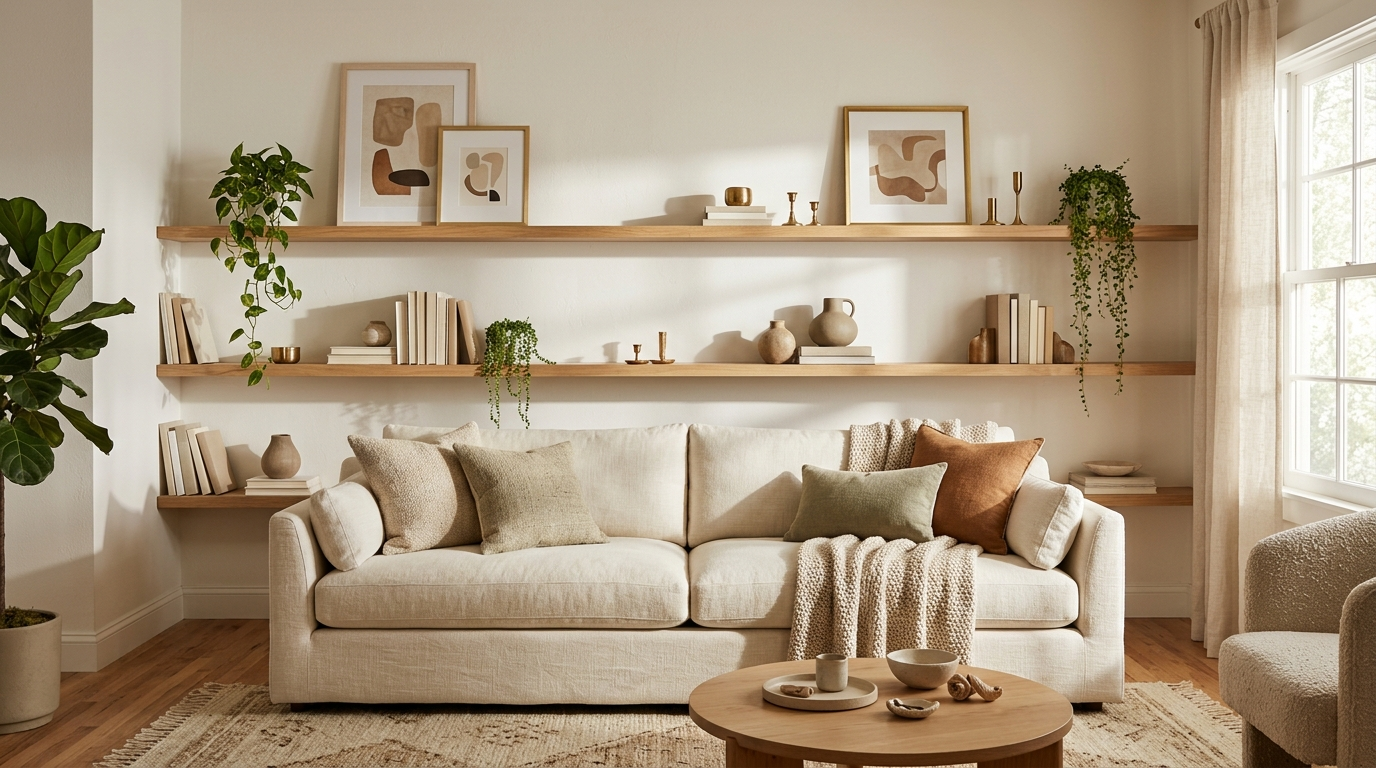
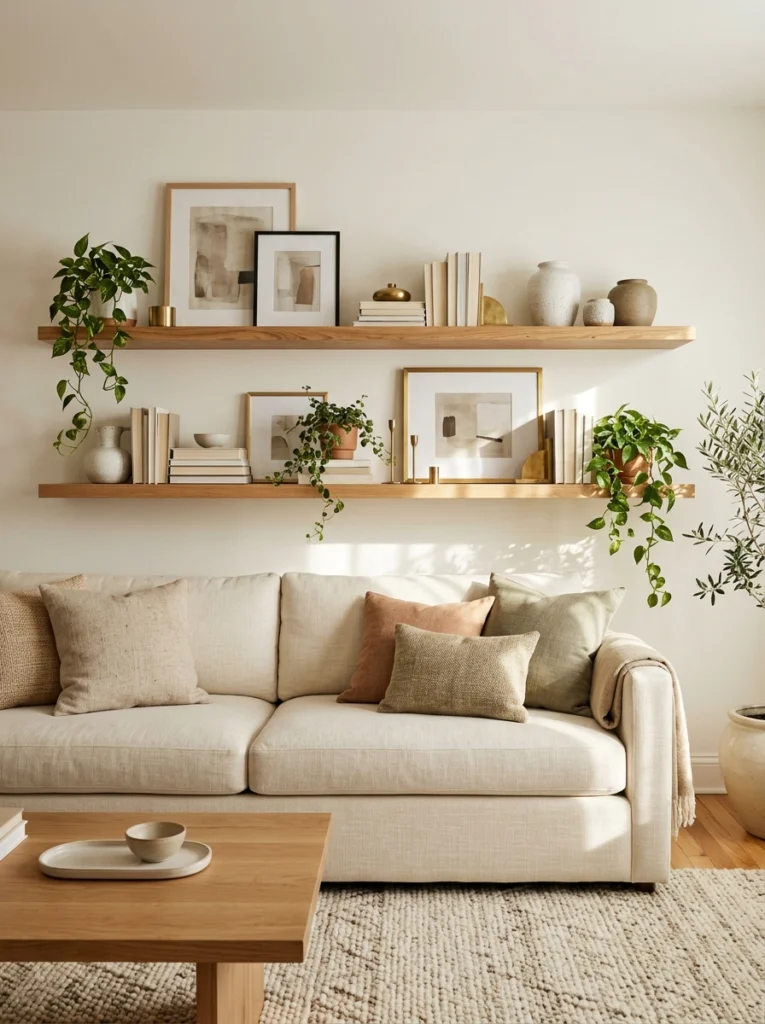
That empty wall above your sofa can be surprisingly frustrating. You hang one picture, step back, and the room still feels unfinished. Add too many decorations, though, and suddenly the whole space looks cluttered. Floating shelves offer a happy middle ground, giving you room to display favorite things while keeping your floors and tabletops clear.
The best floating shelf decor living room ideas combine practical storage with a few personal touches, such as framed prints, books, pottery, plants, and warm lighting. You can style a single shelf for around $30 to $80 or create a layered arrangement with two or three shelves for $75 to $200, depending on the materials and accessories. The secret is balancing different heights, leaving some open space, and choosing colors that work with your sofa, walls, and existing furniture.
1. Style Long Oak Shelves Above the Sofa
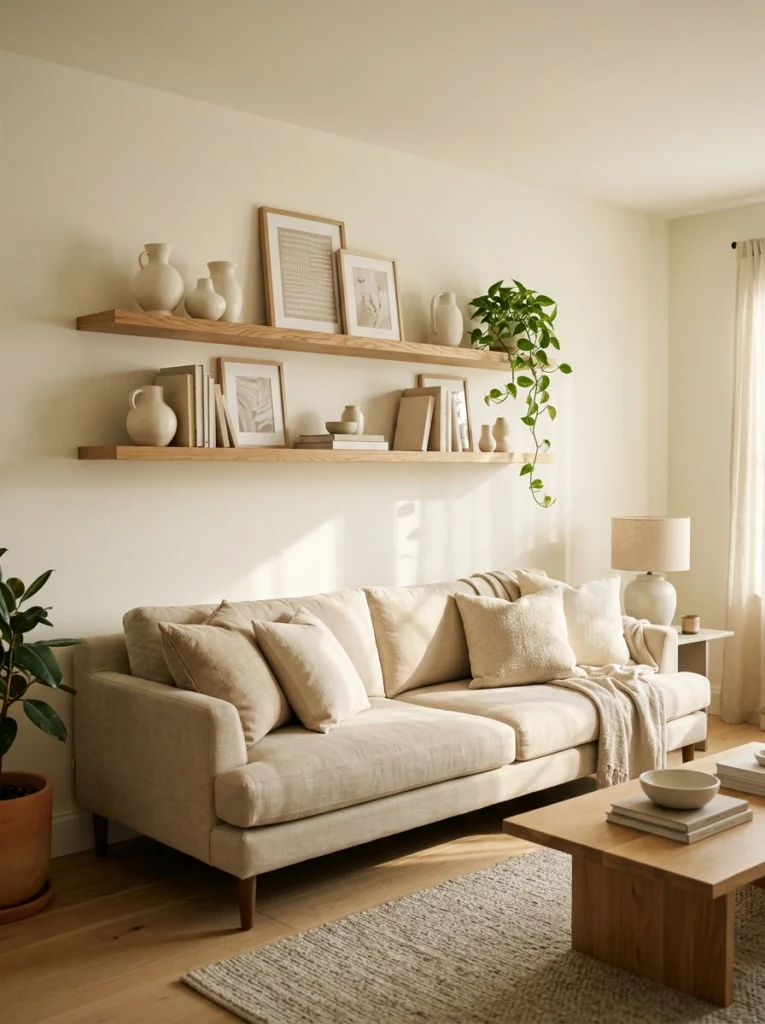
Long oak shelves create a relaxed, finished look above a sofa without making the wall feel too busy. Choose two shelves around 48 to 60 inches long for a standard three-seat sofa, adjusting the length to suit the furniture underneath. Basic wood shelves at IKEA or Home Depot often cost $25 to $70 each, while solid oak options can cost more. Arrange framed art toward one side, stack two or three books in the middle, and place a ceramic vase near the opposite end. This uneven arrangement feels more natural than lining everything up in a row. Keep the largest objects toward the ends and leave small gaps between groups so the wood remains visible. A warm oak finish works beautifully with cream, beige, sage, and charcoal interiors. Before installation, locate wall studs or use mounting hardware rated for your wall type and the shelf’s intended load. Dust the shelf weekly with a microfiber cloth, especially around plant leaves and book spines. The result is a useful display that adds warmth while keeping the coffee table free for everyday living.
2. Create a Minimalist Display With White Floating Shelves

If your living room already has a lot going on, white floating shelves provide storage without adding another strong color. They’re particularly useful in apartments where dark furniture or patterned rugs already occupy much of the visual space. A pair of basic white shelves often costs $20 to $50 each at IKEA, Walmart, or Amazon. Look for a depth of around 6 to 8 inches for books and small decorative objects. Start with one framed print, a small vase, and a short stack of books, then stop before every inch is filled. White shelves work best when the objects have a little contrast, such as green leaves, natural wood, or a black picture frame. If your walls are also white, a matte finish creates a quiet look, while a slightly warmer white can stand out against cream paint. Use a soft cloth to remove dust and avoid harsh cleaners that can damage painted surfaces. This setup is easy to change seasonally, so you can swap artwork or add a small branch arrangement without redoing the entire wall.
3. Mix Floating Shelves With Framed Artwork
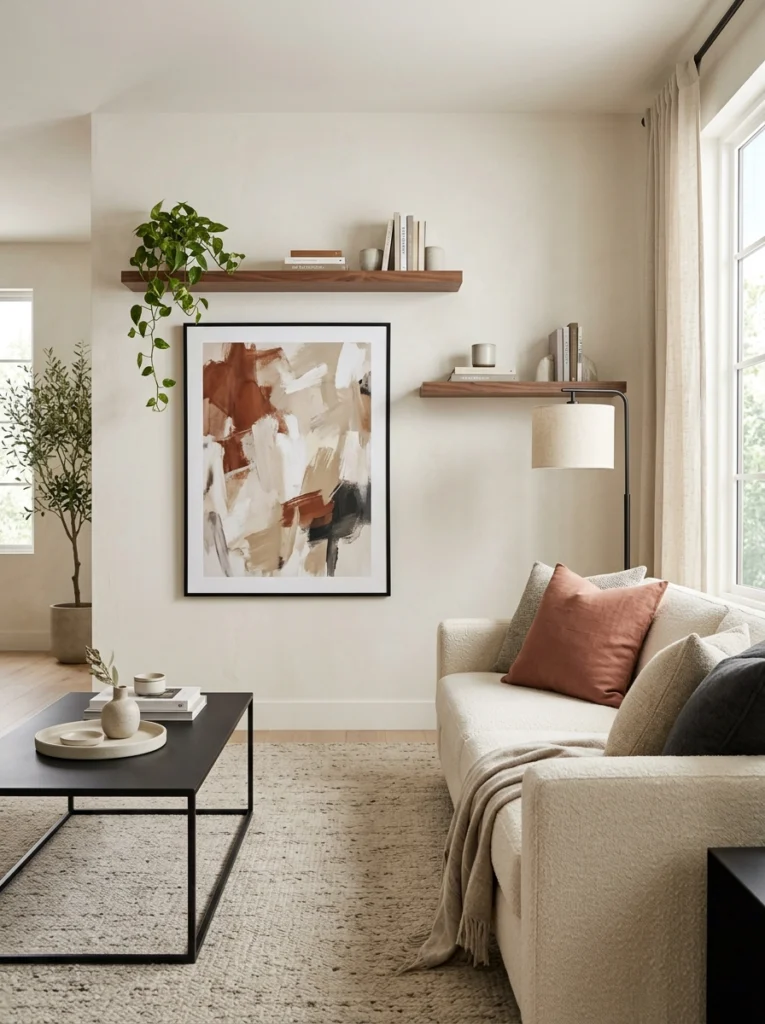
Floating shelves don’t have to carry the entire display. Combining them with framed artwork creates a layered wall that feels more collected and less like a row of storage ledges. Place one larger print between two shelves or lean smaller frames against the wall alongside books and pottery. A framed print from Target or an affordable online art shop often costs $15 to $45, while a walnut shelf may cost $30 to $80. Leave approximately 3 to 6 inches between the artwork and nearby shelf edges so the arrangement has breathing room. Choose artwork that repeats one or two colors already found in the room, such as rust from a cushion or green from a plant. For a relaxed look, lean lightweight frames on a shelf with a lip or secure them using suitable picture hardware. Heavy frames should be mounted safely rather than left unsecured above seating. This approach gives the wall more depth without requiring a large gallery wall or expensive custom framing. If you’re collecting art over time, use similar frame finishes to keep different prints visually connected.
4. Bring Natural Greenery to Wooden Floating Shelves

Plants add movement to a shelf arrangement, especially when the rest of your living room relies on neutral colors and straight furniture lines. Try a trailing pothos on one end, a compact fern in the middle, and a small ceramic pot on the other shelf. Starter houseplants at Walmart, IKEA, or a local nursery often cost $5 to $20 each, so three plants and basic pots can fit a $25 to $60 budget. Choose plants suited to the light available in your room rather than buying greenery simply because it looks attractive. A bright window may suit several common houseplants, while a dim corner calls for species that tolerate lower light. Use lightweight pots with drainage managed through an inner nursery pot and a waterproof saucer. Never allow water to run onto the shelf or wall. Wipe leaves with a damp cloth when dust collects, and rotate the pots occasionally for more even growth. If you have pets or small children, check plant safety and secure the shelves properly. A little greenery makes the display feel alive without filling the floor with bulky planters.
5. Use Black Floating Shelves for a Modern Contrast
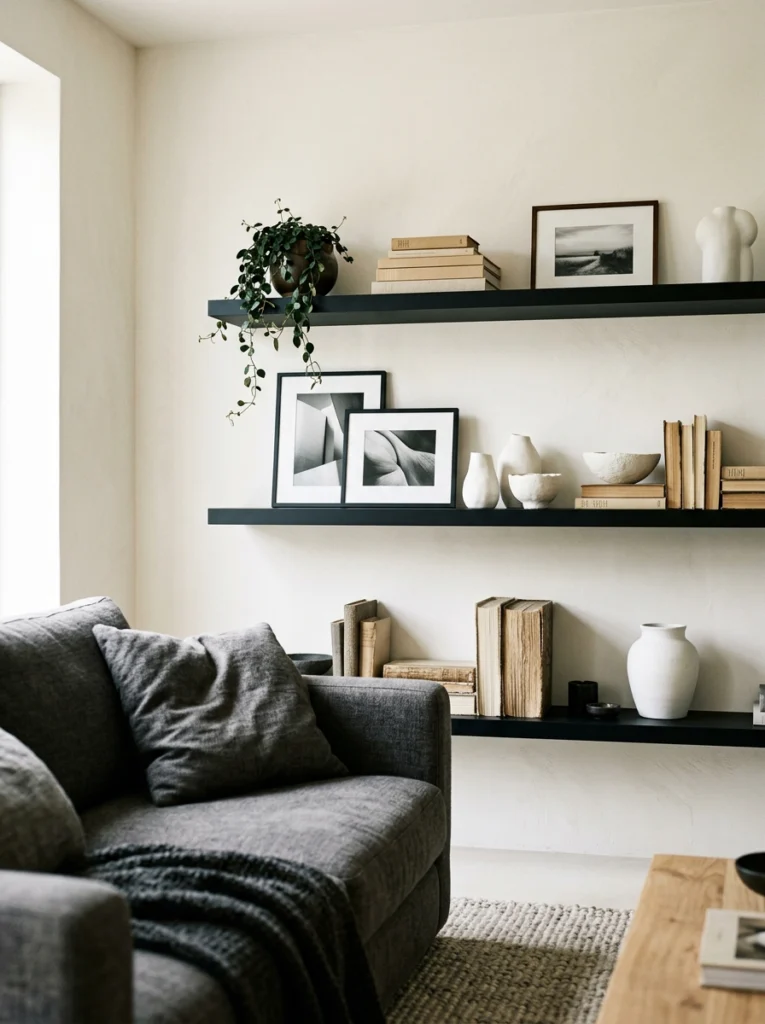
Black floating shelves can give a pale living room a stronger outline, especially when the furniture feels a little too soft or washed out. Choose matte black shelves and repeat the finish in picture frames, a floor lamp, or a side table. Basic black shelves often cost $25 to $65 each, depending on length and mounting design. A 24- to 36-inch shelf works well for a small wall section, while a longer shelf can anchor a larger sofa. Style the shelves with cream pottery, light-colored books, and one green plant to keep the contrast balanced. Avoid filling them entirely with black objects, since the display can disappear against the shelf itself. If your living room has dark flooring, use a light wall behind the shelves or add pale accessories to separate the shapes visually. Matte finishes generally hide glare, though they still collect dust and fingerprints. Wipe them with a soft cloth and avoid abrasive products that can leave shiny marks. This look is especially effective in modern, industrial, and Scandinavian-inspired rooms.
6. Layer Books Horizontally and Vertically
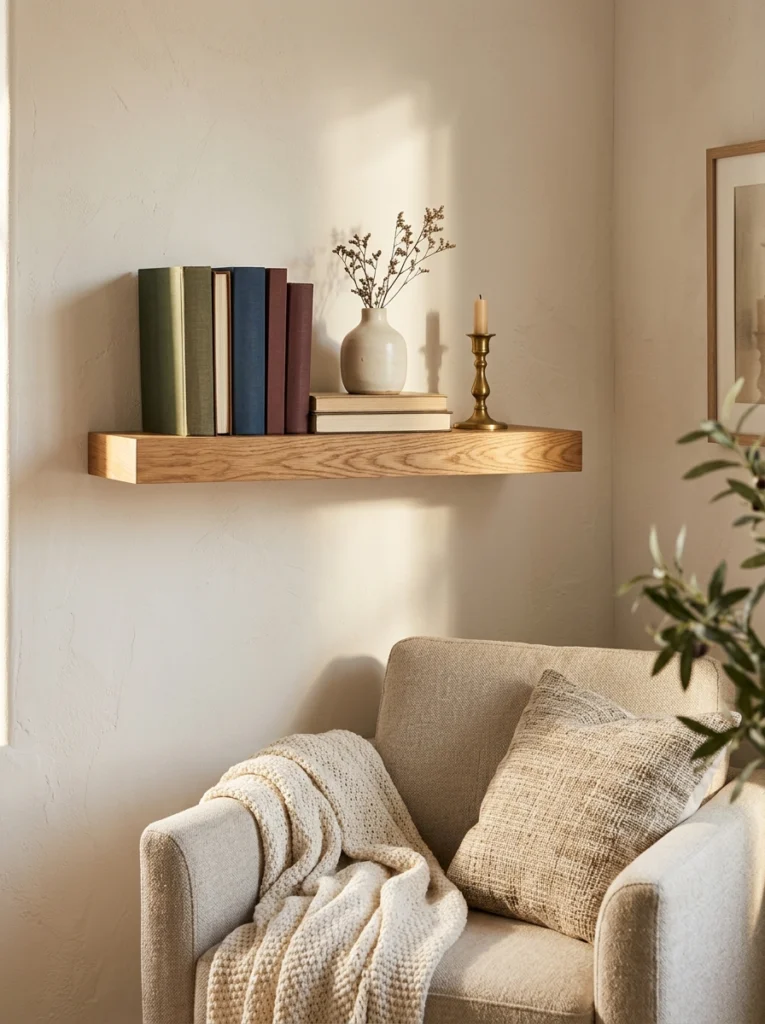
Books make floating shelves feel personal, but a shelf filled entirely with upright spines can look like a miniature library. Mix vertical books with one or two horizontal stacks to vary the height and create natural places for small decorative objects. You can find attractive used hardcovers at thrift stores for $1 to $5 each, while new decorative books often cost $15 to $40. Start with three to five books per shelf section, depending on their size and the shelf’s weight rating. Place the taller books toward one end and use a short stack to raise a small vase or candleholder. Remove dust from the tops and avoid storing books where direct sunlight will fade their covers. For a coordinated appearance, choose books in two or three related color families rather than buying everything in matching neutral covers. The display should still reflect what you enjoy reading, not just what looks good in a photograph. This arrangement works particularly well above a reading chair, beside a media console, or on shelves that share a wall with a home office nook.
7. Make a Small Living Room Feel Taller With Vertical Shelving
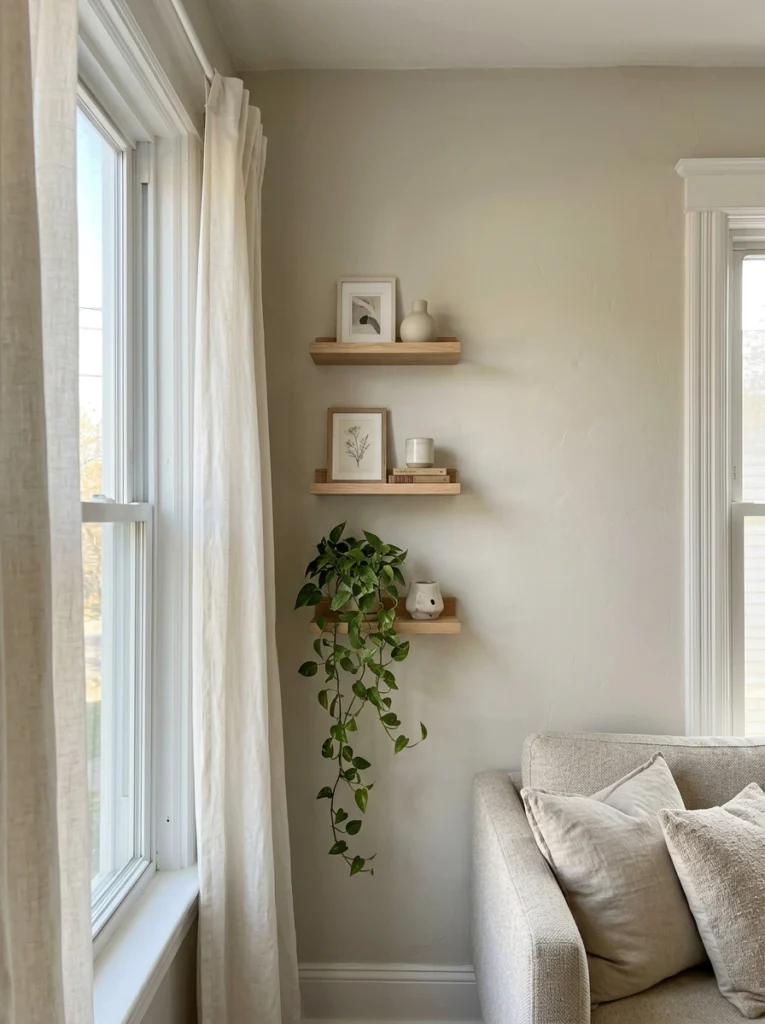
When a living room is short on wall width, stacking shelves vertically can make better use of the space you already have. Instead of stretching one shelf across the entire wall, install three shorter shelves in a column beside a window, reading chair, or narrow console. Shelves around 18 to 24 inches long often work well in tight areas and generally cost $20 to $50 each. Keep the styling light with small frames, a compact vase, and a few books rather than oversized objects that make the arrangement feel top-heavy. Leave roughly 10 to 14 inches between shelves, adjusting the spacing to fit the tallest items. Check the full vertical arrangement against door swings and curtains before drilling. This design draws the eye upward, which can make an ordinary wall feel more interesting without taking up floor space. It also works in rented apartments where a large piece of furniture would crowd the room. Use wall anchors or stud-mounted brackets appropriate for the shelf material and expected load, and keep heavier objects on the lowest shelf for a more balanced display.
8. Add Warmth With Rustic Reclaimed Wood
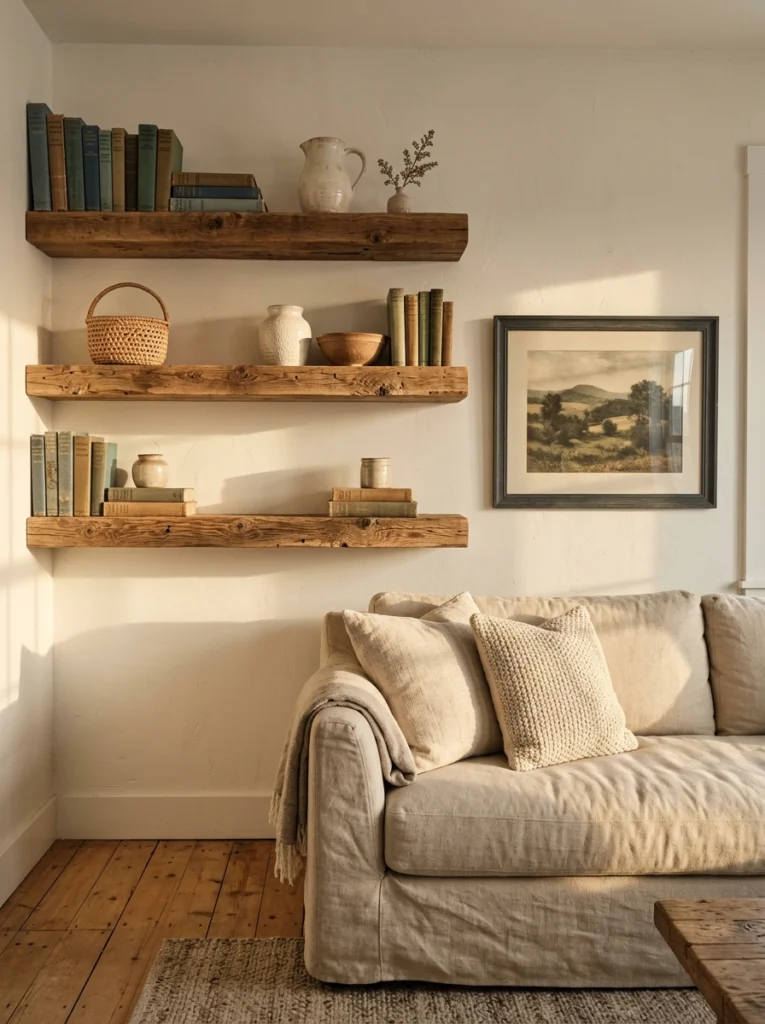
Reclaimed wood brings character to a living room that feels too polished or lacks natural texture. Look for boards with visible grain, gentle color variation, and a finish that suits your furniture. A reclaimed wood shelf from a local woodworker or Facebook Marketplace may cost $35 to $100, while a DIY board and bracket setup can be less expensive. A 36-inch shelf around 8 inches deep gives you enough room for books, a medium vase, and a small framed print without looking bulky. Sand rough edges and seal the surface with a suitable clear finish to reduce splinters and make dusting easier. If you’re repurposing old lumber, confirm that it is structurally sound and free of pests, peeling coatings, or questionable chemical treatments. Style the wood with cream pottery, vintage books, and one metal accent rather than filling it with more rustic objects. A little contrast makes the shelf feel collected instead of themed. This idea pairs naturally with linen upholstery, leather seating, jute rugs, and warm neutral walls.
9. Create a Floating Shelf Display Around Your Television
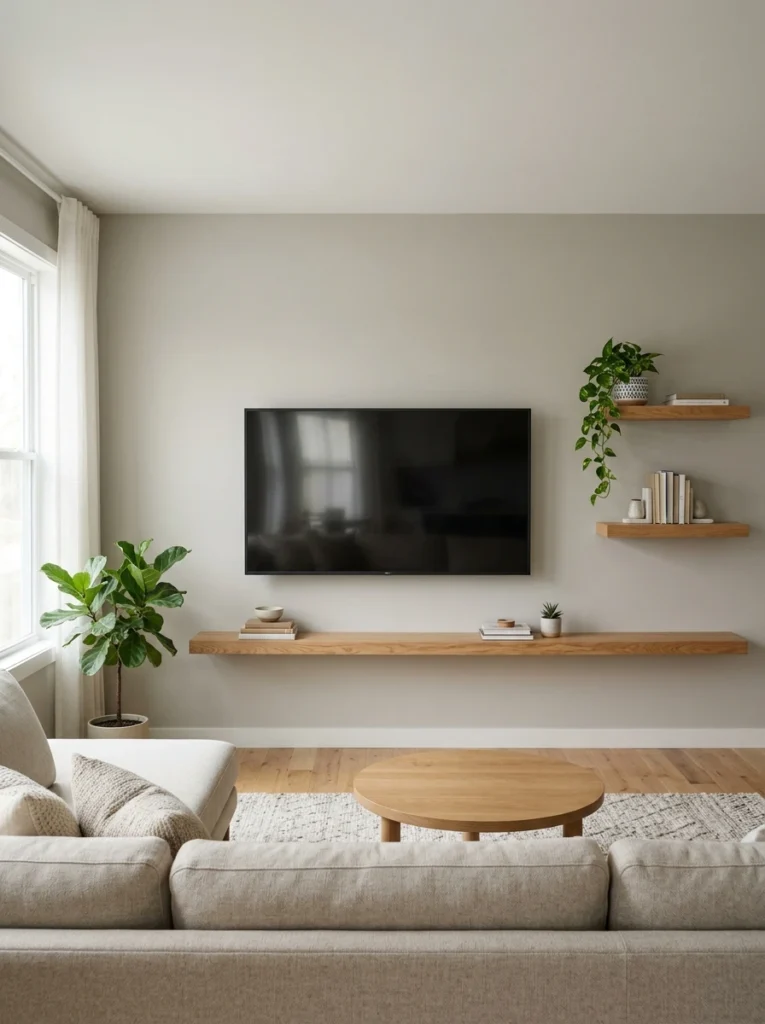
A television wall can feel awkward when the screen is the only object on it. Floating shelves give you room to add warmth and useful storage without bringing in a bulky entertainment unit. A long shelf below the screen and one or two shorter shelves to the side can cost around $75 to $200 total, depending on the materials and mounting hardware. Keep the shelf below the television visually simple, using a small stack of books, a low ceramic bowl, or a compact soundbar if the manufacturer permits the setup. Put decorative objects on side shelves so they don’t compete with the screen. Measure the television and leave adequate space for ventilation, cables, and any equipment that produces heat. Don’t mount shelves into drywall alone unless the selected system is rated for that installation and load. Use cable covers or in-wall cable management installed according to local electrical requirements to keep wires tidy. The display looks best when the shelves don’t extend much farther than the furniture beneath them. For related ideas, see [INTERNAL LINK: living room TV wall decor ideas].
10. Decorate With Neutral Ceramics and Sculptural Vases
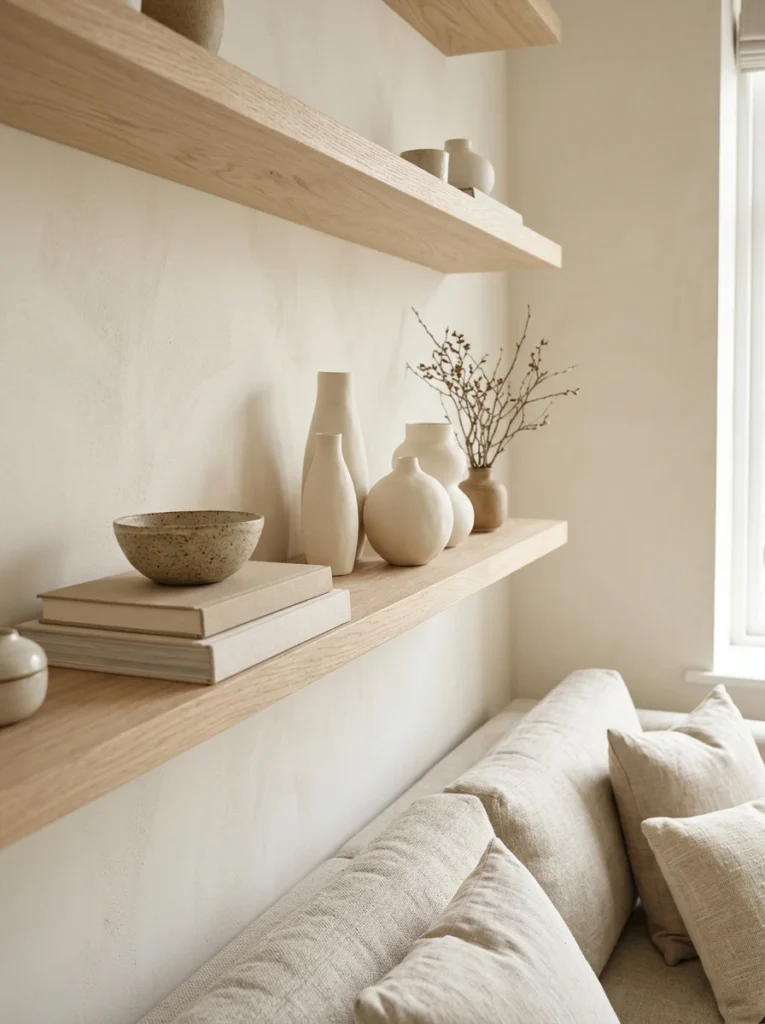
Ceramic vases are useful for adding height and texture without introducing a lot of color. Choose three pieces in different shapes, such as a rounded vase, a narrow bottle, and a small sculptural vessel. Affordable ceramic decor at Target, HomeGoods, or Walmart often costs $10 to $30 per piece, while handmade pottery can cost considerably more. Group two vases together and place the third on another shelf to spread the visual weight across the wall. Cream, sand, and warm gray finishes work with many living room palettes, but a single dark brown or charcoal vessel can add definition. Leave at least a little empty shelf space around each group so the silhouettes remain clear. If you use dried stems, choose a small arrangement that won’t catch on passing sleeves or brush against the wall. Dust the ceramics with a soft cloth, and wash them by hand if the finish or glaze requires it. This approach suits minimalist, modern farmhouse, and organic-inspired interiors, especially when you want a calm display that doesn’t rely on lots of small trinkets.
11. Use Floating Shelves to Frame a Reading Nook
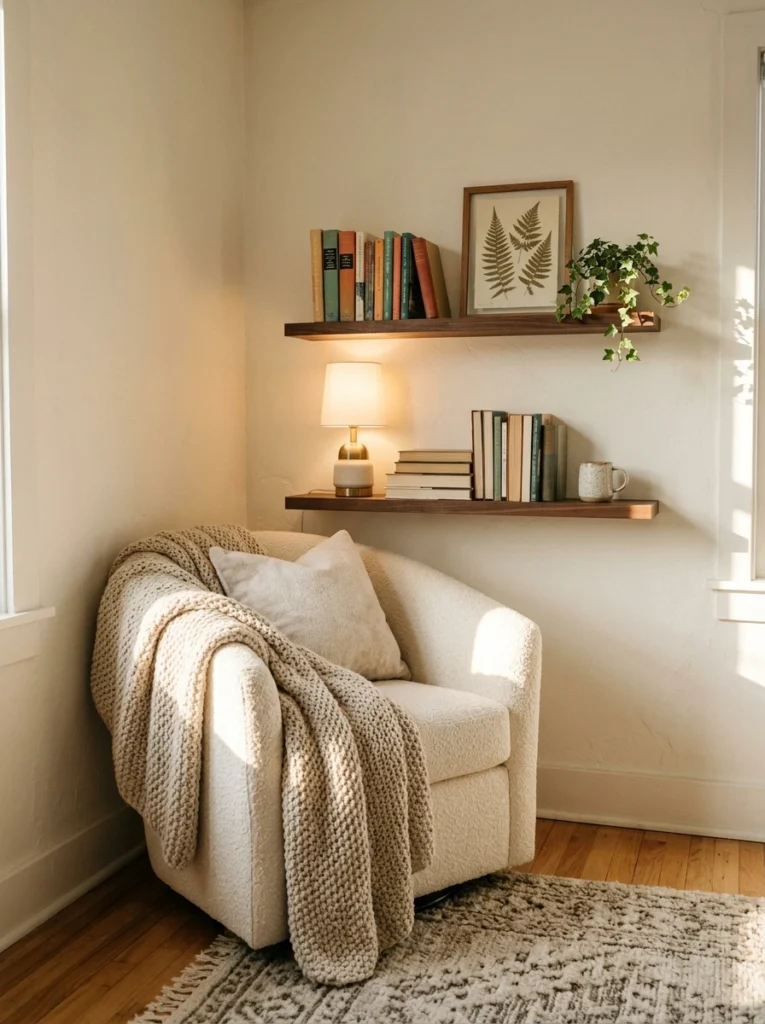
A reading nook becomes more useful when the books you reach for are close at hand. Install one shelf above a comfortable armchair and another slightly higher for artwork or books you aren’t currently reading. Basic 24-inch shelves often cost $20 to $50 each, and a simple reading nook shelf setup can stay around $50 to $120 with a few secondhand books and accessories. Keep the lower shelf within comfortable reach when seated, but leave enough headroom to stand up without bumping it. Choose a sturdy shelf system if you’ll store several hardcovers, since books can weigh more than they appear to. Style the upper shelf with a small frame, a ceramic object, or a trailing plant. Keep drinks on a nearby table rather than directly above your chair, where spills could damage books or upholstery. A reading light beside the chair provides task lighting without forcing you to rely on ceiling lights. This arrangement gives an unused corner a clear purpose and creates a cozy feature without requiring a large bookcase.
12. Bring in Coastal Colors With Pale Blue and Natural Rope

Pale blue shelves can add a relaxed coastal touch, especially when the room already has white walls and natural fiber textures. You can buy painted shelves or paint unfinished wood yourself. A small tin of suitable furniture paint may cost $15 to $30, while basic wooden shelves typically cost $25 to $60 each. Use a muted blue-gray rather than a bright aqua if you want the room to feel calm instead of overly themed. Pair the shelves with white pottery, a small rope basket, driftwood, and one or two books with sandy covers. Avoid covering every shelf with shells or nautical ornaments. A few natural materials will communicate the style more subtly. If you’re painting existing shelves, clean and lightly sand the surface first, then apply the recommended primer and finish coats. Let the paint cure fully before placing accessories on it to avoid sticking or scratches. Dust rope baskets with a soft brush and keep them away from damp windows. This palette works well in beach houses, sunny apartments, and living rooms that need a little color without heavy furniture.
13. Add Small Picture Ledges for Easy Art Changes
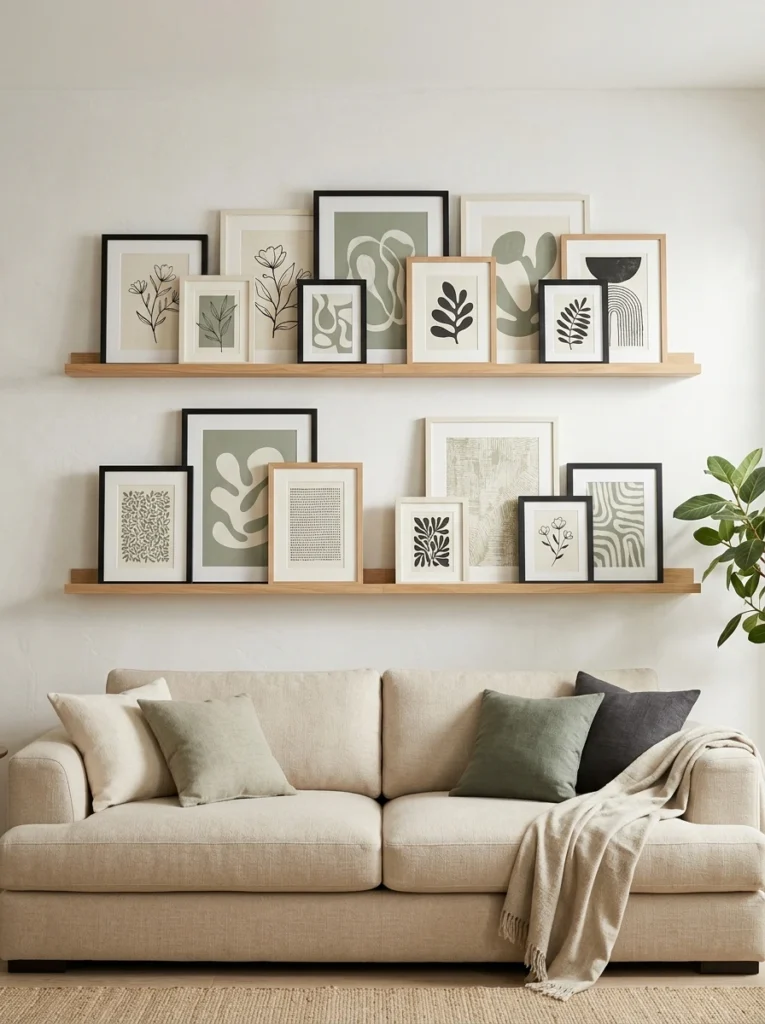
Picture ledges are ideal if you like changing artwork but don’t want to drill new holes every time you buy a print. Their shallow front lip keeps frames in place, and overlapping a few pieces creates a relaxed gallery effect. A basic 24- to 36-inch picture ledge often costs $20 to $45 at IKEA or other home retailers. Choose two ledges in the same finish and stagger the artwork so the frames don’t line up perfectly. Mix a larger print with two smaller pieces, keeping the colors connected through a shared accent such as olive green, tan, or black. Make sure the frames are suitable for the ledge depth and don’t lean beyond the front edge. Secure the ledge according to its weight rating, especially if children or pets can reach the wall. Avoid placing fragile frames directly above a frequently used walkway. This setup is especially useful for renters who want a flexible display, and it’s easy to refresh with thrift-store art or seasonal prints. Dust behind the frames occasionally because narrow ledges can collect debris along the wall.
14. Style a Floating Shelf With Candles and Warm Lighting
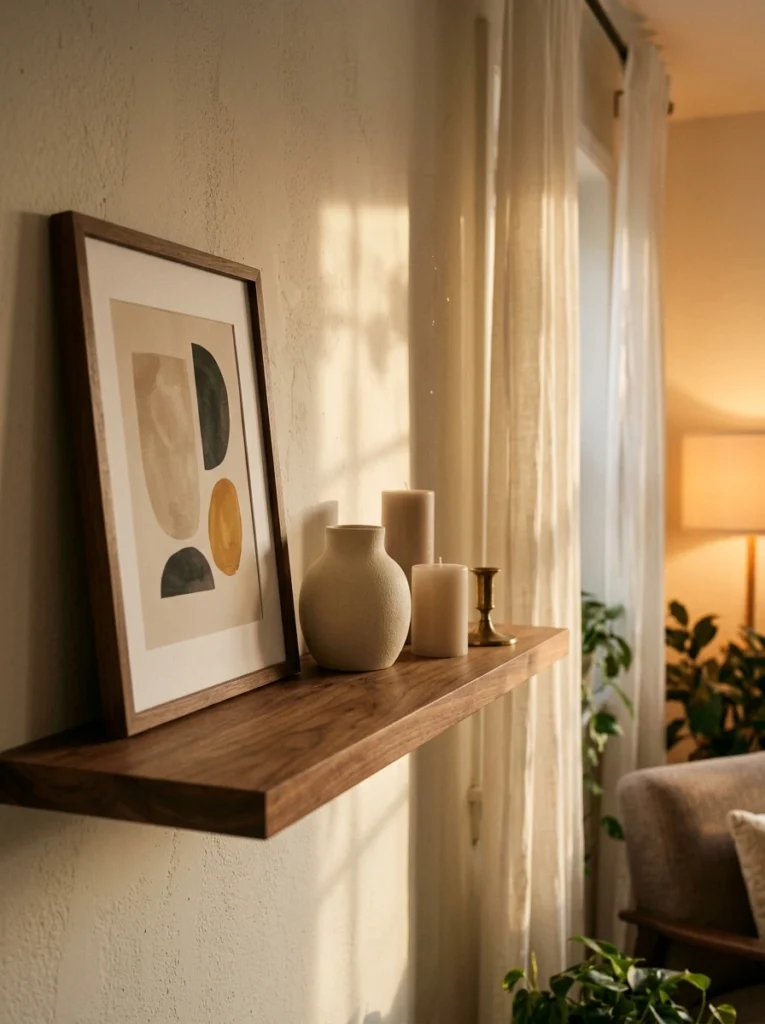
Candles add a soft decorative touch to a living room shelf, particularly when the room feels plain after dark. Use a combination of short pillar candles, a small brass holder, and a ceramic vase rather than lining up identical candles across the shelf. Basic candle sets at Target or Walmart often cost $10 to $25, while decorative holders may cost another $10 to $30. Leave several inches between candles and nearby objects, and follow the candle manufacturer’s safety instructions. Never leave a burning candle unattended or place it near dried foliage, books, curtains, or a television. If your shelf is above a sofa or close to the ceiling, flameless LED candles are a safer decorative option and often cost $10 to $25 for a small set. Keep the shelf away from heat sources and wipe wax spills only after the wax has cooled, using a cleaning method suited to the shelf finish. A warm table lamp nearby can provide the cozy glow without relying on open flames. This arrangement works especially well with wood shelves, cream pottery, and muted earth tones.
15. Make a Gallery Wall With Floating Shelves and Family Photos
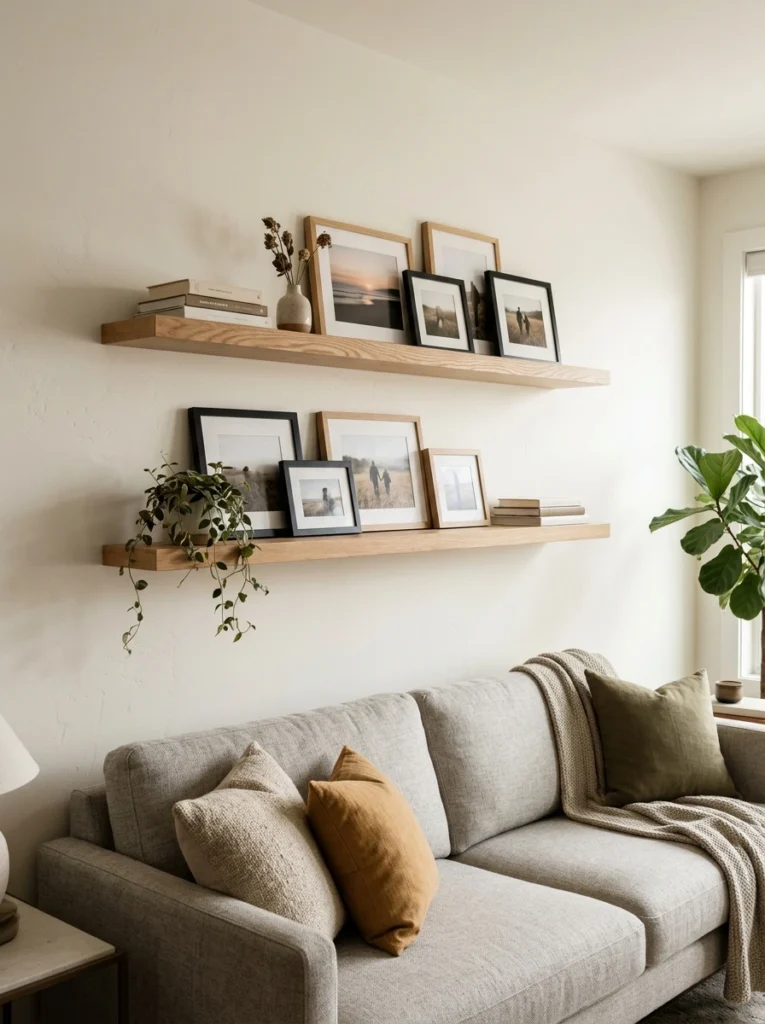
Family photographs make a living room feel personal, but too many frames on every surface can create clutter. Floating shelves let you display a changing collection in one defined area. Start with three to five framed photos in a mix of small and medium sizes, then add one decorative object to keep the arrangement from looking like a row of picture frames. Affordable frames at IKEA, Target, or Walmart often cost $5 to $20 each, making this a manageable project even if you’re displaying several photographs. Use one consistent frame finish, or combine black and natural wood for a more collected look. Lean lightweight frames against the wall on a picture ledge or secure heavier frames properly. Keep the photos away from direct sunlight to reduce fading, and dust the frame edges regularly. A small ceramic vase or stack of books gives the display a little variety without competing with the photographs. This idea works especially well above a sofa or along the wall near a family seating area, where the pictures can be enjoyed every day.
16. Choose Floating Shelves With Hidden Brackets
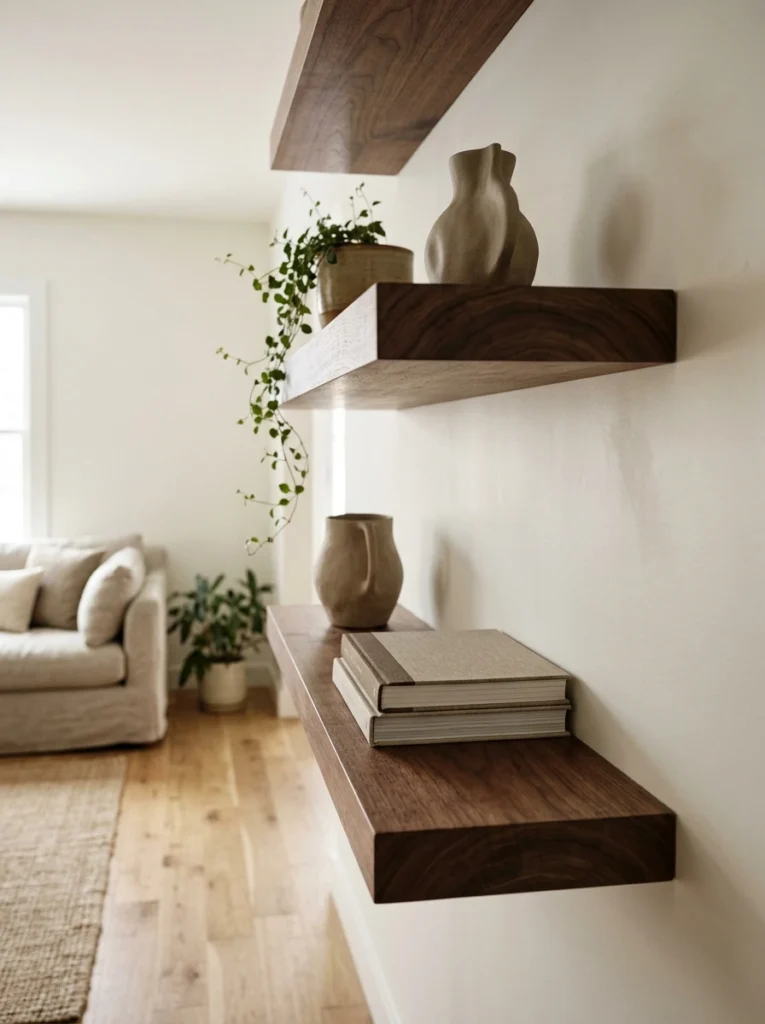
If you prefer a clean, uninterrupted look, floating shelves with concealed brackets are worth considering. The hidden hardware makes the shelves appear to extend directly from the wall, which works well in minimalist and contemporary rooms. Basic shelves with concealed mounting systems generally cost $30 to $80 each, while thick solid-wood models can cost $100 or more. A depth of 8 to 10 inches gives you room for a few books and decorative objects without making the shelf too bulky. Check the mounting instructions carefully because concealed systems often require precise drilling and strong wall support. Secure the bracket to studs or use a mounting system rated for your specific wall construction. Don’t assume that a thick shelf can safely hold heavy objects simply because the hardware is hidden. Style the shelf with lightweight pottery, a small framed print, and a modest book stack. The clean edge makes even a simple arrangement feel intentional. Dust the top and the narrow seam against the wall, where debris can collect. This option suits living rooms where visible metal brackets would compete with the decor.
17. Use Woven Baskets for Hidden Shelf Storage
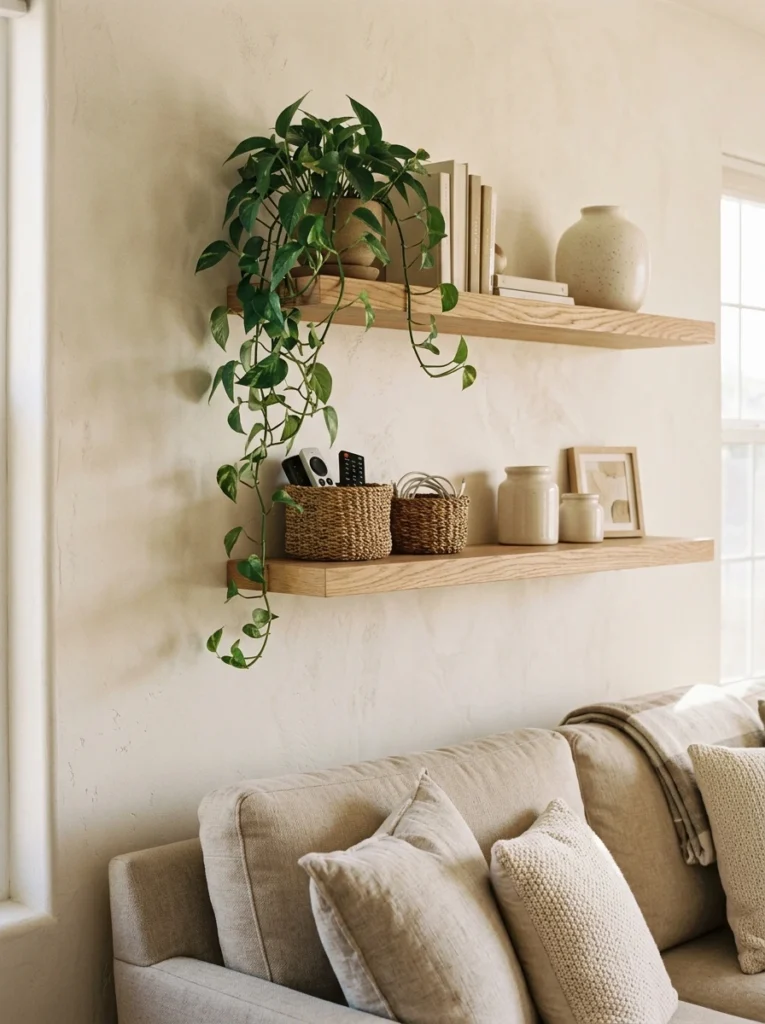
Not every shelf has to be purely decorative. Small woven baskets can hide remotes, charging cables, game controllers, and other bits that tend to gather in a living room. Look for baskets around 8 to 12 inches wide, depending on your shelf depth. Basic seagrass or cotton rope baskets often cost $10 to $25 each at Target, Walmart, or home stores. Choose two matching baskets for a coordinated look, then leave room beside them for a book stack or small vase. The baskets should fit fully on the shelf without hanging over the front edge. Check the shelf’s weight rating because storage containers can become heavy once filled with electronics or other objects. Avoid placing batteries or devices that produce heat inside tightly packed baskets, and keep charging equipment arranged according to its manufacturer’s instructions. Dust woven surfaces with a soft brush or vacuum attachment on low suction. This is a useful solution for households that want a tidy display without hiding everything in a closed cabinet. It works especially well on lower shelves near the sofa, where everyday items are easy to reach.
18. Create a Moody Display With Deep Green and Brass
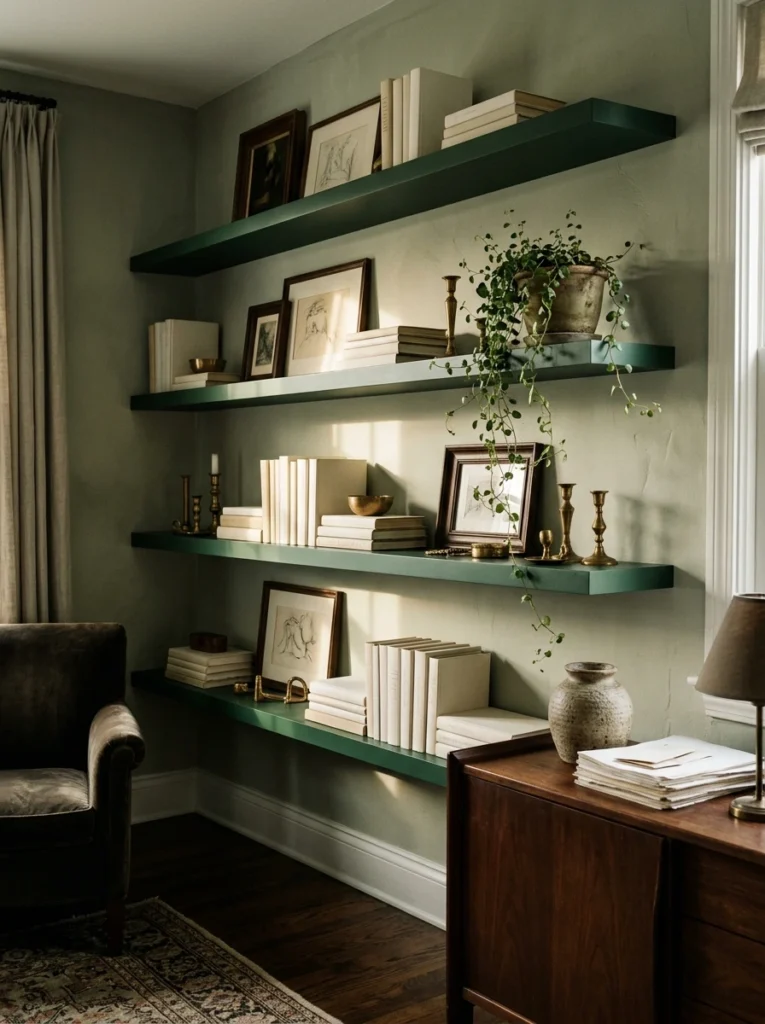
Deep green shelves create a rich focal point in a living room with cream upholstery, warm wood furniture, or neutral walls. You can buy painted shelves or paint unfinished wood in a deep forest or olive shade. A quart of suitable furniture paint generally costs $20 to $40, and a small shelf painting project can stay around $35 to $80 when basic tools are included. Repeat the green in just one or two nearby details, such as a cushion or framed print, instead of spreading it throughout the room. Brass candleholders, cream pottery, and natural wood provide contrast and keep the shelves from looking too dark. If the wall is also dark, choose lighter objects with distinct shapes so the display remains visible. Clean the shelf with a soft cloth and avoid harsh cleaners that can dull the painted finish. This palette works best when the rest of the room has some lighter surfaces to balance the deeper color. It’s a good choice for traditional, eclectic, and modern living rooms that need a stronger focal point without adding a large piece of furniture.
19. Decorate With Travel Souvenirs and Meaningful Objects
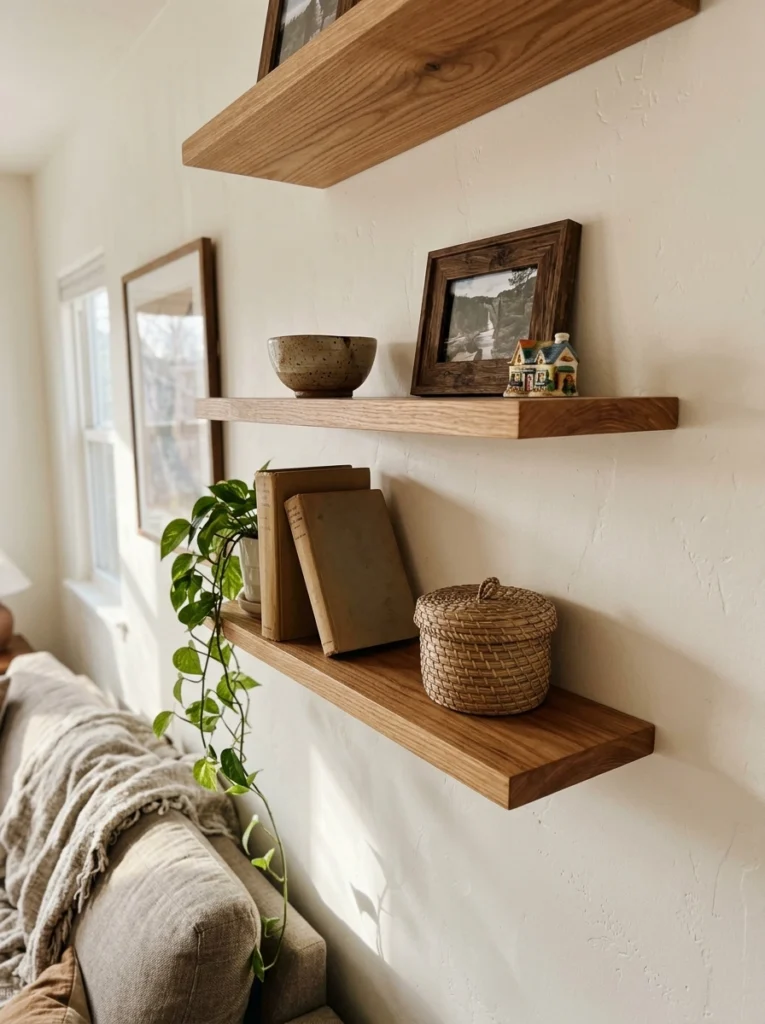
The most memorable shelves usually contain a few things that mean something to the people who live there. Display a small souvenir from a favorite trip, a handmade bowl, a framed photograph, or a keepsake from a family member. You don’t have to buy a whole new collection. A $20 to $50 styling budget can cover one thrifted frame, a small ceramic piece, and a secondhand book if you want to fill a bare shelf gradually. Group objects by color or material rather than placing every souvenir in a straight line. Leave a little open space around unusual pieces so they don’t disappear among smaller items. If an object is fragile or has sentimental value, place it on a sturdy shelf away from the edge and out of reach of children or pets. Dust delicate pieces with a soft brush and keep photographs out of direct sunlight. This approach makes your living room feel personal instead of copied from a catalog. It also gives you a reason to rotate objects as your travels and interests change.
20. Add a Small Mirror to Reflect Light
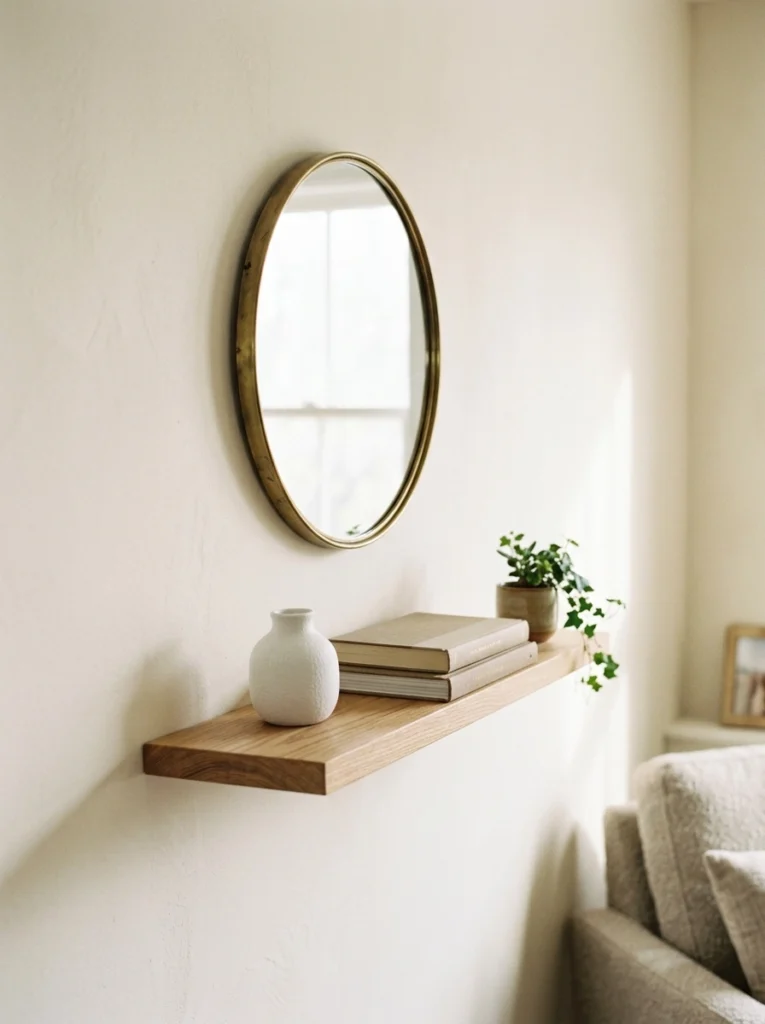
A mirror can help a small living room feel brighter by reflecting light from a nearby window or lamp. Instead of hanging a large mirror above the entire shelf arrangement, try a compact round mirror above a narrow floating shelf. A basic 18- to 24-inch mirror from Target or IKEA often costs $25 to $70, while a simple shelf may cost another $20 to $50. Leave roughly 4 to 8 inches between the mirror and shelf so the arrangement doesn’t feel cramped. Place a small vase or book stack beneath the mirror, keeping the shelf relatively uncluttered. Check what the mirror reflects before mounting it. Reflecting a window or a pleasant part of the room is useful, while reflecting a pile of laundry or an awkward doorway simply doubles the distraction. Use appropriate wall anchors or mount the mirror according to its hardware instructions, particularly if it has a heavy metal frame. Clean the glass with a suitable glass cleaner and wipe the shelf separately. This pairing works well in darker apartments, narrow living rooms, and corners that feel short on natural light.
21. Use Floating Shelves Above a Low Console Table
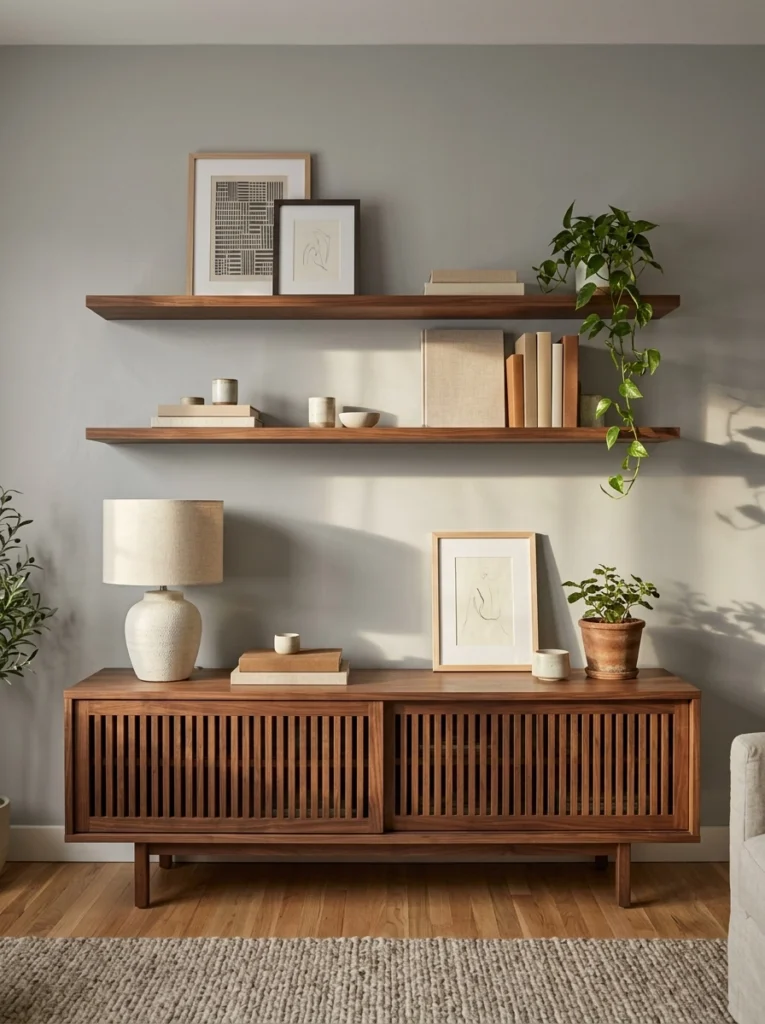
Pairing floating shelves with a low console table gives a living room wall structure without using a tall bookcase. The table provides space for lamps and baskets, while the shelves hold artwork, books, and smaller decorative objects. Basic floating shelves often cost $25 to $60 each, and a compact console table may cost $80 to $200 at IKEA, Target, or Facebook Marketplace. Leave around 12 to 18 inches between the console and the lowest shelf if the objects on the table require extra clearance, adjusting for lamp height and artwork. Keep heavier storage in the table or lower baskets, and use the shelves for lightweight displays. Repeat the wood tone across both pieces when possible, or choose contrasting finishes that already appear elsewhere in the room. This combination works particularly well behind a sofa or along a long living room wall. Measure the full arrangement before installation so the shelves don’t sit too high above the table. Dusting is easier when the shelves aren’t packed tightly, and the open floor beneath the console can make the furniture feel less bulky.
22. Try a Symmetrical Pair of Floating Shelves
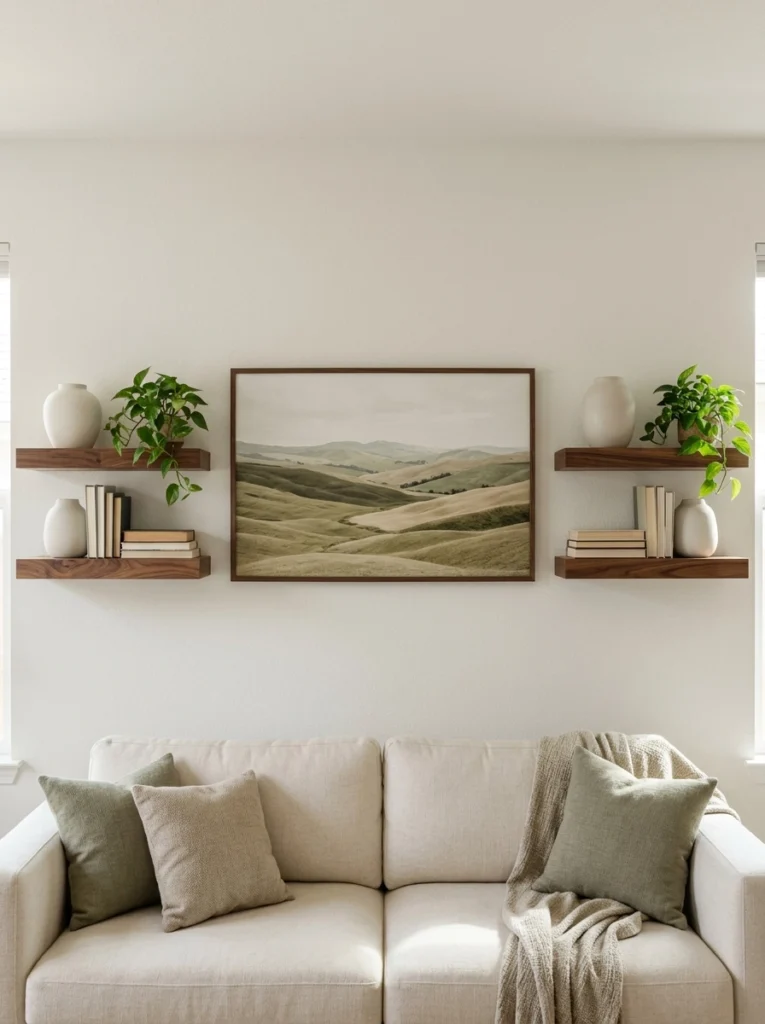
If you prefer a tidy, traditional look, symmetry can make floating shelves feel organized without looking overly formal. Install two matching shelves at the same height on either side of a central artwork or mirror. A pair of 24- to 36-inch shelves usually costs $50 to $140 total, depending on the wood and mounting system. Choose a matching pair of vases or plants for the outer ends, then vary the books or smaller objects toward the center. This keeps the arrangement balanced without making every item identical. Measure from the center of the artwork and mark the shelf positions carefully before drilling. A level is essential because even a slight difference in height is noticeable in a symmetrical arrangement. If the wall is narrow, use shorter shelves and a smaller central print rather than squeezing everything together. This style works particularly well in traditional living rooms, formal sitting areas, or spaces where the furniture is already arranged evenly. Keep the display dusted and avoid gradually adding extra objects until the original balance disappears.
23. Make a Corner More Useful With Short Floating Shelves
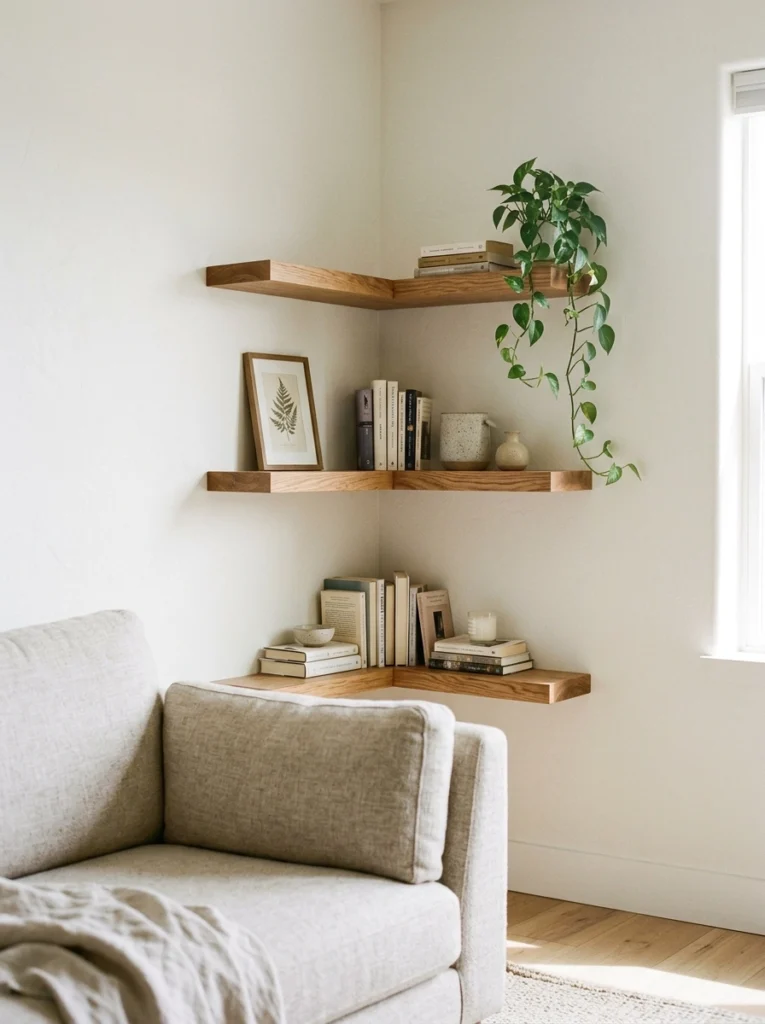
An empty living room corner can be hard to decorate because a bookcase or cabinet may block the walkway. Short floating shelves offer a lighter option that uses vertical space instead. Choose shelves around 12 to 20 inches long, with prices often ranging from $15 to $40 each for basic models. Three shelves may cost $45 to $120 before accessories and installation hardware. Stagger their heights slightly if you want a relaxed look, or line them up for a cleaner arrangement. Use smaller objects, such as a framed botanical print, a compact plant, and a short stack of books, so the shelves don’t feel crowded. Before installing, check the nearby window trim, curtains, door swings, and furniture placement. Corner walls sometimes contain wiring or other obstructions, so choose mounting locations carefully. Secure the shelves to suitable wall support, particularly if you plan to store books. This arrangement gives a bare corner a purpose without taking up floor space, and it can be adapted for renters who prefer lightweight displays and minimal furniture.
24. Style Floating Shelves With Seasonal Decor
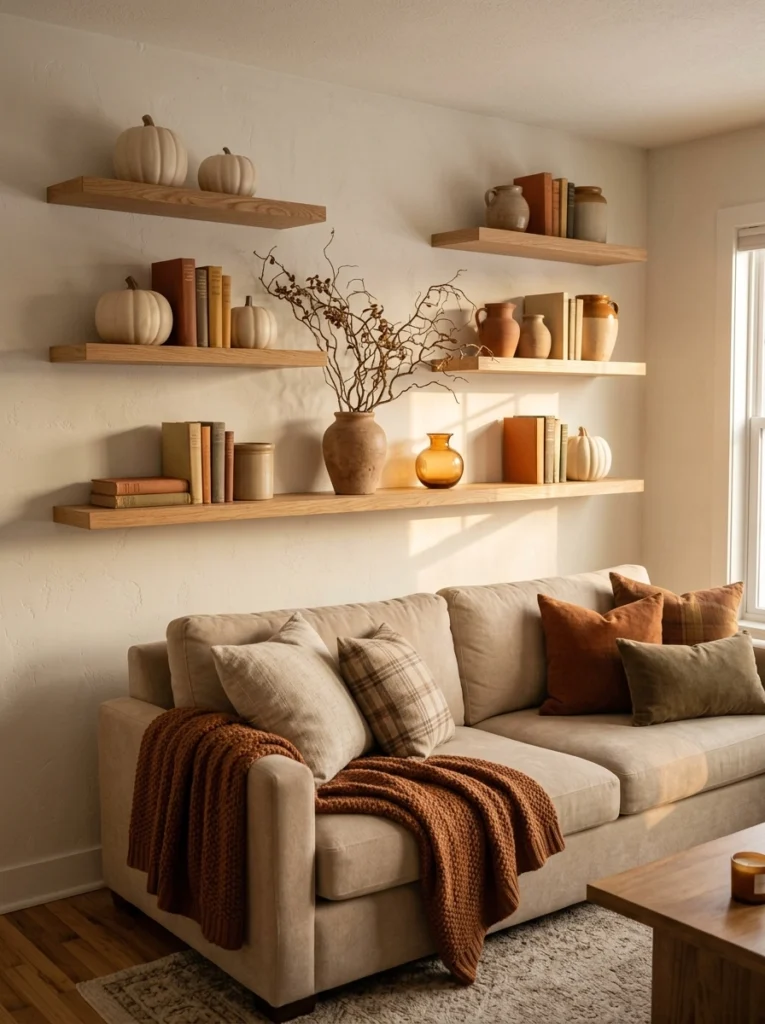
Floating shelves are an easy place to change small decorations as the seasons shift, without buying new furniture or replacing the entire room’s decor. Keep the main pieces, such as books, pottery, and framed art, in place, then swap two or three accents for the season. A few mini ceramic pumpkins, dried stems, or amber glass pieces from Target or a thrift store may cost $15 to $40 for a seasonal update. In spring, use small branches and pale green accents. For autumn, add rust-colored books or cream ceramic pumpkins. During the holidays, a short evergreen arrangement and a few warm metallic details can provide a festive touch. Avoid filling every shelf with themed objects because the display can quickly look crowded. Use lightweight decorations that sit securely on the shelf, and keep dried materials away from candles or other heat sources. Store seasonal pieces in a small labeled box when they’re not in use. This approach keeps the living room feeling current while letting the permanent shelf styling remain simple and useful throughout the year.
25. Use Floating Shelves to Display a Collection of Ceramics
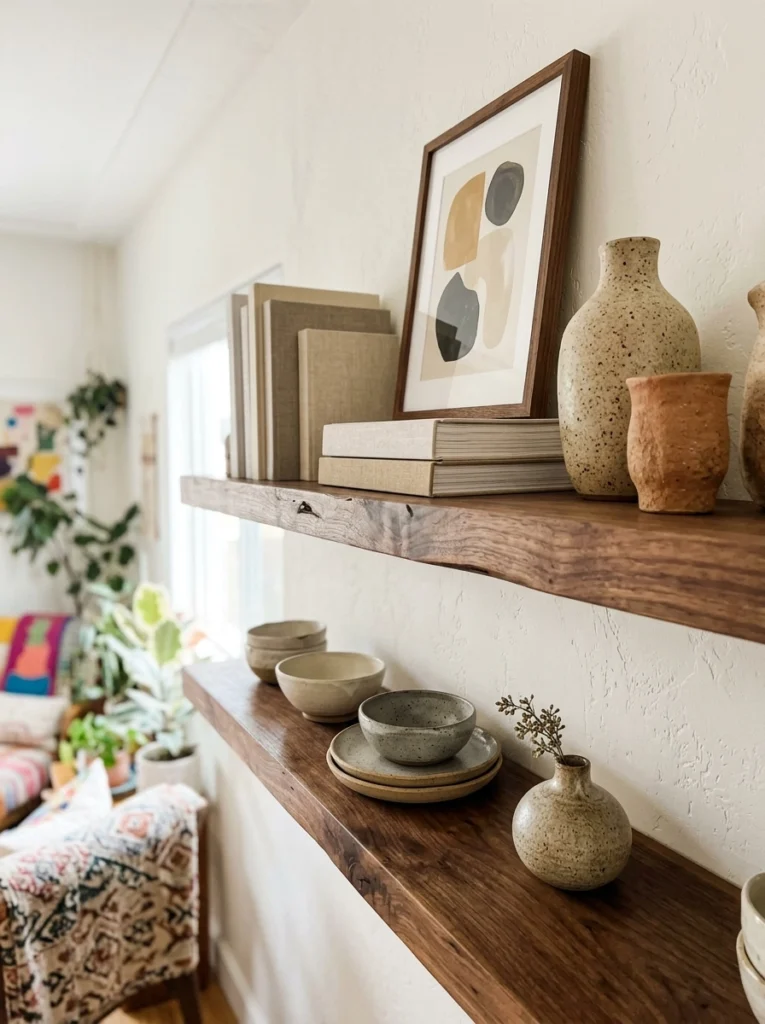
If you’ve collected pottery from craft fairs, thrift stores, or family members, floating shelves give those pieces a place to shine. Instead of spreading every bowl and vase across the room, select a small group with related colors or shapes. Affordable thrift-store ceramics can cost $3 to $15 each, while handmade pottery often ranges from $25 to $80 or more. Start with five to seven pieces across two shelves, leaving enough room to appreciate the shape of each object. Vary the heights by placing one tall vase beside two smaller bowls, then repeat a color on the other shelf. Avoid placing heavy ceramic pieces near the front edge or using shelves that aren’t rated for their combined weight. If you collect especially heavy stoneware, confirm the shelf and bracket capacity before arranging it. Dust the pieces regularly and wash them only according to their finish and care instructions. This display works particularly well in eclectic and organic-inspired living rooms because it combines personal objects with useful storage. You don’t need a matching set. A few related pieces with different shapes often look more interesting.
26. Add a Small Shelf for a Home Bar Display
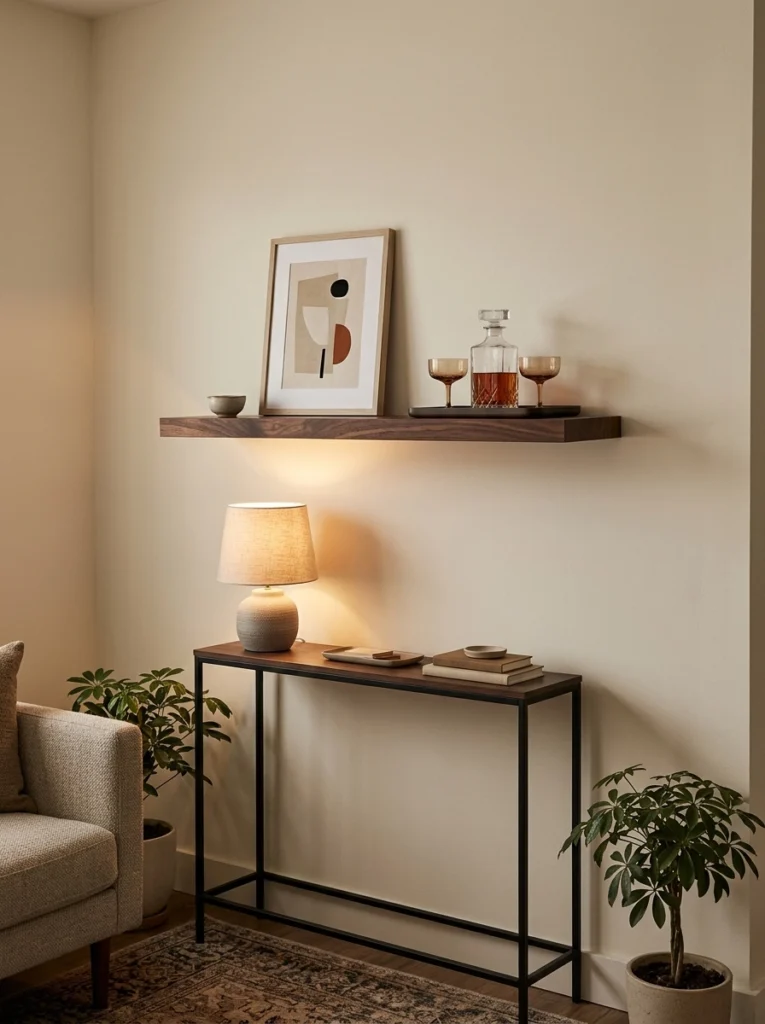
A small floating shelf can give a living room a dedicated spot for glassware and bar accessories without requiring a full bar cabinet. Choose a sturdy shelf with a suitable load rating and place it away from direct sunlight and heat sources. Basic wood shelves often cost $30 to $70, while a small tray and two glasses may add another $20 to $50. A shelf at least 8 to 10 inches deep is useful for stable glassware, provided the mounting system supports the weight. Arrange a small tray, two or three glasses, and one decorative object rather than filling the shelf with bottles. Keep heavier bottles on a low, sturdy console or inside a cabinet if the wall shelf isn’t rated for their weight. Avoid placing glassware above a sofa where falling objects could cause injury. Wipe glass items regularly and keep the shelf dry to prevent rings or water marks. If children visit your home, store alcohol and fragile glassware in a secured location. This idea gives the room a grown-up entertaining corner while keeping the overall display compact.
27. Finish With a Balanced Mix of Art, Books, and Greenery
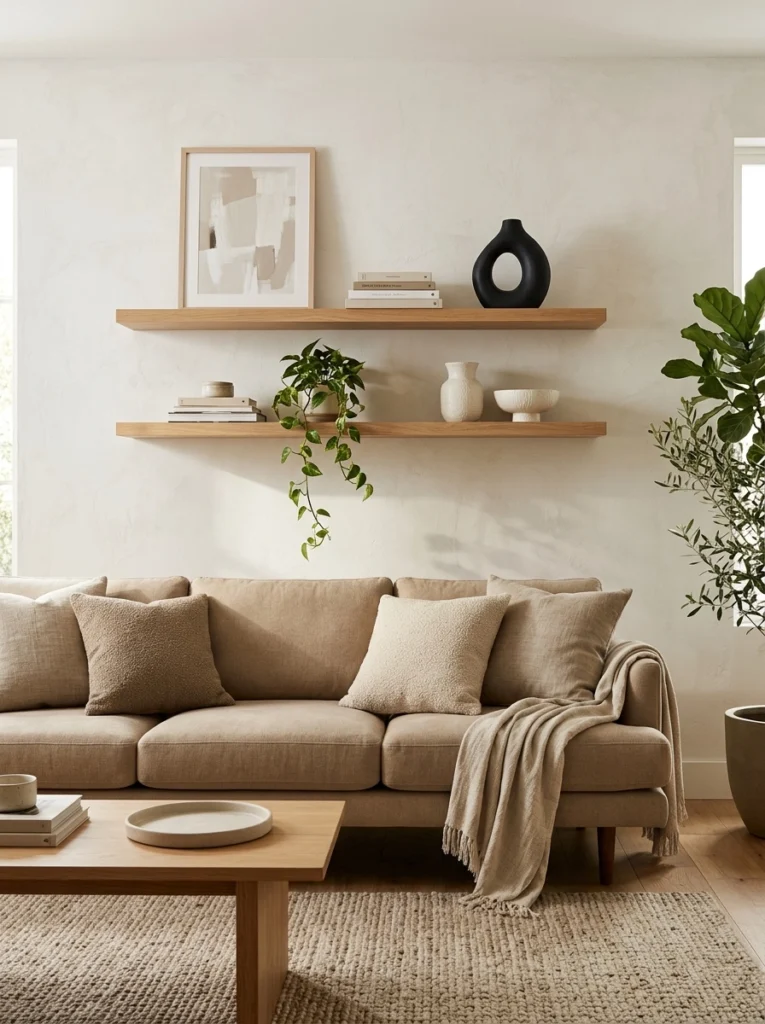
If you’re unsure where to start, combine the three things that work on almost any shelf: artwork, books, and greenery. A framed print gives the display height, books add structure, and a small plant introduces a softer shape. For $40 to $100, you can often assemble a basic arrangement using an affordable shelf, secondhand books, a small plant, and a thrifted frame. Begin with the largest item, such as a framed print leaned against the wall, then add a short book stack and place the plant at the opposite end. Finish with one small ceramic object if the shelf still feels empty. Leave visible gaps between each group so the display doesn’t turn into a row of unrelated items. Repeat one color, such as olive green or warm beige, across the shelf to make the arrangement feel connected. Keep the plant watered carefully and wipe any moisture from the shelf immediately. This simple formula is easy to adjust as your taste changes, and it works whether you’re decorating a first apartment or refreshing a family living room.
Mistakes That Ruin the Look
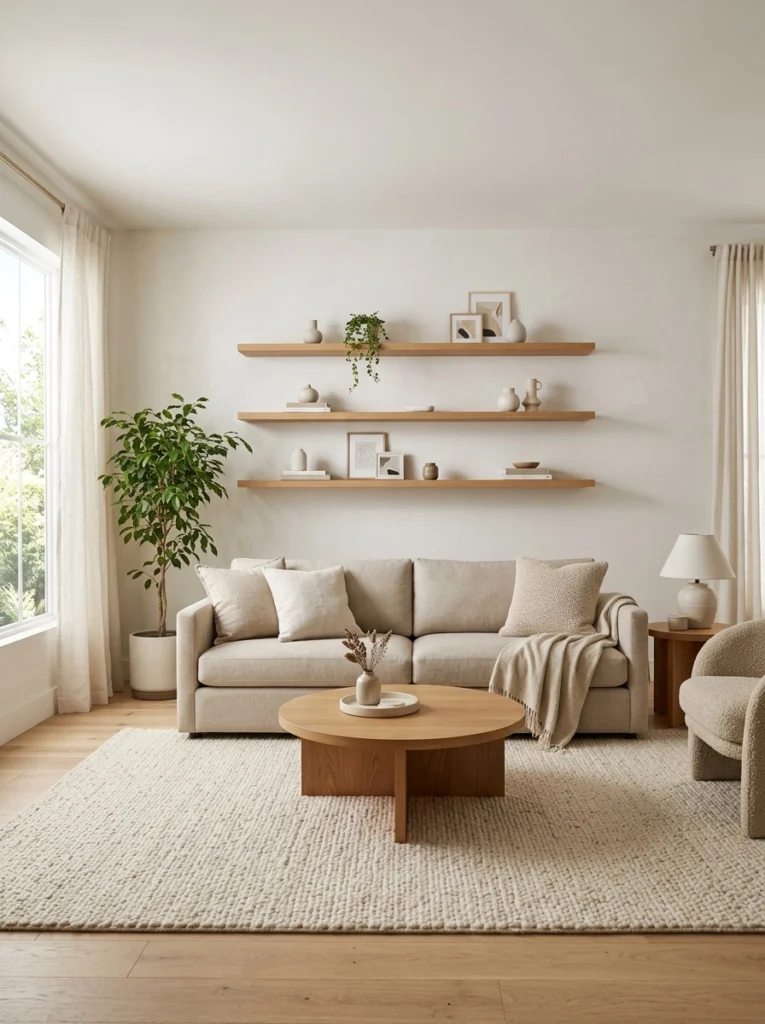
Even attractive shelves can look messy if the arrangement is too crowded or the installation isn’t right. Avoid these common mistakes before adding more accessories.
- Filling every inch of shelf space. Leave open gaps between books, pottery, and plants. Empty space helps each object stand out and keeps the display from looking like storage overflow.
- Choosing shelves that are too shallow or too weak. Measure your largest books and decorative objects before buying. Check the shelf’s load rating and use mounting hardware suited to the wall.
- Ignoring scale above the sofa. A tiny shelf arrangement can look lost above a large couch. Match the overall display width to the furniture beneath it without extending awkwardly beyond the sofa.
- Mixing too many finishes and colors. Repeat one or two materials, such as oak and brass, and limit the main palette. A consistent finish helps different objects feel connected.
Frequently Asked Questions
[Image Prompt: A welcoming living room with oak floating shelves, cream pottery, a few books, framed art, and green plants above a neutral sofa. Balanced natural daylight, tidy styling, eye-level view, no people, no text.]
[Alt Text: Floating shelf decor living room featuring practical storage and carefully arranged decorative accessories.]
Q: What are the best floating shelf decor living room ideas for small spaces?
The best floating shelf decor living room ideas combine useful storage with a few carefully chosen decorative pieces. Try narrow oak shelves, vertical arrangements, small plants, and picture ledges to keep the floor clear.
Q: How high should floating shelves be above a sofa?
A common starting point is around 10 to 14 inches above the sofa back, adjusted for the shelf depth and the height of the objects displayed. Measure your seating position and keep heavy or fragile objects securely mounted above the seating area.
Q: How do you decorate floating shelves without making them look cluttered?
Group objects in small collections, vary their heights, and leave open space between them. A simple mix of books, one framed print, a plant, and a ceramic object is often enough for a single shelf.
Q: What should I put on floating shelves in a living room?
Books, framed photographs, small plants, ceramic vases, woven baskets, and meaningful souvenirs are all practical choices. Select items that suit your shelf depth and weight rating, and repeat a few colors from the rest of the room.
Q: How much do living room floating shelves cost?
Basic floating shelves generally cost $20 to $70 each, while solid wood or custom shelves can cost $80 to $150 or more. The total depends on the number of shelves, mounting hardware, accessories, and whether you install them yourself.
Q: Can floating shelves hold heavy books and decor?
Yes, provided the shelves and mounting hardware are rated for the combined weight and are installed correctly. Locate wall studs when required, follow the manufacturer’s instructions, and keep heavy objects away from the front edge.
Give Your Living Room Wall a Little Personality

You don’t have to fill an entire wall or buy a cartload of accessories to get floating shelves right. Start with one sturdy shelf above a sofa or beside a favorite reading chair, then add a few things you already own. A stack of books, a framed print, and one small plant are plenty for your first arrangement. Once you see how the pieces look together, you can add another shelf or introduce a different texture, such as woven baskets or handmade pottery. The best floating shelf decor living room setups balance everyday storage with objects that make the space feel personal. This weekend, measure one wall, choose a shelf finish that suits your furniture, and gather three or four favorite items before shopping for anything new. A small, well-planned display can give your living room more character while keeping the floor clear and the room comfortable.