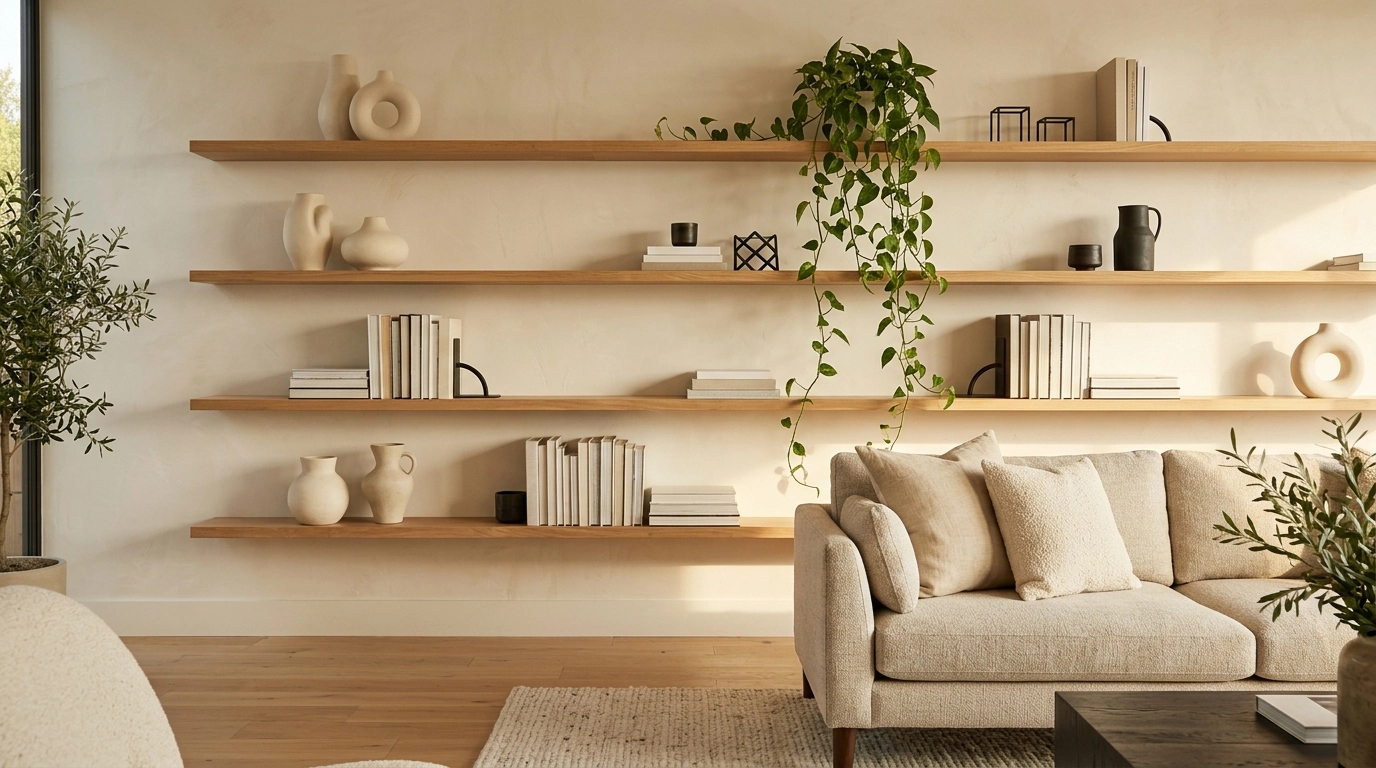
Ever look at your living room shelves and feel like something’s missing, even after you’ve spent money on cute accessories? You’re not alone. Sometimes the problem isn’t the furniture or the room size. It’s the way everything sits together, with too many small objects, mismatched colors, or shelves that don’t feel connected to the rest of the space.
The secret to modern shelf decor living room styling is keeping things intentional without making your home feel cold or empty. Start with a simple color palette, mix decorative objects with useful pieces, and leave a little breathing room between groupings. Whether you’re styling IKEA floating shelves or a full built-in unit, a few thoughtful changes can make your living room feel polished without a big decorating budget.
1. Style Oak Floating Shelves With Neutral Ceramics
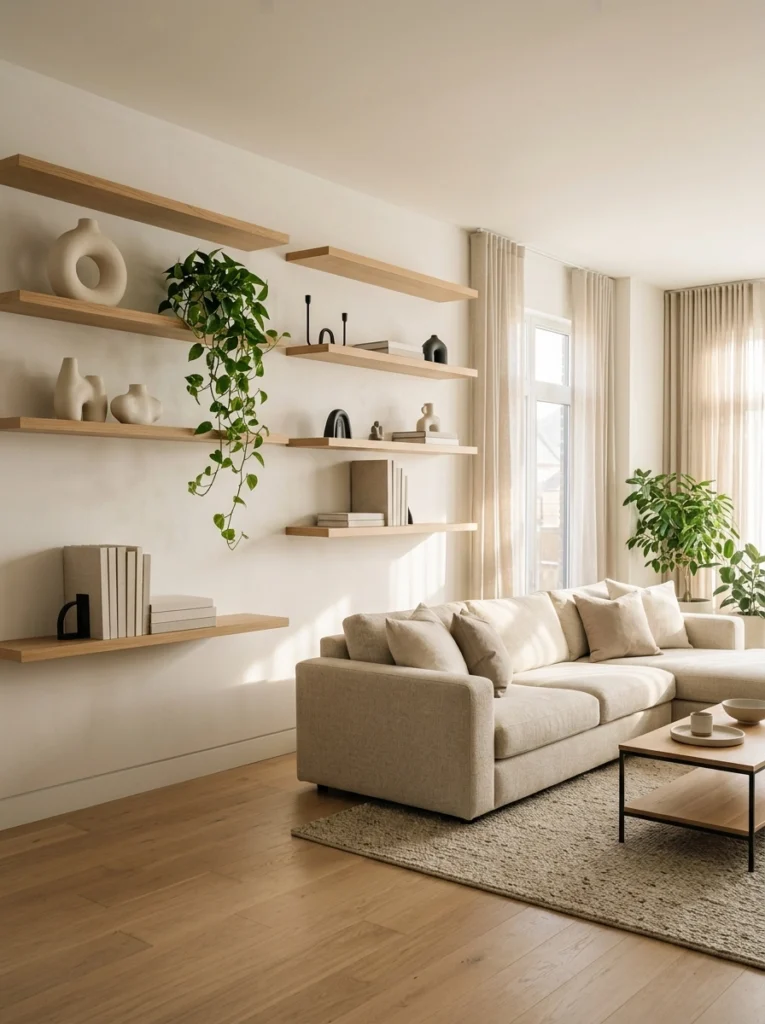
Oak floating shelves are a favorite for modern living rooms because they bring warmth to clean, simple interiors. Install two or three shelves in a staggered arrangement above a sofa or beside the television, choosing a natural oak finish that complements your flooring or coffee table. A pair of 36-inch shelves typically costs around $35 to $90, depending on the material and mounting hardware. IKEA, Target, and Amazon all offer affordable options.
For the decor, combine a rounded ivory vase, a short stack of art books, and a small black sculptural object. Keep the colors to cream, beige, pale wood, and charcoal so the arrangement feels coordinated. Leave a few inches of open space around each group instead of lining up objects from end to end. That empty space is what gives the shelves their sleek appearance. Dust the wood with a soft microfiber cloth and wipe ceramic pieces with a damp cloth when necessary. If you’re decorating a rental, choose shelves with mounting hardware approved for your wall type, or use a freestanding shelving unit instead.
2. Create an Asymmetrical Shelf Arrangement
Perfectly aligned shelves look tidy, but an asymmetrical layout adds movement without making a room feel busy. Try placing one 30-inch shelf above a 42-inch shelf, with both pieces shifted slightly to the left or right. The difference in length creates a natural focal point, especially on a plain wall that otherwise feels bare. Expect to spend $40 to $100 for two quality shelves, including basic mounting hardware.
Style the longer shelf with two books, a low bowl, and a small framed print. On the shorter shelf, use a single vase or a compact plant. The trick is to balance the visual weight of each arrangement rather than matching the number of objects. A tall vase on one side can balance a wider stack of books on the other. Before drilling, mark the shelf positions with painter’s tape and step back to check the spacing from the sofa. Keep heavier items near the brackets or supported areas, and use wall anchors suited to your wall construction. This layout works especially well in apartments where a full bookcase would take up valuable floor space.

3. Mix White Shelves With Pale Wood Accents
White shelving can look a little flat on its own, particularly against white walls. The easy fix is to introduce pale wood through picture frames, small trays, wooden beads, or a carved bowl. These details add texture while keeping the room light and uncluttered. A pair of white shelves from Walmart or IKEA generally costs around $25 to $70, while small wood accessories often cost $8 to $25 each.
Try a simple arrangement with a light wood frame on the upper shelf, a white ceramic vase on the lower shelf, and a shallow wooden bowl holding a few decorative spheres. Repeat the wood tone somewhere else in the room, perhaps on a side table or the legs of an accent chair. That small connection makes the shelving feel like part of the overall design rather than an isolated decorating project. Avoid mixing too many wood finishes at once. One pale oak tone and one white finish are plenty for a small living room. For easy upkeep, choose sealed wooden accessories that can be wiped clean without leaving water marks.
4. Give Black Metal Shelving a Softer Finish
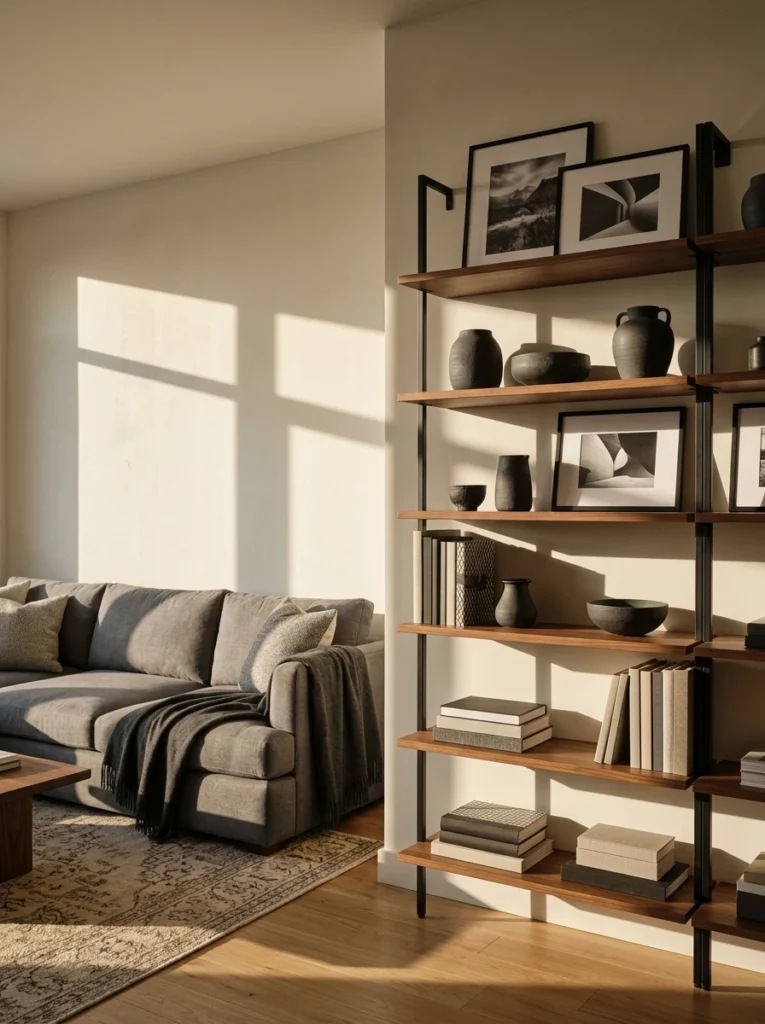
Black metal shelving adds a crisp architectural look, but an entire display of black objects can feel heavy. Soften the frame with warm wood shelves, cream pottery, and a couple of books with neutral covers. A five-shelf metal bookcase often costs $60 to $150, depending on its height and construction, making it a practical option for renters who don’t want to install floating shelves.
Start with the largest pieces first. Place a small stack of books on the bottom shelf, a rounded cream vase in the middle, and a framed print near the top. Add a small plant to introduce a natural shape that breaks up the straight metal lines. Keep the heaviest objects on lower shelves to make the arrangement feel grounded and reduce the risk of tipping. If the bookcase is tall, use its anti-tip hardware, particularly in homes with children or pets. A black frame also hides minor scuffs better than some light finishes, and it works nicely with black curtain rods, lamp bases, or picture frames elsewhere in the room.
5. Use Oversized Books as the Main Decoration
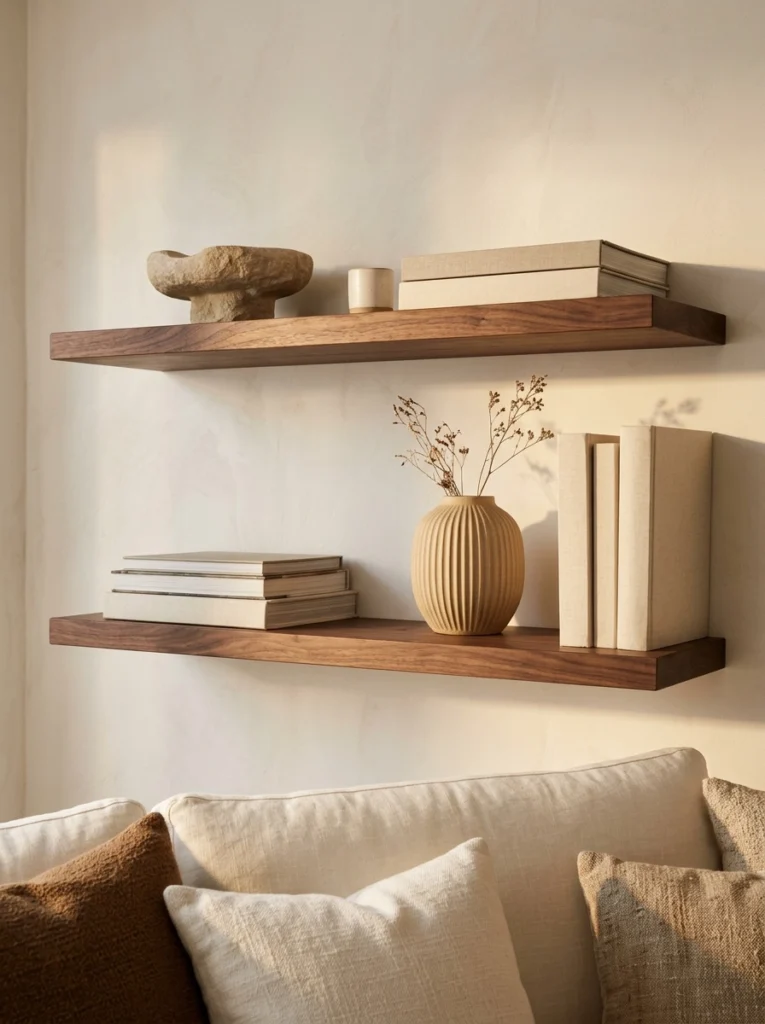
A few large books can make a shelf feel thoughtfully styled without requiring a shopping trip for lots of accessories. Choose interior design books, photography collections, or books you already own with attractive covers. Stack two or three horizontally, then place a small ceramic object on top. You can create the look for $0 to $50 by using your existing collection or picking up inexpensive secondhand books from thrift stores.
The important detail is scale. Large books hold their own on deep shelves, while tiny paperbacks often disappear visually against a broad wall. On a shelf that’s 10 to 12 inches deep, leave enough room for the book stack to sit securely without hanging over the edge. Alternate horizontal stacks with a few upright books to give the arrangement a more relaxed rhythm. If the covers clash with your palette, turn the spines inward or use simple neutral book jackets, provided the books are your own. Avoid buying decorative books solely for their appearance if you can achieve the same effect with titles you enjoy reading. Dust the tops of the stacks regularly, especially if the shelves sit near a television or open window.
6. Make Built-In Shelves Look Custom With Repeated Colors
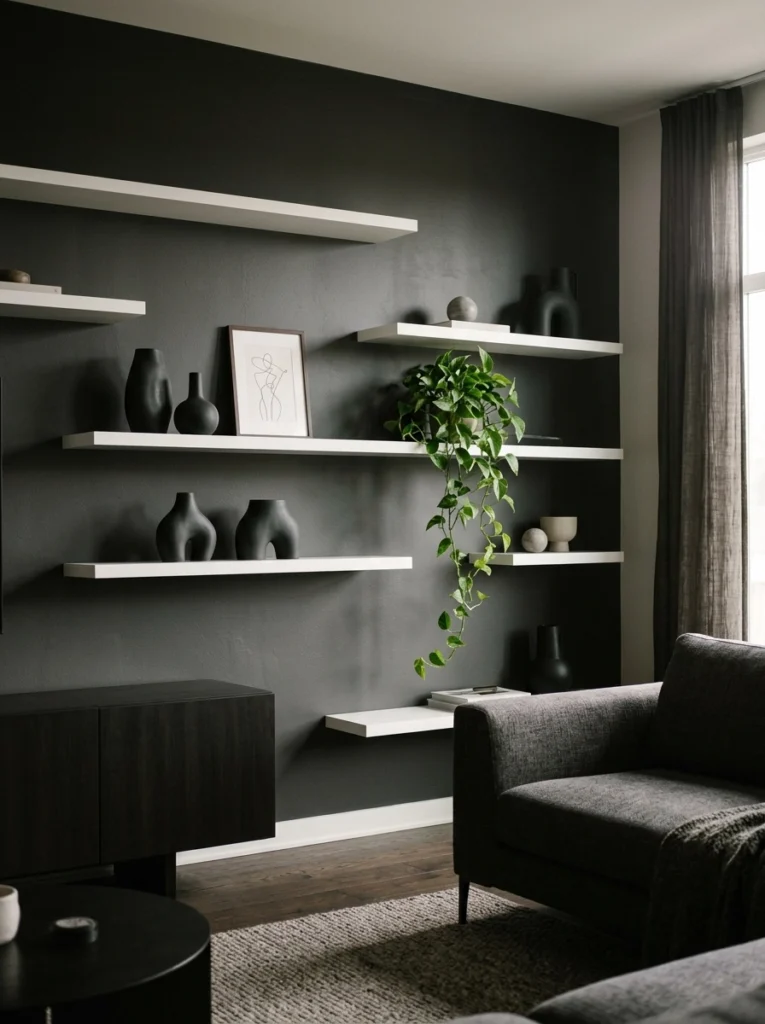
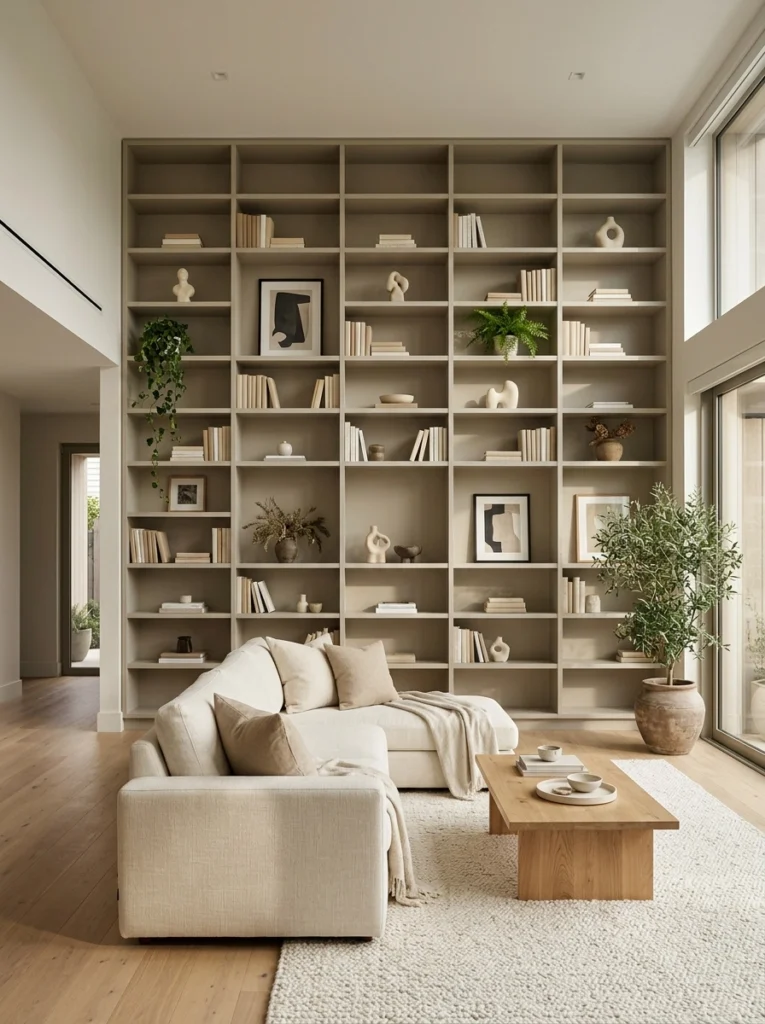
Built-in shelves often look more expensive when their contents follow a consistent palette. Choose three main colors, such as warm white, walnut brown, and black, then repeat them throughout the display. You don’t have to buy an entirely new collection. Rearrange what you own first, grouping similar objects together and removing anything that fights the palette. A small refresh can cost $20 to $80 for a few thrifted accessories, matching frames, or a new decorative bowl.
Use the upper shelves for lighter objects, including pale ceramics and small framed prints. Place darker books and substantial storage boxes on lower shelves, where they help anchor the arrangement. Leave some compartments almost empty so the entire wall doesn’t resemble a packed storage closet. If the shelves have adjustable heights, move one or two pins to accommodate a taller vase or an oversized art book. Matching every accessory isn’t the goal. Repeating a few colors is enough to make different materials and shapes feel connected. Wipe the shelves before restyling, since dust along the back corners becomes obvious once objects are grouped together.
7. Keep TV Wall Shelves Clean and Minimal
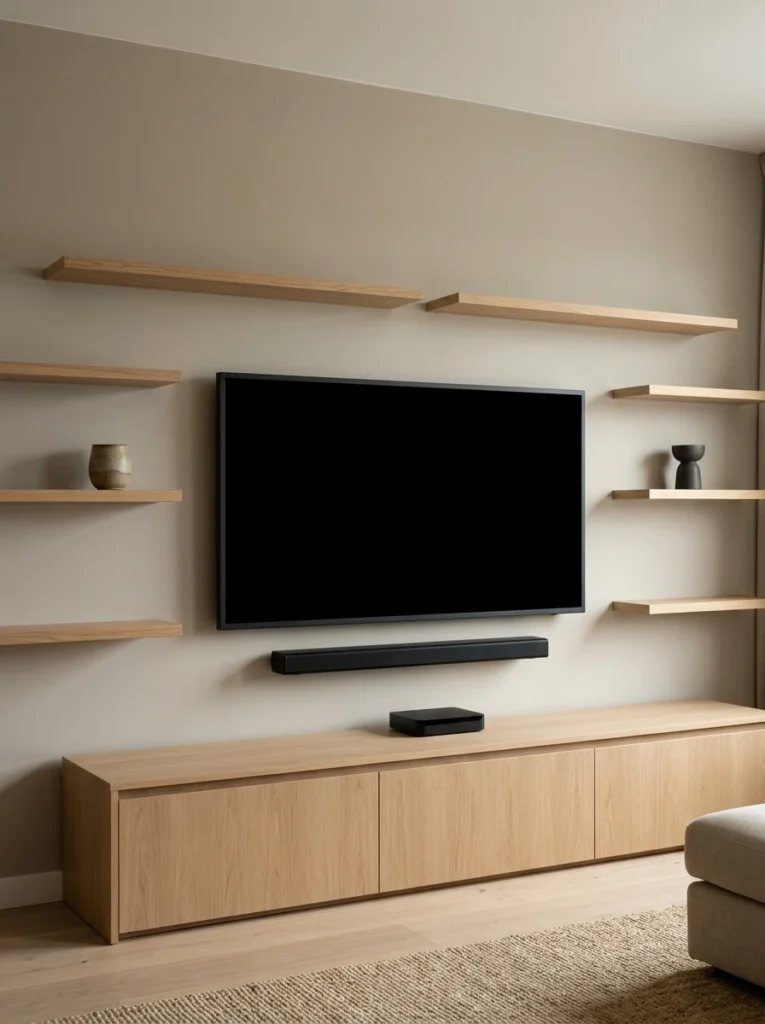
The wall around a television is easy to overcrowd because the screen already draws plenty of attention. Keep the surrounding shelves simple, using one small plant, a low ceramic bowl, and perhaps a short stack of books. For a coordinated setup, two shelves measuring 24 to 36 inches can cost about $30 to $90. Choose a finish that matches the media console, or use a contrasting natural wood tone against a darker wall.
Leave space around the television instead of placing accessories right against its edges. That breathing room makes the screen feel less dominant and keeps the arrangement easy to clean. Hide visible cables with a suitable cable-management kit, generally available for $10 to $25 at Home Depot or online. Check the television and device manufacturers’ ventilation instructions before placing anything near heat-producing equipment. Keep decor away from vents and avoid balancing fragile objects above the screen. A simple setup also makes dusting easier, which matters around electronics. If your console already has several drawers and cabinets, use the shelves for display rather than adding more storage bins that compete visually with the television.
8. Turn an Empty Corner Into a Small Display
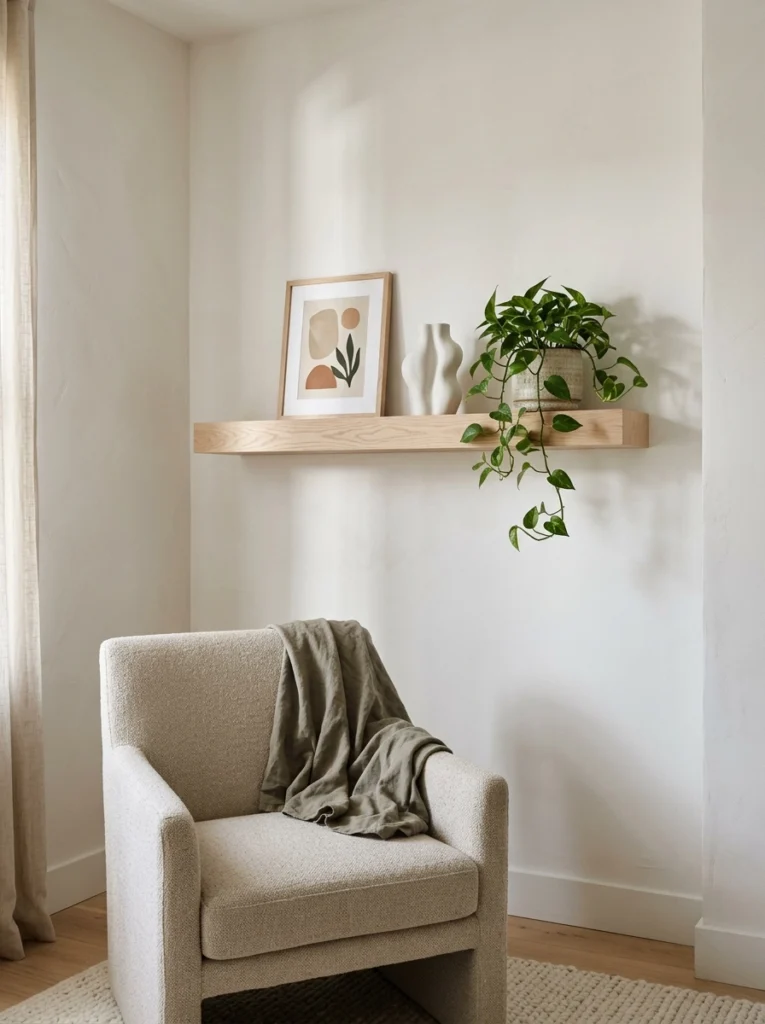
A bare living room corner doesn’t always call for another chair or floor lamp. A single floating shelf can give it purpose without taking up walking space. Install a shelf approximately 24 to 30 inches wide for $20 to $55, then style it with a small framed print, one rounded vase, and a compact plant. This works particularly well beside an armchair, near a reading nook, or in a narrow apartment living room.
Keep the objects low enough that the shelf doesn’t feel top-heavy. If you want a taller look, hang the shelf slightly above eye level and place the artwork a little higher, leaving clear space between the two. Avoid putting the shelf where someone walking through the room could bump into it. Before drilling, check for wall studs, wiring, and pipes, and choose hardware appropriate for the shelf’s load. A corner display also gives you a place to rotate seasonal decor without changing the rest of the room. Swap the plant for a small sculptural branch in winter, then bring back greenery in spring. The shelf stays the same, but the room gets a subtle update.
9. Layer Framed Art on Picture Ledge Shelves
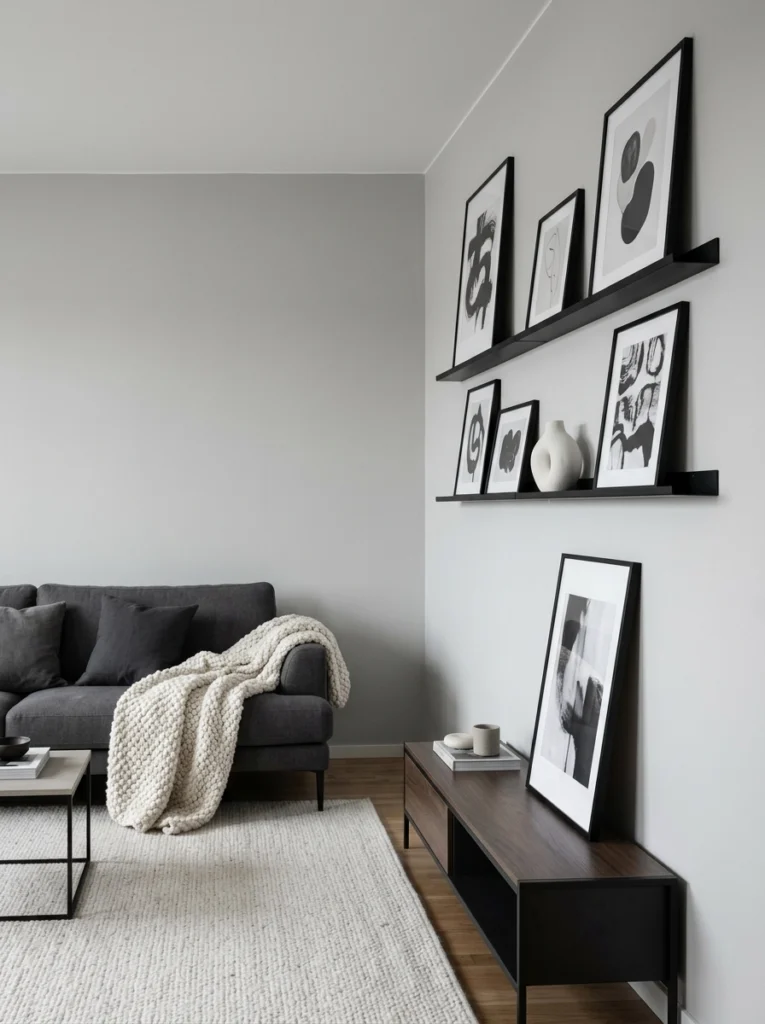
Picture ledges are ideal for anyone who likes changing artwork without patching new holes every few months. Mount two narrow ledges above a sofa or along a hallway-style living room wall, then overlap a few framed prints in different sizes. A 24- to 36-inch picture ledge usually costs $15 to $45, while inexpensive frames from IKEA or Target can run around $8 to $25 each.
For a sleek look, combine one larger abstract print with two smaller photographs or line drawings. Stick to black, white, and natural wood frames so the overlapping arrangement feels intentional. Keep the front edges of the frames aligned with the ledge and avoid stacking so many that the artwork becomes difficult to distinguish. Add a small vase at one end if there’s enough room, but don’t let accessories compete with the images. Picture ledges work especially well for renters who enjoy updating their decor throughout the year. Secure the ledges properly and check their weight limits before adding framed glass. Dust the top edges of the frames regularly, since those narrow surfaces collect more dust than you’d expect.
10. Add One Statement Plant to Break Up Straight Lines
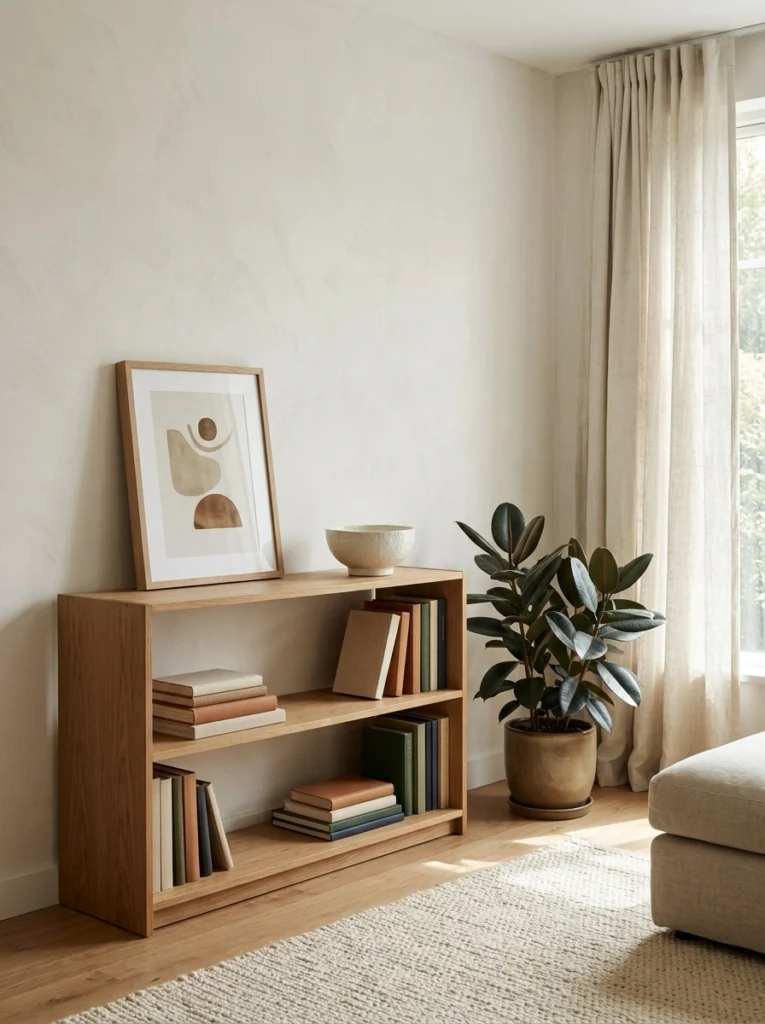
Plants bring an organic shape to shelves filled with rectangular books and straight edges. Choose a pothos, heartleaf philodendron, or another trailing houseplant suited to your home’s light conditions. A small nursery plant typically costs $8 to $25, while a simple ceramic planter may add another $10 to $30. Place the plant near one end of a shelf where its leaves can hang naturally without covering books or artwork.
The best arrangements use greenery sparingly. One trailing plant often does more for the overall display than several tiny pots scattered across every shelf. If your living room gets bright indirect light, a pothos can work well on a high shelf, but keep it within reach for watering and pruning. Homes with dim corners may be better served by a compact low-light plant or a realistic faux option. Use a waterproof saucer or cachepot to protect the shelf from moisture rings. Wipe the leaves occasionally with a damp cloth to remove dust, and trim long vines before they cover neighboring decor. For homes with pets, check plant safety before bringing any variety indoors.
11. Hide Everyday Clutter in Matching Storage Baskets
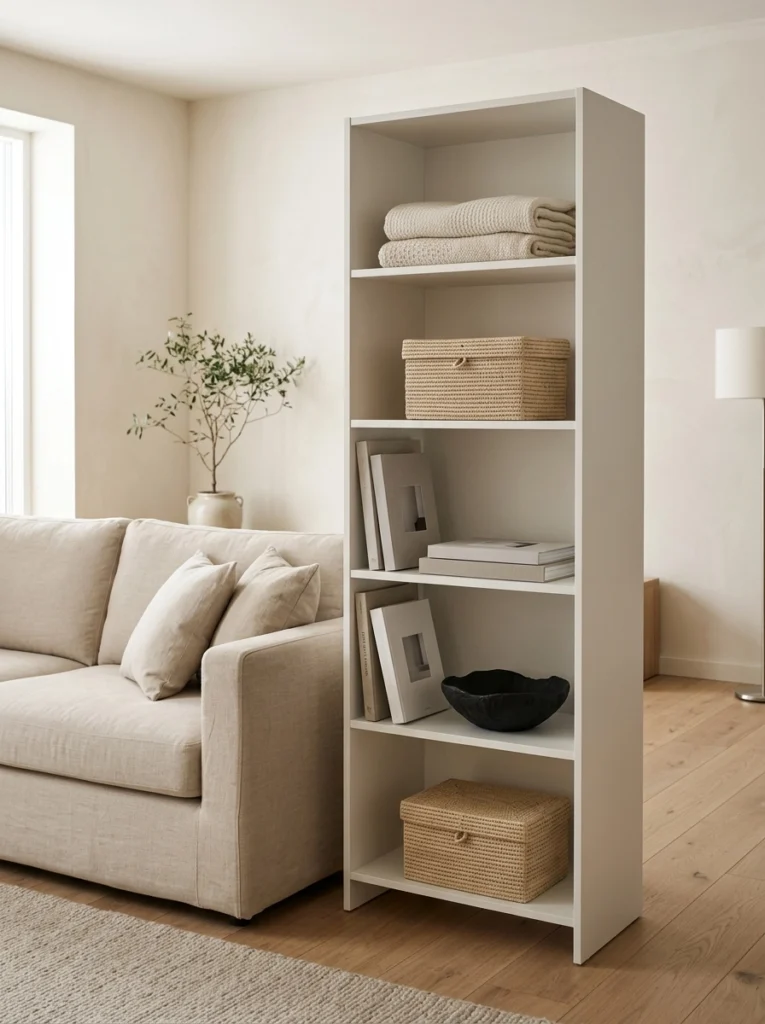
Not every shelf item should be decorative. Remote controls, charging cables, spare coasters, and small household supplies are easier to manage when they have a dedicated home. Use matching fabric bins or woven baskets on the lower shelves, then reserve the upper levels for display. Expect to pay $10 to $30 per basket at Target, Walmart, or IKEA, depending on the size and material.
Measure each shelf opening before shopping. A basket that’s just an inch too wide can leave you with an awkward gap or a piece that sticks out beyond the frame. Neutral canvas, seagrass, and woven paper baskets work well with contemporary furniture because they add texture without introducing loud colors. Keep frequently used items in the easiest-to-reach baskets, and label the inside edge if several bins look identical. Avoid stuffing every compartment full. Leave at least one open area for a decorative piece or a small stack of books. For dusty living rooms, removable fabric liners make cleaning easier, while smooth plastic bins inside closed cabinets are better for items that need extra protection.
12. Display Sculptural Ceramics Instead of Lots of Trinkets
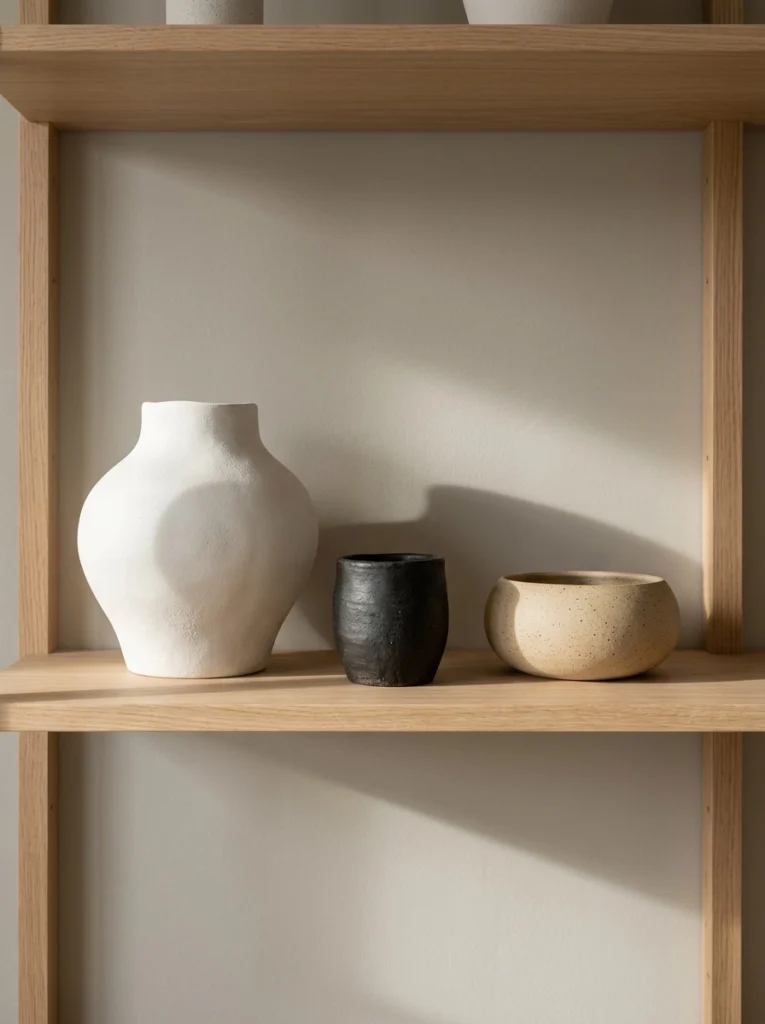
A single sculptural vase can have more impact than a dozen small decorative objects. Look for rounded forms, uneven handmade finishes, or matte surfaces in ivory, charcoal, terracotta, or sand. Affordable options from Target and Walmart often cost $12 to $35 per piece, and thrift stores are worth checking for unusual shapes at lower prices.
Choose one large vessel, one smaller companion piece, and a shallow bowl rather than buying a matching set of identical objects. The slight differences in height and shape give the shelf character. Arrange the pieces in a loose triangle, with the tallest object toward the back and the shorter ones slightly forward. This creates depth without filling every inch. If the shelf is narrow, choose a vase with a stable base and avoid anything that projects too far over the edge. Matte ceramics are easy to maintain with a dry or slightly damp cloth, although textured finishes may need a soft brush to remove dust. Keep the rest of the shelf relatively quiet so the sculptural pieces remain the focus.
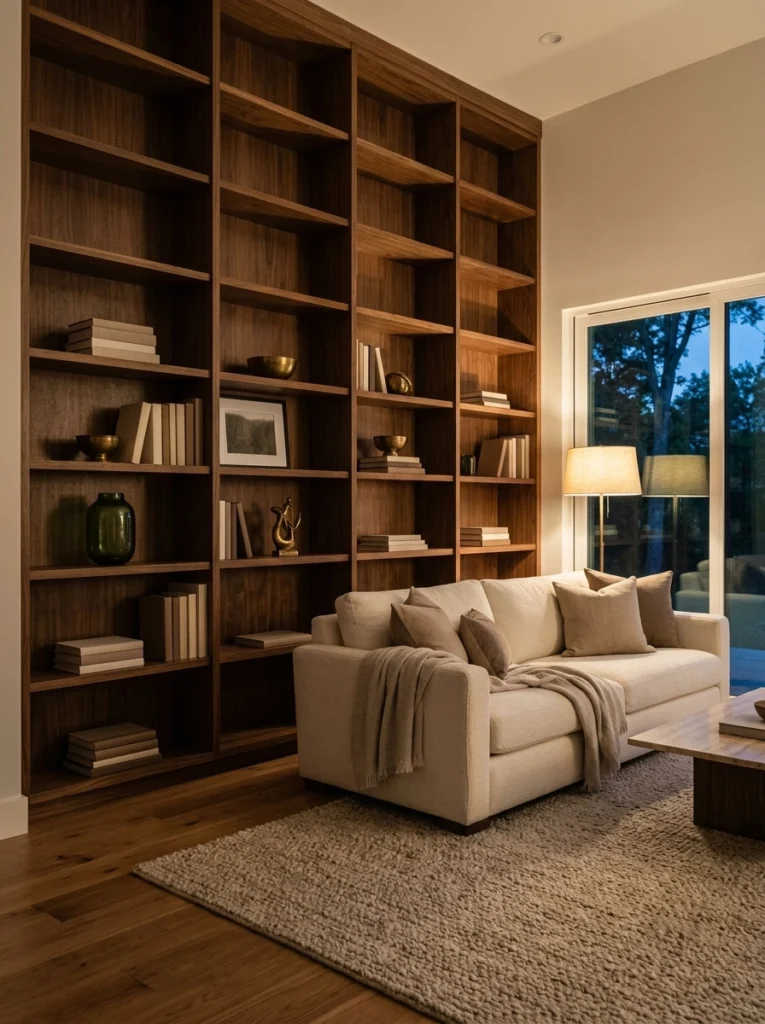
13. Mix Vintage Finds With Contemporary Accessories
Modern shelves don’t have to look like everything came from the same store. A vintage brass candlestick, an old hardback book, or a small secondhand bowl can add personality to a clean contemporary arrangement. Set a budget of $20 to $60 for two or three thrifted pieces, and browse local thrift stores or Facebook Marketplace before paying full price for decorative accessories.
Pair the older item with something simple and current, such as a matte-white vase or a black metal frame. That contrast keeps the arrangement from looking overly traditional. For example, a small brass object looks especially good beside a modern art book with a neutral cover. Choose pieces with different shapes rather than collecting several similar ornaments. Check secondhand items for chips, loose parts, corrosion, or odors before bringing them home. Metal pieces can often be cleaned with a soft cloth, but check the finish before using polish. Keep sentimental finds limited to a few favorites so the shelf still feels edited. The best part is that your decor develops a story over time instead of looking like a showroom display.
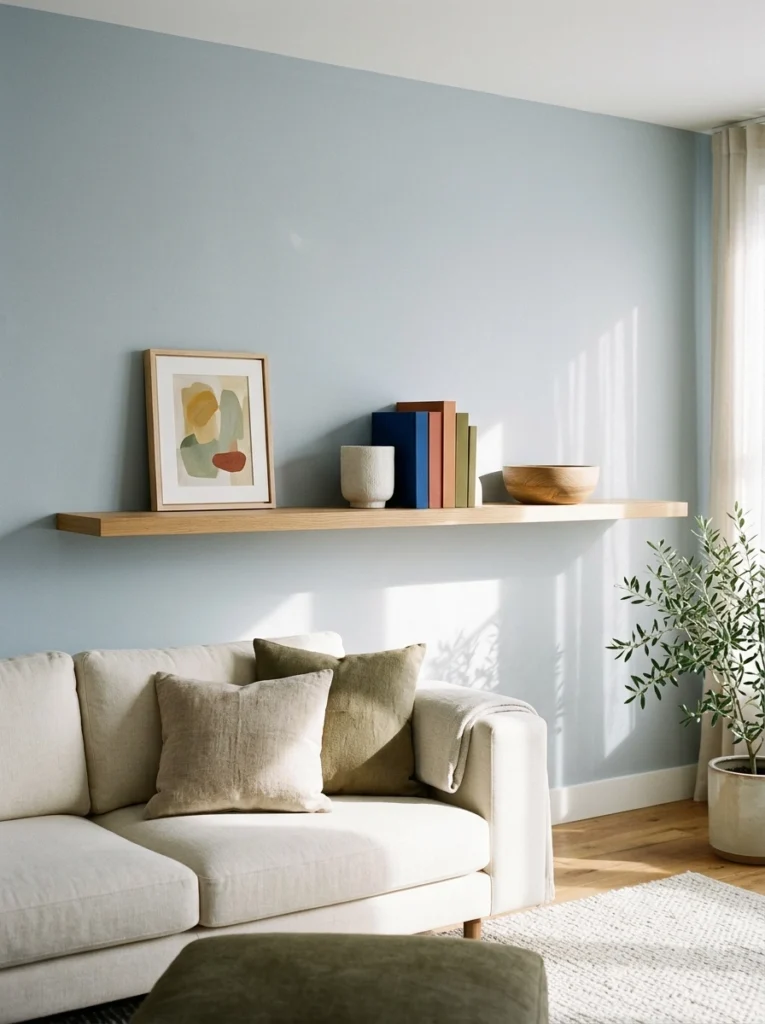
14. Introduce a Small Dose of Color Through Books and Art
A neutral room can feel more personal with a few controlled color accents. Choose one or two shades that already appear in your cushions, rug, or artwork, then repeat them on the shelves. Muted olive, dusty blue, rust, and burgundy work well with warm wood and cream. You can refresh an existing display for $15 to $50 by adding a secondhand art print, a colorful book, or one small glazed vase.
Start with the artwork or book covers, then add a single object in a related color. If your sofa has dusty blue cushions, for instance, place a small blue ceramic bowl beside a book with a similar tone. Keep the remaining accessories neutral so the accent colors don’t compete for attention. A common mistake is introducing five unrelated colors simply because each object looks good by itself. Instead, repeat one color in two or three places and leave the rest of the shelf quiet. This approach is easy to update seasonally, too. Switch the accent objects rather than repainting the room or replacing the shelving.
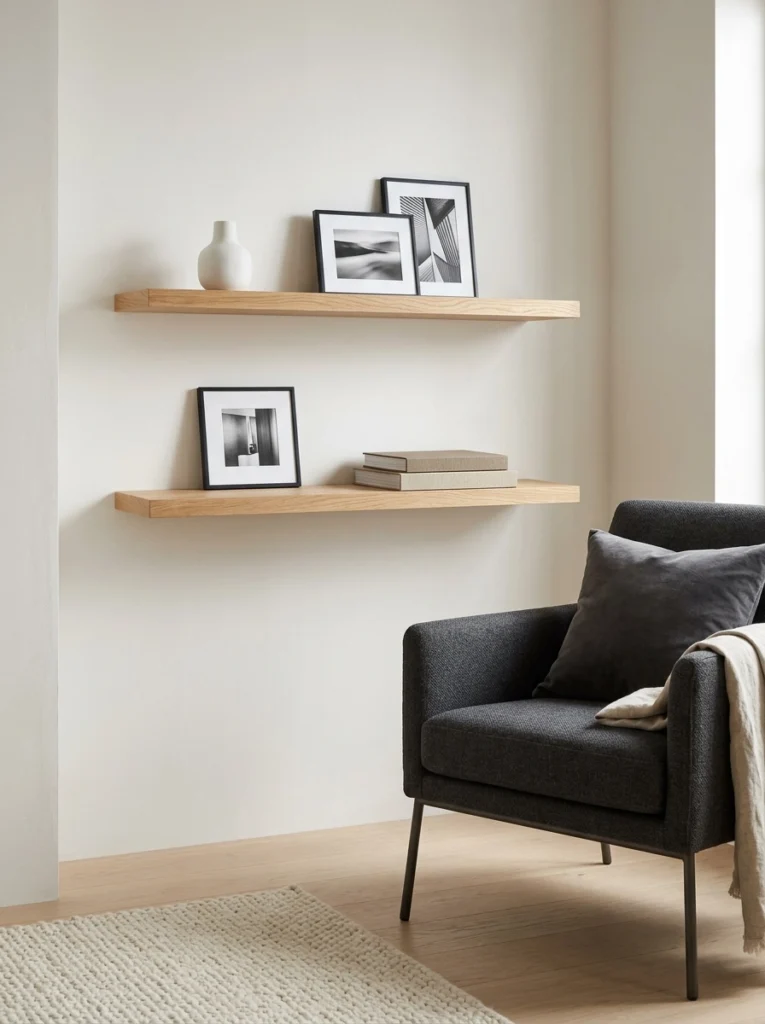
15. Build a Small Black-and-White Gallery Display
Black-and-white photography is an easy way to give shelves a more editorial look. Collect three to five prints featuring architecture, landscapes, or simple abstract shapes, and place them in thin black frames. For a budget-friendly arrangement, five small frames can cost around $40 to $100, depending on their dimensions and whether you use ready-made prints or your own photographs.
Lean two frames against the wall and place the others on an adjacent shelf or picture ledge. Vary the frame sizes slightly so the arrangement feels collected rather than rigid. A small white vase or black bowl can sit nearby, but skip colorful accessories that distract from the artwork. This idea works especially well against white, gray, or pale beige walls. If you use glass frames, check that each shelf can support the weight and secure the frames where necessary. Clean glass with a suitable cloth, spraying cleaner onto the cloth rather than directly over wood shelves. For a cohesive look throughout the home, repeat one or two of the same frame styles in the hallway or bedroom.
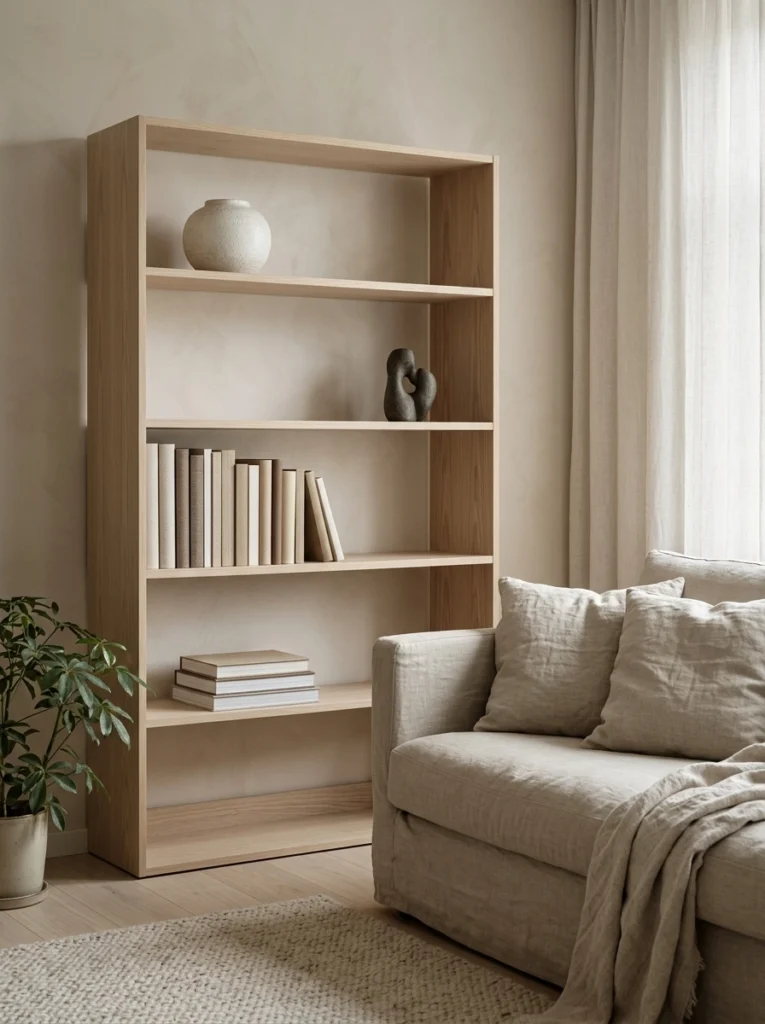
16. Alternate Vertical Books With Horizontal Stacks
Bookshelves look more interesting when every book isn’t standing upright in a single row. Create short groups of vertical books, then add a horizontal stack beside each group. Finish one stack with a small bowl or compact sculpture. If you already own the books, this arrangement can cost nothing. A pair of inexpensive bookends from IKEA or Amazon generally adds $8 to $25 if your books need extra support.
Arrange the books by height rather than trying to match every spine color. You can still create a coordinated appearance by keeping the tallest books toward the ends and using horizontal stacks to fill shorter gaps. Avoid packing the shelf so tightly that books are difficult to remove. Leave a little space at either end of each group, especially if you want to add an object. If the shelves are deep, place the books slightly toward the back and bring one decorative piece forward to create depth. Dust the tops regularly and check that heavier books sit on shelves rated for their weight. This is a practical way to make a collection of ordinary books look intentional without hiding the titles you actually use.
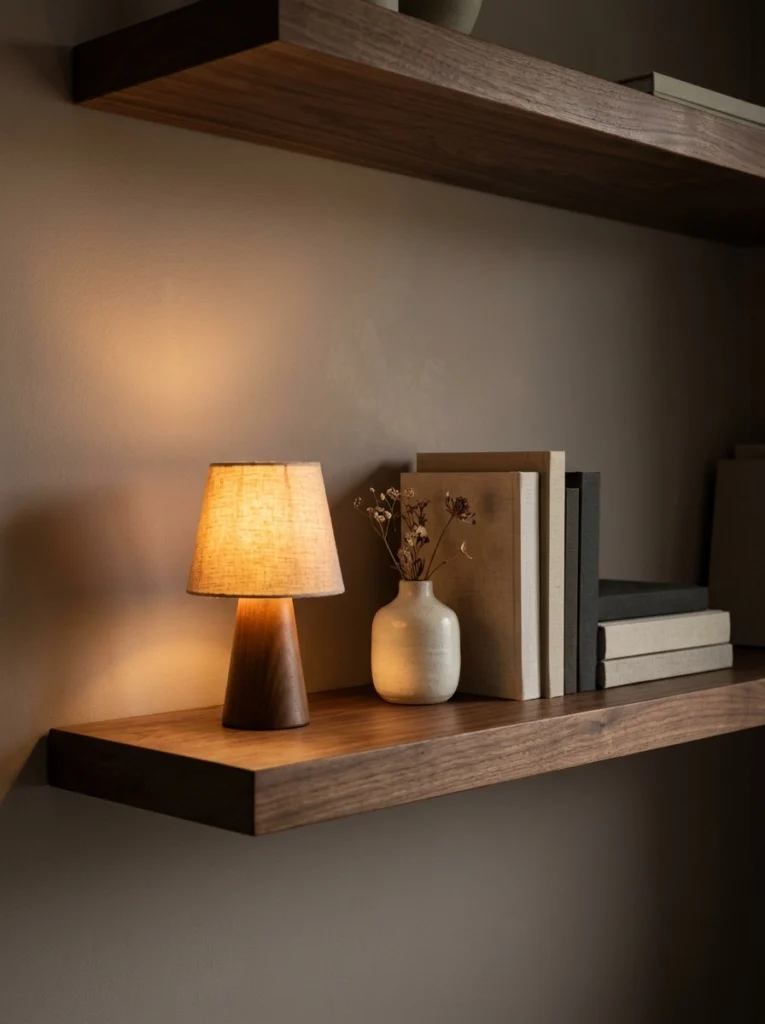
17. Add a Small Lamp for Warm Evening Light
Decorative lighting makes shelves feel inviting after sunset, particularly in living rooms with only one overhead fixture. Choose a compact table lamp with a fabric shade, a small rechargeable lamp, or a battery-operated accent light suited to the location. A small decorative lamp usually costs $20 to $60, while rechargeable designs vary by brightness and battery life.
Place the lamp on a sturdy shelf with enough depth to support its base. Pair it with one or two books and a simple vase, leaving the surrounding area open so the light has room to spread. Warm white lighting around 2700K generally gives living rooms a cozy evening feel. Before buying, check the lamp’s dimensions, power source, and charging arrangement. Avoid running cords where they can be pinched by shelves or pulled accidentally, and follow the manufacturer’s clearance instructions for lamps that generate heat. If the shelf is too narrow for a lamp, use a nearby wall sconce instead. The goal is a small pool of light that adds depth to the wall, not a shelf crammed with multiple glowing gadgets.
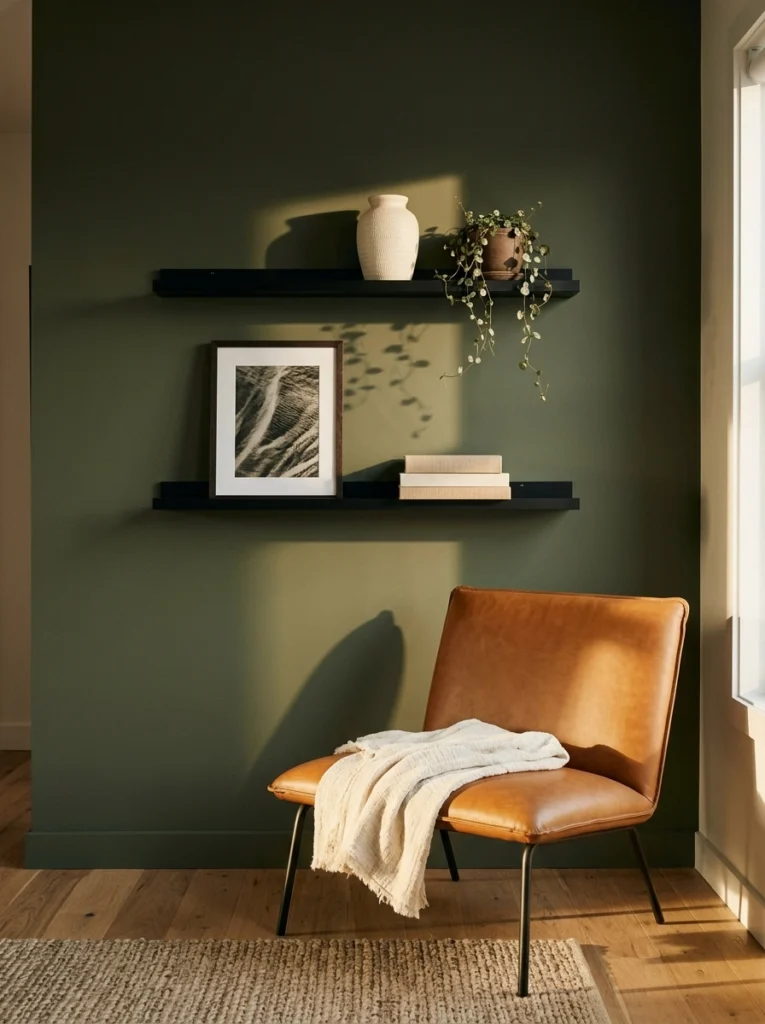
18. Use an Accent Wall to Make Simple Shelves Stand Out
If your shelves look plain against a large blank wall, changing the wall color can make a bigger difference than buying more accessories. Paint the shelving wall muted olive, warm taupe, or charcoal, then keep the objects on the shelves relatively simple. A gallon of interior paint often costs around $30 to $60, although coverage, finish, and brand affect the final price.
Before painting, test a sample beside your sofa and check it in both daylight and evening lighting. Deep colors work well with pale oak, ivory pottery, and black frames, while muted greens look especially good with warm wood and leafy plants. If you’re renting, use removable wallpaper where the wall finish allows it, or create contrast through a large fabric wall hanging instead. Avoid choosing a color that clashes with permanent flooring or large furniture pieces. Once the wall has more visual weight, you can reduce the number of accessories on the shelves. That’s part of what makes this idea so useful: the wall becomes the backdrop, and the objects no longer have to do all the decorating.
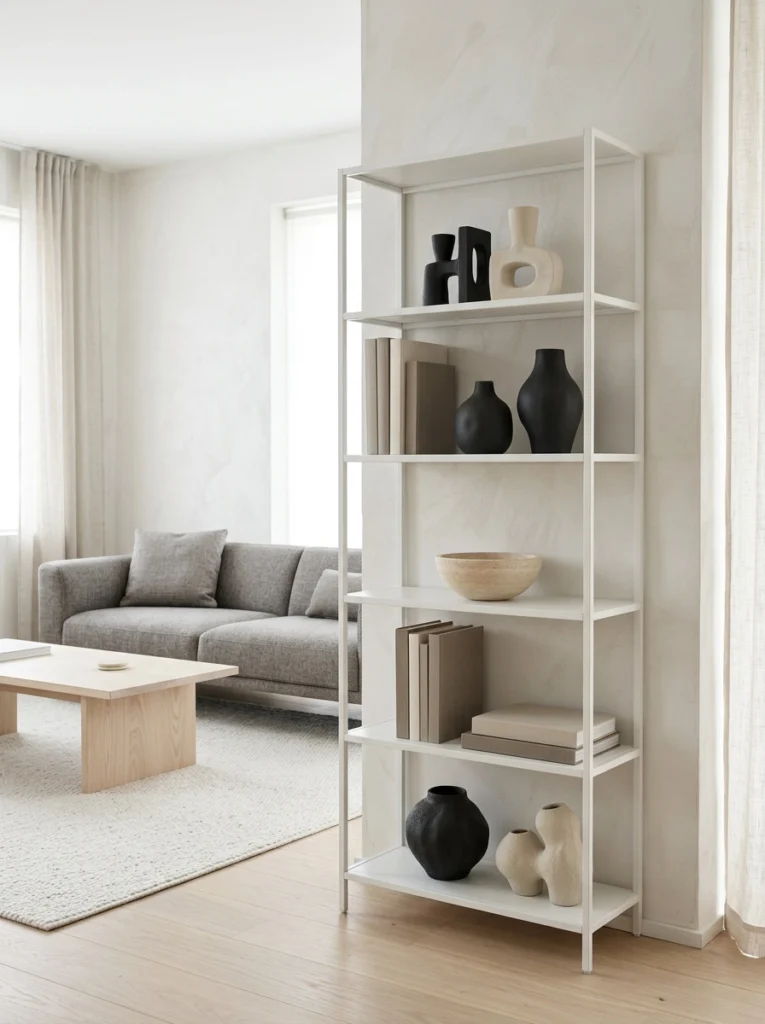
19. Try a Strict Three-Object Arrangement
Sometimes the best way to improve crowded shelves is to remove almost everything. Choose three pieces with different heights and shapes, such as a tall vase, a small framed print, and a low bowl. Place them in a loose grouping with space between each object. You can make this arrangement for $0 to $40 by using accessories you already own or buying one new piece to complete the set.
The three objects shouldn’t be identical in scale. A tall vertical shape, a flat rectangular frame, and a rounded bowl create a more balanced display than three similar vases. Place the tallest item toward the back, angle the frame slightly if it’s designed to lean, and keep the bowl near the front. This creates depth while preserving open shelf space. The idea works especially well on narrow floating shelves or above a sofa, where too many objects can feel visually distracting. If the arrangement looks lopsided, shift the grouping rather than adding another accessory. A little empty space is part of the design, not a sign that you’ve forgotten to finish decorating.
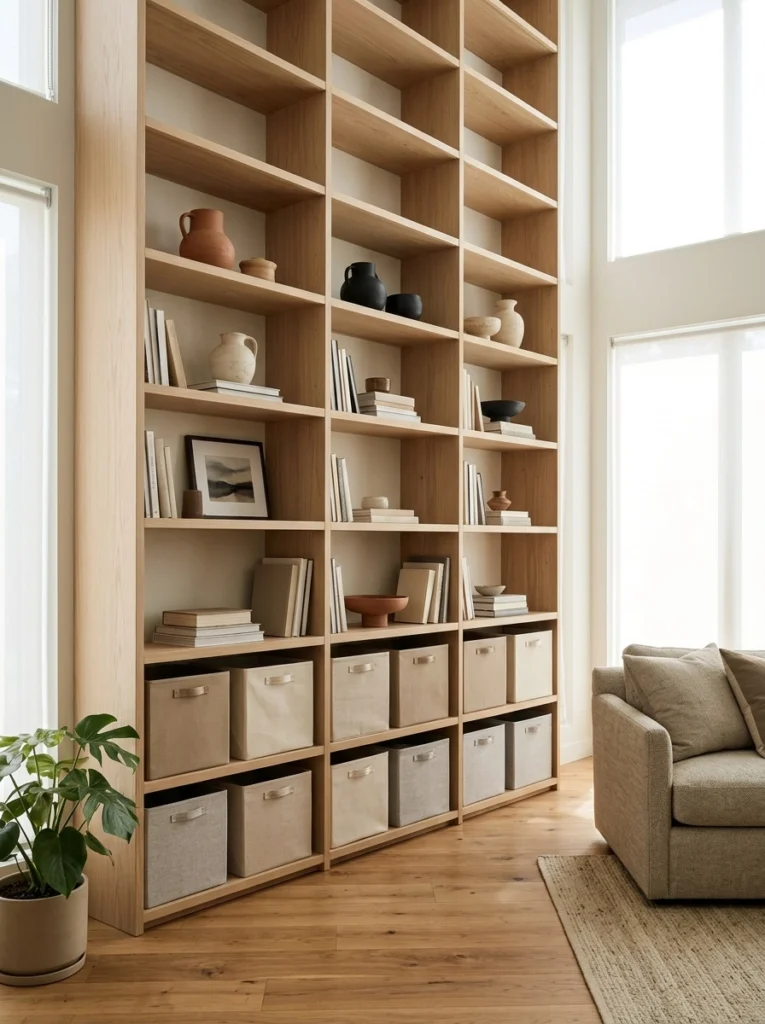
20. Take Shelves All the Way to the Ceiling
Tall shelving draws the eye upward and makes use of wall space that often goes unused. A floor-to-ceiling bookcase is especially useful in compact living rooms where adding another cabinet would crowd the floor. Budget-friendly freestanding units generally cost $100 to $350, depending on height, width, finish, and construction. IKEA and Walmart offer basic options, while custom built-ins cost considerably more.
Choose a unit that fits the wall width without blocking windows, vents, or doorways. Keep everyday items and heavier books on lower shelves, then reserve upper shelves for lightweight baskets and less frequently handled decor. Repeating the same few colors across the full height helps the arrangement feel calm instead of cluttered. If you can’t find a unit that reaches the ceiling, use a tall bookcase with a small amount of open wall above it rather than adding unstable extensions. Secure tall furniture to the wall using the supplied anti-tip hardware. This is particularly important in households with children or pets. Measure the ceiling height and check the delivery dimensions before ordering, since stairways and door openings can be tighter than the living room itself.
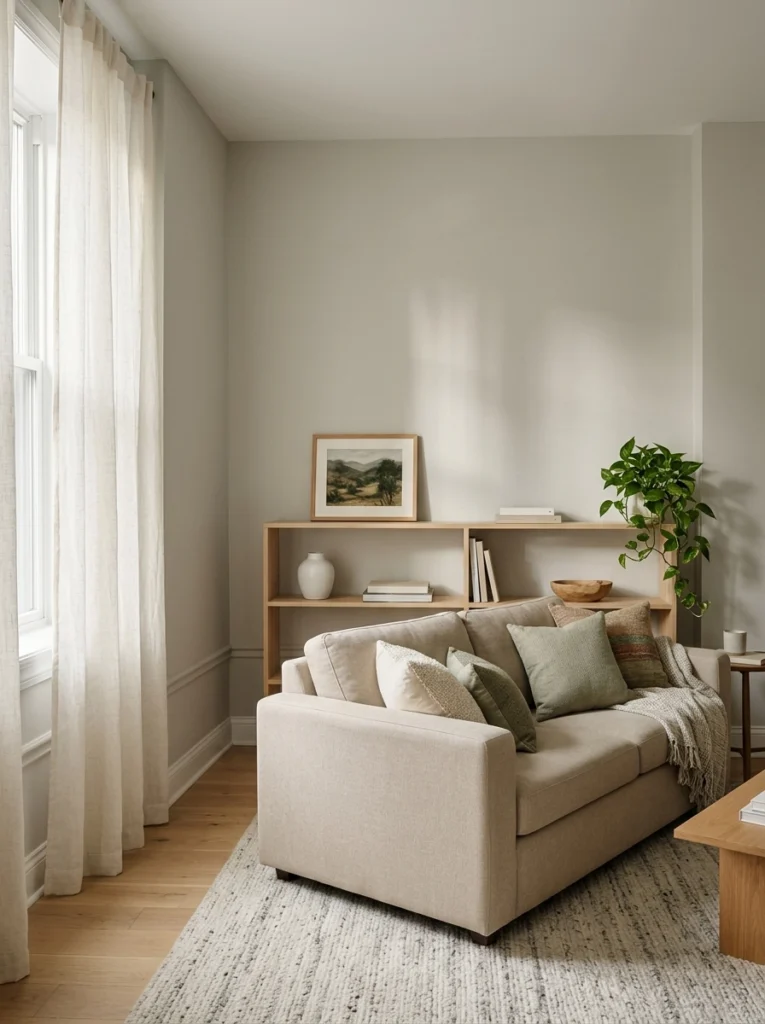
21. Decorate the Wall Behind Your Sofa
The wall behind a sofa is prime display space, but the shelves should be shallow enough to keep the seating area comfortable. Choose ledges around 6 to 8 inches deep for books, small frames, and lightweight decorative pieces. A pair of shelves can cost around $35 to $100, depending on length and finish.
Mount the shelves high enough to avoid making the sofa feel boxed in, and check the full arrangement while seated. A large framed print can anchor the top shelf, while a small plant and two books balance the lower one. Keep objects with sharp corners or unstable bases away from the front edge, particularly if people regularly lean against the sofa. For a more cohesive look, repeat the sofa’s accent color in one small shelf accessory rather than introducing a completely different palette. You can also coordinate the wood finish with the coffee table or side tables. If you’re renting, confirm the wall-mounting rules before installing long shelves. A few carefully positioned pieces will look better here than a crowded row of accessories competing with the seating.
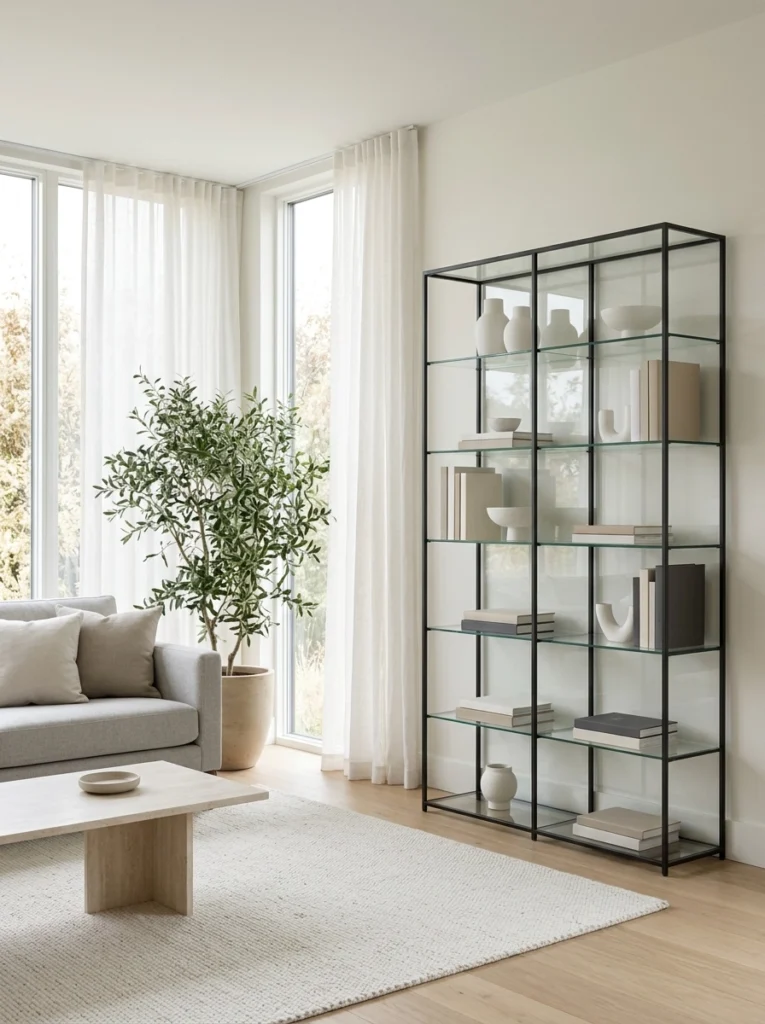
22. Choose Glass Shelves for a Light, Airy Finish
Glass shelves are a smart option when you want a display without adding the visual weight of a large wooden unit. They work particularly well in small living rooms with limited natural light, narrow walls, or modern furniture with metal details. A set of glass shelves generally costs around $30 to $100, depending on the size, thickness, brackets, and installation requirements.
Keep the styling simple because glass already creates a clean, almost invisible backdrop. Choose two or three pieces, such as a white ceramic vase, a small framed photograph, and one compact decorative bowl. Avoid overcrowding the shelves with objects that make the display look messy from multiple angles. Glass also shows fingerprints and dust more readily than wood, so clean it regularly with a glass-safe cloth and suitable cleaner. Check the shelf’s weight rating and use the correct wall anchors, especially for heavier glass panels. If you have children or pets, choose safety-rated glass and place shelves out of reach where possible. This finish suits contemporary spaces, but it works best when the rest of the room has a few softer materials, such as linen upholstery, wood, or a textured rug.
Mistakes That Ruin the Look
– Filling every inch of shelf space: Too many objects make even expensive shelving look messy. Remove a third of the accessories, then regroup what’s left into small arrangements with clear gaps between them.
– Using objects that are all the same height: A row of similarly sized vases or frames feels flat. Mix tall, medium, and low pieces so the display has a natural rhythm.
– Ignoring scale: Tiny decorations disappear on long shelves, while oversized accessories overwhelm narrow ledges. Measure the shelf depth and width before shopping, and choose objects that fit comfortably without hanging over the edge.
– Forgetting safety and maintenance: Heavy books, unstable vases, and poorly mounted shelves can cause damage or injuries. Use suitable wall anchors, secure tall bookcases, follow weight limits, and dust the display regularly.
Frequently Asked Questions
[Image Prompt: A bright modern living room with light oak shelves, three neatly arranged neutral accessories, a small green plant, and a cream sofa. Soft natural daylight, uncluttered contemporary styling, eye-level view, no people, no text or words anywhere in the image.]
[Alt Text: Simple modern shelf decor living room ideas with natural wood, neutral ceramics, and greenery.]
Q: How do I style modern shelf decor living room displays on a budget?
Start by rearranging books, frames, and vases you already own. Spend around $20 to $50 on one or two missing pieces, such as a ceramic bowl or a thrifted frame, instead of replacing everything.
Q: What should I put on living room shelves?
Combine books, framed art, ceramics, small plants, and a few useful storage baskets. Vary their heights and shapes, and leave some open space so each group is easy to see.
Q: How many decorative items should go on one shelf?
For a shelf measuring about 36 inches long, start with three to five objects or a few small groups. Adjust the number based on their size, leaving enough room to prevent the arrangement from looking crowded.
Q: What colors look best on modern living room shelves?
Cream, warm white, black, natural wood, and muted gray create a clean contemporary palette. Olive green, dusty blue, or terracotta can add color without making the display feel busy.
Q: How do I decorate shelves in a small living room?
Use floating shelves, picture ledges, or a narrow bookcase to preserve floor space. Choose shallow accessories, store everyday clutter in baskets, and keep the wall colors light if you want the room to feel more open.
Q: Should living room shelves match the furniture?
They don’t have to match exactly, but repeating one finish or color helps the room feel connected. For example, oak shelves work well with a walnut or oak coffee table when the other accessories tie the finishes together.
Give Your Living Room Shelves a Weekend Refresh
You don’t have to buy an entire new shelving unit to get a sleek, modern look. Start with the shelves you already have, clear off the clutter, and choose three or four pieces that work together. If your room feels too plain, add a trailing plant or a warm wood accent. If it feels crowded, try the three-object arrangement before spending another dollar. For a quick weekend project, I’d start with the shelf above the sofa because even a small change there can make the whole seating area feel more finished. The best modern shelf decor living room setup is one that looks polished but still leaves room for the books, keepsakes, and everyday objects that make your home yours.