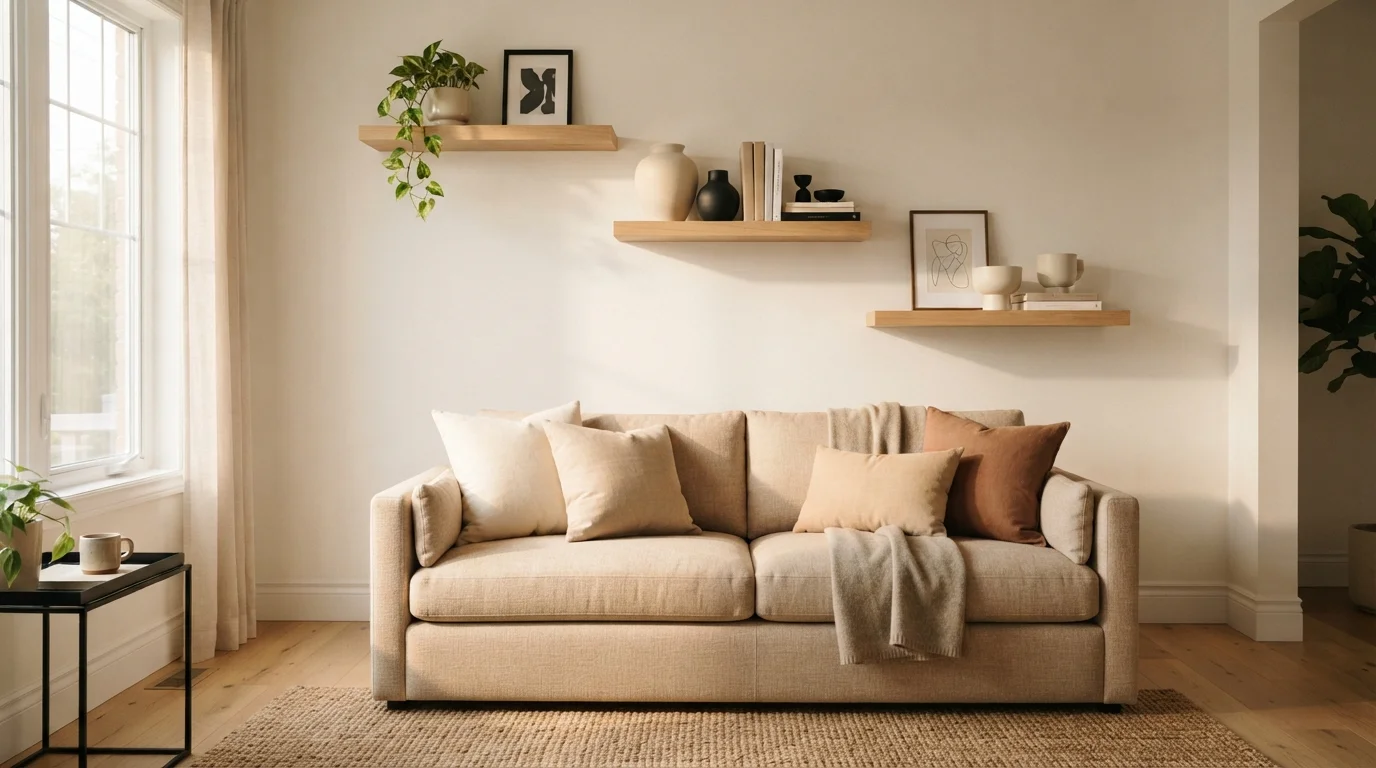
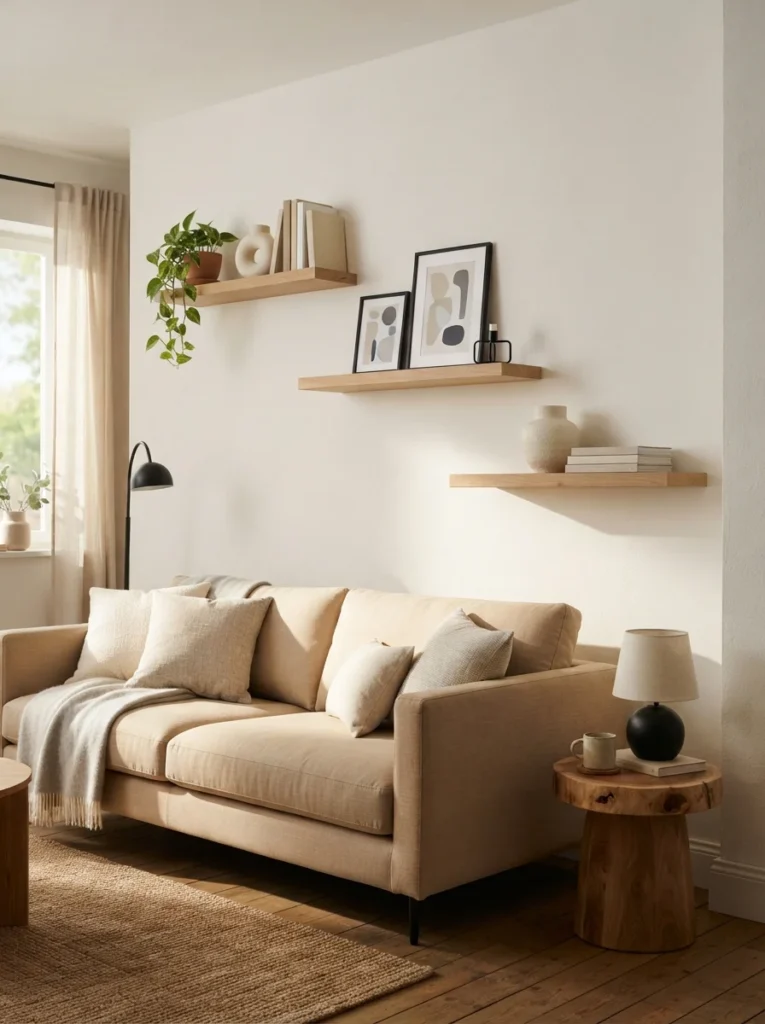
Floating shelves are a great way to fill an empty living room wall without bringing in another bulky bookcase. The tricky part is styling them. A few decorations can look scattered, while too many books, vases, and little trinkets make the whole wall feel crowded.
Learning how to style floating shelves in a living room takes about two hours, and you can create a polished display for around $40 to $90 if you already have a few accessories at home. You’ll learn how to arrange books, choose the right decorative objects, work with different shelf heights, and leave enough breathing room for a relaxed, designer-inspired finish.
Time: 2 hours | Cost: around $40–$90 | Difficulty: Easy | Best for: Small living rooms, apartments, rental homes, and modern family rooms
What You’ll Need
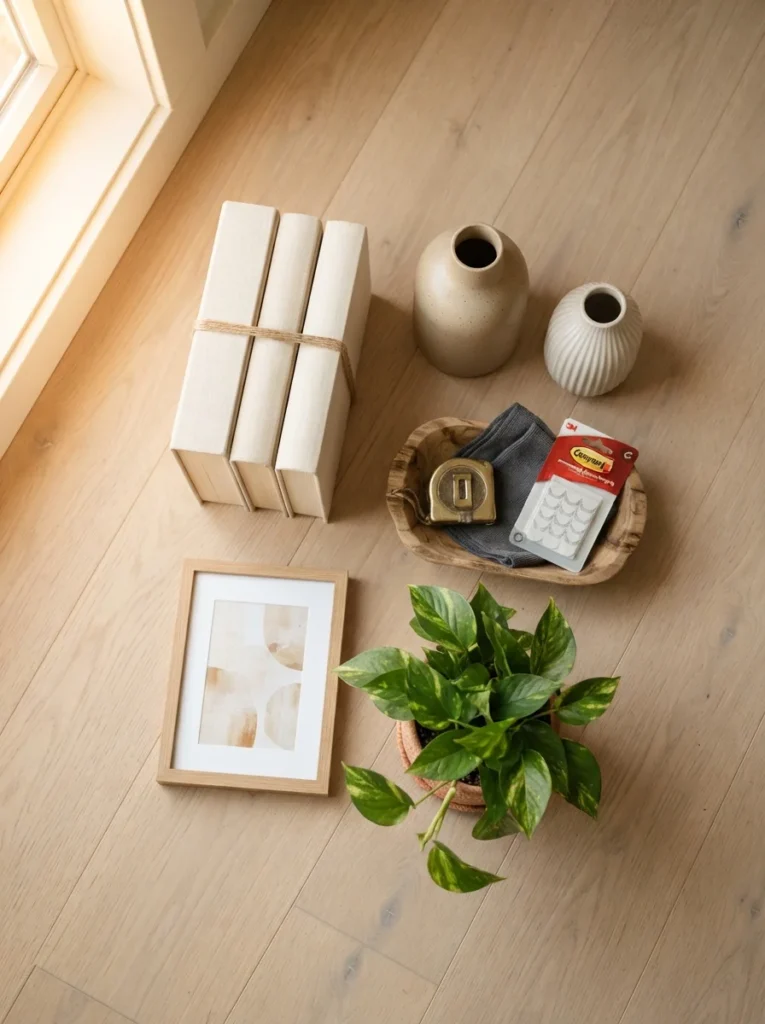
You can use items from other rooms before buying anything new. Start with what you own, then fill the gaps with affordable finds from Target, Walmart, IKEA, or a local thrift store.
- Microfiber cloth and gentle cleaner: around $3–$6
- Measuring tape: around $5–$8
- Neutral hardcover books: around $5–$15 for thrifted finds
- Small ceramic vase: around $8–$15
- Medium decorative vase or bowl: around $10–$20
- Small framed print: around $6–$15
- Pothos plant or realistic faux greenery: around $6–$15
- Wooden accent or candleholder: around $5–$12
- Removable hanging strips for lightweight artwork, if suitable for the wall and frame: around $5–$8
Estimated total: $40–$90, depending on what you already have.
If your floating shelves aren’t installed yet, budget separately for the shelves and mounting hardware. A drill, level, stud finder, and suitable wall anchors are useful for installation. Long or heavy shelves are easier to install with a second person.
1. Clear the Shelves and Decide on a Style
Start by removing every object from your floating shelves. Wipe the surfaces with a microfiber cloth, then look at the wall from across the room. Pay attention to the shelf finish, wall color, sofa fabric, and nearby furniture.
Choose one general style before arranging anything. Modern rooms look good with clean-lined frames and simple ceramics, while farmhouse interiors often suit distressed wood, woven baskets, and vintage books. For a cozy organic look, combine oak shelves with linen-covered books, stoneware, and leafy plants.
Spend about 10 minutes sorting your existing decor into three groups: keep, relocate, and donate. The biggest mistake here is keeping every small ornament simply because it already has a place on the shelf.
2. Choose Three Main Colors for the Display
A limited color palette helps separate objects feel like part of the same arrangement. Look at your sofa, area rug, curtains, and artwork, then choose two main colors and one accent color.
For example, pair warm white and natural wood with muted green. If your living room has charcoal cushions and a black floor lamp, use black frames or a dark ceramic bowl to repeat those details on the shelves.
You don’t have to match every book cover or vase. A little variation keeps the display from looking like a store window. Just repeat the main colors in different places so the shelves relate to the rest of the room.
Use roughly 70% neutral tones, 20% natural textures, and 10% accent color as a starting point. Treat this as a guide, not a strict decorating formula.
3. Measure the Shelves and Plan the Spacing
Measure the length, depth, and distance between your floating shelves. These measurements help you choose decorations that fit comfortably instead of squeezing tall vases into short openings.
On a 36-inch shelf, leave around 7 to 10 inches of open space across the entire shelf. You can split that space into two smaller gaps rather than leaving one large empty section. For a shelf that’s only 24 inches long, start with two or three decorative groupings instead of filling it with six or seven separate objects.
Check the depth, too. A large bowl may fit across the shelf but hang awkwardly over the front edge.
Leave 1 to 2 inches between most objects and the shelf edges. Avoid placing breakable items near the front, especially if children or pets use the room.
4. Position the Largest Objects First
Build the arrangement around two or three larger objects, such as a ceramic vase, framed print, or substantial decorative bowl. These pieces give the display a clear structure before you add the smaller accessories.
On a long floating shelf, place a tall vase about one-third of the way from the left edge. Put a stack of books closer to the opposite end, leaving a gap between the two groups. On the shelf above, shift the main object toward the right rather than lining it up directly with the vase below.
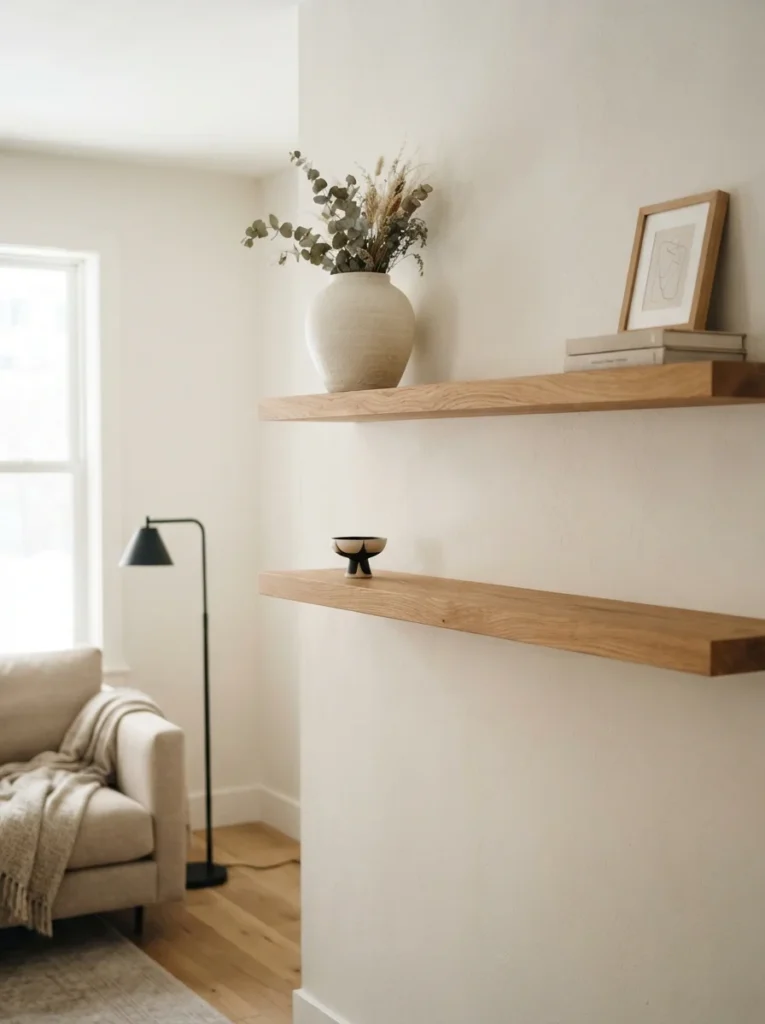
This staggered placement creates movement across the wall without making the arrangement look random.
Use one main statement object per shelf as your starting point. A common mistake is putting several large decorations together, leaving no room for books, plants, or smaller personal pieces.
5. Arrange Books Both Vertically and Horizontally
Books give floating shelves height, color, and a lived-in feeling. Use two to four books per group, depending on their size. Stand some upright with their spines facing outward, then lay a few flat on another shelf to create a different shape.
Horizontal stacks are particularly useful beneath small decorative objects. A wooden bowl or lightweight ceramic piece looks more intentional when it sits on two neatly stacked books rather than directly beside them at the same height.
Try grouping books with cream, tan, gray, or muted green covers. Thrift stores are useful for inexpensive books, and you can remove dust jackets if the covers underneath suit your room.
Keep most horizontal stacks between 4 and 8 inches tall. Don’t pile heavy decor on unstable stacks, and avoid leaning upright books at sharp angles where they can slide off.
6. Mix Artwork With Small Decorative Accents
Floating shelves don’t have to hold only objects. Framed artwork adds height, color, and a backdrop for smaller pieces. A lightweight 8-by-10-inch frame works well on many shelves, while a 12-by-16-inch print suits a longer shelf with adequate clearance.
Lean the frame against the wall at the back of the shelf. Place a short book stack or small ceramic vase in front of one corner to connect the pieces visually. If the frame feels too low, raise it with a slim stack of books rather than adding another large decoration.
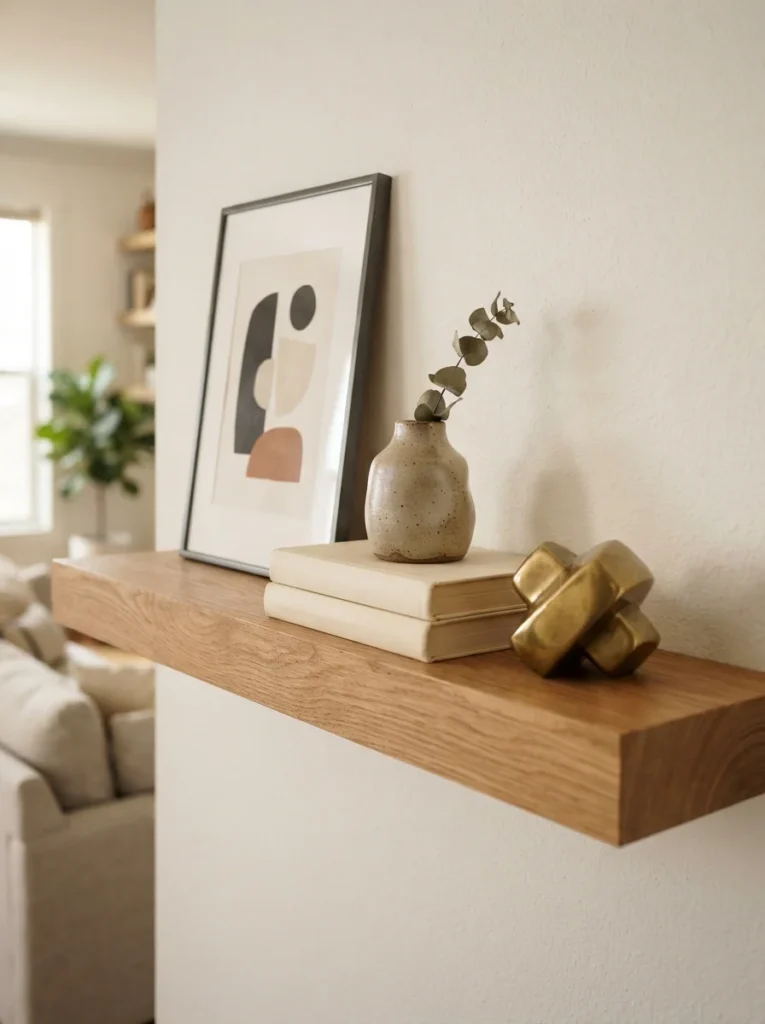
Personal pieces work beautifully here, too. Add a small travel souvenir, family photograph, or handmade pottery piece instead of filling every shelf with generic decorations.
Keep artwork and keepsakes to one or two focal pieces per shelf. For more ideas on arranging wall art around furniture, see [INTERNAL LINK: article about living room wall decor ideas].
7. Add Greenery and Natural Textures
A small plant softens the straight lines of floating shelves. Pothos is a popular choice for a bright room because its trailing stems can hang naturally over the edge. If the shelves sit far from a window, choose a realistic faux plant or a live plant suited to the available light.
Use a pot around 4 to 6 inches wide for a compact arrangement. Put a saucer beneath live plants to protect the wood, and trim trailing stems if they cover the objects beside them.
You can also add texture without using plants. A woven basket, wooden chain, linen-covered box, or textured stoneware vase brings warmth to a display dominated by smooth books and painted walls.
Leave about 3 inches of clearance around a small plant so its leaves don’t cover artwork or spill across the entire shelf.
8. Balance the Entire Wall From a Distance
Once everything is in place, step back about 6 to 8 feet and look at all the shelves together. A display can look attractive up close but feel lopsided from the sofa or doorway.
Check where the darkest objects sit. If one side contains a black frame, dark books, and a heavy wooden bowl, place a smaller dark accent on the opposite side of another shelf. You don’t need matching pairs. The goal is to spread visual weight around the wall.
Take a photo with your phone, too. It’s an easy way to spot repeated shapes, awkward gaps, and objects that sit too close together.
Repeat two or three materials across the full display, such as oak, black metal, and cream ceramics. This helps the shelves feel connected without making every level identical.
9. Edit the Display and Check for Safety
Finish by removing anything that feels unnecessary. If you have six small ornaments on one shelf, take away two and see whether the remaining pieces look stronger. Empty space is part of the design, not wasted room.
Check that every frame sits securely, books are stable, and breakable pieces aren’t close to the edge. Keep heavy decorations on sturdier shelves and follow the shelf manufacturer’s weight limit. If the shelves are newly installed, confirm that the brackets and anchors suit the wall material and intended load.
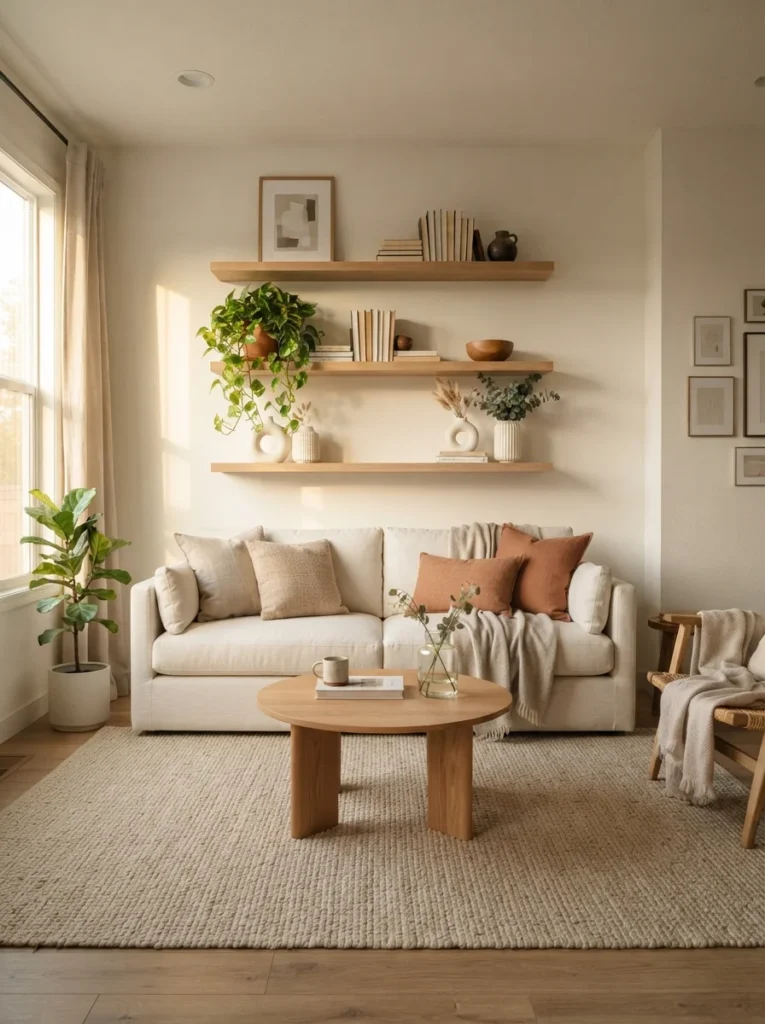
Allow 10 minutes for the final edit. Resist the temptation to fill every empty spot just because you have an accessory left over.
Mistakes That Ruin the Result
- Using too many tiny decorations: Group smaller pieces together or remove a few so the main objects stand out.
- Lining up every vase and frame vertically: Stagger focal objects from left to right across different shelves.
- Ignoring shelf depth: Choose decorations that sit securely on the surface without awkward overhangs.
- Overloading the shelves: Check the manufacturer’s weight rating and use appropriate mounting hardware for the wall type.
Frequently Asked Questions
Q: How do you style floating shelves in a living room?
A: Start with a few large objects, then add books, framed art, plants, and smaller decorative accents. Repeat a limited color palette and leave around 20% to 30% of the shelf space open.
Q: What looks best on floating shelves above a sofa?
A: Framed artwork, ceramic vases, short book stacks, and small plants work well above a sofa. Keep the display balanced across the wall and leave enough space between the shelf and any seated person’s head.
Q: How many items should I put on a floating shelf?
A: For a 36-inch shelf, start with three to five objects or small groups. Larger vases and frames take up more visual space, so you won’t need as many individual pieces.
Q: Should floating shelves be symmetrical?
A: No, balanced arrangements often look more relaxed than perfectly mirrored ones. Use similar colors or materials across the shelves while varying the placement and height of each object.
Q: How do I style floating shelves on a budget?
A: Shop your home first, then look for books, vases, and frames at thrift stores or Walmart. A few carefully chosen accessories for $20 to $30 can refresh shelves without replacing everything.
Q: How far apart should living room floating shelves be?
A: Around 12 to 18 inches of vertical clearance works for many decorative arrangements, but the right spacing depends on the height of your frames and vases. Measure your tallest planned object before installing the next shelf.
Give Your Floating Shelves a Weekend Refresh
A beautiful shelf display doesn’t depend on expensive accessories or a perfectly matched set of decorations. The secret is using a few larger pieces, mixing books with different textures, repeating colors around the wall, and leaving some space empty. Now that you know how to style floating shelves in a living room, gather your favorite items and spend a couple of hours rearranging them this weekend. Start with one shelf, take a step back, and keep adjusting until the whole wall feels balanced and personal.