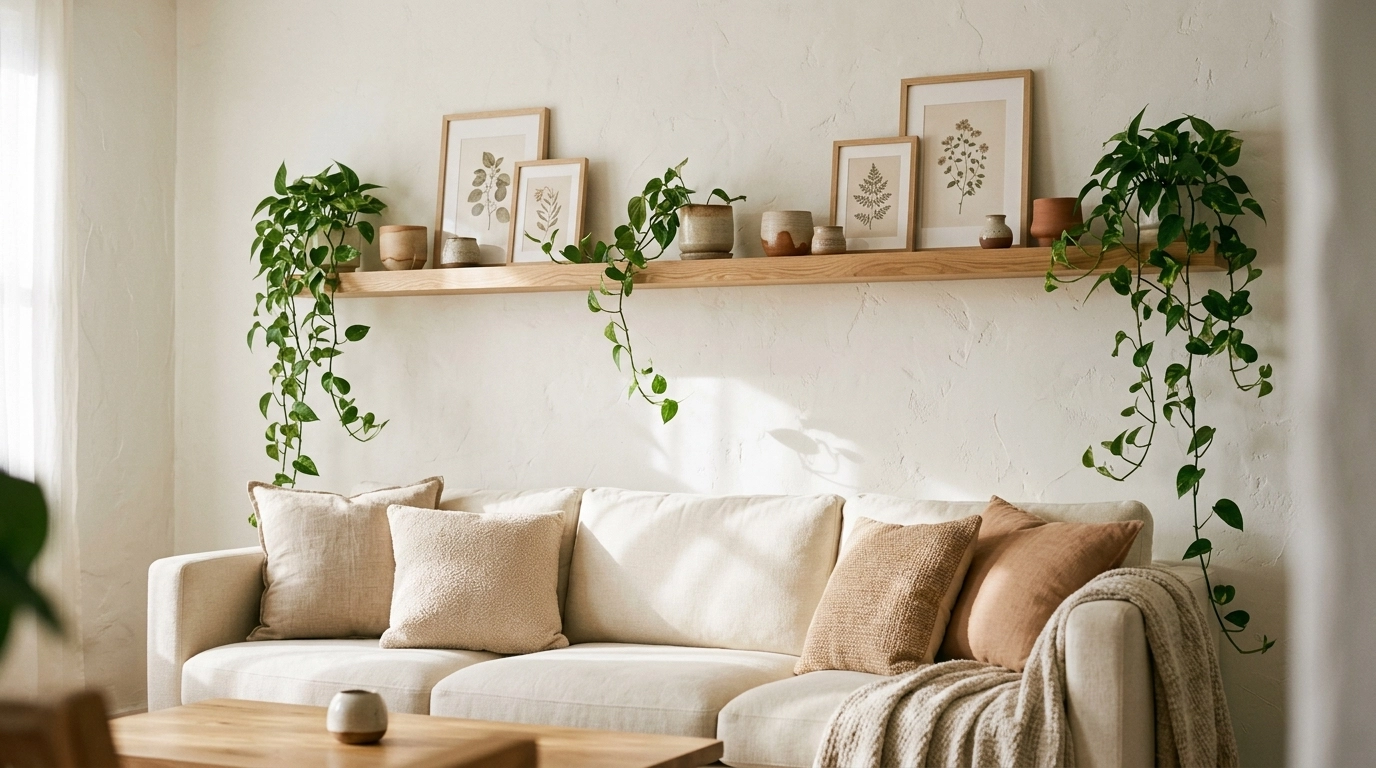
Ever look at your living room shelves and feel like something is missing, even after arranging your favorite books and candles? A little greenery often fixes that problem. Plants add color, soften hard edges, and make ordinary shelves feel more connected to the rest of the room without spending money on a complete makeover.
The best shelf decor living room with plants arrangements combine greenery, useful objects, and a little breathing room. Start with one trailing plant, one upright plant, and a few decorative pieces in different heights. With $15 to $60, you can style a shelf using affordable pots, cuttings, thrifted frames, and plants from places like IKEA, Target, and local garden centers.
1. Style Long Floating Shelves With Trailing Pothos
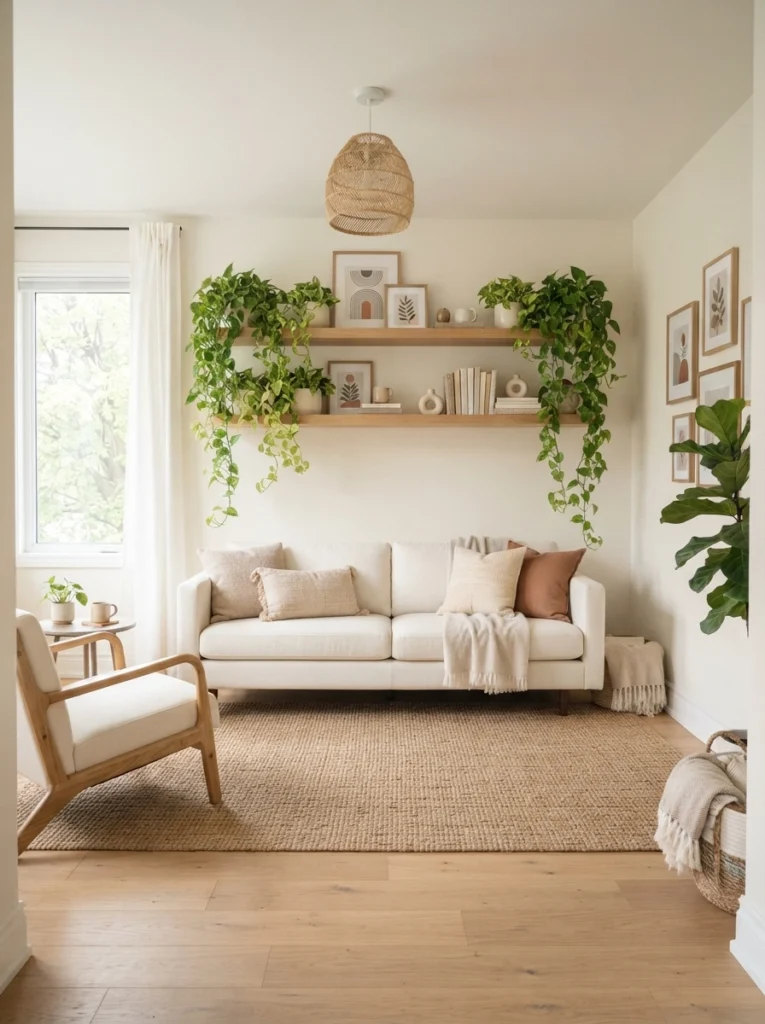
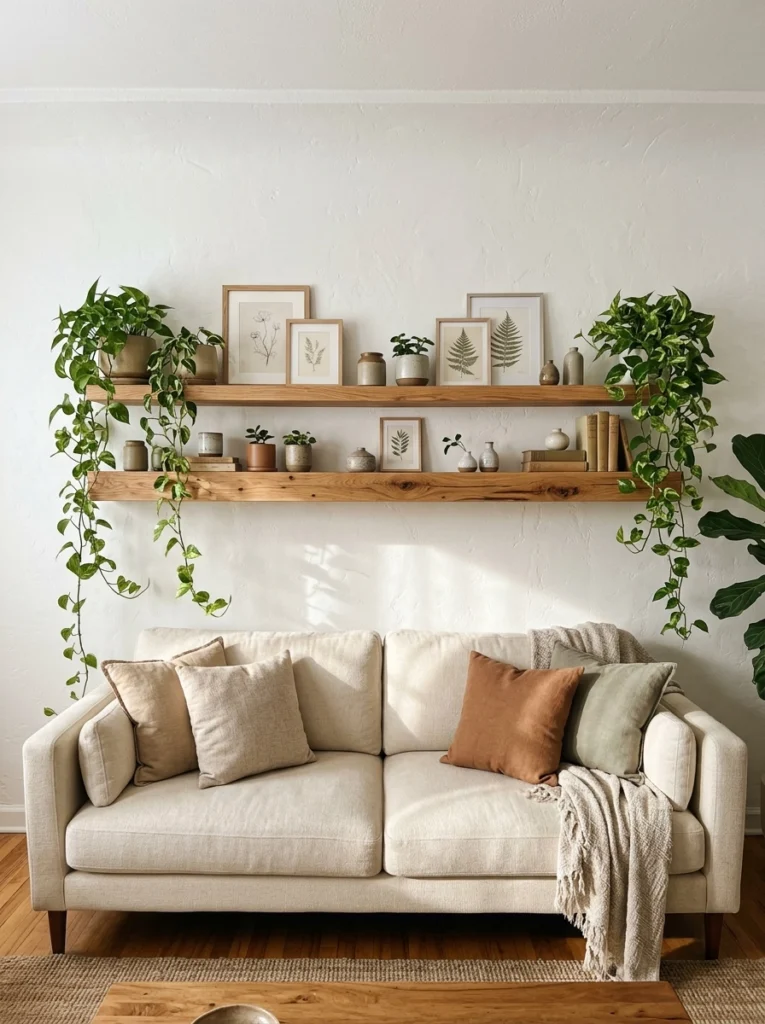
Trailing pothos is one of the easiest ways to give a plain floating shelf some movement. Place two pothos plants in 6-inch ceramic pots costing $12 to $20 each, then position them near opposite ends of a shelf that’s at least 36 inches long. Let the vines hang naturally rather than arranging every leaf into a perfect line. Between the plants, add a small framed photograph, two or three books, and a short decorative bowl. This setup works particularly well above a sofa because the hanging greenery softens the straight lines of the furniture. IKEA and Target often carry affordable planters, while a healthy pothos cutting from a friend can save you the price of a mature plant. Keep the shelf within easy watering distance, and use removable saucers or waterproof liners to protect the wood. Rotate the pots every couple of weeks so the leaves grow evenly toward the light.
2. Mix Greenery With Black Metal Shelving

Black shelving gives green leaves a beautiful backdrop, especially in a room with white walls or pale upholstery. Start with a $45 to $90 black metal shelf unit from Walmart or Amazon, depending on its size and construction. Place a medium snake plant on a lower shelf, a compact ZZ plant at eye level, and a small trailing philodendron near the top. Choose charcoal, stone, or matte black pots to keep the arrangement cohesive. Then break up the dark surfaces with natural wood boxes and a few cream-colored book spines. The contrast makes each plant stand out without requiring bright decorative accessories. Avoid filling every shelf with greenery, though. Leave at least one section relatively open so the black frame remains visible. If the room receives limited daylight, choose plants suited to those conditions and rotate in a grow light when necessary. Check the shelf’s weight rating before placing heavy ceramic planters overhead.
3. Create a Cozy Reading Shelf With Plants and Books
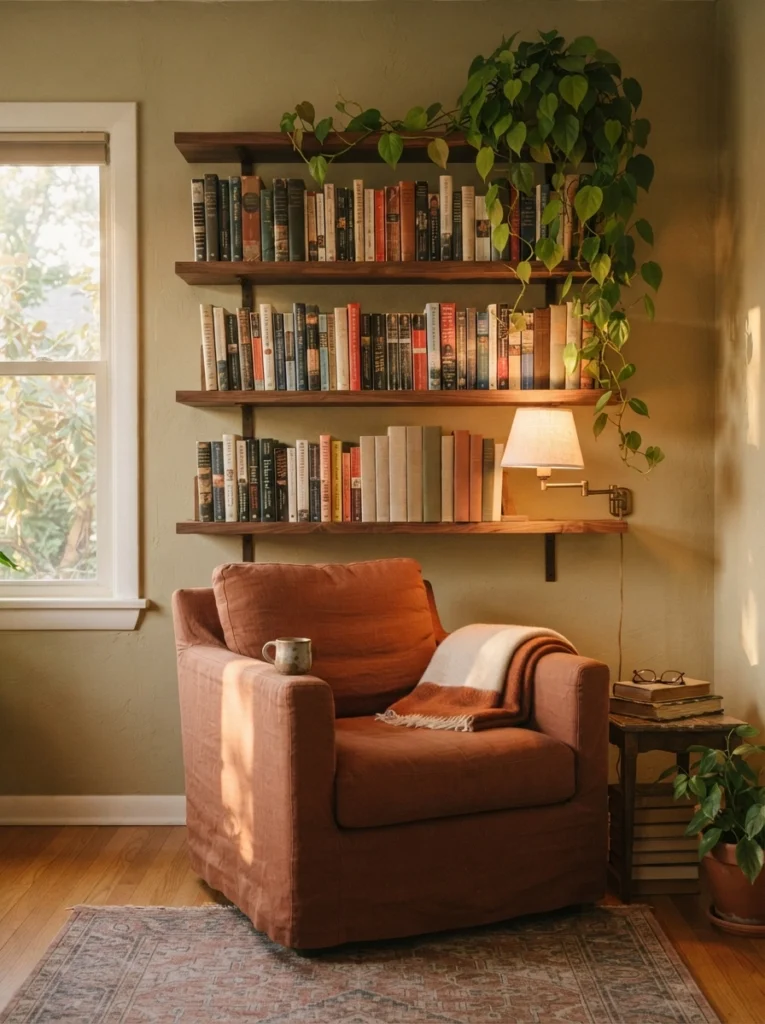
Books and plants are natural companions, particularly if your living room doubles as a reading space. Arrange your books in short horizontal stacks instead of filling every shelf with upright spines. Add a $10 to $18 heartleaf philodendron in a small hanging-style planter, allowing its vines to trail beside the books rather than across their covers. A compact table lamp, a thrifted wooden bookend, and a framed print will finish the arrangement without crowding it. Keep the heaviest books on the lower shelves and leave a little distance between foliage and paper to avoid moisture damage during watering. This setup works because the plants introduce organic shapes among the repeated rectangles of books. For a budget-friendly look, shop used bookstores and thrift shops for attractive hardcovers with muted covers. You don’t need to buy books you won’t read. A handful of favorites mixed with a few decorative objects is enough to make the shelf feel personal.
4. Bring Natural Texture to White Shelves
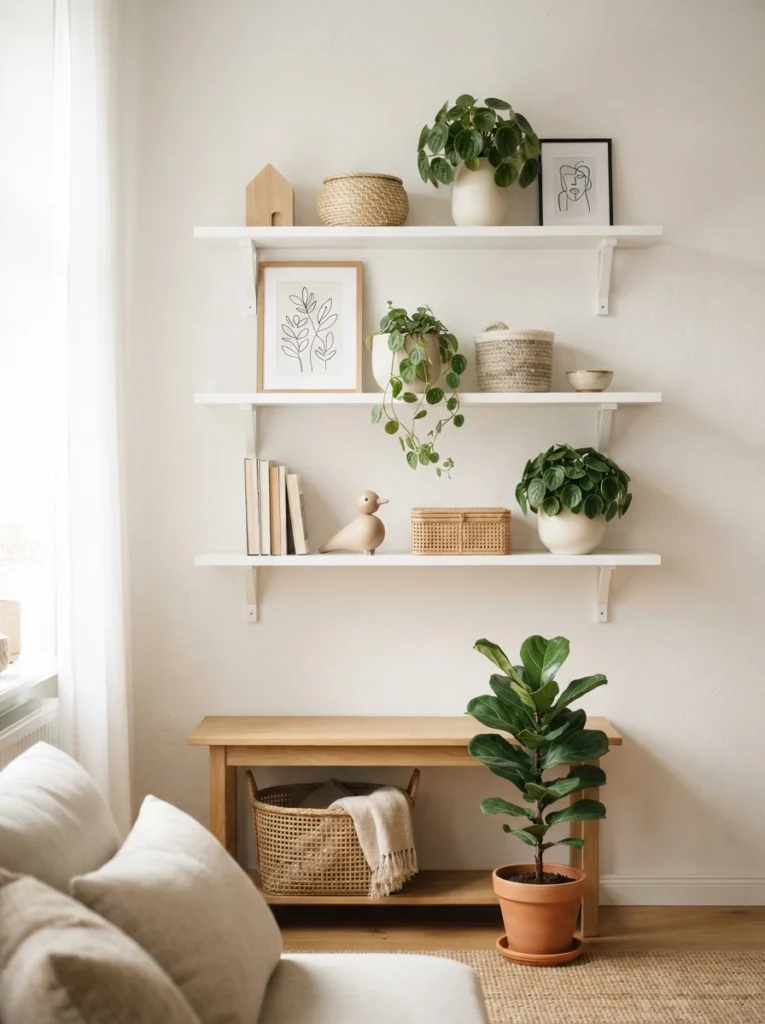
White shelves can look a little flat on their own, but a mix of woven materials and greenery gives them depth. Use two or three small woven baskets priced around $8 to $15 each for remotes, charging cables, or other living room odds and ends. Add peperomia or another compact houseplant in a cream planter, then place a small oak picture frame nearby. The woven texture contrasts with the smooth shelf surface, while green leaves add color without making the arrangement feel busy. Keep the palette to white, tan, light wood, and green for a calm Scandinavian look. If your existing shelves are already white, there’s no reason to replace them. Simply add a few inexpensive accessories and rearrange what you own. Wipe the shelf with a soft microfiber cloth before styling, especially around plant pots, where dust and dried water marks tend to collect. Choose baskets with flat bottoms so they sit securely.
5. Use a Tall Plant to Anchor an Open Bookcase
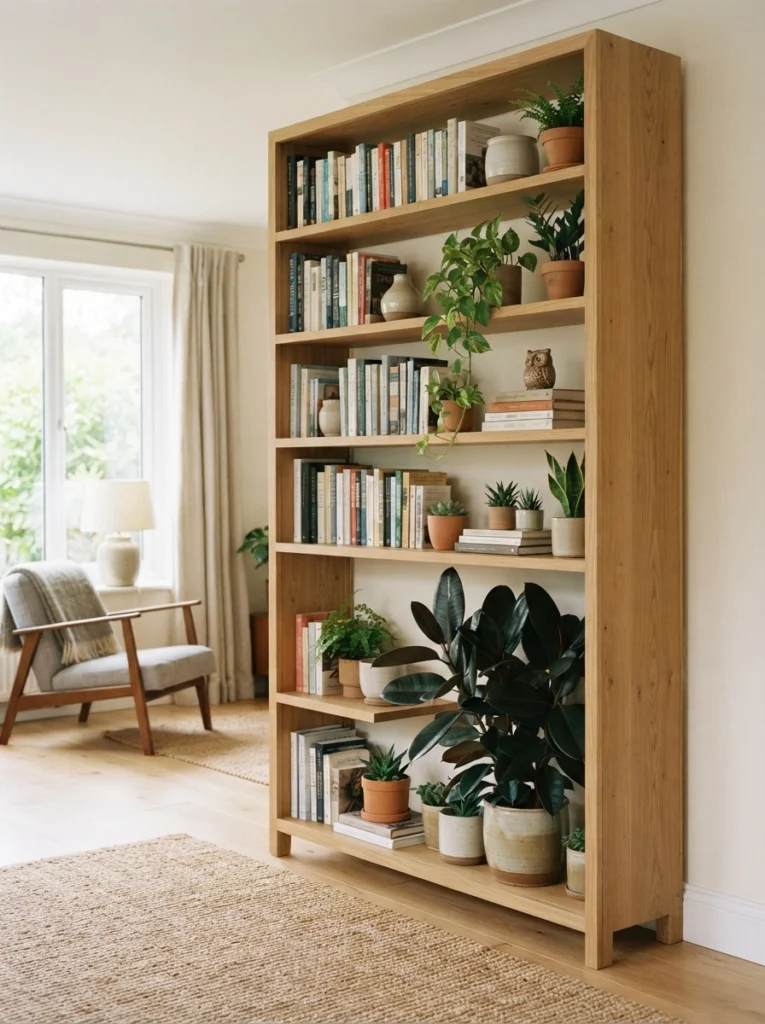
A tall plant creates a strong visual anchor, particularly when the bookcase has several shelves of different heights. Choose a young rubber plant or dracaena in a 10-inch nursery pot costing roughly $25 to $45, then place it on a sturdy lower shelf designed to carry its weight. Check the plant’s mature size before buying, because some varieties eventually outgrow narrow bookcases. On the shelves above, use smaller plants, neutral pottery, and books arranged in groups of three to five. The gradual change in scale makes the entire unit feel balanced rather than top-heavy. If your living room has a high ceiling, leave some vertical space above the tallest shelf so the arrangement doesn’t feel squeezed against the ceiling. A bookcase with adjustable shelves is especially useful because you can make room for taller plants as they grow. Protect wooden shelves with waterproof trays, and avoid placing wet pots directly on unfinished wood.
6. Add a Touch of Boho Style With Macrame Planters
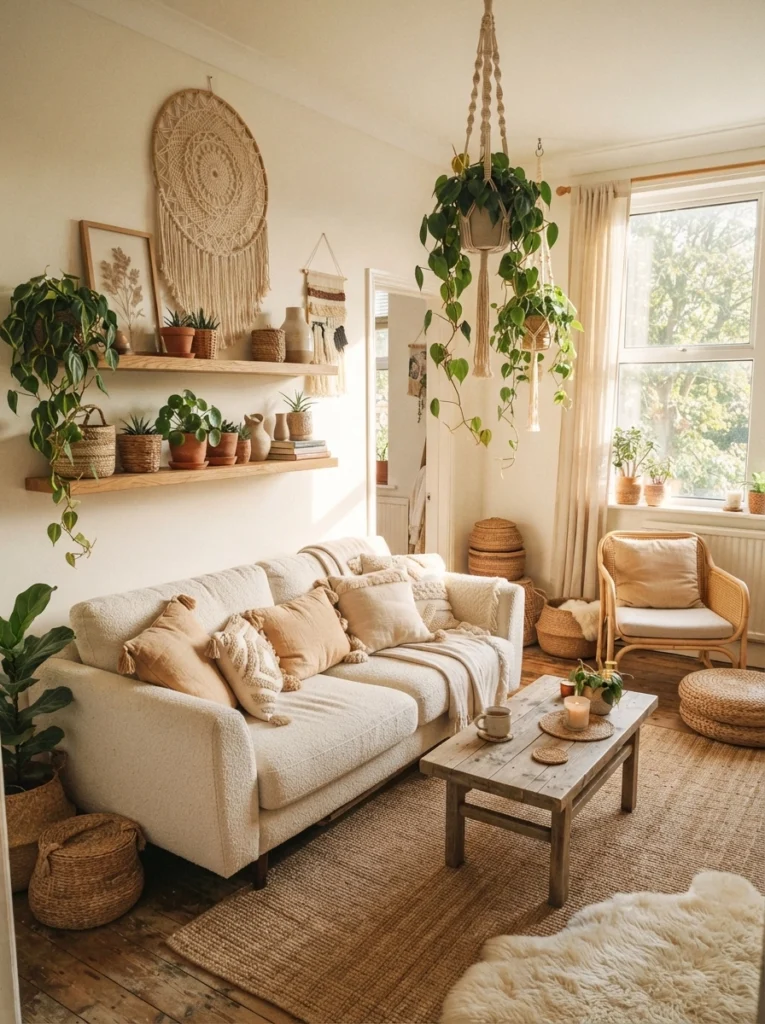
Macrame brings softness to a room filled with straight shelf edges and boxy furniture. Pair a simple wood shelf with a hanging planter made from cotton cord, then add a smaller plant in a terracotta pot beside it. A basic macrame hanger typically costs $8 to $18, while a small terracotta planter can cost just a few dollars at a garden center or Home Depot. Choose pothos, spider plants, or heartleaf philodendrons for their naturally flowing leaves. You can also find handmade hangers at craft markets or make one using cotton cord from a craft store. Keep the hanging planter away from curtain rods and doorways where it could swing into something. If you’re renting, place the macrame planter on a freestanding shelf rather than drilling new holes into the wall. The combination of cotton, clay, and greenery creates a layered bohemian look without requiring a room full of patterned textiles.
7. Decorate Narrow Shelves With Compact Succulents
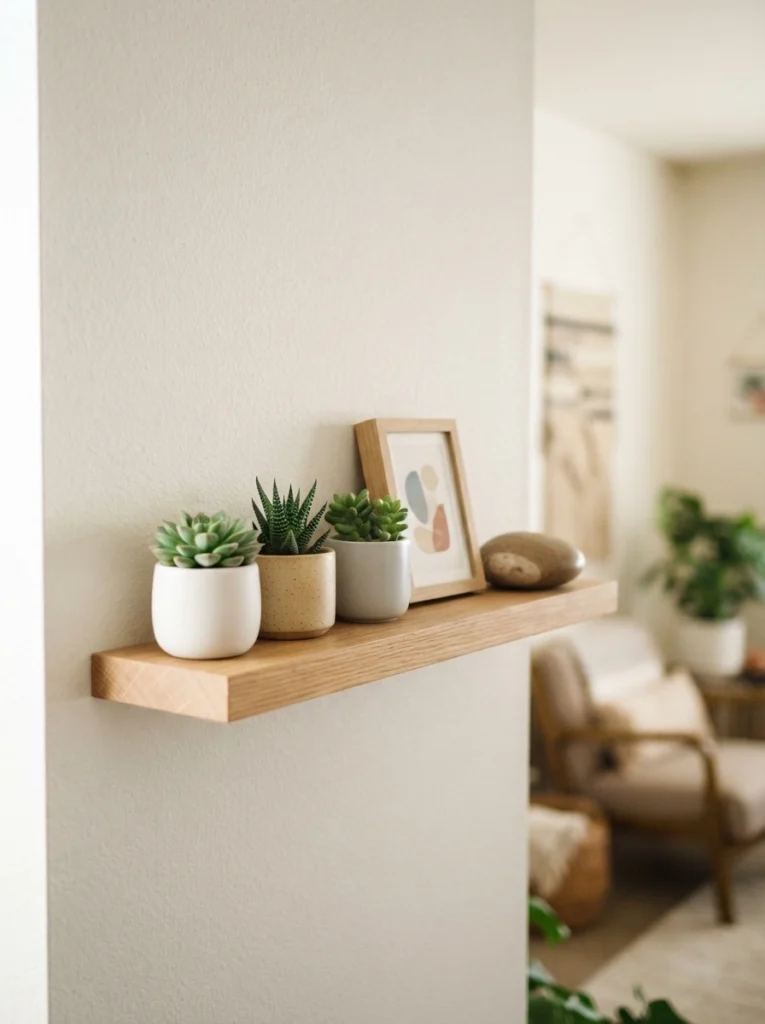
Narrow shelves don’t have much room for oversized planters, so compact succulents are a practical choice when the lighting is right. Arrange three small succulents in 3-inch pots costing $4 to $8 each along a shelf that’s around 4 to 6 inches deep. Leave a little space between each pot, and add one small framed print or smooth stone ornament to prevent the display from looking like a row of nursery plants. Echeveria and haworthia offer interesting shapes without taking up much space. Most succulents prefer several hours of bright light, so a dim corner isn’t suitable unless you provide a grow light. Water only when the potting mix has dried, and use containers with drainage holes. A decorative outer pot can hide the nursery container while allowing you to remove it for watering. This is a useful arrangement for apartments where every inch of shelf space counts, especially above a desk or beside a compact loveseat.
8. Pair Terracotta Pots With Rustic Wooden Shelves

Terracotta pots bring earthy color to rustic shelves, and they usually cost less than decorative ceramic planters. Pick up three 4-inch terracotta pots for around $8 to $15 total, then fill them with small houseplants suited to your room’s lighting. Place the pots on reclaimed wood shelves alongside vintage books, a weathered picture frame, or a small wooden bowl. Keep the accessories simple so the natural grain of the wood remains visible. Pothos, peperomia, and small philodendrons are useful choices for indoor displays, while English ivy requires particular care because it can attract pests indoors. If you like a farmhouse look, mix different pot sizes rather than lining up identical containers. Clay pots dry out more quickly than glazed ceramic ones, so check the soil more often, especially in warm rooms. A little mineral buildup on the outside can be scrubbed away with a damp cloth and a soft brush.
9. Try Shelf Decor Living Room With Plants in a Small Apartment
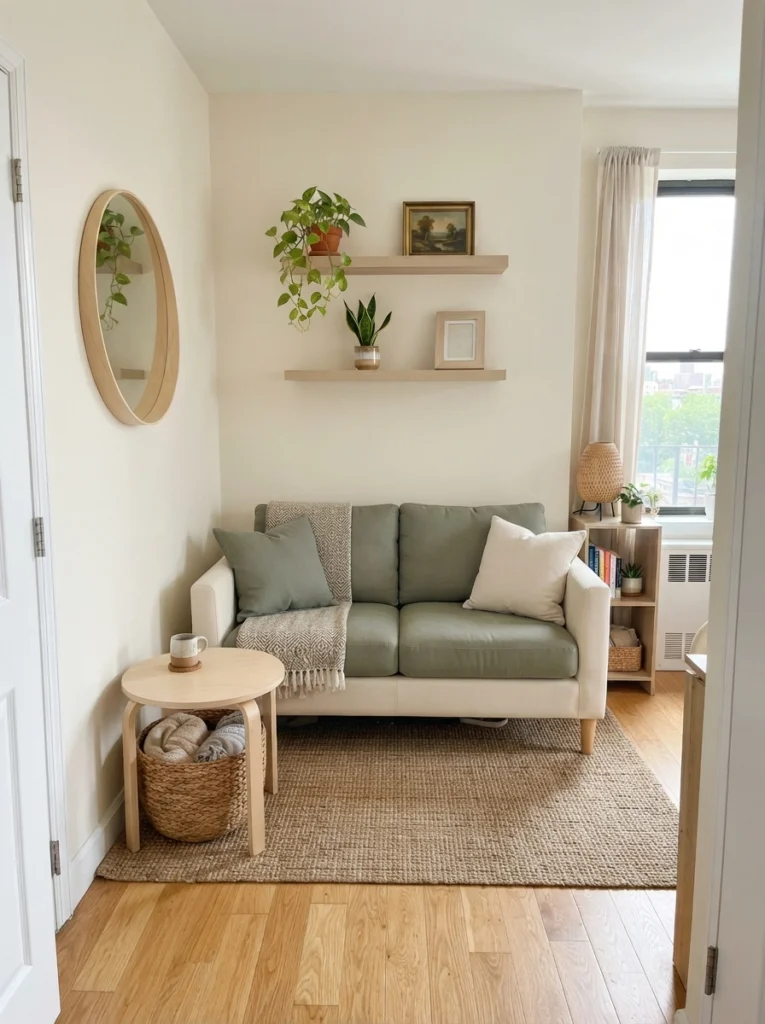
In a small apartment, wall shelves let you display greenery without giving up valuable floor space. Install two 24-inch shelves above a loveseat or narrow console, leaving enough vertical clearance for the objects underneath. A basic shelf and bracket setup can cost $20 to $45, depending on the material and mounting hardware. Place a small snake plant on one shelf, a trailing pothos on the other, and use a tiny picture frame to connect the arrangement visually. Keep the largest items toward the ends and leave the middle relatively open. This makes the display feel lighter, which matters when your sofa, coffee table, and television already share one compact room. Renters should check their lease and use an appropriate mounting method for the wall type. If drilling isn’t permitted, choose a narrow freestanding bookcase instead. For more space-saving inspiration, see [INTERNAL LINK: small living room decorating ideas].
10. Make a Statement With Oversized Botanical Art
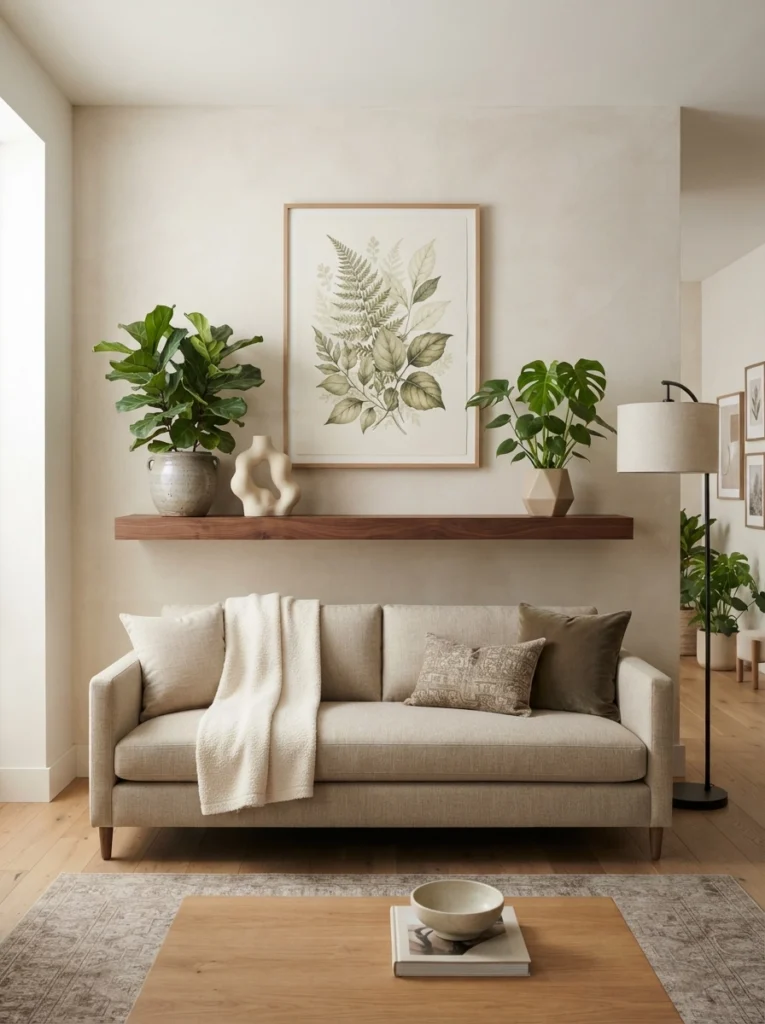
One large botanical print can do more for a shelf than a collection of tiny frames. Look for a print around 18 by 24 inches, available for roughly $15 to $35 at Target, Amazon, or an online art shop. Center it above a shelf, then position a medium plant on one side and a shorter ceramic pot on the other. Add a small vase or a stack of books to fill the remaining gap. The artwork creates a clear focal point, while the live plants repeat the natural theme without making the wall feel cluttered. Choose artwork with olive green, muted brown, or soft black details if your room already has neutral furniture. A simple wood or black frame keeps the look polished. If you don’t want to hang anything, lean the framed print against the wall, provided the shelf is deep enough and the frame sits securely. Dust the frame edges and plant leaves regularly to keep the display tidy.
11. Create a Layered Display With Plants at Different Heights
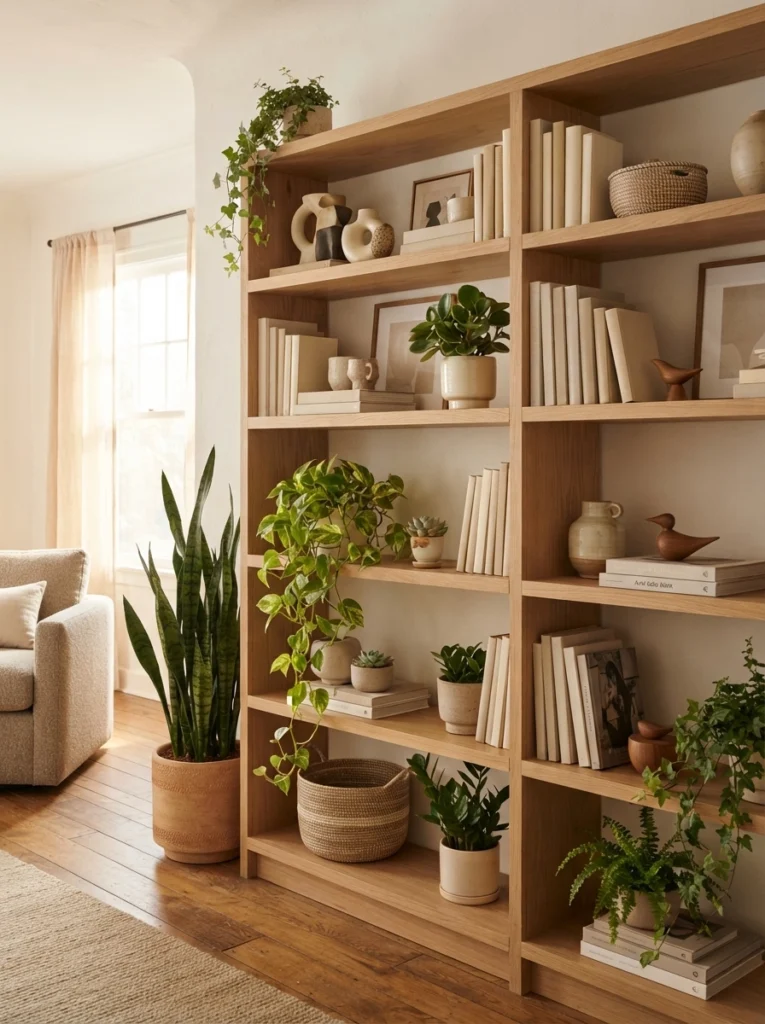
A shelf display feels more natural when the plants don’t all sit at the same height. Start with three plants in small, medium, and tall sizes, spending around $25 to $55 depending on the varieties and pots. Place the tallest upright plant near one end, a medium leafy plant closer to the center, and a trailing plant at the opposite edge. Fill the gaps with books or a low bowl rather than adding more plants just to occupy empty space. This arrangement creates a gentle visual rhythm and allows each leaf shape to stand out. A 36-inch shelf generally has enough room for this combination, while shorter shelves work better with just two plants. Use lightweight nursery pots inside decorative containers if the shelf has a modest weight limit. Turn each plant occasionally to keep its growth balanced, and trim yellow or damaged leaves as they appear. The goal is an arrangement that looks collected over time, not a row of identical pots from the garden center.
12. Use a Glass Shelf for an Airy Modern Look

Glass shelves are useful in a small room because they allow more of the wall to remain visible. A 24-inch tempered-glass shelf usually costs around $25 to $50, depending on the hardware and thickness. Style it with one compact peperomia, a small ceramic planter, and a low decorative object that won’t compete with the greenery. Clear glass can make a room feel less visually crowded than a bulky wooden unit, particularly above a narrow console or beside a window. However, the brackets must be properly secured, and the shelf’s weight limit matters just as much as its appearance. Keep heavy ceramic pots off thin glass shelves unless the product specifications allow them. Water plants away from the shelf and dry the glass afterward to prevent visible spots. This style works best with just a few objects, since too many accessories create distracting reflections and make the transparent surface look messy.
13. Style a Corner Shelf With a Trailing Spider Plant

That awkward corner between a window and the sofa can become a useful place for greenery. Fit a three-tier corner shelf costing approximately $30 to $65 into the space, then put a spider plant on the upper or middle tier where its arching leaves can spread freely. A small pothos on another shelf adds a trailing shape without requiring a large planter. Use the lowest tier for books or a woven basket so the display serves a practical purpose as well. Spider plants produce little offshoots when they’re happy, and those can be potted into inexpensive containers for future displays. Keep the leaves clear of curtains, and make sure the shelf doesn’t block a walkway. If the corner receives bright indirect light, this arrangement is particularly easy to maintain. For dimmer spaces, choose plants suited to lower light rather than expecting a spider plant to thrive in a dark corner.
14. Combine Plants With Warm Brass Accessories
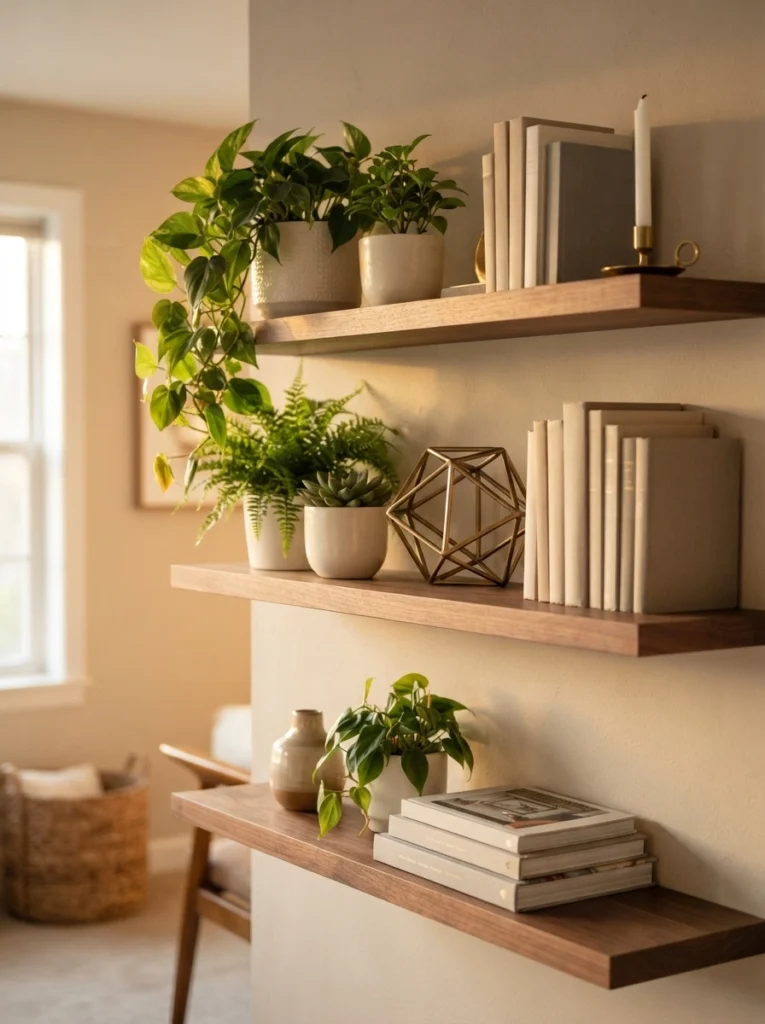
A few brass details give plain wooden shelves a more finished appearance without requiring expensive furniture. Choose one or two brass accessories priced around $10 to $25 each, such as a small candleholder or geometric sculpture, and pair them with leafy plants in cream planters. Keep the brass pieces on separate shelves or at opposite ends of a longer shelf so the metal doesn’t become the main attraction. A walnut finish works particularly well because its warm brown tone complements both green leaves and golden metal. If your shelves are light oak, brushed brass still works, but add a darker picture frame or a small brown ceramic bowl for contrast. Brass-plated accessories usually need only a soft, dry cloth for dusting. Avoid spraying cleaner directly near plants, as residue can settle on their leaves. The result feels polished while remaining approachable enough for an everyday living room.
15. Add a Tiny Herb Garden to a Sunny Living Room Shelf

If your living room has a bright south- or west-facing window, a small herb display can add greenery you actually use. Set up three 4-inch pots for around $15 to $30, including young herbs, potting mix, and basic terracotta containers. Rosemary, thyme, and basil are good candidates when their light and watering preferences are met, although basil generally prefers more consistent moisture than rosemary. Keep the shelf sturdy, place waterproof saucers beneath the pots, and avoid crowding the leaves against the glass. This arrangement works because it combines decorative foliage with something useful for cooking. A small watering jug and a simple plant label can complete the look without turning the shelf into a full gardening station. Rotate the pots for even growth and check for excess water after watering. If the window doesn’t receive enough direct sunlight, a grow light is a better choice than expecting culinary herbs to thrive in a dim living room.
16. Make a Moody Shelf Display With Deep Green Foliage
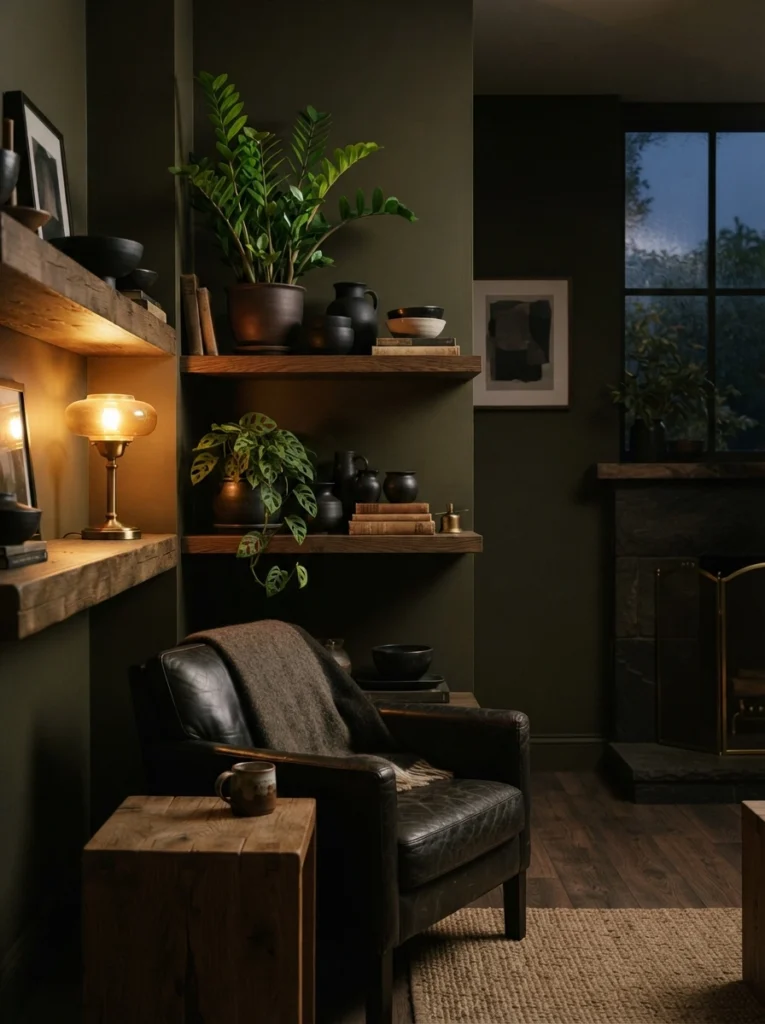
Dark shelves and rich green foliage create a cozy look that works particularly well in rooms with warm wood furniture. Start with two matte black or deep brown planters costing $12 to $25 each, then add a ZZ plant or another species suited to your available light. Place a compact monstera or philodendron nearby if the shelf has enough depth for its leaves. A few books with dark covers and a small amber lamp complete the arrangement. The contrast between the foliage and the darker background gives the leaves definition, while the lamp adds warmth after sunset. Don’t assume that a dark wall means the plants can live in low light. Many plants still require bright indirect light, even if they’re displayed against a moody backdrop. If the shelf is far from a window, select appropriate low-light plants or use a grow light. Dust dark pottery regularly because fingerprints and pale dust show up quickly.
17. Decorate With Propagated Plants in Recycled Glass Jars
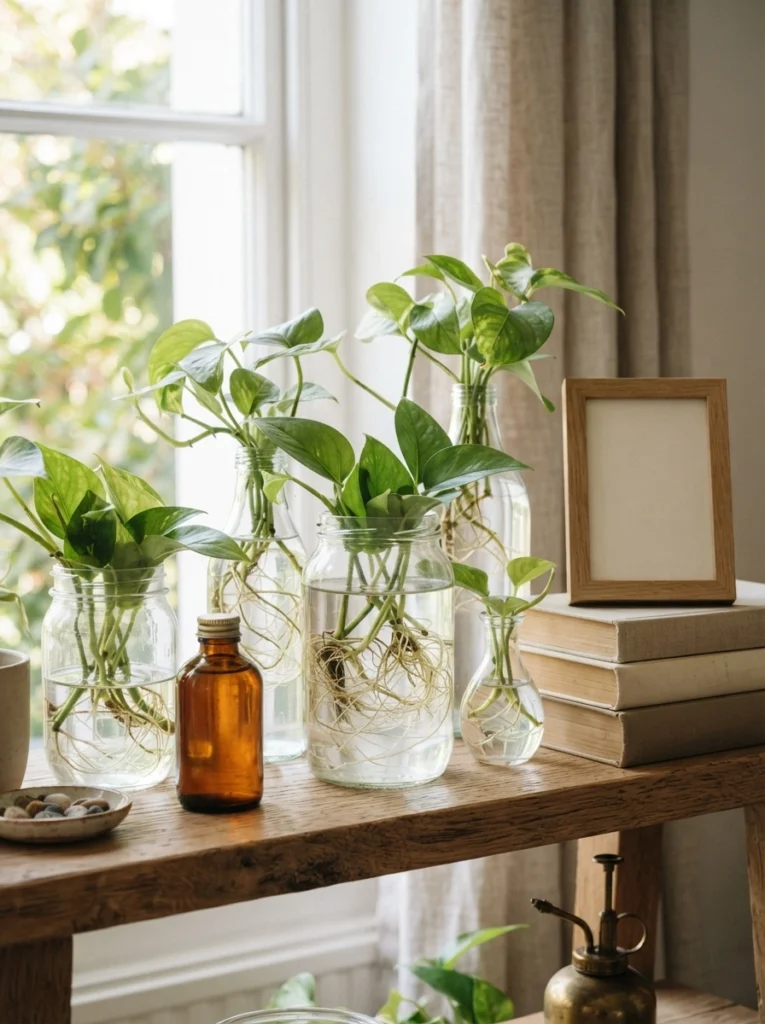
You don’t have to buy mature plants to get a lovely shelf display. Cut a healthy pothos vine below a node, place it in a clean glass jar of water, and set it on a shelf near bright indirect light. Three recycled jars can cost nothing, especially if you reuse food containers you already have. Remove any labels, wash the glass thoroughly, and fill each jar with enough water to cover the nodes while keeping the leaves above the surface. Arrange the jars beside a small framed photo or a short book stack for a casual, collected look. Change the water regularly and rinse the jars when they develop algae or residue. Once the roots are established, you can keep the cuttings in water or pot them in soil. Use stable jars with wide bases, particularly if the shelf is narrow. This idea is inexpensive, easy to rearrange, and useful for creating several small plant displays from one established houseplant.
18. Bring Soft Color to Neutral Shelves With Pastel Pots
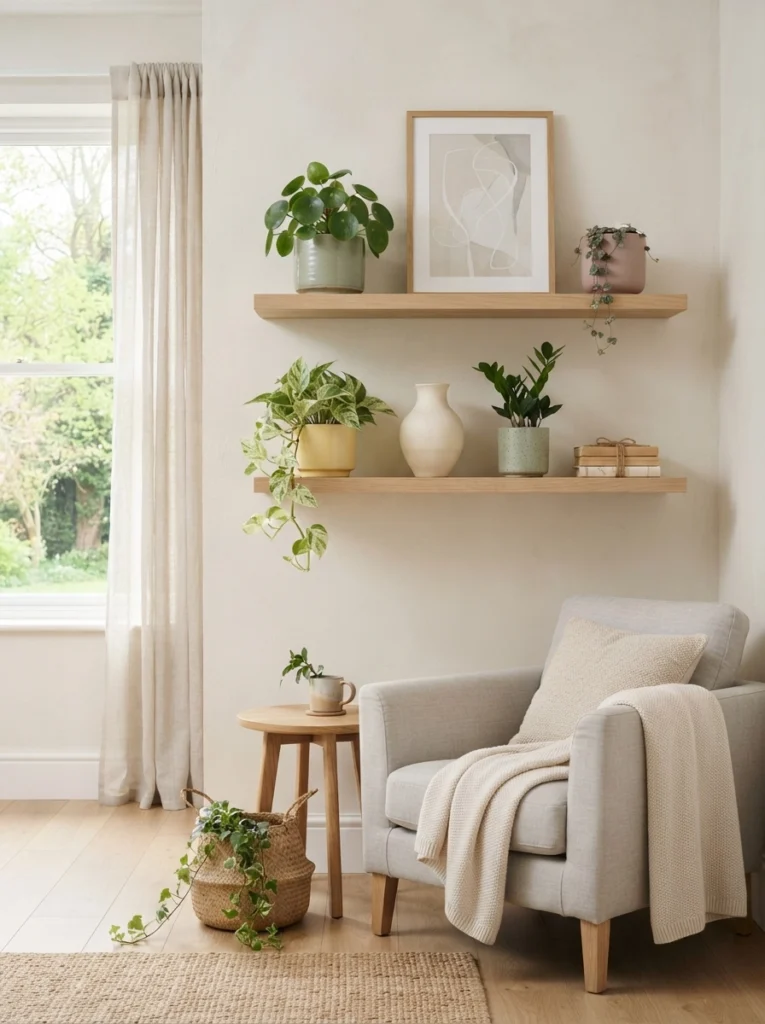
Pastel planters offer a simple way to introduce color without changing your sofa, rug, or wall paint. Choose two or three small pots for $6 to $15 each in muted sage, dusty pink, or soft yellow. Keep the plant varieties relatively simple, such as peperomia, baby rubber plant, or compact philodendron, so the pots remain visible. Arrange the colors unevenly rather than placing them in a strict sequence, then add a cream vase or a pale wood frame to tie everything together. This approach works particularly well in rental homes with white walls and beige furniture because the pots provide color that can be changed whenever you like. If the containers don’t have drainage holes, keep the plants in removable nursery pots and empty any collected water. Choose shades that already appear in your cushions or artwork for a coordinated look. You can find affordable planters at IKEA, Walmart, and local discount home stores.
19. Give a Vintage Bookcase New Life With Plants

An older bookcase can become one of the most interesting features in your living room with just a few inexpensive additions. Search a thrift store or Facebook Marketplace for a solid wood bookcase around $40 to $100, depending on its condition and size. Clean it gently, check that the shelves are secure, and arrange a few books with plants in between. A trailing philodendron adds movement, while a small fern brings a softer, feathery texture if the room has suitable humidity and light. Add a thrifted brass frame or ceramic vase to give the display a collected appearance. Don’t strip or repaint an attractive vintage finish unless it’s damaged. Sometimes a good cleaning and a little rearranging are all the piece requires. Use waterproof trays beneath plant pots, since older wood finishes can be especially vulnerable to water rings. Keep the heaviest books on the bottom shelf and leave the top relatively uncluttered.
20. Try Minimalist Shelf Decor With Just Two Plants

Sometimes the best shelf arrangement contains fewer things. For a minimalist look, use two plants and three decorative objects at most on a shelf around 30 to 40 inches long. A small upright plant, a trailing pothos, one framed print, and a simple sculptural object are enough. Depending on what you already own, the display can cost $20 to $50. Keep the color palette to green, cream, and natural wood so the leaves become the main visual feature. This setup works because empty space gives each object room to stand out, rather than forcing your eye to jump between lots of little accessories. It also takes less time to dust and water. If you have a habit of buying decorative items whenever you see something pretty, try styling the shelf with what you own first. Remove anything that doesn’t contribute to the arrangement, then add one item only if the shelf feels genuinely unbalanced.
21. Use a Ladder Shelf for a Flexible Plant Display
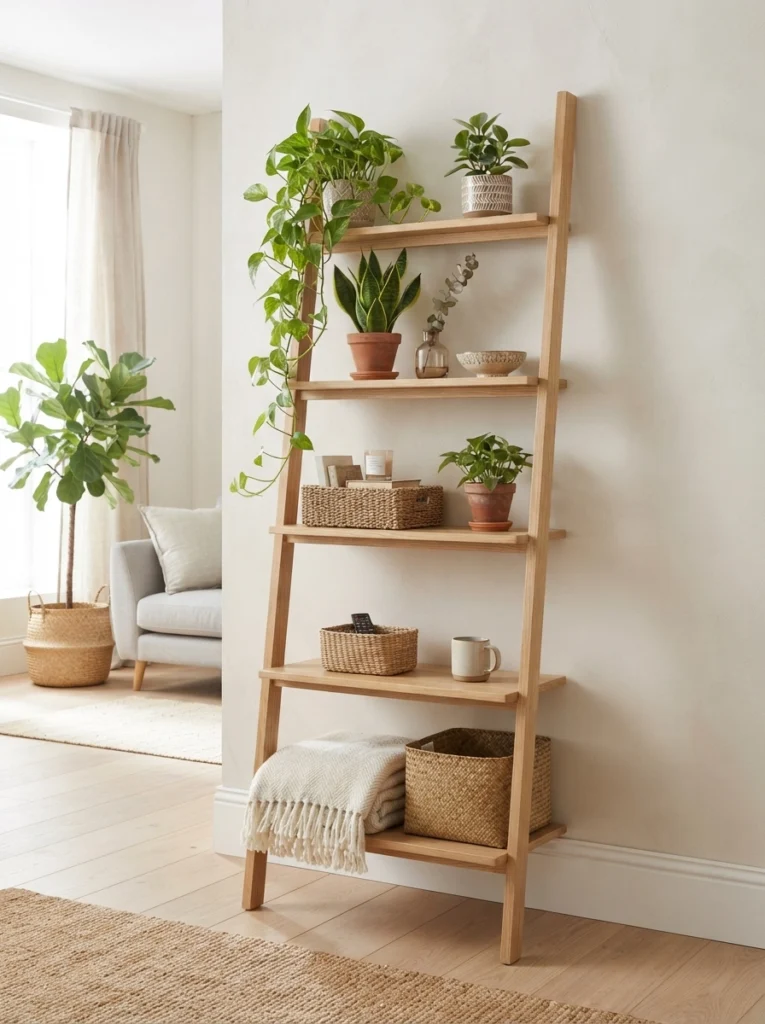
A ladder shelf is useful if you want several levels of greenery without mounting multiple shelves to the wall. A basic wood or wood-look model generally costs $45 to $100, depending on its height and construction. Put the heaviest plant on the lowest tier, a medium plant in the center, and a trailing variety near the top. Use a woven basket on another tier for remotes or spare throws, keeping the display decorative and practical. The gradually narrowing shelves create a natural arrangement, so you won’t have to fill every level with accessories. Secure the unit according to its instructions, especially in homes with children or pets, and check the weight limits for each tier. Avoid placing water-sensitive plants on shelves where spilled water can drip onto electronics or upholstered furniture. If your style changes seasonally, the plants and accessories can be rearranged without buying new furniture.
22. Create a Green Wall Effect With Repeated Small Planters
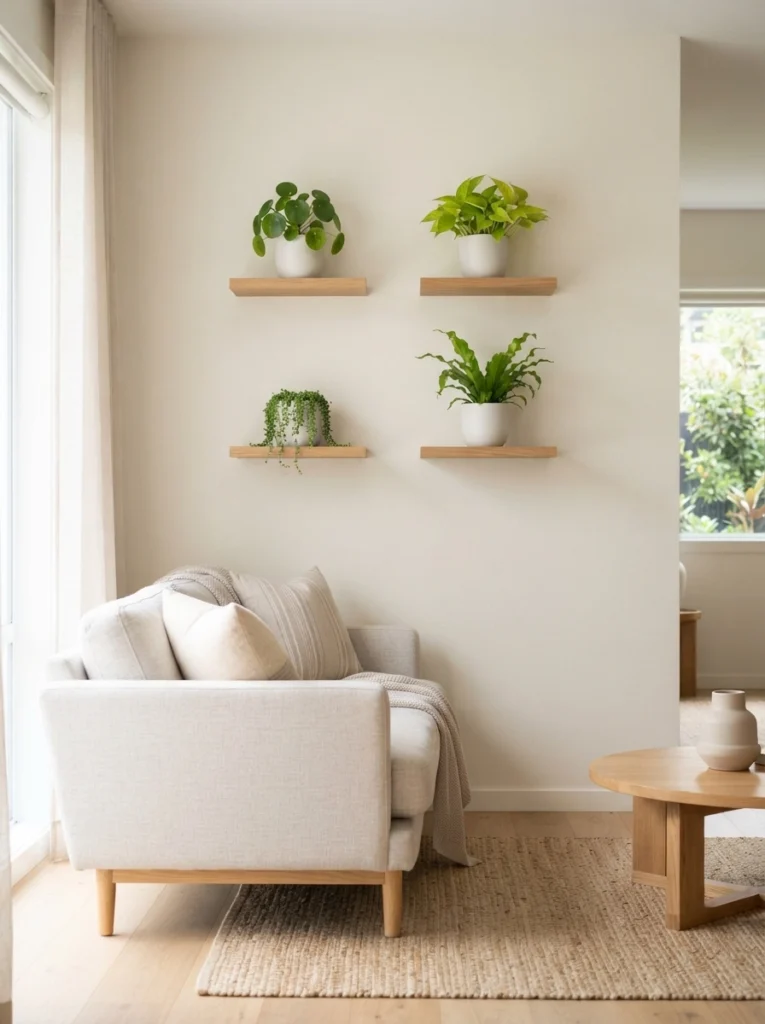
If you enjoy a tidy, repeated look, install several small ledges in a balanced arrangement rather than buying one large shelving unit. Four basic ledges can cost $30 to $60 total, before installation supplies, and matching small planters often cost $5 to $12 each. Use the same pot style throughout, but vary the plants slightly to keep the wall from looking too uniform. Compact peperomia, small philodendrons, and other plants suited to the room’s light work well. Keep the gaps between shelves consistent and check the wall layout before drilling. The repeated shapes create a coordinated display, while the different leaves add natural variety. This idea is particularly effective above a narrow console where a bulky bookcase would take up too much space. Water the plants away from the wall and use saucers or removable nursery pots to protect the ledges.
23. Mix Plants With Personal Travel Souvenirs
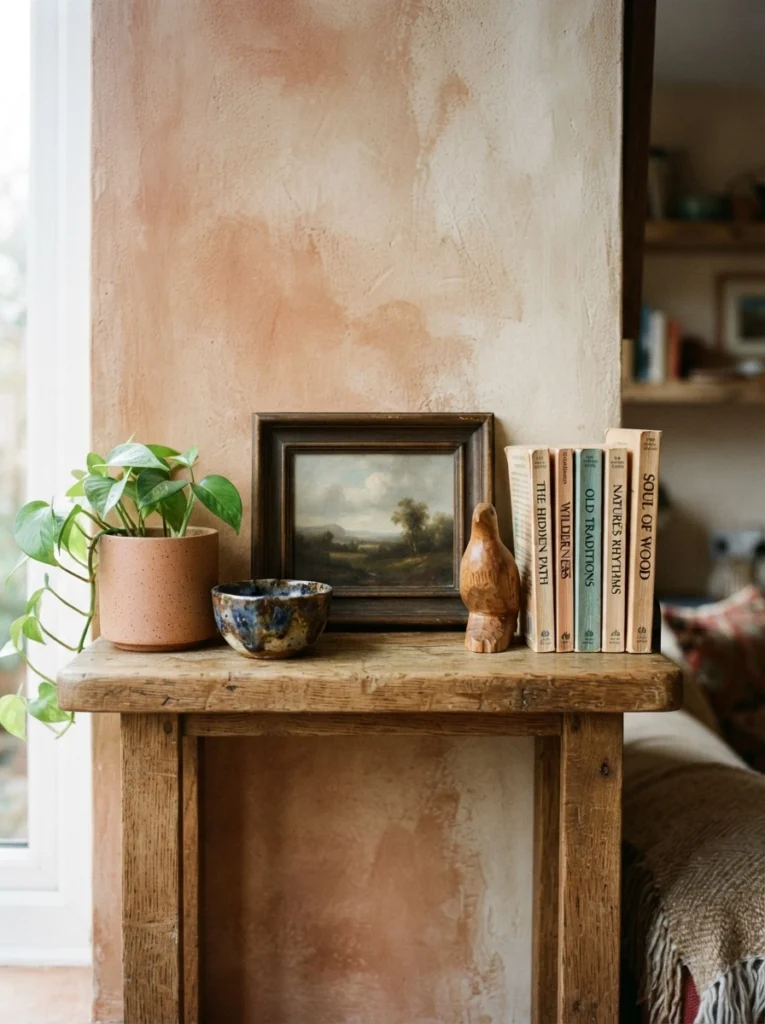
Shelves feel more personal when they hold objects connected to real memories. Choose one or two meaningful souvenirs, such as a handmade bowl, a small sculpture, or a framed postcard, and arrange them beside a living plant. A small pothos or peperomia typically costs around $8 to $18, while the personal objects may already be sitting in a drawer. Group the pieces by color or material instead of trying to match every item exactly. For example, a wooden souvenir pairs well with a terracotta pot, while a pale ceramic keepsake looks lovely beside a green plant in a white container. Leave some empty shelf space so each object can be seen. This approach works because it gives the display a story rather than making it look like a collection of generic accessories. Keep delicate souvenirs away from water and place a waterproof tray under the plant. Rotate the display occasionally to bring overlooked pieces back into view.
24. Add a Warm Glow With Shelf Lighting and Greenery
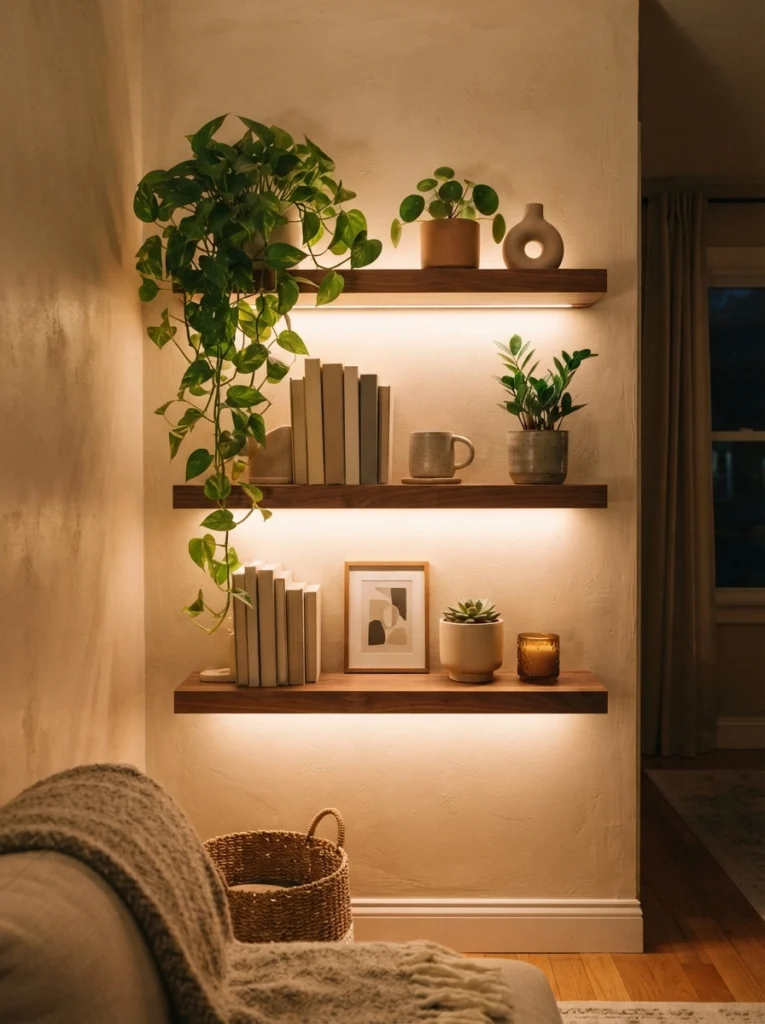
Lighting can make a shelf arrangement look finished after sunset, particularly in a living room without much overhead light. Add a warm-white LED strip or a small battery-operated shelf light for around $12 to $25. Position the light so it illuminates the wall and accessories rather than shining directly into your eyes. Place plants near the shelf edges, leaving enough room for the light to spread across the center. A trailing pothos, a small upright plant, and a few neutral books work well with this setup. Choose lights that stay cool during operation and follow the manufacturer’s installation instructions. Ordinary decorative LEDs aren’t necessarily suitable as plant grow lights, so don’t rely on them to replace sunlight. If the shelf is above a television, keep reflections and glare in mind before installing the lighting. The soft glow highlights leaf shapes and adds depth to the wall without requiring a large lamp or extra floor space.
25. Combine Natural Wood Shelves With Hanging Philodendrons
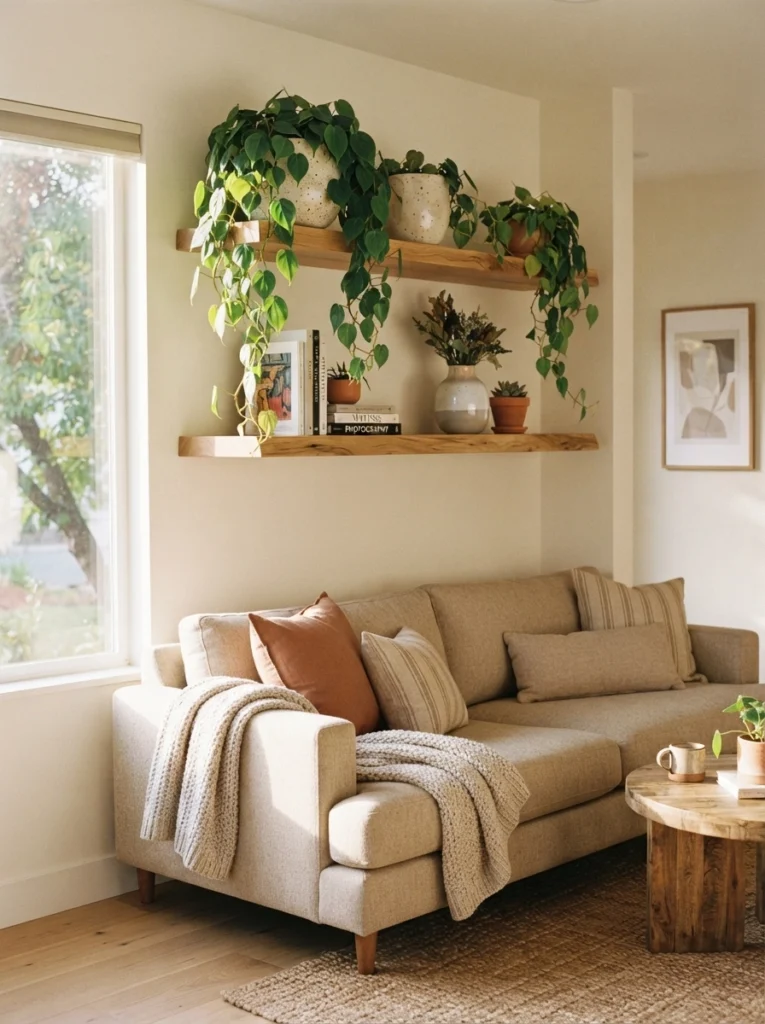
For a simple, plant-filled living room, let the leaves do most of the decorating. Install two oak shelves measuring about 36 inches long, with a combined material and hardware cost of roughly $40 to $85 for budget-friendly options. Place a heartleaf philodendron in a planter near one end of the upper shelf, then add a second smaller plant on the lower shelf. Use a few art books and one ceramic vase to break up the greenery without competing with it. Philodendrons are easy to shape with occasional pruning, and their cuttings can be rooted for future displays. Choose shelves with a suitable weight rating and secure them to the appropriate wall supports. Keep the longest vines away from lamps, doorways, and places where pets can chew them. Philodendrons are toxic if ingested by cats and dogs, so use inaccessible locations or choose pet-safe alternatives when necessary. The mix of warm wood and flowing foliage creates a relaxed look that works with modern, traditional, and casual interiors.
Mistakes That Ruin the Look
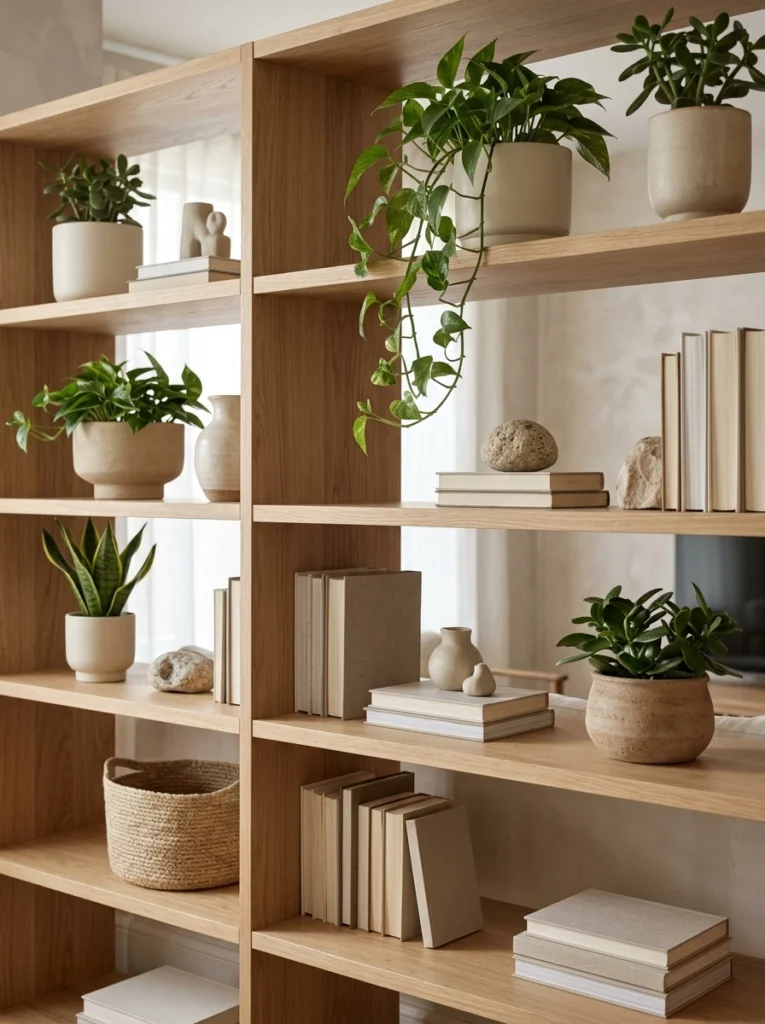
Even attractive plants can look messy when the shelf arrangement isn’t planned. A few simple adjustments help the display stay attractive and easier to maintain.
- Crowding every inch of the shelf: Leave some open space between pots and accessories. On a 36-inch shelf, three plants and a few small objects are often enough.
- Ignoring the light: A beautiful plant won’t thrive in a dark corner if it requires bright indirect light. Match the species to the room or add a suitable grow light.
- Watering directly on the shelf: Use waterproof saucers or removable nursery pots, and wipe up spills immediately to prevent stains, swelling, and damage to the finish.
- Making everything the same height: Combine an upright plant, a medium leafy variety, and one trailing plant to create a more natural arrangement. Repeated pot sizes can still work if the foliage varies.
Frequently Asked Questions
[Image Prompt: A bright living room shelf with a small pothos, a compact snake plant, cream ceramic pots, a wooden picture frame, and a few books arranged neatly against a warm white wall. Close-up composition with soft daylight, no people, no text or words anywhere in the image.]
[Alt Text: Simple living room shelf decor with plants and accessories in a bright, neutral home.]
Q: How do I style shelf decor living room with plants without making it look cluttered?
A: Start with two or three plants in different shapes, then add a few books or decorative objects. Leave roughly one-third of the shelf open so the arrangement has room to breathe.
Q: Which plants are best for living room shelves?
A: Pothos, heartleaf philodendron, peperomia, and snake plants are popular options, provided their light and watering requirements match your room. Trailing plants suit upper shelves, while compact upright varieties work well on narrow ledges.
Q: How much does it cost to decorate living room shelves with plants?
A: A small DIY display can cost $15 to $40 if you use affordable pots, plant cuttings, and accessories you already own. Larger arrangements with new shelving and several mature plants can cost $100 or more.
Q: How do I decorate shelves with plants in a room without much sunlight?
A: Choose plants suited to low-light conditions, such as ZZ plants or snake plants, while remembering that low light doesn’t mean no light. A suitable grow light helps if the room receives very little natural illumination.
Q: How many plants should I put on a living room shelf?
A: For a shelf measuring 30 to 40 inches, start with two or three plants and add a few smaller accessories. Wider bookcases can hold more, but vary the plant heights and leave some empty space.
Q: How can I protect wooden shelves from plant water damage?
A: Use waterproof saucers, plastic liners, or removable nursery pots, and never let water sit under a planter. Wipe up spills promptly and check the shelf surface during regular watering.
Give Your Living Room Shelves a Green Makeover This Weekend
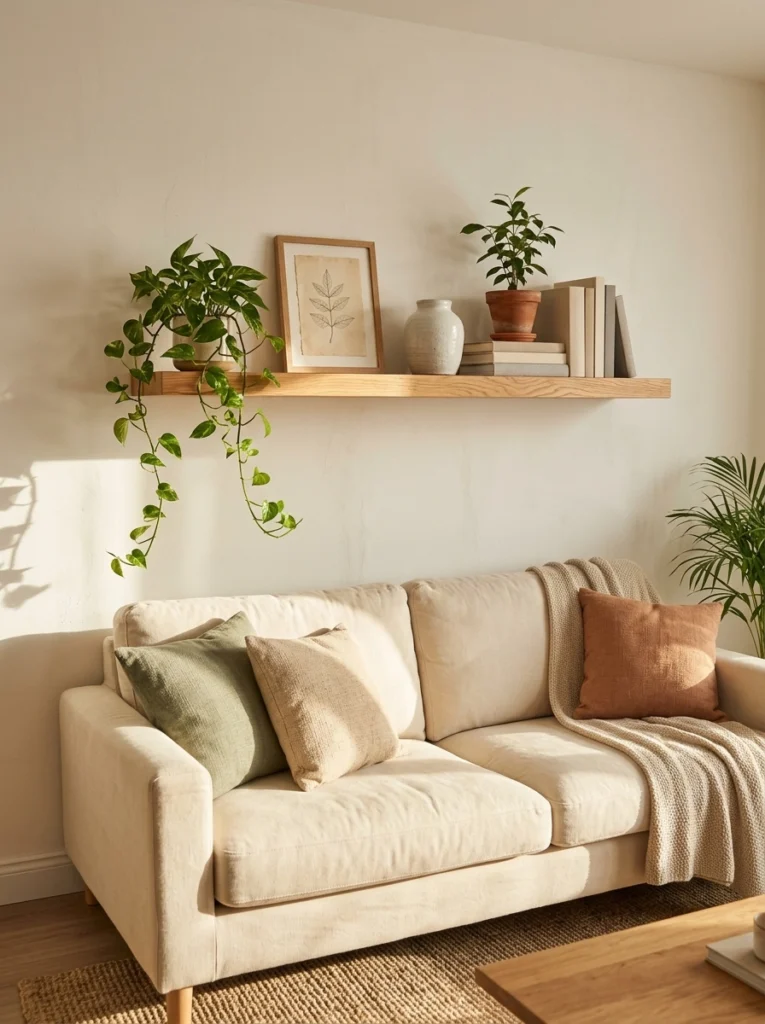
You don’t have to buy a new bookcase or fill your shelves with expensive decorations to make your living room feel more inviting. Start with one trailing pothos, a simple ceramic pot, and a few favorite books. Once those pieces are in place, add a framed print or a small object with personal meaning. The best shelf decor living room with plants arrangements reflect your room’s lighting, the amount of space you have, and the things you genuinely enjoy seeing every day. This weekend, try styling just one shelf before tackling the entire room. Spend $20 on a plant and planter if you need to, reuse the accessories you already own, and give every piece enough room to stand out. A small change above the sofa or beside your favorite reading chair can make the whole space feel more considered without stretching your decorating budget.