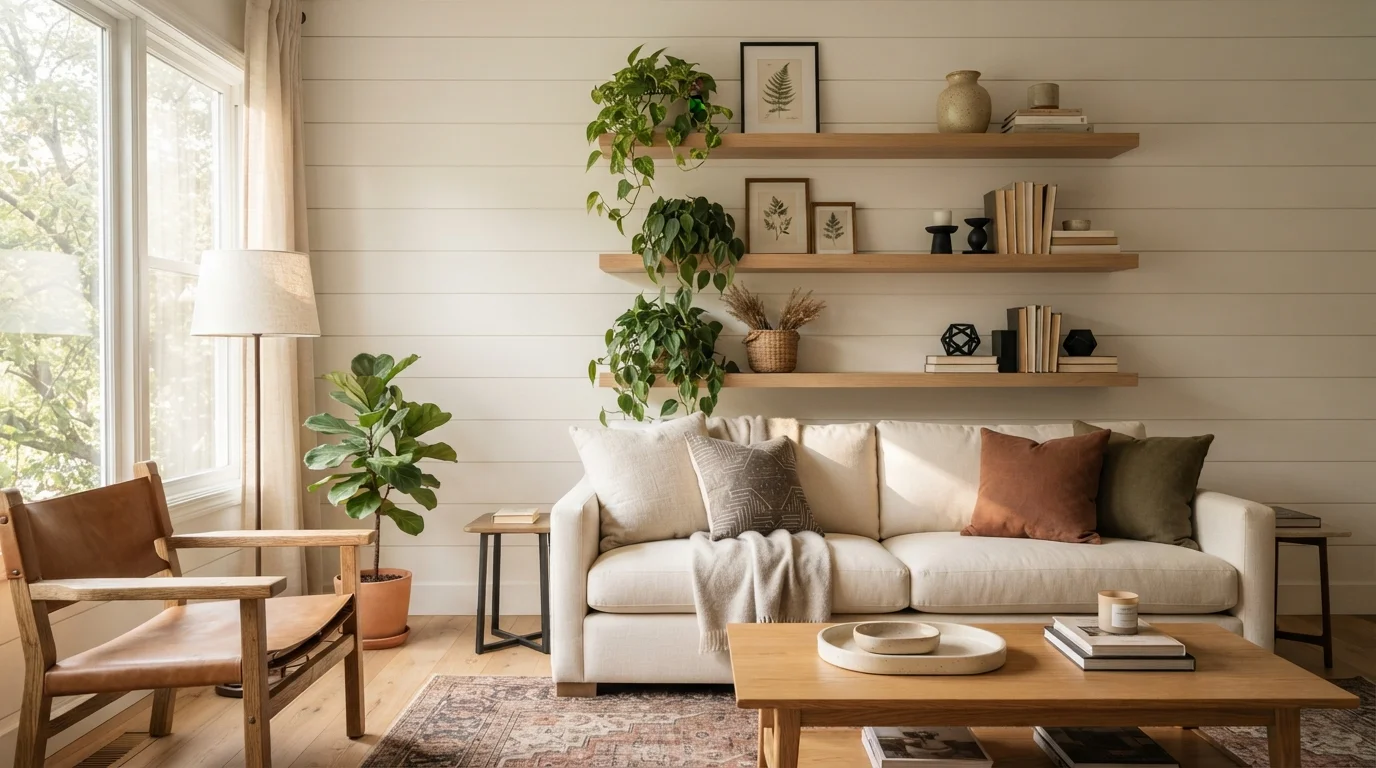
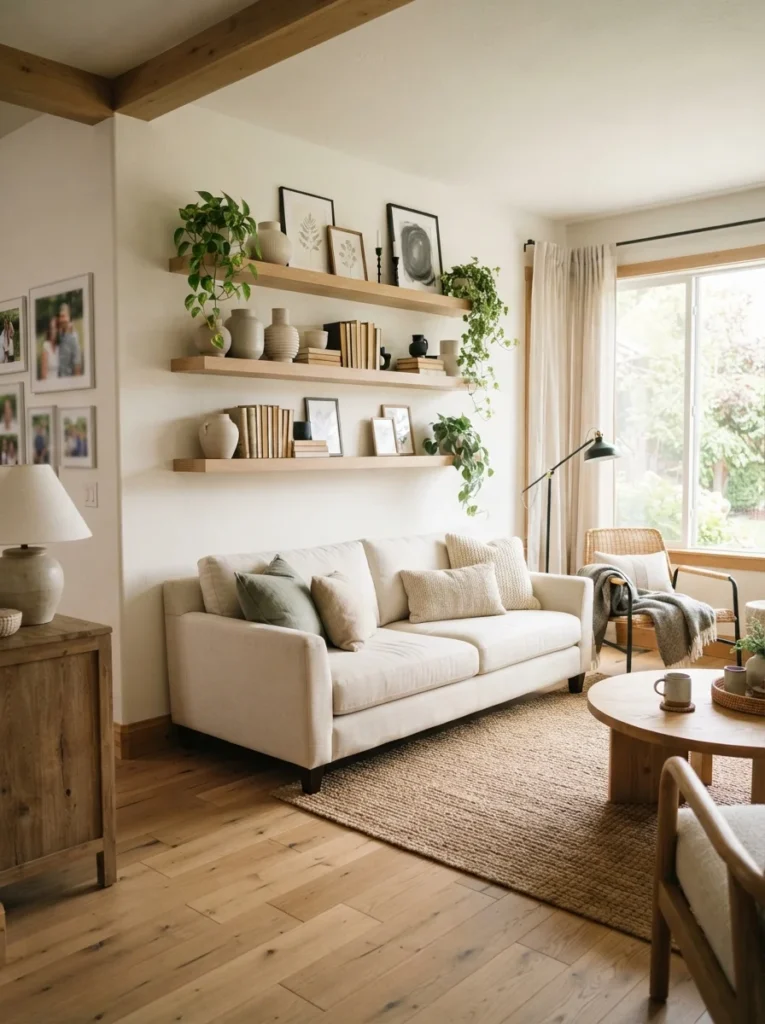
Living room shelves can be surprisingly tricky to decorate. You put out a few books, a vase, and a framed photo, but somehow everything looks crowded on one end and empty on the other. The problem usually isn’t the decor itself. It’s the way the colors, heights, shapes, and empty spaces work together.
Learning how to arrange decor on living room shelves doesn’t require a shopping spree or a professional stylist. In about 1 to 2 hours and for around $25 to $60, you can create a coordinated display using items you already own, a few inexpensive accessories, and some simple styling rules. These steps work for floating shelves, built-in bookcases, and freestanding living room shelving.
Time: 1–2 hours | Cost: around $25–$60 | Difficulty: Easy | Best for: living rooms, apartments, rental homes, and built-in shelving
What You’ll Need
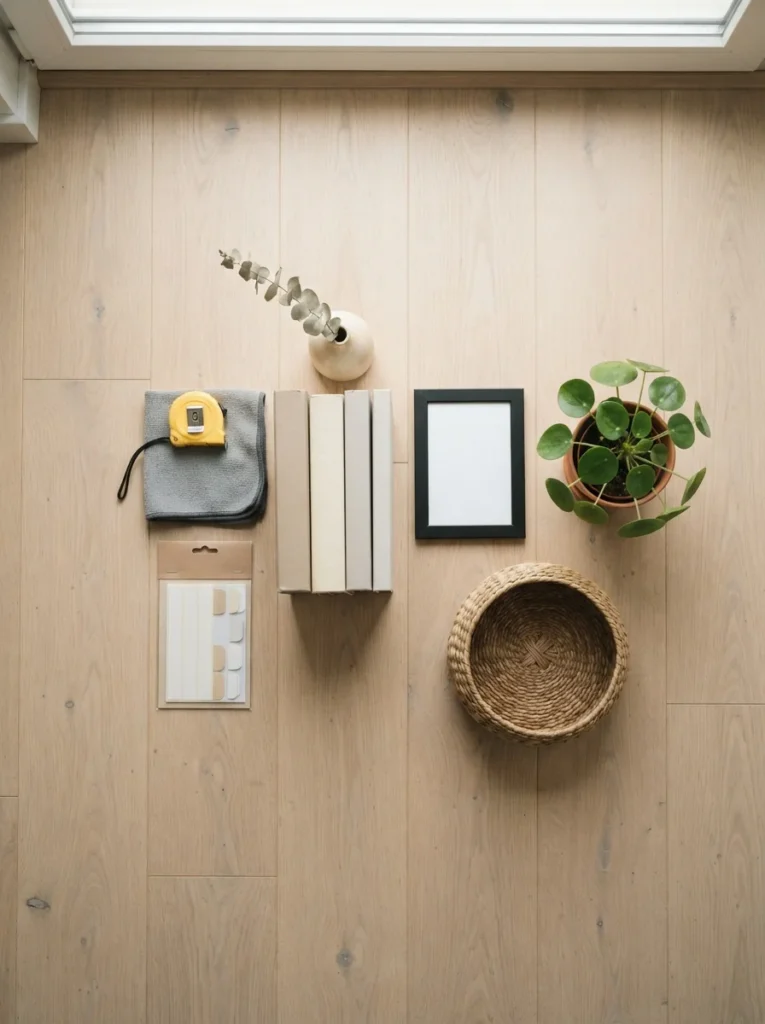
You probably have most of these items already. Shop your own rooms before heading to Target, Walmart, or a local thrift store.
- Microfiber cloth and all-purpose cleaner, around $3–$6 if you don’t have them
- Tape measure, around $5–$8
- Hardcover books in coordinating colors, $0–$15 from your collection or a thrift store
- Two or three decorative vases, around $8–$20 total
- One small potted plant, around $5–$12
- One or two framed prints or family photos, around $5–$15
- Small decorative bowl or woven basket, around $5–$12
- Removable picture strips for lightweight frames, around $5–$8
Estimated total: $25–$60, assuming you already own basic cleaning supplies and can reuse some decor.
1. Clear the Shelves and Start With an Empty Surface
Take everything off your shelves and wipe away dust with a microfiber cloth. If you’re working with several built-in shelves, clean each one before putting anything back. It’s much easier to spot uneven spacing and awkward groupings when you’re not working around existing objects.
Next, place all your decorative items on the floor or coffee table where you can see them together. Separate books, plants, framed art, ceramics, baskets, and personal keepsakes into loose groups. Remove anything damaged or anything that doesn’t suit the room anymore. Give yourself 10 minutes for this first pass. Don’t start styling until the shelves are completely clear, because moving objects around a dusty surface gets old quickly.
2. Choose Three Colors That Work With Your Living Room
Look at your sofa, curtains, rug, and other large pieces before choosing shelf accessories. Pick three main colors that already appear in the room. For example, a beige sofa and oak coffee table work nicely with cream, warm brown, and muted green. A charcoal sofa may look better with ivory, black, and natural wood.
You don’t have to buy matching accessories. Pull a cream vase from the kitchen, a green plant from the bedroom, and a few neutral books from a bookcase. Repeat each color at least twice across the shelves so the arrangement feels connected. One common mistake is introducing too many unrelated accent colors, which makes a small shelf display feel busy.
3. Measure the Shelves Before Arranging Anything
Grab your tape measure and record the width and depth of each shelf. A 10- to 12-inch-deep shelf generally accommodates books, small vases, and framed photos comfortably, while narrower shelves call for slimmer accessories. Measure the available height between shelves, too, especially if you’re styling built-ins.
Leave some room above tall objects so they don’t look squeezed against the shelf above. If a shelf is 14 inches tall, for instance, a 10-inch vase leaves a reasonable amount of breathing room. Don’t forget to check the shelf’s weight limit before placing heavy books or stoneware on floating shelves. A beautiful arrangement won’t matter much if the brackets sag under the weight.
4. Place the Largest Pieces First
Start with your largest objects, such as a substantial vase, a framed print, or a leafy plant. Place one larger piece toward the left or right side of the shelf rather than directly in the center of every shelf. On a 36-inch-wide shelf, a vase measuring 8 to 10 inches tall makes a useful starting point without overwhelming the entire surface.
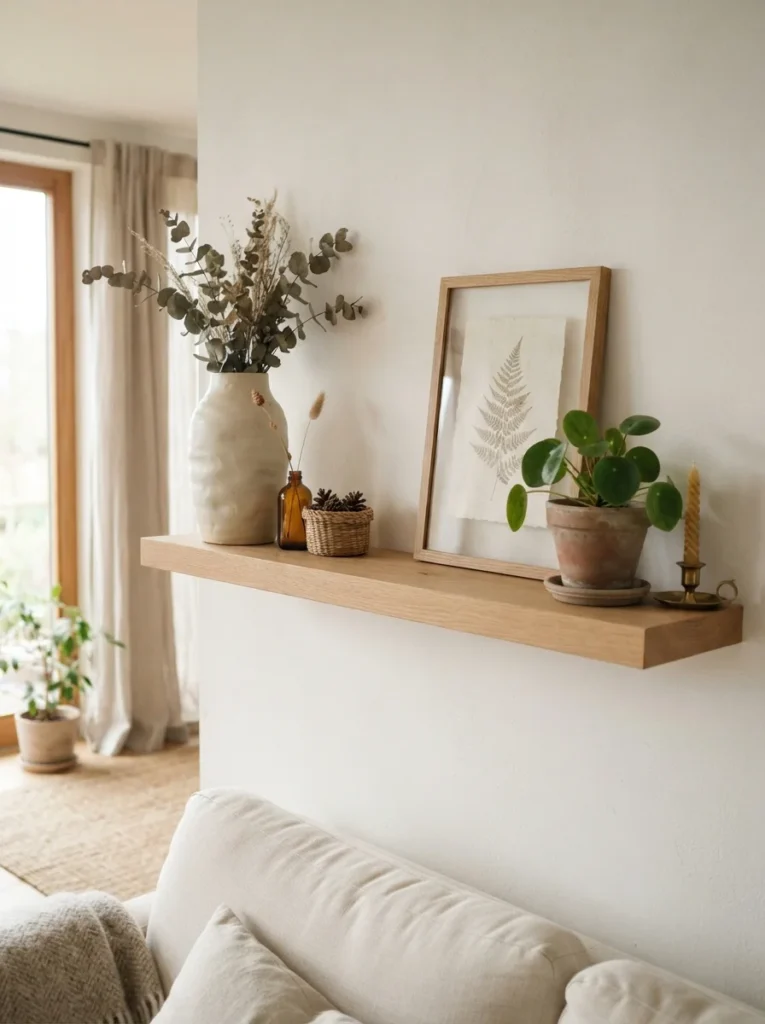
Now repeat the process on the other shelves, varying the placement instead of lining every large object up vertically. This creates a more relaxed arrangement. The mistake to avoid is putting all your tallest objects on one side of the entire bookcase, which makes the display feel lopsided.
5. Stack Books Horizontally and Vertically
Books are one of the easiest ways to add height, color, and structure to living room shelves. Stack two to four books horizontally, then stand three to six books vertically beside them if the shelf is wide enough. A horizontal stack also makes a handy base for a small bowl or decorative object.
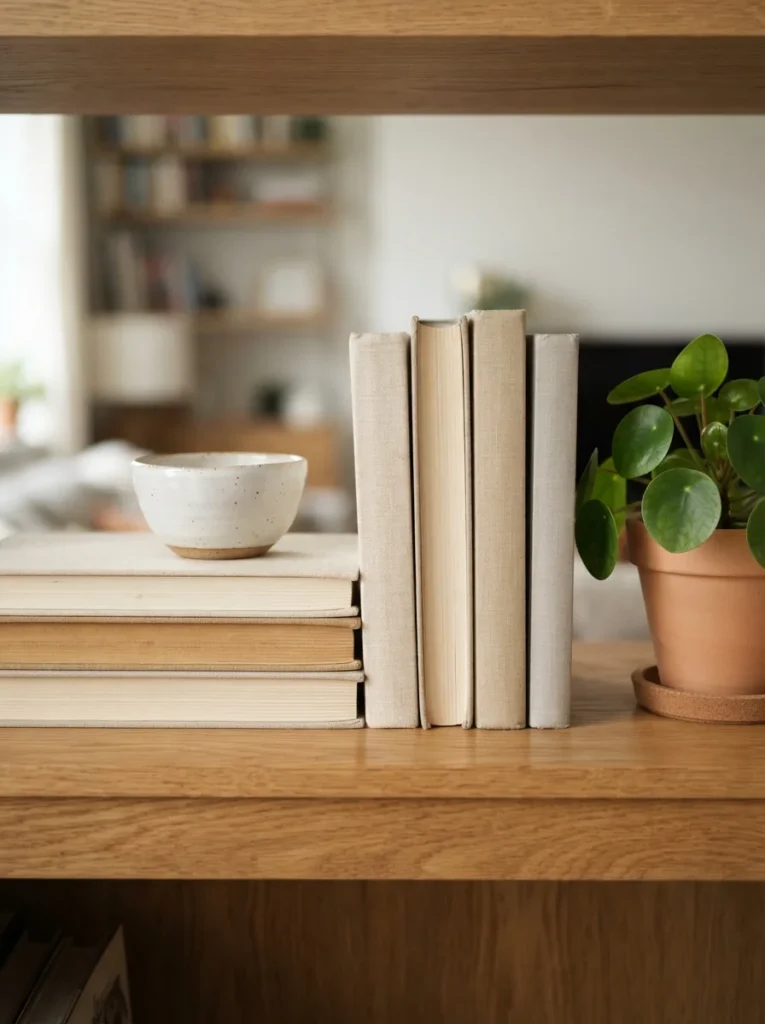
Keep the book spines within your chosen color palette, but don’t worry about making every spine identical. Leave roughly 2 inches of space between book groupings and nearby decor when the shelf allows it. If the shelf is narrow, skip the vertical row rather than cramming books together. Another easy mistake is stacking books so high that the objects on top almost touch the shelf above.
6. Group Small Accessories in Odd Numbers
Once the larger pieces and books are in place, add smaller accessories. A simple group of three works well: try a small ceramic vase, a wooden bead strand, and a decorative bowl. Keep the pieces different in height and shape so they read as one arrangement instead of three unrelated objects.
Use the rule of thirds as a starting point. On a 30-inch shelf, you might devote about 10 inches to a small accessory group, leaving the rest for books and open space. You don’t have to follow exact proportions, but grouping objects prevents the shelf from looking like a row of scattered knickknacks. Avoid placing tiny objects individually every few inches. They usually look better together.
7. Add Greenery for a Softer Look
A small plant breaks up the straight lines of shelves, books, and picture frames. Choose a pothos, compact fern, or artificial trailing plant from IKEA or Target. Set a 4- to 6-inch pot beside a book stack or toward the outer edge of a shelf where a few leaves can hang naturally.
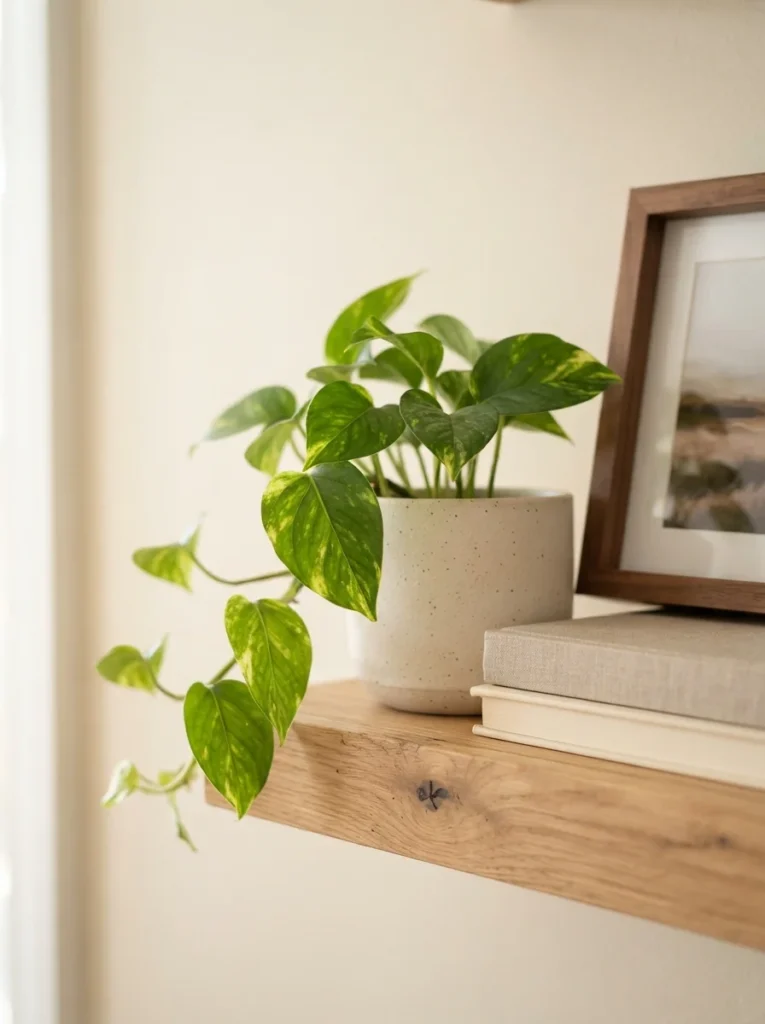
If you prefer low-maintenance decor, a realistic faux plant works just as well visually. Keep live plants away from direct heat and check whether the shelf can handle a watering pot without damage. Don’t let long stems cover framed art or spill across the entire shelf. A little greenery is enough to soften the display without hiding the other pieces.
8. Layer Framed Art and Personal Objects
Lean a small framed print against the wall behind a book stack or vase to create depth. Frames measuring 8 by 10 inches or 5 by 7 inches are practical for most standard living room shelves. If you’re using a floating shelf, check that the frame’s base sits securely and won’t slide forward.
Personal touches make the arrangement feel like your home rather than a furniture showroom. Add a family photograph, a small travel souvenir, or a handmade bowl. Keep sentimental pieces in the same general color family as your other accessories, but don’t hide everything behind neutral decor. For more ideas on combining artwork and accessories, try [INTERNAL LINK: article about living room wall decor ideas]. Avoid leaning several large frames in front of one another, since the arrangement can become visually heavy.
9. Step Back and Balance the Whole Display
Stand about 6 to 8 feet away and look at the shelves as one composition. Check whether the visual weight is spread across the entire unit. If the left side has a tall vase, a heavy book stack, and a large frame, balance it with a substantial plant or a similarly sized grouping on the right.
Don’t try to make every shelf identical. One shelf can hold mostly books, another can feature a plant and framed art, and a third can have a larger open area. Leave roughly 20% to 30% of each shelf visibly empty when space permits. That breathing room helps the objects stand out. I skipped this step once and kept adding little pieces until the shelves looked more like a gift shop than a living room.
Mistakes That Ruin the Result
- Using too many colors: Limit the main palette to three colors and repeat them across the shelves.
- Filling every inch: Remove one or two small accessories from crowded areas and leave visible empty space.
- Making every shelf symmetrical: Vary the height, placement, and type of objects while keeping the overall color palette consistent.
- Ignoring shelf depth and weight: Measure the shelf before styling, and check its rated load before adding heavy books or pottery.
Frequently Asked Questions
Q: How to arrange decor on living room shelves for a cohesive look?
Start with three coordinating colors, place the largest objects first, and group books and accessories in different heights. Repeat colors and materials across the shelves, leaving some empty space between arrangements.
Q: How many decorative items should go on each shelf?
For a shelf around 30 to 36 inches wide, start with three to five objects or small groupings. Add more only if the shelf still has room for comfortable spacing.
Q: Should living room shelves have matching decor?
No. Matching every object can make shelves look like a store display. Repeat a few colors, finishes, or materials instead, such as oak, cream ceramics, and green plants.
Q: How do I decorate floating shelves in a small living room?
Choose slim accessories, short book stacks, and small framed prints to preserve usable space. Keep larger pieces toward the ends and leave the center relatively open if the wall already feels crowded.
Q: How do I make living room shelves look expensive on a budget?
Use a restrained color palette, mix matte ceramics with natural wood, and vary the height of your objects. Thrift stores often have attractive hardcover books, small pottery pieces, and frames for a few dollars each.
Q: Should I put plants on living room shelves?
Yes, if the shelf gets suitable light and can support the planter. Small pothos plants and compact faux greenery add organic shapes that soften straight shelf edges and book spines.
Give Your Living Room Shelves a Weekend Refresh
You don’t have to replace your accessories or buy an entire matching decor collection to get a polished result. The easiest way to learn how to arrange decor on living room shelves is to work with what you own, repeat a few colors, and give every object enough space to stand out. Set aside an afternoon this weekend, clear the shelves, and try two or three arrangements before settling on your favorite. A handful of thoughtful changes can make your living room feel more connected without stretching your decorating budget.