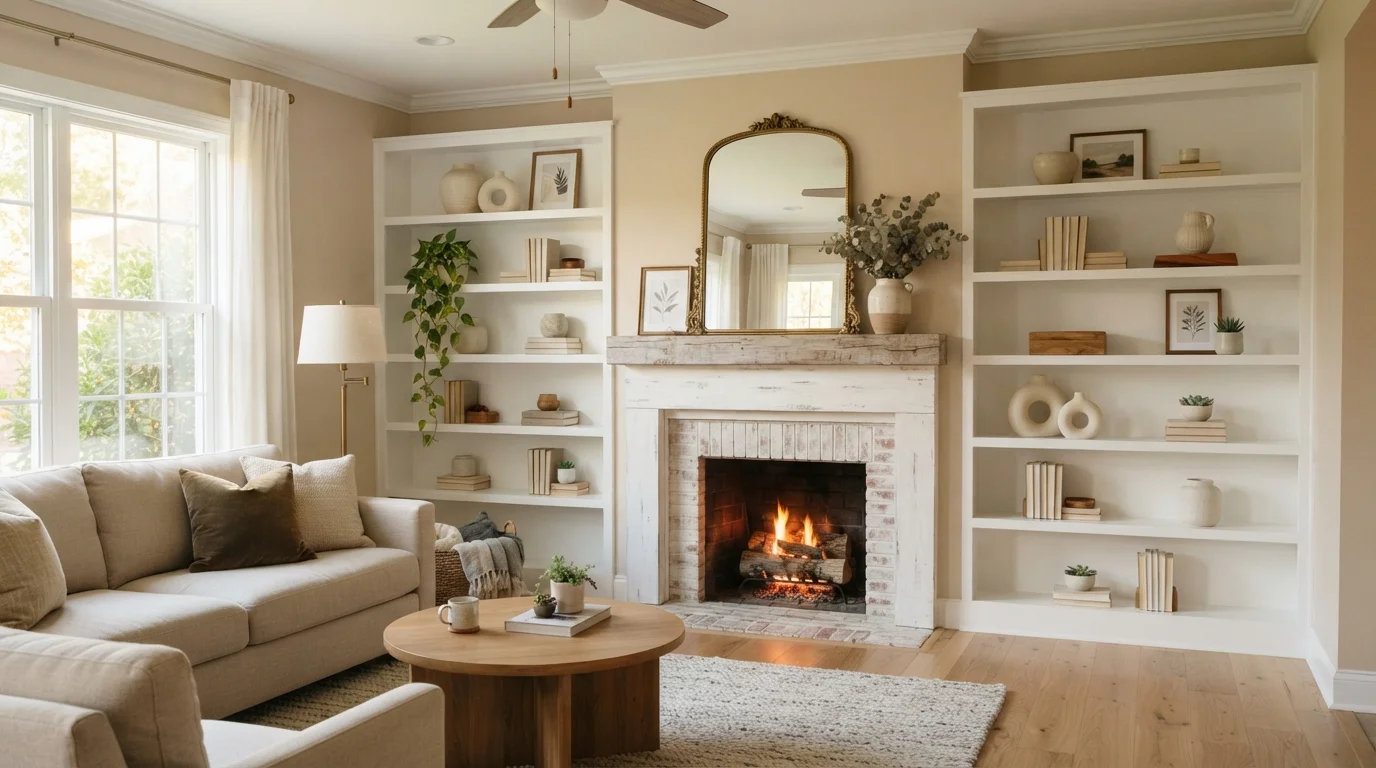
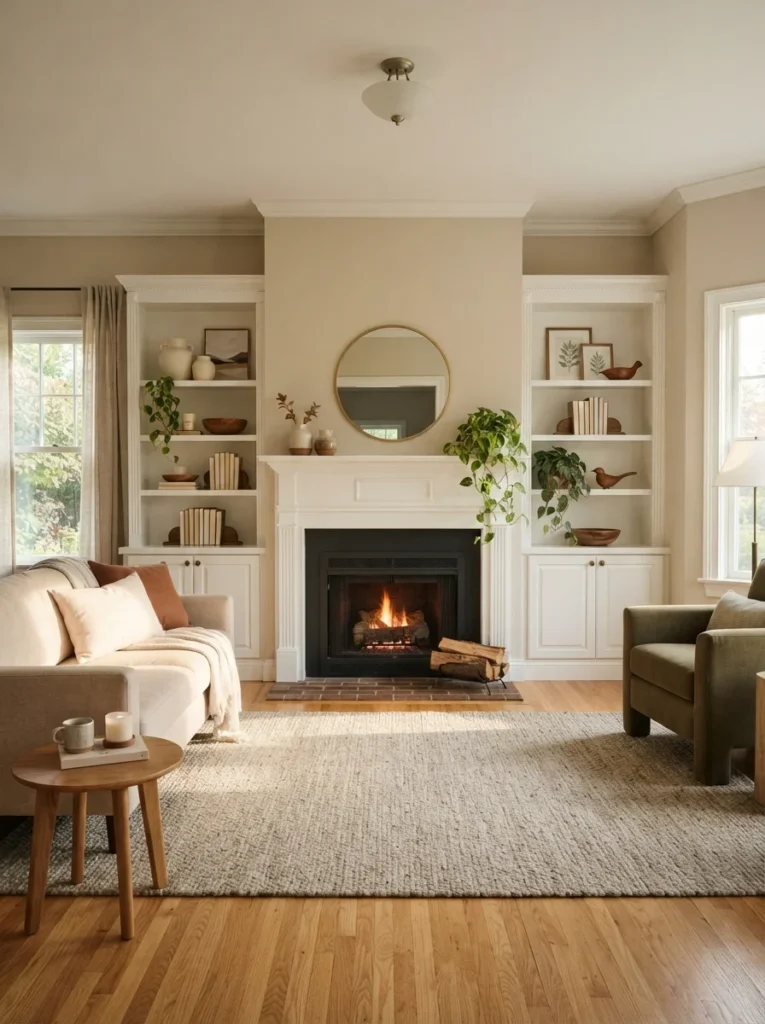
Built-in shelves can be one of the prettiest features in a living room, but they’re surprisingly easy to overfill. A few books, some family photos, a collection of little vases, and suddenly every shelf looks crowded. The problem usually isn’t the decor itself. It’s how much you’re displaying and where each piece sits.
The good news is that you don’t have to buy an entirely new collection of accessories. This guide to how to decorate built in shelves in a living room will help you create a balanced display using items you already own, plus a few affordable additions if you want them. Set aside about two hours, and plan on spending around $25 to $75 if you’re shopping for a handful of new pieces.
Time: 2 hours | Cost: around $25–$75 | Difficulty: Easy | Best for: Living rooms with built-in bookcases, fireplace shelving, or wall-to-wall storage
What You’ll Need
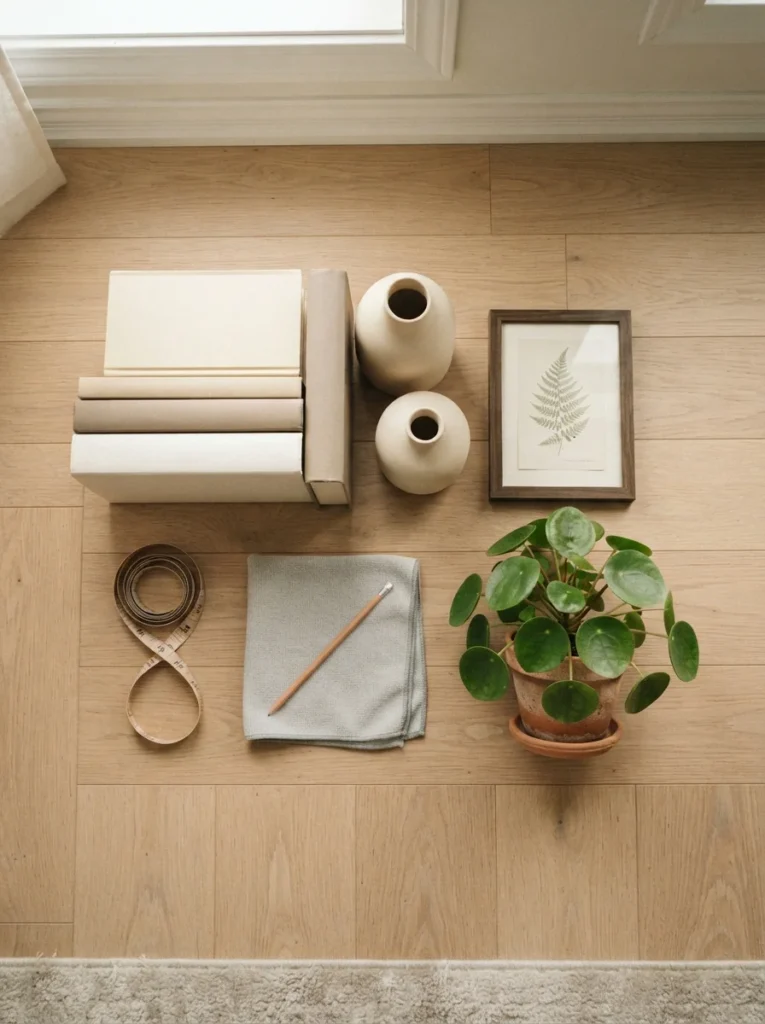
- Microfiber cloth and all-purpose cleaner, around $4–$8 if purchased new
- Tape measure, around $5–$10
- Pencil and painter’s tape, around $4–$7
- Hardcover books from your home or a thrift store, around $0–$15
- Two or three ceramic vases, around $10–$25
- One small framed print, around $5–$15
- One or two small plants, around $5–$15
- Decorative bowl or sculptural object, around $5–$12
- Small storage baskets, optional, around $8–$15 each
Budget tip: Start with your existing books, framed photos, and bowls before buying anything. You can style an entire bookcase with just a few new accessories if the pieces you already own have different heights and textures.
1. Empty the Shelves Before You Start Styling
Take everything off the built-ins, including the little objects tucked behind books. Place the items on your living room floor or dining table so you can see what you have. Wipe each shelf with a microfiber cloth, paying extra attention to corners where dust collects.
While the shelves are empty, check whether the wood, paint, or laminate has scratches that need attention. Measure the height and depth of each shelf with your tape measure. Write down the usable depth and height of every shelf, especially if the built-ins have adjustable shelves or a few unusually short compartments.
The mistake to avoid is putting everything back simply because it was there before. This is your chance to remove objects you no longer enjoy looking at.
2. Choose a Simple Color Palette for the Whole Bookcase
Before arranging individual pieces, pick three or four colors that work with your living room. For a relaxed neutral room, try cream, warm wood, muted green, and black. If your sofa is navy blue, add a little navy through book spines, a framed print, or a ceramic bowl.
Spread your chosen colors throughout the shelves rather than keeping every matching object together. For example, place a green plant on the upper left shelf and another green accent on the lower right shelf. This creates a visual connection without making both sides identical.
Use your room’s existing colors as your starting point. The common mistake is introducing too many unrelated colors through small decorative objects, which makes the whole bookcase feel busy.
3. Decide How to Decorate Built In Shelves in a Living Room by Zone
Built-ins often look cluttered because every shelf is treated like a separate decorating project. Instead, divide the entire bookcase into three visual zones: upper shelves for lighter accessories, middle shelves for books and artwork, and lower shelves for heavier objects or concealed storage.
If your bookcase has eight compartments, assign two or three to books, two to decorative groupings, one to framed art, and the remaining spaces to plants or baskets. Adjust that mix to suit the size of your collection.
Leave roughly 25–40% of the visible shelf space empty. Negative space gives each group room to stand out. Avoid filling every gap with a tiny object just because there’s room for one.
4. Arrange Books Horizontally and Vertically
Books provide structure, so use them as the foundation of your display. Stand five to eight books upright on one side of a shelf, then lay two or three larger books flat on another shelf. A horizontal stack also creates a low platform for a small vase or decorative object.
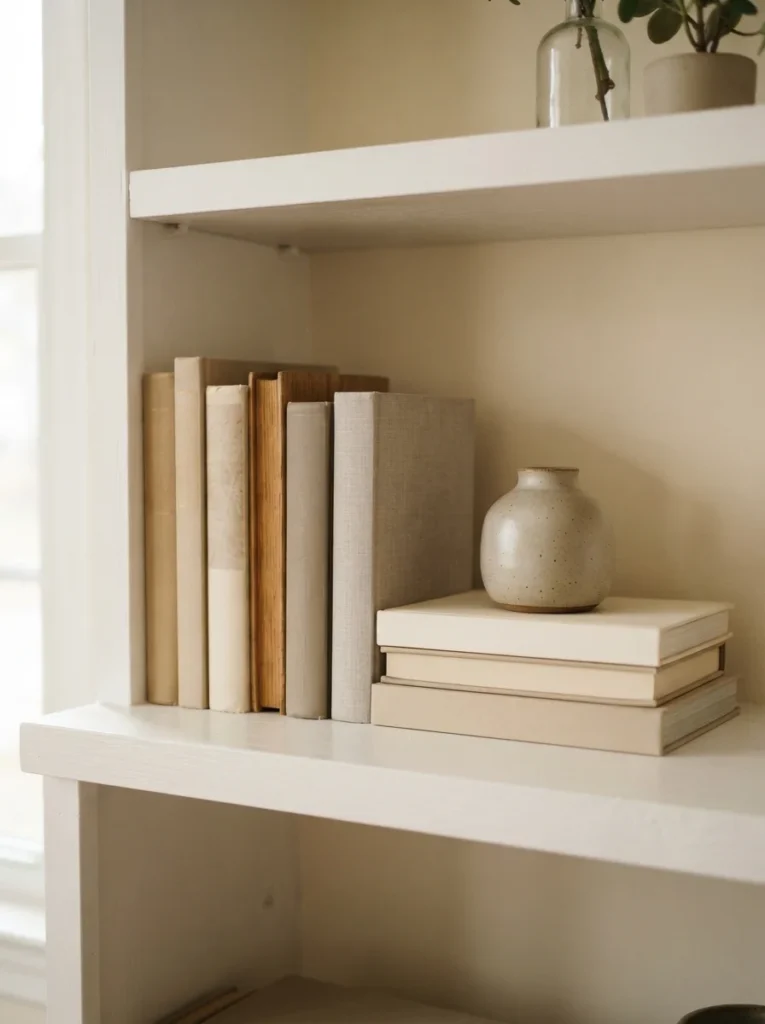
Mix book sizes, but keep the tallest books away from shelves where they almost touch the top. If the books have colorful spines, turn a few around only if you genuinely prefer the softer look, rather than hiding every color.
Leave at least 1–2 inches between the top of a book and the shelf above it when the space allows. A common mistake is making every row of books the same height, which creates a rigid, library-like appearance.
5. Add Decor in Groups of Two or Three
Now bring in vases, bowls, framed photographs, and small sculptures. Arrange two or three related objects together rather than lining up six separate accessories across one shelf. A cream vase beside a small wooden bowl and a short stack of books makes a more intentional grouping than three unrelated trinkets.
Vary the height and shape of the objects. Pair a tall, narrow vase with a low, rounded bowl, for example. On a shelf that’s 12 inches deep, leave enough room for the objects to sit securely without hanging over the front edge.
Keep most decorative groupings to three objects or fewer. The mistake here is choosing items that are all the same size, which makes the arrangement look flat.
6. Use Framed Art to Break Up Rows of Objects
Small artwork adds a different shape to a bookcase filled with rectangular books. Lean an 8-by-10-inch or 11-by-14-inch frame against the back of a shelf, then place a short book stack or small bowl in front of one corner.
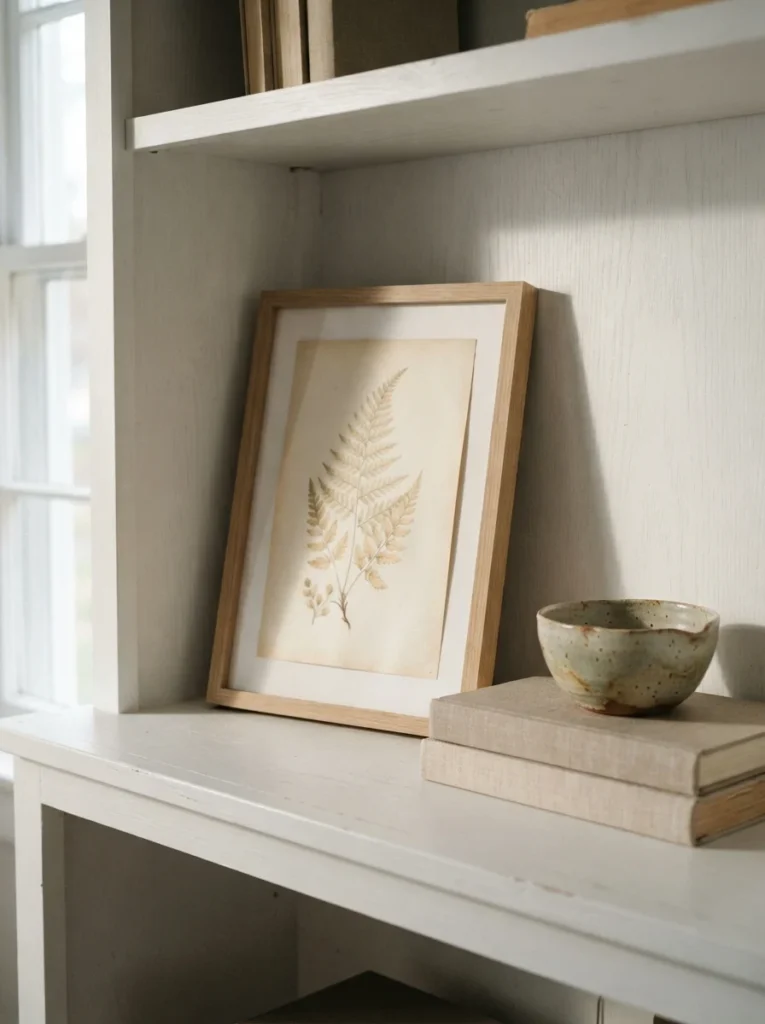
Check the frame’s stability before adding anything in front of it. If the shelf is deep, position the frame near the back so it doesn’t compete with objects at the front. For a narrow shelf, a single small frame often works better than several overlapping pictures.
Use artwork with a frame no wider than about two-thirds of the shelf width when you want it to be the main feature. A frequent mistake is choosing a frame that’s so large it leaves no breathing room around the other objects.
For more inspiration, see [INTERNAL LINK: article about living room wall decor ideas].
7. Bring in Greenery Without Crowding the Shelves
A little greenery softens straight lines and adds color to neutral decor. Choose a small pothos, peperomia, or compact artificial plant for a shelf with limited depth. Place a trailing plant near an outer edge where its leaves can hang naturally without covering the books or artwork beside it.
Before buying a plant, measure the shelf depth and check how much light reaches the bookcase. A real plant needs suitable light and occasional watering, while a good-quality artificial plant works well in a dark built-in beside a fireplace.
Start with one or two plants across the entire bookcase. Too much foliage can hide the objects behind it and make narrow compartments feel cramped. Keep leaves away from hot fireplace openings and other heat sources.
8. Balance Both Sides Without Making Them Identical
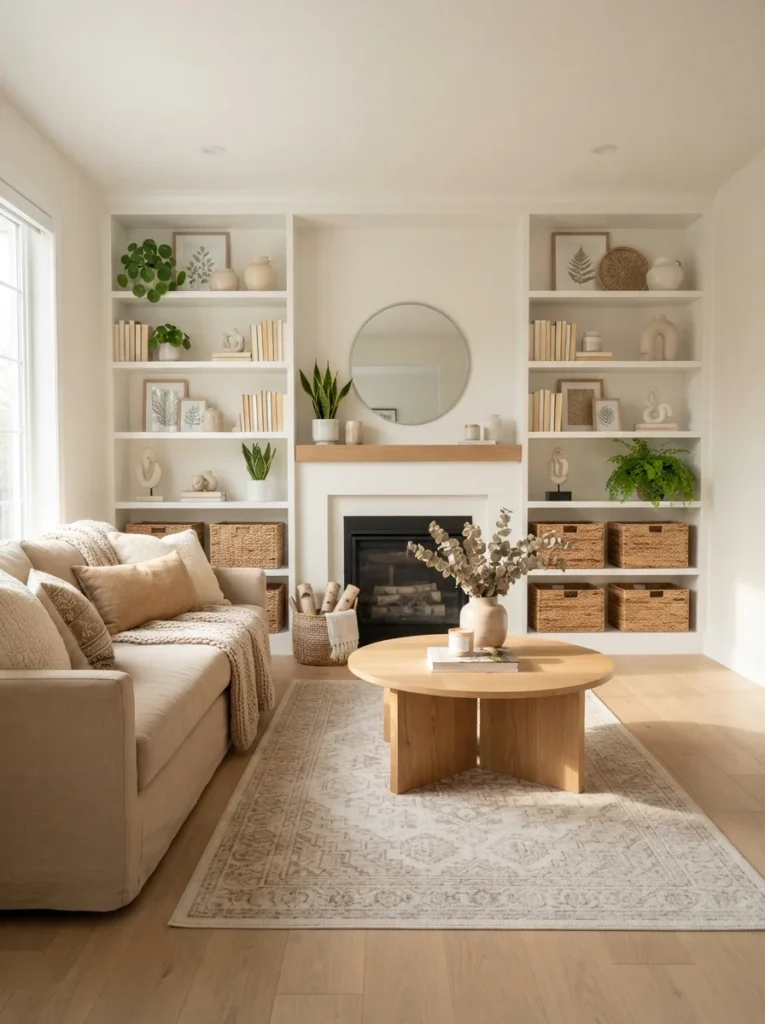
Built-ins that flank a fireplace often look best when both sides have a similar visual weight. You don’t have to duplicate every vase or book stack. Instead, use comparable shapes and heights on opposite sides. A tall ceramic vase on the left can balance a leafy plant and a short stack of books on the right.
Step back about six to eight feet and look at the entire wall, not just the individual compartments. If one side looks much heavier, move a darker object or larger frame to the other side.
Repeat two or three colors or materials across both sides. White ceramics, natural wood, and green foliage work particularly well together. The mistake to avoid is forcing perfect symmetry when the shelf dimensions or the items you own are different.
9. Edit the Display and Leave Room to Breathe
Once everything is in place, resist the temptation to add one more little object. Look for shelves where several items touch, where every surface is covered, or where the same type of accessory appears repeatedly.
Remove one item from any grouping that feels crowded. Move small loose objects into a drawer or basket, especially if they’re things your family uses every day. Baskets on the bottom shelves are handy for remote controls, charging cables, and children’s toys that otherwise end up scattered around the room.
Leave at least one completely open section on each side of a fireplace built-in, if the layout allows it. That quiet space helps the more decorative shelves stand out. I find that taking a quick photo on my phone makes crowded spots much easier to spot than staring at the shelves up close.
Mistakes That Ruin the Result
- Filling every shelf: Remove a few accessories and leave open space around each group.
- Using too many tiny objects: Replace several small pieces with one larger vase, bowl, or framed print.
- Repeating identical arrangements: Keep a consistent color palette, but vary the shapes and heights of each grouping.
- Ignoring practical storage: Put everyday clutter in baskets on lower shelves instead of displaying it in the open.
Frequently Asked Questions
Q: How to decorate built in shelves in a living room without clutter?
Start by removing everything, then return only books, artwork, plants, and a few meaningful accessories. Keep groupings to two or three objects and leave around 25–40% of the visible shelf space open.
Q: What should I put on living room built-in shelves?
Use a mix of hardcover books, framed photos, ceramic vases, decorative bowls, small plants, and a few personal objects. Include useful storage baskets on lower shelves if you want to hide everyday items.
Q: Should built-in shelves match on both sides of a fireplace?
They should feel balanced, but they don’t have to be identical. Repeat a few colors, materials, and similar visual heights on each side to create a connected look.
Q: How do I decorate built-in shelves on a small budget?
Shop your own home first, then look at thrift stores for hardcover books, frames, and ceramic pieces. A budget of $25 to $40 can cover a couple of new accessories if you reuse most of what you already own.
Q: How much empty space should built-in shelves have?
Aim for about 25–40% open space across the visible shelves as a starting point. Smaller decorative groupings and a few completely open compartments help prevent the bookcase from feeling overcrowded.
Q: How do I decorate built-in shelves with a TV?
Keep the shelves around the television relatively simple so the screen remains the main focal point. Use a few books, low-profile pottery, and restrained greenery, and avoid placing tall objects where they overlap the screen or block ventilation.
Give Your Built-In Shelves a Weekend Refresh
You don’t need expensive accessories or a perfectly coordinated collection to decorate built-in shelves in a living room beautifully. Start with a clear surface, choose a small color palette, mix books with a few sculptural objects, and leave enough empty space for the arrangement to breathe. The whole project takes about two hours, so set aside a Saturday morning, shop your own home first, and make small adjustments until the shelves feel balanced from across the room.