A small living room can feel crowded surprisingly fast. One extra side table, a stack of books, or a decorative bowl on the coffee table, and suddenly there’s barely room to set down a cup of coffee. The trick isn’t getting rid of every pretty thing. It’s finding smarter places to display the things you love.
The best small living room shelf decor ideas use vertical wall space, lightweight accessories, and practical storage to keep a room comfortable without making it feel packed. Think slim floating shelves, thrifted picture frames, baskets, small plants, and a few carefully arranged books. Many of these setups cost $15 to $60, especially if you reuse pieces you already own. Even one well-styled shelf can give an empty wall a purpose.
1. Give an Empty Wall a Pair of Slim Floating Shelves
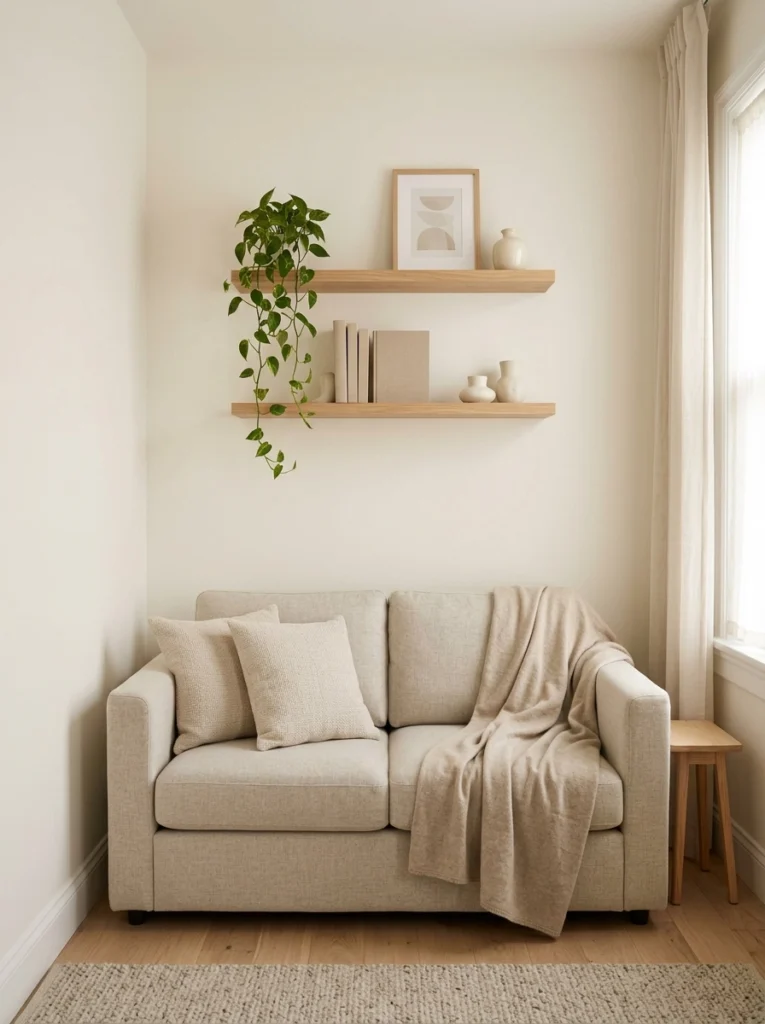
Floating shelves are one of the easiest ways to decorate without sacrificing floor space. Install two shelves about 24 to 36 inches long above your sofa or beside the television, leaving around 10 to 14 inches between them for books and medium-sized accessories. IKEA and Walmart carry affordable shelf options, while Home Depot sells unfinished pine boards if you’d rather make your own. Plan on $20 to $45 for a basic pair, excluding any tools you don’t already own.
Keep the upper shelf lighter, with a small plant and one framed print, then use the lower shelf for two stacked books and a ceramic bowl. That variation makes the arrangement feel relaxed instead of perfectly matched. Before drilling, check for wall studs and follow the shelf manufacturer’s weight limits. If you’re renting, choose a suitable removable shelving system only for lightweight objects and within its stated load rating. A little planning saves you from patching unnecessary holes later.
2. Style a Picture Ledge With Affordable Art
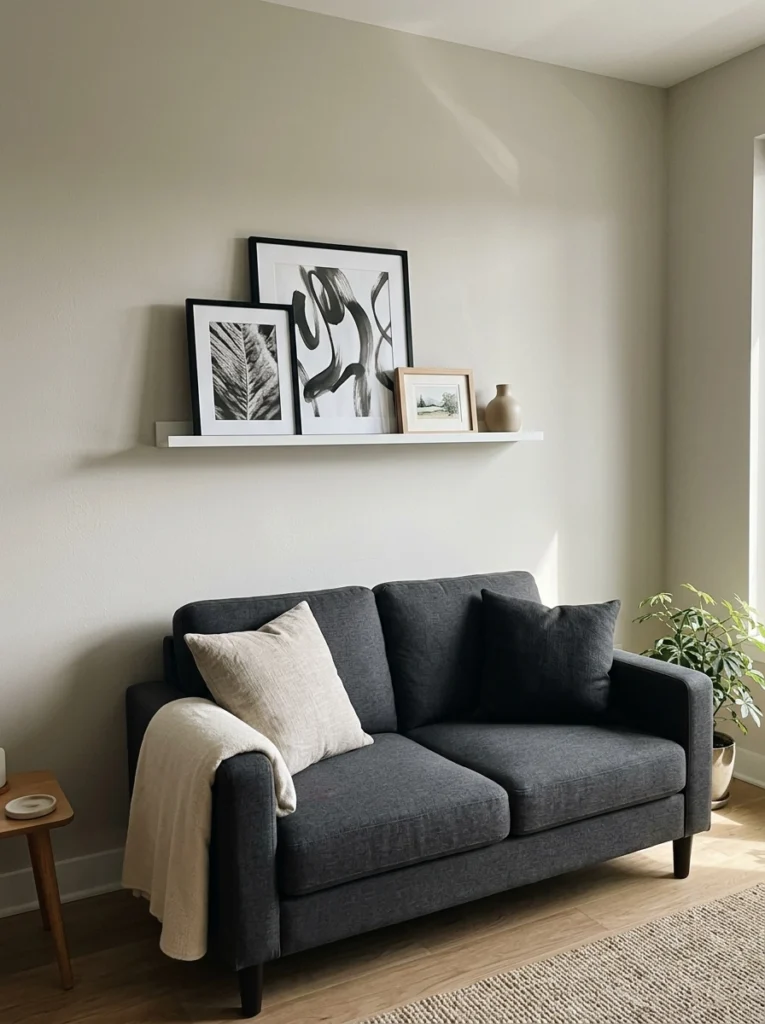
A picture ledge is ideal if you love changing your artwork but don’t want to hang a dozen separate frames. Choose a ledge around 30 inches long for $15 to $30, then arrange two or three frames of different heights along it. Target and IKEA are good places to look for inexpensive frames, while printable artwork can cost just a few dollars.
Lean a larger print against the wall at one end and overlap a smaller frame slightly in front. Add a little wooden object or a tiny vase to break up the straight lines. Keep the artwork palette consistent, perhaps black, cream, and muted green, so the arrangement feels connected even when the illustrations differ. Picture ledges also work beautifully above a narrow desk or reading chair. Use frames with secure stands, and keep the ledge anchored properly so heavier frames won’t slide off if someone brushes against it.
3. Turn the Corner Into a Mini Plant Display
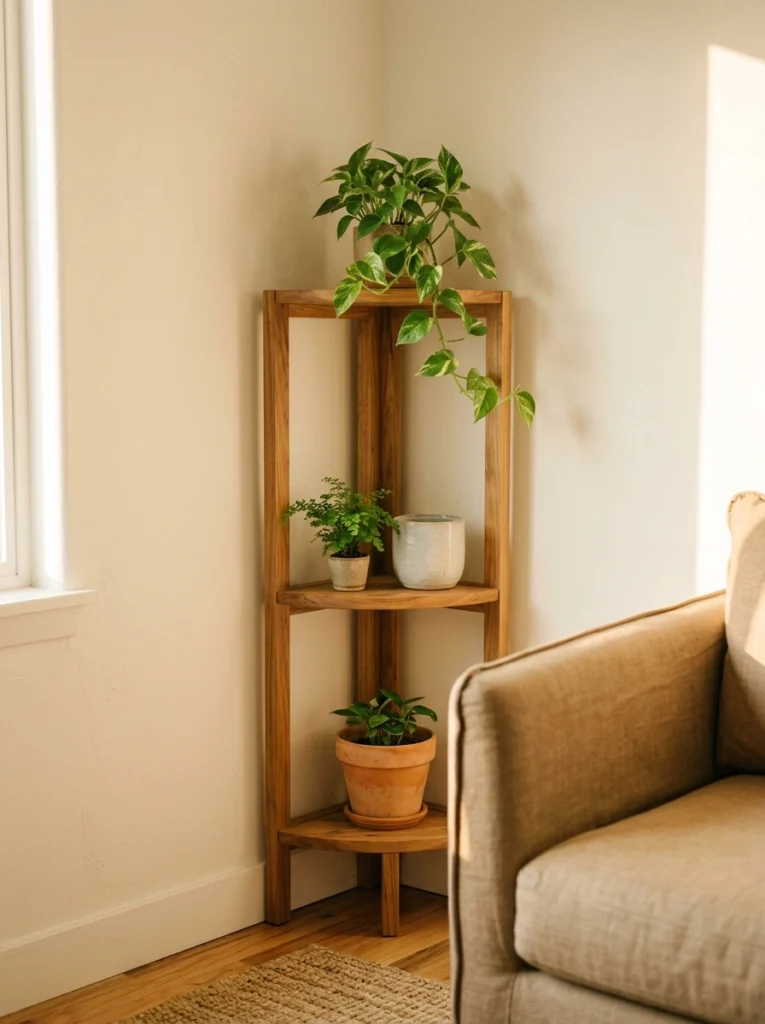
That awkward corner between the sofa and the window often becomes a dumping spot for things that don’t have a home. A narrow corner shelf turns it into a useful display without adding another wide piece of furniture. Look for a three- or four-tier unit around 10 to 14 inches wide. Budget $25 to $50 for a simple corner shelf, or check Facebook Marketplace for a secondhand wooden one.
Use small plants that suit your room’s light. Pothos and heartleaf philodendrons are good choices for many bright, indirect-light spots, while succulents generally prefer stronger light. Place the largest pot on the bottom tier and smaller ones higher up, with at least one empty section to give the arrangement breathing room. Add saucers beneath the pots to protect wood from water marks. If your corner is dim, use a realistic artificial plant instead of trying to keep a sun-loving plant alive in poor conditions. The result feels decorative without turning the floor into a jungle.
4. Stack Books Horizontally for a Casual Designer Look
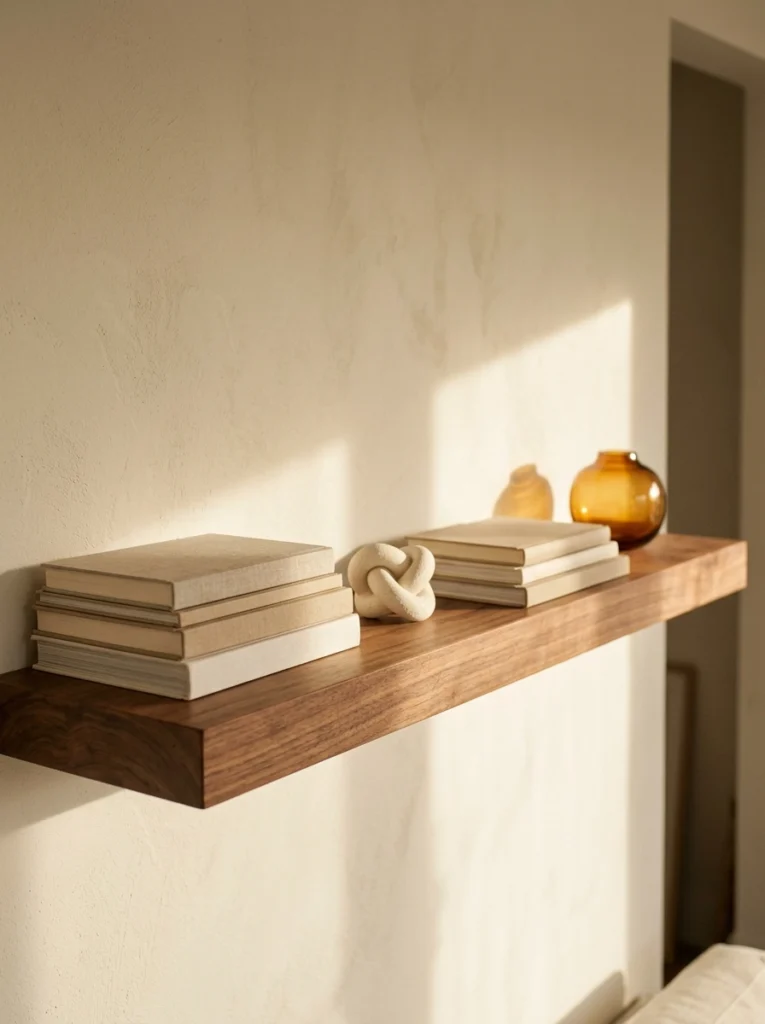
Books are useful decor because they add color, texture, and height without requiring special accessories. Pull a few attractive titles from your own collection before buying anything. If your shelves are bare, thrift stores often have inexpensive hardcovers for $1 to $5 each, and you can find affordable decorative books at Walmart or Target.
On a shelf about 24 inches long, create one stack of two or three books and place a small object on top. Keep another group upright with a bookend if you have enough room. Vary the direction of the spines so the display doesn’t resemble a library shelf, but avoid turning every book around simply to hide its title. That trick can make the arrangement look artificial. A small brass object, a smooth stone bowl, or a wooden bead accessory gives the books a finished appearance. Dust the tops occasionally, especially if the shelves sit near a ceiling fan or an open window.
5. Add a Small Shelf Above the Television
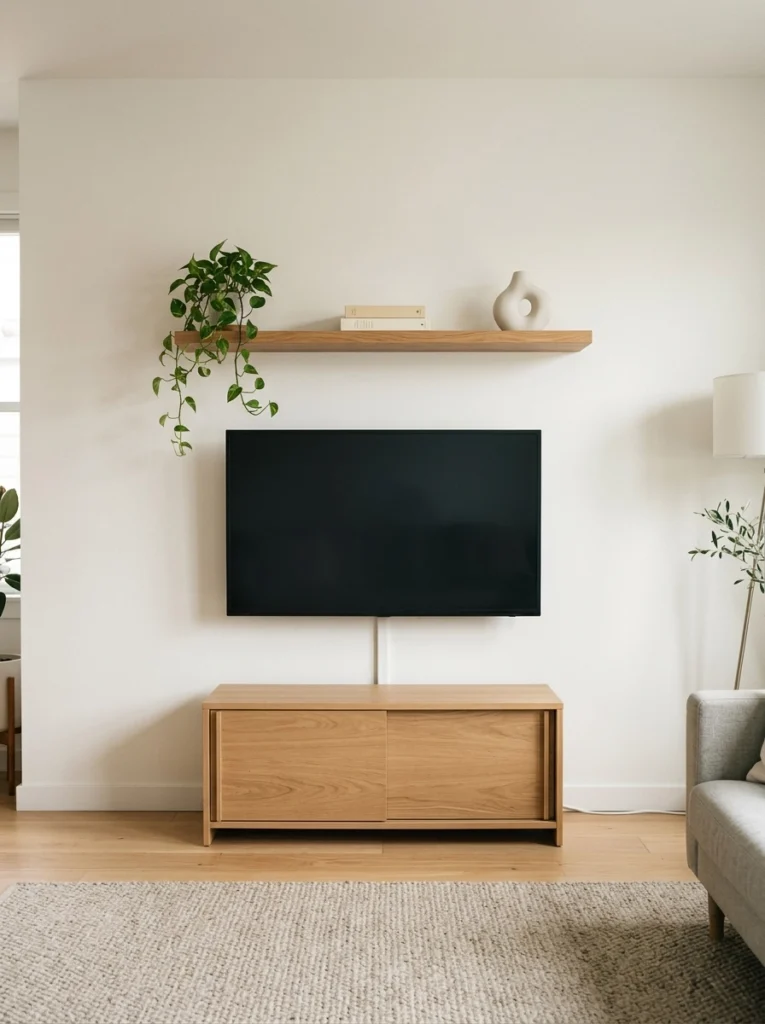
Television walls can look surprisingly bare, especially when the screen is mounted above a compact media console. A single shelf above the screen adds a little warmth and makes the wall feel more complete. Choose a shelf roughly 36 to 48 inches long for $25 to $55, depending on the finish and mounting hardware.
Keep the objects low and simple. A short stack of books, a small plant, and one rounded ceramic piece are enough. Avoid tall lamps, oversized vases, or dangling cords that compete with the screen. Before installing the shelf, check the television’s mounting instructions, ventilation clearances, and the distance between the screen and the proposed shelf. You don’t want accessories falling onto your television or blocking airflow. For a cohesive look, repeat the wood tone of your media console or coffee table. That one matching detail can make inexpensive pieces feel like they belong together.
6. Use Woven Baskets to Hide Everyday Clutter
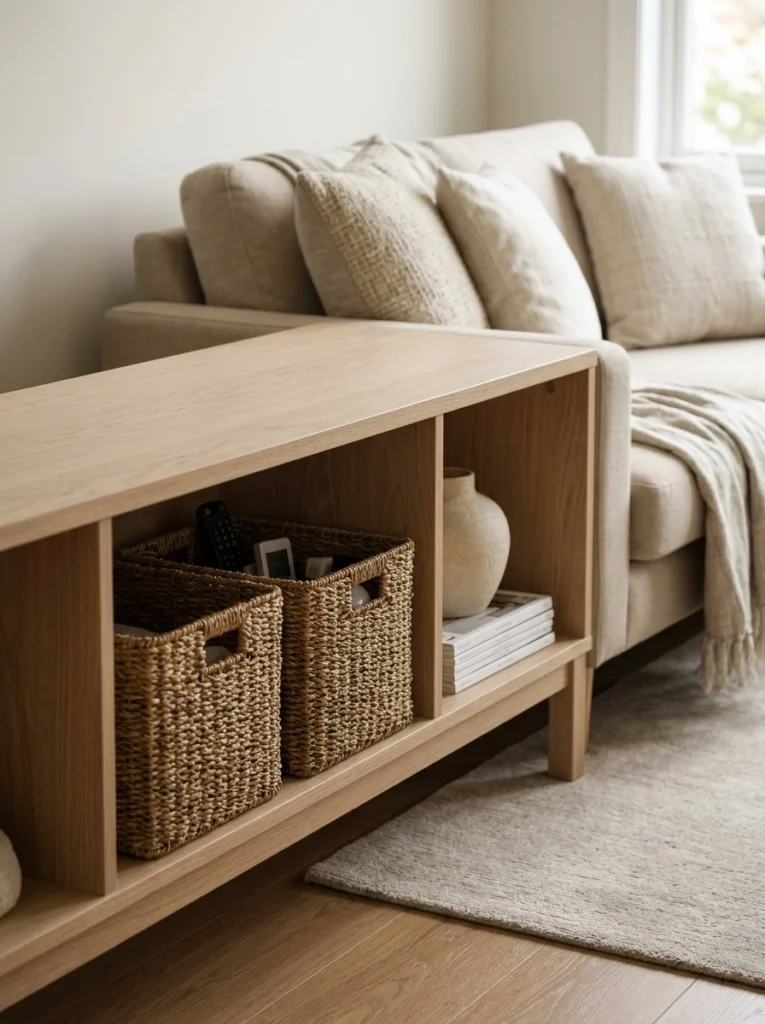
Not everything on a living room shelf deserves to be on display. Charging cables, spare batteries, game controllers, and little odds and ends can quickly spoil an otherwise lovely arrangement. Woven baskets give those items a home while adding texture to plain shelves. Look for baskets around 8 to 12 inches wide at Target, Walmart, or IKEA, where $8 to $18 per basket is a reasonable shopping budget for many basic styles.
Measure your shelf opening before buying, including the height beneath any fixed shelf above it. Use matching baskets along the bottom row and reserve the upper shelves for books or decorative pieces. If the room already has plenty of beige, choose darker seagrass or black woven baskets for contrast. For a home with children or pets, choose sturdy baskets without sharp wire edges or loose decorative cords. Keep heavier items on lower shelves, and avoid stuffing baskets so full that pulling them out becomes a daily wrestling match.
7. Make a Tiny Shelf Feel Personal With Framed Photos
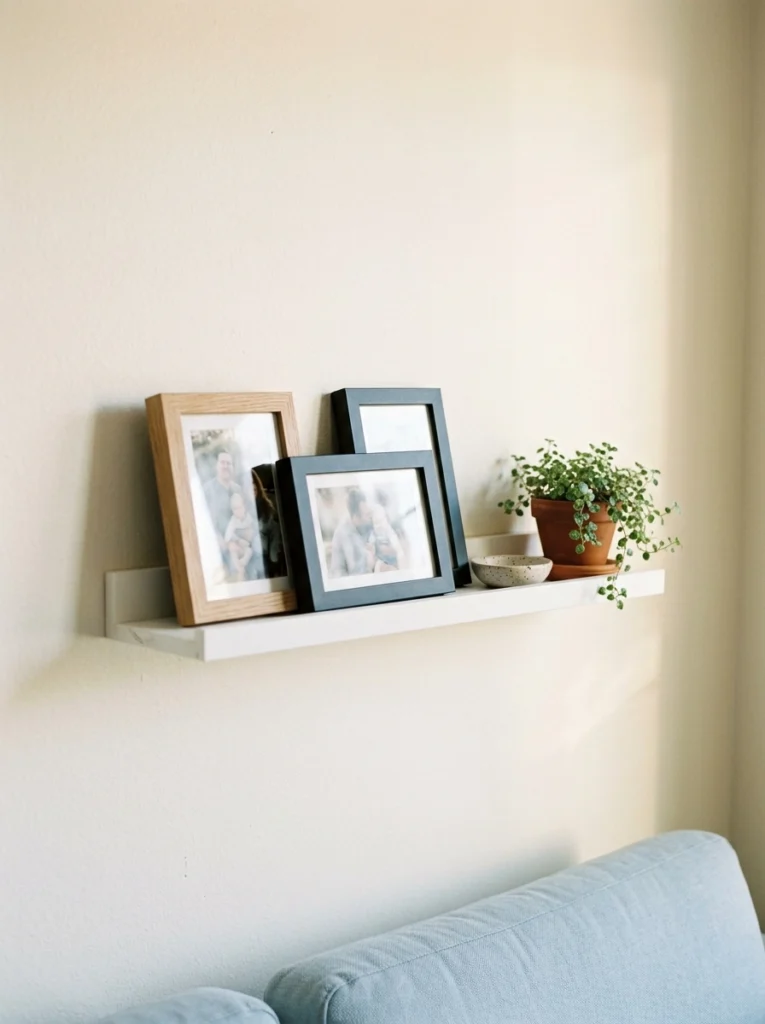
A shelf doesn’t have to hold expensive decor to feel special. A few framed photographs make the room feel lived-in, especially when you mix personal memories with one or two decorative objects. Use frames around 4 by 6 or 5 by 7 inches, which are small enough for a narrow ledge. Basic frames at IKEA or Walmart often cost $3 to $10 each.
Instead of lining up every frame at the same height, place two together and leave a little space before the third. Use a small ceramic dish or a miniature plant to fill the gap. Black frames look crisp against white walls, while oak frames create a softer, more relaxed appearance. You can also print favorite photographs at a local photo counter rather than buying costly art. Keep the number of frames proportional to the shelf length. Three thoughtfully arranged photos on a 24-inch shelf generally look better than seven squeezed together. If the shelf is above a sofa, mount it securely and keep the frames from leaning too far forward.
8. Choose a Narrow Ladder Shelf for Vertical Storage
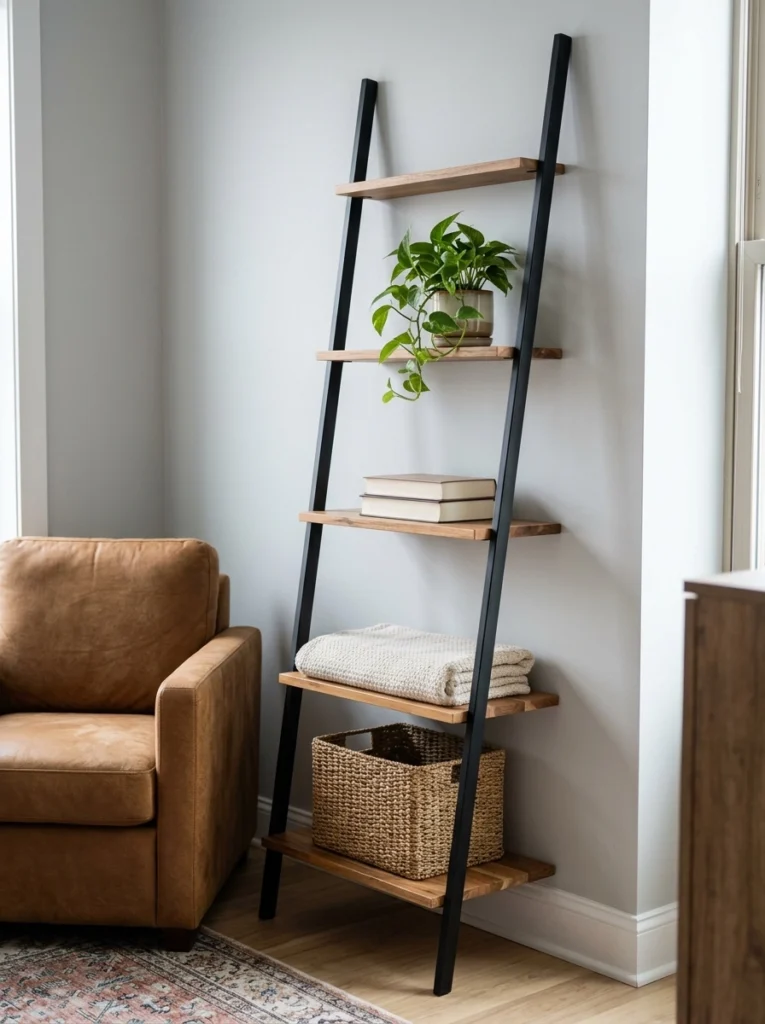
When your floor space is limited, a tall shelf can be more practical than a wide bookcase. A ladder-style unit uses vertical space and often has a shallower profile than traditional furniture. Look for a model around 18 to 24 inches wide and 55 to 70 inches tall, with prices commonly ranging from $40 to $90 at IKEA, Walmart, and online retailers.
Use the upper tiers for lightweight decor, the middle for books, and the bottom for a basket of magazines or a folded throw. Leave one or two shelves partially empty so the unit doesn’t feel crowded from top to bottom. Ladder shelves are especially useful beside a loveseat or in a narrow gap near a window. Check whether the model must be attached to the wall, and use the supplied anti-tip hardware where required. If you have toddlers or pets, anchoring the unit is particularly important. A tall shelf looks airy, but it still needs to be stable.
9. Try Small Living Room Shelf Decor With One Oversized Print
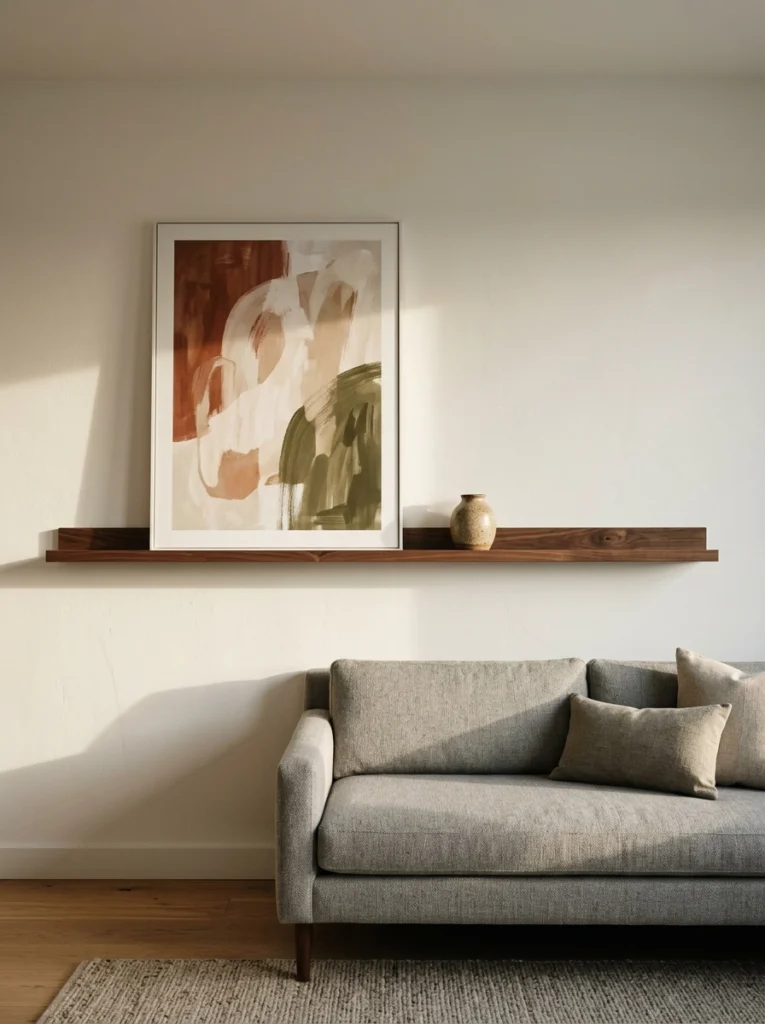
Sometimes the best shelf styling involves removing things rather than adding them. If your living room already has patterned cushions, a textured rug, and several colorful accessories, a single large art print can give the eye a place to rest. Use a picture ledge around 36 inches long for $20 to $35 and lean a print that measures roughly 16 by 20 inches against the wall.
Choose artwork with two or three colors already present in the room. For example, muted rust in the print can pick up the color of a cushion, while cream connects it to the sofa. Add one small vase beside the frame, then stop. There’s no need to fill every inch. If you’re decorating on a tight budget, print a public-domain artwork or an inexpensive digital download at a local print shop. Place the ledge at a comfortable viewing height and check that the frame sits securely. This approach works particularly well in minimalist rooms where a crowded collection would feel out of place.
10. Display Everyday Ceramics Instead of Buying More Decor
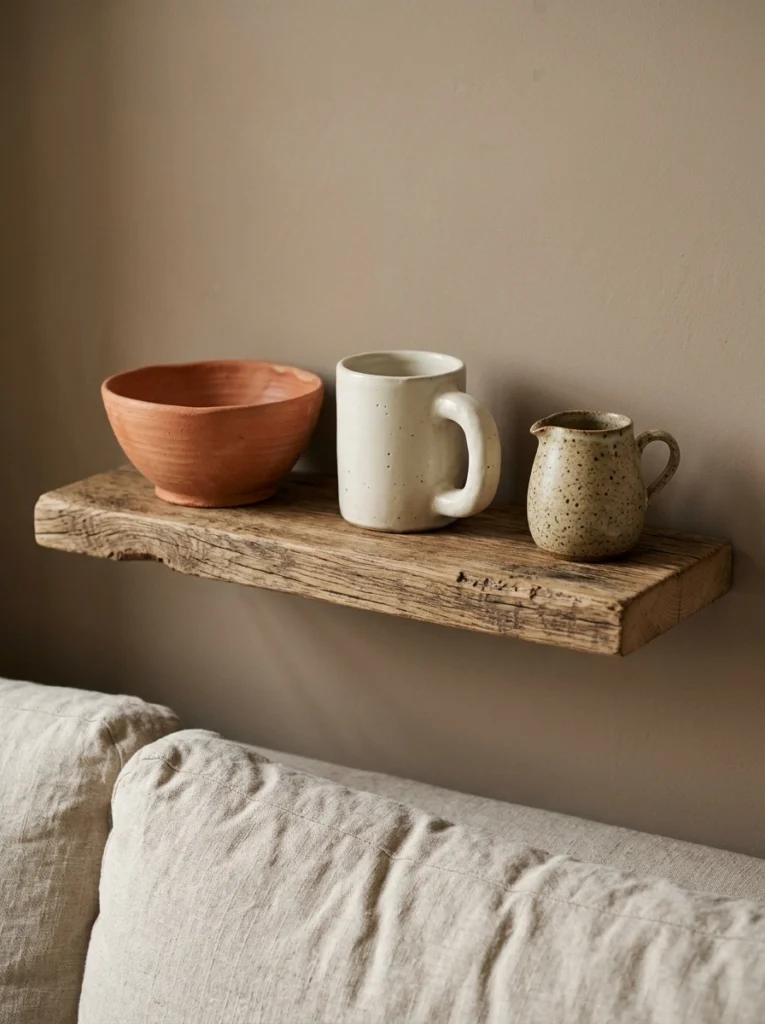
You probably already own a few objects that deserve a better spot than the kitchen cabinet. A small serving bowl, a handmade mug, or a ceramic pitcher can look lovely on a living room shelf when the shapes and colors work together. Try this before shopping. If you do want something new, thrift stores often carry ceramic pieces for $4 to $12 each.
Arrange two or three pieces in a loose group, varying their heights rather than placing them in a straight row. A rounded bowl beside a taller pitcher creates a more interesting outline than three identical vases. Choose pieces that share a color family, such as cream, rust, and warm brown. Leave a little clear shelf space around the group so the shapes stand out. For easy maintenance, wipe glazed ceramics with a damp microfiber cloth and dry them before returning them to the shelf. Avoid displaying fragile pieces near a busy doorway or where a sofa cushion regularly bumps the wall.
11. Turn a Window Wall Into a Light, Airy Display
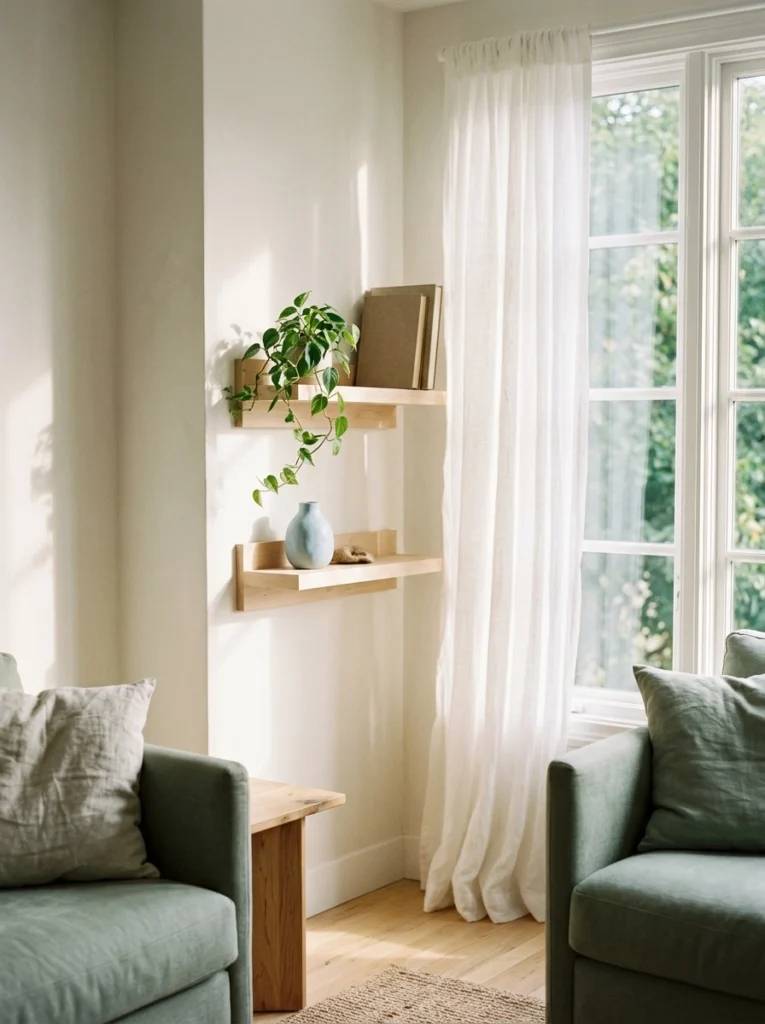
The wall beside a window is often overlooked because it’s too narrow for a bookcase but too visible to leave completely bare. Two short shelves can fill that gap without covering the glass or making the room feel darker. Choose shelves around 16 to 24 inches long, with a budget of $15 to $35 for a basic pair.
Keep the accessories light in both color and weight. A small white vase, a slim book stack, and a plant that suits the available daylight are plenty. Avoid mounting shelves where curtains will hit the objects every time you open them. Measure the curtain’s full movement before drilling, and leave enough clearance for window handles. If the wall gets direct afternoon sun, choose accessories that won’t fade easily and plants that tolerate the light conditions. A narrow shelf beside the window can provide the decorative detail you want while preserving the bright, open feeling that makes a small room comfortable.
12. Give Your Favorite Collectibles a Dedicated Shelf
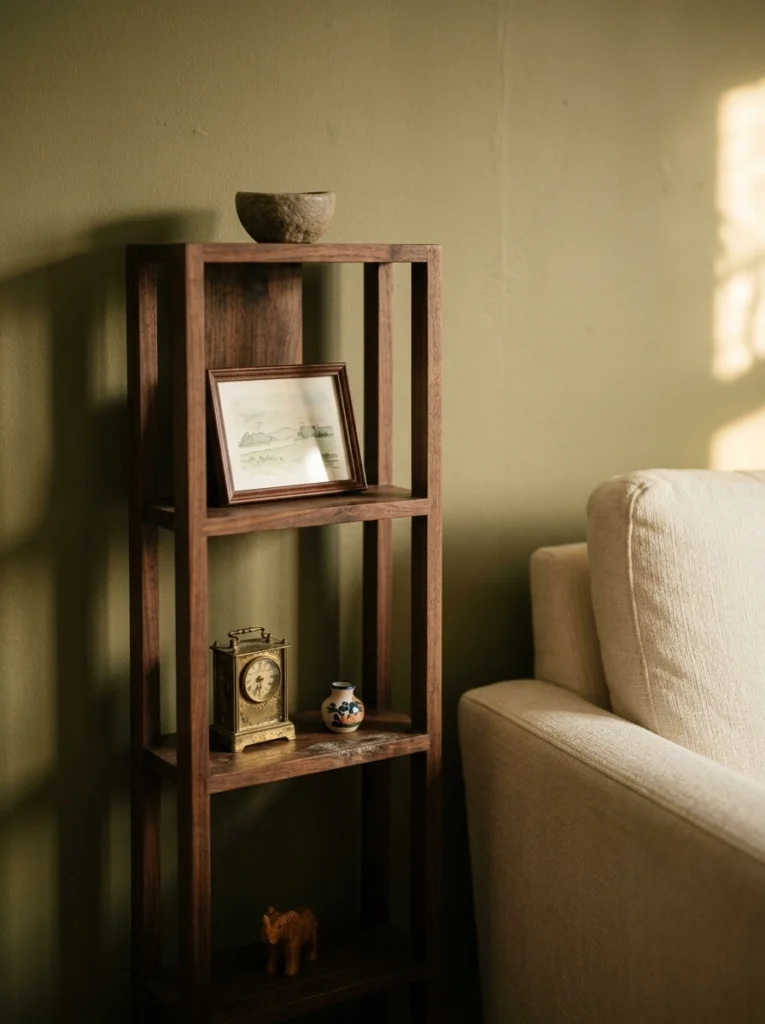
Collectibles can tell a story, but displaying every souvenir at once can make a small room feel busy. Pick three to five favorites and give them one dedicated shelf. A narrow shelf around 24 inches long for $15 to $30 is enough for a few miniature objects, small keepsakes, or vintage finds from a thrift store.
Start with the tallest object near one end, then group two smaller pieces nearby. Leave the opposite end mostly clear or add a small framed picture. This creates an arrangement with a natural focal point rather than a row of unrelated trinkets. If the items come from different trips, connect them through color or material. A brass ornament, for instance, looks more at home beside another warm-toned object than among a collection of unrelated bright plastics. Dust delicate collectibles with a soft brush and avoid placing valuable pieces near the edge of a high shelf. You don’t need an entire cabinet to display meaningful things.
13. Use a Shelf Above a Reading Chair
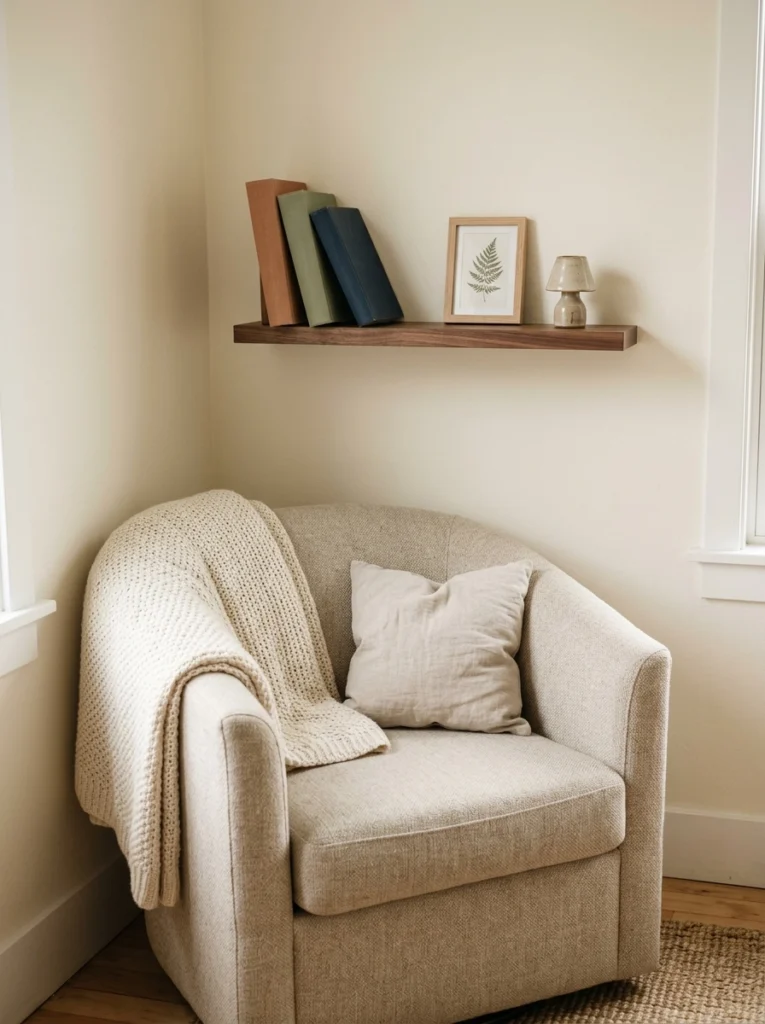
A reading corner doesn’t always have room for a side table, floor lamp, and bookcase. A narrow shelf above the chair can hold your current books and a small decorative object without taking up floor space. A 20- to 28-inch shelf costing $18 to $40 is usually enough for a compact nook.
Hang it high enough that you won’t bump your head when sitting down or leaning back. Use a small framed print and two or three books, leaving the chair itself as the main feature. If you need reading light, a wall-mounted lamp or a plug-in sconce can save more floor space than a table lamp. Keep the shelf clear of the chair’s movement and avoid placing heavy objects overhead. For an affordable finishing touch, drape a washable cotton throw over the chair and pick a cushion color that echoes the artwork. The entire corner can feel intentional without buying a matching furniture set.
14. Mix Black Metal and Wood for a Modern Industrial Look
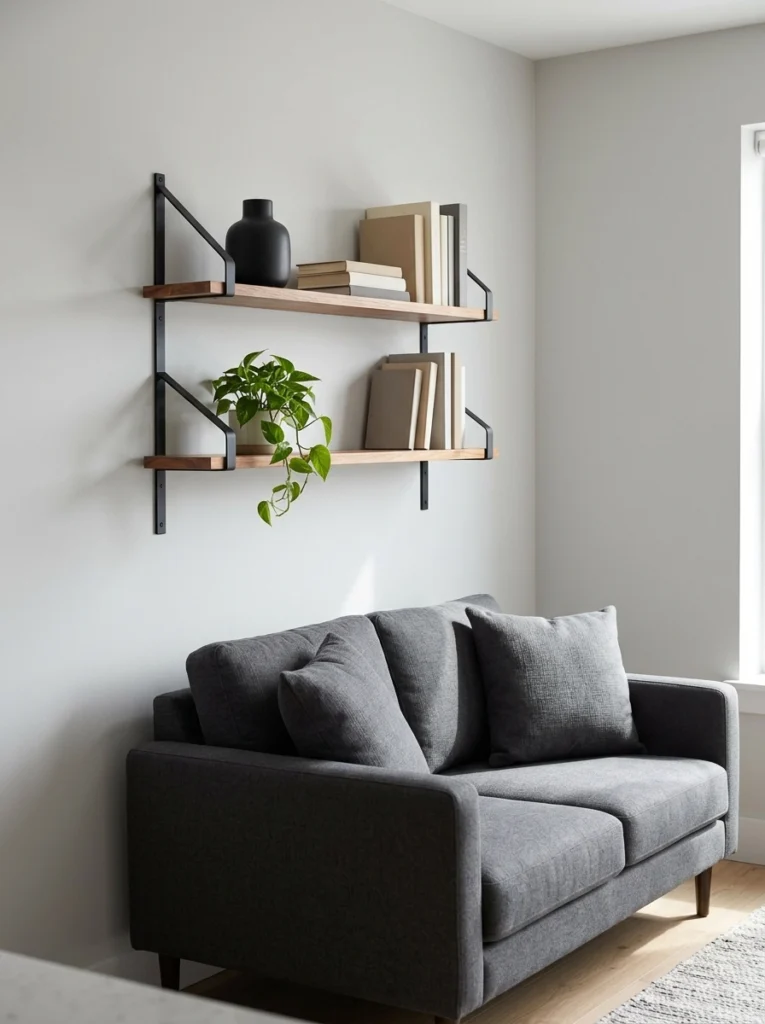
If your living room has a gray sofa, black picture frames, or metal furniture legs, wood shelves with black brackets can tie those details together. Look for a pair of shelves around 24 inches long, or make your own using inexpensive pine boards and metal brackets from Home Depot. Budget $25 to $50 for a simple DIY pair, depending on board size and finish.
Sand unfinished wood lightly, wipe away the dust, and apply a suitable stain or clear protective finish according to the product directions. Once installed, keep the styling restrained with a matte black vase, two neutral books, and a small plant. The contrast between dark hardware and warm wood provides enough visual interest that you don’t need lots of accessories. Use brackets rated for the intended load and secure them into suitable wall supports. This combination works particularly well in modern apartments, where matching every accessory would feel too formal.
15. Add a Mirrored Backdrop Behind Your Shelf
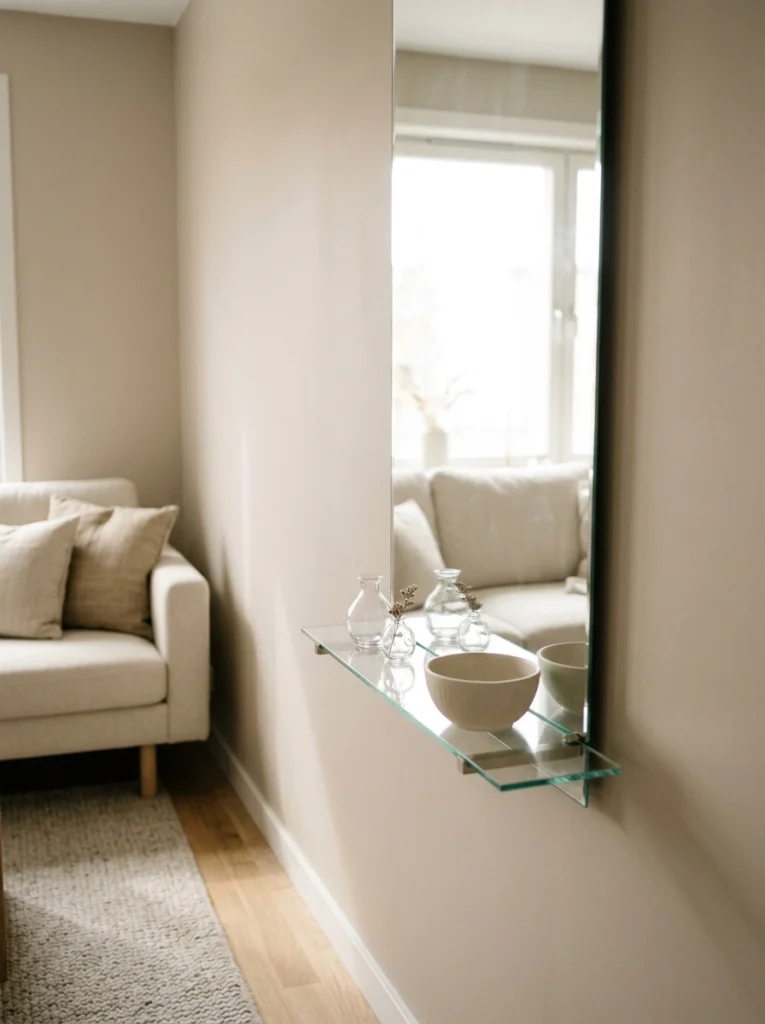
A mirror behind a display shelf can reflect window light and add depth to a room that feels a little boxed in. You don’t have to install a full mirrored wall. A narrow mirror measuring around 12 by 24 inches can be enough to create a small reflective backdrop. Basic mirrors often cost $15 to $35 at Walmart or IKEA, while a small glass shelf may add another $15 to $25.
Keep the objects in front of the mirror simple, such as two clear glass vases and a small ceramic dish. Transparent accessories let light pass through visually, so the display feels less heavy than a collection of dark objects. Check the mirror’s mounting requirements and use hardware suitable for its weight. If you prefer not to drill into the wall, a securely supported freestanding mirror on a nearby console can offer a similar effect. Clean the mirror with a suitable glass cleaner and wipe the shelf separately to prevent streaks behind the accessories.
16. Build a Budget-Friendly Shelf From Reclaimed Wood
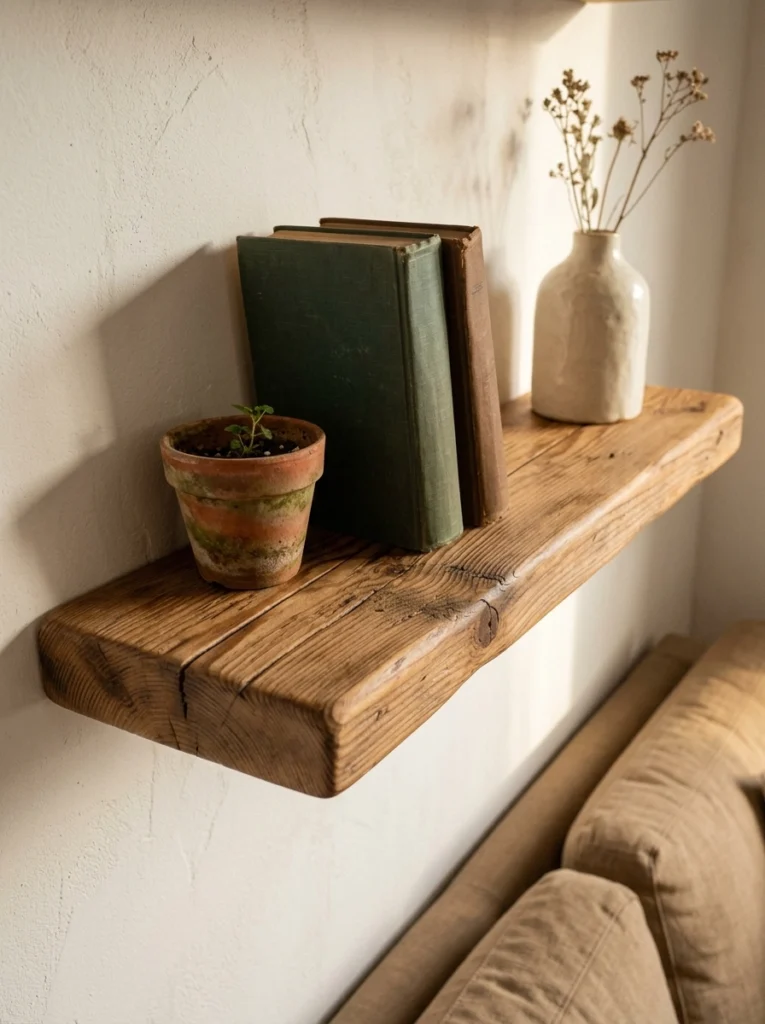
A reclaimed board can look far more interesting than a mass-produced shelf, especially if you like rustic, farmhouse, or cottage-inspired rooms. Check a local salvage shop, thrift store, or Facebook Marketplace for a short piece of solid wood. A suitable board may cost $5 to $20, with brackets and finishing supplies adding another $10 to $25.
Choose a board that’s straight, sturdy, and free from rot, active insect damage, or questionable coatings. Sand rough edges, remove dust, and seal the surface with a finish suitable for indoor furniture. A shelf around 24 to 30 inches long works well above a small sofa or beside a desk. Style it with a terracotta pot, a couple of books, and one light-colored vase. The natural grain becomes part of the decor, so you won’t need much else. Check the board’s thickness and weight before selecting brackets, and anchor the completed shelf securely. A simple reclaimed piece often adds more character than several inexpensive decorative objects.
17. Use Color-Coordinated Storage Boxes on Open Shelves
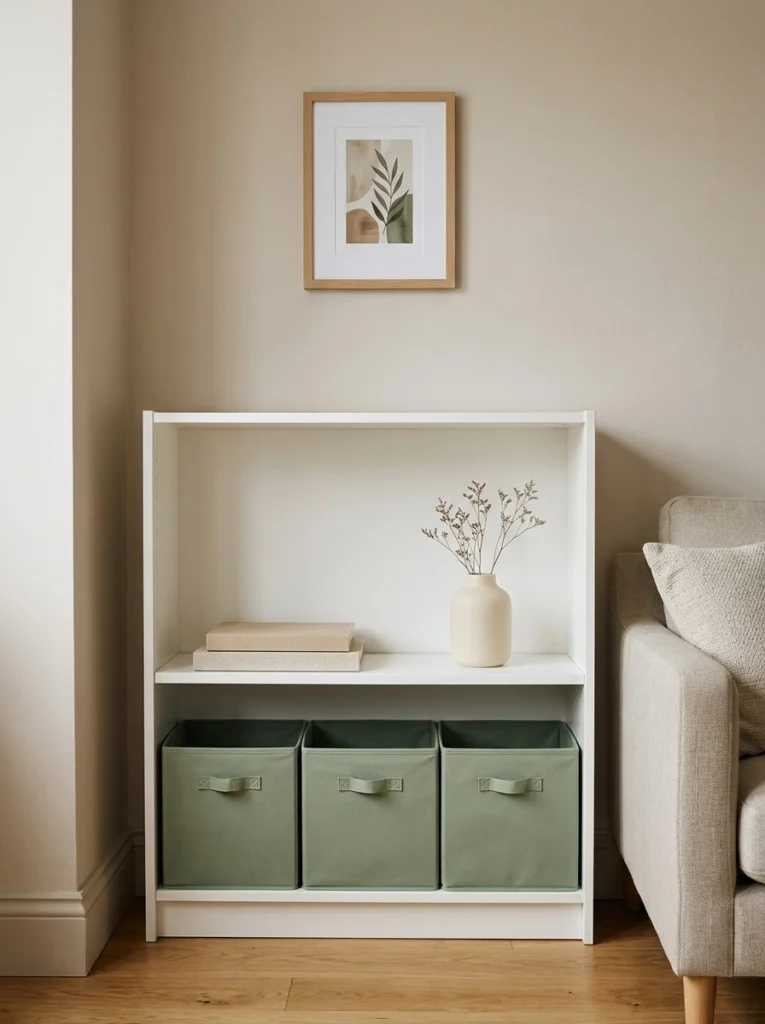
Open shelving looks best when practical storage doesn’t compete with the decorative items. Fabric or cardboard boxes can hide batteries, charging accessories, craft supplies, and spare remotes while keeping the room tidy. Choose boxes in one or two colors, such as sage and cream, and look for sizes that fit your existing bookcase. A basic box often costs $6 to $15 at Target, Walmart, or IKEA.
Measure the shelf’s width, depth, and height before buying, allowing a little clearance so the boxes slide out easily. Put the heaviest contents on the bottom shelves and label the inside of each lid or use a small discreet label if you need quick access. Matching boxes make a mixed collection of belongings look calmer because the eye sees a repeated shape and color. Keep the upper shelves open for a few books and decorative objects. If the boxes collect dust, wipe or vacuum them regularly, and avoid fabric storage near damp windows.
18. Create a Mini Gallery With Layered Frames and a Plant
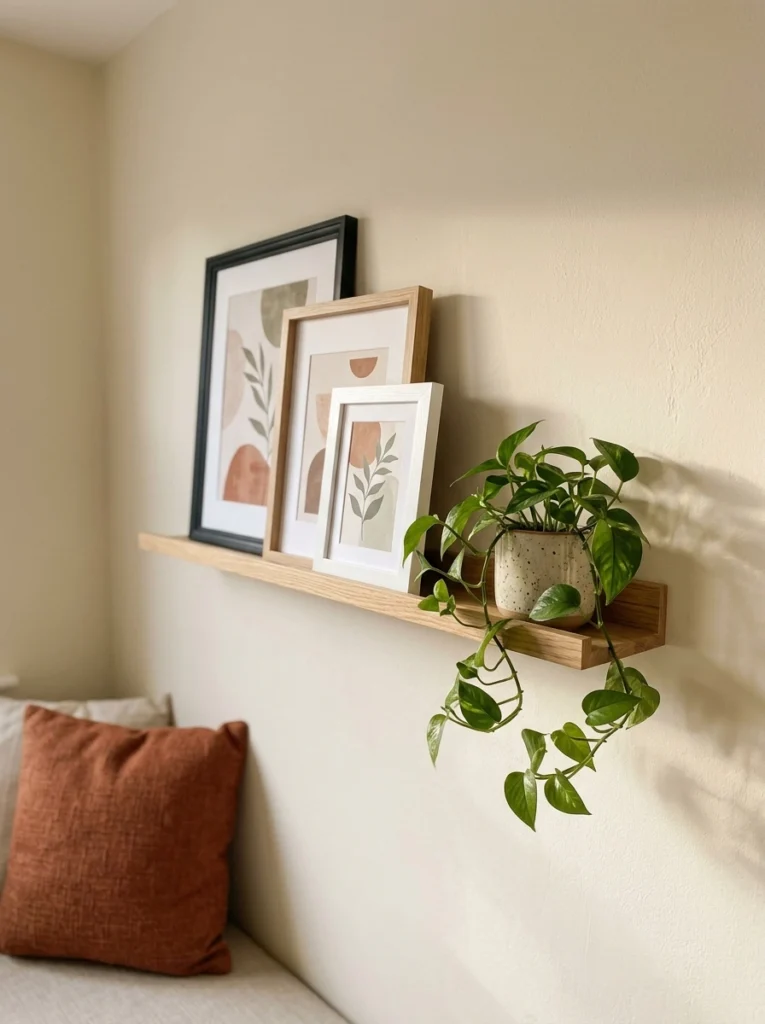
A layered shelf gives you the collected look of a gallery wall without requiring several separate picture hooks. Start with a long ledge around 30 to 36 inches, then lean two medium frames and one smaller frame against the wall. Add a little trailing plant at one end. Budget $25 to $50 for an affordable ledge, frames, and a small plant if you shop carefully.
Keep the frame colors related, but don’t make every piece identical. A black frame, a pale oak frame, and a white frame can work together if the artwork shares a similar palette. The plant softens the hard edges and breaks up the rectangular shapes. For more affordable art, use printable illustrations or cut images from inexpensive calendars. Make sure the frames have stable backs and sit fully on the ledge. This setup works especially well over a loveseat or compact console, where a traditional gallery wall could feel too crowded.
19. Let One Trailing Plant Do the Decorating
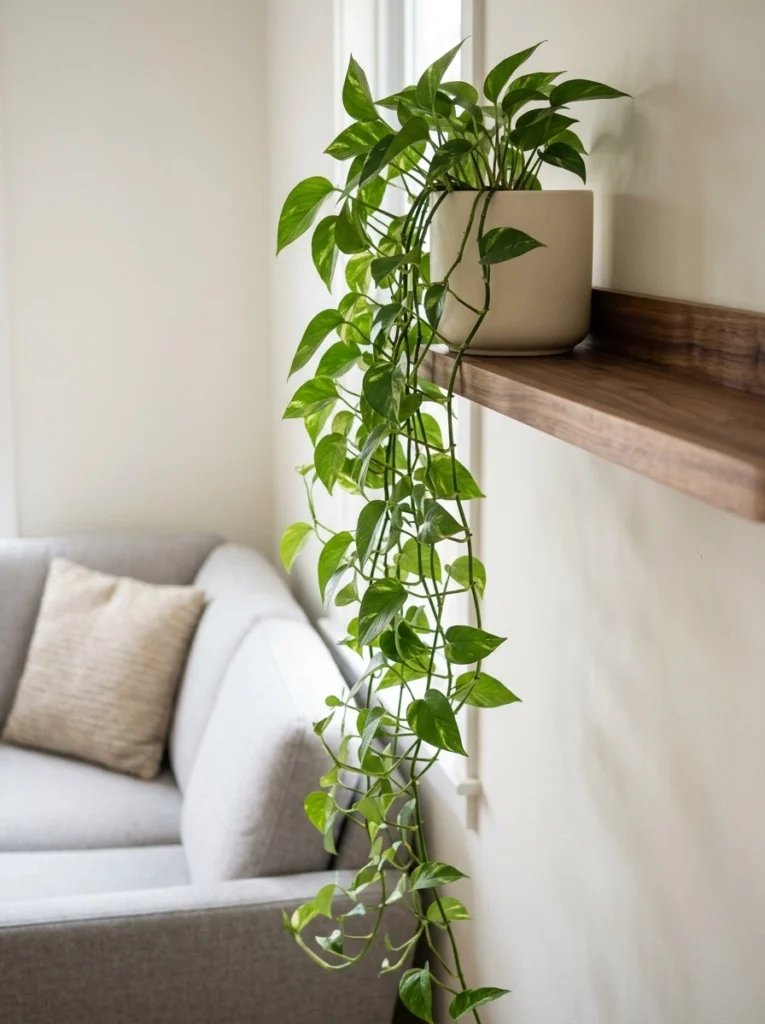
If you like a relaxed, natural room, one trailing plant can do more for a shelf than several small accessories. Place a pothos in a lightweight pot on one end of a shelf around 24 inches long, then leave the remaining space mostly clear. A small plant often costs $8 to $20, depending on its size and the nursery or garden center.
The leaves create movement as they grow downward, which softens the straight edge of the shelf and adds color without filling the room with more objects. Choose a location with suitable indirect light and rotate the pot occasionally so the growth stays reasonably balanced. Use a waterproof saucer or an inner nursery pot to prevent water from damaging the shelf. Trim yellow or damaged leaves and wipe dust from the foliage with a damp cloth when needed. If you have cats or dogs, check the plant’s toxicity before bringing it home. A pet-safe artificial trailing plant is a good alternative when a real one isn’t appropriate.
20. Make a Narrow Shelf Feel Larger With White Accessories
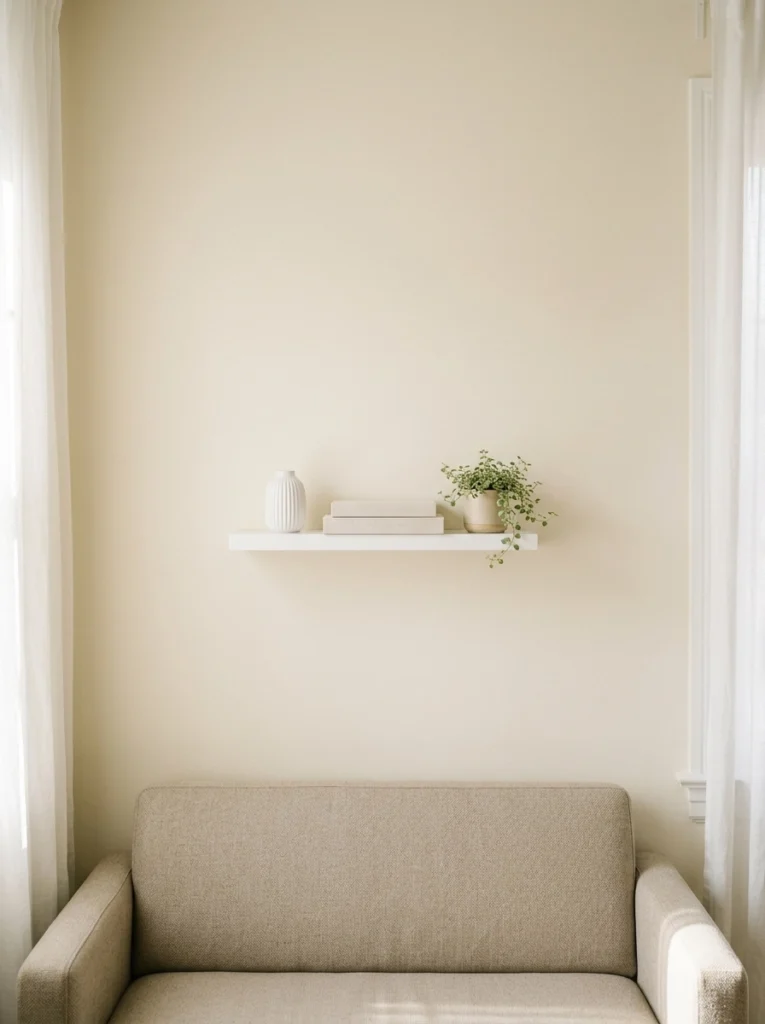
A dark, crowded shelf can visually dominate a small room, particularly when the wall behind it is already narrow. White or cream accessories soften that effect and make the shelf feel like a quieter part of the wall. You can restyle an existing shelf for almost nothing, or buy a simple white shelf for $15 to $30.
Try a white vase, two pale-covered books, and a small plant in a light-colored pot. Keep the objects grouped toward one side and leave at least a third of the shelf empty. This negative space is what keeps the display from looking crammed. If your room is entirely white, introduce a little contrast through natural wood or green leaves rather than filling the shelf with more white objects. Wipe the surfaces with a microfiber cloth to keep dust from dulling the finish. The idea works particularly well in studio apartments and narrow living rooms with limited daylight.
21. Turn a Thrifted Bookcase Into a Stylish Display
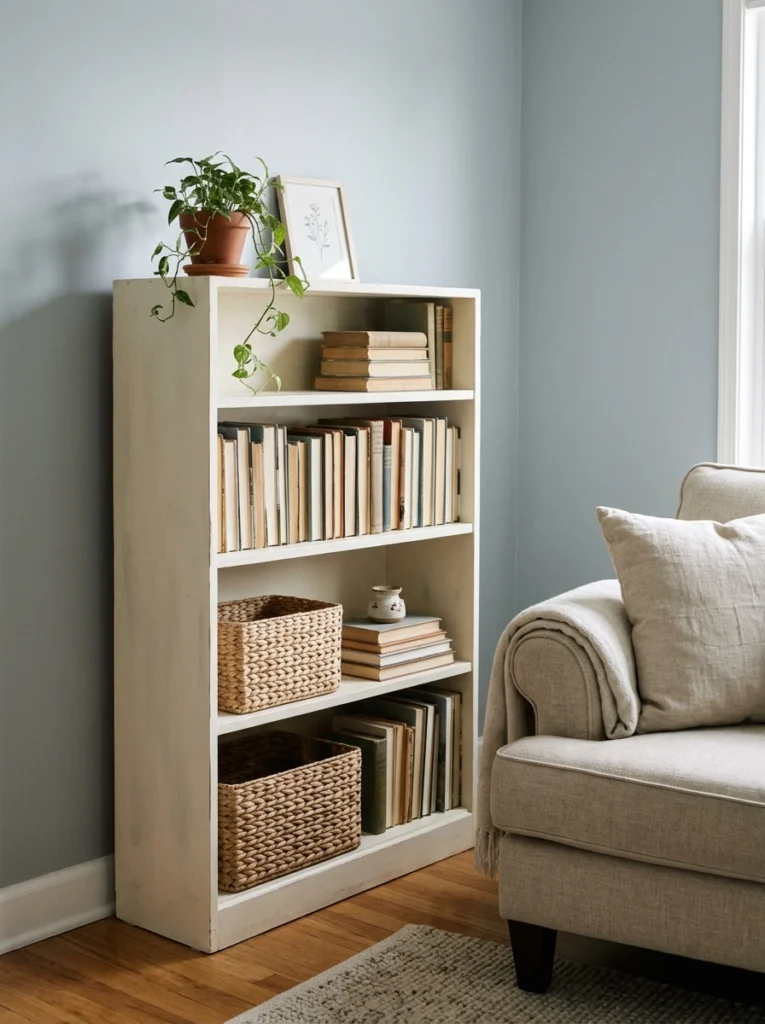
A secondhand bookcase can give you more storage for less money than buying several individual shelves. Look for a narrow unit around 24 to 30 inches wide at a thrift store or on Facebook Marketplace. A basic used bookcase may cost $20 to $60, depending on its condition, material, and location.
Before bringing it home, check for wobbling, damaged shelves, water stains, and musty odors. Clean the surfaces thoroughly, tighten loose hardware, and repaint only if the finish really needs attention. Arrange books in short groups rather than filling every shelf edge to edge. Add a woven basket to hide small belongings and leave one section for a framed print or a small vase. This mix of closed and open storage makes the bookcase practical without looking like a storage closet. Secure tall furniture to the wall with suitable anti-tip hardware, especially in homes with children or pets.
22. Install a Small Shelf Beside the Sofa Instead of a Side Table
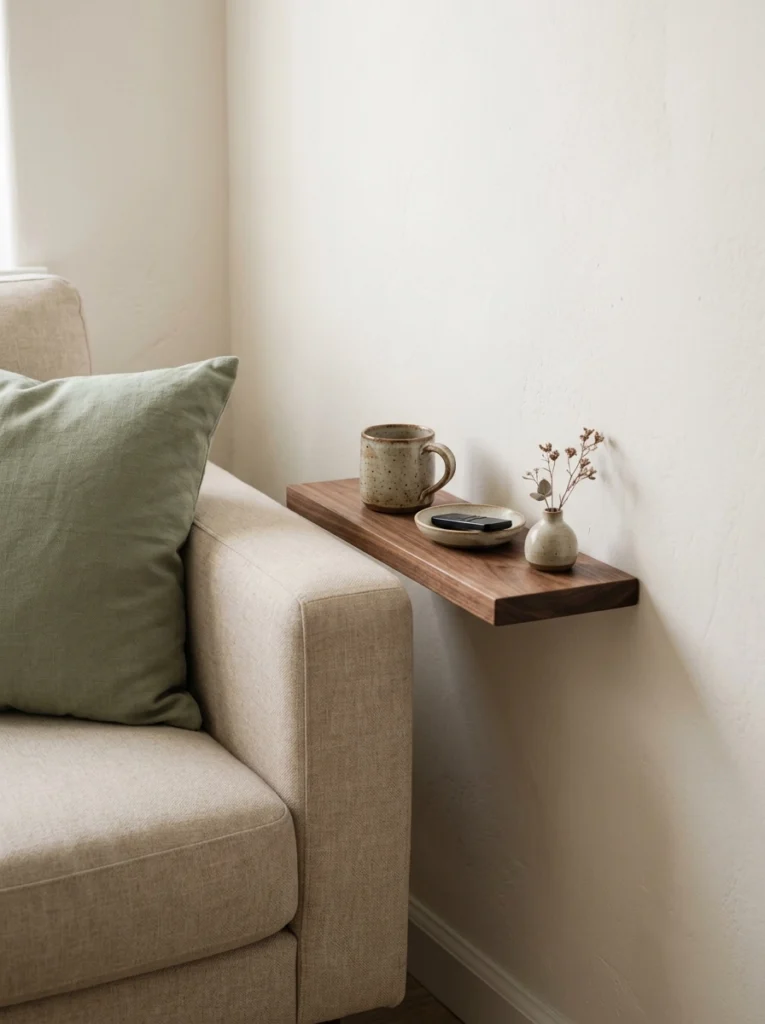
If there’s barely enough room to walk between your sofa and the wall, a traditional side table may be more trouble than it’s worth. A short floating shelf can hold a drink, remote, or reading glasses without adding legs to the floor. Choose a sturdy shelf around 10 to 14 inches deep for $15 to $35, depending on the material and hardware.
Mount it beside the sofa arm at a height that’s comfortable to reach while seated. Check the sofa’s final position first, including any recliner movement or cushions that extend beyond the frame. Keep the styling practical with a small dish for remotes and one little vase, rather than treating it like a full decorative display. If you plan to set down drinks, choose a stable shelf with enough depth and a finish that can handle occasional moisture. This small change can free up a surprising amount of floor space, especially in a studio apartment or a narrow living room.
23. Add a Rustic Crate Shelf for Flexible Storage
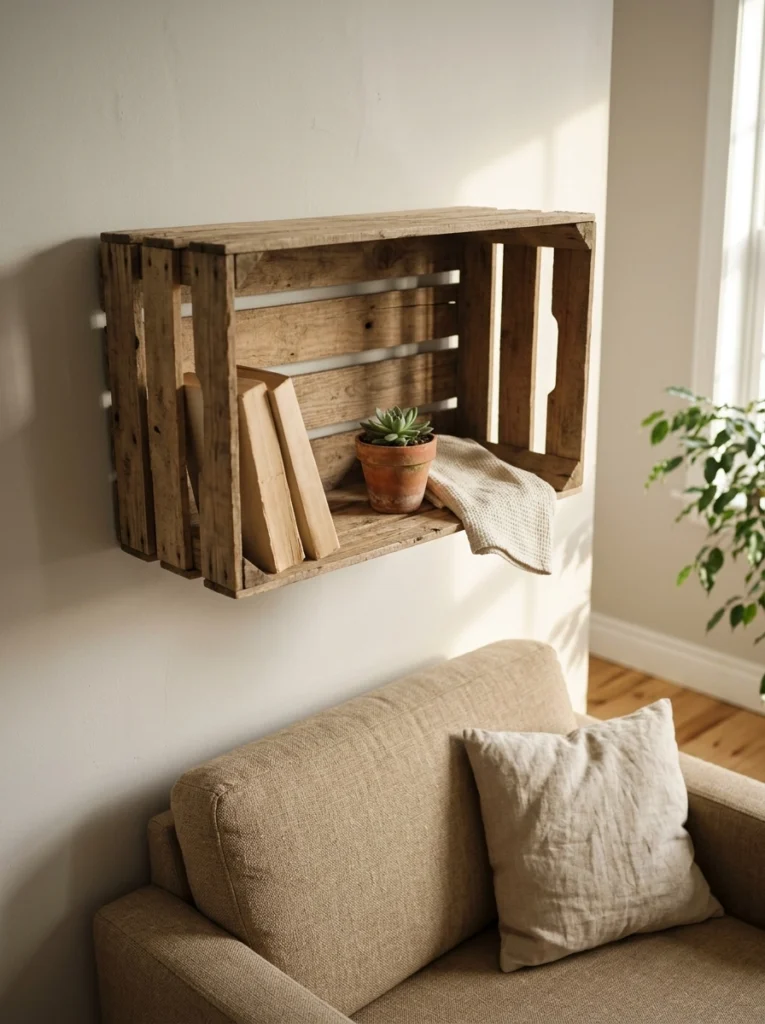
A wooden crate can make an affordable shelf for a farmhouse-inspired living room, especially if you find one at a salvage shop or already have a sturdy crate at home. Expect to spend $10 to $25 for a suitable crate and basic finishing supplies, although decorative crates can cost more.
Choose a solid, undamaged crate with smooth edges. Sand splinters, clean away dust, and apply an indoor-safe finish if the wood is unfinished. Mount it only if its construction and mounting points support secure wall installation. A crate used as a shelf can be deeper and heavier than a standard floating shelf, so check the total load and use suitable anchors or studs. Arrange a few books on one side and a small plant or ceramic piece on the other. Avoid filling every inch with little objects. If the crate is too deep for your wall, use it on a low console instead, where it can store magazines and remotes without projecting into a walkway.
24. Use Matching Glass Jars for Small Decorative Collections
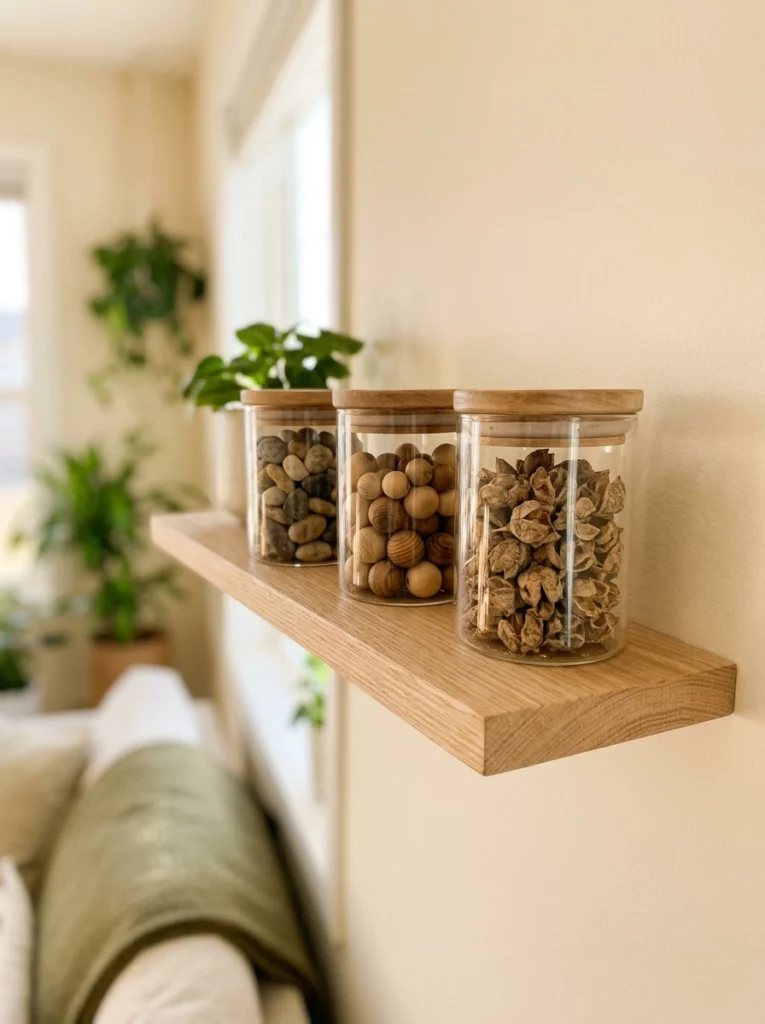
Glass jars are a useful option if you enjoy collecting shells, smooth stones, wooden beads, or other little objects that would otherwise sit loose in a bowl. Find three matching jars at IKEA, Target, or a thrift store for around $10 to $25 for a small group. Clear glass keeps the display visually light, while matching lids make the arrangement feel tidy.
Choose one type of object for each jar rather than mixing everything together. For example, one jar of smooth river stones, another of wooden beads, and a third with dried seed pods creates variety without looking random. Leave space between the jars, and avoid using containers so tall that they crowd the wall above. Clean the glass with a lint-free cloth to remove fingerprints and dust. Keep the display away from direct sunlight if the contents are sensitive to fading, and avoid placing heavy glass jars near the edge of a high shelf. This idea is inexpensive, easy to change, and particularly nice in natural or rustic rooms.
25. Decorate With a Small Table Lamp on a Low Shelf
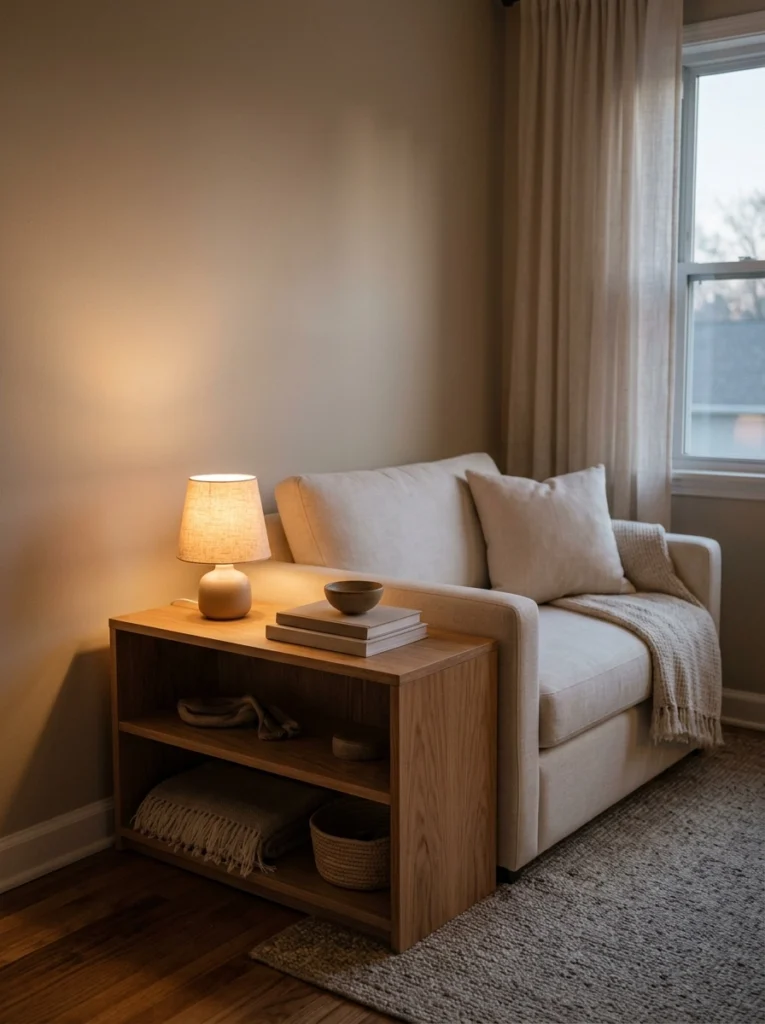
Shelves don’t have to be decorative only. A small lamp on a sturdy low shelf can create a softer evening atmosphere than an overhead ceiling light, particularly in a living room with limited space for end tables. Look for a compact lamp around 10 to 15 inches tall, with basic options often costing $15 to $35 at Target, Walmart, or IKEA.
Place it on a stable shelf or low bookcase with enough depth for the lamp’s base. Leave the neighboring space relatively clear, adding only a small stack of books or a shallow dish. Choose a fabric shade for softer light and a bulb with a warm color temperature, around 2700K. Check the lamp’s clearance from curtains and other materials, and route its cord so nobody can snag it while walking past. If the shelf is high on the wall, choose a purpose-made lighting fixture instead of an ordinary table lamp. A small lamp can make the whole room feel cozier without requiring another piece of furniture.
26. Use a Two-Tone Shelf Arrangement for Subtle Contrast
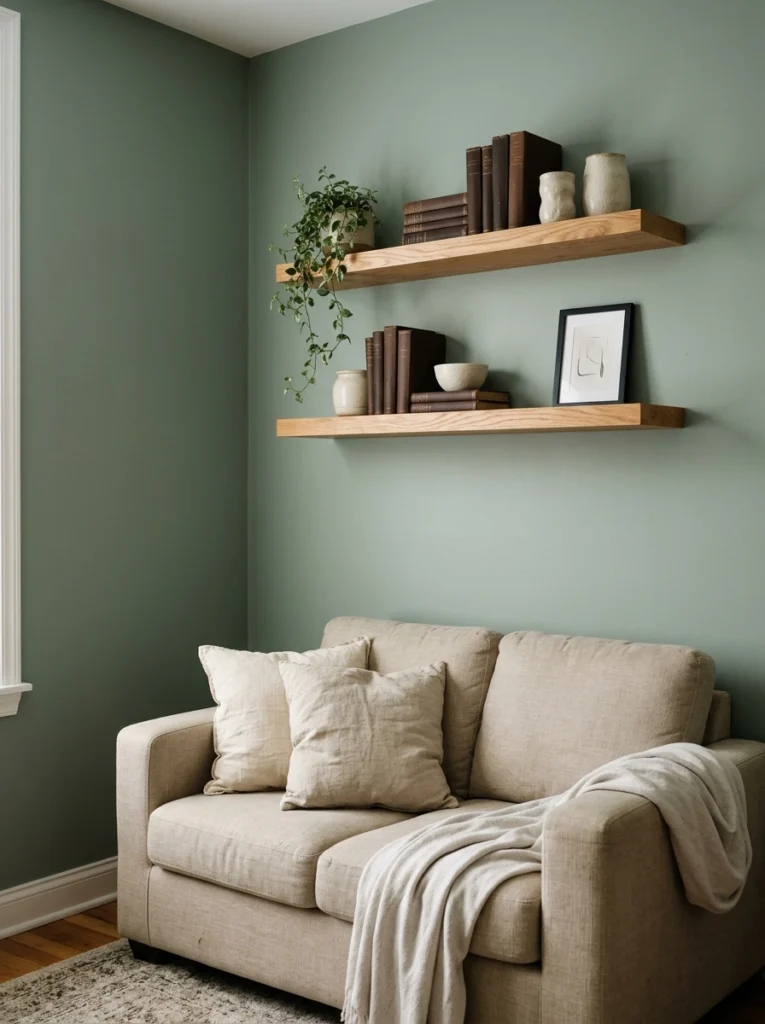
When a room has very little space for decoration, color can do some of the work for you. Pair warm wood shelves with accessories in two main tones, such as cream and dark brown, or white and muted green. You can restyle existing shelves for under $20 by shopping your home for books, pottery, and frames before buying anything else.
Start with the largest piece, perhaps a cream vase, then add a dark book stack and a small black frame to provide contrast. A plant supplies a third texture without adding another strong color. Keep the same palette across both shelves, but change the arrangement so they don’t look like exact copies. For example, use books on the lower shelf and ceramics on the upper one. This repeated color scheme helps separate objects visually while keeping the wall calm. If you want to repaint the shelves, test a sample first and choose a finish suitable for the existing material.
27. Make a Small Shelf Work Hard in a Studio Apartment
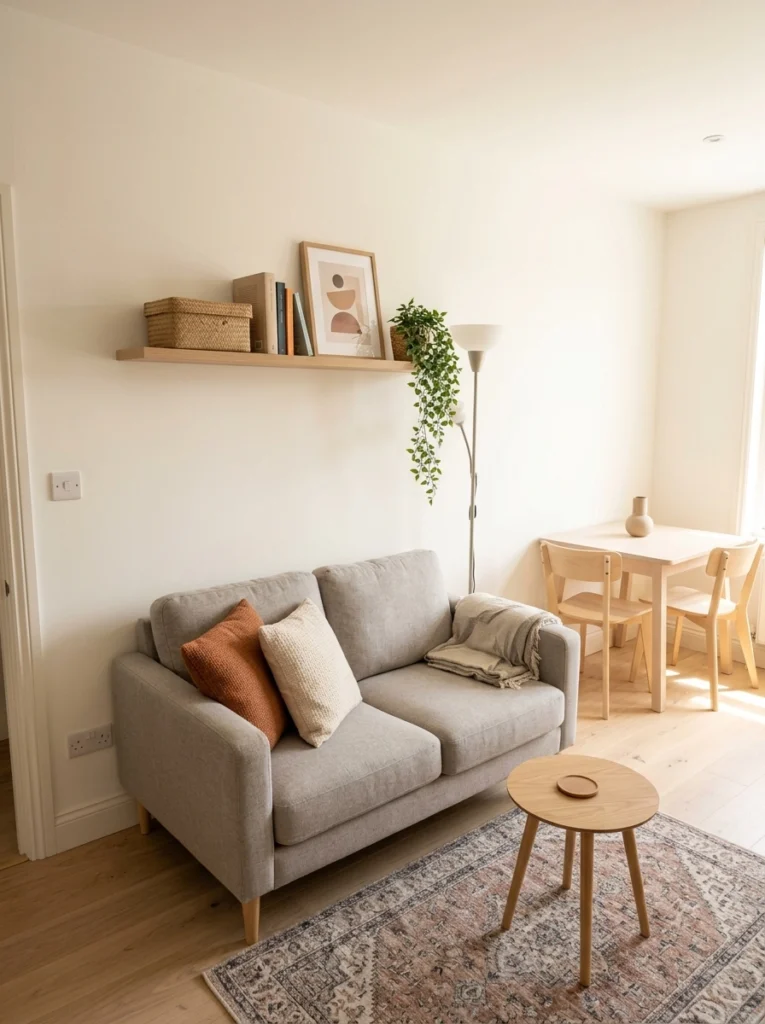
In a studio apartment, the living room may also be your office, dining area, and reading nook. A slim shelf helps keep the sofa area organized without creating another furniture zone. Choose a shelf around 30 inches long and 6 to 8 inches deep, with basic options costing about $20 to $40.
Give each section a purpose. Put a small box for charging cables at one end, a short stack of books in the middle, and a little plant or framed print at the other. This arrangement keeps daily clutter within reach while leaving your desk and coffee table free for their own jobs. For a more cohesive room, repeat the shelf’s wood finish in a nearby dining chair or desk accessory. If you’re renting, check your lease and use an installation method appropriate for the wall type and intended load. A simple shelf can help separate the living area visually without putting up a divider that makes the apartment feel smaller.
28. Keep One Shelf Almost Empty for a Calm Finish
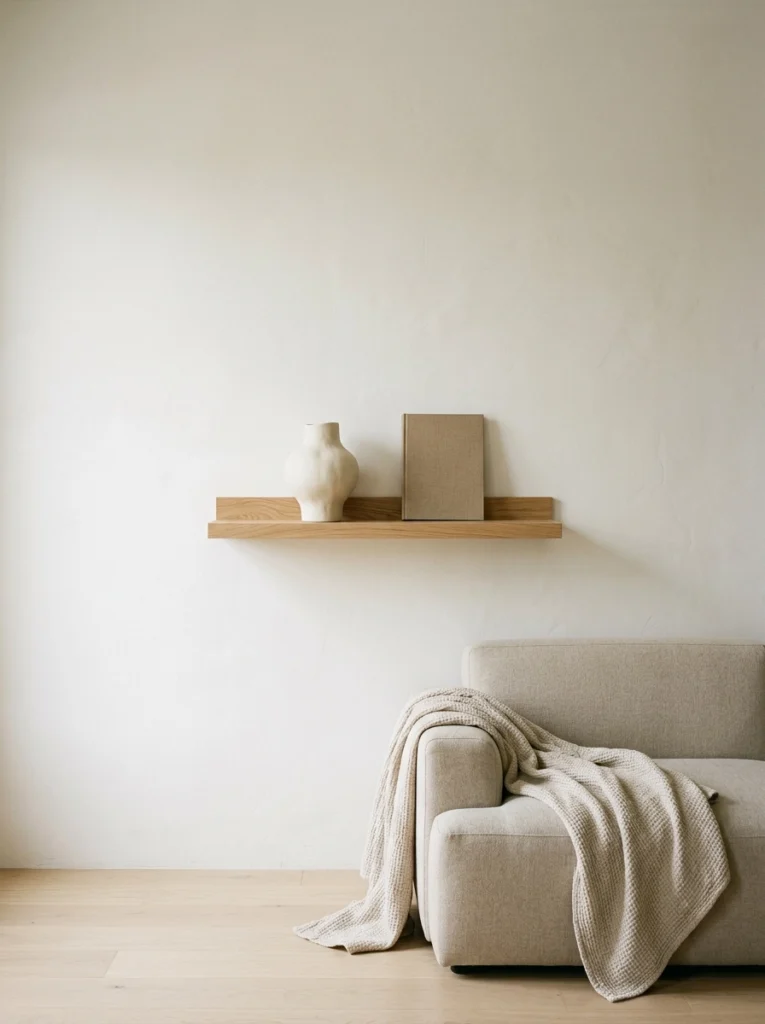
The final idea is also one of the cheapest. Instead of filling every shelf, choose two objects you genuinely like and leave the rest empty. A short oak or white shelf around 24 inches long can cost $15 to $30, and the accessories may already be sitting around your home.
Pick one taller object, such as a sculptural vase, and one lower item, like a book or small dish. Position them slightly off-center rather than separating them into equal halves. The empty space makes both objects easier to notice and prevents the shelf from competing with other details in the room. This approach is especially useful if your sofa has patterned cushions or your walls already have artwork. You don’t have to buy new pieces or create an elaborate arrangement to make the room feel finished. Start by removing half of what’s currently on your shelf, then add back only the items that genuinely contribute to the look.
Mistakes That Ruin the Look
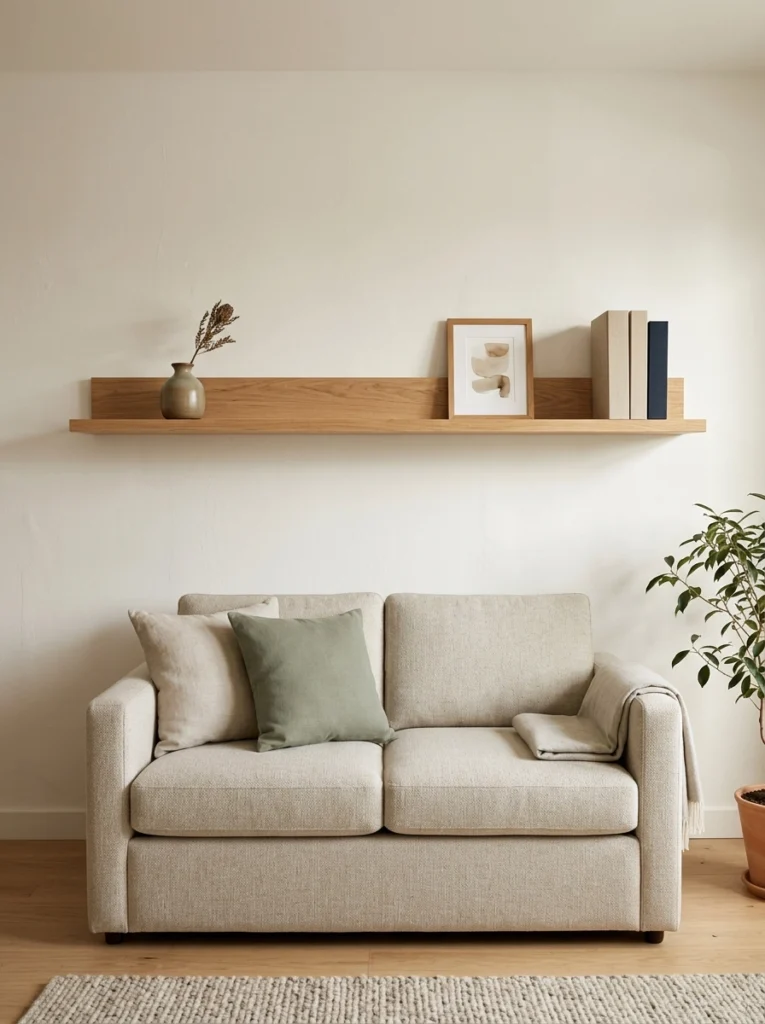
- Filling every inch of the shelf. Too many small objects create visual clutter, particularly in a compact room. Remove a few pieces and leave some visible wall and shelf space between the remaining items.
- Ignoring shelf depth. A shelf that projects too far into a narrow walkway can make the room uncomfortable. Measure the wall and nearby furniture first, and choose a shallow design when people regularly pass underneath or beside it.
- Mixing too many colors and finishes. A collection of unrelated wood tones, bright ceramics, and metal accessories can look scattered. Repeat two or three colors already present in your sofa, rug, or artwork.
- Mounting shelves without checking the wall. Incorrect anchors, overloaded brackets, and unsteady tall furniture can cause damage or injuries. Follow the manufacturer’s weight limits, use appropriate hardware, and secure heavy or tall units properly.
Frequently Asked Questions
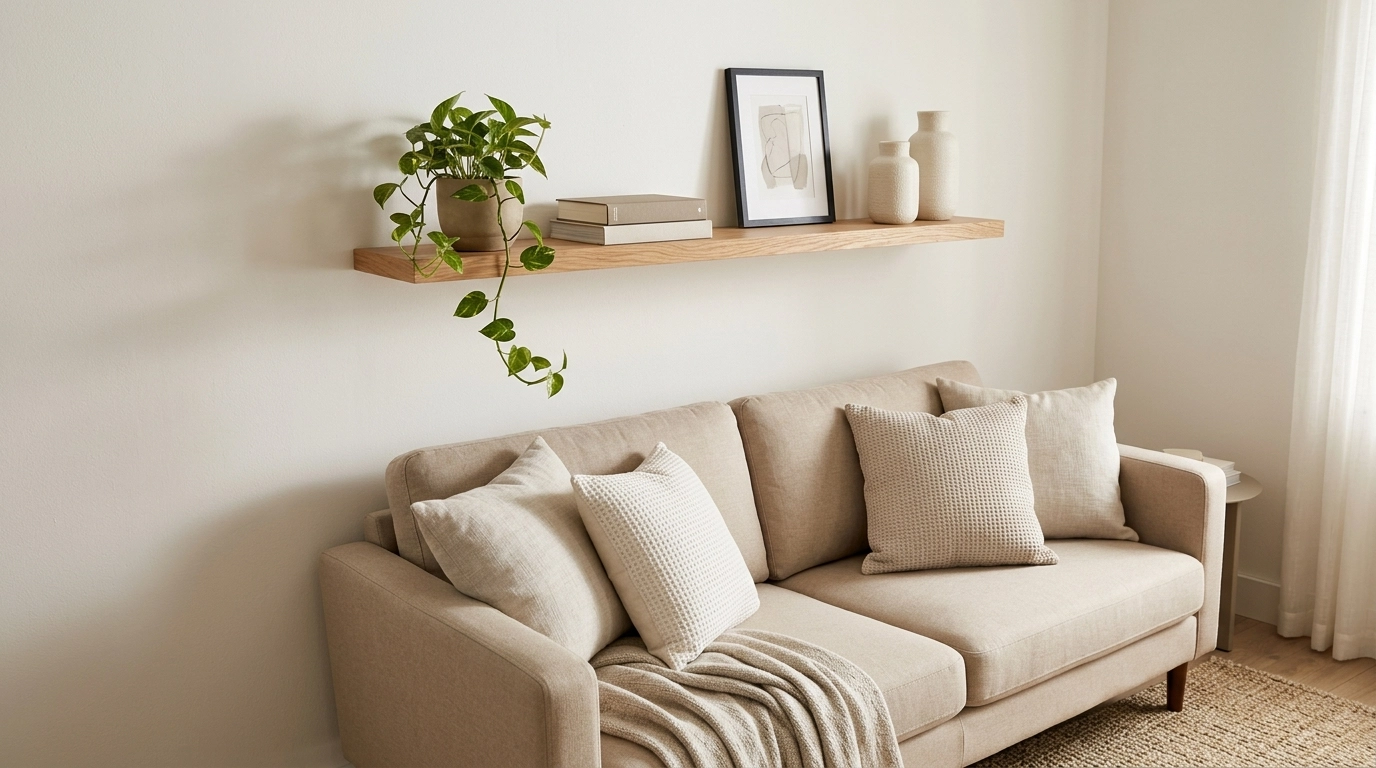
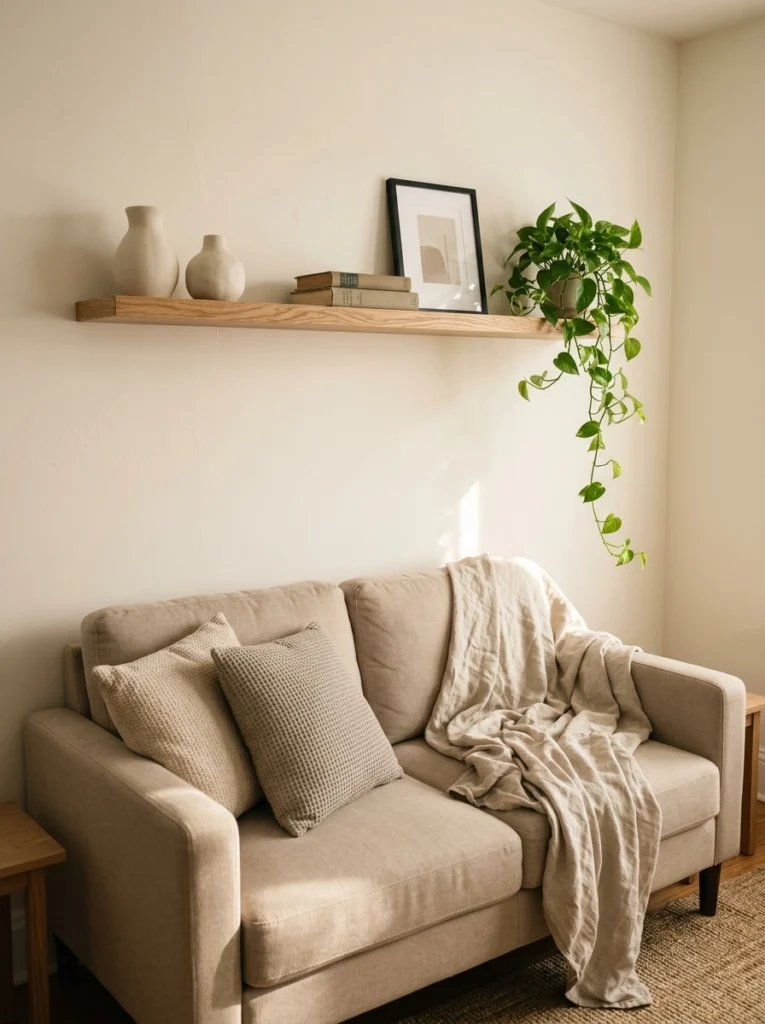
[Image Prompt: A small living room with a simple floating shelf above a beige sofa, decorated with a cream vase, a small green plant, and two books. Warm natural light, neutral color palette, clean uncluttered styling, close-up front angle suitable for a home decorating guide. Shot on a high-end camera, natural light, no people, no text or words anywhere in the image.]
[Alt Text: Simple floating shelves illustrate affordable small living room shelf decor ideas for everyday homes.]
Q: What is the best small living room shelf decor for a tiny space?
The best small living room shelf decor uses vertical wall space without adding bulky furniture. Start with one or two slim floating shelves, then style them with books, a small plant, and one or two personal accessories.
Q: How do I decorate living room shelves on a tight budget?
Shop your home first for books, picture frames, ceramics, and small baskets. Thrift stores and Facebook Marketplace are useful for finding inexpensive shelves, while a simple DIY board and brackets can cost less than a decorative shelving unit.
Q: How high should shelves be above a sofa?
For decorative shelves, around 10 to 14 inches above the sofa back is a useful starting point, depending on the sofa height and shelf depth. Check the overall arrangement while standing and sitting, and leave enough room to avoid bumping the shelf when adjusting cushions.
Q: How many items should I put on a small living room shelf?
For a shelf around 24 to 30 inches long, start with three to five items of different heights and shapes. Leave some empty space, then add another piece only if the arrangement still feels balanced.
Q: How can I decorate shelves without making my living room look cluttered?
Limit the display to a few coordinated colors and mix useful items, such as books and baskets, with decorative pieces. Group small objects together instead of scattering them across the entire shelf.
Q: What can I use instead of floating shelves in a rental?
A freestanding narrow bookcase or ladder shelf can provide display space without requiring wall installation, although tall units may still need anti-tip restraints. For lightweight items, a removable wall system can work if it’s suitable for your wall surface and rated for the intended load.
Start With One Shelf This Weekend
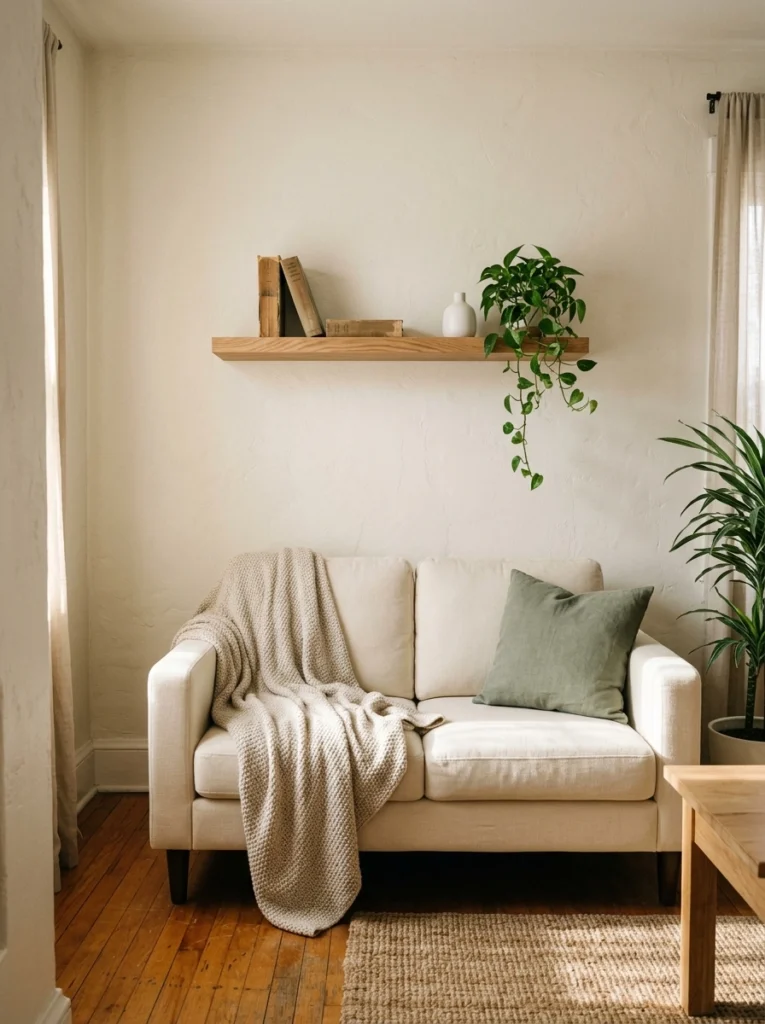
You don’t have to redo the entire living room to make it feel more organized. Start this weekend by clearing one shelf, gathering a few books and accessories you already own, and arranging them with a little breathing room. If your room lacks storage, add a basket or small box; if it feels bare, try a picture ledge or a trailing plant. Keep your budget around $20 to $30 for the first project and see how much difference a small change makes. The best small living room shelf decor is the kind that suits your actual home, keeps everyday items within reach, and leaves enough open space to relax comfortably.