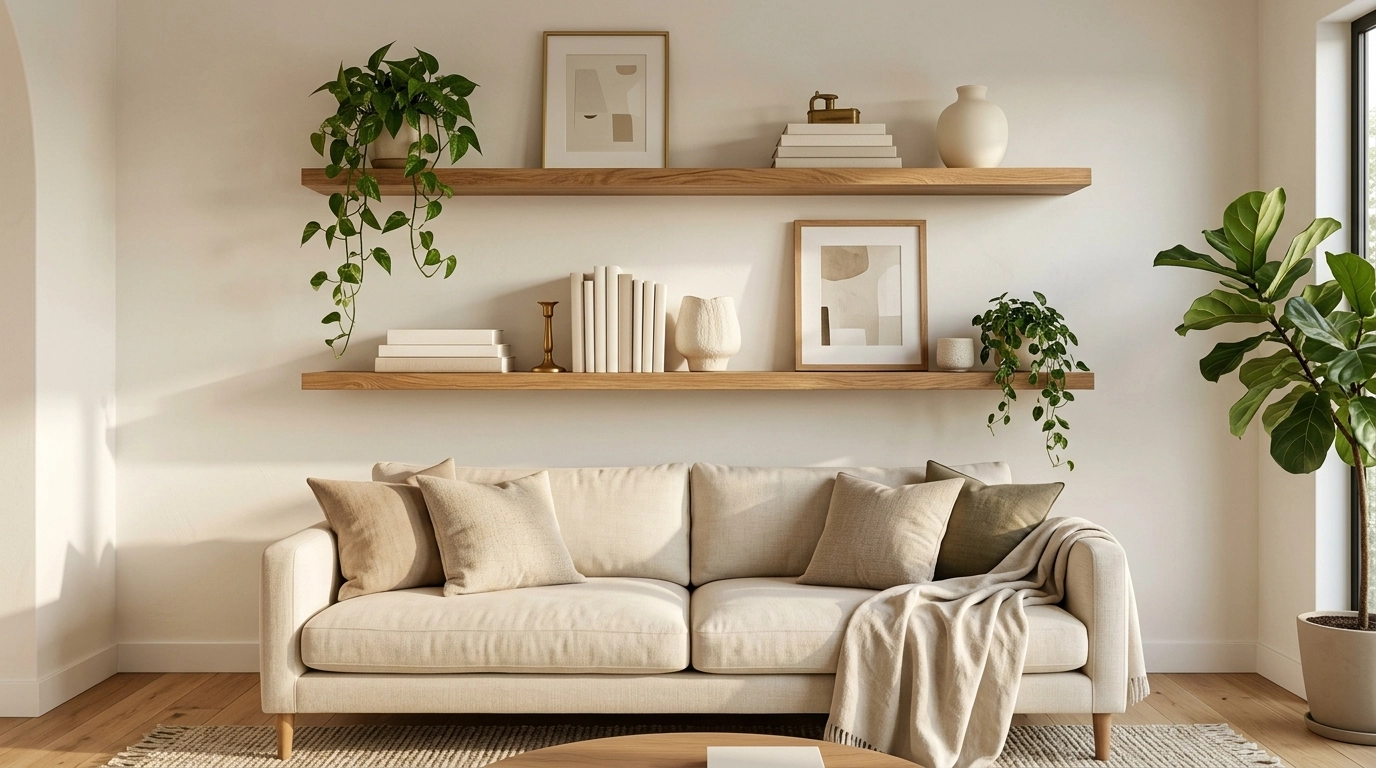
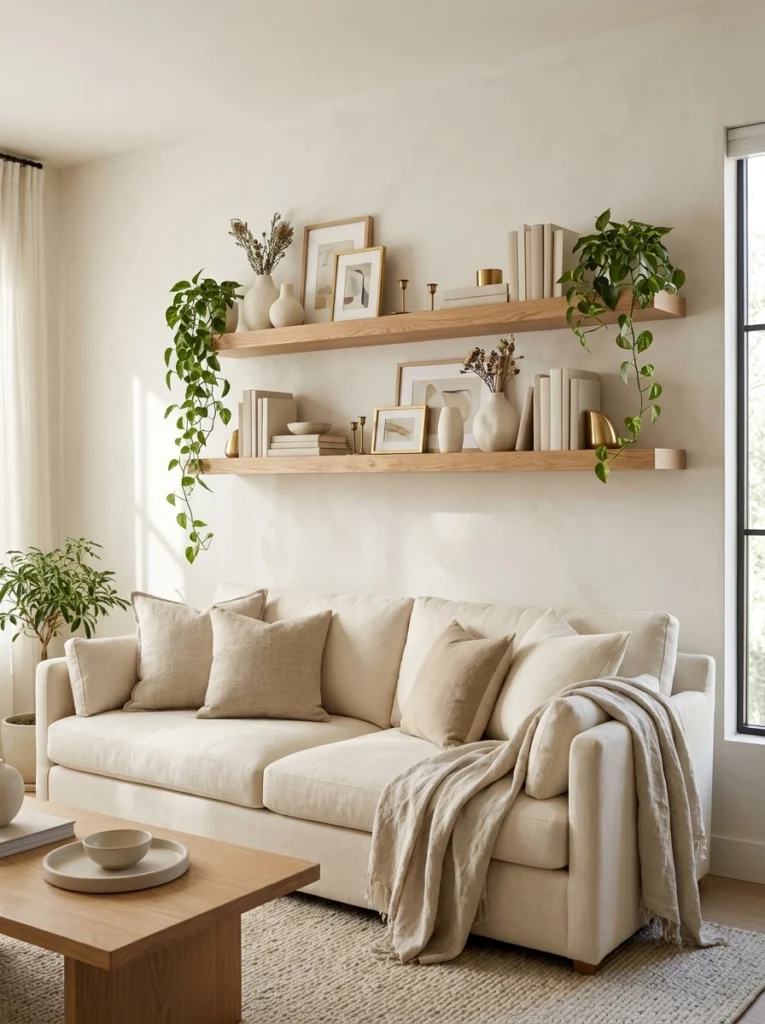
Ever finish decorating your living room, step back, and realize the shelves still look a little off? Maybe they’re crowded with small knickknacks, or there’s one awkward empty spot that catches your eye every time you walk past. I’ve found that the problem usually isn’t a lack of decor. It’s how the pieces work together.
The best shelf styling ideas living room designs combine different heights, textures, colors, and a little breathing room. Start with a few larger objects, add books and natural elements, then leave some open space between groupings. With around $20 to $60, you can often restyle shelves you already own using thrifted ceramics, inexpensive frames, and items from Target or IKEA.
1. Layer Neutral Ceramics for a Soft, Collected Look
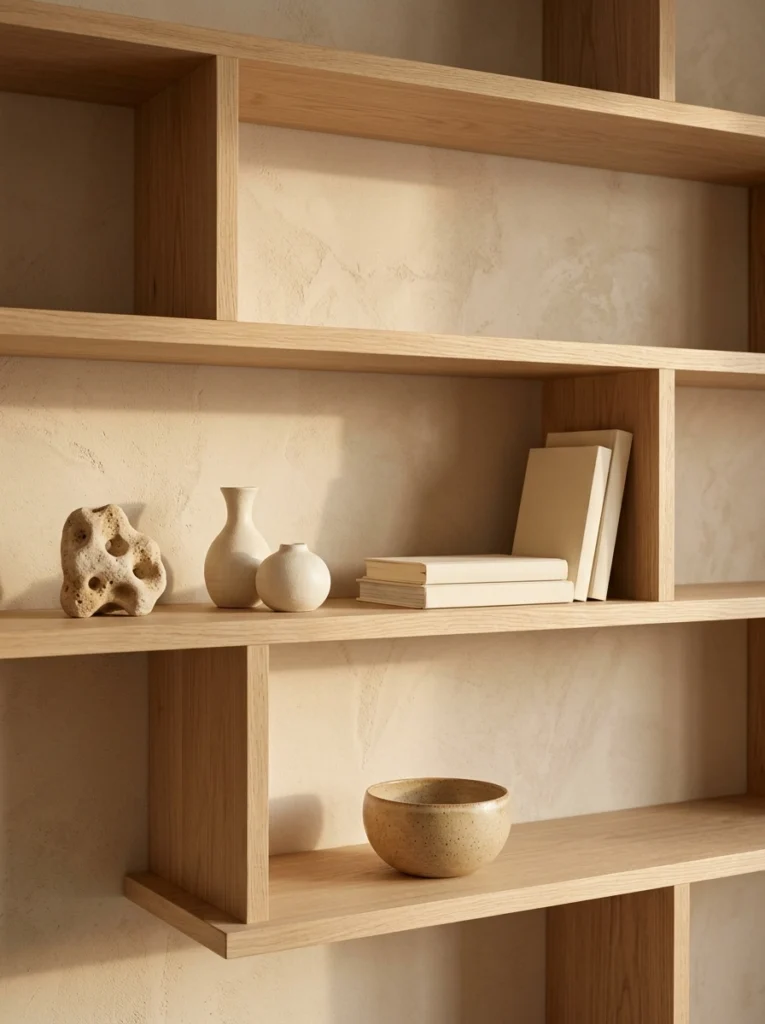
Neutral ceramics are an easy starting point if your living room already has beige upholstery, wood furniture, or warm white walls. Choose three pieces with different silhouettes, such as a tall narrow vase, a squat rounded vessel, and a small textured bowl. Group them on one side of a shelf instead of spacing them evenly across the entire length. That little difference makes the arrangement feel more natural.
You don’t have to buy handmade pottery to get the look. Target’s decorative accessories, IKEA’s simple vases, and thrift-store stoneware all work beautifully. Set aside $20 to $45 for two or three pieces, depending on their size and finish. Stick to ivory, oatmeal, and soft taupe so the shapes provide the visual interest. If everything looks too similar, add one piece with a rough, speckled glaze. Dust the ceramics weekly with a microfiber cloth, especially if they’re displayed near a window.
2. Mix Vertical Books With Horizontal Stacks
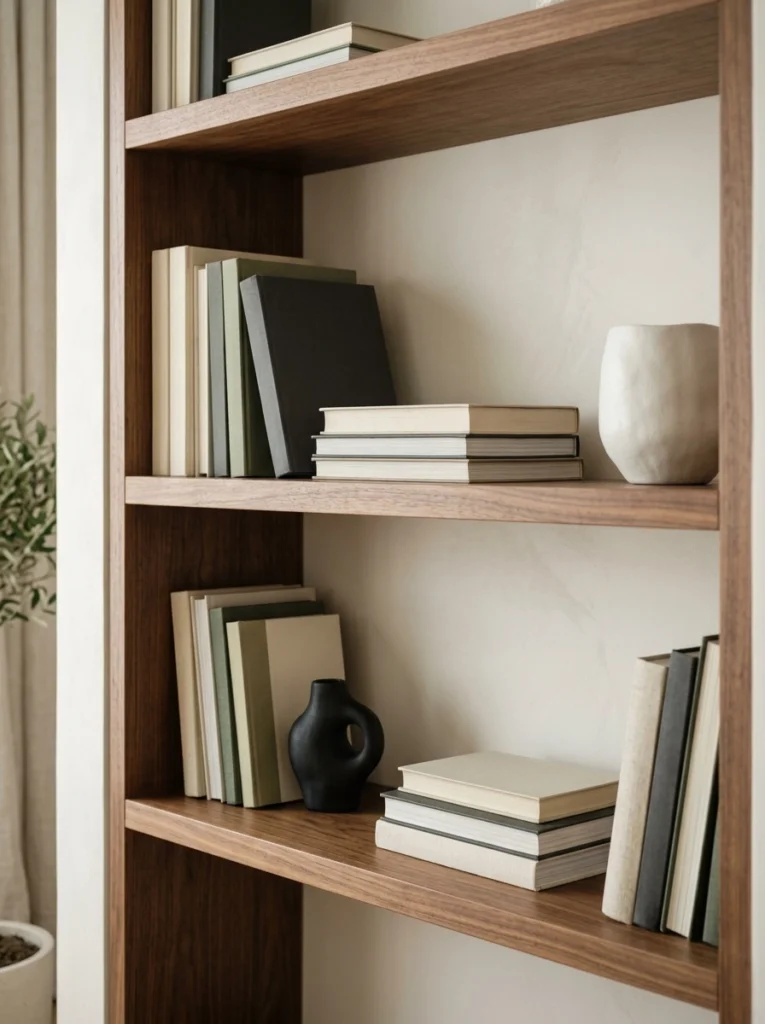
Books give shelves structure, but rows of upright spines can look a little like a library if every shelf is arranged the same way. Mix vertical books with stacks of two to four books lying flat. The upright books create height, while horizontal stacks provide a low platform for a small bowl, candleholder, or decorative object.
Look through your existing books before shopping. Turn a few jackets around if their colors clash with your room, or use attractive secondhand hardcovers from a local thrift store. A small decorative object placed on a stack of books should sit securely without covering the entire pile. For a shelf that’s 36 inches wide, start with one vertical group and one horizontal stack, then adjust from there. Budget around $10 to $30 for thrifted books and one accent object. Avoid buying books solely for their covers if you won’t enjoy keeping them. A living room shelf feels more personal when a few titles actually reflect your interests.
3. Bring in a Trailing Plant for Natural Movement
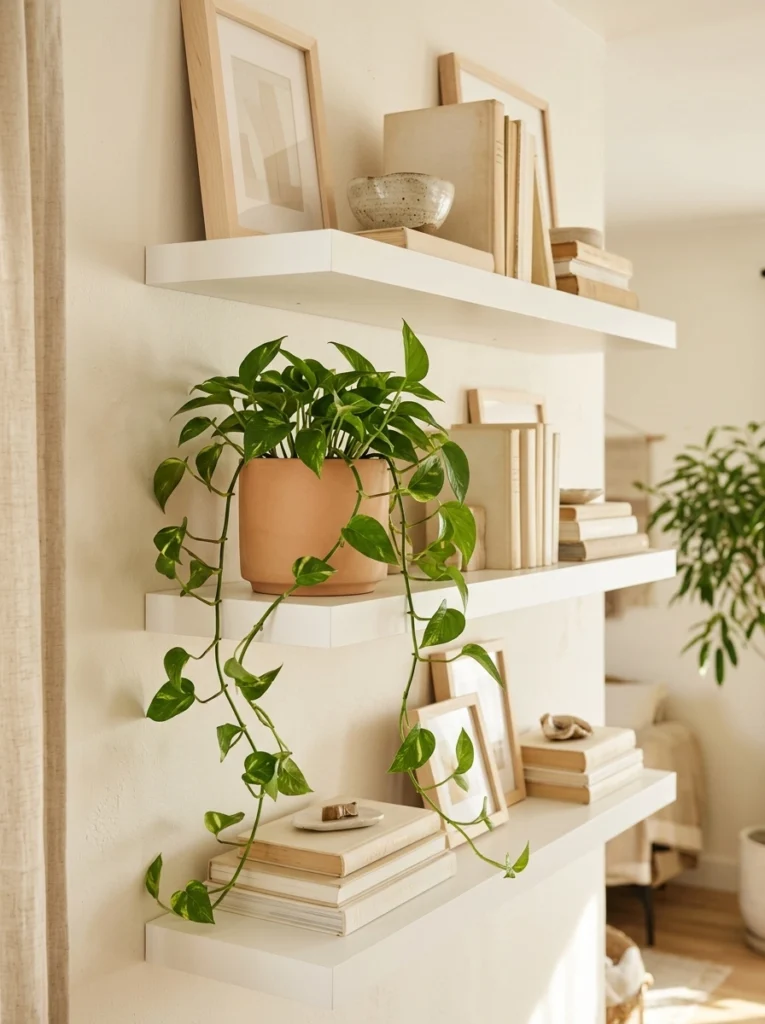
Straight shelves and square picture frames can create lots of hard lines. A trailing plant softens them without requiring another decorative object on every level. Pothos and heartleaf philodendrons are popular choices because their vines naturally spill over the edge of a shelf, creating movement between otherwise separate objects.
Choose a planter about 4 to 6 inches wide for a small shelf arrangement. Place a saucer beneath it to protect wood finishes, and keep the plant within the light conditions it prefers. A pothos in a bright room with indirect light is usually easier to maintain than a plant tucked into a dark corner. Expect to spend around $8 to $20 for a small plant and basic pot at a garden center or Home Depot. Water when the potting mix begins to dry rather than following a rigid weekly schedule. If you have pets that chew plants, check the plant’s toxicity before bringing it home and use a pet-safe alternative where appropriate.
4. Lean Framed Art Instead of Hanging Every Piece
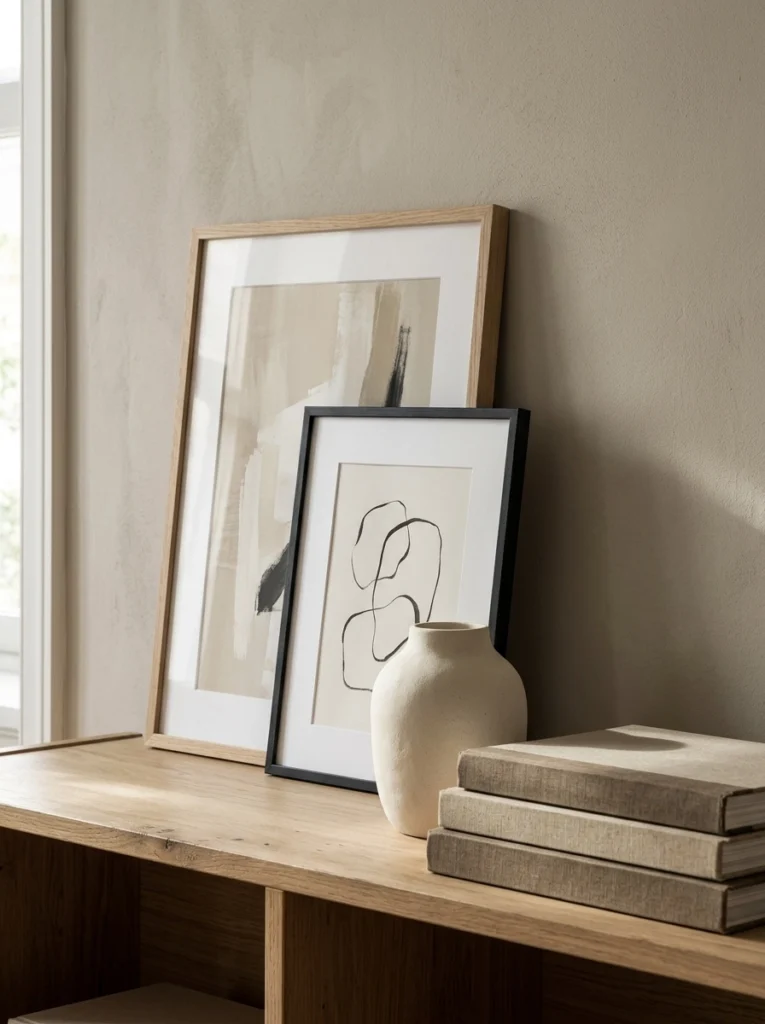
Not every frame on a shelf has to hang on the wall. Leaning artwork against the back panel creates depth and makes the arrangement feel less rigid. Start with one medium frame, then overlap a smaller print in front of it by a couple of inches. Keep the artwork visible enough to read as a deliberate layer rather than a pile of frames waiting to be hung.
For a standard bookcase, an 8-by-10-inch or 11-by-14-inch frame is a practical size to test. Thrift stores often have inexpensive wood frames that look lovely after a quick cleaning or a coat of matte paint. You can also find simple frames at IKEA or Target for roughly $8 to $25 each. Use lightweight frames on narrow shelves, and secure anything that could fall if children or pets bump the furniture. Black-and-white photography, muted landscapes, and abstract prints are easy to combine with neutral ceramics. Keep the frame finishes related, but they don’t have to match exactly.
5. Add a Sculptural Object With an Interesting Shape
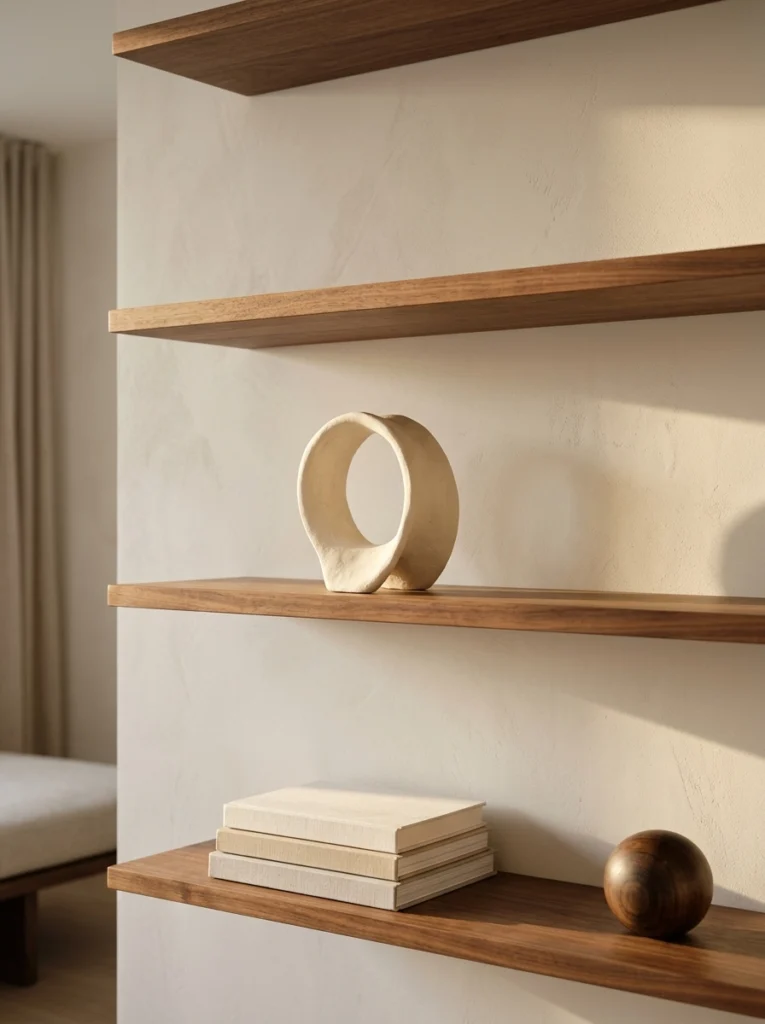
Sometimes the shelf isn’t missing another color. It needs a shape that catches your eye. A plaster knot, carved wooden chain, rounded stone object, or abstract ceramic sculpture provides a focal point without introducing another busy pattern. Pick one piece with a noticeably different silhouette from the surrounding books and frames.
A sculpture around 6 to 10 inches tall usually has enough presence for a standard bookcase without overpowering the other decor. Look at Walmart, Target, and Facebook Marketplace for affordable options, with prices ranging from approximately $12 to $35. If your shelves are already full of pale objects, choose a dark wood or charcoal accent for contrast. On darker shelves, an ivory sculpture stands out more clearly. Leave a few inches of clear space around the piece instead of surrounding it with several tiny accessories. Wipe textured sculptures with a soft brush to remove dust from crevices.
6. Style a Shelf With One Warm Brass Accent
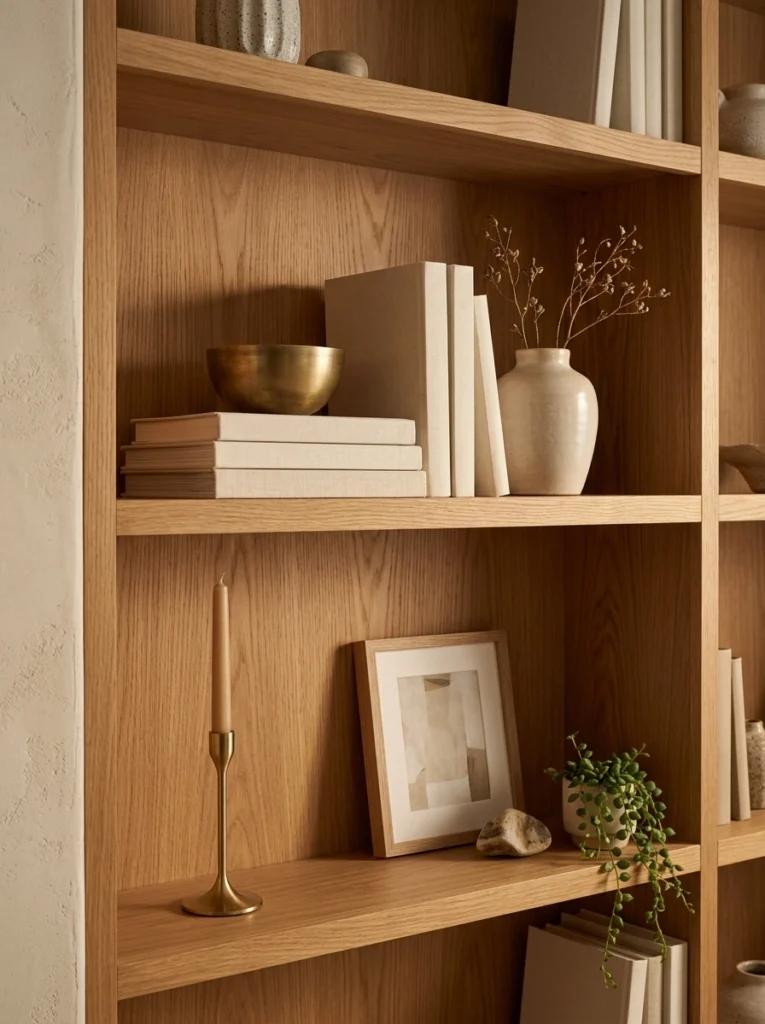
A little brass can warm up a shelf filled with white ceramics, gray books, or cool-toned artwork. The trick is to use one or two small accents rather than covering every shelf in shiny metal. A brushed brass candleholder, shallow catchall dish, or simple geometric object offers enough contrast to make the surrounding materials stand out.
Try a 4- to 6-inch brass accent beside a stack of books or near a framed print. Target and IKEA accessories often provide affordable options, while thrift stores can turn up vintage brass pieces for around $5 to $20. If you prefer a softer finish, look for brushed or aged brass instead of highly polished gold. Keep the rest of the arrangement relatively matte, using linen, wood, and ceramic finishes to prevent glare. Clean the metal according to its finish, and avoid harsh products that could damage a protective coating. This approach works particularly well in living rooms with warm wood floors, cream curtains, or tan leather seating.
7. Use Baskets to Hide Everyday Clutter
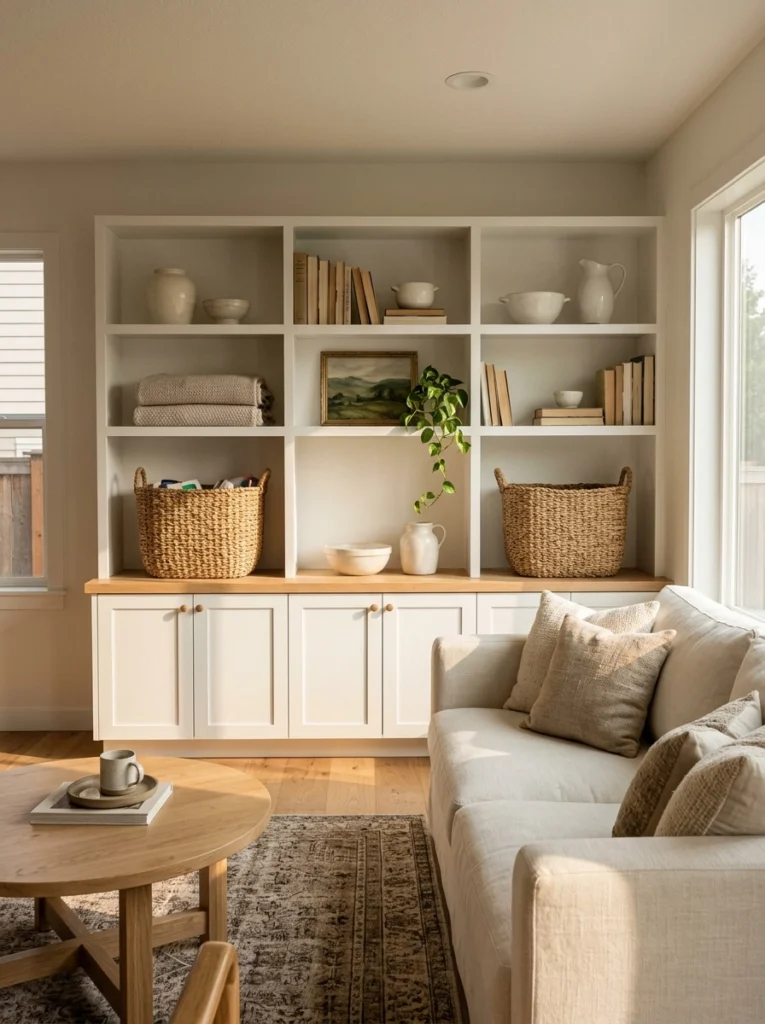
Decorative shelves often become storage for remote controls, chargers, game controllers, and other little things that don’t look particularly pretty. Woven baskets solve that problem while introducing a natural texture that breaks up smooth painted shelves. Use one or two matching baskets along the bottom of a bookcase, where their visual weight helps anchor the entire arrangement.
Measure the inside of the shelf before buying anything. A basket that’s 10 to 12 inches wide often fits a standard bookcase compartment, but check the height and depth too. IKEA, Target, and Walmart carry woven or seagrass-style baskets for roughly $10 to $25 each. Label them discreetly if several family members share the storage. Keep heavier objects on lower shelves, and use baskets with smooth interiors for fabric items that snag easily. Dust natural fibers with a brush attachment on your vacuum. For a cleaner look, repeat the same basket material in just two or three places rather than filling every compartment with wicker.
8. Create a Small Gallery of Family Photographs
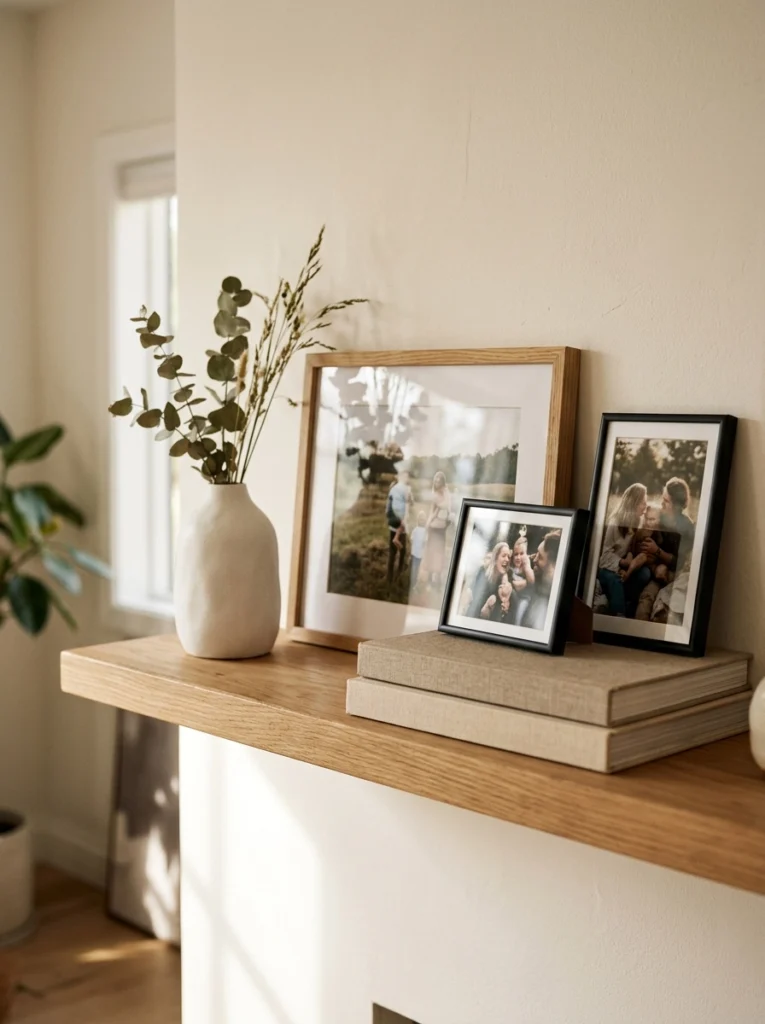
Family photographs bring personality to a room that otherwise feels like a furniture showroom. Instead of lining up a dozen frames in identical sizes, choose three photographs with different dimensions and arrange them in a loose cluster. A larger frame at the back gives the group a visual anchor, while two smaller frames create a more casual layered effect.
Try one 8-by-10-inch frame and two 4-by-6-inch frames on a shelf that’s at least 30 inches long. Simple wood frames feel warm, while thin black frames suit a modern living room. You can find inexpensive options at Target or IKEA for around $15 to $35 for a small group, depending on the frame styles. Keep the photographs in a similar color family, such as black-and-white portraits or softly colored travel pictures. Add a small ceramic bowl beside the frames rather than placing decor between every photograph. Use shatter-resistant acrylic glazing on shelves that are frequently bumped or sit within children’s reach.
9. Pair Dark Wood With Cream Accessories
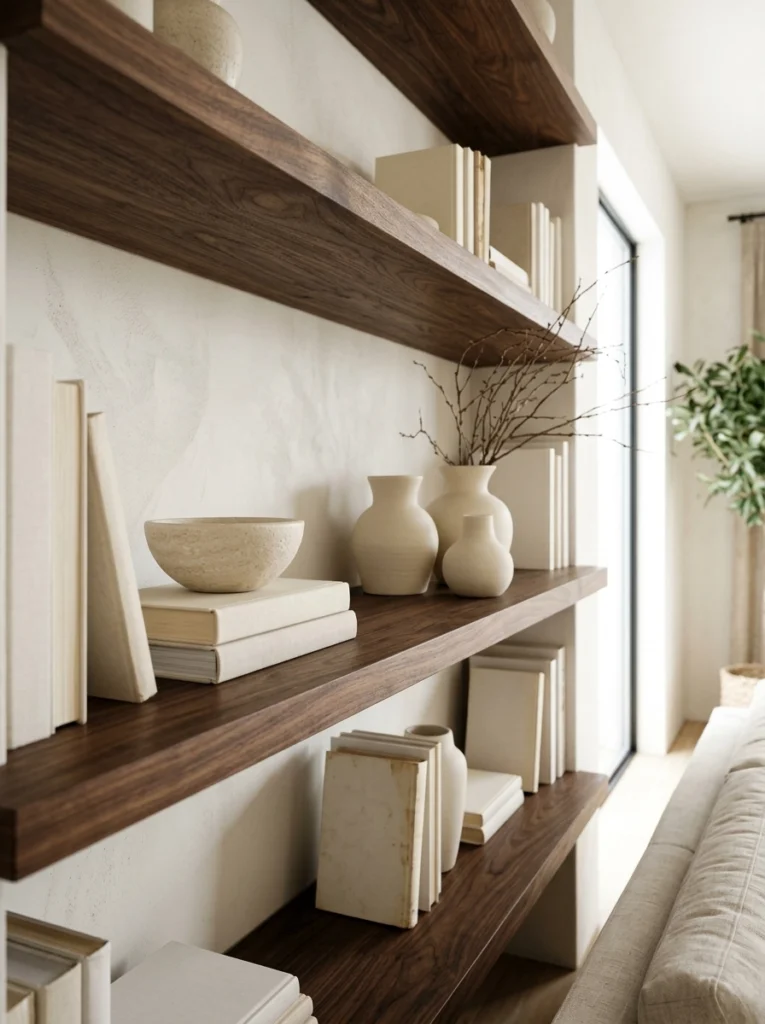
Dark shelves can look beautiful, but they sometimes feel heavy when every accessory is equally dark. Cream and ivory pieces break up the wood while keeping the palette calm. Use a pale vase on one level, a light stack of books on another, and a small stone-colored object near a darker frame. The contrast guides the eye through the bookcase instead of letting everything merge together.
You don’t have to replace your existing shelves to try this combination. Start with two light-colored accessories costing $10 to $30 total from a thrift store, Walmart, or Target. Matte finishes work especially well because they contrast with the grain of walnut or espresso-stained wood without creating distracting reflections. If your room already has cream upholstery, repeat that shade on the shelves to connect the furniture visually. Avoid adding too many unrelated accent colors at once. A single muted green plant or brown glass vessel is plenty. Dust dark wood with a soft cloth and use a cleaner suited to the existing finish rather than saturating the surface with water.
10. Style Floating Shelves in Uneven Groupings
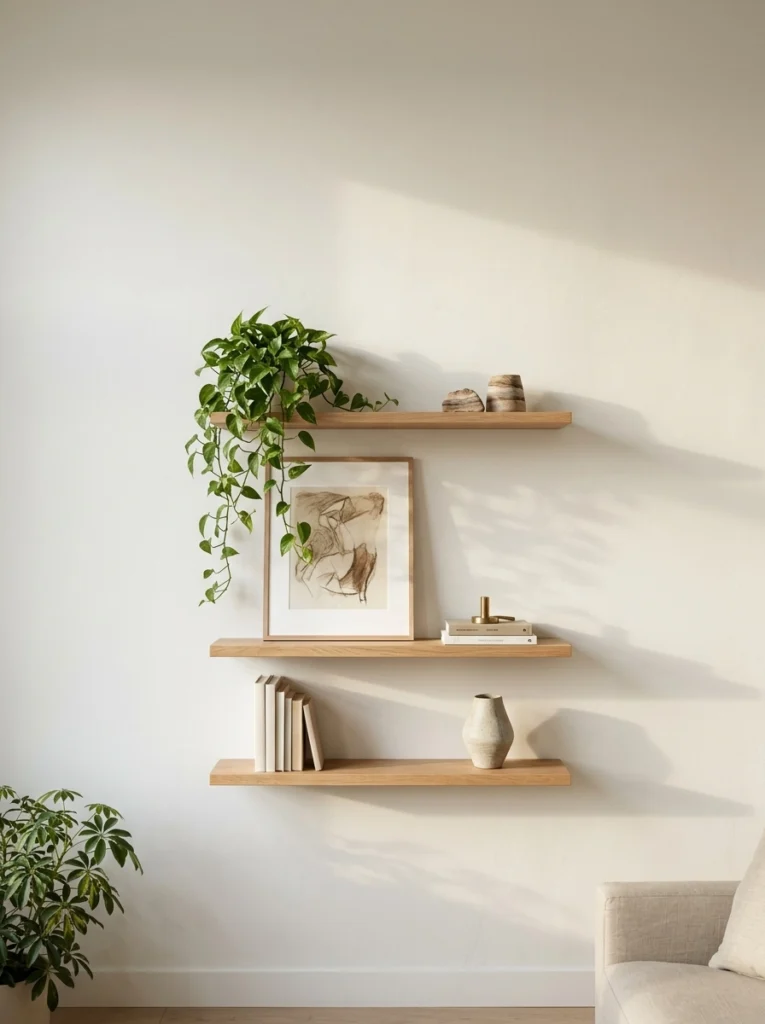
Floating shelves look most natural when each level has a slightly different arrangement. If the top shelf holds a framed print and a vase, use books and a low bowl on the middle shelf, then a trailing plant on the bottom. Repeating the same objects in the same positions creates a rigid, store-display effect. Varying the heights and groupings gives the wall a more relaxed rhythm.
For a small living room, two or three shelves measuring 24 to 36 inches long are often enough for a decorative wall. IKEA and Home Depot offer shelf boards and mounting hardware at prices that vary by material and load rating, while basic DIY versions can cost around $25 to $60 before tools. Check the wall type and use hardware rated for the shelf and its contents. Locate studs where the mounting system calls for them, and never rely on appearance alone to judge whether a shelf is secure. Keep the objects light if the shelves are mounted above a sofa, and leave clear wall space around the display so it doesn’t compete with nearby artwork.
11. Introduce a Small Stack of Vintage Books

Vintage books bring color, history, and texture that new decorative accessories sometimes lack. Search secondhand shops for hardcovers with attractive cloth covers, worn edges, or muted spines. Stack two or three horizontally, then place a small wooden box or brass object beside them. The result feels collected over time instead of purchased as one matching set.
A thrift store or used bookstore is a good place to begin, with many decorative hardcovers priced around $2 to $8 each. Set a budget of $10 to $25 for a small stack and choose books you actually enjoy looking through. If you find a lovely old volume with a damaged spine, keep it upright only if the binding is stable. Avoid placing fragile antique paper in direct sunlight, which can fade covers and dry out materials. For a more colorful room, choose one burgundy or forest-green spine among neutral books. The deeper shade gives the arrangement character without requiring another large decorative object.
12. Bring in a Branch Arrangement for Height
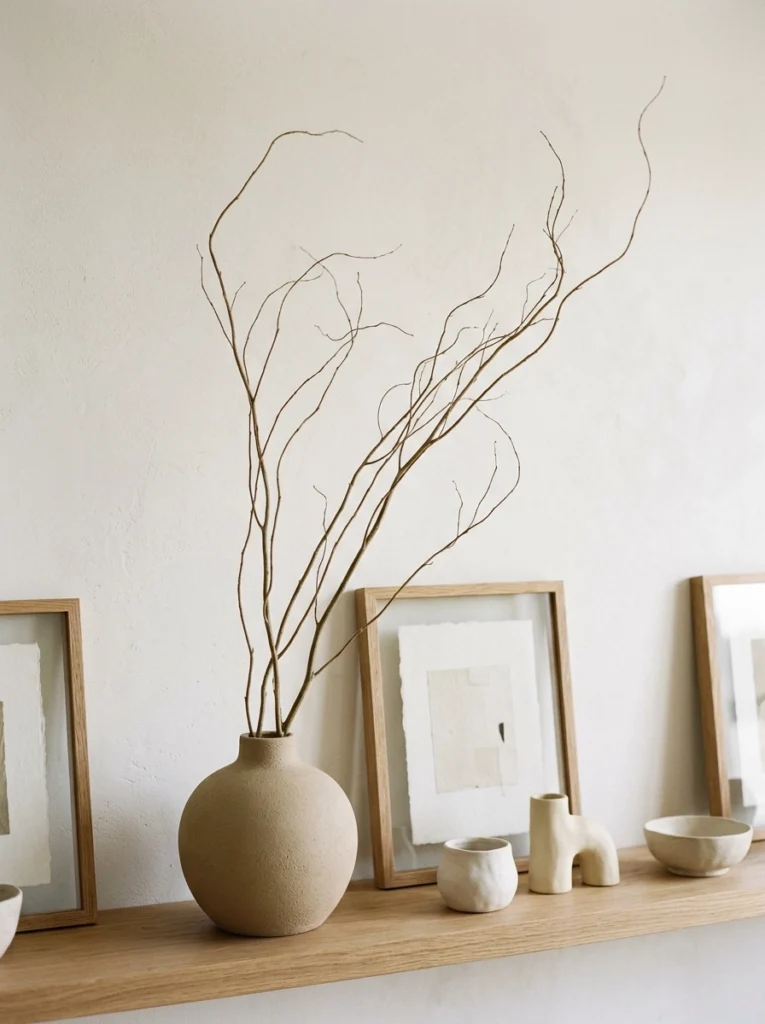
When every object on a shelf is short, the whole arrangement can feel flat. A few branches solve that problem with very little expense. Choose curly willow, preserved stems, or clean fallen branches, then place them in a stable vase toward one end of the shelf. The upward lines draw attention to the height of the bookcase and help balance lower objects nearby.
A vase measuring 8 to 12 inches tall works well for many standard shelves, provided the shelf has enough clearance above it. Basic ceramic vases often cost $12 to $25 at Target or Walmart, and natural branches may cost nothing if gathered legally from your own property. Remove loose bark, inspect for insects, and avoid collecting material from protected parks. Keep the vase away from heavy traffic so it won’t be knocked over. If you have low shelves, use shorter stems or a wider vessel with a compact arrangement. Dust dried branches gently, since rough handling can cause small pieces to break off.
13. Repeat One Accent Color Across the Bookcase
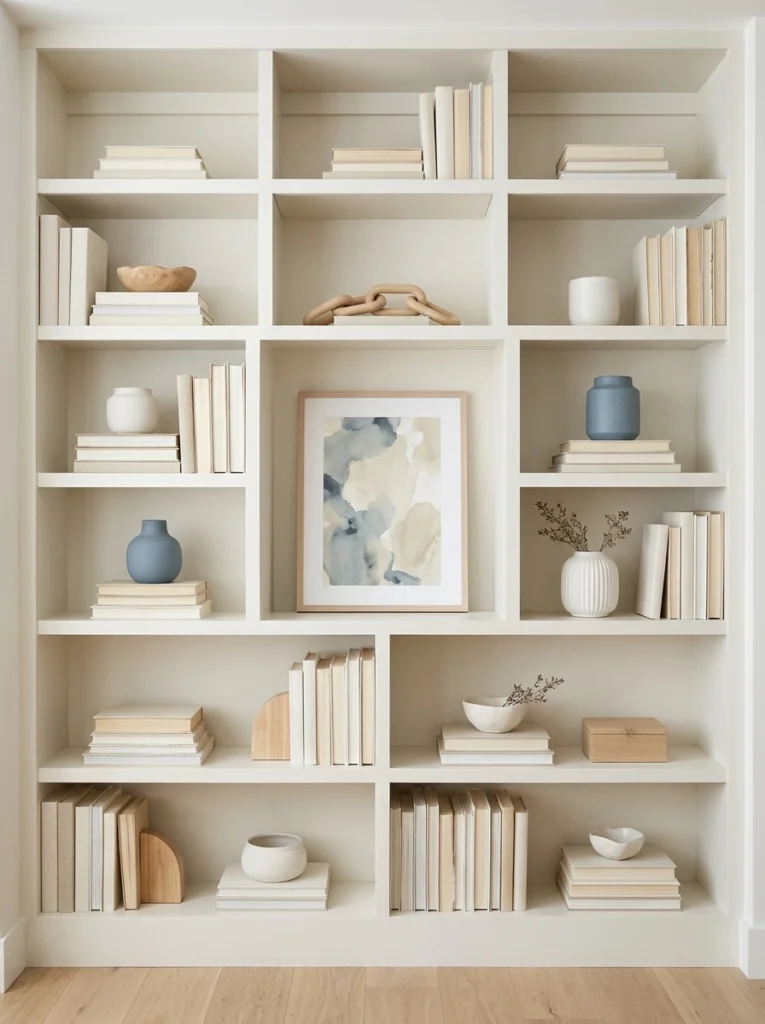
A shelf display doesn’t have to be completely neutral to feel balanced. Pick one accent color that already appears in your living room, perhaps dusty blue from a rug, rust from a cushion, or olive green from a throw. Repeat it in two or three small places across the bookcase rather than concentrating all the color on one shelf.
For example, a dusty blue vase on the top shelf and a blue detail in a framed print below create a subtle connection. Add a third touch through a book spine or small bowl if the shelves still feel disconnected. Three repeated accents are usually enough for a medium-sized bookcase. Look through Target, Walmart, and thrift stores before purchasing new decor, since even a $6 bowl can carry the color through the room. Keep the remaining pieces in wood, cream, or another quiet neutral. Too many accent colors compete for attention, while one repeated shade creates a simple visual thread that connects the shelves to the rest of the space.
14. Make Room for a Decorative Bowl
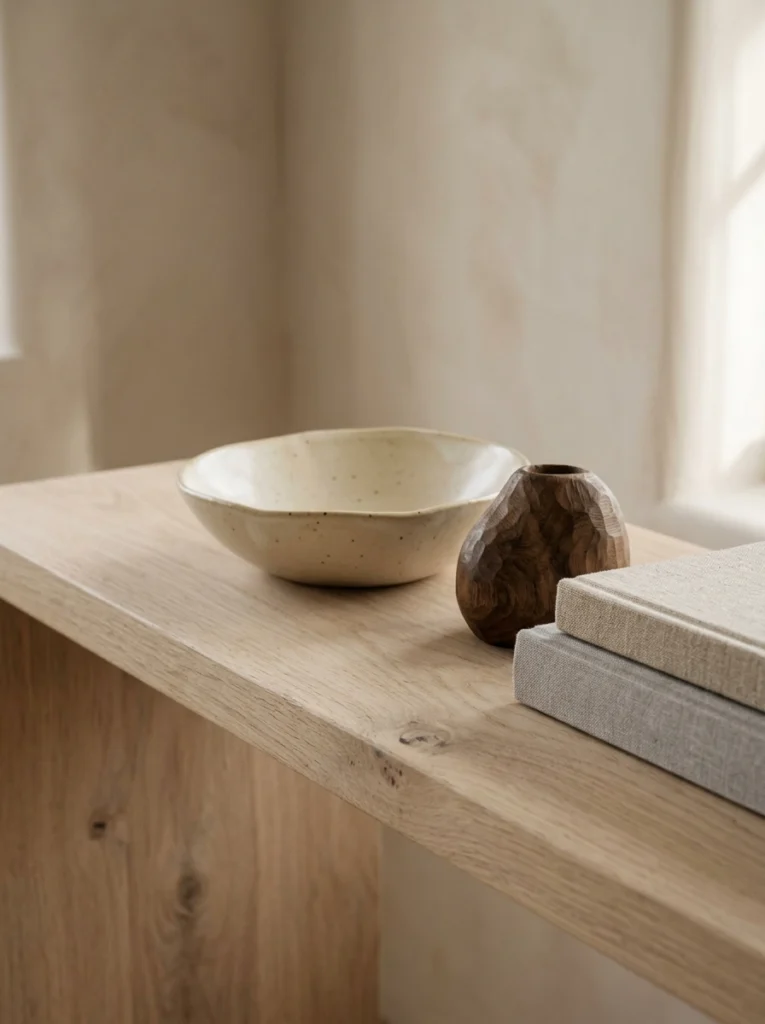
A decorative bowl is one of those small accessories that earns its place because it has both shape and function. Choose a shallow stoneware bowl, carved wooden dish, or textured ceramic piece, then leave it mostly empty. It can hold a few smooth stones or a single decorative object, but filling it with miscellaneous household items makes the shelf look untidy again.
A bowl measuring 6 to 10 inches across is a useful size for a standard bookcase. Thrift shops often have ceramic serving bowls for $5 to $15, while new decorative versions at Target can cost around $12 to $25. Check the base before buying to make sure it sits flat and doesn’t wobble. Place the bowl beside books or in an open section of the shelf where its curved shape contrasts with rectangular objects. A wood bowl suits warm, rustic rooms, while matte white stoneware works with Scandinavian-inspired interiors. Wipe ceramic bowls with a damp cloth, and keep untreated wood away from standing water.
15. Try Shelf Styling Ideas Living Room Displays With Woven Texture
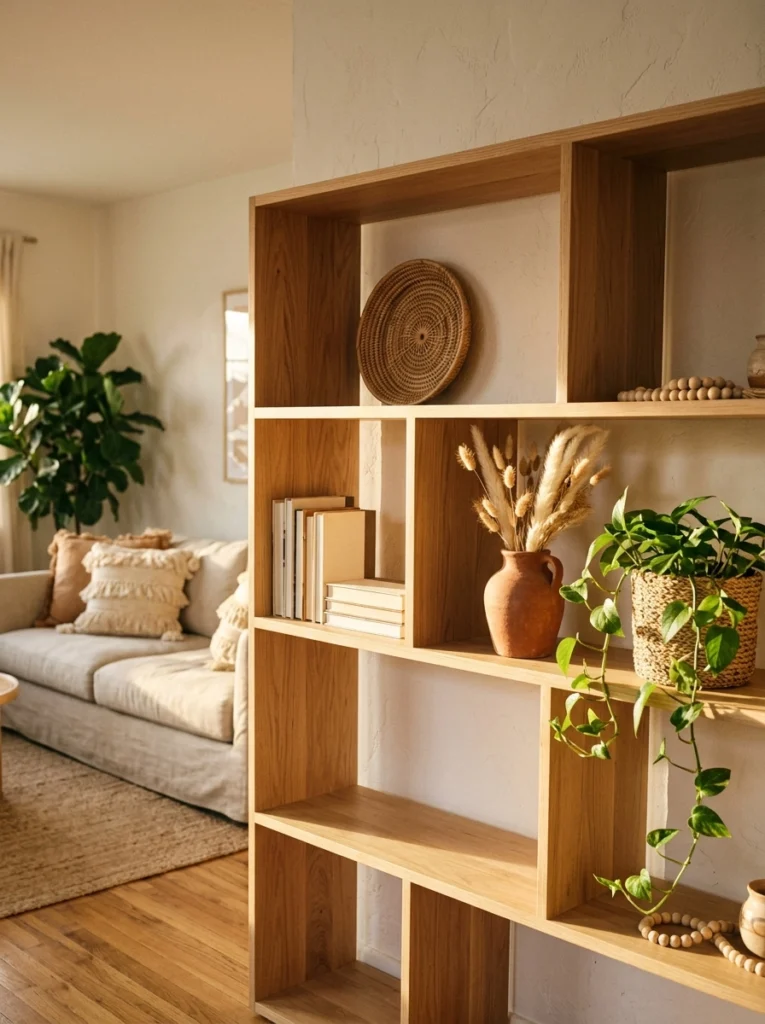
Woven materials bring softness to shelves filled with glass, metal, and hard ceramic surfaces. A small woven tray, palm-fiber bowl, or basket can introduce that texture without making the entire bookcase look rustic. The trick is to choose one piece with visible fibers and let the surrounding objects remain relatively simple.
Try a 6- to 10-inch woven tray on a middle shelf, with a small ceramic vessel or a few books nearby. Natural-fiber accessories from IKEA, Target, or local craft markets typically cost around $8 to $25. Keep the tray away from damp plant pots unless it’s designed for moisture, and check for loose fibers that could snag nearby fabrics. In a contemporary living room, pair woven texture with clean-lined black frames and pale wood. For a boho-inspired space, mix it with terracotta and leafy plants. One woven accent per shelf is plenty. Too many baskets, rattan pieces, and straw accessories can make a compact living room feel visually crowded.
16. Add a Compact Table Lamp to a Shelf
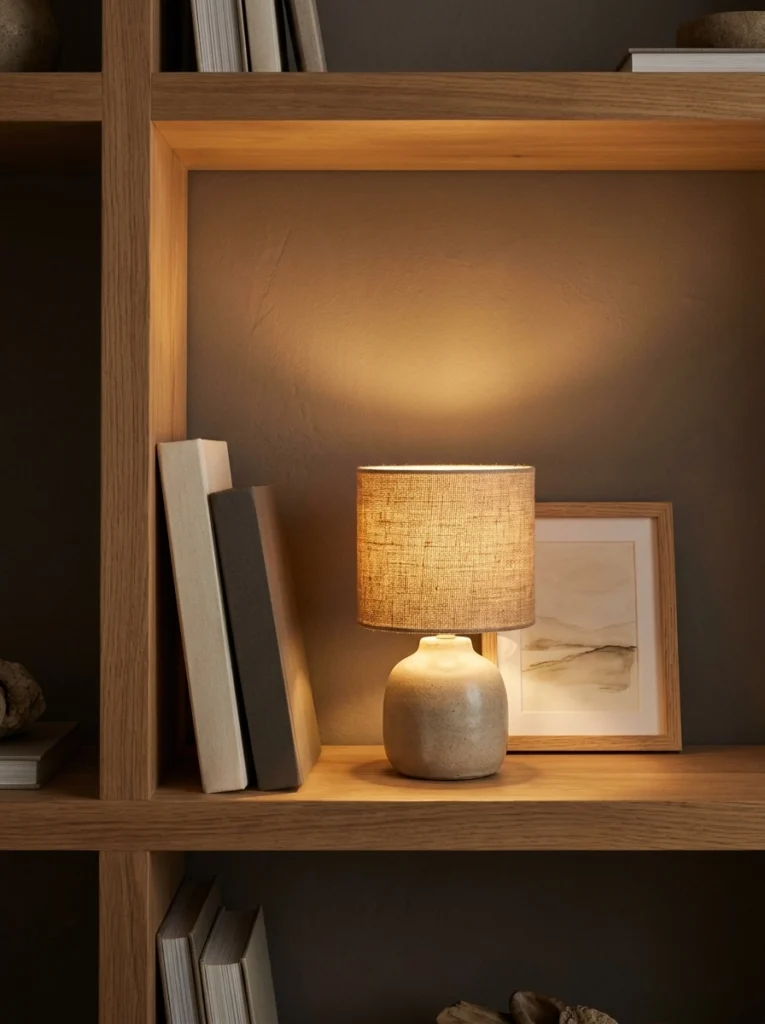
A small lamp can make a bookcase feel cozy after sunset, especially if your living room relies on one overhead light. Choose a compact lamp with a linen shade and a stable base, then position it on a shelf with enough depth to support it safely. The light adds another layer to the room and makes the shelves feel connected to the seating area.
Look for a lamp around 12 to 18 inches tall and check that the shelf can support its weight. Budget roughly $20 to $45 for an affordable lamp from Walmart, IKEA, or Target, plus the cost of a bulb if one isn’t included. A warm-white LED bulb around 2700K creates a comfortable evening glow. Route the cord neatly and keep it away from pinch points, hot surfaces, and places where people could snag it. Don’t overload the shelf with books around the lamp, and follow the manufacturer’s clearance instructions. If the bookcase is narrow or unstable, use a floor lamp beside it instead.
17. Combine Glass With Matte Ceramics
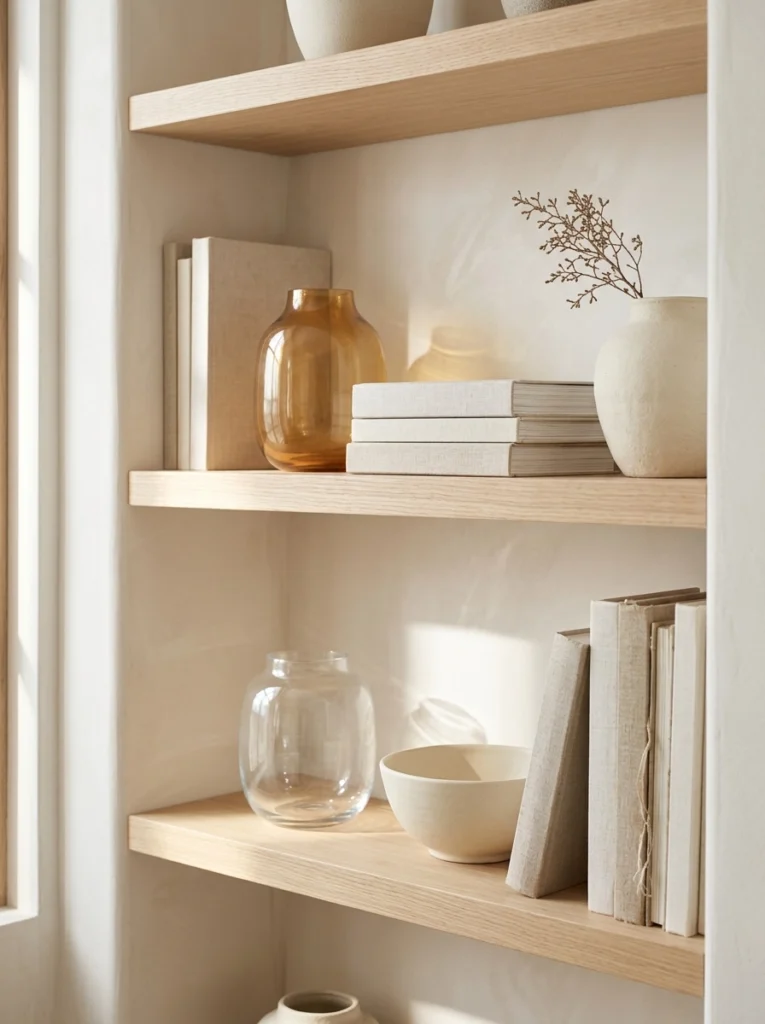
Glass catches light in a way that wood and ceramics don’t. A clear bud vase or amber glass bottle can make a shelf arrangement feel lighter, particularly when paired with matte pottery. Choose just one or two glass pieces and position them where daylight can highlight their shape without reflecting directly into your eyes.
A 6- to 9-inch glass vase is a practical size for many shelves, and thrift stores often sell attractive bottles and vessels for $3 to $12. New amber glass decor at Target or Walmart typically falls around $8 to $20. Pair the glass with a solid ceramic vase or a small stack of books so the display doesn’t look like a collection of empty bottles. If the shelves sit near a sunny window, check the manufacturer’s care instructions and avoid placing glass where concentrated sunlight could pose a fire risk. Clean glass with a soft lint-free cloth, and leave enough space around fragile pieces that they won’t knock against one another when you reach for a book.
18. Style the Bottom Shelf With Oversized Objects
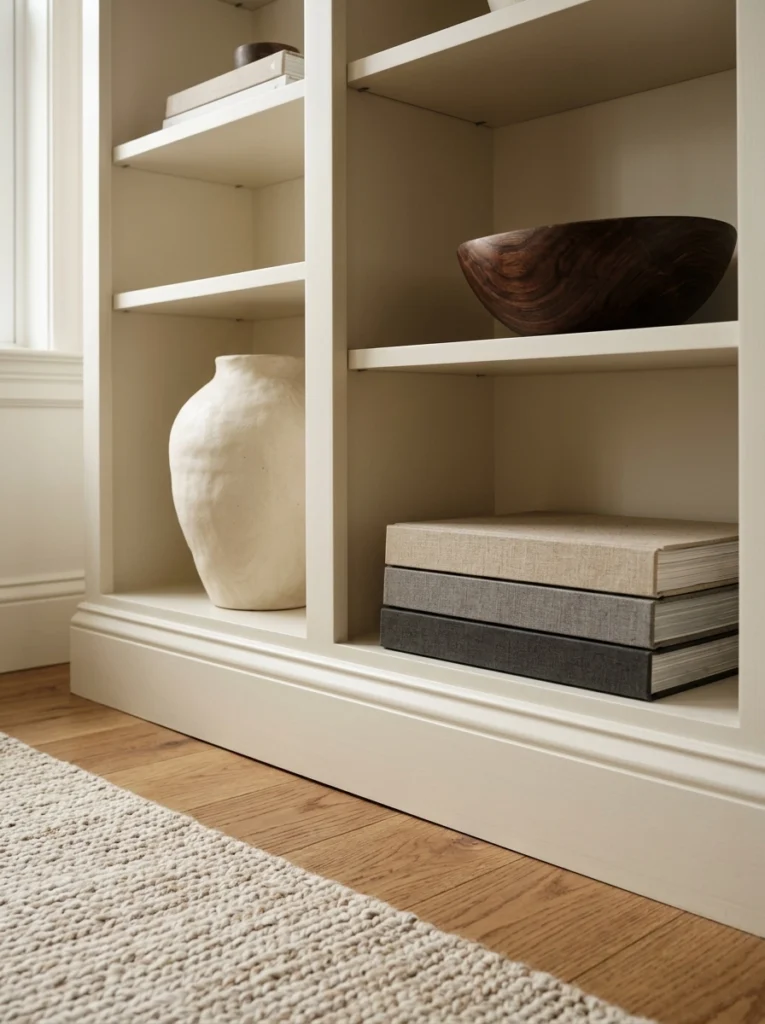
Small decorative pieces scattered across every level can make a bookcase feel fussy. Give the bottom shelf a different role by using fewer, larger objects. An oversized vase, a stack of large-format art books, or a substantial wooden bowl adds visual weight near the floor, which helps the whole arrangement feel grounded.
For a shelf with 12 to 14 inches of vertical clearance, look for one substantial object rather than several tiny ones. A thrifted vase or secondhand coffee-table book can keep the cost between $15 and $40. Before purchasing, measure the shelf opening and check whether the object can be lifted out easily. Keep heavier ceramics low, especially if children or pets move through the room. Avoid placing anything so large that it blocks cabinet doors or makes nearby storage difficult to reach. A broad object with a simple silhouette is often more effective than an intricate ornament. Leave some bare shelf visible around it to prevent the bottom level from looking packed.
19. Use Matching Frames to Calm a Busy Display
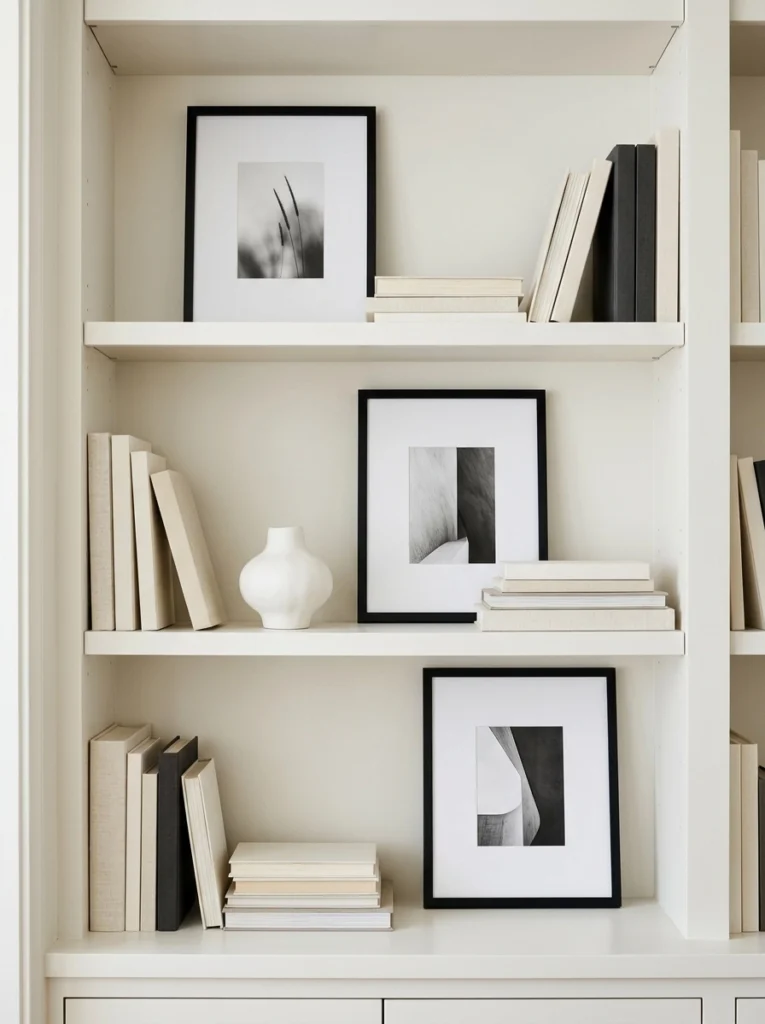
If your shelves contain books, souvenirs, plants, and ceramics collected over several years, matching frames can give everything a sense of order. Choose two or three frames in the same finish and use different images inside them. The repeated black or oak edges connect the arrangement, even if the objects around them vary in color and shape.
Start with two or three frames in one finish, costing around $15 to $35 altogether for budget-friendly options. IKEA and Target both carry simple styles that work well in contemporary rooms. Choose artwork or photographs with similar contrast, such as monochrome images or muted landscapes, so the frames and pictures support one another. Place the frames on different shelves rather than creating a perfectly straight row. That keeps the display from feeling too formal. Dust the frames regularly, and use removable backing clips or secure hanging hardware when appropriate to prevent photographs from slipping. This approach is particularly useful if you love collecting objects but want the overall bookcase to feel quieter.
20. Create a Moody Shelf With Charcoal and Earthy Brown
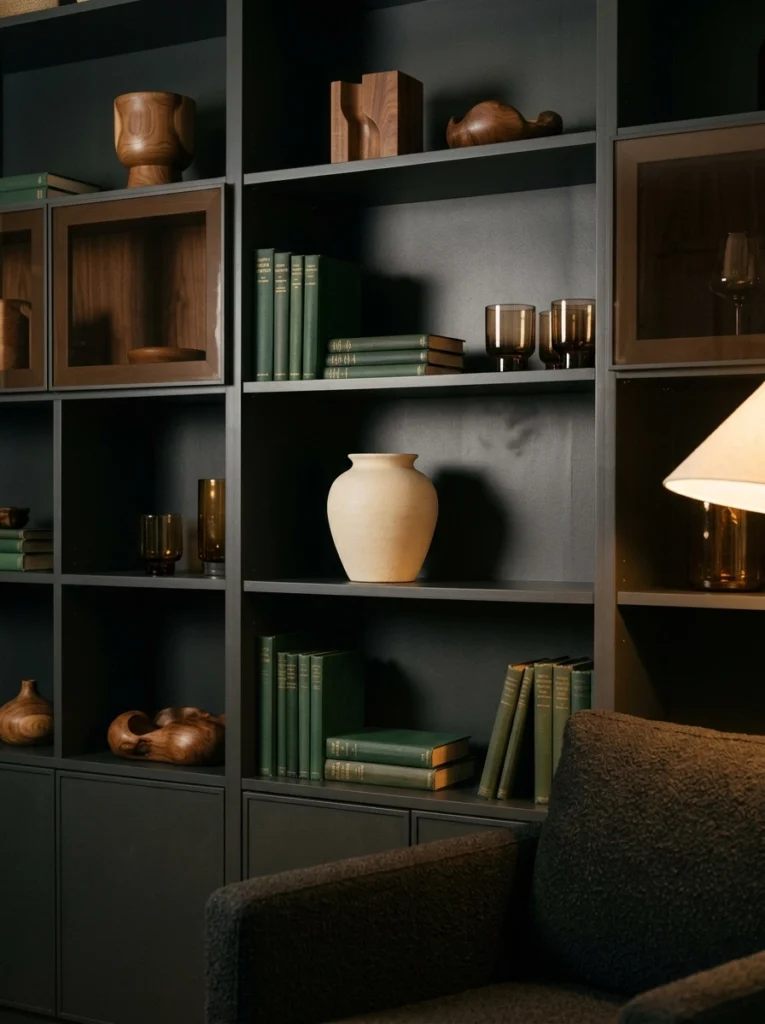
Not every aesthetic living room has to be white and beige. Charcoal shelves can look inviting when paired with earthy browns, dark green books, and one lighter object to break up the depth. The secret is to vary the finishes. Matte pottery, smoked glass, and visible wood grain prevent a dark palette from becoming a flat block of color.
You can experiment with this look without repainting the bookcase. Add two or three dark accessories for $15 to $35, then use a cream vase or pale art print as a contrasting focal point. Thrift stores are especially useful for finding brown glass bottles and wooden objects at modest prices. Keep darker decor away from the very back of every shelf if the room lacks natural light, since too many dark objects can disappear into the background. A warm lamp nearby helps reveal the textures after sunset. Dust charcoal finishes with a soft cloth, as pale dust tends to show more clearly against dark surfaces.
21. Display a Small Collection Without Overcrowding It
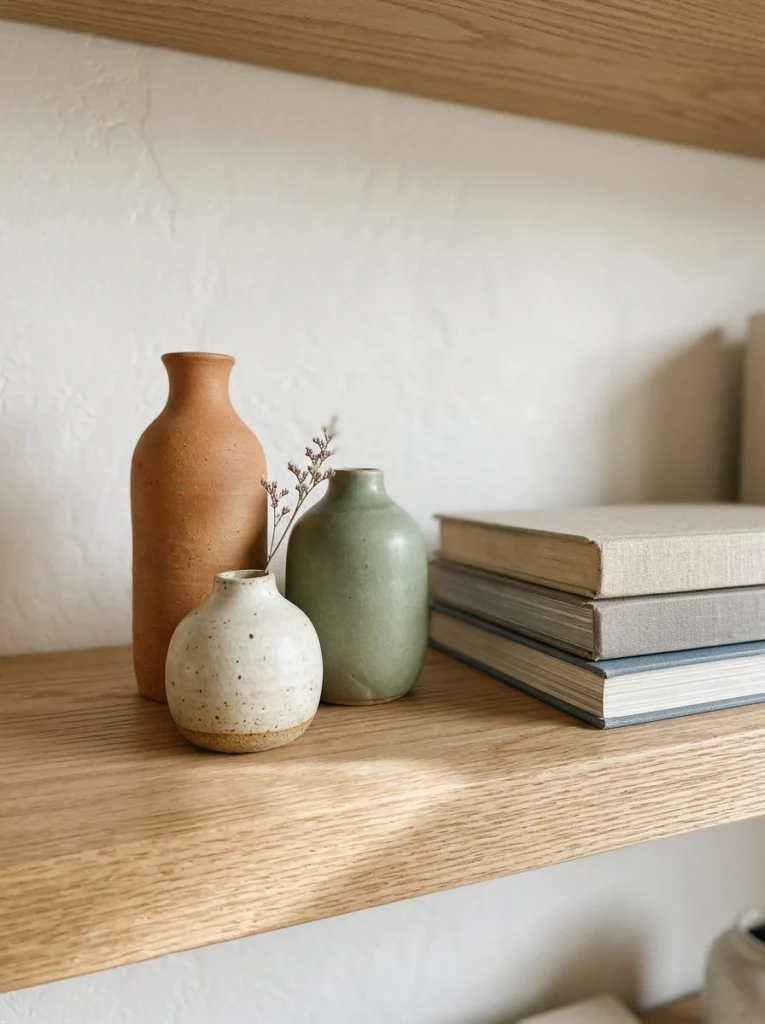
Collections are more interesting when they have a clear boundary. If you collect pottery, vintage cameras, small sculptures, or travel souvenirs, group three to five related objects together instead of spreading them across every shelf. The grouping reads as one intentional feature, leaving the remaining shelves available for books and larger decor.
For a collection of three to five small objects, dedicate one shelf section measuring roughly 18 to 24 inches wide. You don’t have to purchase anything new if you already own meaningful pieces. If your collection is still growing, thrift-store ceramics often cost $4 to $15 each. Arrange the objects by height, with one larger piece toward the back and smaller pieces closer to the front. Leave a little space between them so each silhouette remains visible. Avoid displaying every item you own at once. Rotate the collection seasonally or whenever the shelves start feeling crowded. For delicate objects, use small museum putty where appropriate and follow the care instructions for the shelf finish.
22. Bring in Natural Stone for a Subtle Luxury Look
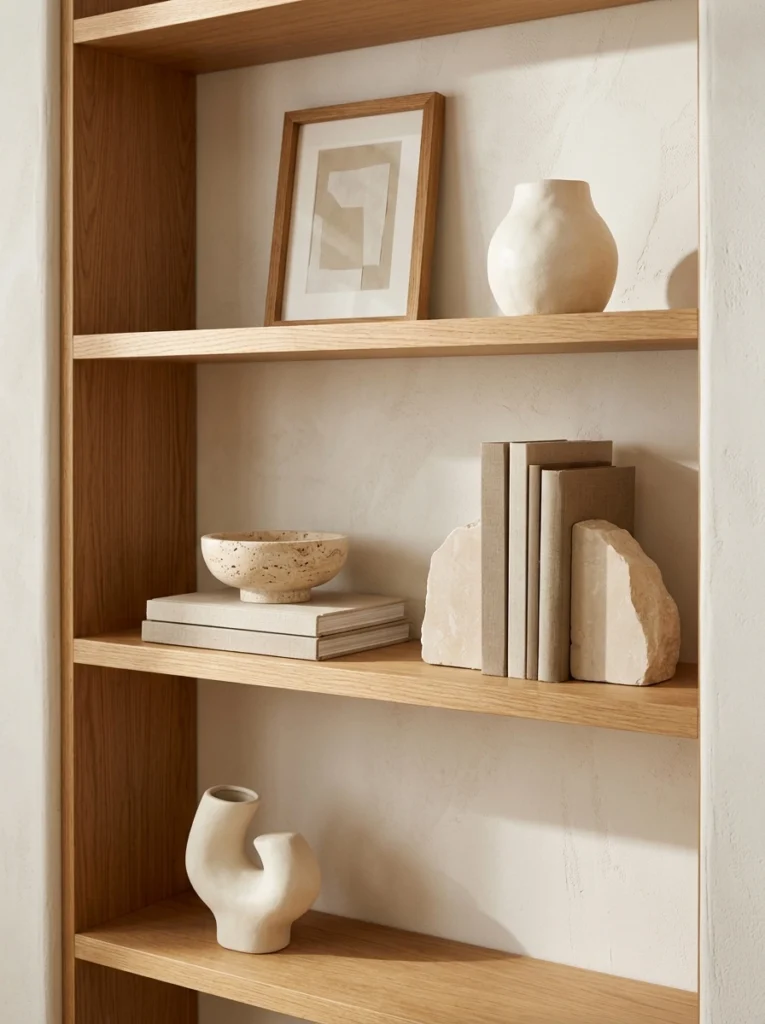
Natural stone accessories bring weight and texture without adding another bold color. A travertine-style bowl, marble bookend, or small stone sculpture looks especially good beside pale books and warm wood. The small variations in the material give the shelf interest, even when the overall palette stays quiet.
Real stone accessories vary in price, but $15 to $40 is a reasonable starting budget for a small piece or an affordable stone-look alternative. Browse home stores, thrift shops, and online marketplaces, checking the dimensions and material description before buying. Place heavier pieces on sturdy shelves and use protective pads if the stone has a rough underside. Pair a stone bowl with one matte ceramic vase instead of adding several other decorative objects. That contrast keeps the display simple. Wipe stone with a soft cloth and follow the manufacturer’s cleaning guidance, since acidic cleaners can damage some stone surfaces. If you’re renting and can’t alter the shelves, removable accessories offer the same material contrast without permanent changes.
23. Give Each Shelf a Little Breathing Room
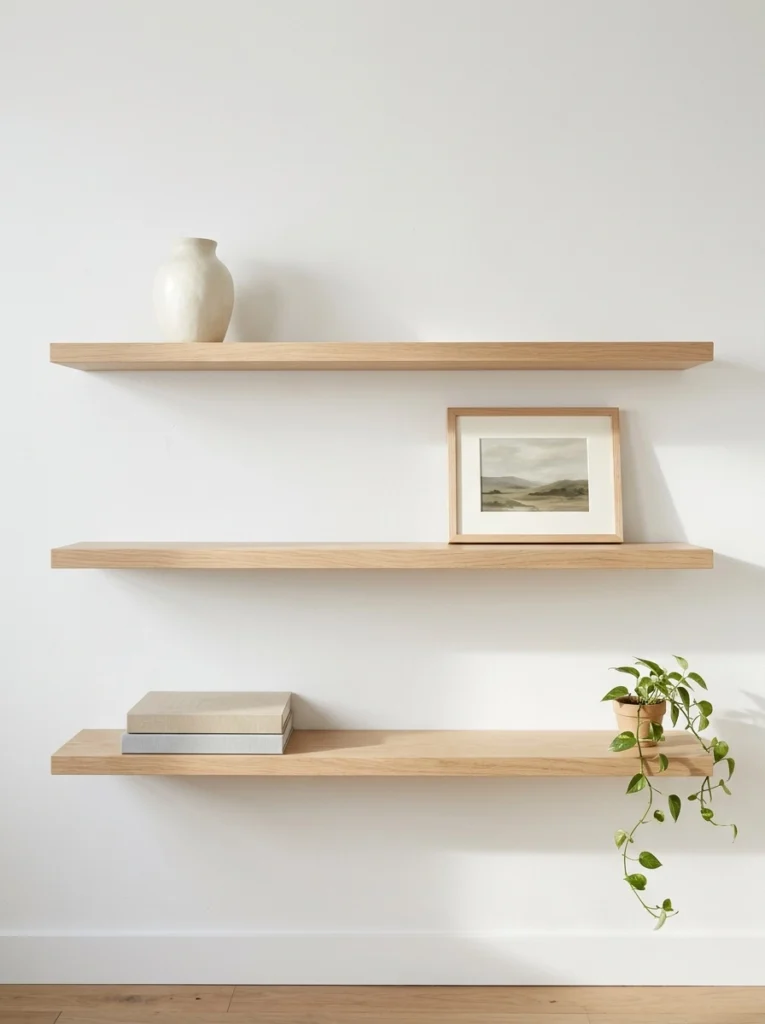
One of the easiest shelf styling ideas living room decorators overlook is simply removing a few things. Empty space isn’t wasted space. It lets the remaining pieces stand out and prevents a bookcase from competing with the sofa, rug, and artwork nearby. Start by removing everything from one shelf, then put back only the items you genuinely like.
For a 30-inch-wide shelf, try one grouping of two or three objects on one side and leave the rest open. If you need the shelf for books, keep the books together and leave a small gap at one end rather than filling every inch. This costs nothing, and it often makes a bigger difference than buying more decor. Move the extra pieces to a storage box and rotate them later if you enjoy changing your room. A useful test is to step back several feet and check whether the eye can settle on one main feature. If everything grabs attention equally, remove one more small object.
24. Add a Personal Travel Souvenir
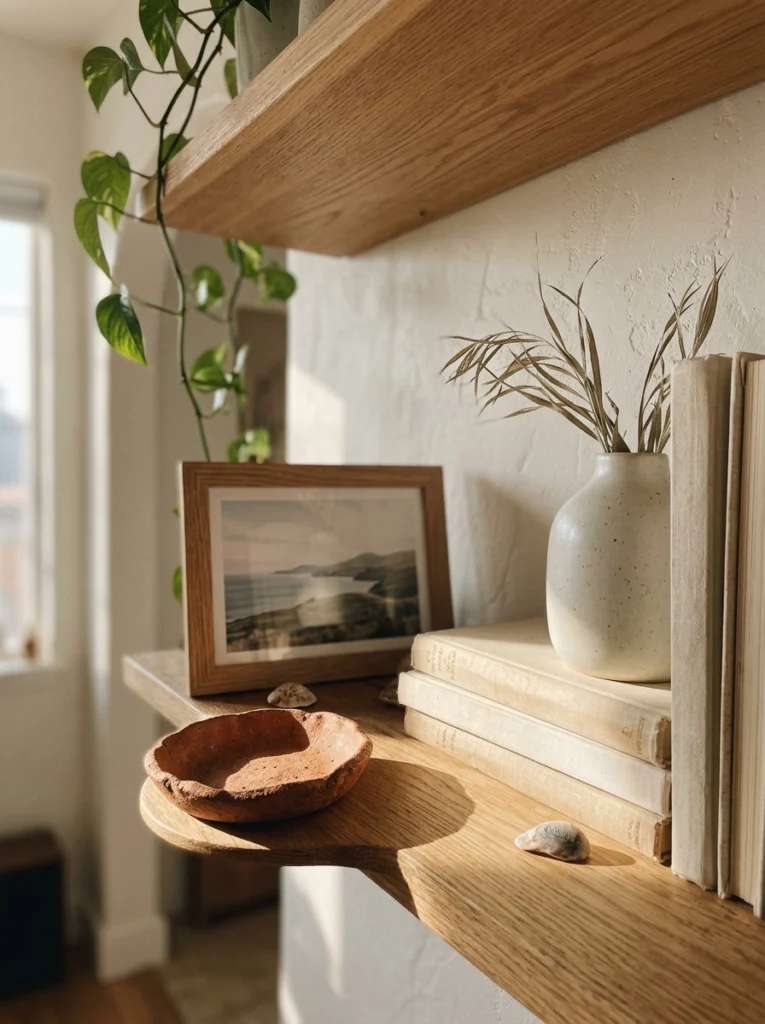
A shelf feels more like home when it includes something that means something to you. A small pottery piece from a vacation, a carved wooden object from a local market, or a shell collected legally from an appropriate beach can give a neutral arrangement a personal detail. Pair the souvenir with simple books or a frame so it stands out rather than disappearing among unrelated trinkets.
Choose one meaningful object around 3 to 8 inches wide for a typical shelf grouping. If you already own the item, the cost is zero. Otherwise, local craft markets and thrift stores often offer interesting handmade objects for $5 to $25. Think about how the piece relates to your room’s colors. A terracotta souvenir works well with cream and oak, while a small blue ceramic piece can connect to a coastal color scheme. Clean it according to its material, and avoid placing fragile items near shelf edges. If the souvenir has a story, let it be the focal point instead of surrounding it with several other keepsakes.
25. Use Bookends as Decorative Objects
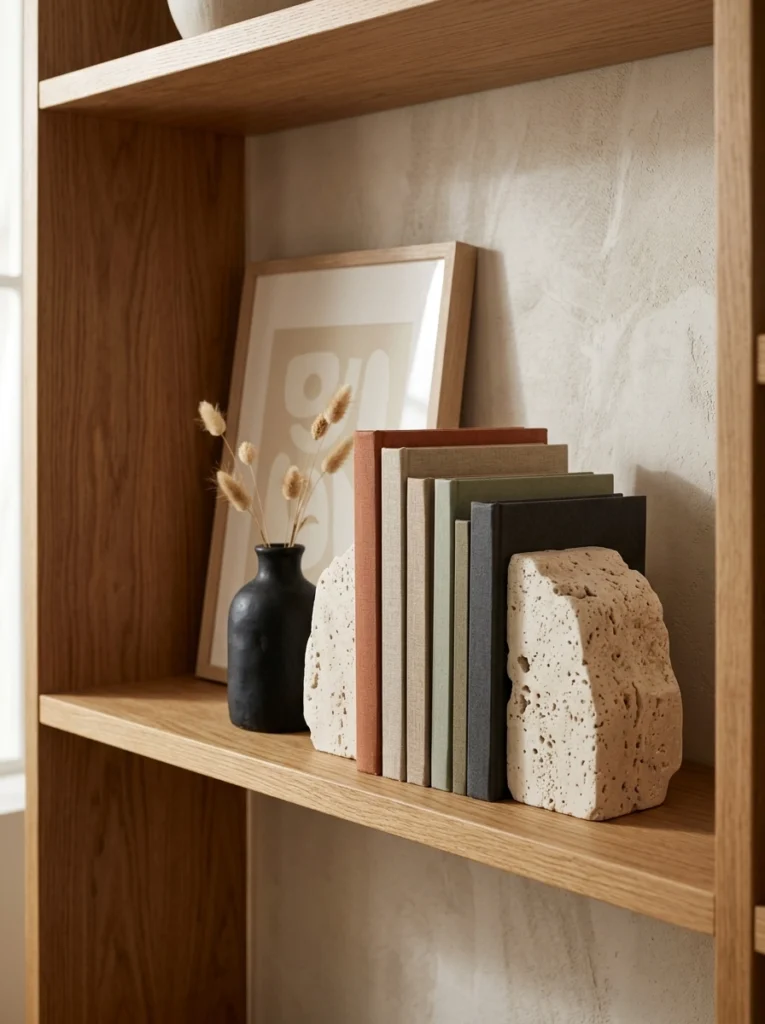
Bookends can do more than keep a row of books upright. Choose a pair with an interesting silhouette, such as simple stone blocks, dark metal arcs, or carved wood forms. They add structure to a shelf while introducing a new material. This works especially well if you have a lot of books and don’t want to break up every row with little decorative objects.
A pair of 5- to 7-inch bookends generally works for many standard hardcovers, though heavier books call for sturdier supports. Budget approximately $12 to $30 for affordable pairs from Walmart, Target, or online home retailers. Check that the bases are broad enough to support your books without slipping. Use stone or metal bookends for heavier volumes and lighter wooden styles for smaller paperbacks. Position the row of books toward one side of the shelf, then leave space for a single vase or framed print at the opposite end. Wipe metal and stone bookends with a suitable soft cloth, and use protective pads under rough bases to prevent scratches.
26. Style a Small Living Room Shelf With a Three-Piece Formula
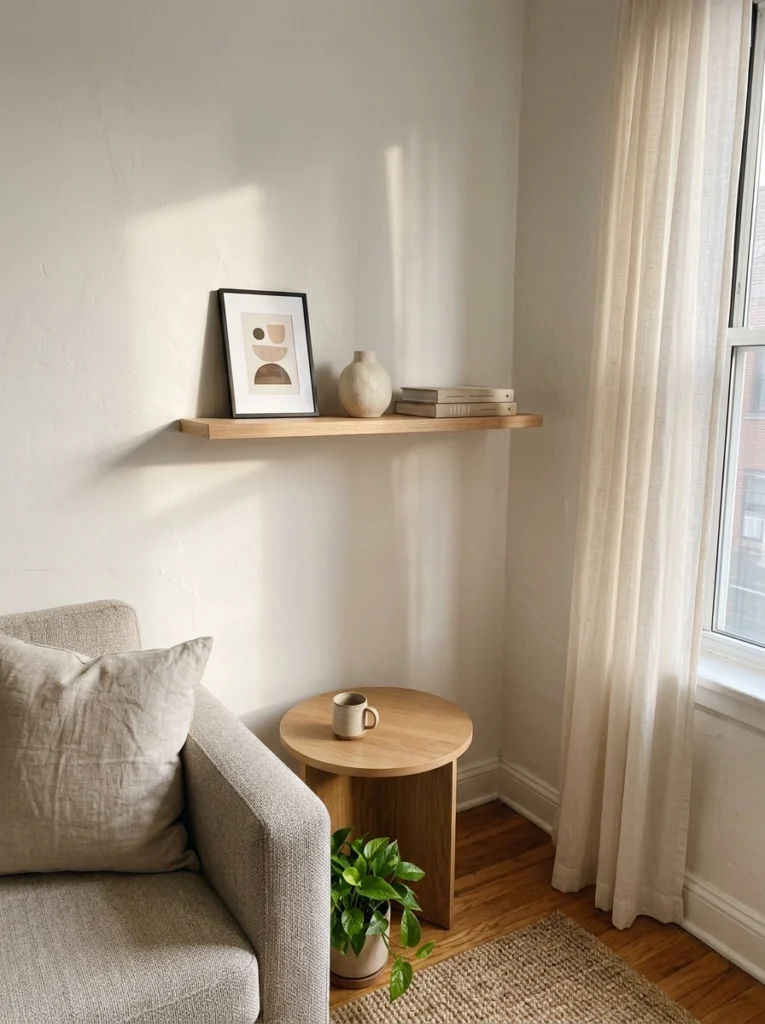
If your living room is small, a simple formula saves time and keeps the shelves from swallowing the room. Start with one tall object, one medium object, and one low object. For example, lean a framed print at the back, place a ceramic vase beside it, and finish with two stacked books. The different heights create visual interest without requiring a large collection.
For a shelf around 24 inches long, three carefully chosen elements are often enough. Use decor you already own, or set aside $15 to $35 for a basic frame, vase, and secondhand books. Keep the palette connected to your sofa or rug so the shelf feels like part of the room rather than a separate display. In a narrow apartment, avoid deep accessories that project too far from the wall. Check the shelf’s weight limit before placing anything substantial on it. If you want more ideas for compact spaces, see [INTERNAL LINK: small living room decorating ideas]. The same principle applies to a tiny shelf above a desk or beside a reading chair. A small arrangement can have plenty of character without taking up much visual space.
Mistakes That Ruin the Look
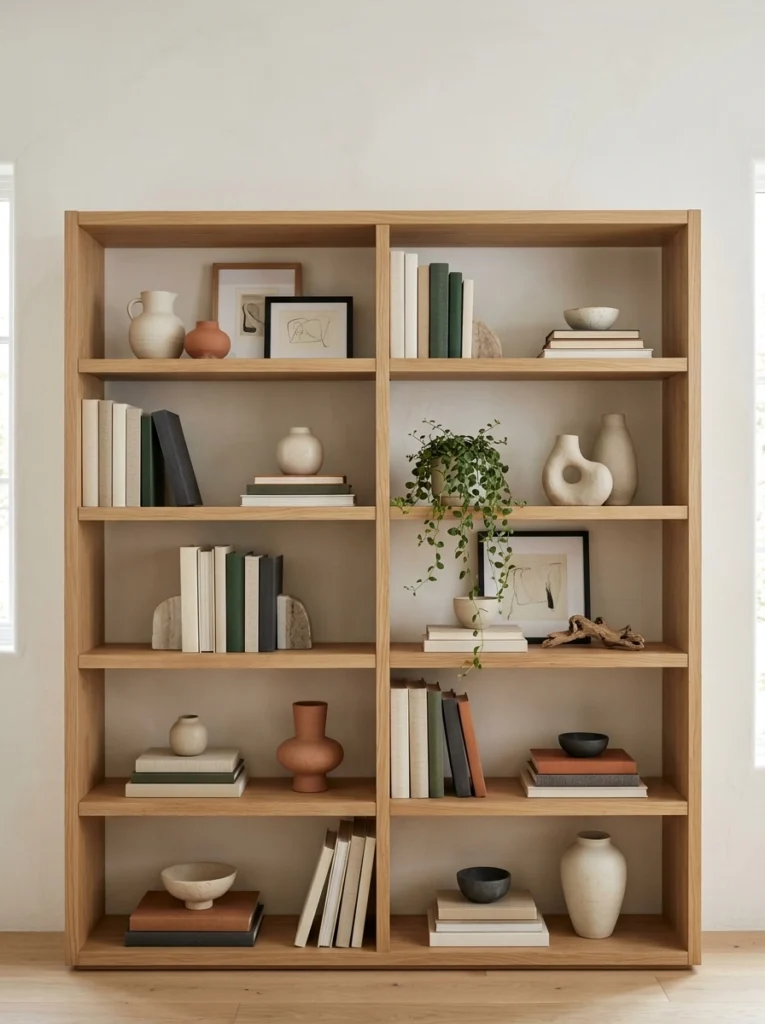
Even beautiful accessories can look awkward if the arrangement lacks structure. Before buying anything else, check these common problems.
- Filling every inch of the shelf: Too many small objects make the display look busy. Remove a few accessories and leave visible gaps between groupings.
- Using the same height everywhere: Rows of similarly sized vases and frames look flat. Mix tall pieces, low bowls, horizontal book stacks, and vertical books to create a more varied outline.
- Ignoring the shelf’s weight limit: Heavy ceramics and books can strain poorly mounted floating shelves. Check the manufacturer’s rating, use suitable hardware, and place heavier objects lower down.
- Mixing too many colors and finishes: Five unrelated accent colors can make the bookcase feel disconnected from the rest of the room. Choose one or two accent shades and repeat them in a few places.
- Buying decor before measuring: Oversized vases can block nearby shelves, while tiny accessories disappear on wide bookcases. Measure the shelf depth, height, and width before shopping.
Frequently Asked Questions
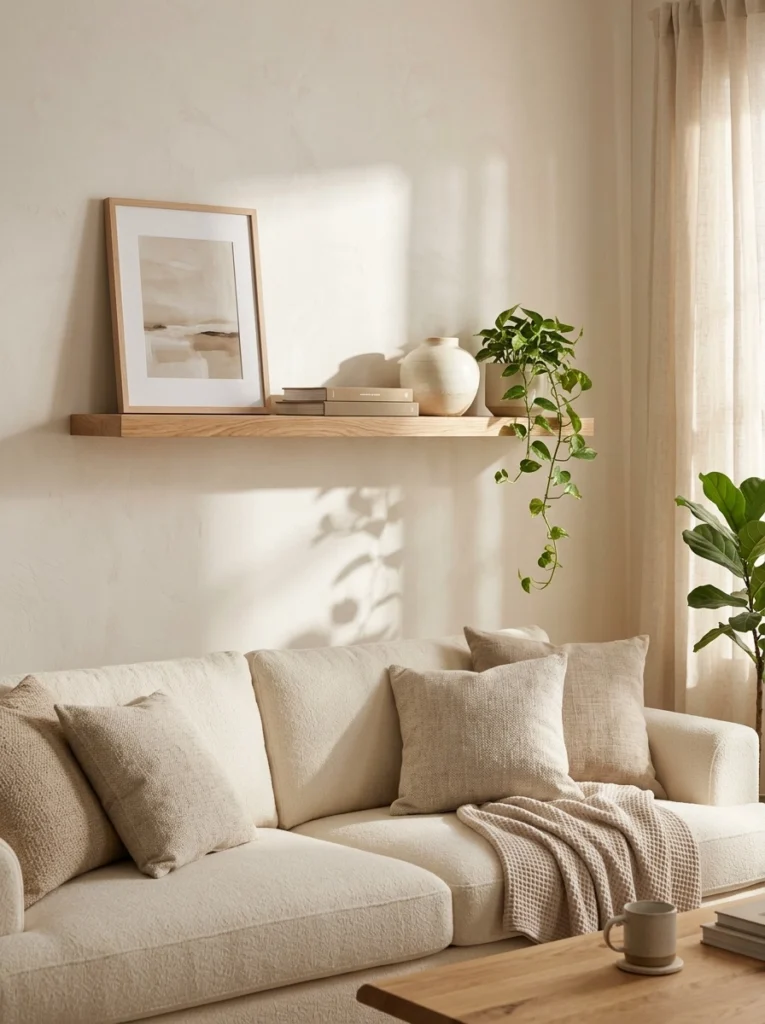
[Image Prompt: A softly lit living room with balanced oak shelves, neutral pottery, a few books, framed artwork, and a small green plant. Clean editorial composition with open space and warm natural materials, no people, no text.]
[Alt Text: A neutral living room shelf display illustrates simple answers to common shelf styling questions.]
Q: What are the best shelf styling ideas living room decorators use for a balanced look?
A: Start with a mix of books, one or two larger decorative objects, a framed print, and a natural element such as a plant. Vary the heights, repeat one accent color, and leave open space between groupings.
Q: How do I style living room shelves on a small budget?
A: Begin with items you already own, then shop thrift stores and Facebook Marketplace for frames, ceramics, and used books. A budget of $20 to $40 can cover several inexpensive accessories if you focus on a few well-chosen pieces.
Q: How many decorative items should I put on each shelf?
A: For a narrow shelf, start with three to five objects or one compact grouping. Wider shelves can hold more, but the right number depends on the size of the items and how much space remains around them.
Q: How do I make living room shelves look expensive?
A: Use a restrained color palette, mix materials such as wood, ceramic, glass, and stone, and include a few larger pieces instead of lots of tiny ornaments. You don’t need expensive brands if the arrangement has good proportions and enough breathing room.
Q: Should all my living room shelves match?
A: No, but repeating a few materials or colors helps the bookcase feel connected. Keep the overall palette consistent while varying the objects, heights, and groupings on each shelf.
Q: How often should I change my shelf decor?
A: There’s no fixed schedule, so change it whenever the arrangement feels crowded or no longer suits the room. Dust weekly or as needed, and rotate a few accessories seasonally if you enjoy a different look.
Start With One Shelf This Weekend
You don’t have to restyle the entire bookcase in one afternoon. Pick one shelf this weekend, remove everything, and rebuild the arrangement with three or four objects in different shapes and heights. Try a thrifted ceramic vase, a couple of books, and a framed print before spending money on anything else. The best shelf styling ideas living room displays have in common aren’t expensive accessories or perfectly matching decor. They’re thoughtful choices, repeated colors, useful proportions, and enough empty space for each piece to stand out. Once that first shelf feels right, use the same approach on the others, changing the materials and groupings so the room feels collected rather than copied from a catalog.