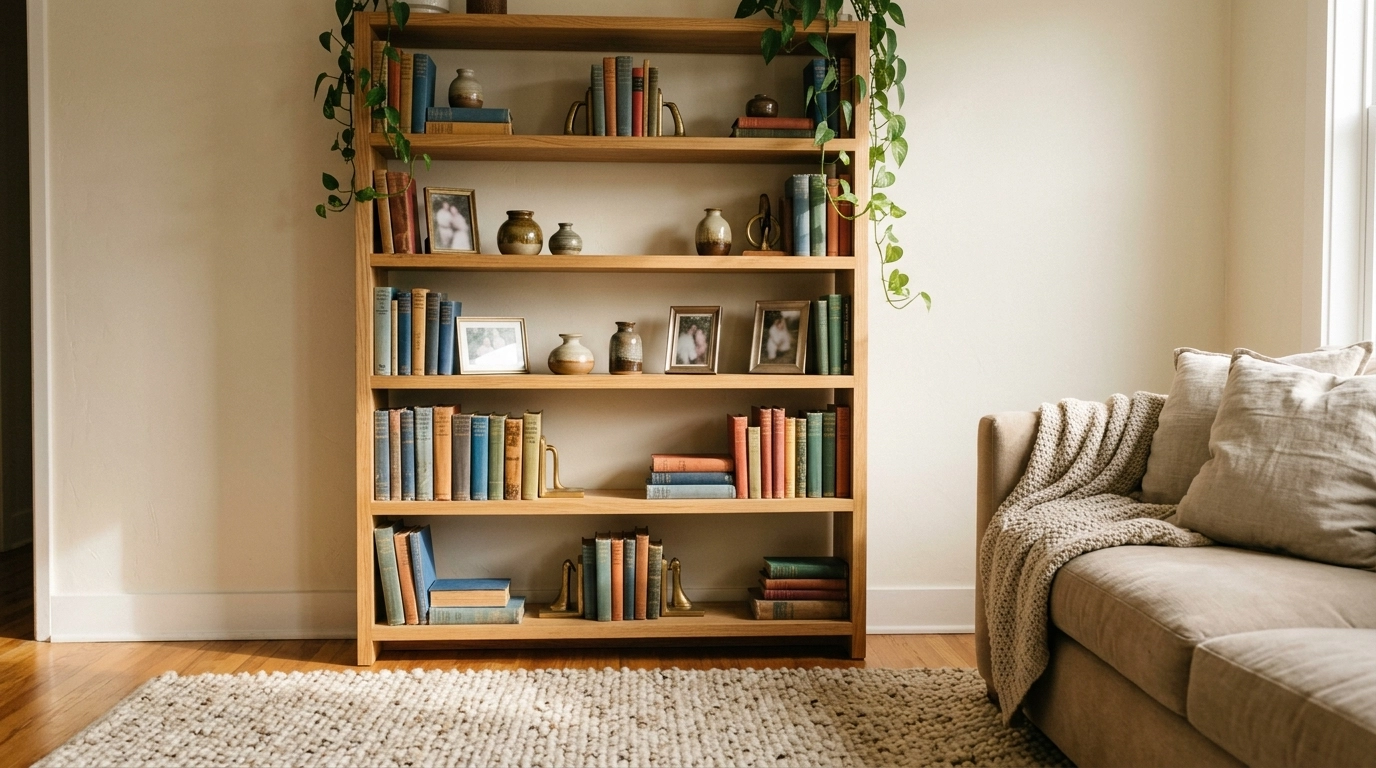
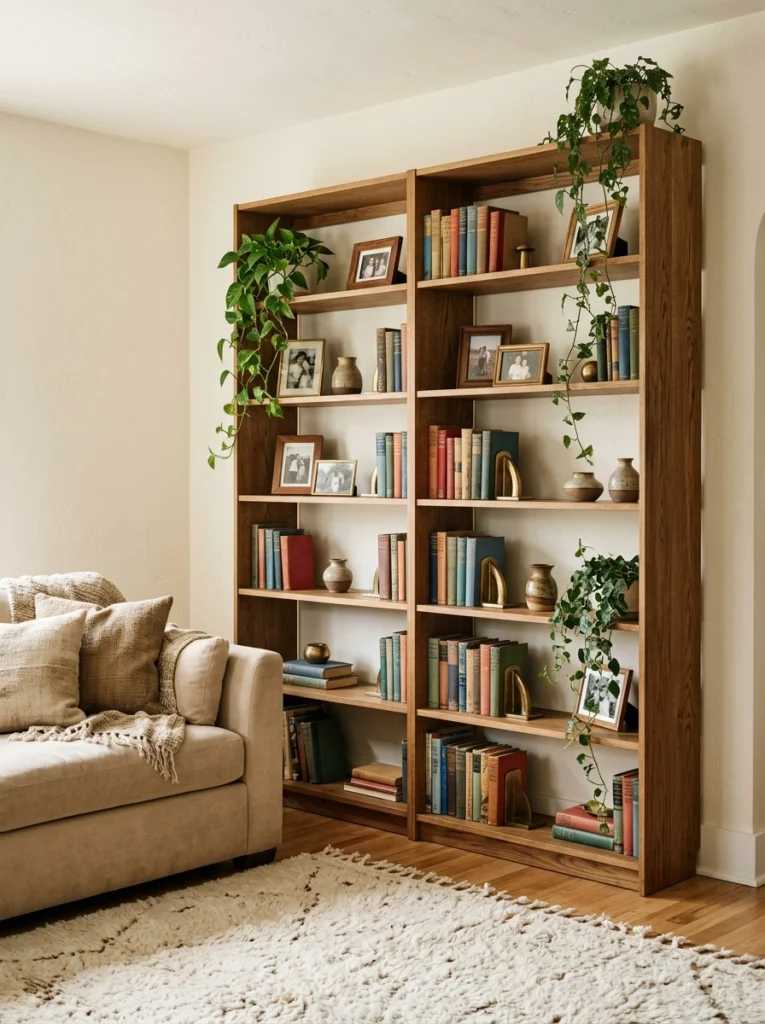
A living room bookshelf can become a cluttered pile of paperbacks, dusty souvenirs, and random little objects before you even realize what’s happened. I’ve always found that the trick isn’t buying more decor. It’s giving the things you already own a little breathing room and mixing them with a few pieces that feel like you.
The best bookshelf decor living room ideas combine useful storage with personal details, balanced colors, and a mix of heights and textures. Start with your books, then add framed photos, small plants, pottery, baskets, or soft lighting. You can style a basic IKEA bookcase for around $25 to $75 in extra accessories, or spend nothing by rearranging what you already have at home.
1. Mix Vertical Books with Horizontal Stacks
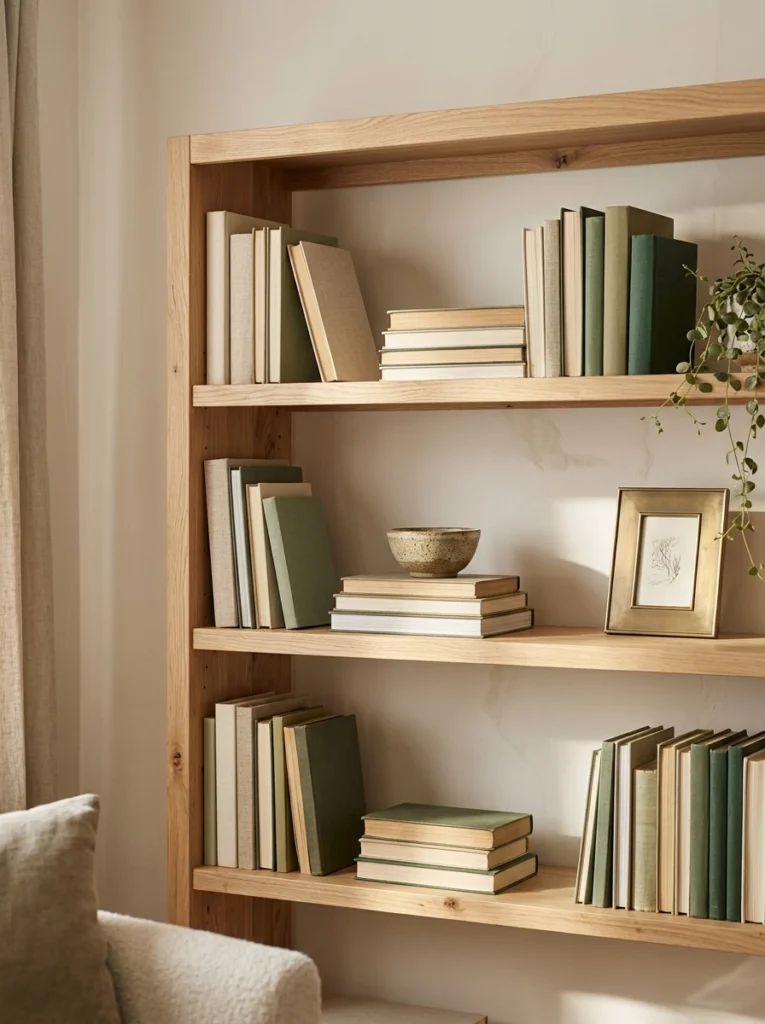
One of the easiest ways to make a bookshelf look thoughtfully styled is to change how you arrange the books. Instead of lining every spine up in one long row, keep some books upright and lay others flat in stacks of two to five. The horizontal piles create little platforms for decorative objects, while vertical books give the shelves a tidy, familiar structure.
Try this on a standard 30-inch-wide shelf using books you already own. Arrange the tallest hardcovers at one end, then place a short stack of paperbacks beside them with a small ceramic bowl on top. Target and Walmart often carry simple decorative bowls for around $8 to $15, although a favorite mug without its handle or a thrifted dish works just as well.
Keep the book stacks low enough to leave some open space above them. That empty area helps the shelf feel less crowded, particularly in a small apartment living room. Dust the horizontal stacks every couple of weeks because flat book covers tend to collect dust faster than upright spines.
2. Give Your Bookshelf a Collected Vintage Look
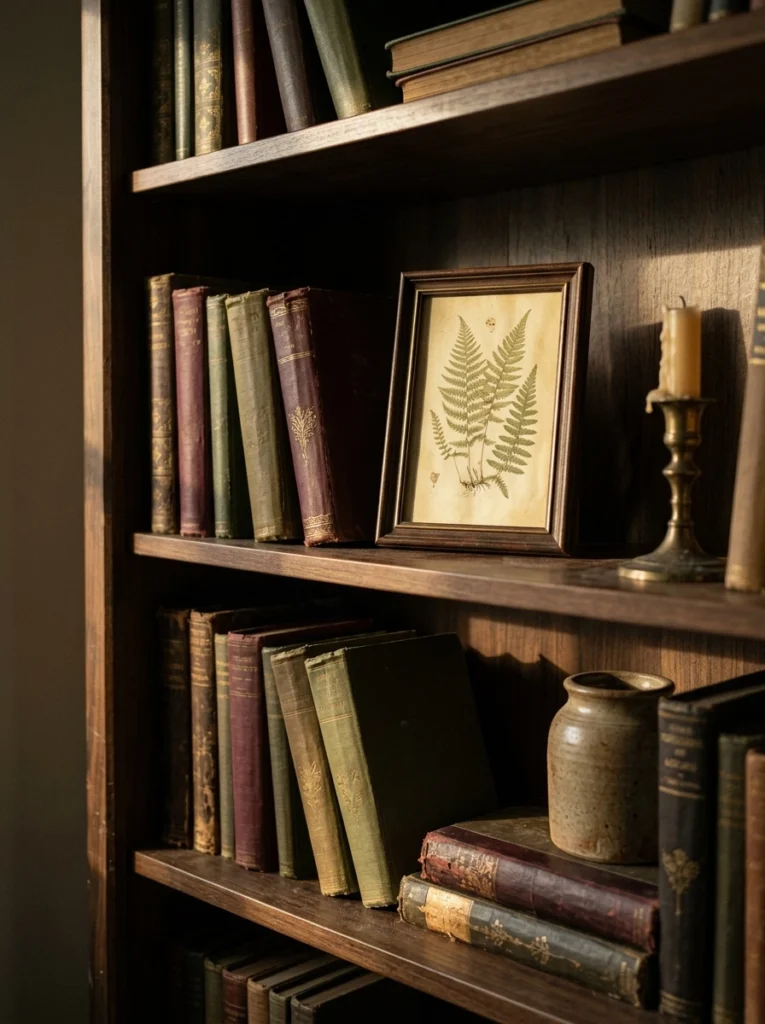
Vintage decor brings character to a bookshelf without requiring a perfectly matched set of accessories. Visit a local thrift store, estate sale, or Facebook Marketplace and look for worn hardcover books, small brass objects, old picture frames, and pottery with interesting shapes. A collection of slightly imperfect pieces usually feels more natural than a shelf full of brand-new decorations.
Start with three vintage accents for roughly $15 to $35. Place a brass candlestick beside a stack of old books, then lean a small botanical print against the back of the shelf. An aged wooden box can fill a lower compartment while hiding spare chargers or remote controls.
The trick is to repeat a color or material so the collection feels connected. If you find a brass candlestick, add a gold-toned frame or a warm wood object nearby. You don’t have to restore every thrift-store purchase, either. Wipe hard surfaces with a soft cloth and check secondhand items for loose parts, mildew, or pests before bringing them into your living room.
3. Add Trailing Plants for a Softer Look
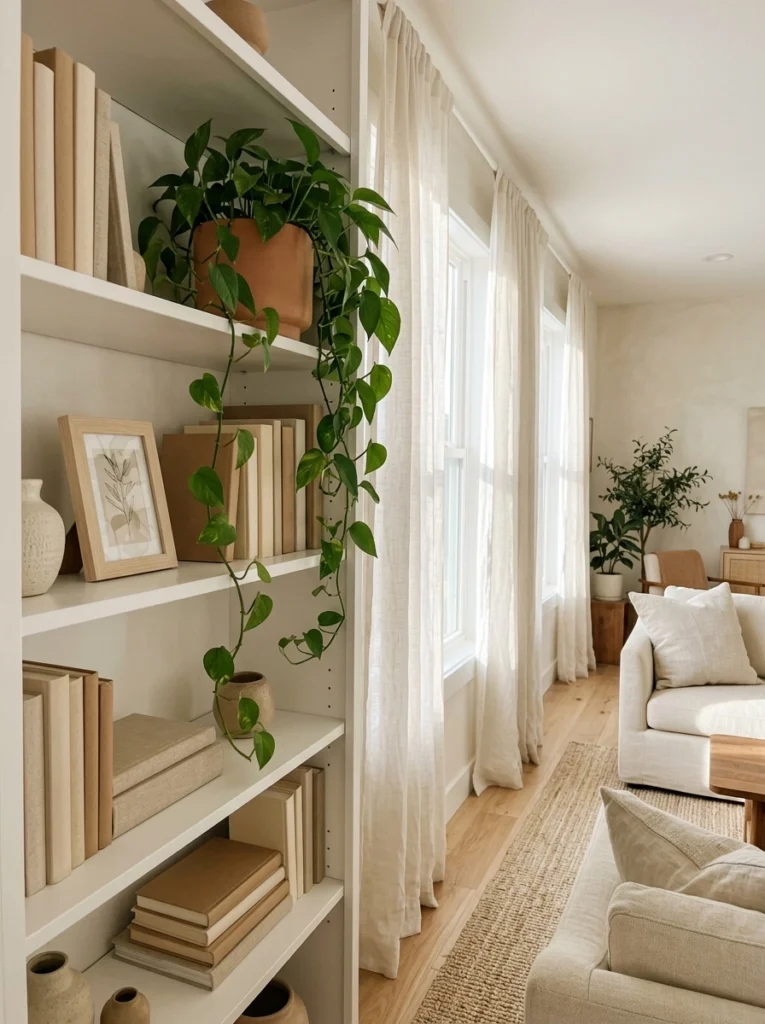
Bookshelves can look a little boxy, especially when they’re made from square compartments and straight wooden boards. A trailing plant softens those hard lines and introduces a natural green color that works with almost any decorating style.
A small pothos or heartleaf philodendron typically costs around $8 to $20 at a garden center or home improvement store. Set the pot near one end of an upper shelf, leaving enough room for its stems to hang freely without brushing the television or blocking a nearby lamp. Use a lightweight, waterproof saucer beneath the pot to protect wood and laminate from moisture.
For a 6-inch nursery pot, choose a decorative planter that’s slightly wider and has a drainage-friendly setup. If your living room gets very little natural light, rotate the plant toward a brighter window periodically or use a small grow light. Faux trailing greenery is another option, often available for $10 to $18 at craft stores, and it won’t leave damp rings on your shelves.
4. Style the Shelves Around a Single Accent Color
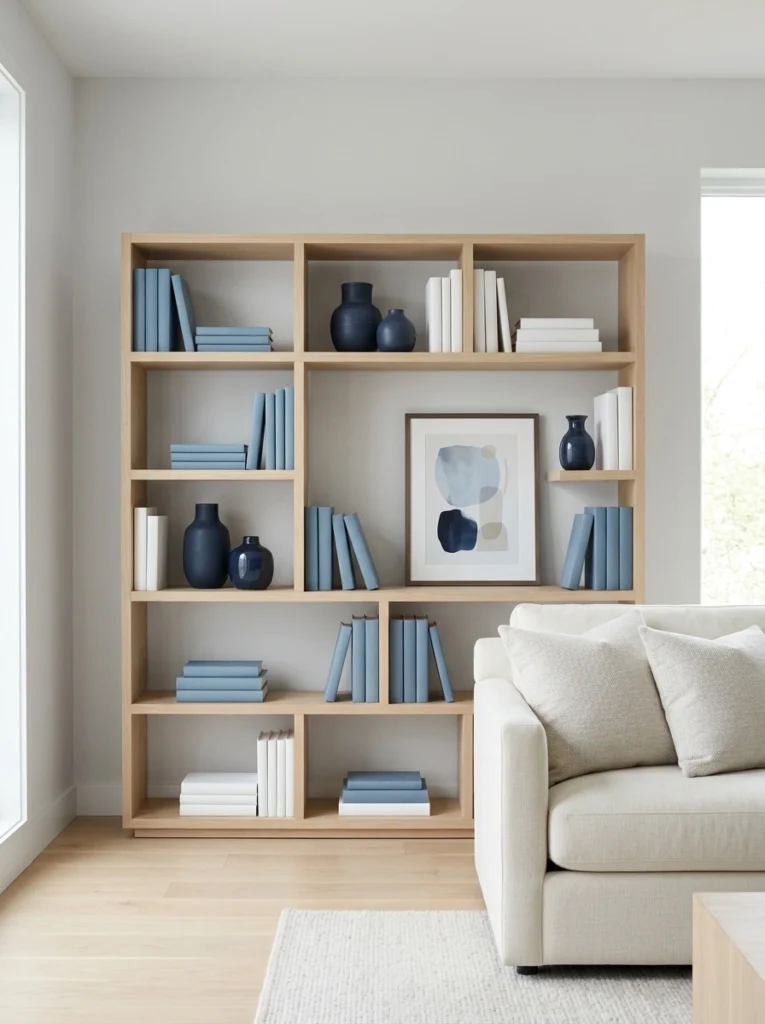
If your bookshelf contains books in every color imaginable, adding even more colorful accessories can make the whole wall feel busy. Pick one accent color and repeat it in a few places instead. Dusty blue, forest green, terracotta, and muted rust all work nicely against white or natural wood shelves.
You can try this for under $25 by shopping your own home first. Pull together three blue objects, such as a small vase, a photo frame, and a decorative box. Spread them across different shelves rather than grouping them all in one corner. Leave your existing books in place and use neutral objects to give the stronger color a little rest.
This approach is particularly useful in open-plan homes, where the bookshelf is visible from the kitchen or dining area. Repeating one color helps connect the shelving to nearby cushions, curtains, or artwork. Don’t worry about matching shades exactly. A pale blue vase and a navy book spine can look better together than two identical blue accessories because the difference adds depth.
5. Lean Framed Art Instead of Hanging Everything
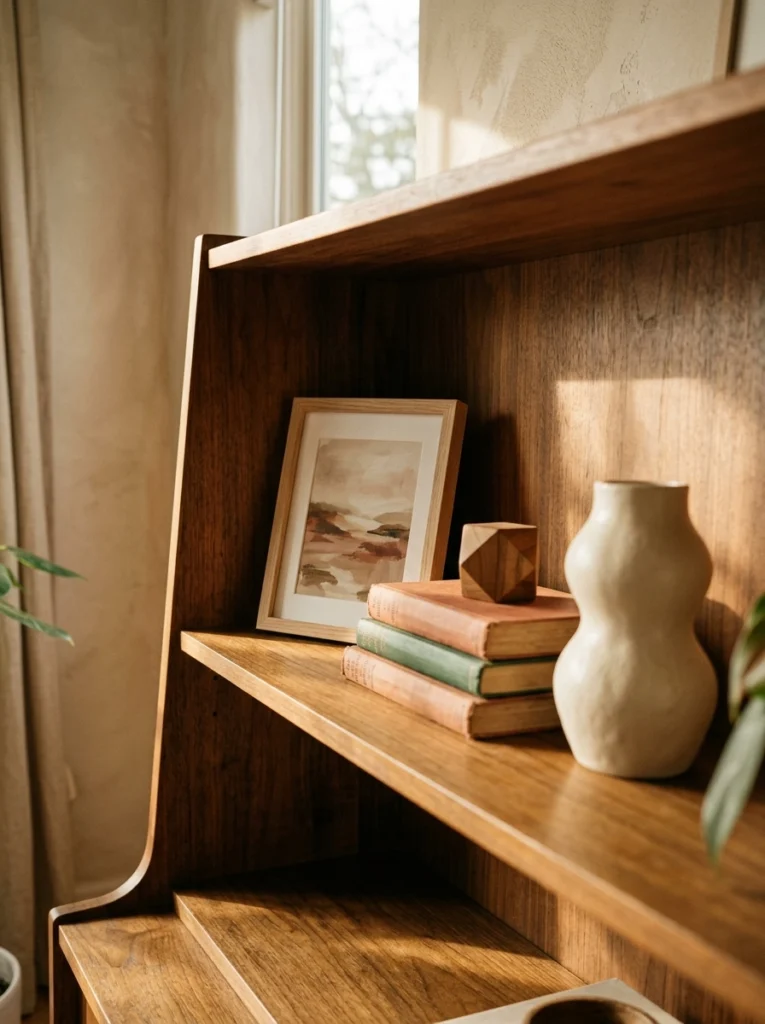
Not every piece of art needs to hang on the wall. A framed print leaning against the back of a bookshelf adds color and makes a simple row of books feel more layered. It’s also a renter-friendly way to decorate because you don’t have to drill holes or rearrange the walls.
Look for a 5-by-7-inch or 8-by-10-inch frame at Target, IKEA, or a thrift store. Basic frames often cost around $7 to $18, and you can print a favorite photograph or download affordable artwork for a simple, personal display. Set the frame behind a short horizontal stack of books, then add one small object in front of a lower corner.
For deeper shelves, try a larger frame measuring 11 by 14 inches. Just keep it stable and away from the edge, especially if children or pets use the room. A small felt pad behind the frame can help protect the shelf finish and prevent sliding. Rotate the artwork every few months when you want the room to feel different without buying another accessory.
6. Bring in Woven Baskets for Hidden Storage
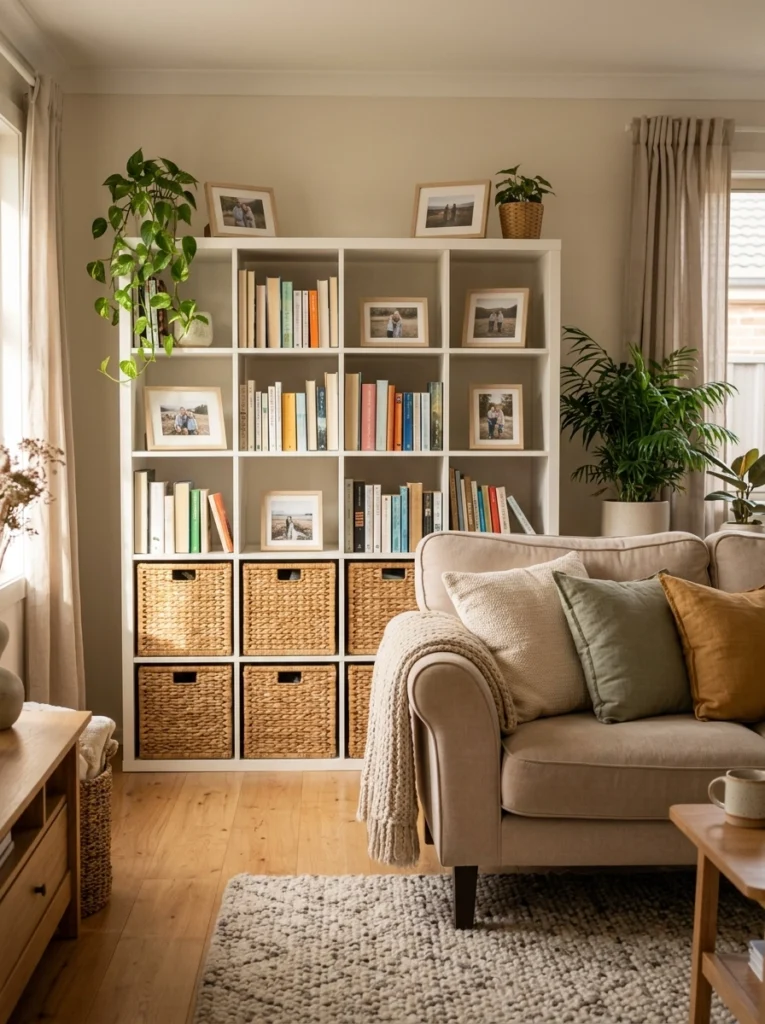
Decorative shelves are much easier to maintain when they also have a place for the things you don’t want on display. Woven baskets are especially useful on lower shelves, where they can hold charging cables, game controllers, children’s toys, or spare blankets.
Measure the inside of each compartment before buying anything. A basket around 11 inches wide and 10 inches deep often fits a cube-style unit, but IKEA and other furniture brands use different dimensions. Expect to spend about $12 to $25 per basket at Target or Walmart, with larger woven options costing more.
Choose two or three matching baskets for a tidy appearance, or mix natural seagrass with cotton rope baskets for a softer, relaxed style. Leave the upper shelves for books and decorative objects so the storage doesn’t dominate the entire bookcase. For everyday use, choose baskets with sturdy handles and smooth interiors that won’t snag fabric. Vacuum woven surfaces with a brush attachment when dust collects between the fibers.
7. Display Travel Souvenirs That Tell Your Story
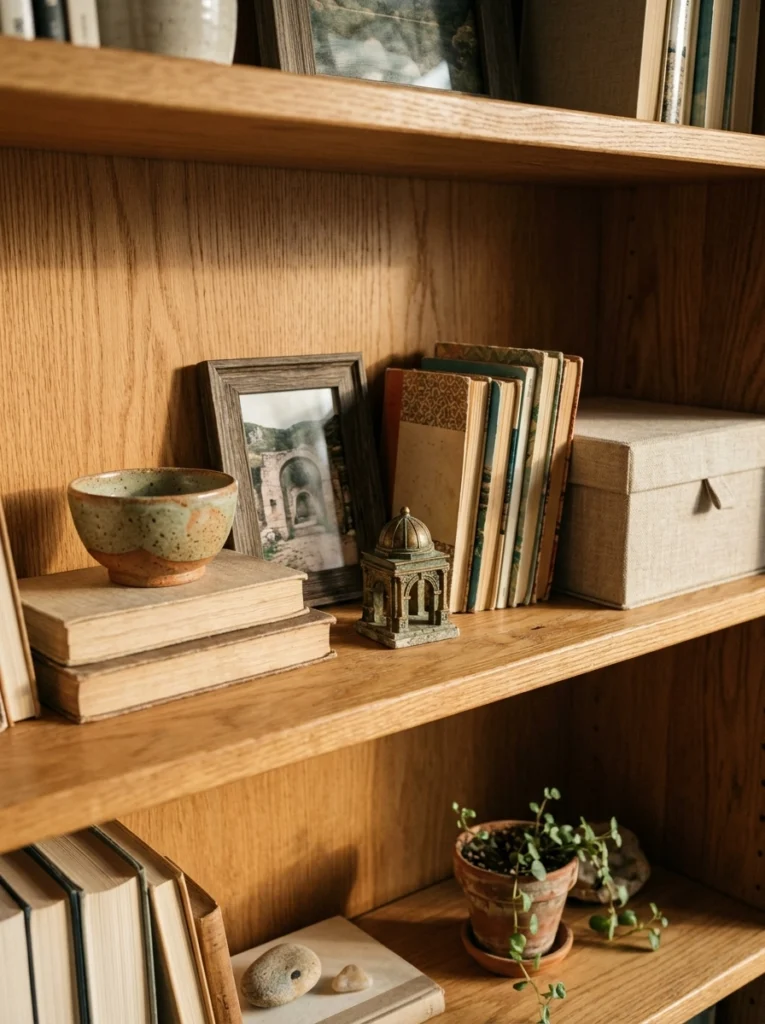
Those little souvenirs sitting in drawers deserve a spot where you can actually enjoy them. A bookshelf is a good place to display a handmade bowl from a vacation, a miniature building, a shell collected legally from a beach, or a photograph from a memorable trip. The goal is to show a few meaningful things rather than every souvenir you’ve ever brought home.
Choose three to five keepsakes and group them with books about the same destination or subject. A small ceramic bowl from a weekend trip can sit on a stack of travel books, while a framed photograph stands behind it. You may spend nothing if you already own the pieces, or around $10 to $20 on a simple frame from Walmart or Amazon.
Vary the heights so the display doesn’t look like a row of tiny objects lined up for inspection. A larger souvenir can anchor one side, while a smaller piece fills the opposite corner. Leave some open shelf space around fragile items, particularly if you use the bookcase every day or have curious pets.
8. Make a Minimalist Bookshelf Feel Intentional
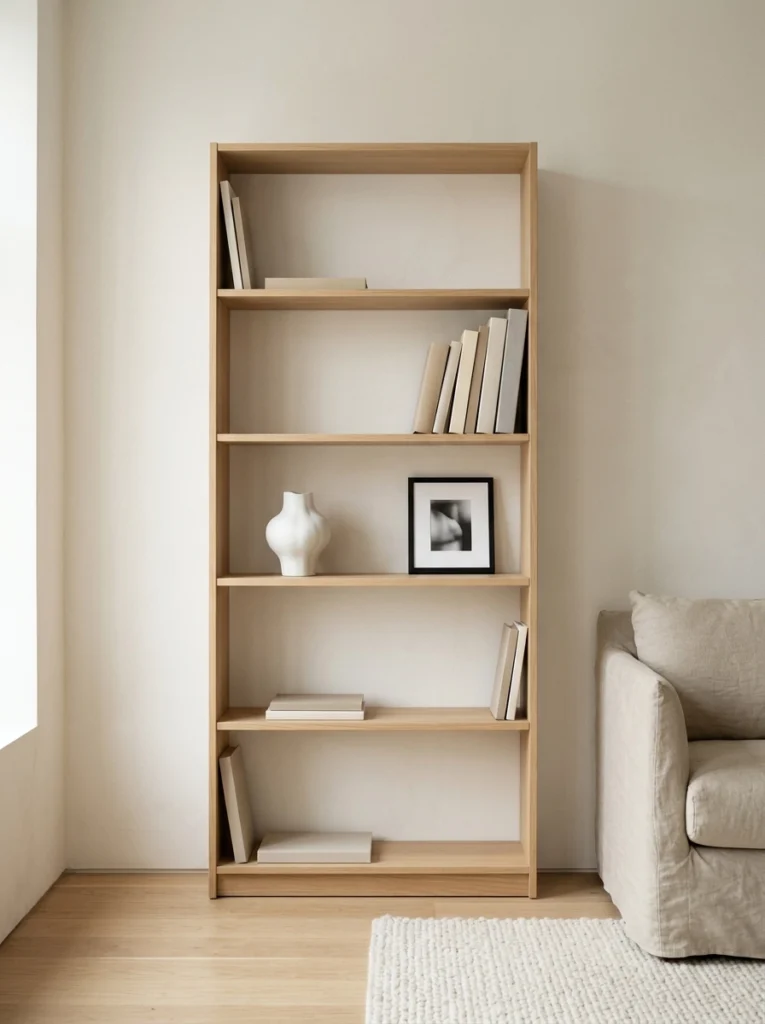
A minimalist bookshelf isn’t simply a bookshelf with fewer things on it. The pieces that remain need enough room to stand out. Start by removing everything, then return your favorite books and a handful of accessories, leaving some compartments almost empty.
For a four-shelf bookcase, try filling two shelves mostly with books, one with a ceramic object and framed photograph, and the last with a short book stack. This loose arrangement gives the eye somewhere to rest. A plain ceramic vase from IKEA or Target usually costs around $10 to $25, and a simple black frame adds definition without introducing another busy pattern.
Stick with two or three main materials, such as oak, ceramic, and black metal. You can still include colorful book spines because their natural variation gives the shelves some life. Avoid buying a matching set of accessories just to fill gaps. The empty areas are part of the design, and they make the few objects you choose feel more deliberate.
9. Use Warm Lighting to Make the Bookcase Glow
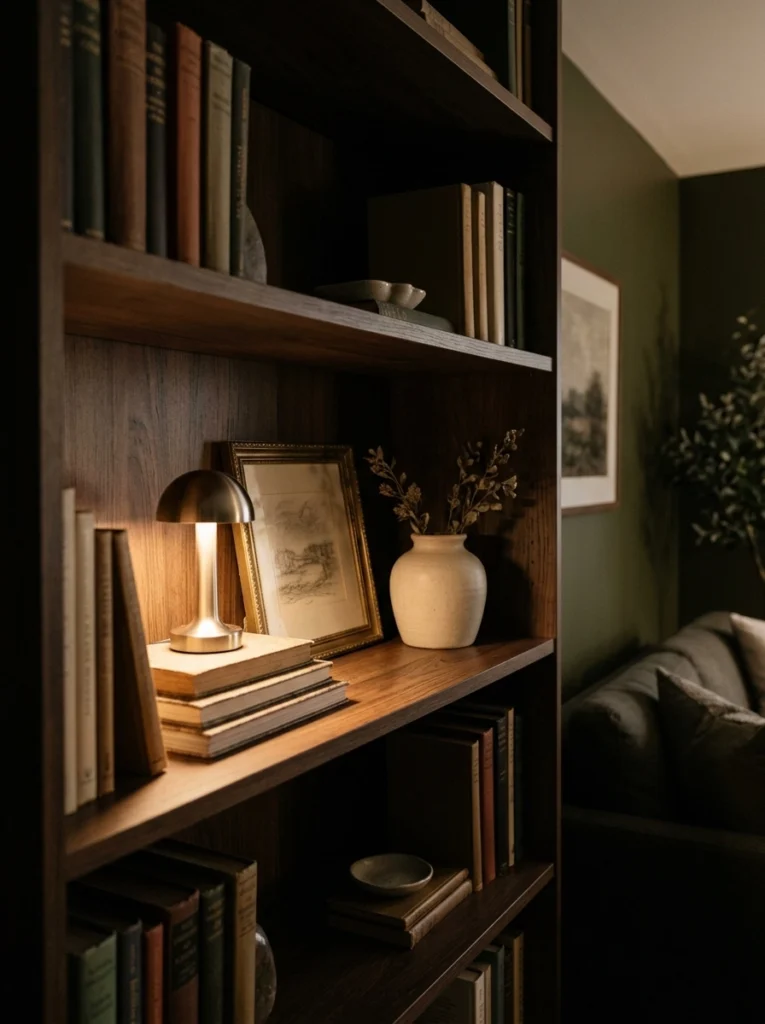
A bookshelf can disappear into a dark corner, even when it’s beautifully arranged. Adding a small lamp creates a focal point and makes the room feel more comfortable after sunset. This is especially helpful if your main ceiling light is harsh or the bookcase sits beside a reading chair.
Look for a compact rechargeable lamp or battery-powered puck lights for around $15 to $35 at Amazon, IKEA, or a home improvement store. A warm-white color temperature around 2700K gives wood, cream ceramics, and neutral book covers a cozy appearance. Place a small lamp on a sturdy middle shelf, leaving clear space around the light and its charging cable.
For a built-in bookcase, discreet LED strip lighting beneath a shelf can create a more finished look. Basic strips often cost $10 to $25, depending on length and controls. Keep cords secured and away from pets, and follow the manufacturer’s instructions for battery use and charging. If you use adhesive lighting, test the mounting surface before attaching it to painted wood.
10. Arrange Books by Color Without Losing Their Purpose

Color-organized bookshelves can be beautiful, but there’s no reason to sacrifice practicality to get the look. If you remember books by subject or author, organize them into loose color groups within those categories instead of sorting every title into a strict rainbow.
Begin with the books you own and spend $0 on the rearrangement. Put cream and pale gray spines together, group darker blue or green books nearby, and use rust or burgundy titles as small accents. A white ceramic vase or a wooden photo frame can break up the stronger colors between groups.
This works particularly well in living rooms with neutral sofas and rugs because the book spines introduce color without requiring extra artwork. Don’t turn every book spine toward the wall just to hide bright colors. That makes finding a title frustrating and can damage the edges of some books over time. If the colors feel too strong, use a few horizontal stacks of neutral hardcovers to interrupt the brighter sections naturally.
11. Give a Small Bookshelf a Big Personality
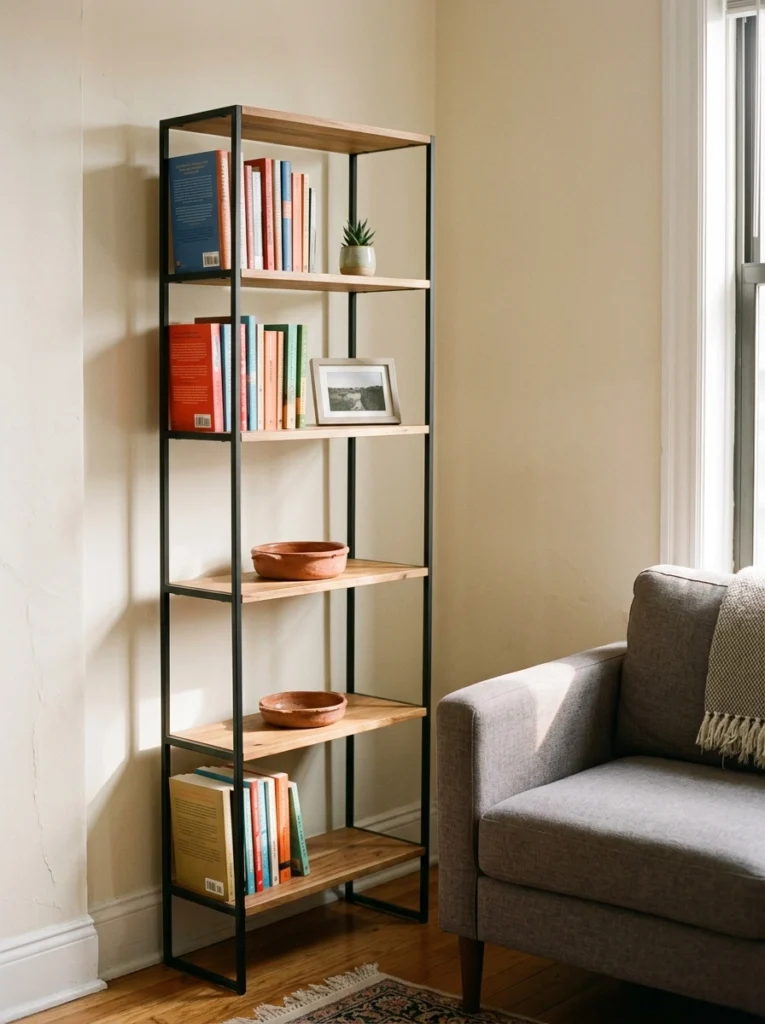
A narrow bookshelf can still feel personal. In fact, a smaller unit often looks better when each object has a clear purpose because there isn’t enough room for random extras to accumulate. A slim bookcase measuring around 24 inches wide works well beside a sofa, near a desk, or in an unused corner.
For $20 to $40 in accessories, you can add a small planter, a framed photo, and one interesting handmade object. Walmart and IKEA are useful places to look for compact decor, while thrift stores often have unusual pieces for less. Place heavier books on the lower shelves and reserve the upper levels for lightweight objects that are easy to reach.
Keep the tallest decorative piece toward one side rather than placing it in the middle of every shelf. This creates movement and leaves space for book spines to remain visible. If the bookcase is tall and narrow, secure it to the wall according to the manufacturer’s instructions. A few decorative accessories aren’t worth the risk of an unstable shelf tipping over.
12. Try Bookshelf Decor Living Room Styling with Sculptural Objects
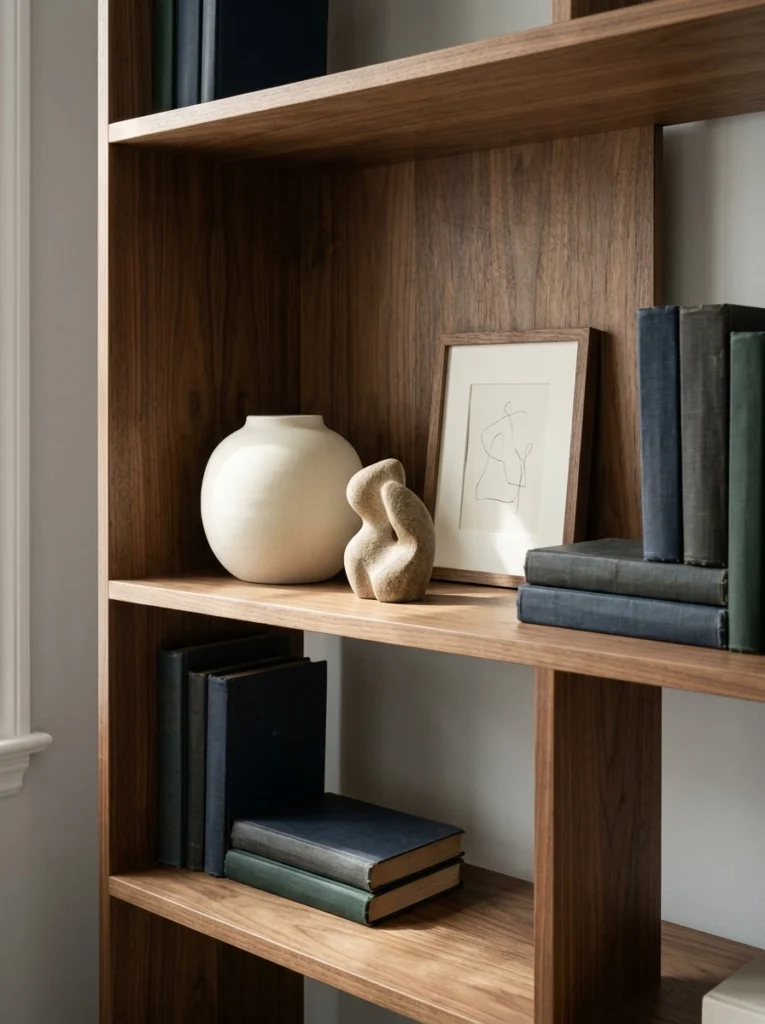
If your bookcase is full of rectangular books and square frames, a sculptural object introduces a different shape. Think rounded ceramic vases, carved wooden figures, stone-like ornaments, or small abstract sculptures. Their curves break up the straight lines without making the shelf feel crowded.
You don’t need an expensive art object. A $12 to $30 ceramic vase from Target or a thrifted wooden sculpture can do the job. Place it beside a short book stack or in a compartment with only a few books. Choose a finish that contrasts with the shelf, such as cream pottery against dark walnut or black stoneware against pale oak.
Pay attention to the silhouette rather than the label on the price tag. A single well-shaped object often looks better than three unrelated ornaments packed together. For maintenance, wipe smooth ceramics with a damp microfiber cloth and dry them before returning them to the shelf. Use a soft brush for carved objects with grooves that collect dust.
13. Create a Family Photo Shelf That Doesn’t Feel Cluttered

Family photographs make a room feel lived in, but lining up a dozen frames can quickly turn a bookcase into a crowded gallery. Choose a small selection of favorite images and vary the frame sizes so the arrangement looks relaxed rather than repetitive.
Start with two or three frames costing about $6 to $15 each from IKEA, Walmart, or a thrift store. Use black-and-white photographs if your bookshelf already has colorful books, or choose warm wood frames for a softer, traditional look. Lean one larger frame against the back panel and place a smaller one beside a horizontal book stack.
Keep frames at different heights, but don’t let them cover the titles of every book behind them. For a shelf near a sunny window, avoid placing irreplaceable photographs in direct sunlight because fading can occur over time. Dust the frame edges regularly and use a dry microfiber cloth on glass to remove fingerprints without leaving streaks.
14. Bring Natural Wood and Ceramic Textures Together
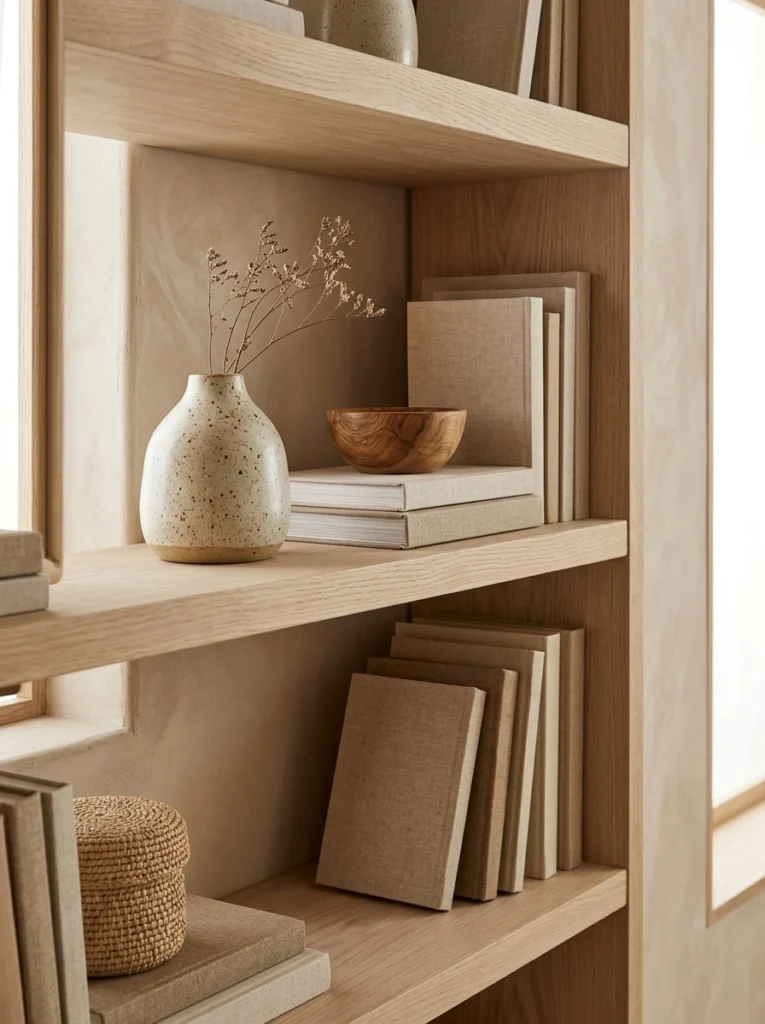
A shelf decorated entirely with smooth glass and shiny metal can feel a little cold. Natural wood and handmade ceramics add texture, even when the color palette stays quiet. This combination is especially appealing in Scandinavian, organic modern, and relaxed farmhouse living rooms.
Look for a small wooden bowl priced around $8 to $18 and pair it with a speckled ceramic vase or a matte stoneware cup. IKEA and Target offer accessible options, while local craft markets often carry handmade pottery at a range of prices. Place the bowl on a short stack of books and the vase on a neighboring shelf to distribute the materials.
You don’t have to buy everything new. A small wooden serving bowl from your kitchen can work just as well, provided it’s clean and dry. Avoid placing unfinished wood directly beside a damp plant pot, since moisture can leave marks. A clear protective tray beneath greenery helps keep natural materials in good shape.
15. Use Baskets and Boxes for a Family-Friendly Bookcase
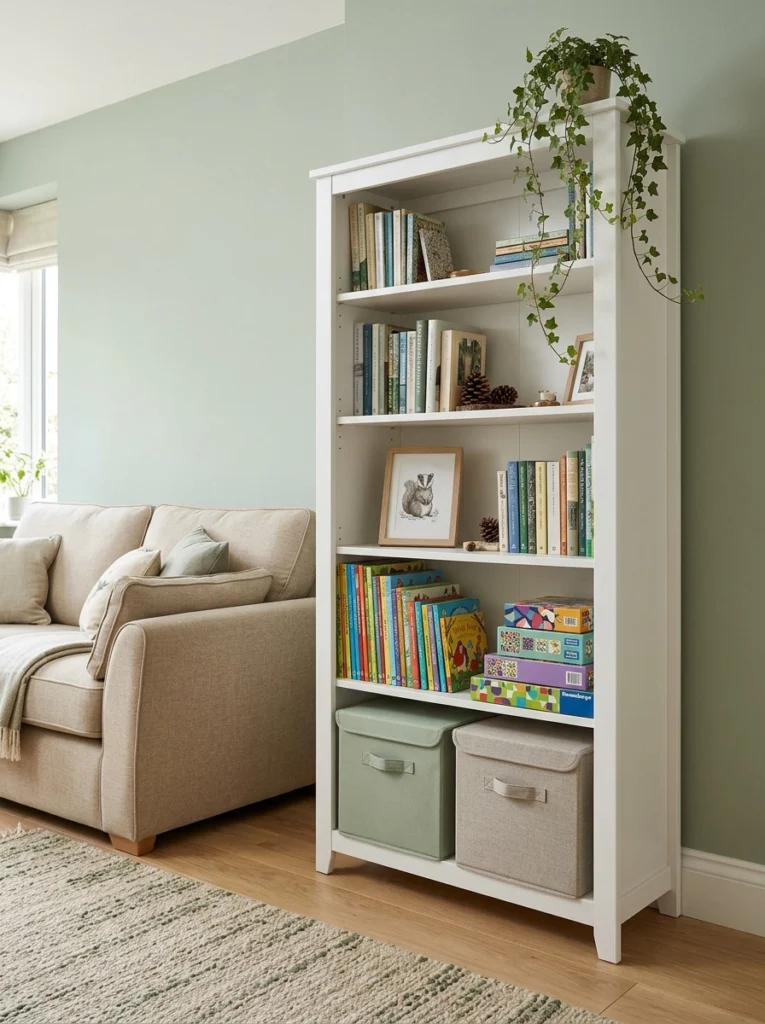
A living room bookshelf often has to handle more than books. Board games, art supplies, spare batteries, and children’s toys all seem to find their way onto the same shelves. Storage boxes help keep those everyday items accessible without making the entire room look like a utility closet.
Measure your compartments and look for 10- to 12-inch fabric boxes costing around $8 to $18 each at Walmart, Target, or IKEA. Choose neutral boxes with labels tucked discreetly on the inside edge, or use simple woven baskets if you prefer a natural look. Keep the most frequently used items on middle or lower shelves where everyone can reach them.
Leave the upper shelves for decorative objects and books you don’t handle daily. For a household with young children, use sturdy furniture and secure tall bookcases to the wall. Avoid heavy objects on the top shelf, and skip fragile glass accessories in areas where children regularly play.
16. Add a Small Mirror to Reflect Light
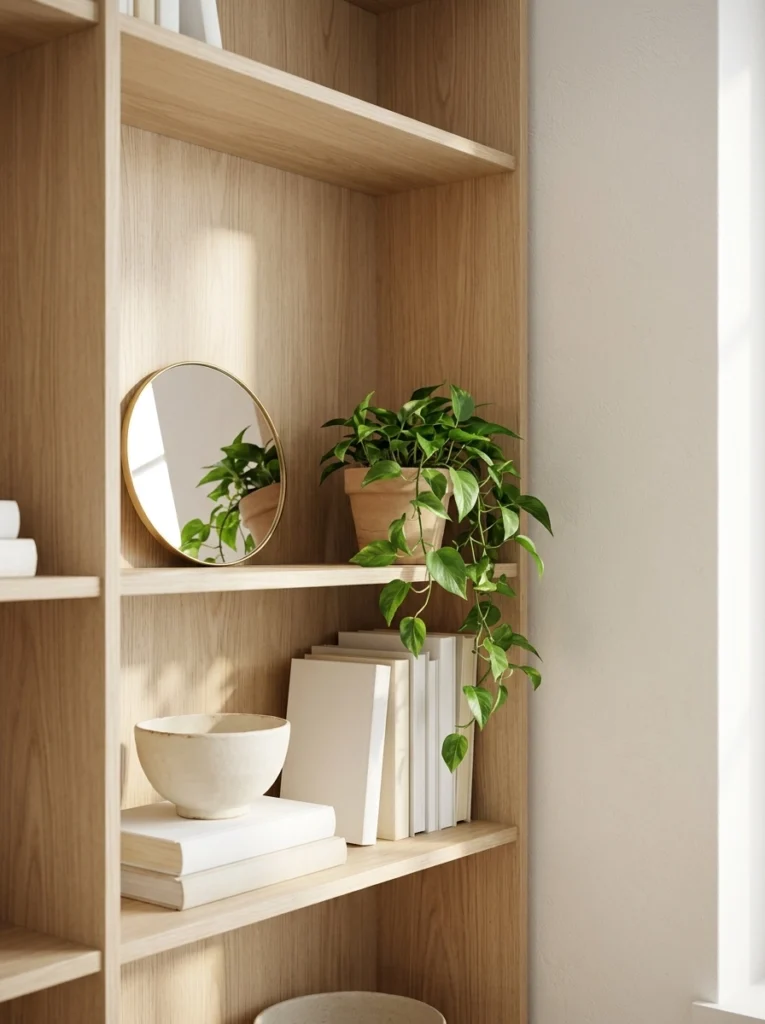
A small mirror can make a dark bookcase feel lighter by reflecting nearby window light. It also adds a different shape among rectangular book spines and frames. This is a useful trick for narrow living rooms where a large wall mirror won’t fit or where the bookshelf sits across from a window.
Look for a 10- to 14-inch round mirror priced around $15 to $30 at Target, IKEA, or a home decor shop. Lean it securely against the back of a deep shelf, then place a short book stack or small vase in front of one edge. A brass or natural wood frame helps connect the mirror to other finishes in the room.
Check the shelf depth and stability before placing glass on it. The mirror should sit flat and well away from the front edge, particularly in homes with pets or children. If the shelf is shallow, choose a lightweight framed mirror designed for wall mounting instead of balancing it loosely among the books.
17. Give Your Bookshelf a Moody, Dark-Academia Feel
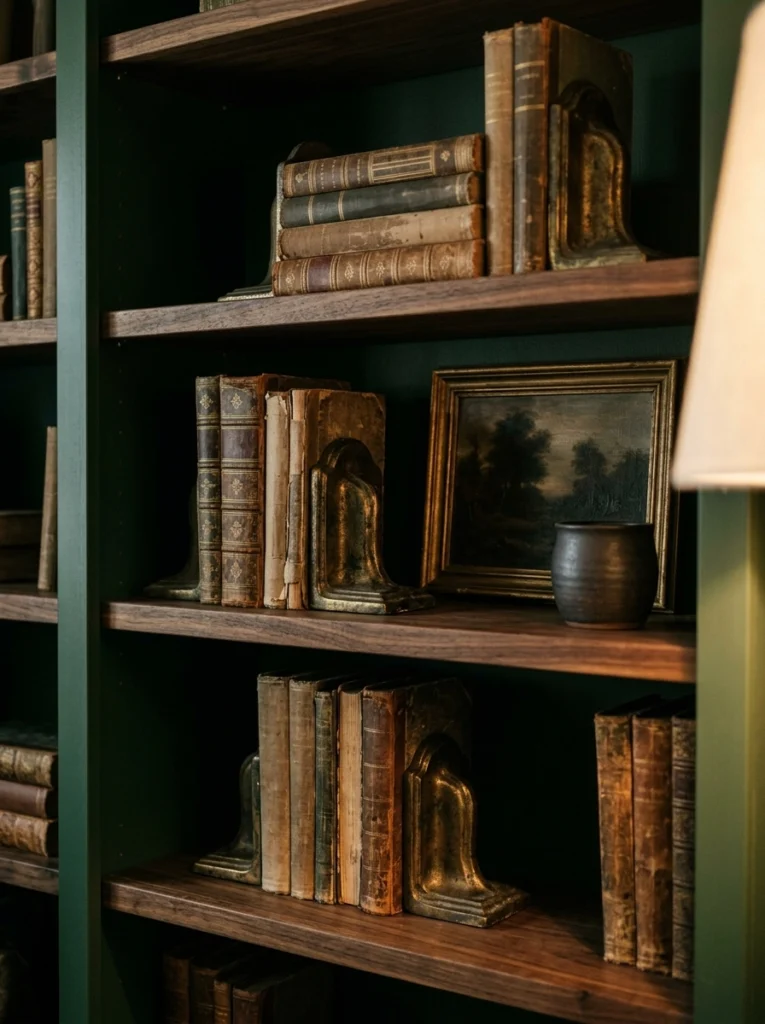
For a room with darker furniture or traditional architecture, try a moody bookshelf inspired by old libraries. You don’t have to paint the entire room dark. Deep green, charcoal, or walnut accessories can create the same feeling against an ordinary cream wall.
Start with $20 to $45 in secondhand accessories, such as aged-looking hardcovers, brass bookends, and a small landscape print. Thrift stores and Facebook Marketplace are good sources for these items. Arrange the darker objects together, then add one lighter accent, such as a cream vase or pale book cover, to keep the display from becoming a solid block of brown.
Warm lighting makes this style work particularly well in the evening. A compact lamp with a warm bulb adds depth to dark finishes, while a little open shelf space prevents the bookcase from feeling heavy. Dust brass with a soft cloth and check any vintage metal pieces for loose fittings before putting them near valuable books.
18. Display Your Hobbies Instead of Generic Decor
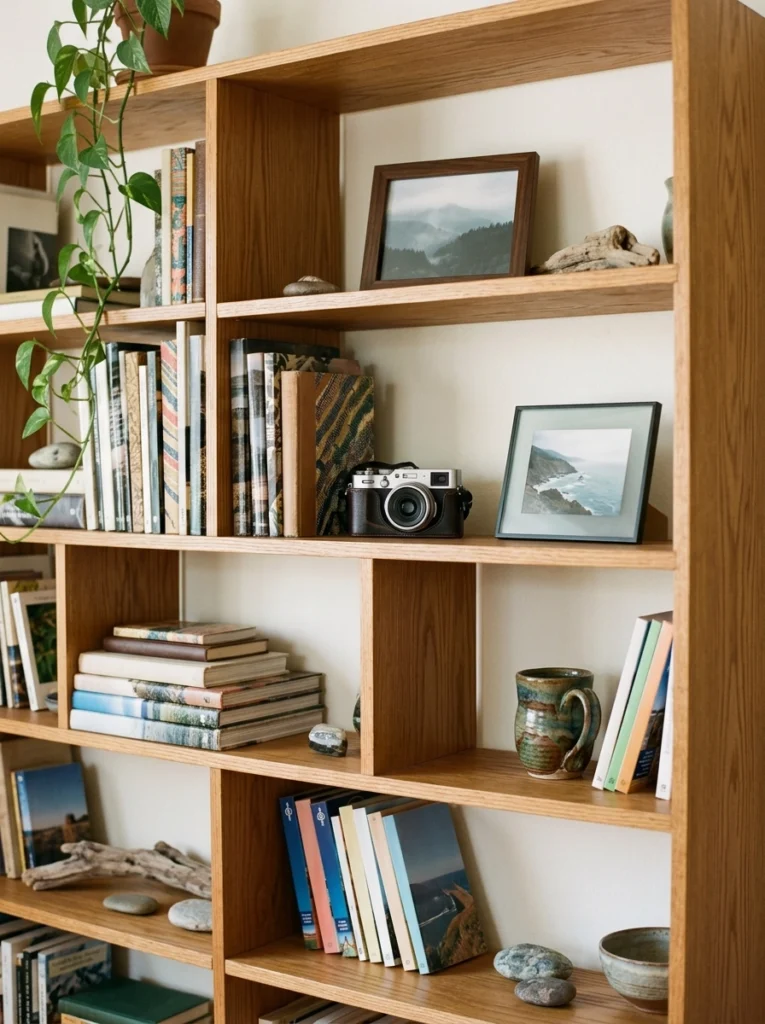
The most memorable bookshelves often reveal something about the person who lives there. If you enjoy photography, display a camera you no longer use, a photography book, and one favorite print. If cooking is your hobby, try a few attractive cookbooks with a small wooden utensil holder or a ceramic bowl.
Use two or three hobby-related objects rather than turning every shelf into a collection display. You can arrange the pieces for free with things you already own, or spend around $10 to $25 on a frame or decorative box to complete the setup. The accessories feel more connected when they share a subject, material, or color.
Keep practical equipment clean and safe. Don’t store delicate camera lenses in direct sunlight or display objects that leak, rust, or shed dust beside your books. For more ways to make your shelves reflect your taste, pair this idea with [INTERNAL LINK: personal home decor ideas for displaying collections]. A little personality goes a long way when it’s mixed with everyday books and a few quiet spaces.
19. Decorate Around Your Television Without Making the Wall Busy
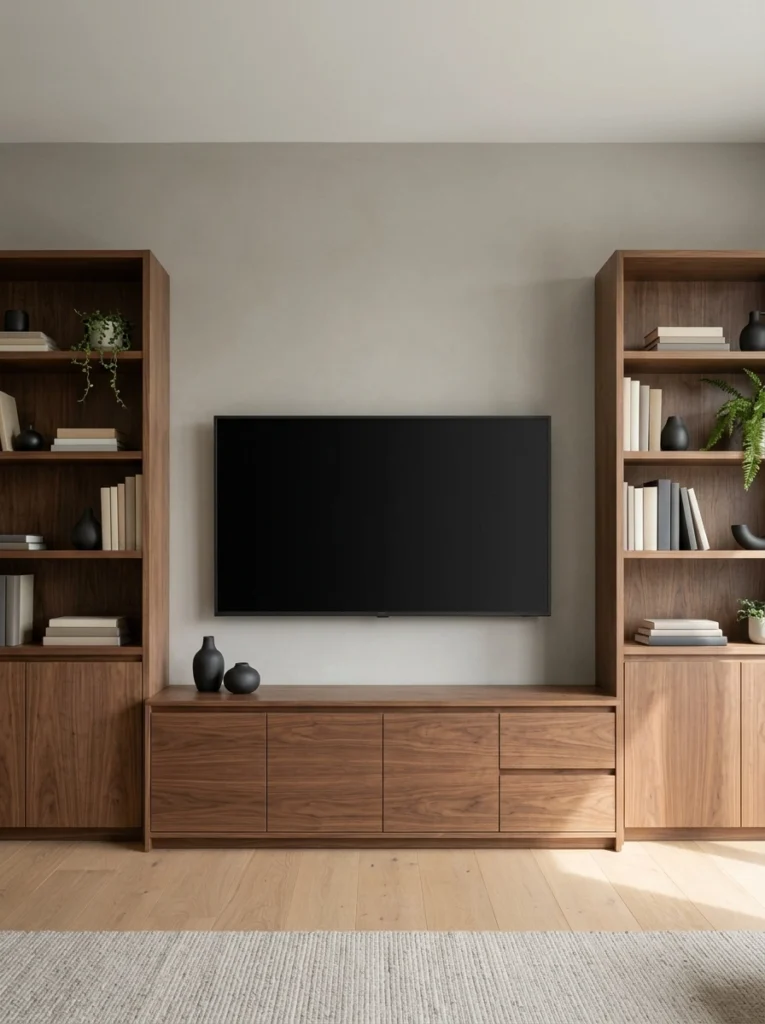
A television wall can be tricky because the screen already commands attention. If you have bookshelves beside the TV, keep the accessories quieter and let the books provide most of the color and texture. Repeating a few materials on both sides makes the whole wall feel connected without filling every inch.
For $15 to $35, try two matching ceramic objects, a small plant, or a pair of simple bookends. Place larger books toward the bottom and reserve the shelves closest to the television for low-profile accessories. Avoid bright lamps or reflective mirrors directly beside the screen because they can create distracting glare.
If the bookcase and media console are different colors, repeat one finish to tie them together. A walnut frame, black planter, or cream vase can help link the furniture. Keep ventilation openings clear around electronic equipment, secure cables, and leave enough space to access devices for cleaning or repairs.
20. Use Seasonal Accessories Without Rebuilding the Whole Shelf
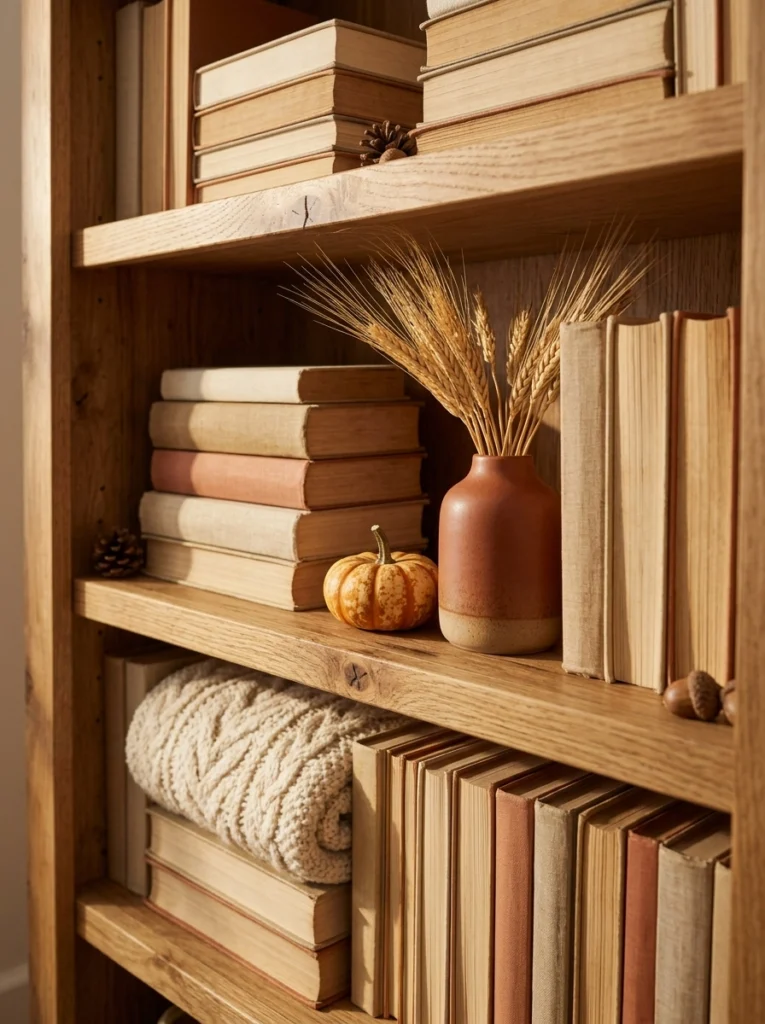
You don’t have to restyle your entire bookcase every season. Keep the books, frames, and useful storage in place, then switch out two or three small accessories when the weather or holidays change. This keeps the room feeling current without filling your closets with seasonal decorations.
For fall, try a miniature decorative pumpkin, a rust-colored vase, and a few dried stems for around $12 to $25 total. Target, Walmart, and craft stores often carry affordable seasonal pieces. During winter, replace the pumpkin with a small evergreen arrangement or a brass ornament. In spring, a simple bud vase with fresh flowers can do the same job.
Keep seasonal items proportionate to the shelf. A large wreath or oversized ornament can crowd a small bookcase, while a few smaller pieces fit naturally among the books. Remove dried stems once they shed heavily, and use a washable tray beneath fresh flowers to protect the wood from water.
For additional inspiration throughout the year, see [INTERNAL LINK: easy seasonal living room decorating ideas]. The best seasonal bookshelf is one you can update in ten minutes, not one that requires moving every book and accessory.
Mistakes That Ruin the Look
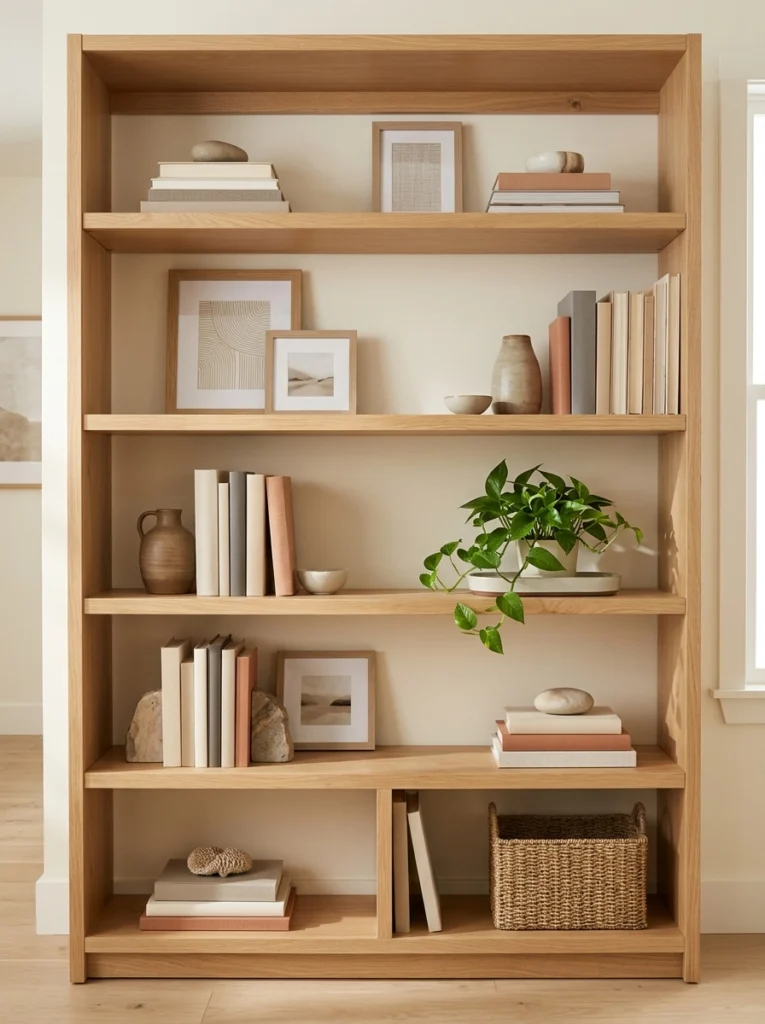
Even attractive accessories can look messy when the arrangement doesn’t work with the shelves. These common mistakes are easy to fix without spending another dollar.
- Filling every empty spot. Open space gives books and decorative objects room to stand out. Remove one or two items from each crowded shelf before buying anything new.
- Using accessories that are all the same height. A row of identical vases or frames can feel flat. Mix tall books, low stacks, and one medium-sized object to create a more natural rhythm.
- Ignoring scale. Tiny accessories disappear on a large bookcase, while oversized pottery can overwhelm a narrow shelf. Measure the shelf depth and leave enough room to reach books comfortably.
- Forgetting everyday use and safety. Heavy books belong on sturdy lower shelves, plants need protection against water damage, and tall bookcases should be secured to the wall according to the manufacturer’s instructions.
Frequently Asked Questions
[Image Prompt: A calm living room bookshelf with a practical mix of books, small plants, framed art, and baskets, styled in warm white and natural oak. Soft daylight, clean front-facing composition, approachable everyday home styling, no people, no text or words anywhere in the image.]
[Alt Text: Everyday living room bookshelf decor combining books, baskets, framed artwork, and simple plants.]
Q: How do I style bookshelf decor living room spaces on a budget?
Start with the books, frames, and objects you already own, then rearrange them into small groups with some open space between them. Add one or two thrift-store accessories or inexpensive plants if the shelves still feel bare.
Q: How many decorative items should I put on each bookshelf shelf?
There isn’t a fixed number, but two to five objects often work well on a standard shelf when books are included. Adjust the arrangement based on the shelf width, object size, and how much storage you use every day.
Q: Should books be arranged by color or by subject?
Arrange books by subject if you regularly look for particular titles, or group them loosely by color if appearance matters more to you. You can also combine both methods by sorting within categories and keeping similar colors near each other.
Q: How can I decorate a bookshelf in a small living room?
Choose compact accessories, use baskets on lower shelves, and leave a few compartments open. A narrow bookcase with vertical book arrangements and one trailing plant can provide storage without making the room feel crowded.
Q: What looks good on a bookshelf besides books?
Framed photographs, small ceramics, plants, decorative boxes, bookends, and meaningful souvenirs all work well. Pick a few pieces with different heights and textures rather than filling the shelves with unrelated ornaments.
Q: How often should I clean and restyle my living room bookshelf?
Dust your shelves every one to two weeks, particularly around horizontal book stacks and plant leaves. Restyle whenever your collection changes or at the start of a new season, rather than buying new accessories on a fixed schedule.
Start with One Shelf This Weekend
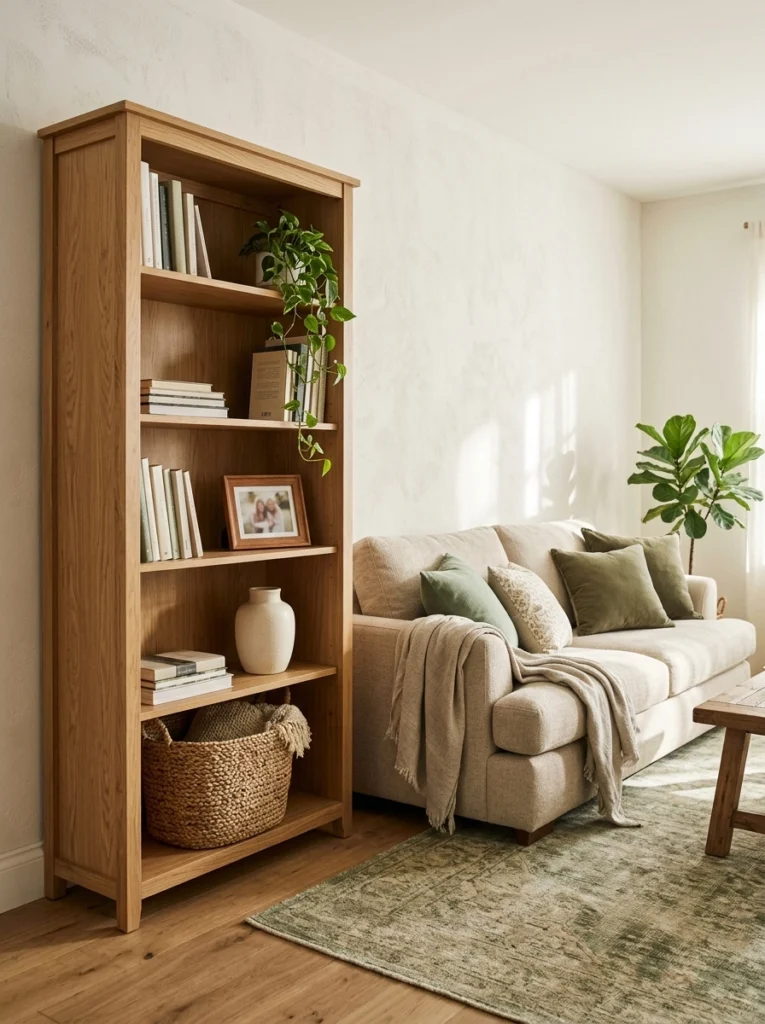
You don’t have to redo an entire bookcase to change how your living room feels. Start with one shelf this weekend, remove the clutter, arrange your favorite books in a mix of vertical and horizontal stacks, and add one personal object that means something to you. If you have a little money to spend, a small plant or thrifted ceramic vase is a good place to begin. The best bookshelf decor living room arrangement isn’t the one with the most expensive accessories. It’s the one that holds the books you love, keeps everyday items organized, and feels like it belongs in your home.