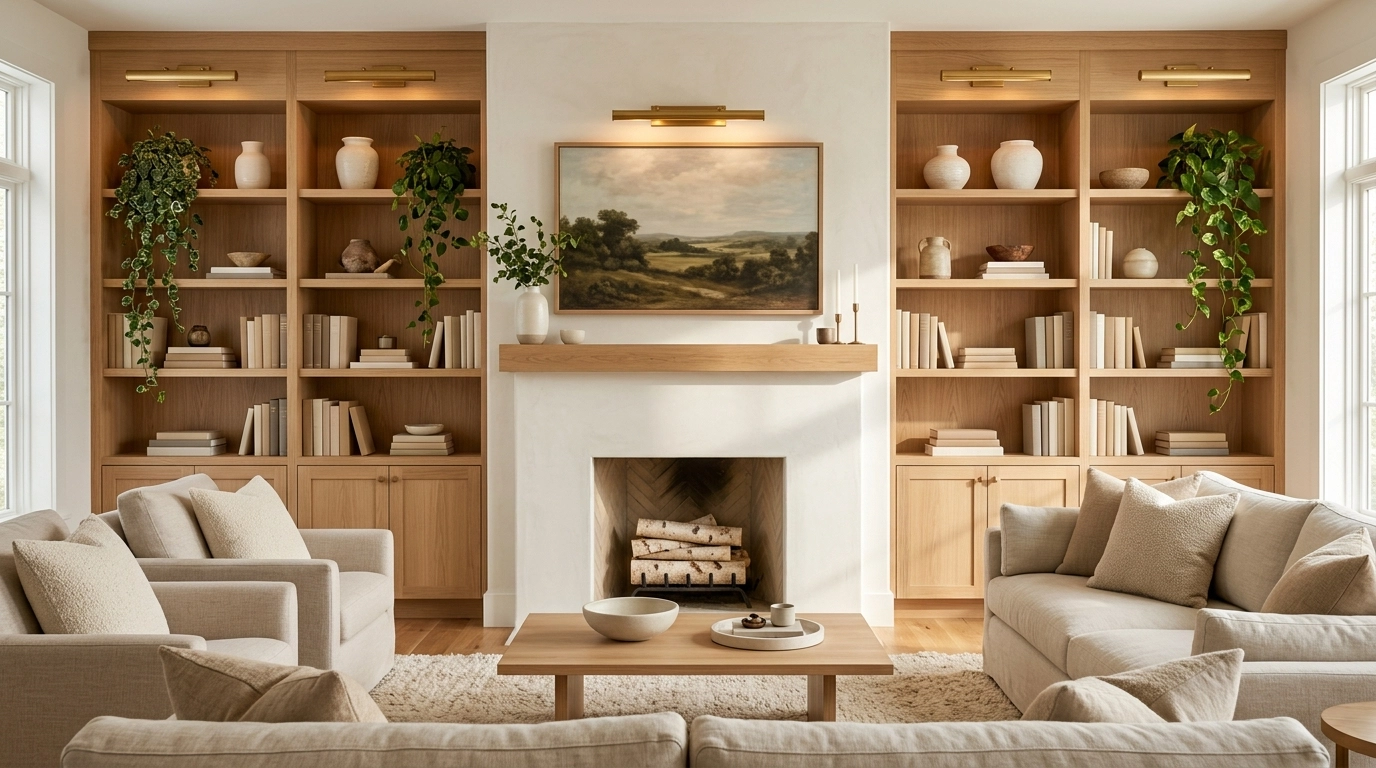
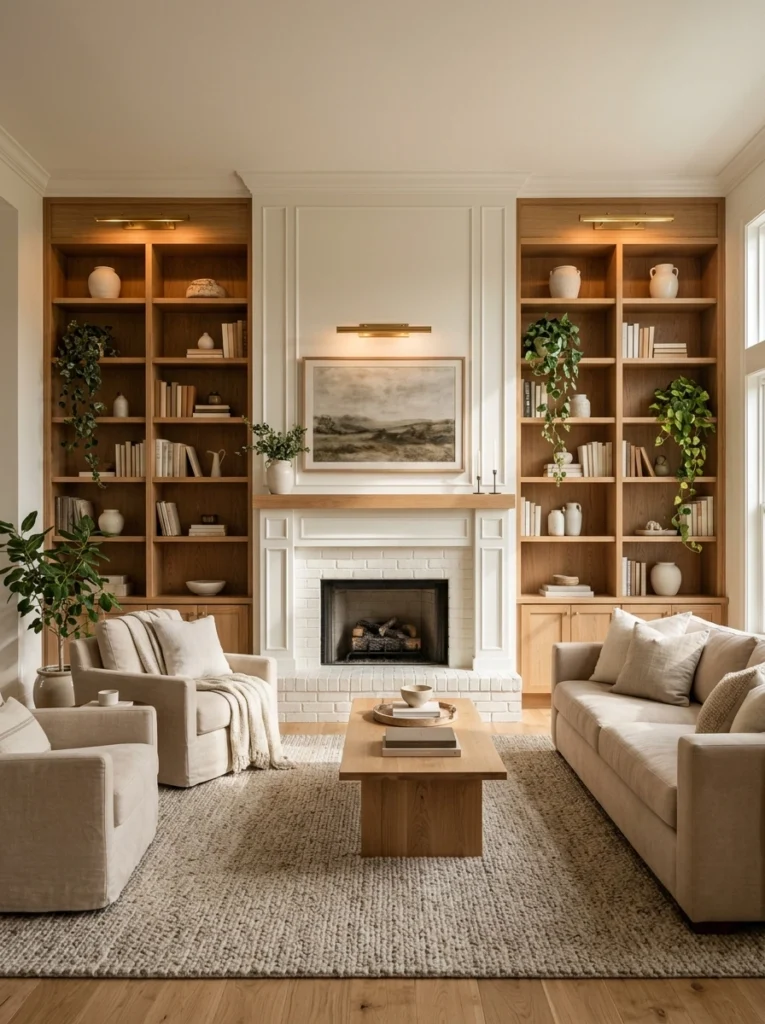
Built-in shelves can make a living room look polished, but decorating them is surprisingly easy to get wrong. One minute you’re arranging a few books and vases, and the next, every shelf is crowded with things that don’t seem to belong together. The good news? You don’t need expensive custom accessories or a designer’s budget to get the look right.
The secret to built in shelf decor living room styling is mixing different heights, textures, useful objects, and a little breathing room. Start with a simple color palette, add books and meaningful pieces, then finish with greenery or lighting. Whether your shelves surround a fireplace or fill an awkward wall, these 23 ideas will help you create a living room that feels collected, comfortable, and beautifully finished.
1. Give White Built-In Shelves a Warm Neutral Palette
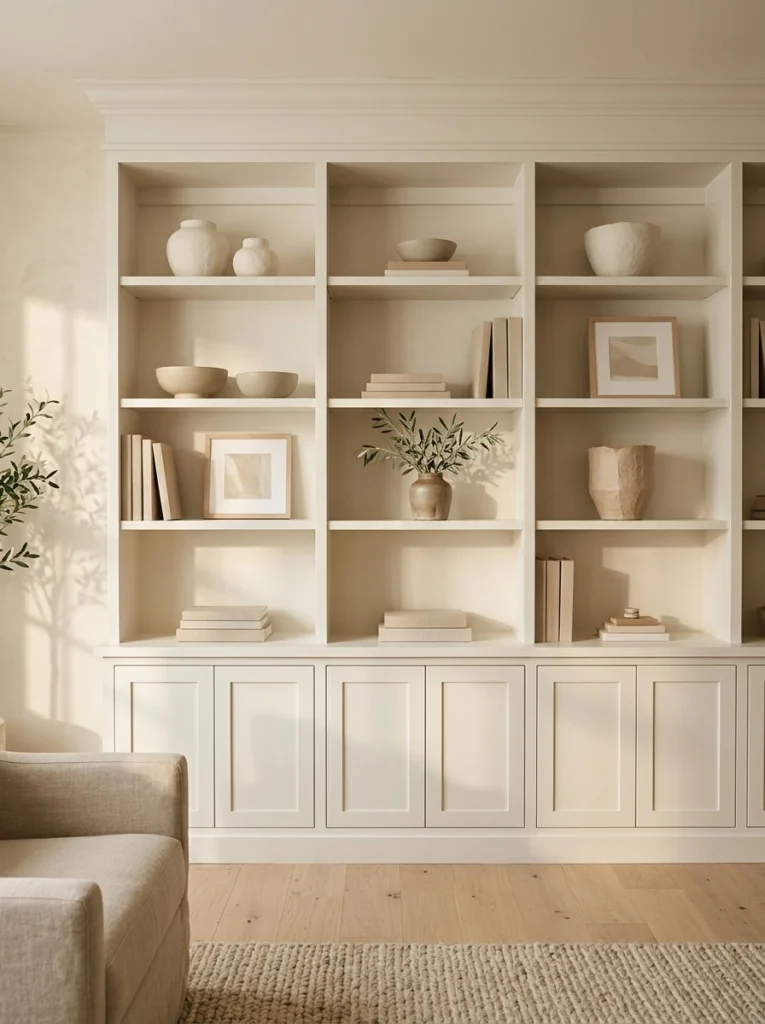
White built-ins are a classic, but an entire wall of white can feel a little flat if every accessory matches it. Add warmth with cream pottery, tan book covers, wooden picture frames, and a few textured baskets. For a simple starting point, choose three main colors: ivory, warm beige, and natural wood. Target carries affordable ceramic vases and decorative objects, often around $10 to $25, while thrift stores are excellent places to find older wooden frames for less. Place a taller vase beside a short stack of books, then leave part of the shelf empty so the arrangement doesn’t feel packed. This approach works especially well in traditional and transitional living rooms because the accessories soften the crisp lines of painted cabinetry. Dust the shelves weekly with a microfiber cloth, particularly around textured pottery, where dust tends to settle. You can keep the look interesting without introducing a different color on every shelf.
2. Style the Shelves Around Your Fireplace
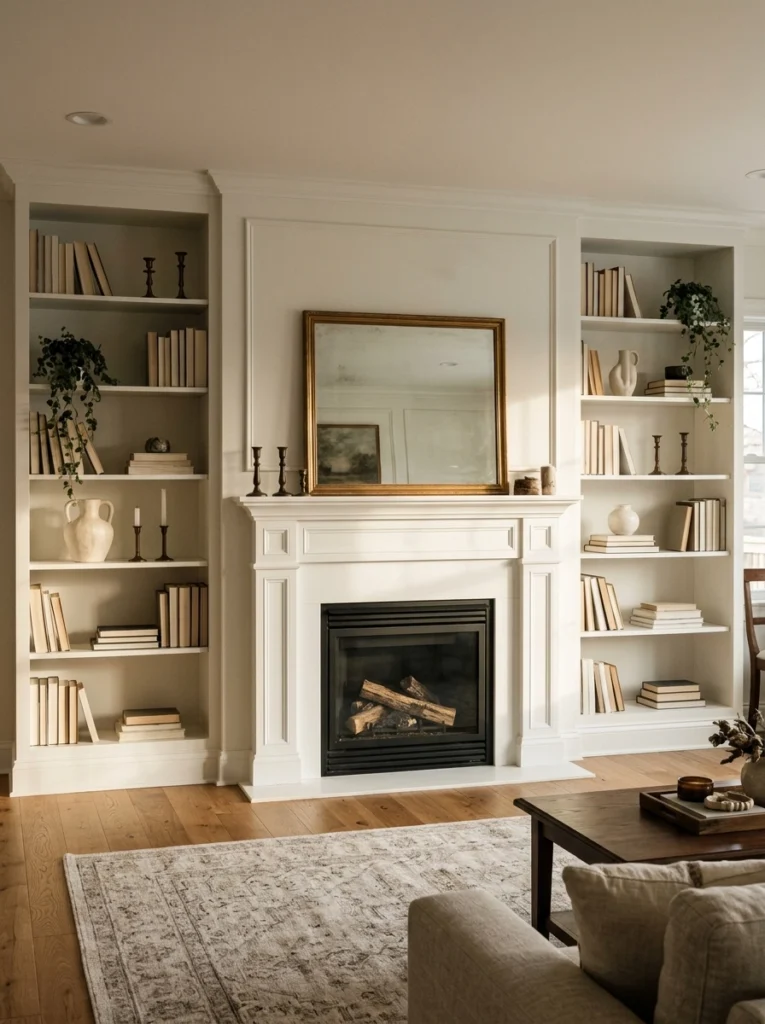
A fireplace naturally draws attention, so let the surrounding shelves support it rather than compete with it. Start by repeating a few accessories on both sides, such as matching pottery or similar-sized framed photographs. You don’t have to make the arrangements identical. For example, place a tall vase on the upper left shelf and a framed landscape in a similar visual position on the right. A pair of ceramic vases from Walmart or Target may cost $25 to $50 together, depending on their size and finish. Keep the mantel relatively simple, perhaps with one substantial mirror and two low decorative objects. The repeated shapes make the entire wall feel intentional, while small differences keep it from looking like a furniture showroom. If the fireplace is already ornate, skip elaborate shelf accessories and choose clean shapes instead. For a room with an electric fireplace, the same arrangement works beautifully with a painted surround and a few warm LED lights.
3. Add Natural Wood for a Cozy, Collected Look
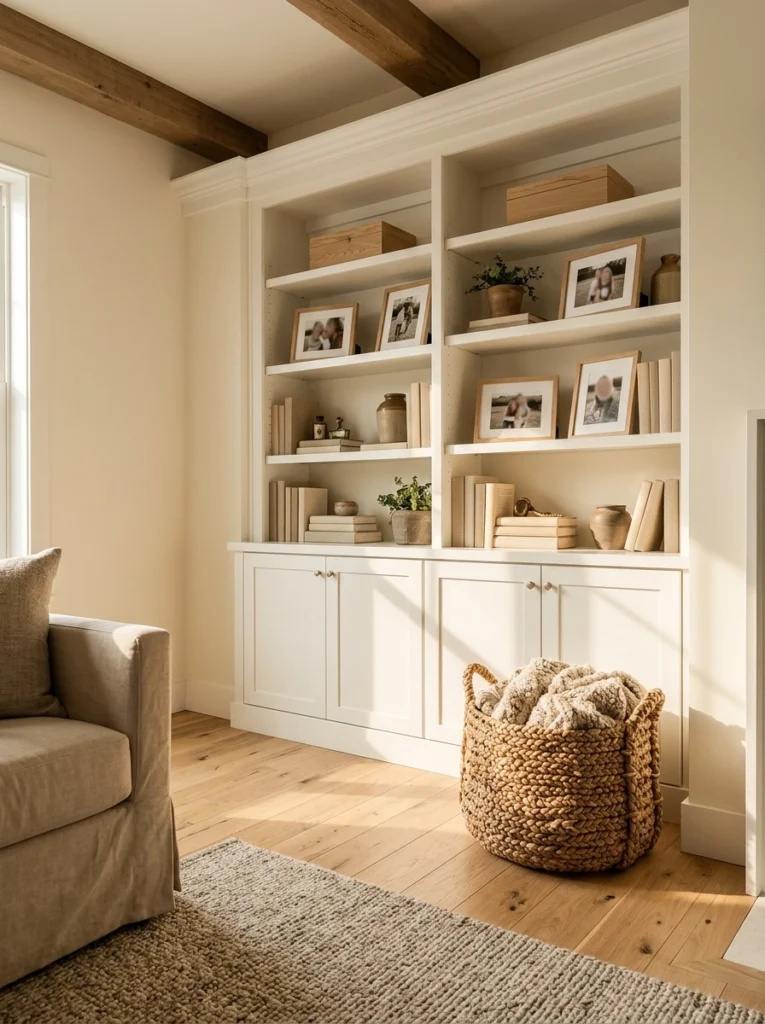
If your built-ins look a little too formal, natural wood is one of the easiest ways to make them feel more relaxed. Add a small oak picture frame, a wooden bowl, or a box with a visible grain pattern. You don’t have to buy a complete matching set. A single $12 to $20 wooden accent from IKEA or a local thrift store can break up a long stretch of painted shelving. Mix light oak with creamy fabrics and matte ceramic pieces to keep the result from looking overly rustic. On a lower shelf, try a wooden box beside two horizontally stacked books. Higher up, a small frame or carved wooden object gives the eye something different to land on. This combination is particularly useful in homes with white walls, gray sofas, or cool-toned flooring because wood adds visual warmth without requiring a major room makeover. Wipe wooden accessories with a dry or slightly damp cloth, and avoid soaking unfinished pieces.
4. Make Books Look Like Part of the Decor
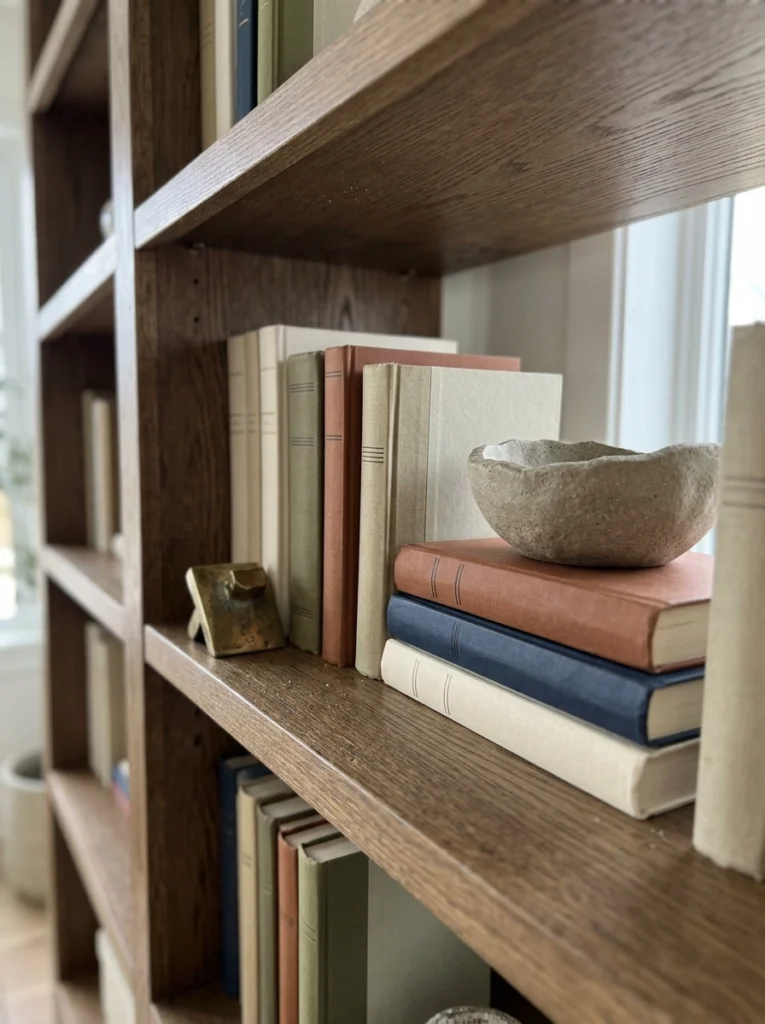
Books are often the most useful things on a living room shelf, but rows of mismatched spines can look visually busy. Start by grouping books by general color or height rather than trying to coordinate every single cover. Stand a few upright, then stack two or three horizontally to create a platform for a small decorative object. Paperback novels work perfectly well, and thrift stores frequently sell used books for $1 to $5 each. If you have a large collection, leave some colorful spines visible instead of covering everything in neutral paper. The personal character is part of the appeal. On a narrow shelf, avoid stacking books so high that they touch the shelf above. A little vertical clearance makes the arrangement easier to use and clean. Keep frequently read titles near eye level and less-used reference books lower down. The result feels like a real home, not a display that nobody is allowed to touch.
5. Bring in Greenery Without Crowding the Shelves
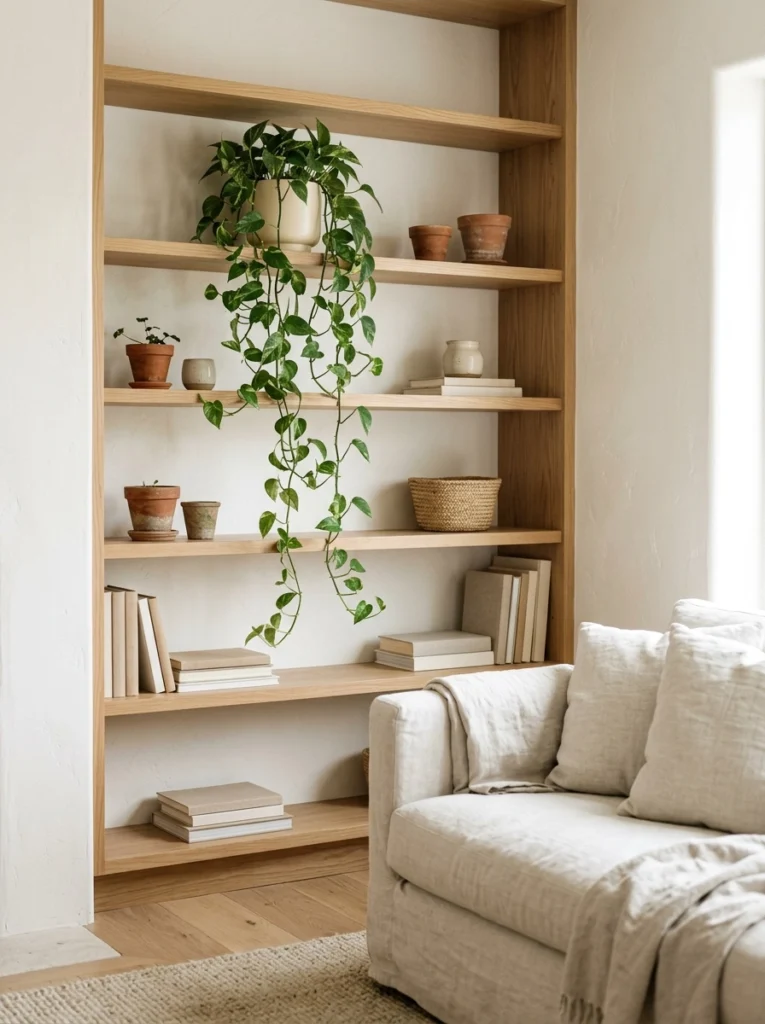
A little greenery can make built-in shelves feel less rigid, especially when the rest of the room has lots of straight lines. Try one trailing pothos on an upper shelf or a compact ZZ plant in a lower cubby. Keep the plant’s growth pattern in mind before choosing its position. Trailing stems look lovely along the edge of a shelf, but they shouldn’t cover framed artwork or hang into a walkway. A small live plant typically costs $8 to $20 at a garden center or home improvement store, while a quality faux plant from IKEA or Target is a practical alternative for dim rooms. Use a lightweight, waterproof saucer beneath live plants to protect painted wood from moisture. If you’re styling shelves above electronics or a fireplace, choose low-maintenance faux greenery instead. One or two plants are usually enough for an average bookcase. Too many pots can make the shelves feel like a plant stand rather than part of the living room’s overall design.
6. Use Oversized Art as a Backdrop
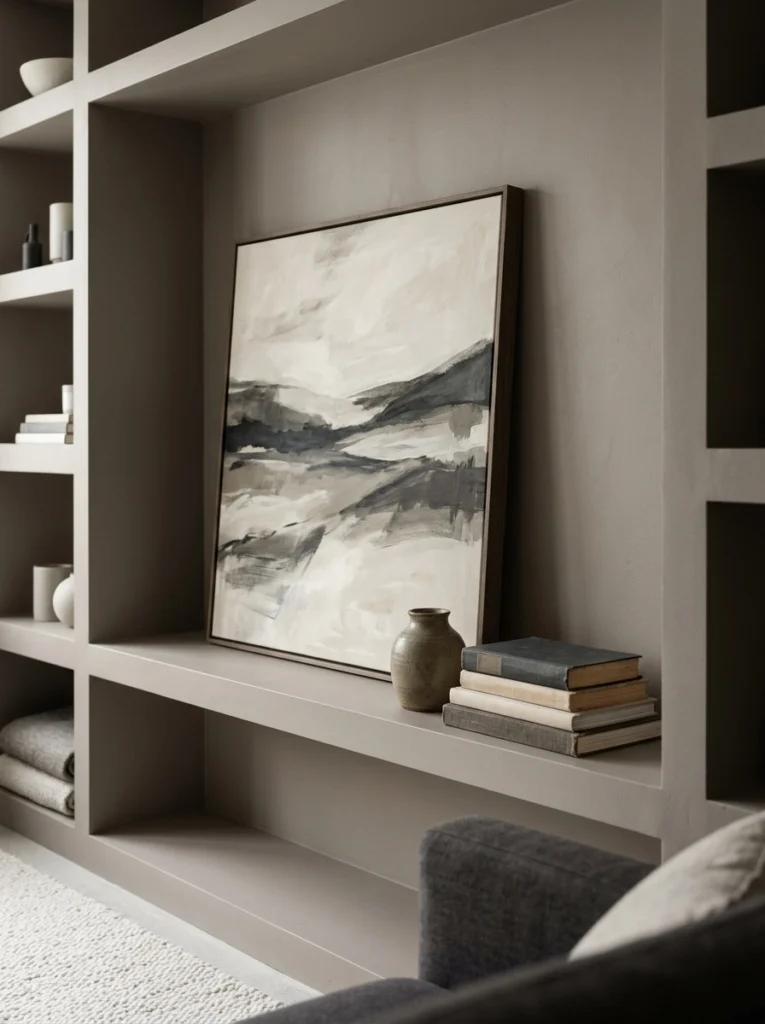
Small frames scattered across every shelf can create a cluttered appearance. Instead, choose one larger artwork to anchor a wider opening. A 12-by-16-inch or 16-by-20-inch print works well on many standard shelves, though the opening should determine the final size. Lean the artwork against the back panel if the shelf is deep enough and the frame is stable, then place a low vase or book stack in front. Affordable prints are available at IKEA, Target, and online art retailers for roughly $15 to $40, excluding framing. Landscapes, abstract paintings, and muted botanical prints work especially well because they introduce color without overwhelming the arrangement. This trick is particularly helpful for broad shelves that look empty even after you’ve added smaller objects. Just make sure the frame doesn’t slide forward when someone reaches for a book. For heavy or valuable artwork, use a secure mounting method appropriate for the shelf material.
7. Create a Moody Look With Dark Shelves
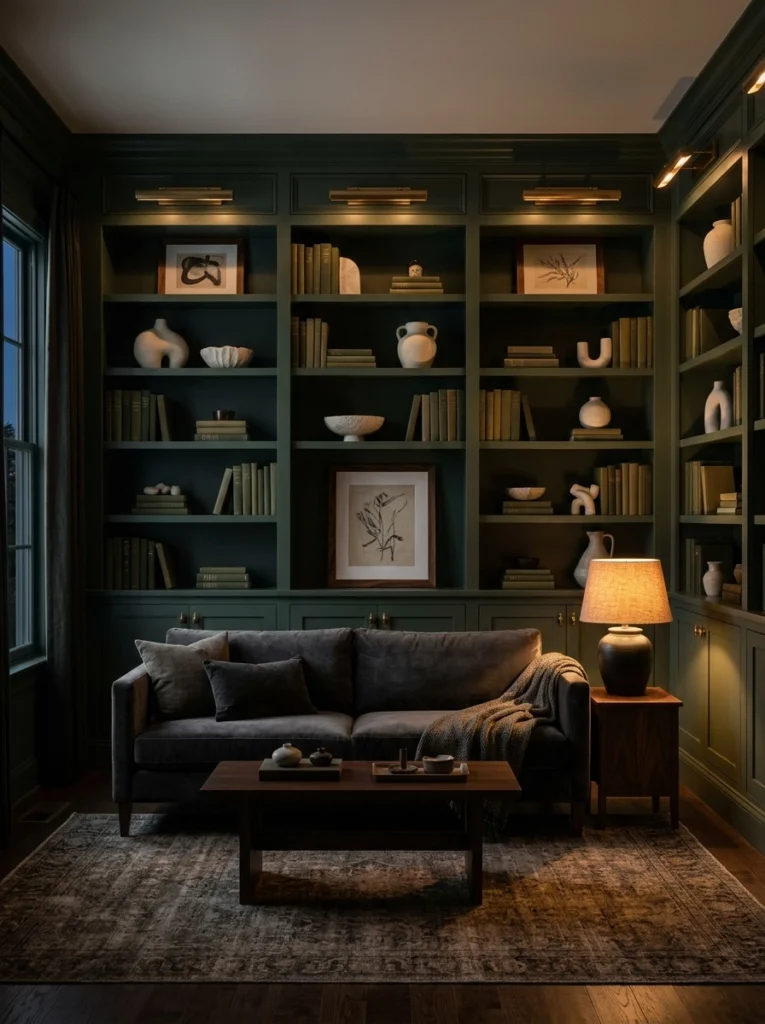
Dark built-ins can look rich and sophisticated, especially when the accessories provide enough contrast. Forest green, navy, and charcoal are excellent choices for rooms with plenty of natural light or layered lamps. Start with ivory pottery, warm brass candleholders, and walnut frames so the objects don’t disappear against the background. You can create the effect without replacing the cabinetry. A quart of suitable interior paint often costs around $20 to $35, while a few new accessories may add another $30 to $60 to the project. Test the paint color on a hidden section first because dark shades can look different in daylight and at night. On the shelves, leave some darker areas visible instead of filling every opening with bright objects. That contrast gives the room depth. For maintenance, use a soft microfiber cloth and follow the paint manufacturer’s cleaning advice to avoid leaving shiny marks on a matte finish.
8. Work a Few Woven Baskets Into Lower Shelves
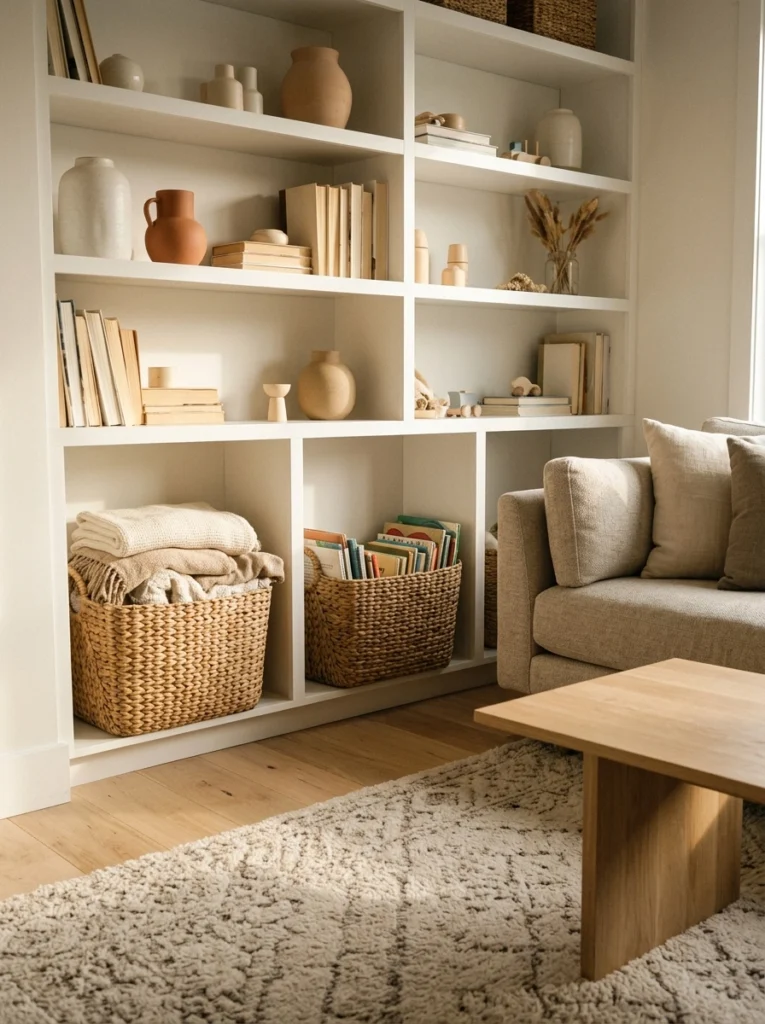
Decorative shelves still have to work for everyday life. Woven baskets are a simple way to hide remote controls, chargers, spare coasters, and other little items that tend to collect in the living room. Measure each opening before shopping, leaving around half an inch of clearance on each side so the basket slides in and out comfortably. IKEA, Walmart, and Target sell many options in the $10 to $30 range. Choose two matching baskets for a cleaner look, or use different natural weaves in similar shades for a more relaxed style. Keep baskets on lower shelves where they’re easy to reach, and reserve upper shelves for objects you don’t use often. If the baskets will hold electronics, avoid tightly packed storage that traps heat. For a family room, this arrangement gives you somewhere to put things away quickly before guests arrive. Vacuum woven surfaces with a brush attachment to remove dust caught between the fibers.
9. Try Built In Shelf Decor Living Room Styling With Brass Accents
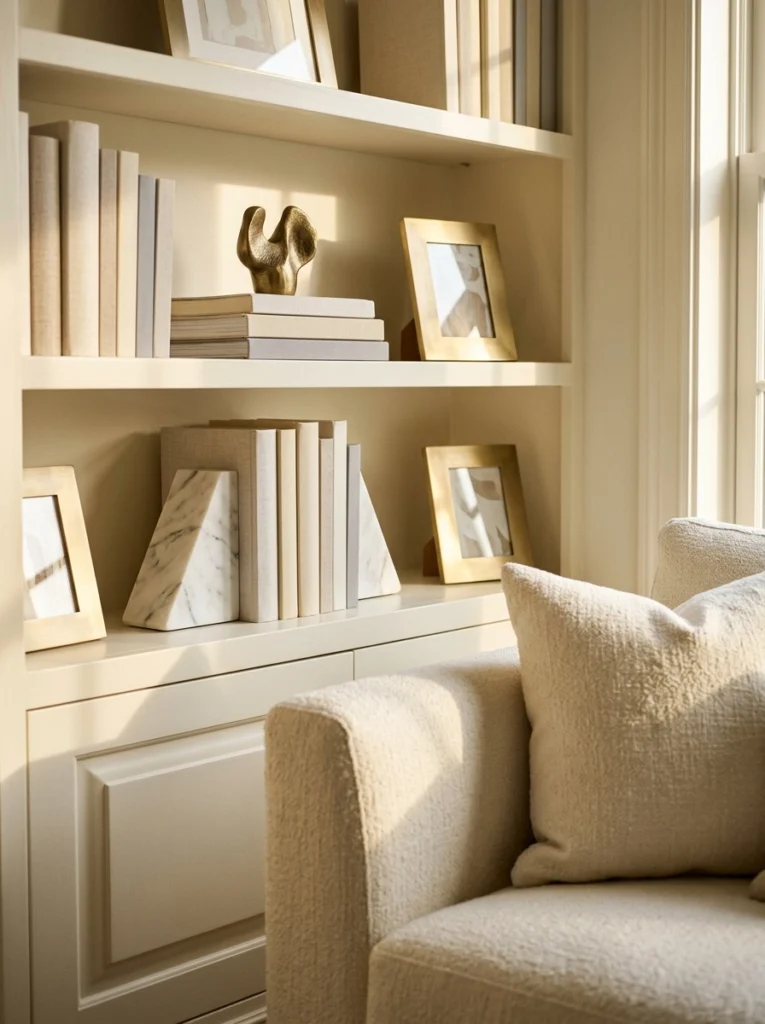
Brass accents add a little shine without making shelves feel flashy. The trick is to repeat the finish in small doses instead of buying every accessory in gold. Try one brass frame, a small sculptural object, and perhaps a pair of metal bookends. A simple brass-look frame from Target may cost around $10 to $18, while a decorative object from a thrift store can be even less. Aim for two or three brass pieces across the entire bookcase, adjusting the number to the size of the unit. Pair them with matte ceramics, linen-covered books, and wood to keep the metal from feeling too formal. This look works particularly well with cream, sage, navy, and warm gray interiors. If you already have brass hardware on nearby cabinets or lighting, repeating that finish ties the room together. Use a soft cloth to clean metal surfaces, and check the care instructions before applying polish because some decorative finishes are only plated.
10. Make Small Shelves Feel Larger With Mirrors

If your built-ins are shallow or tucked into a dim corner, a mirror can help the arrangement feel more open. Look for a small arched or rectangular mirror with a frame that complements your other accessories. A 10-by-14-inch mirror is a useful starting point for a medium shelf, although you’ll want to measure the opening before purchasing. Budget-friendly options at IKEA, Walmart, and Target generally cost around $15 to $35. Lean the mirror securely against the back of the shelf, then add a short stack of books or a low ceramic bowl in front. The reflection introduces another layer of depth and can bounce light from a nearby window. Avoid placing it where it reflects a messy television setup or a bright lamp directly into someone’s eyes. For a rental, a freestanding shelf arrangement avoids wall holes, but secure heavier mirrors so they can’t tip forward.
11. Display Family Photos Without Turning the Shelves Into a Gallery Wall
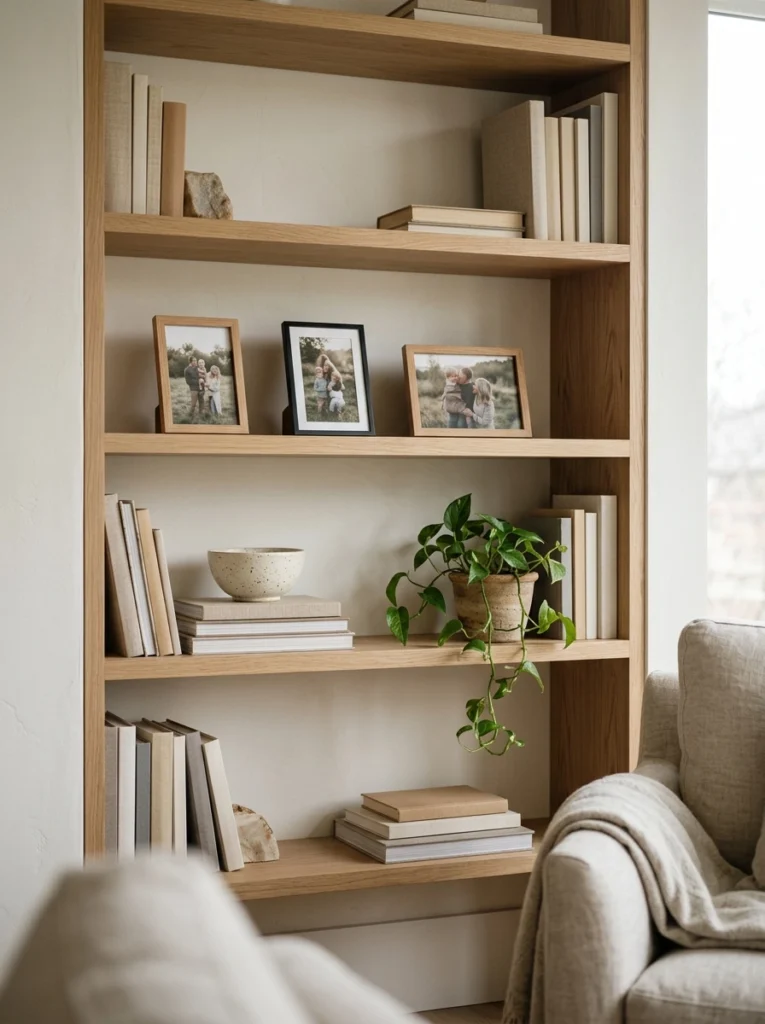
Family photographs belong in a living room, but dozens of small frames can overwhelm built-ins quickly. Select a few favorites and vary the frame sizes so the display feels intentional. For example, use one 8-by-10-inch frame with two smaller 4-by-6-inch frames spread across different shelves. Basic frames at IKEA or Walmart often cost around $5 to $15 each. Stick with black, natural wood, or white frames rather than introducing a new finish for every picture. You can include candid family moments alongside a landscape or travel photograph to keep the arrangement personal without making it look crowded. Place frames toward the back of the shelf and angle them slightly if the design allows, leaving room for a small bowl or a few books in front. For easy cleaning, choose frames with smooth surfaces and glass or acrylic fronts. This setup also makes it simple to rotate photographs as your family takes new pictures.
12. Use Ceramic Sculptures for an Artistic Touch
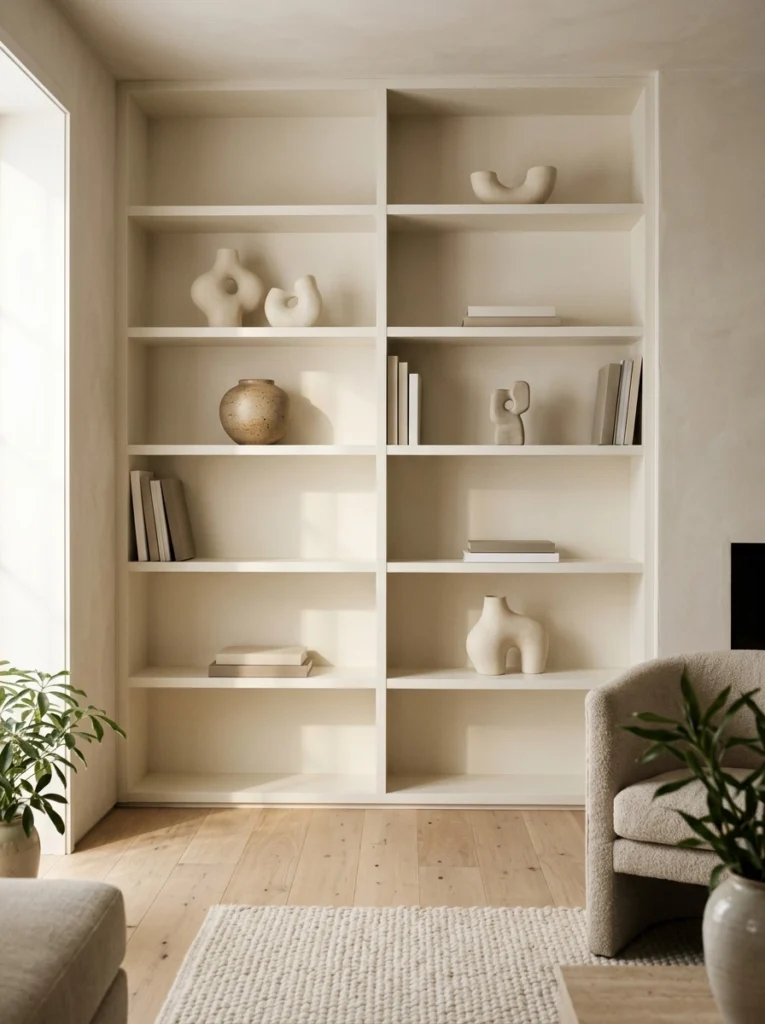
Not every shelf has to hold books or something useful. A few sculptural objects can make built-ins feel more like a thoughtfully designed part of the room. Choose rounded ceramic forms, a carved wooden object, or a small abstract sculpture, then give each piece enough space to stand out. Decorative ceramics from Target or Walmart often cost around $12 to $30, and thrift stores are worth checking for unusual shapes that don’t look mass-produced. For each large sculpture, leave several inches of clear space around it whenever possible. The empty area helps its shape become part of the display. Combine a rounded object with a rectangular stack of books to create contrast between organic and straight lines. You can keep the colors restrained, or choose one dark sculptural piece to anchor an otherwise pale shelf. Dust textured pieces with a soft brush, particularly around carved details that collect debris.
13. Add Picture Lights Above Your Built-Ins
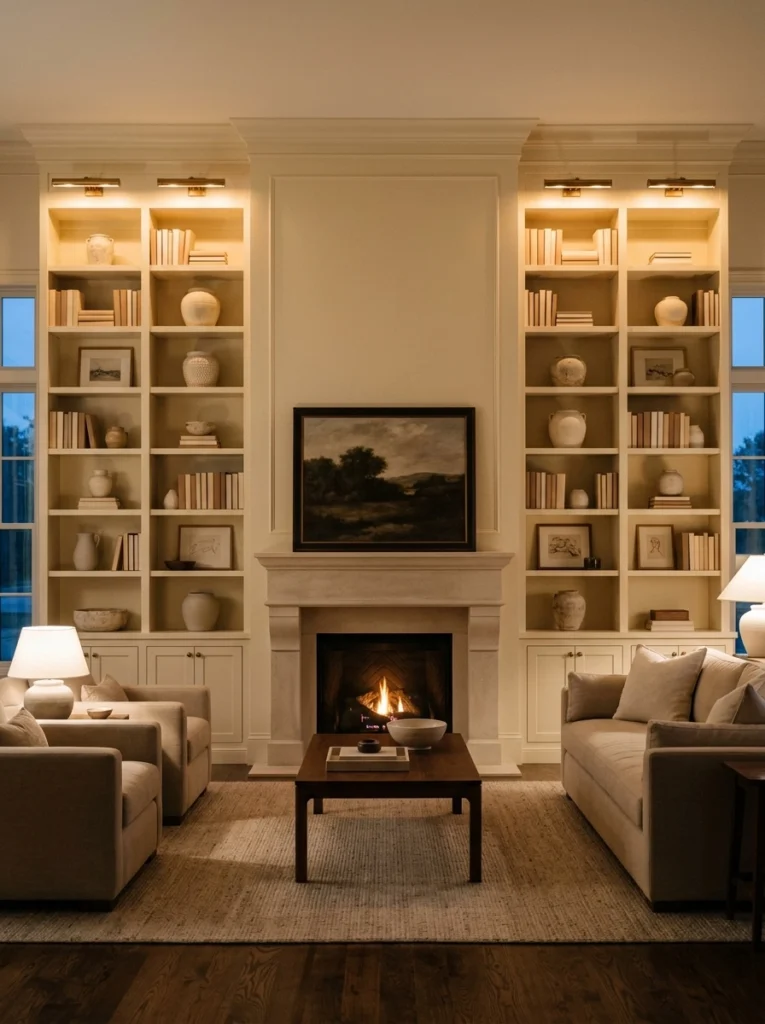
Lighting can change how your shelves look after sunset, especially if the living room relies on one overhead fixture. Slim picture lights above artwork or selected shelving sections create a soft, gallery-like glow. Battery-operated models are convenient for rentals because they generally avoid new electrical wiring, and basic options often cost $20 to $45 per light. For a built-in wall around eight feet wide, begin with one or two lights rather than installing a fixture over every shelf. Choose a warm color temperature around 2700K to keep the room comfortable in the evening. Aim each light at the artwork or display area, and check the manufacturer’s mounting instructions before attaching anything to painted cabinetry. If you prefer a cleaner daytime look, select fixtures with simple brass or black finishes that coordinate with your existing hardware. Replace batteries as needed, and wipe the fixtures with a dry cloth to prevent dust from dulling the finish.
14. Bring in a Touch of Vintage Character
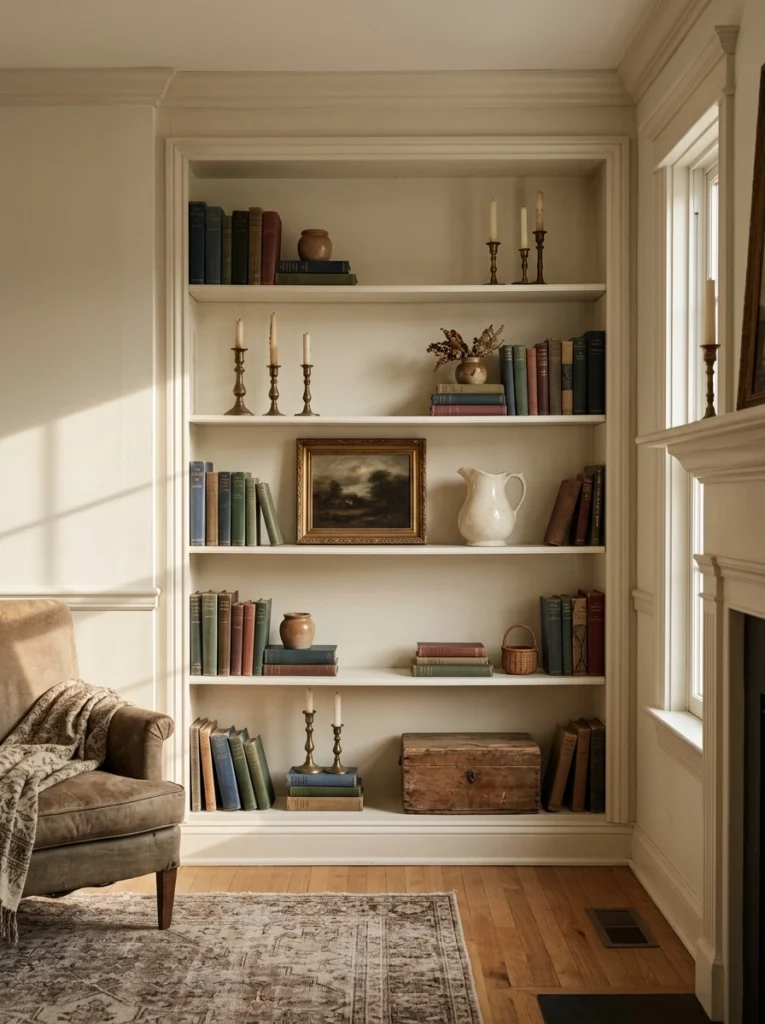
A few older objects can keep built-in shelves from feeling too new or carefully coordinated. Look for brass candlesticks, an ironstone pitcher, a small landscape painting, or a wooden box with visible wear. Estate sales and thrift stores are often good places to shop, with smaller decorative pieces frequently priced around $5 to $25. You don’t have to collect genuine antiques, either. A single vintage-style accessory paired with modern ceramics gives the shelves enough character without making the room feel dated. Arrange the older piece beside something simple, such as a plain stack of books, so its details remain visible. Avoid buying several unrelated vintage objects at once just because the prices are low. Choose items that share a finish, color, or shape with things you already own. Clean old metal and painted wood gently, and test any cleaning product on a hidden spot before using it on a delicate finish.
15. Create a Coastal Shelf Display With Blue and White
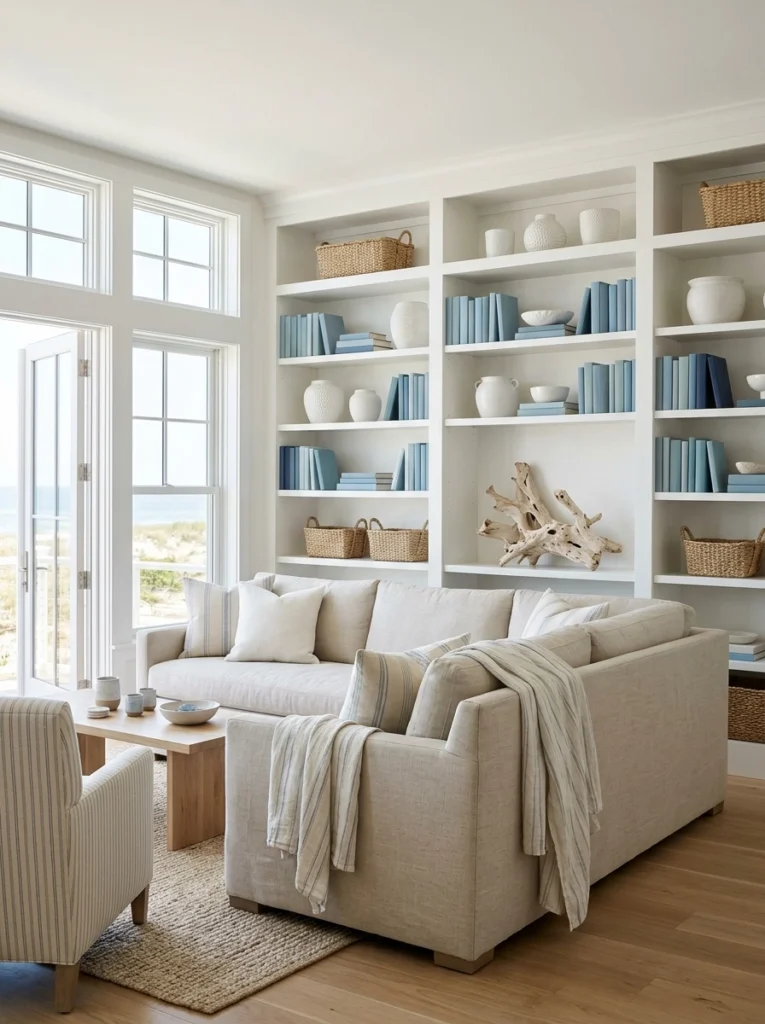
You can bring a coastal feeling into the living room without covering the shelves in seashells. Use a restrained mix of soft blue, white, pale wood, and sandy beige instead. A blue ceramic vase, a few ocean-inspired art prints, and a driftwood-style accent are enough to suggest the look. Budget-friendly decorative pieces from Target or IKEA generally fall around $10 to $30 each, so you can build the display gradually. Choose one or two shades of blue and repeat them across the bookcase rather than introducing every color found at the beach. This makes the styling feel calm instead of themed. Place a white vase beside blue-spined books, then add a natural wood object to break up the cool colors. The palette is particularly attractive with white cabinetry, light flooring, and linen upholstery. Dust pottery regularly and keep actual shells or sand-filled containers away from shelves where children or pets can easily reach them.
16. Style Open Shelves With Black Accents for Contrast
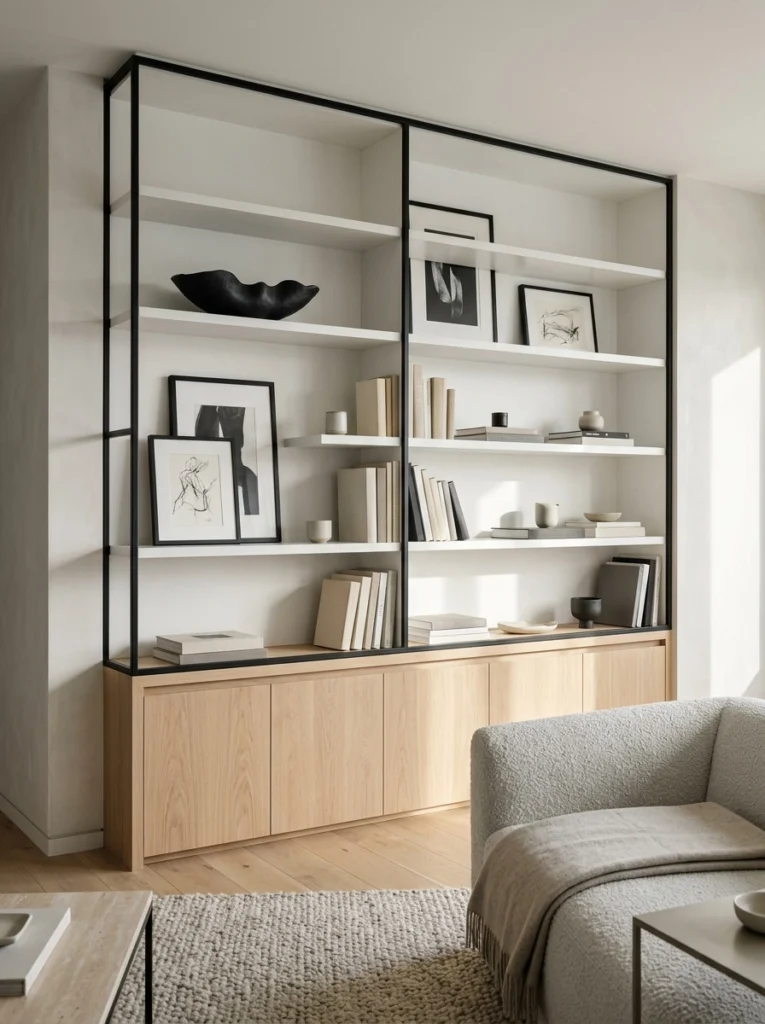
White shelves can look washed out when every accessory is pale, so a few black accents help define the arrangement. Use a matte black bowl, a thin black frame, or dark bookends against the lighter background. A small black decorative object from IKEA or Target often costs around $10 to $25. Spread these pieces across the bookcase rather than placing them all on one shelf. Two or three dark accents usually create enough contrast for a medium-sized unit without making the display feel heavy. Combine them with wood, ivory pottery, and books in muted colors to soften the sharp edges. This style works especially well in contemporary homes with black window frames, dark hardware, or a black coffee table. For maintenance, wipe matte finishes with a soft cloth rather than an abrasive sponge, which can leave shiny patches. If your room already has many dark furnishings, use smaller accents and allow the white shelving to remain the dominant feature.
17. Use Storage Boxes to Hide Everyday Clutter
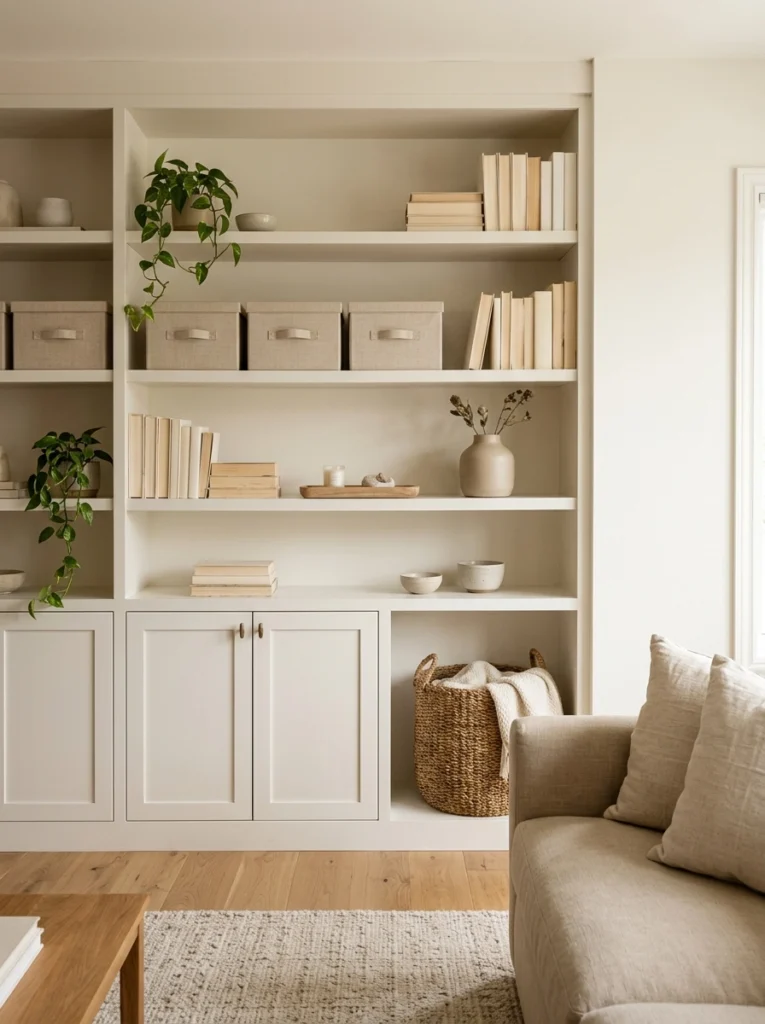
For a living room that doubles as a workspace or family hangout, closed storage can make the difference between attractive shelves and constant mess. Add two or three fabric-covered boxes to hold paperwork, charging cables, game controllers, or small accessories. Before buying, measure the opening’s width, depth, and height, then allow about half an inch of clearance wherever the box slides. IKEA and Walmart carry many storage options for approximately $8 to $25 each. Pick a single fabric color, such as oatmeal, gray, or charcoal, and use small labels on the inside or underside if you want the front to stay clean. Mix the boxes with a few visible books and decorative objects so the shelves don’t look like a wall of office storage. This approach works especially well on middle and lower shelves, where concealed storage is easy to access. Vacuum fabric surfaces occasionally and avoid storing damp items inside enclosed boxes.
18. Give a Small Built-In a Clean Minimalist Look
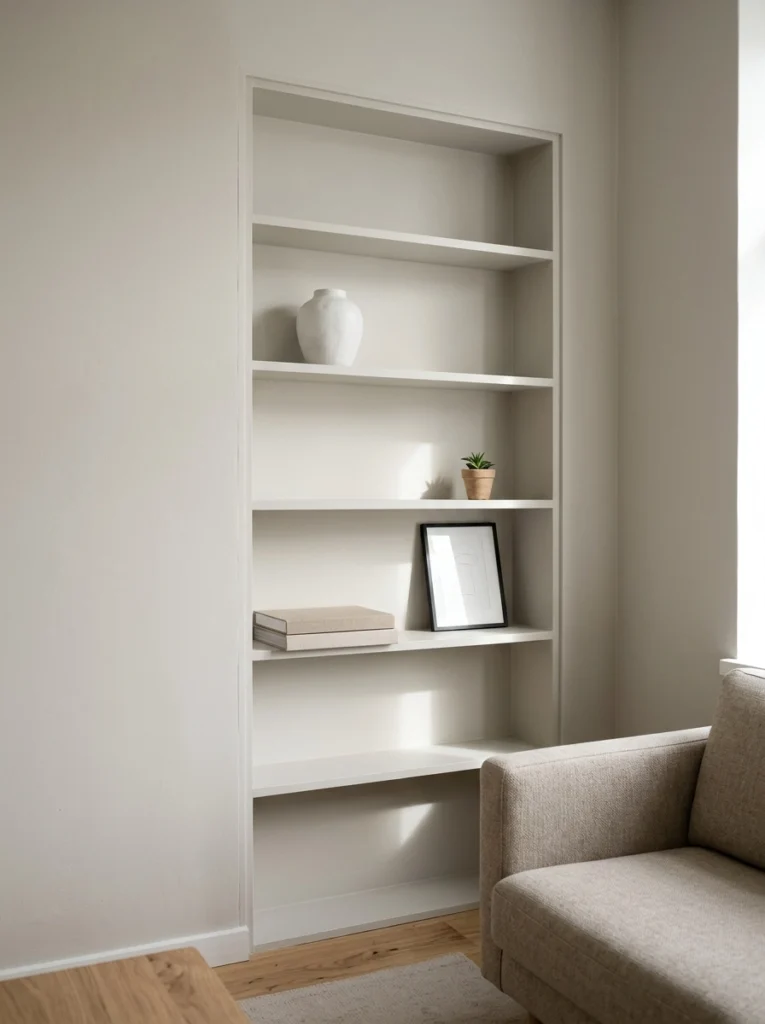
Small built-ins often look best when you resist the temptation to fill every opening. Choose a few useful books, one sculptural vase, a small plant, and a framed print, then leave generous space around them. You can style a narrow bookcase for around $30 to $60 if you shop your home first and purchase only one or two missing pieces. This is particularly effective in apartments where too many small objects make the entire room feel crowded. Keep accessories proportional to the shelf depth. A tall, narrow vase works better on a shallow shelf than a broad decorative bowl that hangs over the edge. Repeat one or two colors throughout the arrangement to connect the shelves with your sofa, rug, or curtains. If you want more ideas for making limited square footage work, see [INTERNAL LINK: small living room decorating ideas]. Wipe the shelves regularly and rotate the objects seasonally rather than adding more pieces every time the display starts to feel familiar.
19. Decorate With Large Baskets and Oversized Vessels
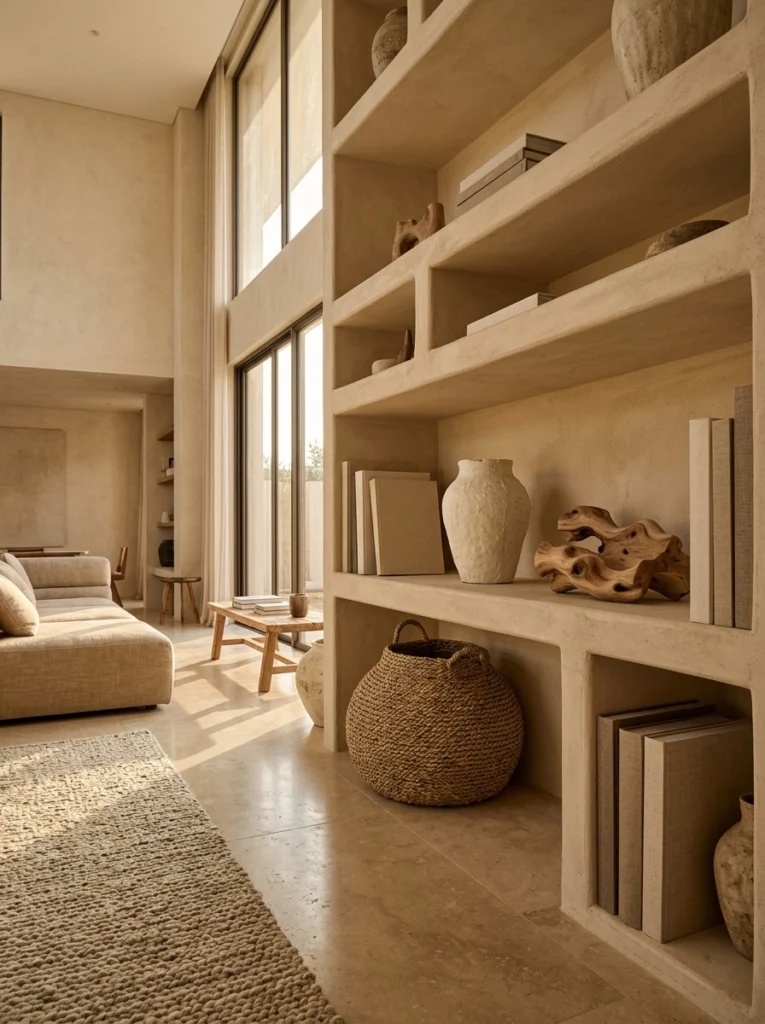
Wide built-in shelves can make tiny accessories look lost. Larger pieces help fill the space without requiring a dozen decorative objects. Try an oversized ceramic vessel on one shelf, a substantial woven basket below it, and a thick stack of art books on another. A larger vase from a home store may cost around $25 to $60, while a basket from a thrift store or Facebook Marketplace can be considerably cheaper. Before purchasing, measure the shelf opening and choose one substantial object for each broad shelf section rather than several small items scattered across it. Keep the tallest piece comfortably below the shelf above, leaving enough room to remove it for cleaning. The combination works because large shapes are easy to read from across the living room. Mix smooth ceramics with rough woven textures to stop the display from feeling bulky. Use furniture pads beneath heavy objects to protect wood shelves from scratches.
20. Add a Pop of Color With One Statement Object
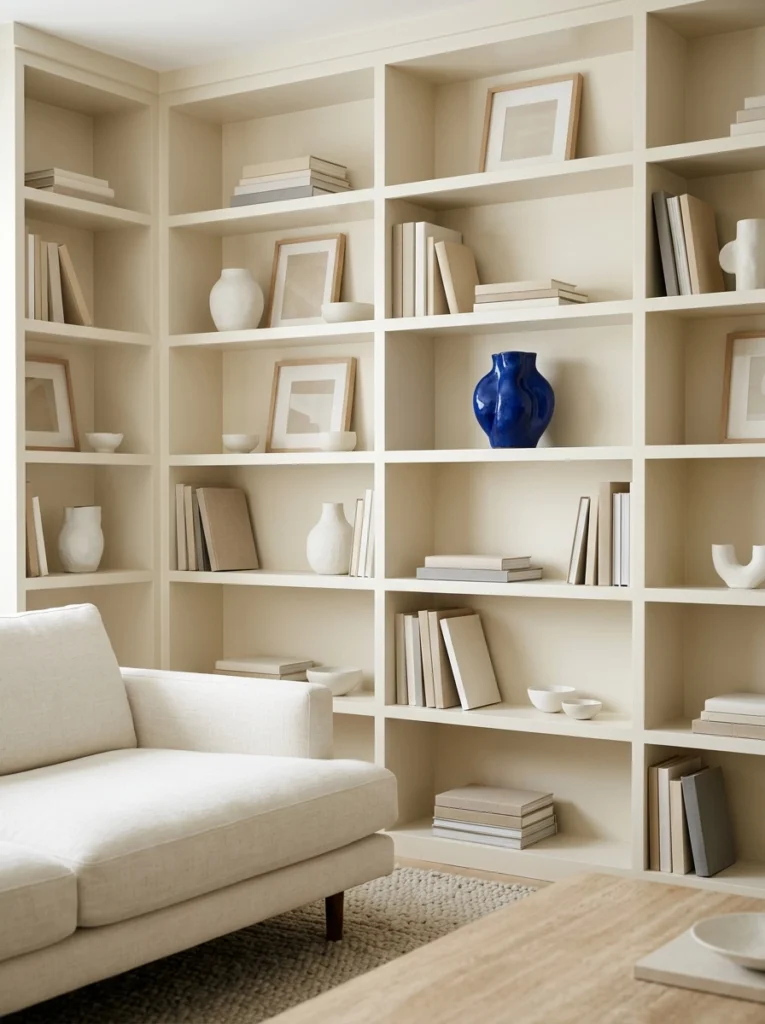
If you love color but don’t want to repaint your shelves, introduce one statement accessory. A cobalt-blue vase, terracotta sculpture, or deep burgundy bowl can give a neutral bookcase a focal point without requiring a complete restyle. Look for a piece around 8 to 12 inches tall if the shelf opening is average in size, adjusting to the proportions of your cabinetry. Decorative statement objects at Target or online home stores often cost $20 to $45. Place the colorful item near a small group of neutral books so it stands out clearly. Repeat the same color once elsewhere in the room, perhaps in a throw pillow or artwork, to make the choice feel connected to the rest of the space. Avoid adding several competing accent colors unless your room already has a colorful, eclectic style. A single strong shade is easier to live with and simple to change when you want a different look next season.
21. Mix Closed Cabinets With Open Display Shelves
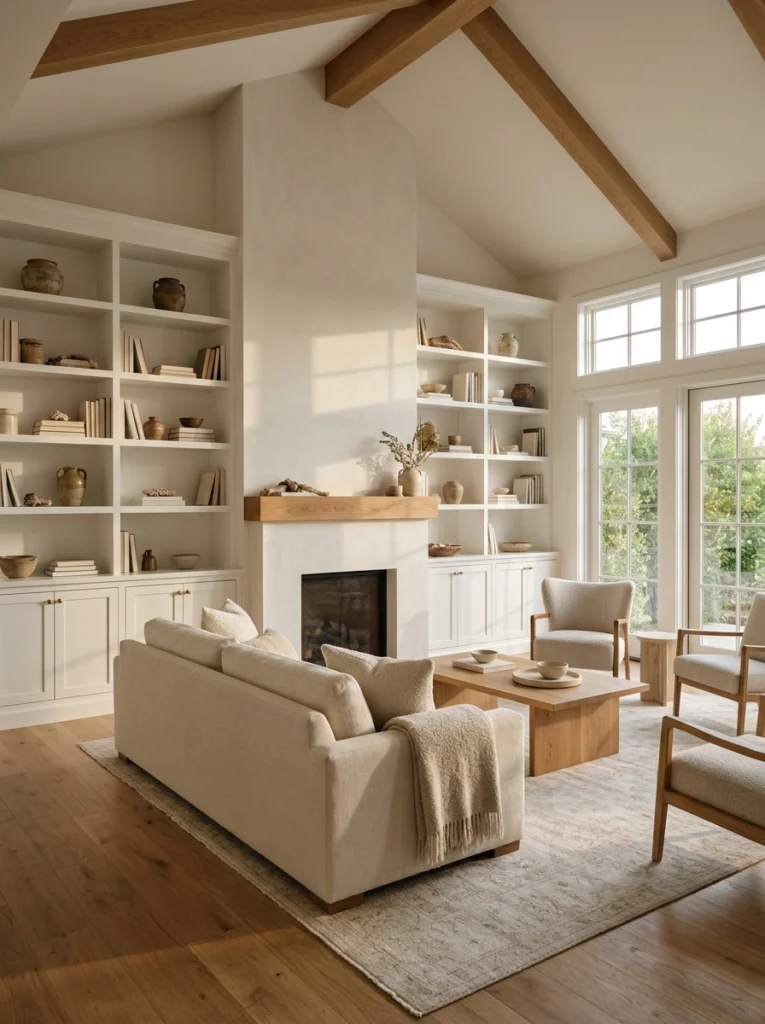
If your built-ins have both open shelves and lower cabinets, give each area a different job. Use the open sections for books, artwork, and decorative objects, then store board games, spare blankets, and electronic accessories behind cabinet doors. This division keeps the room functional without sacrificing the display. If your cabinetry has plain doors, new hardware from Home Depot or IKEA can make a noticeable difference for roughly $3 to $10 per knob or pull. Match the finish to nearby lighting or furniture hardware. On the open shelves, keep a limited color palette so the upper half of the wall feels calmer than the more practical storage below. This arrangement works especially well in busy family rooms because you can tidy away everyday items in minutes. Check cabinet hinges periodically and use gentle cleaners appropriate for the finish. If you’re adding hardware to existing doors, measure the current hole spacing before ordering replacements.
22. Make a Rental-Friendly Display With Removable Accessories
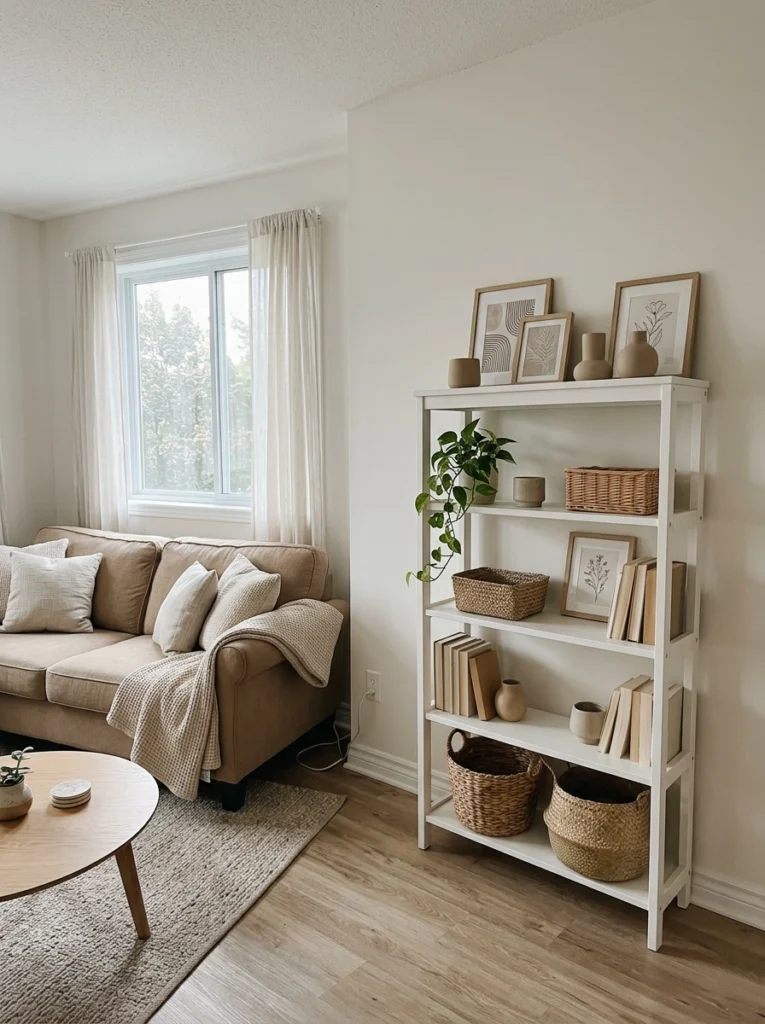
You don’t have to own your home to create a built-in-inspired display. Freestanding bookcases can look more custom when you arrange accessories with the same care you’d give permanent cabinetry. Choose a bookcase that fits your wall, then add matching baskets, framed prints, and a few substantial decorative pieces. An IKEA bookcase or similar budget unit may cost around $50 to $150, depending on its dimensions and construction. Add $25 to $50 for accessories if you already own books and storage containers. Use removable picture-hanging strips only on suitable wall surfaces and within the manufacturer’s weight limits. Always secure tall furniture against tipping, particularly in homes with children or pets. Keep the shelf styling simple and repeat the room’s main colors so the furniture looks intentional rather than temporary. For more renter-friendly ideas, try [INTERNAL LINK: apartment living room decor ideas]. When moving, pack the accessories separately and reuse them on your next set of shelves.
23. Finish With Layered Lighting and a Few Favorite Objects
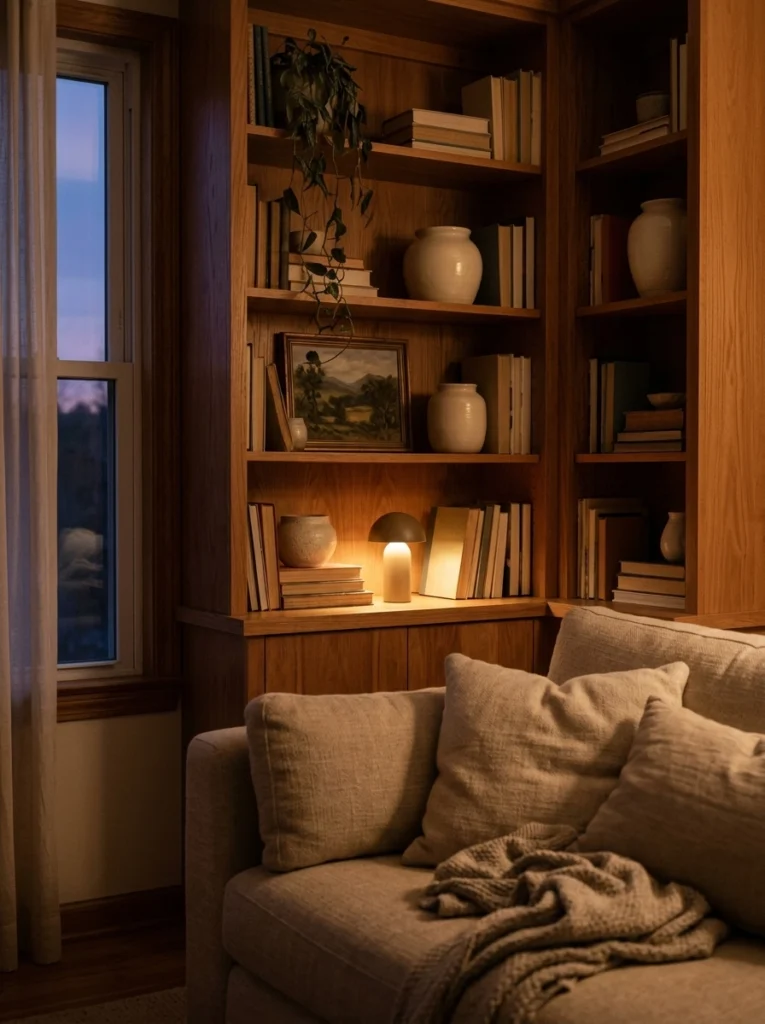
The finishing touch is often lighting rather than another decorative object. A small rechargeable lamp can add a warm pool of light to a wide shelf, while a few favorite books and personal keepsakes make the display feel lived-in. Compact cordless lamps at Target or online retailers generally cost around $20 to $50, depending on the finish and battery life. Choose warm-white lighting around 2700K for a cozy evening atmosphere, and place the lamp where it won’t crowd nearby books or artwork. Add one meaningful object, such as a travel souvenir or a small framed photograph, instead of filling every gap with store-bought decor. Personal items give the shelves a character that coordinated accessories alone can’t provide. Keep lamps away from loose fabric and follow the manufacturer’s charging and operating instructions. If the shelf is too narrow for a lamp, use an existing table lamp nearby to illuminate the display from the side.
Mistakes That Ruin the Look
Even attractive accessories can look awkward when they’re arranged without enough attention to scale and spacing. These are the mistakes worth checking before you finish styling your shelves.
- Filling every opening: Empty space is part of the design. Remove a few small objects and leave some visible shelf surface around the remaining pieces.
- Using accessories that are all the same height: A row of short vases or identical book stacks looks flat. Mix tall, medium, and low objects to create a more natural rhythm.
- Buying decor before measuring: A vase that barely fits beneath a shelf or a basket that gets stuck in an opening becomes frustrating quickly. Measure the height, width, and depth before shopping.
- Ignoring the rest of the room: Shelf decor should relate to the sofa, rug, curtains, and lighting. Repeat a few existing colors and finishes instead of introducing an entirely separate palette.
Frequently Asked Questions
[Image Prompt: A photorealistic close-up of a beautifully styled neutral built-in living room bookcase with pottery, books, greenery, and natural wood frames, bright soft daylight, editorial interior photography, no people, no text or words anywhere in the image.]
[Alt Text: Neutral built-in living room shelves showing balanced styling with books, pottery, and greenery.]
Q: How do you style built in shelf decor living room displays?
Start with a small color palette, then arrange books, pottery, framed art, and greenery at different heights. Leave some open space on every shelf so the accessories remain easy to see and the bookcase doesn’t feel overcrowded.
Q: What should you put on living room built-in shelves?
Books, ceramic vases, framed photographs, small plants, decorative bowls, and woven baskets are all useful choices. Include a few personal objects to keep the display from looking like a store showroom.
Q: How much does it cost to decorate built-in shelves?
A simple refresh can cost around $50 to $150 if you already own books and frames. A more extensive makeover with lighting, larger artwork, and new accessories can cost $200 or more.
Q: How do you make built-in shelves look expensive on a budget?
Use fewer, better-proportioned accessories and repeat a consistent palette of two or three colors. Shop thrift stores for vintage objects, use books you already own, and add one larger statement piece instead of lots of inexpensive little decorations.
Q: Should built-in shelves be symmetrical?
Symmetry works especially well around fireplaces and in traditional living rooms. For contemporary or casual spaces, balance the visual weight on each side without making every shelf identical.
Q: How do you decorate built-in shelves in a small living room?
Choose compact accessories, use vertical space, and keep the color palette restrained. Baskets on lower shelves provide hidden storage, while mirrors and a few well-spaced objects help a small room feel less crowded.
Give Your Living Room Shelves a Personal Touch
The best built-in shelves aren’t the ones filled with the most expensive decor. They’re the ones that make sense for your home, from the books you actually read to the pottery you picked up on a weekend shopping trip. If you’re not sure where to begin, start with three things you already own, such as a stack of books, a favorite vase, and a framed photograph. Arrange them at different heights, leave a little empty space, and see how the shelves feel before buying anything new. This weekend, try the warm neutral palette or add one trailing plant to a bare corner. Small changes can make your built-ins feel more personal and thoughtfully styled without turning the project into an expensive room makeover.