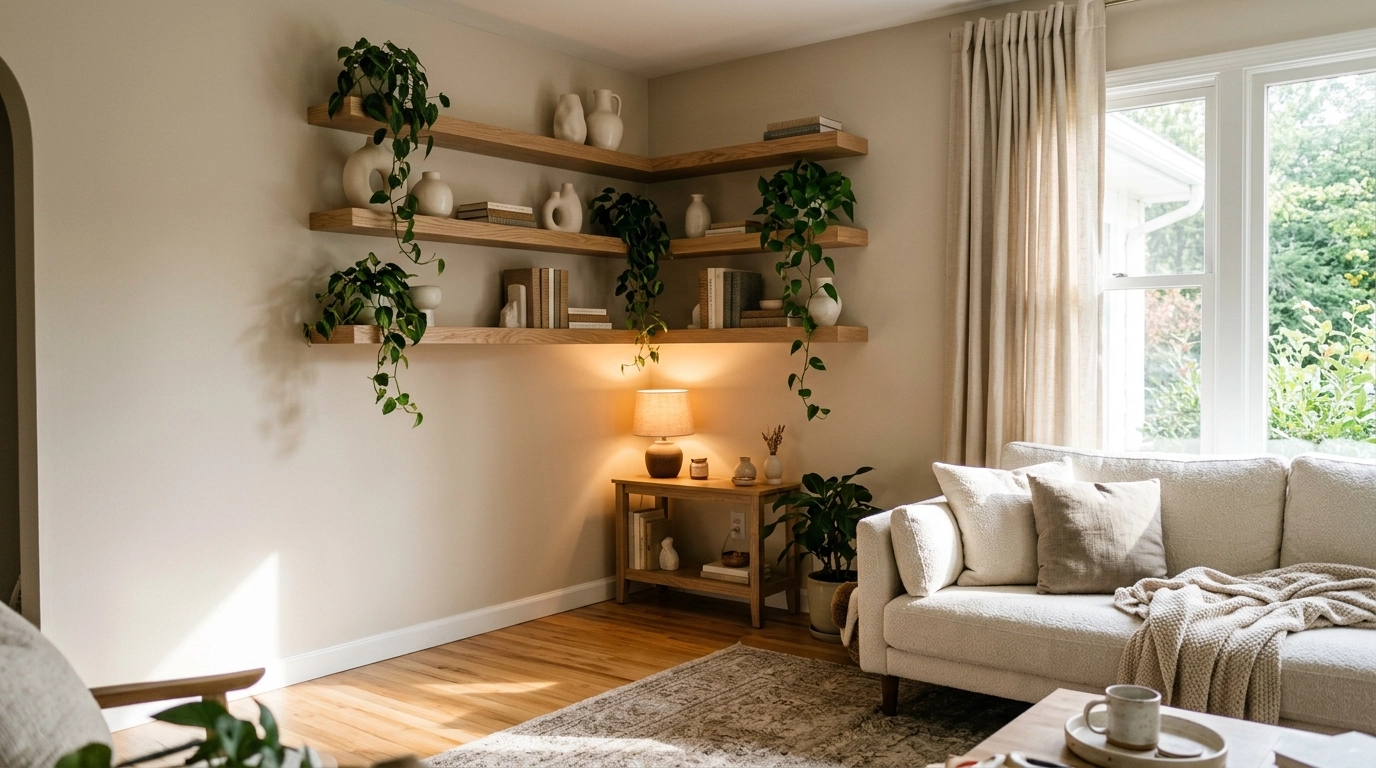
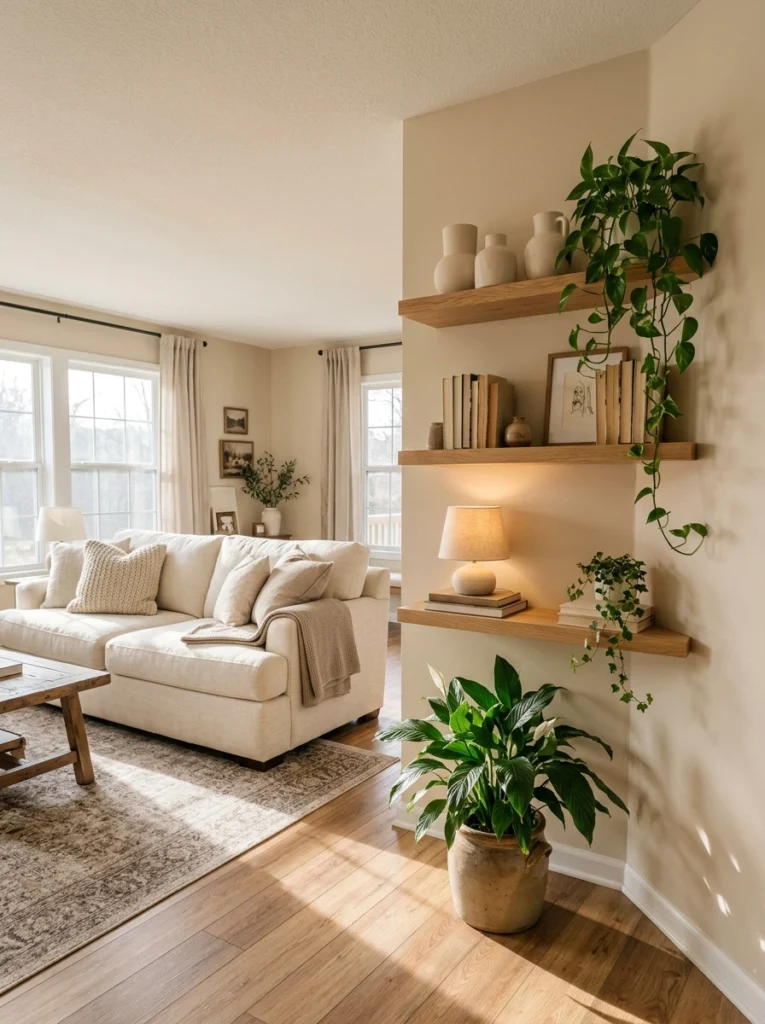
Ever look at that awkward living room corner and wonder what to do with it? I’ve seen corners collect everything from random shopping bags to a lonely fake plant that doesn’t match anything. The good news is that even a small, overlooked spot can become one of the prettiest parts of your room without spending a fortune.
The best corner shelf decor living room ideas combine useful storage with a few carefully chosen decorative pieces. Try floating wood shelves, a tall bookcase, small potted plants, framed artwork, or warm accent lighting. With shelves around 8 to 12 inches deep, you can display favorite items, use vertical space, and keep the floor open for a more comfortable living area.
1. Style Natural Wood Floating Shelves With Neutral Decor
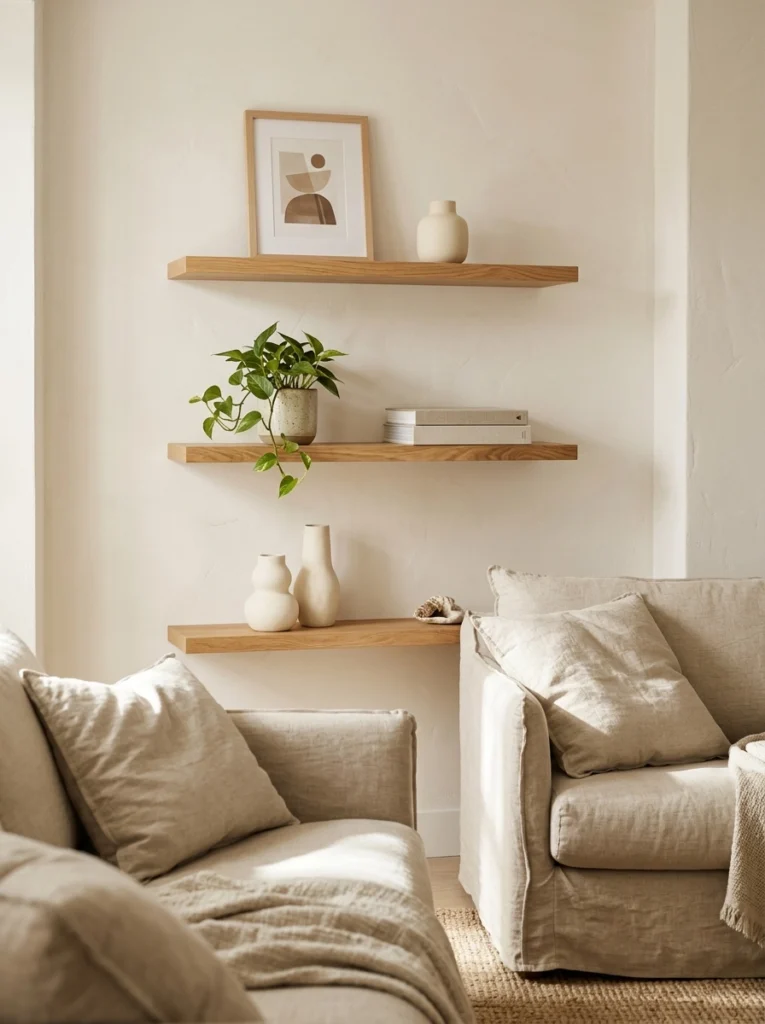
Natural wood shelves are an easy starting point if your living room already has beige, white, gray, or earthy colors. Install three shelves in a vertical arrangement, leaving 12 to 15 inches between shelves so taller vases and books fit comfortably. A pair of 24-inch oak shelves from IKEA or Home Depot typically costs around $20 to $45, depending on the finish and mounting hardware. Add a $12 ceramic vase, a small plant from Target, and two books you already own. That’s enough to create a finished display without filling every inch. Keep the largest object toward one side and leave the other side open, which gives the arrangement a more relaxed appearance. Wipe the shelves weekly with a soft microfiber cloth, and use a wood-safe cleaner when fingerprints appear. This style works especially well beside a sofa or near a window where natural light brings out the grain. If you’re renting, check whether removable shelf systems can support your intended display before installing them.
2. Turn an Empty Corner Into a Mini Indoor Garden
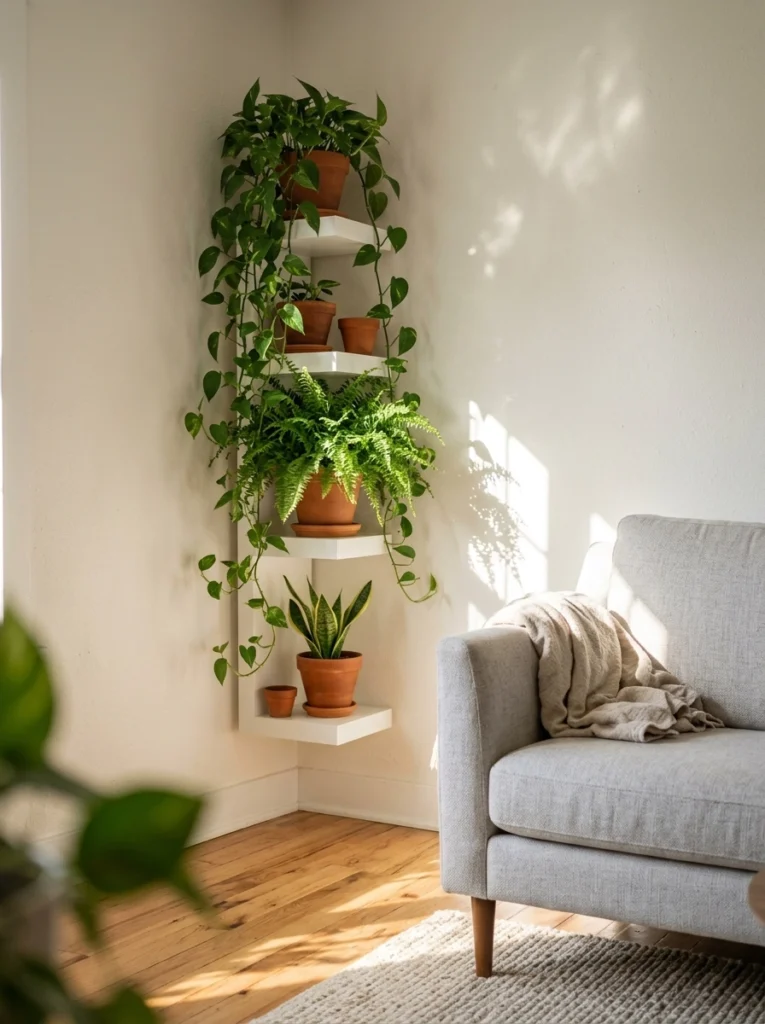
If your living room feels a little flat, use the corner for a collection of small houseplants rather than another decorative object. Four triangular shelves can hold pothos, peperomia, small ferns, and other plants that suit your available light. Budget $30 to $60 for basic shelves, a few starter plants, and inexpensive terracotta pots from Walmart or a local garden center. Choose plants with different leaf shapes so the display has variety even when the pots match. Place moisture-loving plants together and keep them away from electronics, upholstery, and direct heat from radiators. A small waterproof tray under each pot helps protect wooden shelves from drips. For darker rooms, select low-light-tolerant plants and rotate them toward a brighter window periodically. Avoid squeezing the pots together because crowded foliage is harder to water and inspect. This arrangement is particularly useful in apartments where floor space is limited but vertical space is available. The result is a living display that changes gradually as the plants grow.
3. Give Your Favorite Books a Dedicated Corner

Books don’t have to stay lined up in a large bookcase. A corner shelf arrangement gives your favorite titles a home while making an unused wall feel personal. Start with three or four shelves, each 24 to 30 inches wide, or choose a purpose-built corner unit if the walls meet at an awkward angle. Basic shelves and brackets can cost $35 to $80 at Home Depot, while thrift stores often have affordable wooden options. Arrange books vertically in short groups, then stack two or three horizontally to create places for a tiny sculpture or candle. Keep heavier hardcovers on lower shelves and check the manufacturer’s weight rating before loading them. You don’t need to sort everything by color, either. Grouping books by subject or size is practical, and a few visible spines add personality. Dust the tops of books regularly, particularly if the shelves sit near an open window. This idea suits readers, families, and anyone who wants the living room to feel collected rather than staged.
4. Add a Tall Ladder Shelf for an Effortless Look
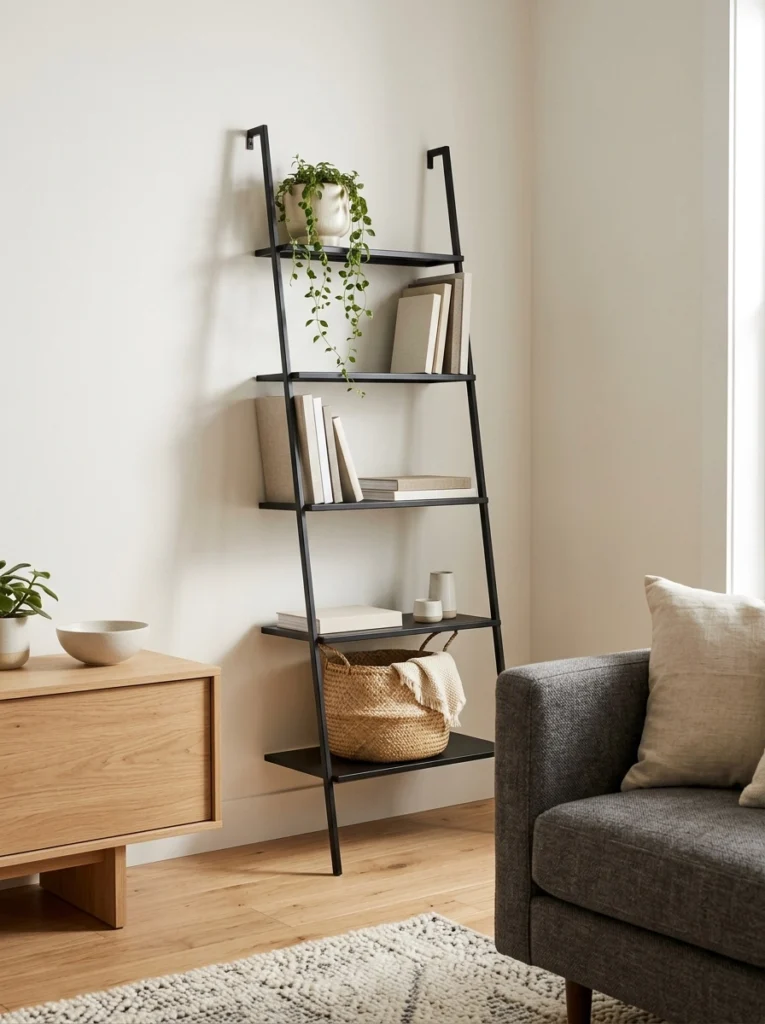
A ladder shelf is a practical choice if you want several display levels without drilling multiple sets of brackets into the wall. Look for a model around 60 to 72 inches tall and 16 to 24 inches wide, with a footprint that fits comfortably behind an armchair or beside the television. Budget roughly $45 to $100 for a basic ladder shelf from Walmart, Target, or Amazon. Put a woven basket on the bottom level for remotes or spare blankets, then reserve the upper shelves for lighter items such as small plants, books, and framed prints. This arrangement works because the graduated shape draws the eye upward while keeping the upper portion visually lighter. Check that the unit sits level, and secure it to the wall according to the manufacturer’s instructions, especially in homes with children or pets. Don’t stack heavy decor near the top. A black metal frame suits industrial rooms, while pale wood looks softer in a Scandinavian or coastal space. The shelf also moves easily if you rearrange the furniture later.
5. Create a Cozy Corner With Warm Accent Lighting
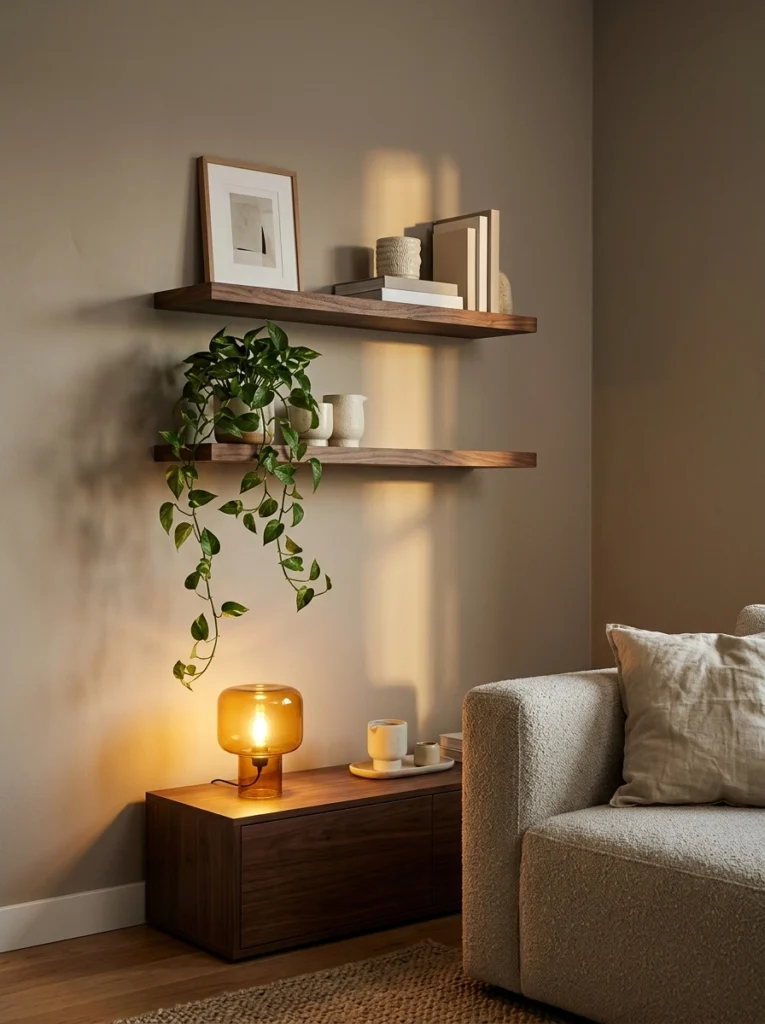
Decorative shelves look different once the sun goes down, so use lighting to make the corner useful in the evening. Install two wooden shelves above a narrow console and place a compact lamp with a fabric shade on the console. A basic lamp from Target or IKEA often costs around $20 to $40, while a pair of shelves may add another $25 to $45. Choose a warm-white bulb around 2700K for a comfortable glow that complements cream textiles and natural wood. Keep the lamp on a stable surface with its cord routed safely away from walking paths. If there isn’t room for a console, a small rechargeable accent lamp can sit on a sufficiently deep shelf, provided the shelf’s weight rating allows it. Use just a few objects around the light so the display doesn’t cast a jumble of distracting shadows. This setup is particularly attractive in living rooms that feel dark in winter or have only one main ceiling fixture. Dust the lampshade and wipe the bulb when cool to keep the light looking clear.
6. Display Framed Art on Picture-Ledge Shelves
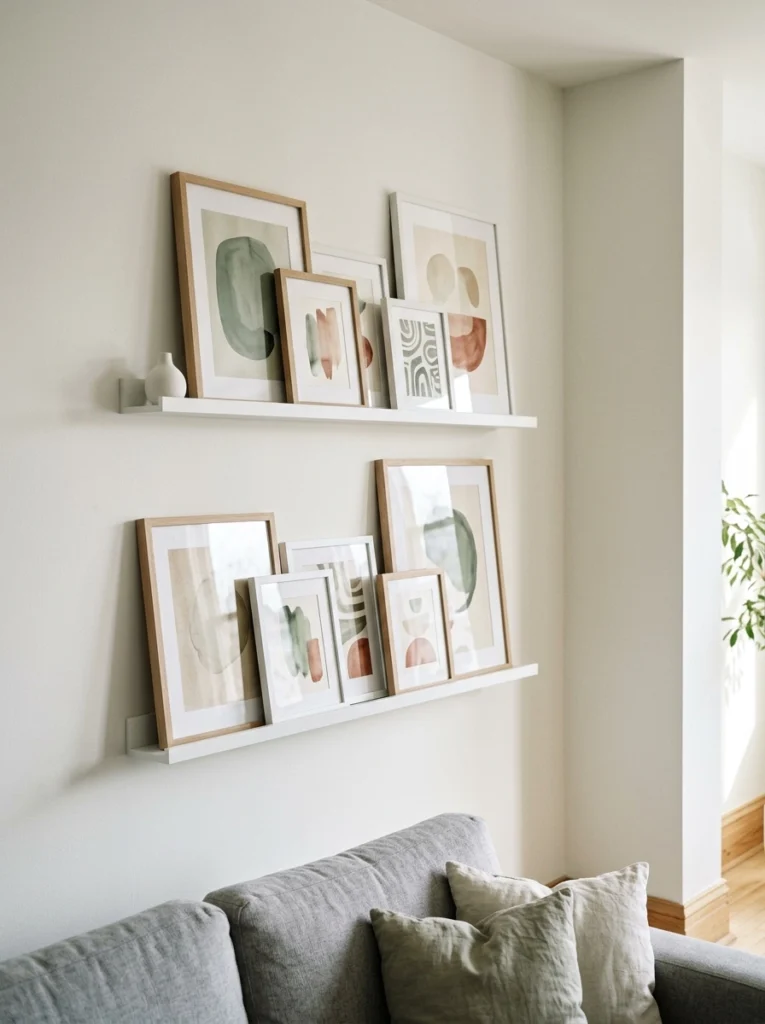
You don’t have to commit to a full gallery wall to display artwork. Picture ledges let you lean framed prints against the wall, swap them seasonally, and avoid making a new set of nail holes every time you change your mind. Choose two ledges around 24 to 36 inches long, costing approximately $25 to $55 for a basic pair from IKEA or Amazon. Mix one larger frame with two smaller ones, keeping the colors connected through a shared shade such as olive green, terracotta, or charcoal. Place the largest print slightly off-center instead of lining everything up like a shop display. A small ceramic object can fill a gap, but resist adding so many accessories that the artwork disappears. Check the ledge’s depth against your frame sizes, and use any supplied retaining lip or safety hardware to prevent frames from slipping. This design is ideal for renters who want a changeable display and homeowners who enjoy rotating family photos or seasonal art. For a related project, try [INTERNAL LINK: living room gallery wall ideas].
7. Use a Corner Cabinet to Hide Everyday Clutter
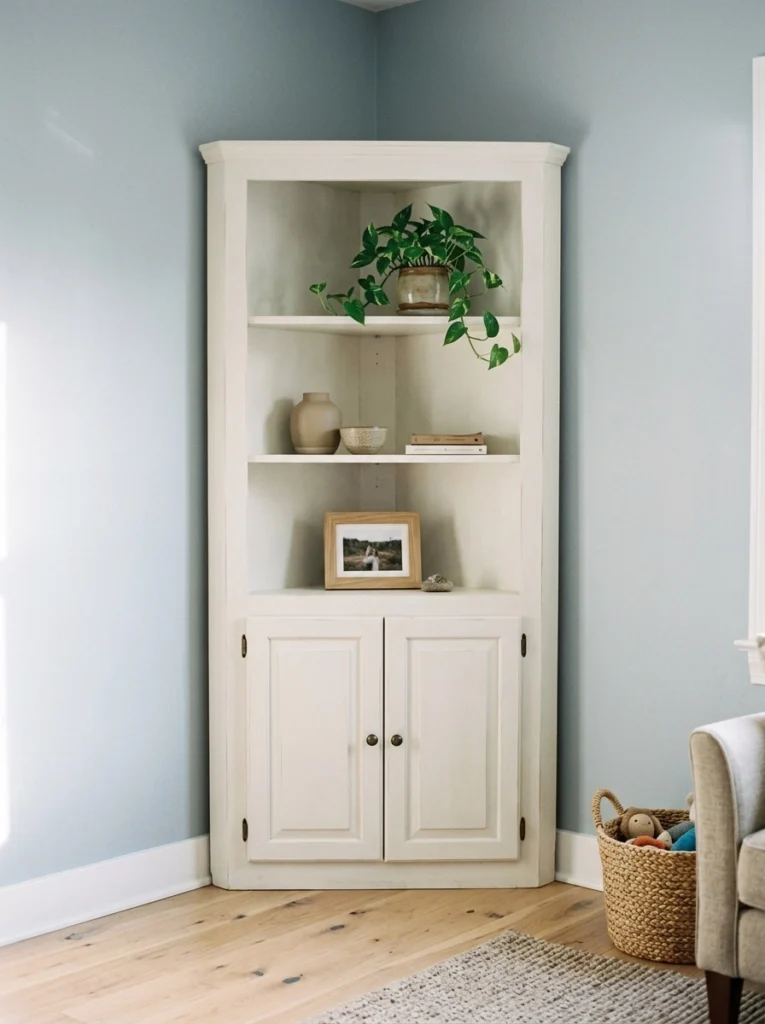
Not everything you store in the living room deserves to be on display. A corner cabinet with closed doors below and open shelving above gives you both options in one piece of furniture. Look for a cabinet around 24 to 32 inches wide and 60 inches tall, with prices generally ranging from $90 to $200 for budget-friendly models at Walmart or online retailers. Use the closed section for board games, spare chargers, small electronics, or paperwork you need nearby. Keep the upper shelves simple with a plant, a framed photo, and a couple of coordinated ceramic pieces. Before purchasing, measure both walls from the corner and account for baseboards, door swings, and nearby outlets. A triangular cabinet can fit where a rectangular bookcase feels bulky, but verify the actual dimensions rather than relying on product photos. Wipe the exterior with a damp cloth suitable for its finish, and avoid placing drinks directly on untreated wood. This idea is especially helpful in family rooms where practical storage matters just as much as appearance.
8. Bring in Rustic Charm With Reclaimed Wood
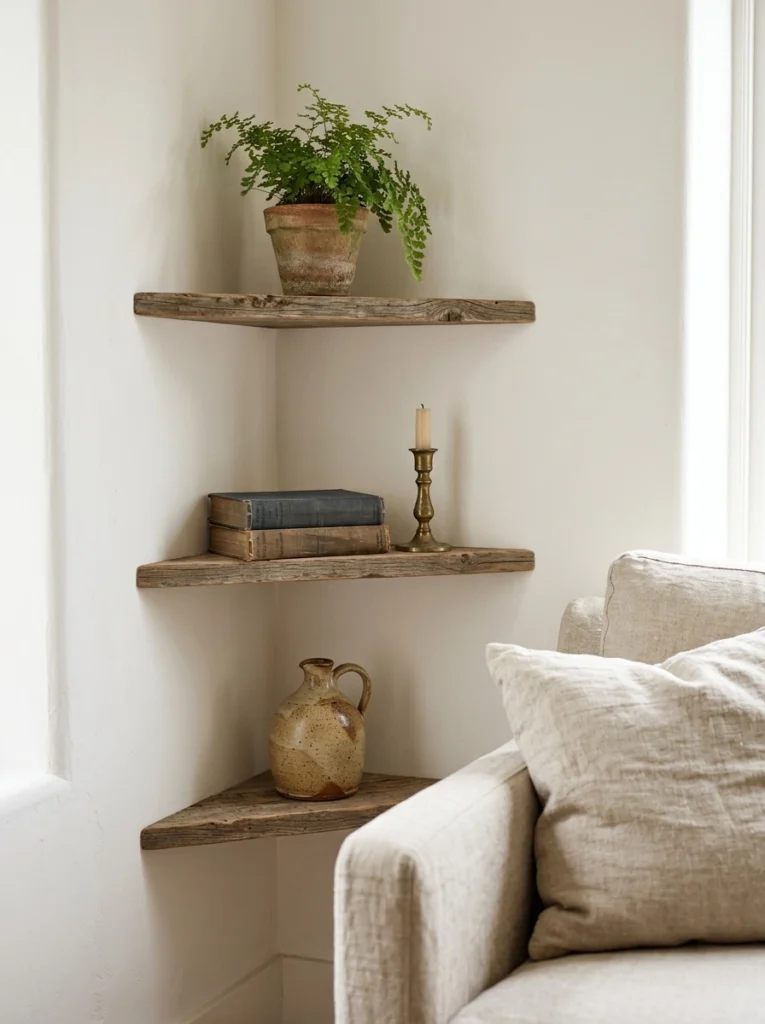
Reclaimed wood adds character to a living room without requiring a complete farmhouse makeover. Look for three solid-looking shelves with varied grain, warm brown coloring, and a finish that feels consistent with your other furniture. A local salvage shop or Facebook Marketplace may have suitable pieces for $30 to $70, depending on the wood and size. Pair them with a stoneware jug, an old hardback book, and a small plant in a simple clay pot. One slightly imperfect accessory is often enough to make the display feel authentic. Avoid filling the shelves with matching signs and miniature farmhouse ornaments, which can make the corner feel like a themed store display. Check reclaimed boards for splinters, loose knots, pests, and signs of moisture before bringing them indoors. Sand rough edges and seal the surface with a finish appropriate for indoor furniture. The warm wood looks particularly good against white plaster, muted sage, or soft beige walls. If you already have a wooden coffee table, repeat its finish or undertone so the corner feels connected to the rest of the room.
9. Make a Small Corner Feel Taller With Vertical Shelves
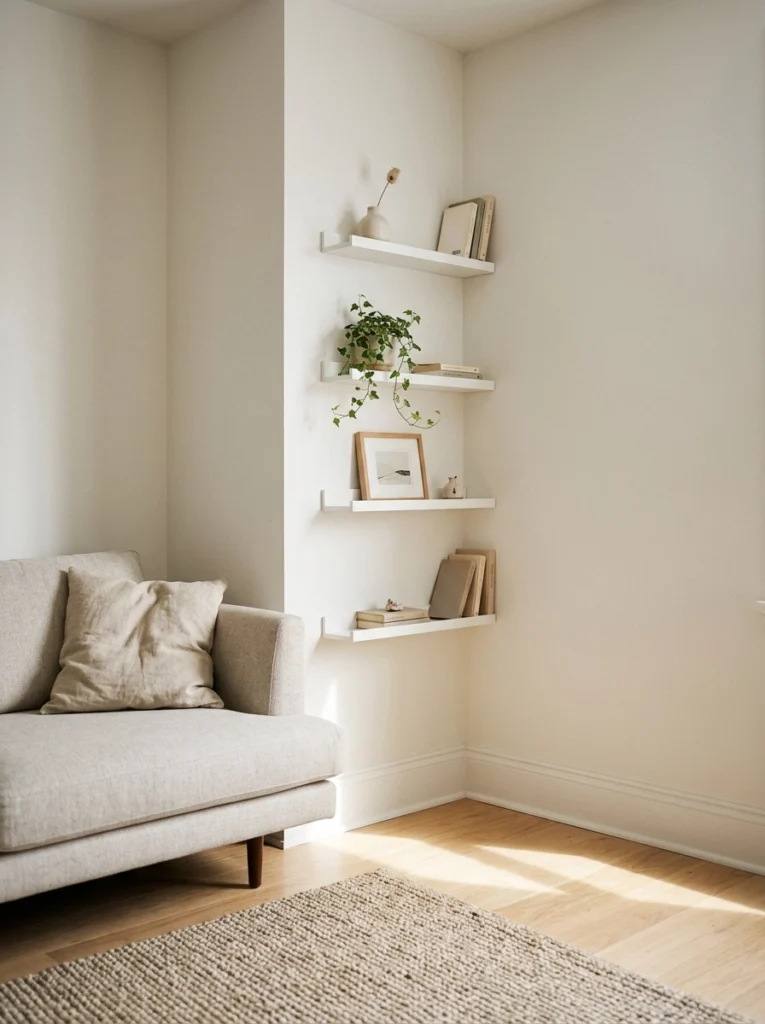
In a small apartment, a deep bookcase can steal the space you need for walking or pulling out a chair. Narrow floating shelves solve that problem by using the wall instead of the floor. Choose four shelves about 6 to 8 inches deep, with lengths between 16 and 24 inches, and budget around $35 to $75 for the set and appropriate mounting hardware. Stack them with enough room for the tallest objects you plan to display. Keep the top shelves light with a trailing plant or small framed print, while books and heavier pottery sit lower. A consistent palette of white, pale oak, and soft green keeps the arrangement from looking busy. Before drilling, use a stud finder or suitable wall anchors rated for the intended load. Plaster, drywall, and masonry require different fixing methods, so select hardware for your wall type. This setup works especially well beside a compact loveseat or in a narrow corner between a window and a media unit. Dust the shelves from top to bottom so debris doesn’t fall onto the items below.
10. Decorate With a Collection of Ceramic Vases
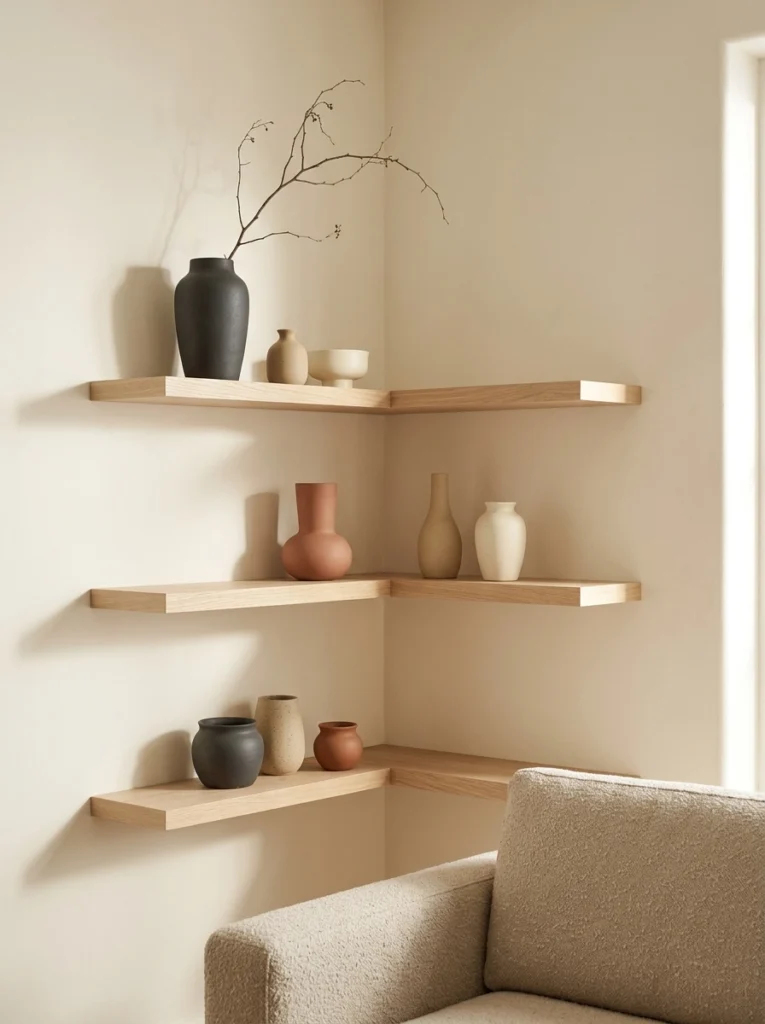
A collection of vases can look polished without requiring expensive designer pieces. Start with five vases in three related colors, choosing different heights and shapes rather than buying an identical set. Target, HomeGoods, and thrift stores are good places to find pieces between $6 and $20 each, depending on size and material. Arrange the tallest vase on one shelf, then use a pair of shorter vessels on another to create variation. Matte ivory, sand, and muted rust work beautifully with natural wood, while black pottery adds contrast in a modern room. Leave a little space between each piece so the silhouettes remain visible. If you prefer branches or dried stems, choose a stable vase with a wide enough base to resist tipping. Keep the arrangement away from the edge of the shelf, particularly if pets brush against the furniture below. Ceramic pieces are easy to maintain with a soft dry cloth, and occasional washing with mild soap removes dust that clings to textured surfaces. This idea suits homeowners who prefer a restrained display over lots of small ornaments.
11. Give Your Corner a Modern Black-and-White Finish
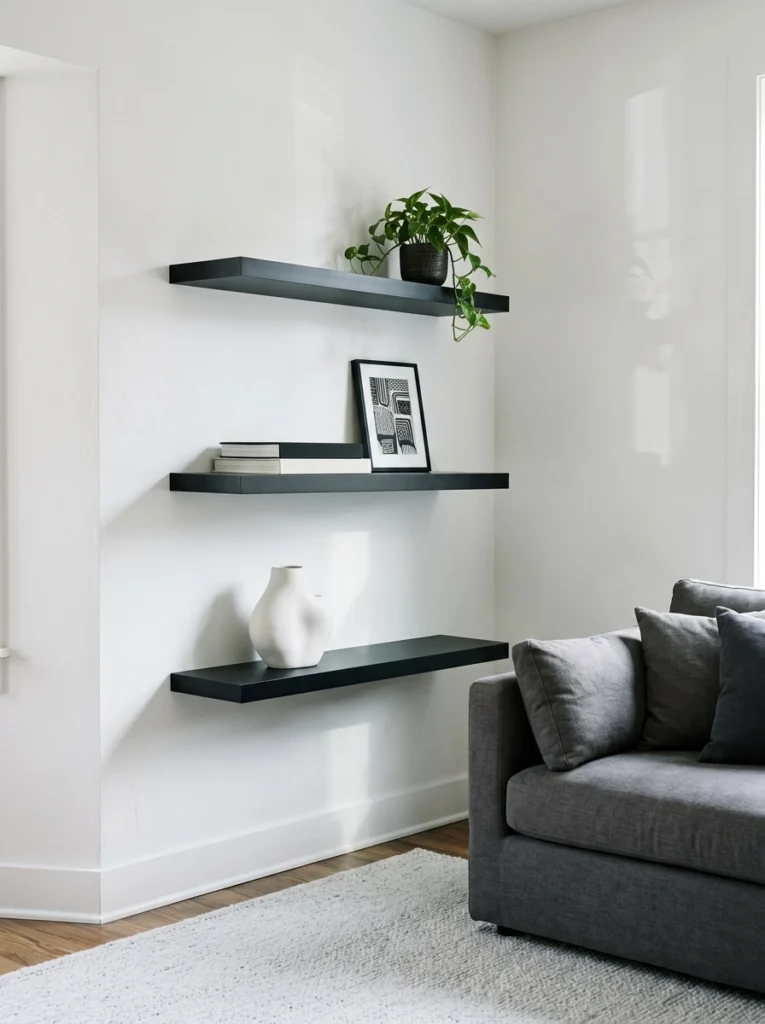
If your living room already has black picture frames, dark furniture legs, or a charcoal sofa, repeat those details on the corner shelves. Three matte-black shelves paired with white pottery and monochrome artwork create a crisp contrast without adding another accent color. A basic set may cost $30 to $65, while black shelf brackets and separate boards let you customize the length. Keep the accessories varied in shape but limited in number. For example, display a rounded white vase, two black-and-white books, and one small plant rather than several nearly identical objects. This arrangement works well in contemporary rooms because the dark shelves create a clear outline against pale walls. Use a microfiber cloth to remove dust, since black finishes show pale particles more readily than natural wood. If the corner is dim, avoid placing every dark object on the same shelf, where they can visually merge. A white object or light-colored book helps break up the dark surface. Repeat black in one or two nearby details to connect the corner with the rest of the room.
12. Add Woven Baskets for Storage That Looks Decorative
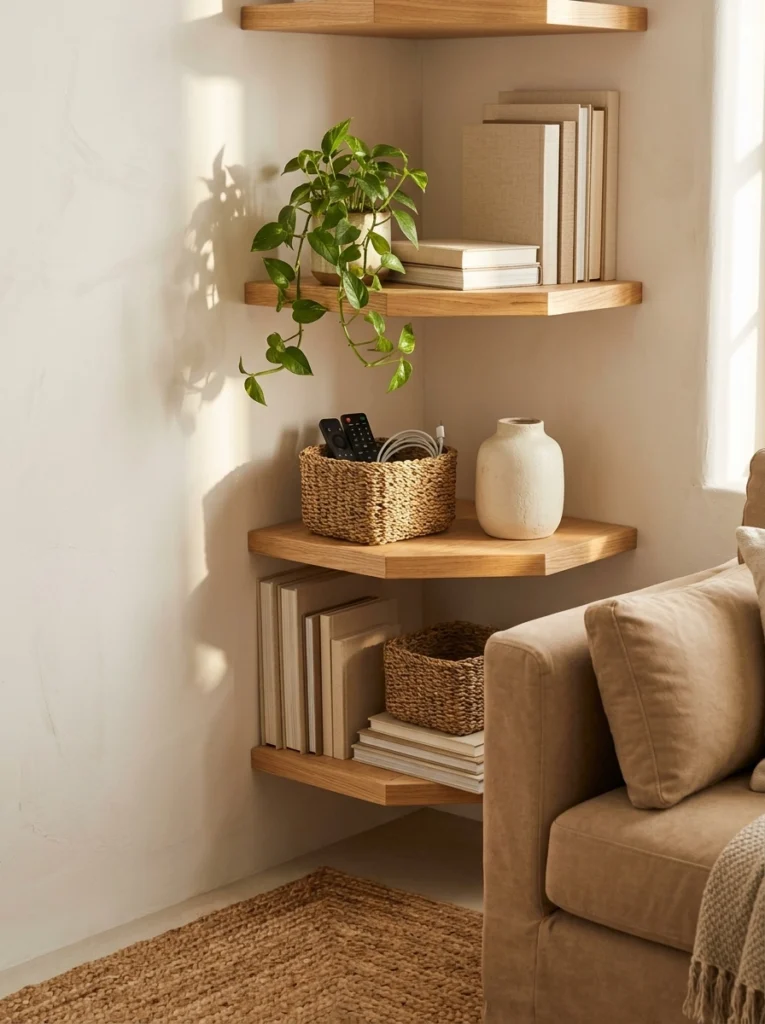
Woven baskets are handy for the little things that otherwise spread across the coffee table. Choose shallow baskets that fit the shelves, ideally 8 to 10 inches wide, and use one for remote controls, another for charging cables, and a third for small accessories. Three inexpensive baskets from Walmart or Target usually cost around $20 to $35. Measure the inside dimensions of each shelf before shopping because basket handles and flared sides take up extra room. Pair the baskets with a small plant or one framed photograph so the corner still reads as a decorative display. Keep cables loosely coiled rather than packed tightly into a basket, and avoid storing hot electronics or power adapters where ventilation is restricted. Natural seagrass looks relaxed with oak and linen, while dark woven baskets work better with walnut or black metal. Dust the baskets with a brush attachment on a vacuum, and keep them dry to prevent musty odors. This setup is especially useful in a family room where everyone wants quick access to everyday items without leaving them in plain sight.
13. Try Glass Shelves for a Light, Airy Corner
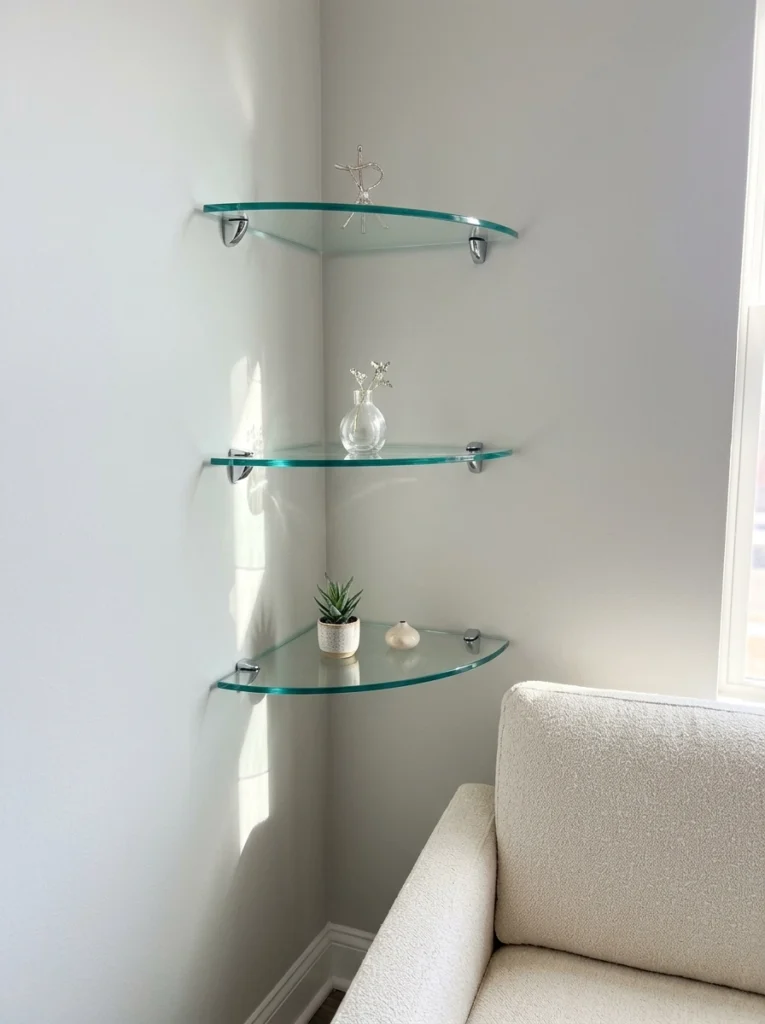
Glass shelving is useful when a wooden bookcase would make a narrow corner feel crowded. The transparent surfaces allow more of the wall to remain visible, which helps preserve an open appearance in compact living rooms. Expect to pay around $35 to $80 for a small set of tempered-glass shelves with suitable brackets. Choose shelves with rounded or polished edges, and confirm the stated load limit before placing anything on them. A small vase, a succulent, and one sculptural object are enough for a delicate display. Glass also reflects nearby light, so shelves positioned near a window can look especially airy during the day. The trade-off is maintenance. Fingerprints and dust are easy to see, meaning you’ll need to wipe the surfaces more often than wood. Use a glass-safe cleaner sprayed onto a cloth rather than directly onto the shelf, where liquid can drip onto the wall or brackets. Avoid heavy pottery, oversized books, or objects that could slide when the surface is wet. This style suits contemporary, minimalist, and small urban living rooms.
14. Make a Corner Work Hard With a Compact Bar Display
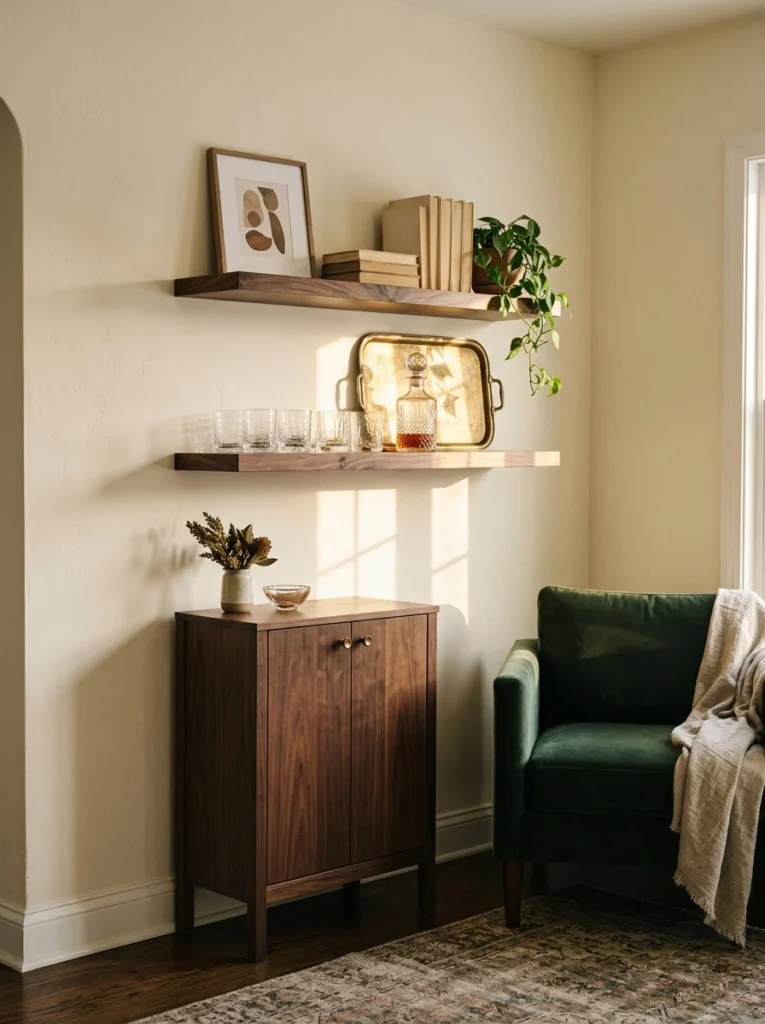
A corner near the dining area or sofa can become a neat entertaining station without taking up an entire wall. Install two shelves above a narrow cabinet or console, then arrange glassware on a tray with a decorative decanter and a small framed print. A basic pair of shelves and a compact cabinet may cost $100 to $180 altogether, depending on the materials and whether you shop secondhand. Keep heavier glass bottles on the cabinet or a securely mounted lower shelf rather than high above seating. If the display is purely decorative, use an empty decanter and a few attractive glasses instead of storing lots of supplies. Leave enough clearance for cabinet doors and nearby traffic, and keep the surface away from direct sunlight that could heat the contents of bottles. Wipe glassware before guests arrive, and use a dry microfiber cloth on brass accents to avoid streaks. This setup is a smart option for apartments without a dedicated dining room, particularly when a small corner sits between the kitchen and living area.
15. Mix Family Photos With Simple Decorative Objects
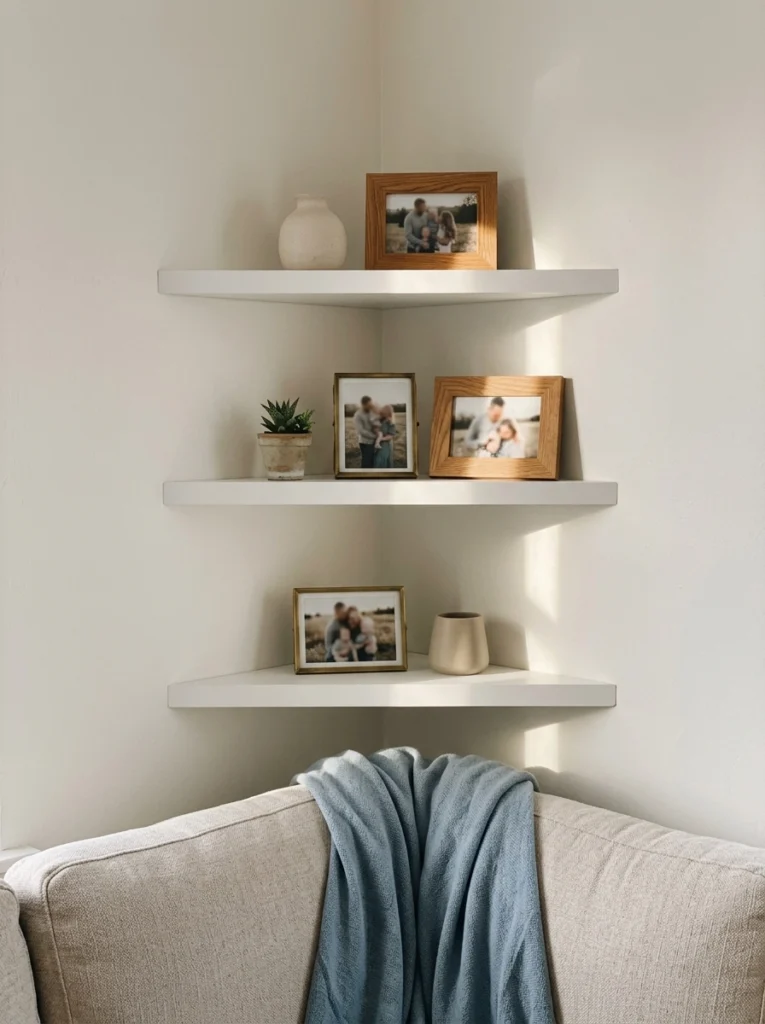
A living room feels more personal when it includes a few photographs, but lining up every family picture on one shelf can look crowded. Instead, distribute four to six frames across three shelves, using two or three frame finishes that relate to your existing furniture. Small frames from Target, Walmart, or thrift stores usually cost around $4 to $12 each. Mix portrait and landscape orientations, and add one non-photo object to break up the rectangular shapes. A small plant or a rounded ceramic bowl works well without taking attention away from the pictures. Keep the frames close enough together to feel connected, but leave a gap between separate groups. Before hanging the shelves, arrange the frames on the floor to test the layout and avoid unnecessary wall holes. Use glass cleaner on the frame fronts and a soft cloth on the shelf surfaces. If the photos sit in direct sunlight, choose prints and frames designed to resist fading. This is a particularly nice approach for family rooms where the decor should tell a story instead of looking like a furniture showroom.
16. Build a Soft Coastal Corner With Blue and White
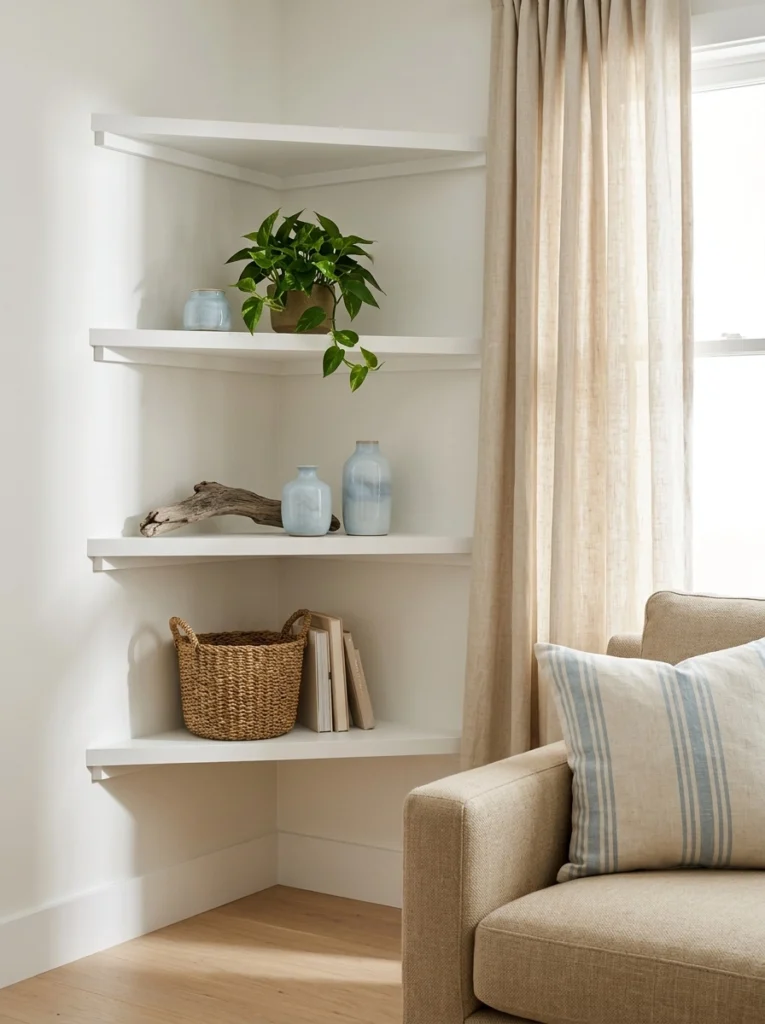
You don’t need a beach house to use coastal colors. White shelves, pale blue pottery, woven textures, and a few natural wood accents bring a breezy feel to an ordinary living room. A set of painted wooden shelves generally costs $25 to $60, and you can find affordable blue-and-white accessories at HomeGoods, Target, or local thrift shops. Use a mixture of smooth ceramic, woven fibers, and natural wood so the display doesn’t feel too uniform. One small piece of driftwood or a simple landscape print is enough to suggest a coastal theme without covering the shelves in seashells. Repeat the blue in a nearby throw pillow or rug to tie the corner into the seating area. Wipe painted shelves with a soft damp cloth, and keep woven accessories away from consistently damp windows. This palette is particularly effective in rooms with white walls, light flooring, and plenty of daylight. For a related styling project, see [INTERNAL LINK: coastal living room decorating ideas].
17. Use Floating Shelves Around a Wall-Mounted TV
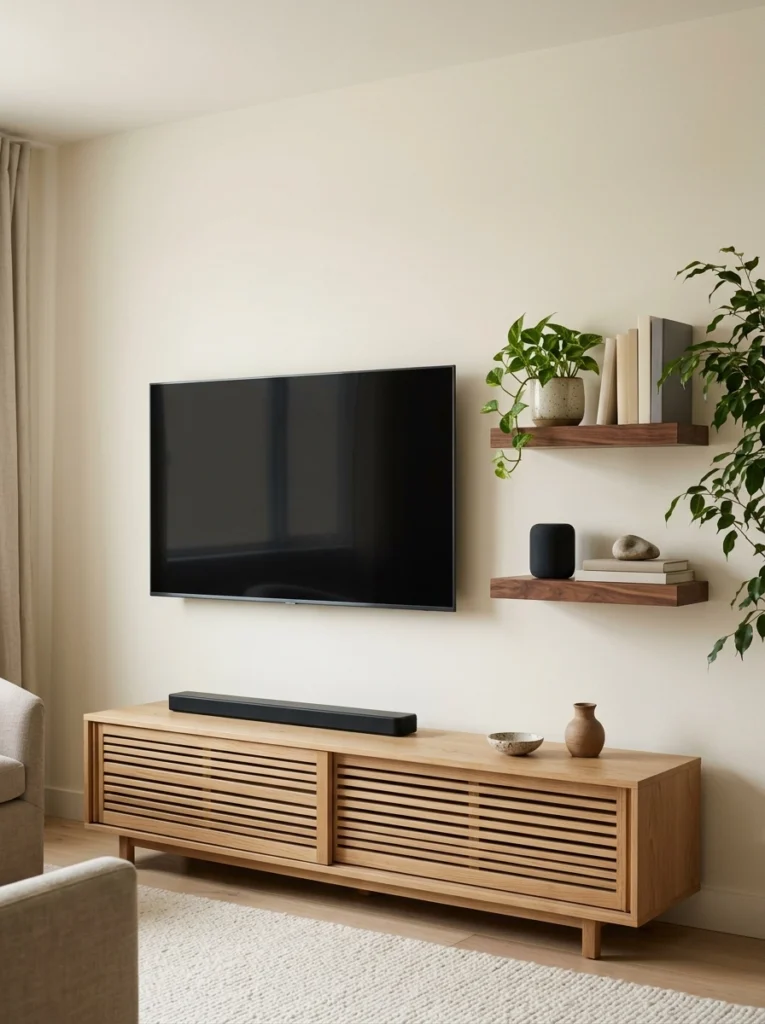
The corner beside a television often ends up looking unfinished, especially when the media console doesn’t extend to the nearest wall. Two or three short shelves can fill the gap without competing with the screen. Choose shelves around 18 to 24 inches long and 6 to 8 inches deep, budgeting $25 to $60 for a small set. Match the shelf finish to the media console or use a contrasting tone that already appears elsewhere in the room. Put lightweight decor, a small plant, or a few books on the shelves, leaving enough blank space around the television to keep the wall calm. Check the television’s ventilation requirements and avoid placing shelves where they block ports, speakers, or access to cables. Before drilling, locate wall studs and identify electrical wiring routes, especially around wall-mounted electronics. A clean cable management channel can help tidy visible cords, but electrical work should be handled safely and according to local requirements. Dust the shelves and screen regularly to prevent buildup around the equipment. This is a practical solution for open-plan living rooms where the media wall is visible from several angles.
18. Decorate With One Oversized Statement Piece
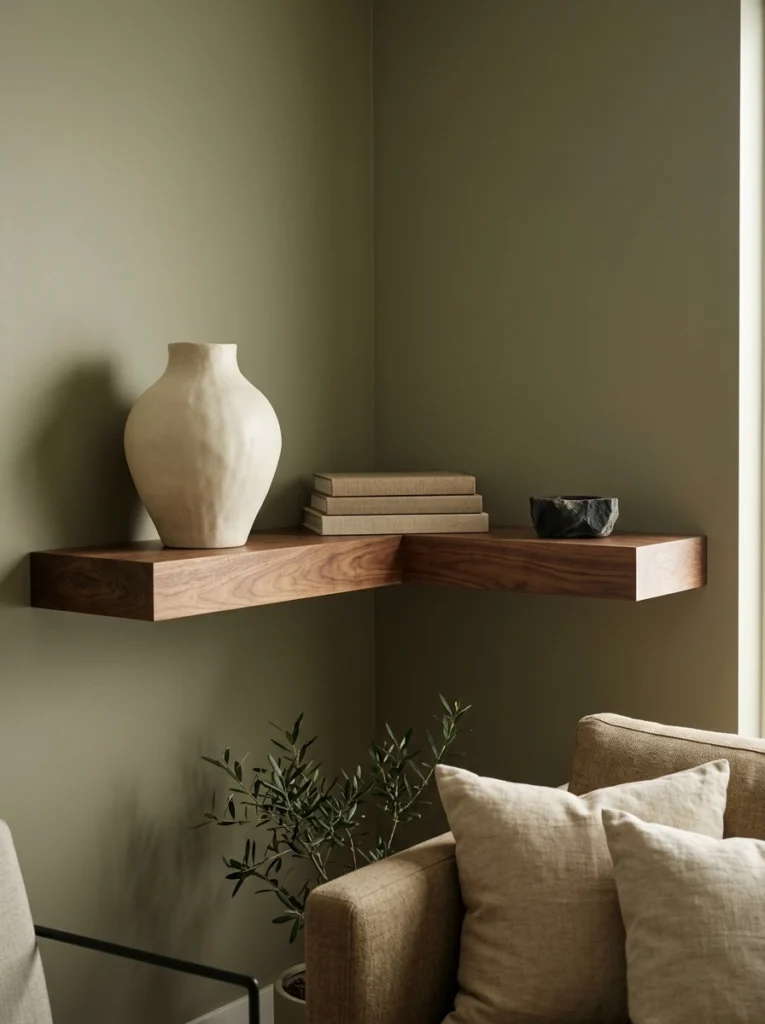
Sometimes a corner looks better with fewer things rather than more. Choose one substantial decorative object, such as a sculptural vase or carved wooden bowl, and give it room to stand out. A 12- to 16-inch ceramic vase costing $20 to $45 can anchor a display when placed on a sturdy shelf with enough depth and weight capacity. Add a short stack of books or a small contrasting object, but avoid filling every remaining inch. The open space around the main piece makes its shape easier to appreciate and helps the corner feel less cluttered. This idea works especially well in minimalist rooms or living rooms where the coffee table and artwork already have plenty of visual detail. Before choosing a large object, measure the shelf and check the item’s base width. A tall vase placed too close to the edge can be unstable, particularly on a narrow shelf. Use a soft brush to clean textured ceramic and a microfiber cloth on smooth finishes. You can also swap the statement object seasonally without rebuilding the entire arrangement.
19. Give a Tiny Corner a Vintage Thrift-Store Look

Vintage decor looks most convincing when the pieces seem collected over time instead of purchased in one matching set. Start with two wooden shelves and visit thrift stores or Facebook Marketplace for a brass candlestick, an old book, and a small ceramic bowl. A realistic budget is $25 to $60 for the shelves and accessories, especially if you reuse items from other rooms. Choose objects with different heights and textures, but keep their colors connected through warm wood, aged brass, cream, or muted green. A small botanical print in an inexpensive frame adds a traditional touch without taking up much room. Check secondhand pieces for chips, loose fittings, musty smells, or damaged finishes before displaying them. Clean each item according to its material, and avoid using harsh chemicals on aged metal or delicate artwork. Leave some empty shelf space so the display doesn’t resemble a flea-market table. This approach suits traditional homes, eclectic apartments, and living rooms with older furniture that deserves to feel intentional rather than mismatched.
20. Create a Functional Corner for Board Games
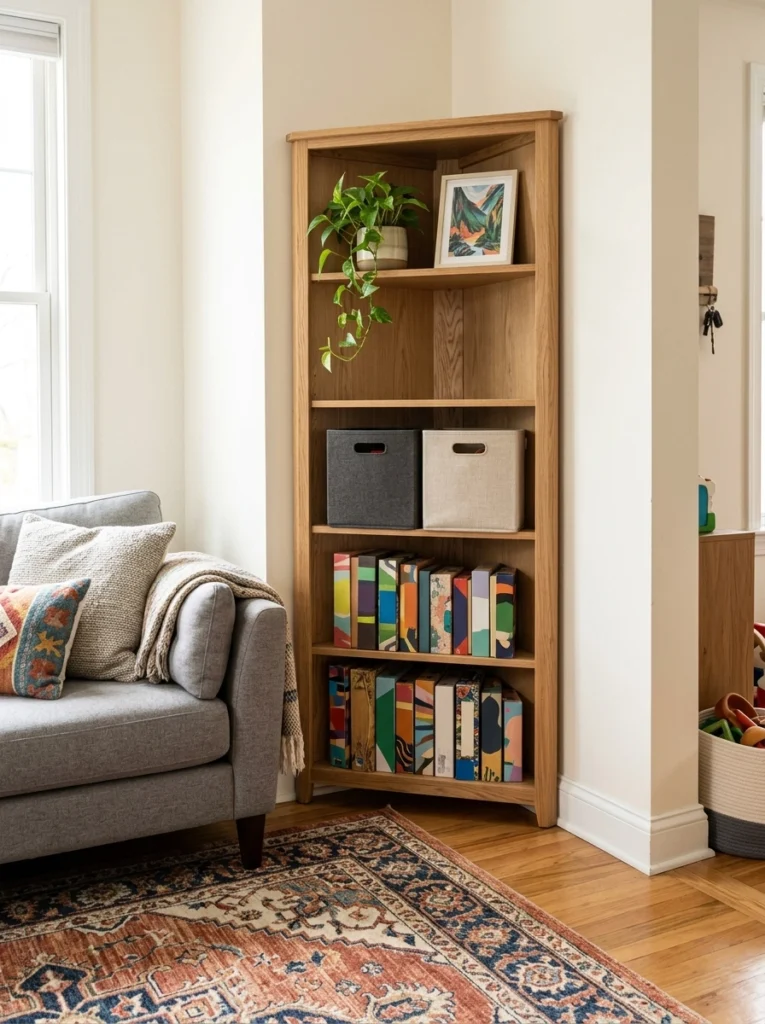
If your board games keep migrating between the coffee table and a closet, give them a dedicated home in the living room corner. A sturdy shelving unit around 48 to 60 inches tall generally costs $45 to $100 at IKEA or Walmart, depending on its construction. Measure your largest game box before buying so you know which shelves can hold it upright. Place heavier boxes on the lower levels and use fabric bins for card decks, dice, spare pieces, or smaller games. Reserve one upper shelf for a plant or a simple framed print to keep the unit from looking purely utilitarian. Check the weight rating because board games add up quickly, especially when several large boxes sit together. Keep the shelf away from damp exterior walls, and avoid storing paper games in direct sunlight where their packaging may fade. A quick label on each fabric box helps family members return pieces to the right place. This design makes movie nights and game nights easier while keeping the rest of the living room clear.
21. Add a Round Mirror Above Corner Shelves
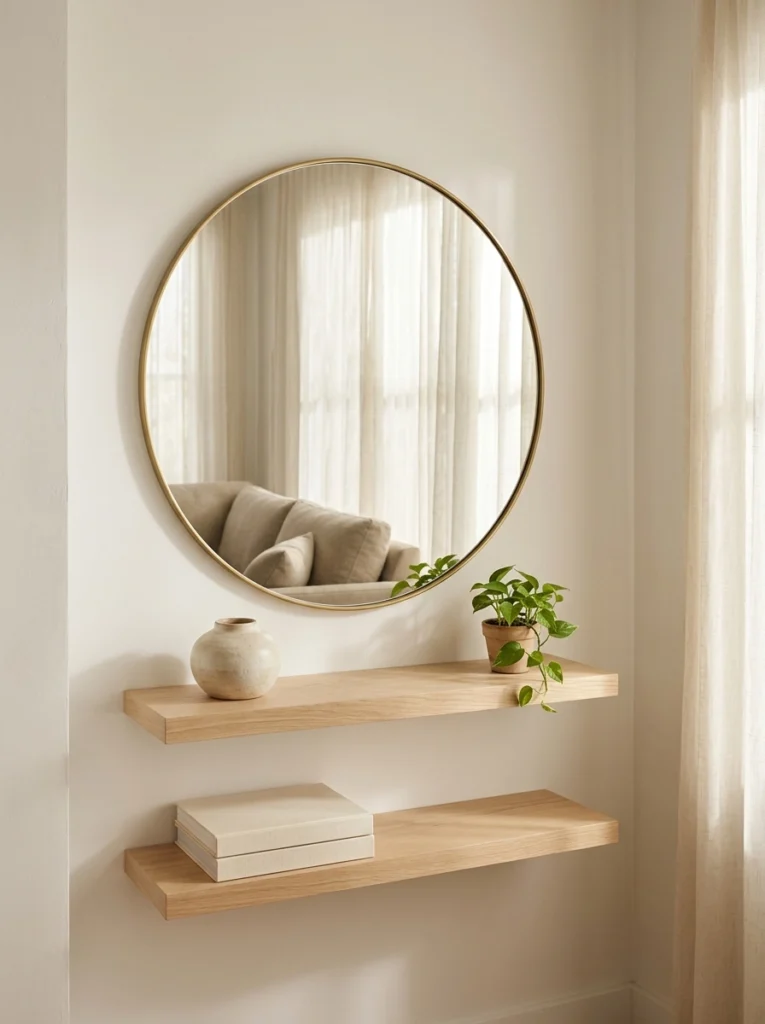
A mirror can make a small corner feel brighter by reflecting daylight and giving the wall another point of interest. Hang a round mirror around 24 to 30 inches in diameter above two shelves, leaving enough space between the frame and the objects below. A budget mirror from Target or IKEA often costs $25 to $60, with simple shelves adding another $20 to $40. Choose a brass frame for a warmer traditional look or a thin black frame for a modern room. Keep the shelves underneath fairly restrained, perhaps with one plant, two books, and a ceramic vase. Before hanging the mirror, check what it reflects from the main seating area. A view of a window or attractive artwork is better than a cluttered doorway. Use mounting hardware rated for the mirror’s weight, and avoid fixing it to a shelf unless the entire setup is designed for that purpose. Clean the mirror with a lint-free cloth and keep plant leaves from rubbing against the glass. This arrangement works especially well in narrow living rooms with limited natural light.
22. Use Triangular Corner Shelves for an Awkward Nook
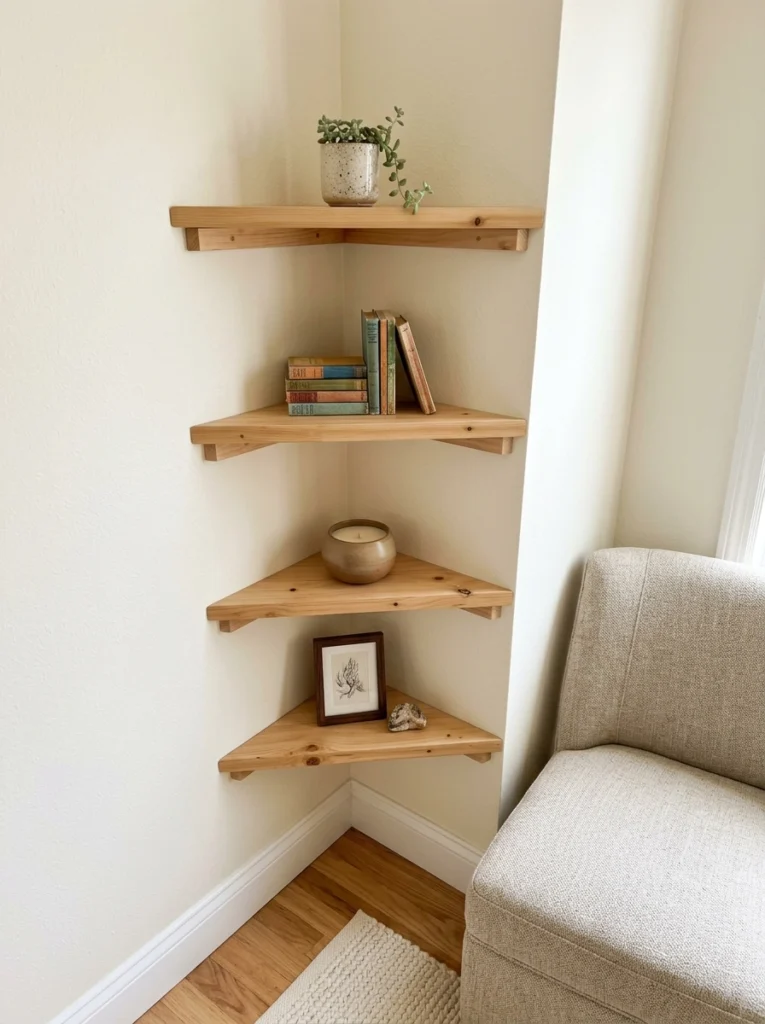
Some corners are too tight for standard rectangular shelves, particularly between a window and a doorway. Triangular corner shelves use the meeting point of two walls and keep their front edges compact. A set of four pine or laminate shelves may cost $25 to $55, depending on size and mounting hardware. Look for shelves around 10 to 14 inches deep at the center, then check how far their front edges project into the room. Style each level with one or two small objects, such as a planter, a short book stack, or a little framed print. Since the shelves are relatively small, avoid bulky vases that overhang the front edge. A matching finish helps the stack look like one planned feature instead of a series of unrelated boards. Wipe the shelves with a dry cloth and clean any plant drips promptly. This style is ideal for apartments, narrow passageways opening into living rooms, and corners beside a fireplace where a full-size cabinet would be too intrusive. It also makes a good starter DIY project if you’re comfortable measuring and installing wall brackets.
23. Make the Corner Feel Organic With Stone and Wood
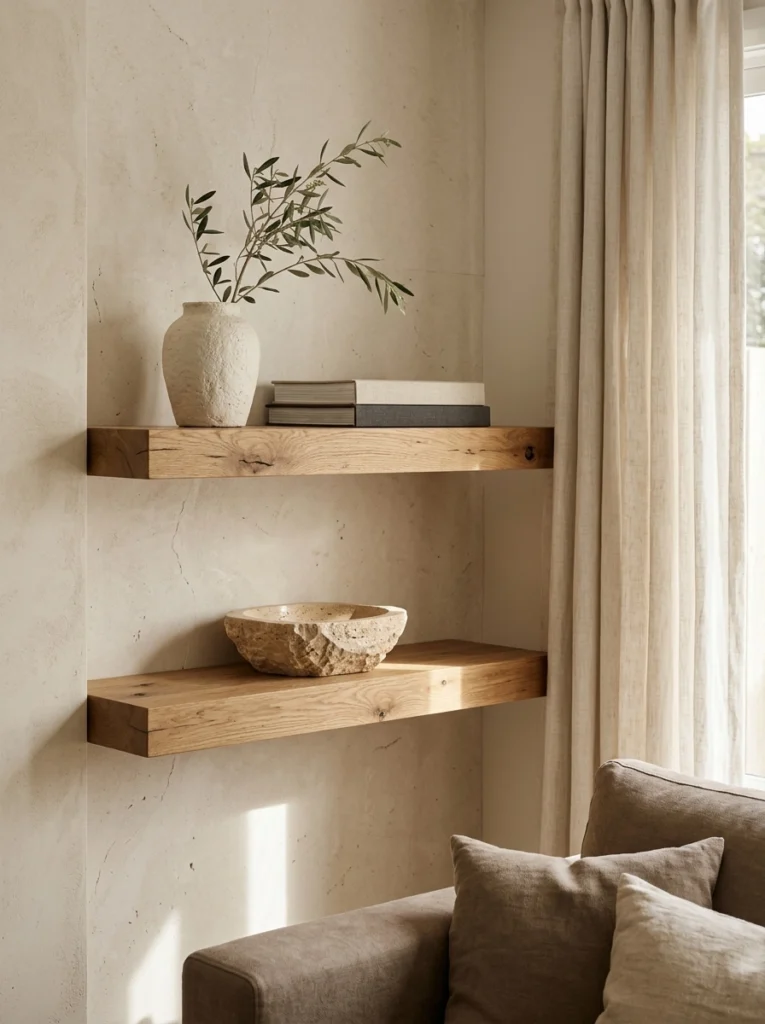
Wood and stone-inspired finishes bring a grounded look to a living room without requiring a major renovation. Use two sturdy oak shelves and add a stone-look bowl, a textured ceramic vase, and a small branch in a simple container. Budget around $45 to $90 for shelves and accessories, depending on whether you choose real stone, ceramic, or a lightweight composite. The trick is to vary the surfaces rather than the colors. Smooth wood, rough pottery, and a softly textured wall create interest even when everything stays within a palette of cream, tan, and brown. Keep heavier stone objects on shelves with a suitable weight rating and position them toward the wall rather than the front edge. A soft brush works well for dusting textured pottery, while wood should be cleaned according to its finish. This approach suits modern organic interiors, rooms with linen upholstery, and spaces that already feature natural wood flooring. You don’t need a stone accent wall to get the look. A single textured accessory often provides enough contrast.
24. Use a Narrow Corner Shelf Beside an Armchair
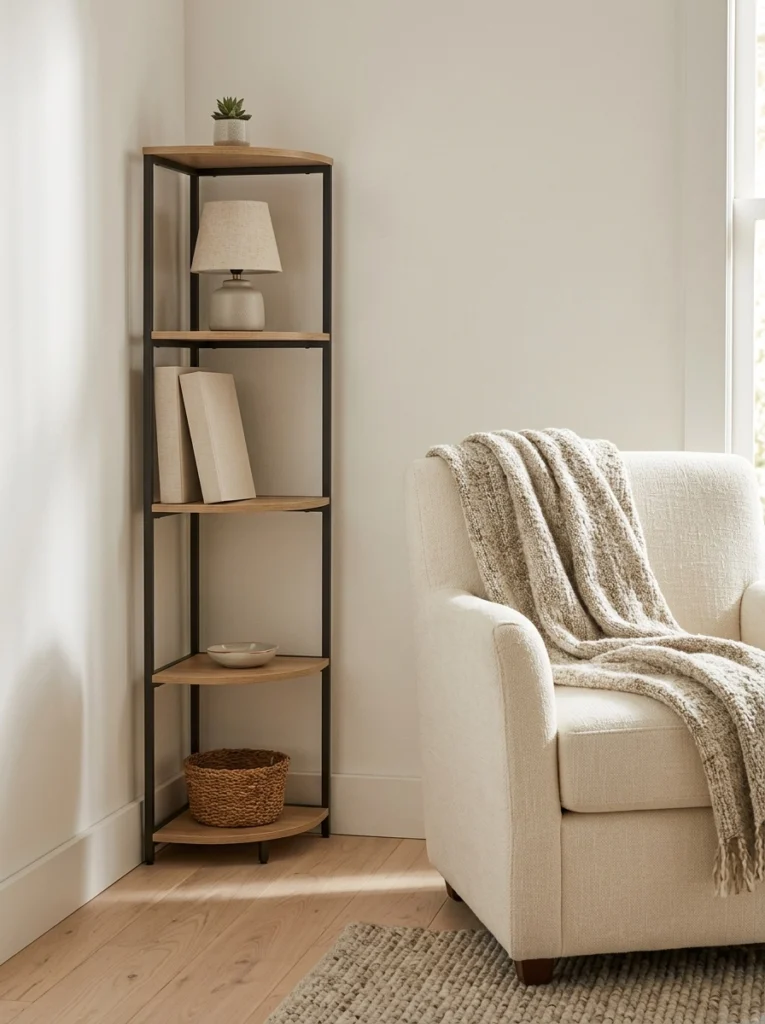
A corner next to an armchair is a natural place to keep the things you use every evening. Choose a narrow shelf unit around 12 to 16 inches wide, with enough room for a few books, reading glasses, and a small dish for everyday items. Budget $35 to $80 for a basic unit from Walmart, IKEA, or Amazon. Put the most useful items at arm’s reach, then use the upper levels for a plant or a framed photo. If you want a reading lamp, check the shelf’s dimensions and electrical setup rather than balancing a large lamp on a narrow surface. A rechargeable lamp is a useful alternative when there isn’t an outlet nearby. Keep cords out of the walking path and avoid placing drinks where they can spill onto books. Dust the shelves weekly, especially if the armchair sits beside a window. This arrangement works beautifully in small living rooms where a full side table would block the walkway. It gives the chair its own practical little zone without taking up much floor area.
25. Arrange Decor in Odd-Numbered Groups
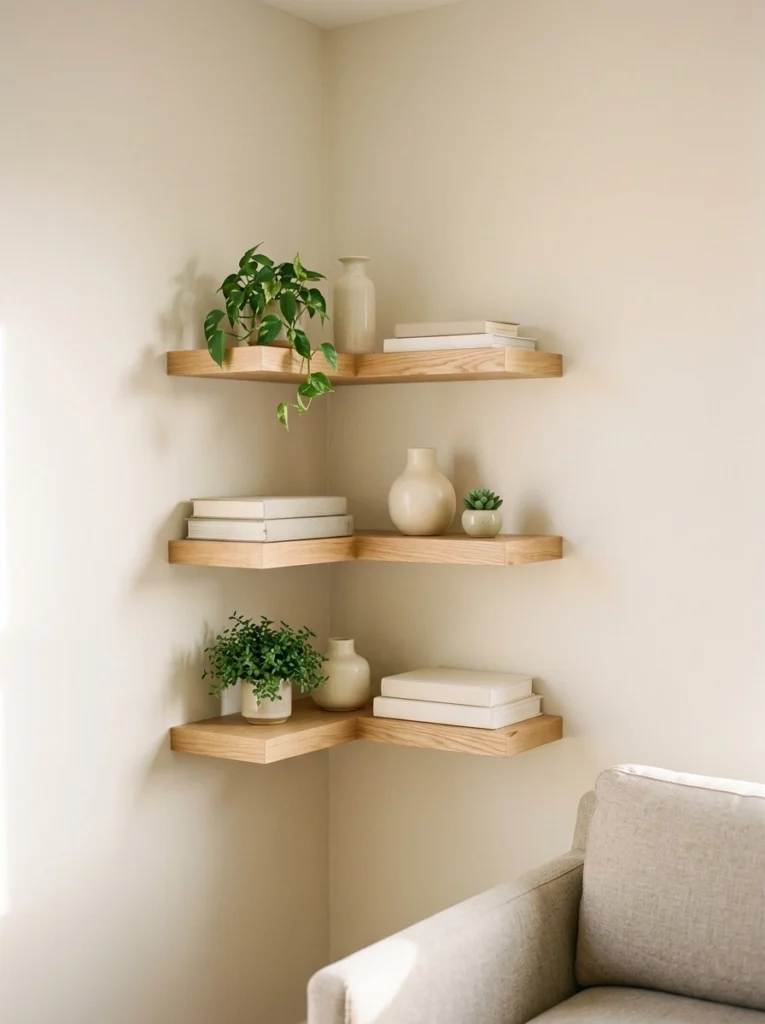
If your shelves look scattered even after you’ve added attractive objects, try arranging the accessories in groups of three. On one shelf, use a small vase, two stacked books, and a tiny plant. On another, place a taller object beside two shorter pieces. A set of basic wooden shelves may cost $25 to $60, while the accessories can come from items you already own. The appeal of this method is the variation in height and shape, which keeps the display from looking like a row of identical ornaments. Three is a useful starting point, not a rule for every shelf. A very small ledge may look better with one object, while a broad shelf can handle five or more. Leave space between groups so each arrangement reads clearly. Before buying anything, gather possible accessories on the floor and experiment with combinations. This saves money and helps you spot items that don’t fit the overall palette. The method works with modern, farmhouse, traditional, and eclectic decor because it focuses on visual balance rather than a particular style.
26. Paint the Corner Wall for a Colorful Backdrop
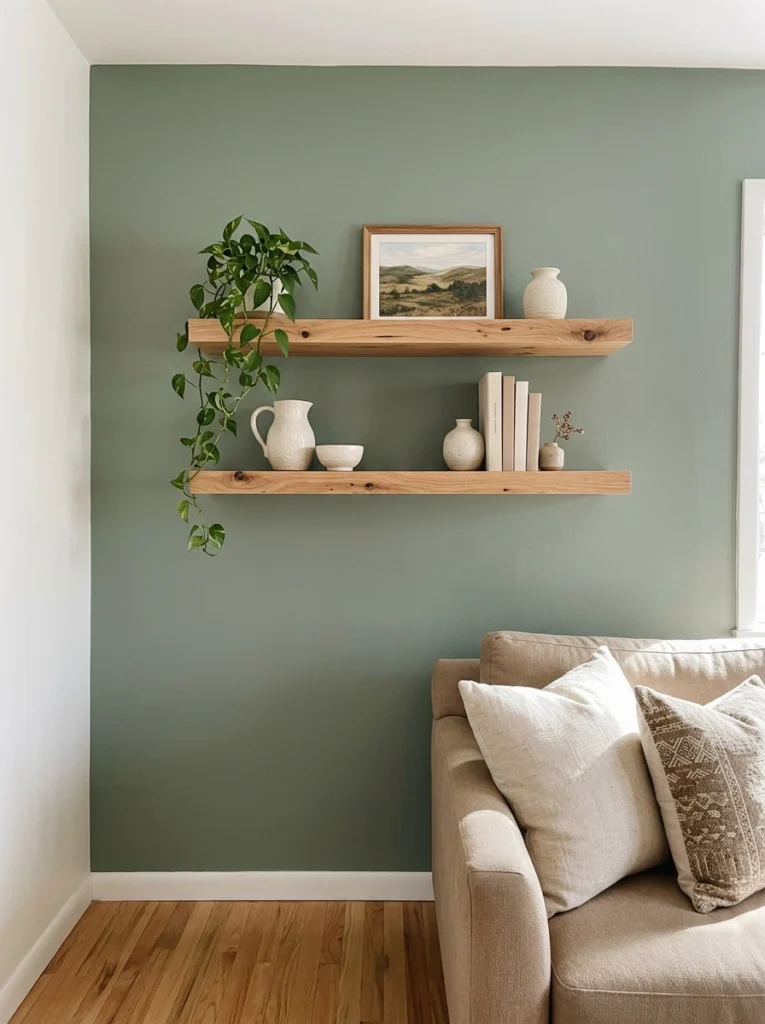
If the shelves disappear against a plain wall, paint the corner a contrasting shade to make the display feel intentional. A muted sage, dusty blue, or warm clay color works well with natural wood and cream accessories. A small paint project may cost $25 to $50 for paint and basic supplies, depending on the brand and whether you already own brushes and rollers. You can paint the entire corner wall or create a defined vertical section behind the shelves. Test a sample first because colors look different in morning and evening light. Keep the shelf accessories relatively simple so the painted background remains visible. If you’re renting, ask about painting permissions or use a removable wallpaper option instead. Protect nearby trim and flooring with painter’s tape and a drop cloth, and allow the paint to dry fully before reinstalling shelves. This idea works especially well in living rooms with neutral furniture that needs a little contrast. The color also helps distinguish the corner from adjoining walls without adding another piece of furniture.
27. Bring in a Sculptural Tabletop Fountain or Art Object
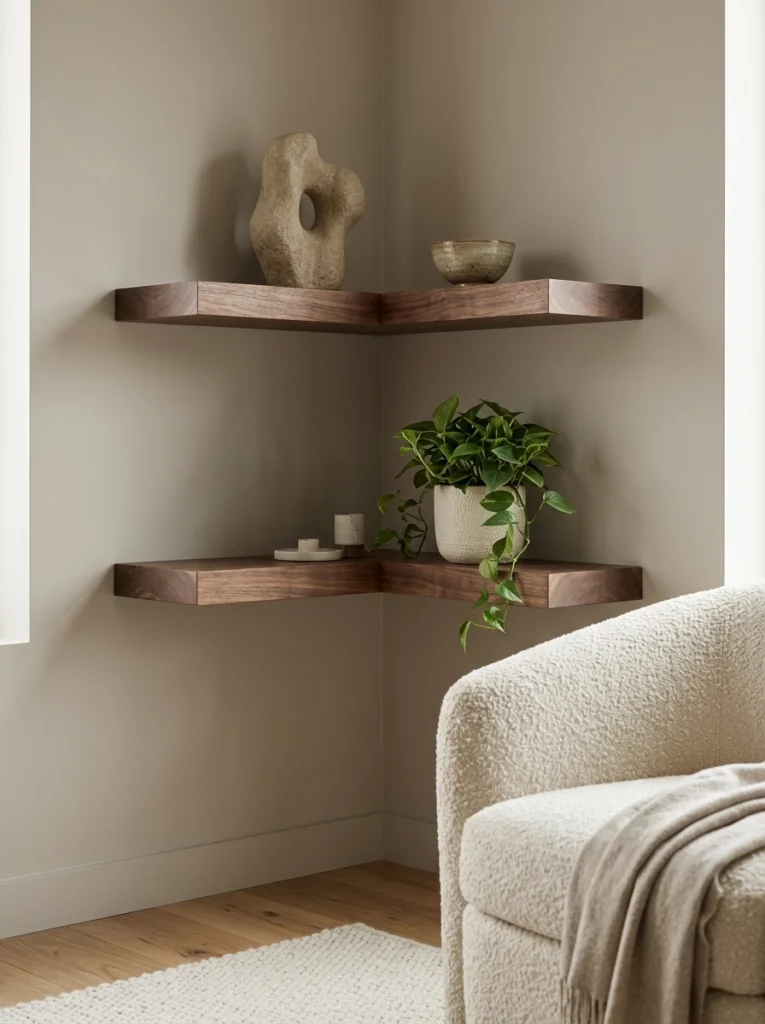
Decorative objects with unusual shapes can give a plain corner personality without requiring a lot of accessories. Choose a sculptural piece in carved wood, stone-look resin, or matte ceramic and let it occupy the main shelf. A small-to-medium object from HomeGoods, Target, or an online retailer typically costs $15 to $40. Pair it with a short stack of books and a small plant, keeping the other shelves fairly open. Look for a shape that contrasts with your furniture, such as a rounded sculpture near a sofa with straight lines. A tabletop fountain is another option, but only use one on a stable, waterproof surface with a suitable power source and enough clearance to prevent splashes. Never place water features directly on unprotected wood shelves. For most homes, a dry sculptural object offers the same visual interest with less maintenance. Dust detailed pieces with a soft brush and wipe smooth surfaces with a microfiber cloth. This approach works well in contemporary rooms, particularly when you want the corner to feel like a small art display rather than a storage area.
28. Make a Seasonal Shelf Display You Can Change Easily
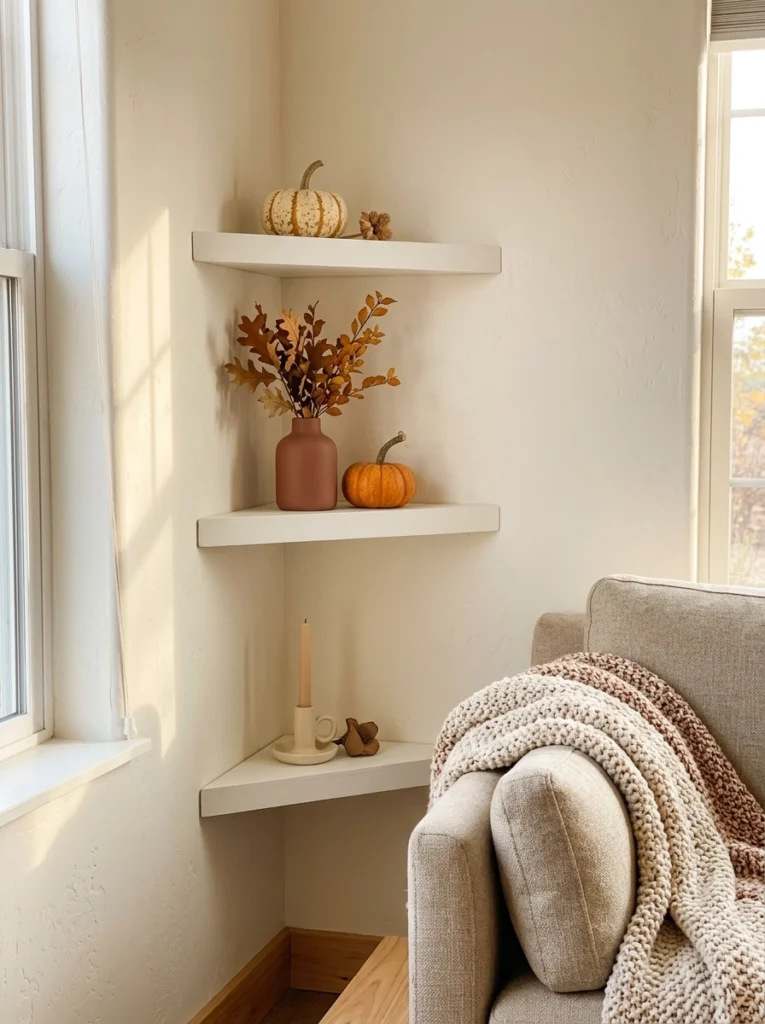
A few seasonal accessories can change the feel of your living room without requiring new furniture or a large decorating budget. Keep the shelves themselves neutral, then rotate small items as the year changes. For autumn, use miniature pumpkins, a rust-colored vase, and dried foliage. For winter, switch to evergreen clippings and warm metallic accents. Budget $15 to $35 per season if you shop discount stores, reuse containers, and store accessories carefully. Keep the largest seasonal piece on one shelf and repeat its color once or twice elsewhere. That small connection helps the arrangement feel planned. Avoid placing real candles close to dried foliage, fabric, or trailing plants, and use battery-operated candles if you want the look without an open flame. Store decorations in labeled boxes after the season ends so they’re easy to find next year. This approach is ideal for homeowners who enjoy decorating but don’t want to buy an entirely new collection each season. Neutral shelves provide a steady backdrop while a handful of inexpensive pieces do the changing.
29. Combine Open Corner Shelves With a Small Closed Cabinet
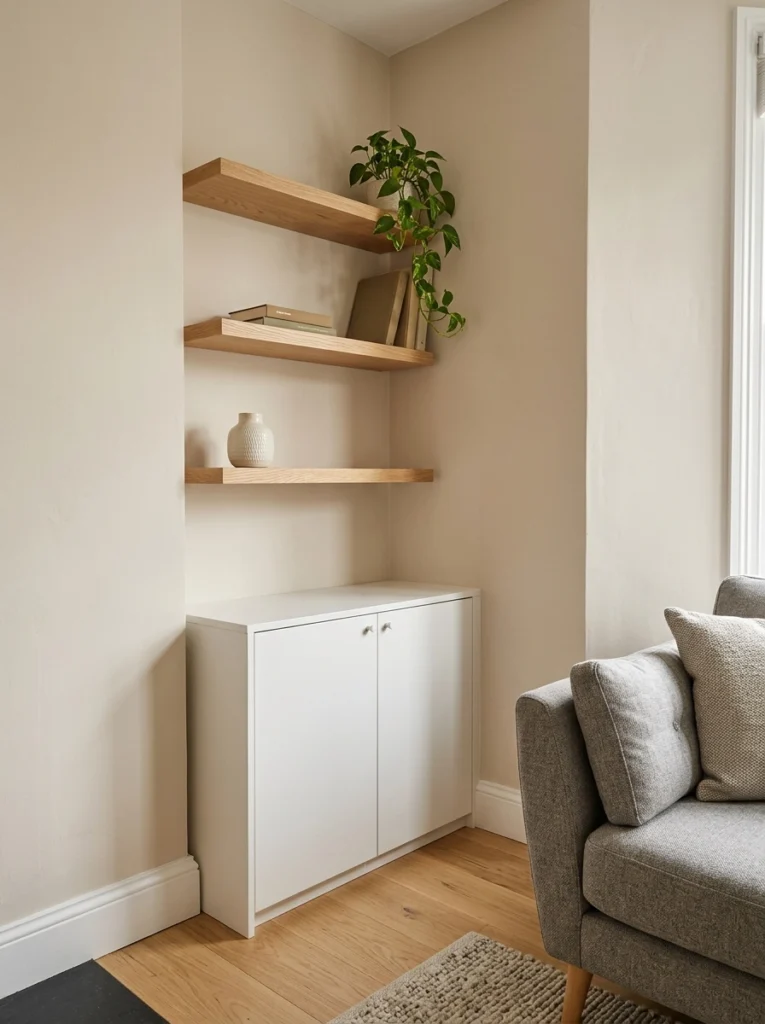
For a corner that has to handle both storage and decorating, combine a small cabinet with open shelves above it. Choose a cabinet around 24 to 30 inches wide and 28 to 34 inches tall, then mount two or three shelves above it if the wall and hardware allow. A budget cabinet and a small set of shelves generally cost $100 to $180 from IKEA, Walmart, or secondhand sellers. Use the cabinet for items that look messy, such as spare cables, board games, or paperwork, and keep the shelves for a plant, framed art, and a couple of decorative objects. The mix of open and closed storage prevents the display from becoming overloaded while giving you a useful surface for everyday items. Measure the combined height before installation, especially if the corner sits beneath a window or near a ceiling fixture. Secure the cabinet against tipping and use suitable wall anchors for the shelves. Wipe the cabinet doors regularly and check the shelf brackets occasionally for looseness. This arrangement is a strong choice for busy family rooms, small apartments, and multipurpose living spaces.
Mistakes That Ruin the Look
Even attractive shelves can feel cluttered if the spacing and accessories aren’t right. A few simple adjustments make a big difference.
- Filling every inch of every shelf: Empty space helps each object stand out. Remove a few accessories and leave at least one open area on each shelf.
- Ignoring shelf depth and weight limits: Oversized books and heavy pottery can overhang narrow boards. Measure objects before buying shelves, and check the manufacturer’s load rating.
- Mixing too many finishes and colors: A collection of unrelated metals, wood tones, and bright colors can look scattered. Choose two or three main colors and repeat them throughout the display.
- Hanging shelves at awkward heights: Shelves placed too close together limit what you can display, while a poorly positioned top shelf can look disconnected from the furniture. Plan the arrangement on paper first, then mark the positions with painter’s tape before drilling.
Frequently Asked Questions
Q: What is the best corner shelf decor living room style for a small space?
Floating shelves are a great choice because they use wall space without taking up floor area. Choose slim shelves, light finishes, and a few carefully selected accessories to keep the corner open.
Q: How many shelves should I put in a living room corner?
Three or four shelves work well for most average-height walls. In a very small corner, two shelves with a larger decorative object can look more balanced than a tall, crowded stack.
Q: What should I put on corner shelves in a living room?
Try a mix of books, ceramic vases, small plants, framed photos, and woven baskets. Include useful items where appropriate, such as remotes or board games, and leave some open space between groups.
Q: How do I decorate corner shelves on a tight budget?
Start with shelves you already own or look for affordable pieces at thrift stores and Facebook Marketplace. Reuse books, swap accessories from other rooms, and spend your money on one or two pieces that make the arrangement feel finished.
Q: Are floating corner shelves suitable for renters?
Yes, provided your lease allows the installation method you choose. Removable shelving systems can work for lightweight displays, but check their stated weight limits and wall compatibility before placing objects on them.
Q: How do I make corner shelves look professionally styled?
Vary the heights and shapes of your accessories, repeat a small palette of colors, and avoid filling every shelf completely. Place heavier items lower down and step back to check the overall arrangement from the sofa.
Give That Empty Corner a Purpose
You don’t have to buy an entire set of furniture to make an awkward living room corner feel finished. Start this weekend with three floating shelves, a couple of books you love, one ceramic vase, and a small plant. You can often put together a lovely display for around $40 to $60, especially if you already have a few accessories at home. Measure the wall, choose a shelf finish that suits your existing furniture, and arrange the pieces on the floor before hanging anything. Once the shelves are installed, add items gradually rather than filling every space at once. A corner that once collected clutter can become a useful little library, a plant display, or a personal gallery that makes the whole living room feel more considered.