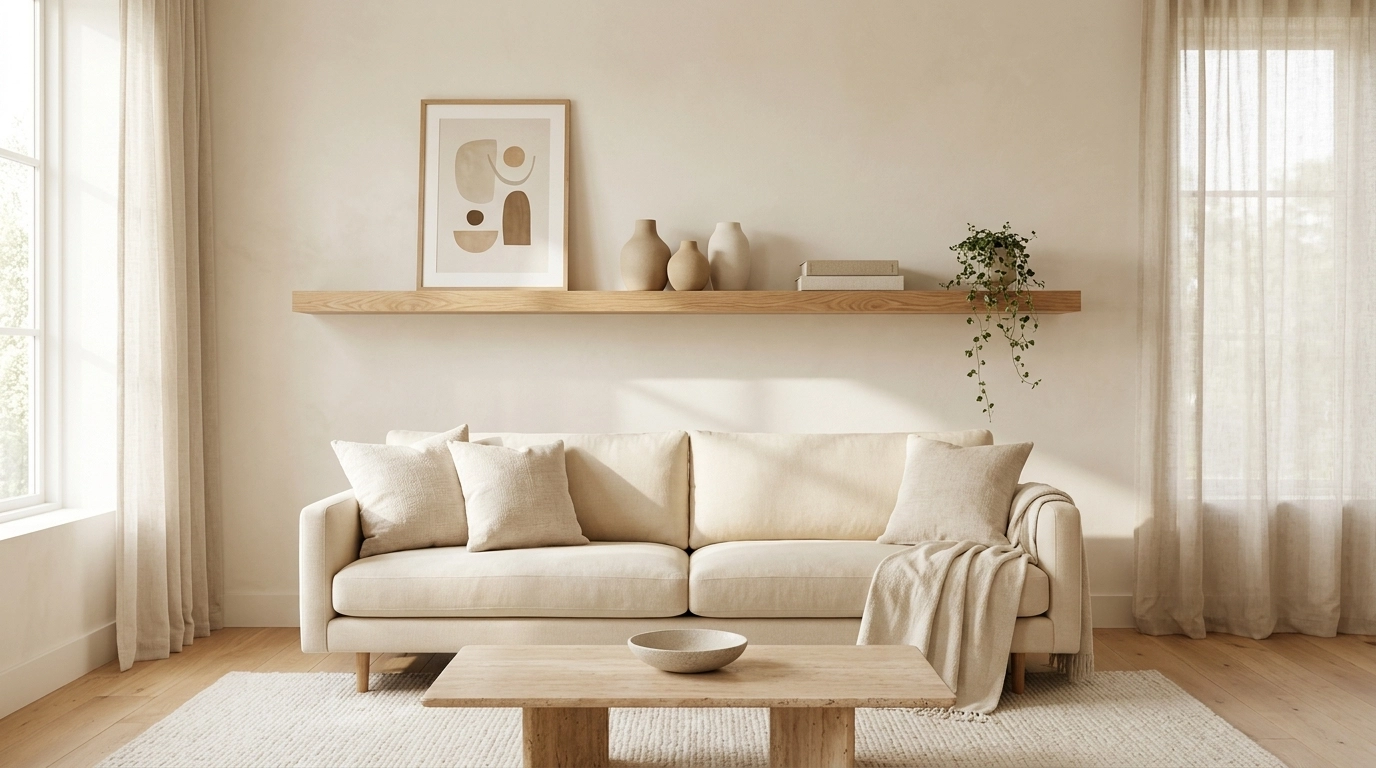
A living room shelf can look surprisingly messy even when you’ve spent money on pretty decor. Too many tiny objects, mismatched colors, and books crammed together can turn a simple wall into visual noise. The good news? You don’t need to buy a whole new collection of accessories to fix it.
Minimalist shelf decor living room styling works best with a few carefully chosen pieces, open space, and a restrained color palette. Start with two or three larger objects, add natural materials such as wood or stone, and leave some shelf space empty. These 21 ideas show how to get a polished, comfortable look without overspending or making your living room feel bare.
1. Style a Floating Shelf With Just Three Favorite Pieces
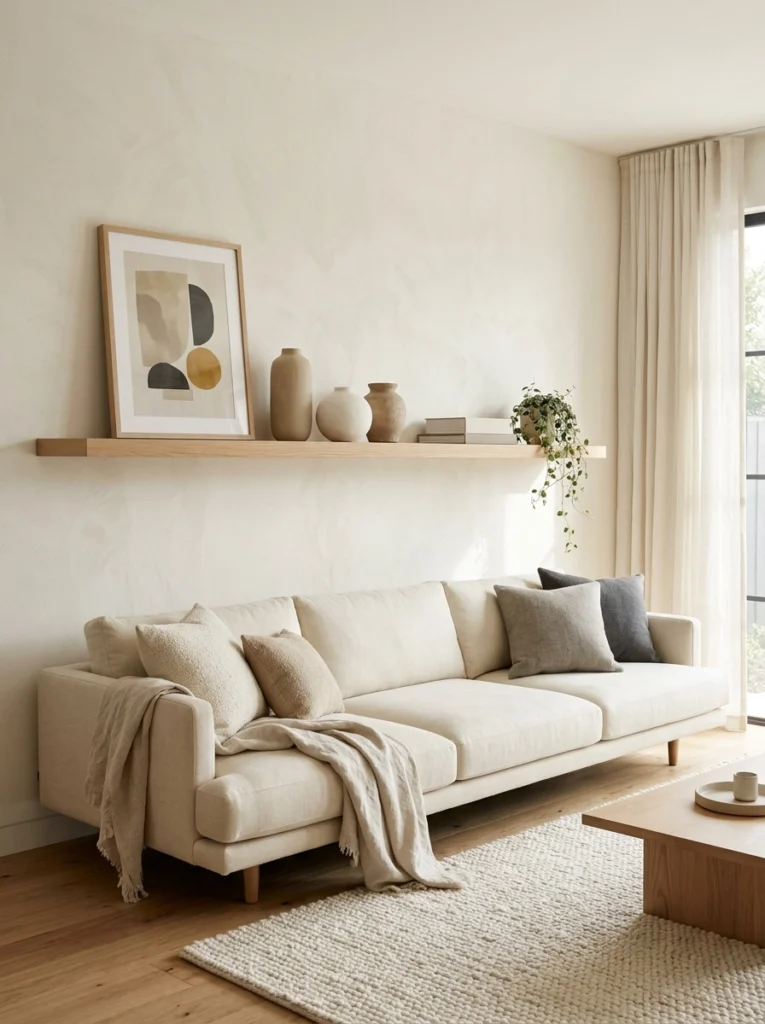
A floating shelf looks most elegant when every object has room to breathe. Choose a 36-inch natural oak shelf for around $25 to $55 from IKEA or Amazon, then arrange an ivory ceramic vase, a pair of neutral books, and a small sculptural object across its length. Keep the vase toward one end and the smaller pieces near the opposite side instead of lining everything up evenly. That little bit of imbalance feels relaxed rather than staged. For a rental, check the wall type and use suitable hardware that can safely support the shelf and its contents. Wipe the wood with a dry microfiber cloth each week, and avoid soaking the surface with cleaning spray. This setup works especially well above a loveseat or a narrow console where bulky furniture would crowd the room. Leave at least a third of the shelf empty. It sounds like a lot of wasted space, but that open area is what makes the few objects look intentional.
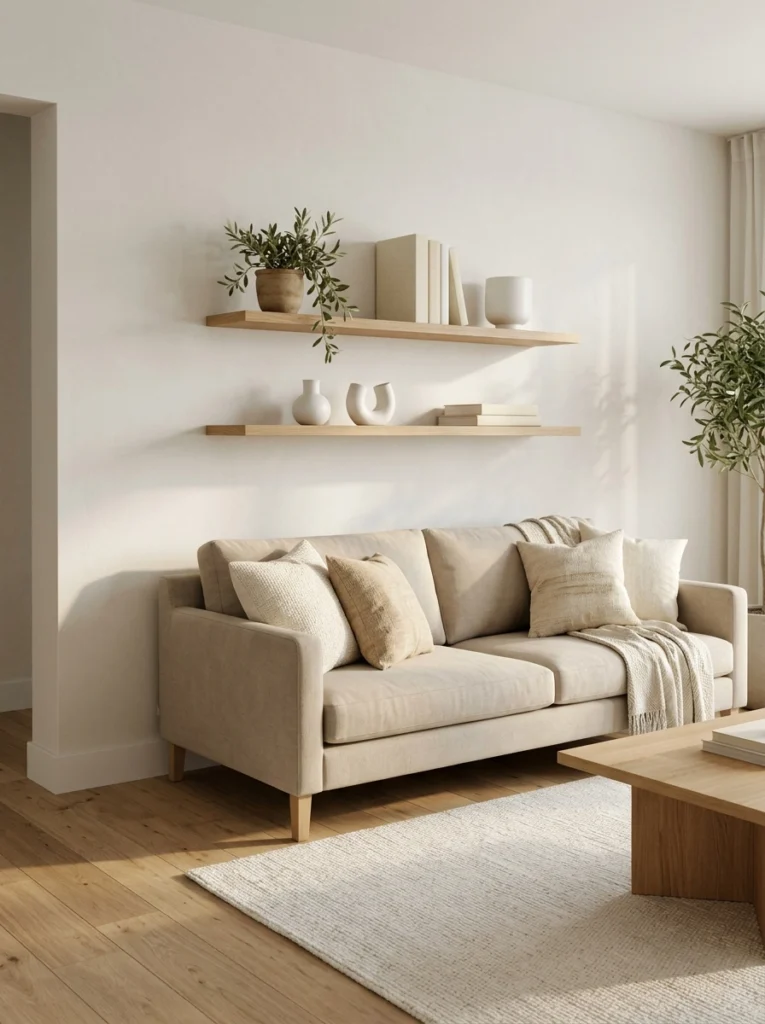
2. Use Two Shelves Instead of One Crowded Row
When one shelf can’t hold your books and accessories without looking packed, install two narrower shelves vertically. A pair of 30-inch shelves costing about $20 to $45 each gives you room to separate functional items from decorative ones. Put three or four favorite books on the lower shelf and reserve the upper one for a small vase, a framed print, or a compact plant. Keep roughly 12 to 16 inches between the shelves, adjusting the distance to suit your objects and wall height. This arrangement works nicely beside a television or over a small reading chair because it draws the eye upward without filling the entire wall. Choose matching finishes so the shelves feel connected, even if the objects differ. If you have a low ceiling, position the arrangement carefully rather than stacking shelves too close together. Dust the upper shelf before the lower one so loose debris doesn’t fall onto your books. The result feels organized, but there’s still enough personality to keep the room from looking like a furniture showroom.

3. Let Neutral Books Set the Color Scheme
Books are useful decor because they add height, texture, and a lived-in feeling without requiring lots of extra accessories. Gather books with cream, tan, charcoal, or muted gray covers, then arrange a few upright and stack two or three horizontally. You can find attractive used books at thrift stores for about $2 to $8 each, so there’s no reason to buy expensive coffee-table editions just for their covers. Remove bright dust jackets if the underlying covers are attractive, but keep any that you love. On a shelf measuring 36 to 48 inches, one short upright row and one horizontal stack usually leave plenty of space for a small decorative object. Try placing a dark book near the middle to give the arrangement some definition against a pale wall. The trick is to avoid sorting every book by exact shade, which can make the shelf feel overly arranged. Mix a few different heights and textures instead. For more ideas on coordinating shelves with the rest of your room, see [INTERNAL LINK: article about neutral living room decor ideas].
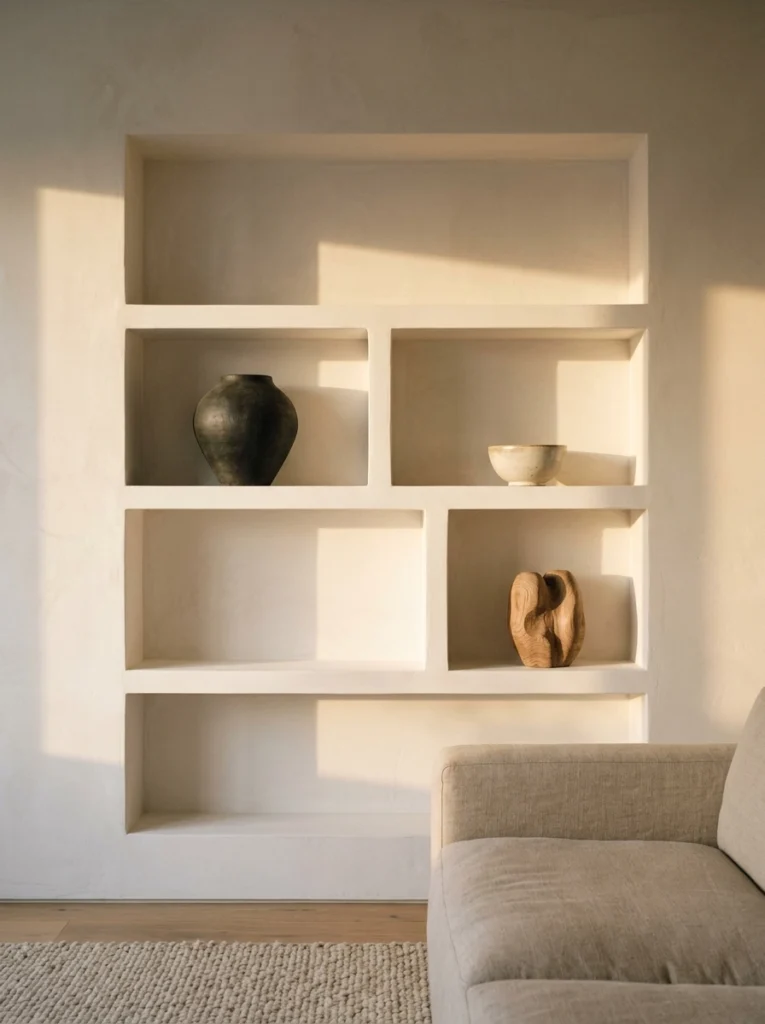
4. Make One Sculptural Vase the Main Attraction
Sometimes a single object does more for a shelf than an entire collection. Look for a rounded stoneware vase with an irregular silhouette in charcoal, sand, or warm white. A piece measuring 8 to 12 inches tall and costing $18 to $40 is usually substantial enough to stand on its own. Target, IKEA, and local home stores often carry simple ceramic designs at reasonable prices. Set the vase slightly off-center on a floating shelf and leave the rest of the surface open, or pair it with one flat book stack if the shelf is particularly long. The shape adds interest without introducing another color or a busy pattern. Choose a matte finish if you prefer a softer, understated appearance. For easy maintenance, use a soft cloth on textured ceramic and a slightly damp cloth on glazed surfaces. Avoid tiny vases lined up in a row, especially on a narrow shelf, because several small shapes can look like clutter from across the room. A larger piece gives the eye one clear place to rest.
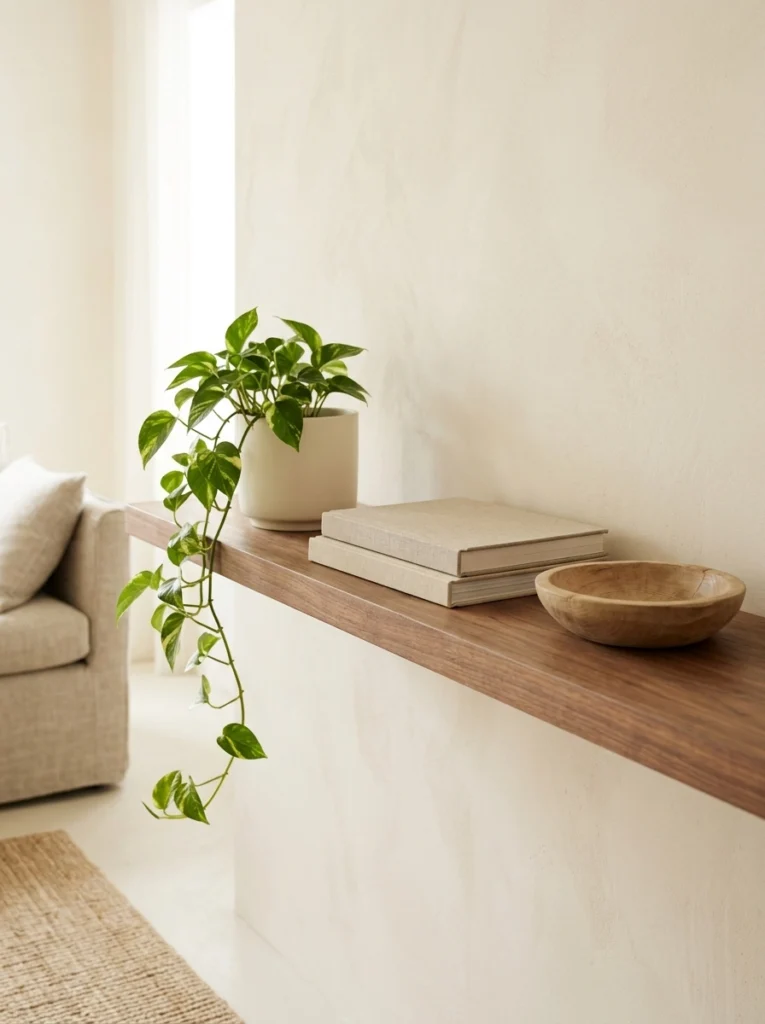
5. Add One Trailing Plant for a Softer Look
Minimalist decor doesn’t have to be completely free of greenery. A single pothos or heartleaf philodendron brings movement to a shelf filled with straight lines and solid objects. Choose a 4- to 6-inch planter for around $12 to $25, including a basic plant from a garden center or home improvement store. Position it at one end so the leaves can trail naturally without covering your books or artwork. These plants generally prefer bright, indirect light, so avoid placing them on a dark shelf simply because it looks good there. If your living room has limited daylight, use a suitable grow light or choose a quality artificial plant instead. Keep the pot on a waterproof saucer, particularly on wood shelves, and trim damaged leaves when you notice them. One plant is often enough for a small arrangement. The contrast between soft green leaves and a clean shelf edge adds life without introducing a dozen decorative objects. If you have pets, check the plant’s safety before bringing it home, since pothos and philodendrons are toxic to cats and dogs if chewed.
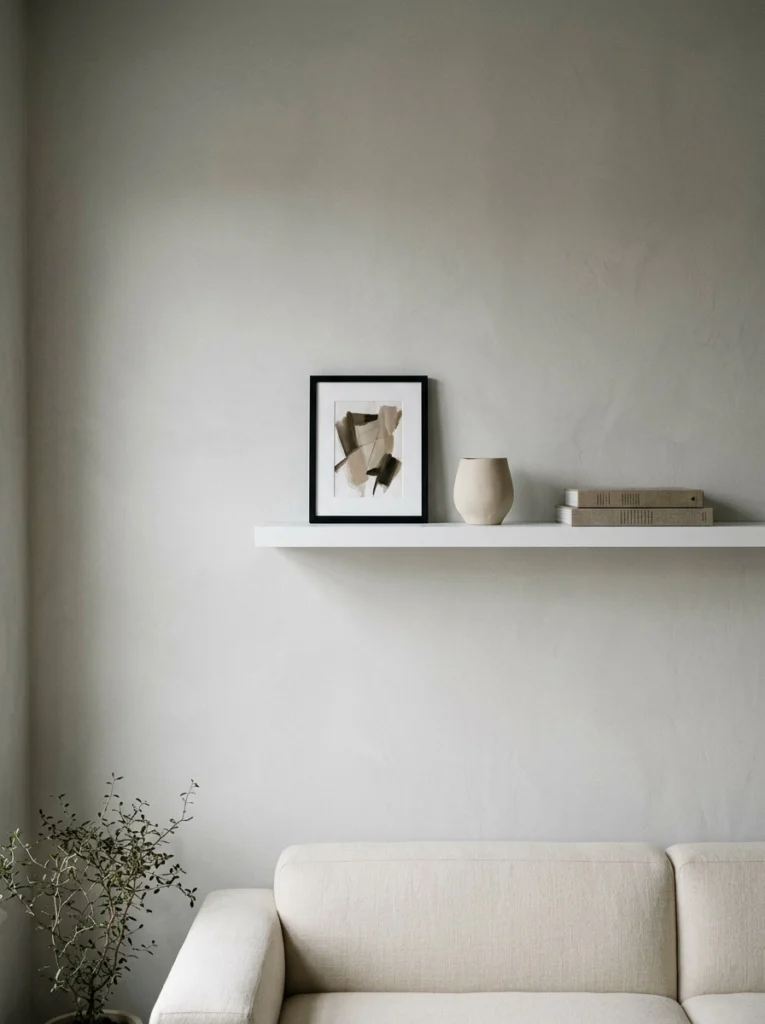
6. Lean a Small Framed Print Against the Wall
Not every shelf needs a row of decorative objects. A framed print adds height and visual interest without taking up much usable surface area. Choose an 8-by-10-inch or 11-by-14-inch print for about $10 to $35, using a thin black, natural wood, or white frame. Abstract line drawings, muted landscapes, and simple architectural prints all work well with minimalist furniture. Lean the frame against the wall instead of hanging it immediately, provided the shelf is deep enough and the frame is stable. Place a small ceramic bowl or a short book stack beside it, leaving some empty room around the edges. This arrangement works especially well on a shelf above a low sofa or on a built-in ledge. Make sure the frame can’t slide forward, particularly if the shelf sits where children or pets can reach it. A discreet picture-frame grip can help keep it steady. Keeping the artwork relatively small also means you can switch it out seasonally without rearranging the whole room.
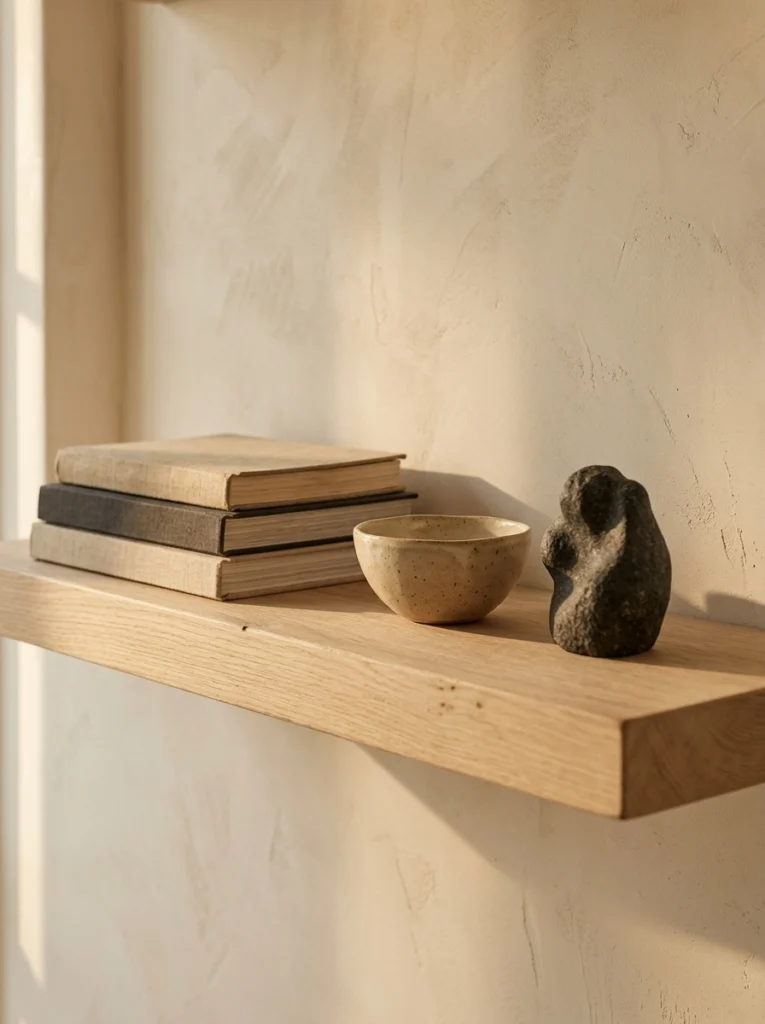
7. Mix Stone, Wood, and Ceramic for Natural Texture
A minimalist shelf can feel flat if every object has the same smooth finish. Instead of adding more colors, combine three materials with different textures. Try a small wooden bowl, a matte ceramic vase, and a smooth stone-like sculpture. Expect to spend around $30 to $60 for three affordable accents from IKEA, Target, or a thrift store. Keep the colors related, such as pale oak, warm white, and soft gray, so the differences in material do the work. Place the tallest object toward one end, the bowl near the middle, and the smallest piece closer to the opposite side. The variation makes the arrangement interesting even from across the room. Avoid mixing too many finishes, such as shiny brass, distressed wood, mirrored glass, and bright plastic on the same short shelf. Dust textured pieces with a soft brush, and use coasters or felt pads beneath heavy objects that sit on delicate wood. This approach suits rooms with linen upholstery, woven rugs, and natural flooring particularly well.
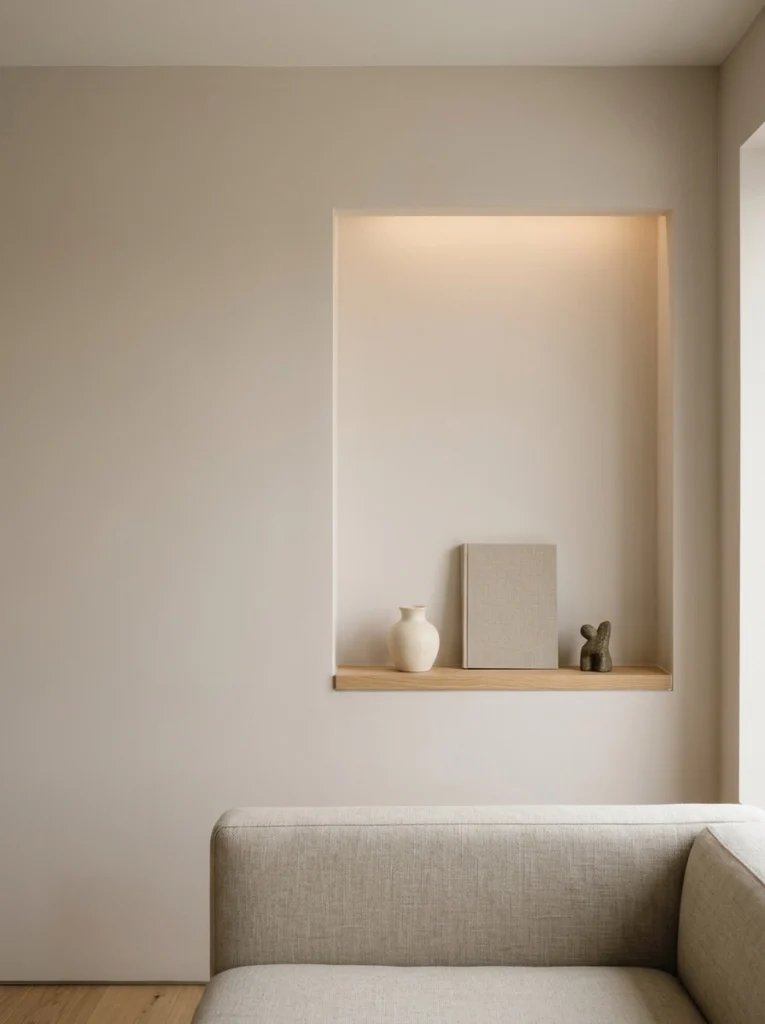
8. Treat a Recessed Shelf Like a Small Gallery
If your living room already has a recessed wall niche, let the architecture do most of the decorating. A narrow ledge inside the niche can hold two or three carefully selected pieces without projecting into the room. For a simple DIY update, a 24-inch wood ledge costing around $15 to $35 can work in a suitably sized recess. Measure the width and depth before purchasing, and choose a finish that matches nearby furniture or trim. Style the ledge with a small framed print, one rounded vase, or a low sculptural object. Keep the back wall visible instead of filling the entire niche with accessories. That open background creates the gallery-like effect. If the recess is deep, use a slightly larger object rather than adding several tiny ones that disappear from the doorway. Clean the corners with a narrow dusting brush, since recessed spaces tend to collect dust along their edges. This is a useful way to decorate an awkward architectural feature without adding a freestanding cabinet or bulky storage unit.

9. Choose Black Accents for a Little Contrast
An all-neutral room can look beautiful, but a few dark details help define the arrangement. Use a slim black shelf or add one black ceramic bowl to a natural wood ledge. A 12-inch matte-black decorative bowl for around $12 to $25 is an affordable starting point. Place it near a stack of pale books or beside a cream vase so the contrast feels deliberate. You don’t need to repeat black in every object. One or two dark accents are enough to connect the shelf to a black picture frame, floor lamp, or television elsewhere in the room. This trick works particularly well against white walls, where dark shapes remain visible from across the space. For cleaning, use a dry microfiber cloth on matte finishes and avoid abrasive sponges that leave shiny patches. If your room already has dark furniture, choose a black object with a similar finish so it looks related rather than random. The aim is a clear focal point, not a shelf full of dark accessories.
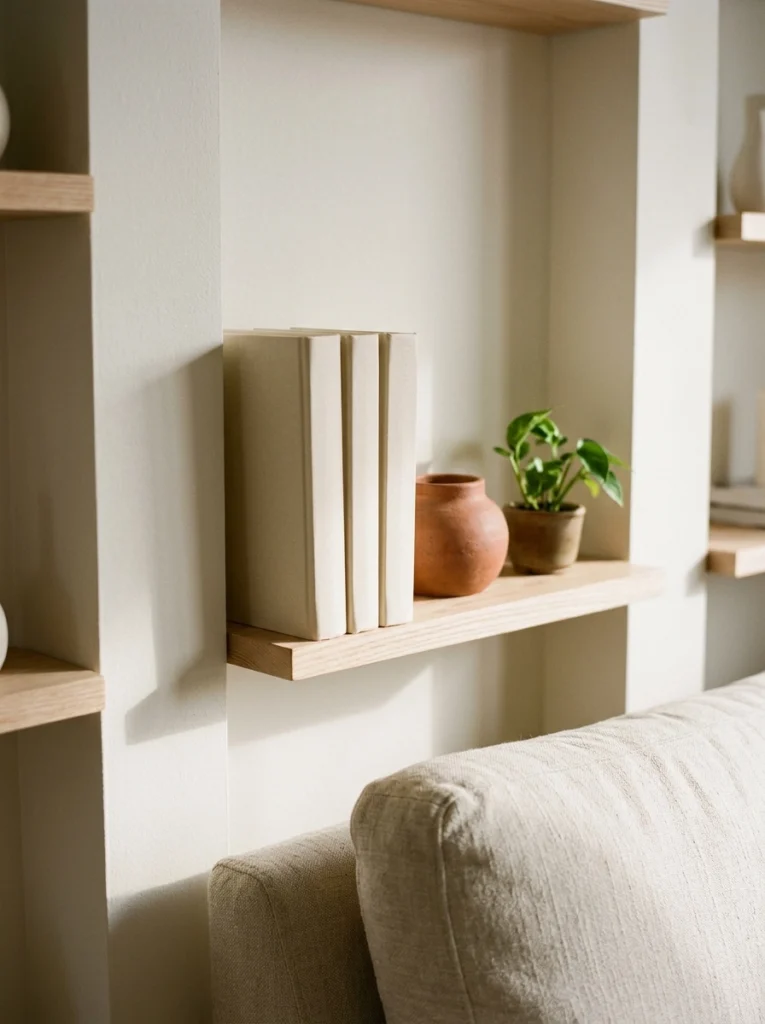
10. Bring in a Small Terracotta Accent
Warm clay tones are an easy way to stop a minimalist room from feeling too cold. Choose one terracotta planter or unglazed ceramic vessel in a muted rust shade, ideally around 6 to 8 inches wide for $10 to $24. Place it beside cream books or a pale wooden object so its earthy color stands out without dominating the shelf. This look works especially well in rooms with beige sofas, oak furniture, and natural woven textiles. You can find inexpensive clay pots at Home Depot or local garden centers, then use a simple saucer underneath to protect the shelf. If the pot is unglazed, check for moisture marks after watering and keep a liner inside if needed. Avoid adding several unrelated accent colors just because the terracotta looks good. A restrained palette of cream, wood, and clay is enough. The warmer hue also gives you an easy way to connect the shelf to a rust-colored cushion or a small detail in a nearby rug.
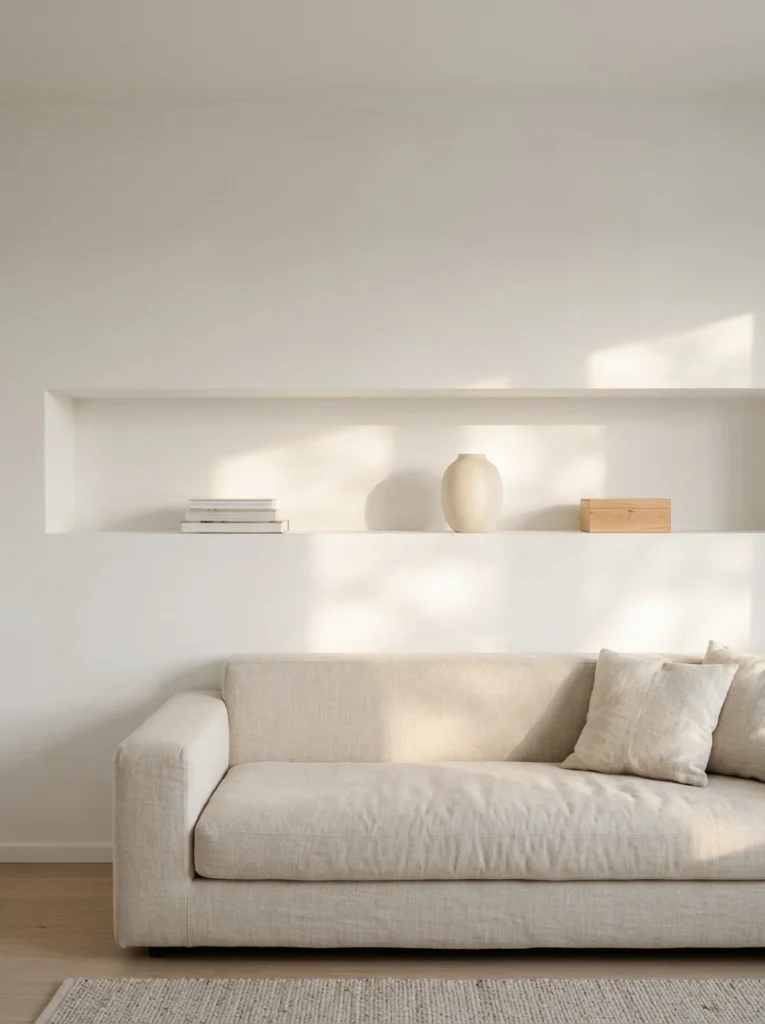
11. Hide Small Essentials in a Wooden Box
Not every object on a living room shelf is decorative. Remote controls, spare charging cables, and small household items can quickly make a tidy room look disorganized. A lidded wooden box gives those everyday pieces a proper home while keeping the shelf visually calm. Choose a 10- to 12-inch box for around $15 to $30 from IKEA, Target, or a local home store. Set it at one end of the shelf and place a small vase or a couple of books nearby. Pick a simple rectangular design without shiny hardware or ornate carving. The box works best when it’s large enough to hold useful items but small enough to leave open space around it. Check that the lid opens comfortably if the shelf sits high on the wall. Wipe unfinished wood with a dry cloth and use a slightly damp cloth on sealed finishes. This is a particularly practical choice for family living rooms where the decor has to look tidy even after a busy evening.

12. Use Clear Glass for an Almost Invisible Accent
When a shelf already has several solid objects, clear glass adds variety without making the arrangement feel heavier. Try one small glass bud vase or a simple rounded vessel measuring 5 to 7 inches tall for around $8 to $20. Target and IKEA often carry affordable options, and thrift stores are useful places to find unusual glass shapes. Set the vessel near a pale book stack or a small wooden object, but leave a little room around it so its outline remains visible. Clear glass works particularly well in compact living rooms because it doesn’t introduce another strong block of color. It also reflects daylight gently without the shine of mirrored or metallic accessories. Wash the vessel with mild dish soap when fingerprints or dust become visible, then dry it with a lint-free cloth. Avoid filling the shelf with several glass pieces in different colors, which can make the arrangement look more decorative than minimalist. One clear accent is usually enough.
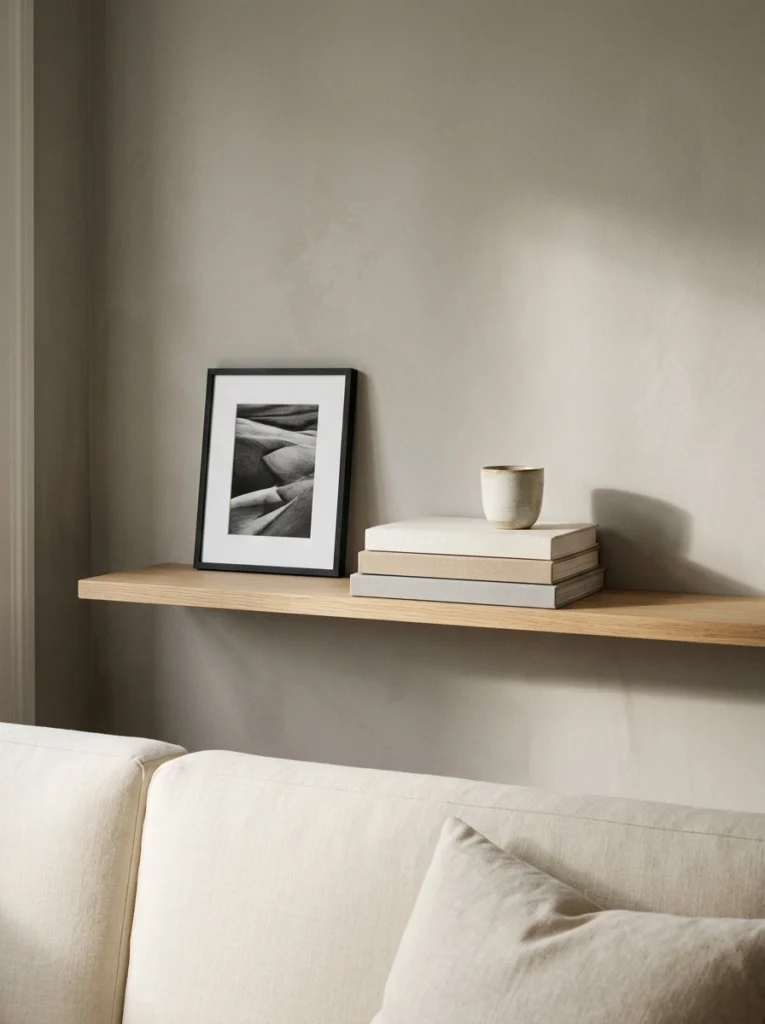
13. Display One Meaningful Photograph
Minimalist decor feels more personal when it includes something that matters to you. Instead of arranging several family photographs across the shelf, choose one favorite image and give it space. A 5-by-7-inch or 8-by-10-inch frame costing about $10 to $25 works on most floating shelves. Black frames suit contemporary interiors, while light oak feels softer in Scandinavian or coastal rooms. Lean the frame against the wall and add one low object nearby, such as a ceramic bowl or a small stack of books. A monochrome photograph is an easy choice if the rest of the room uses muted colors, though a single colorful image can work just as well. Check the frame occasionally for dust, especially along the glass edges. If the shelf is high or close to a busy walkway, use a secure mounting method to keep the frame from slipping. The finished arrangement feels like part of your home rather than a collection of accessories bought in one shopping trip.
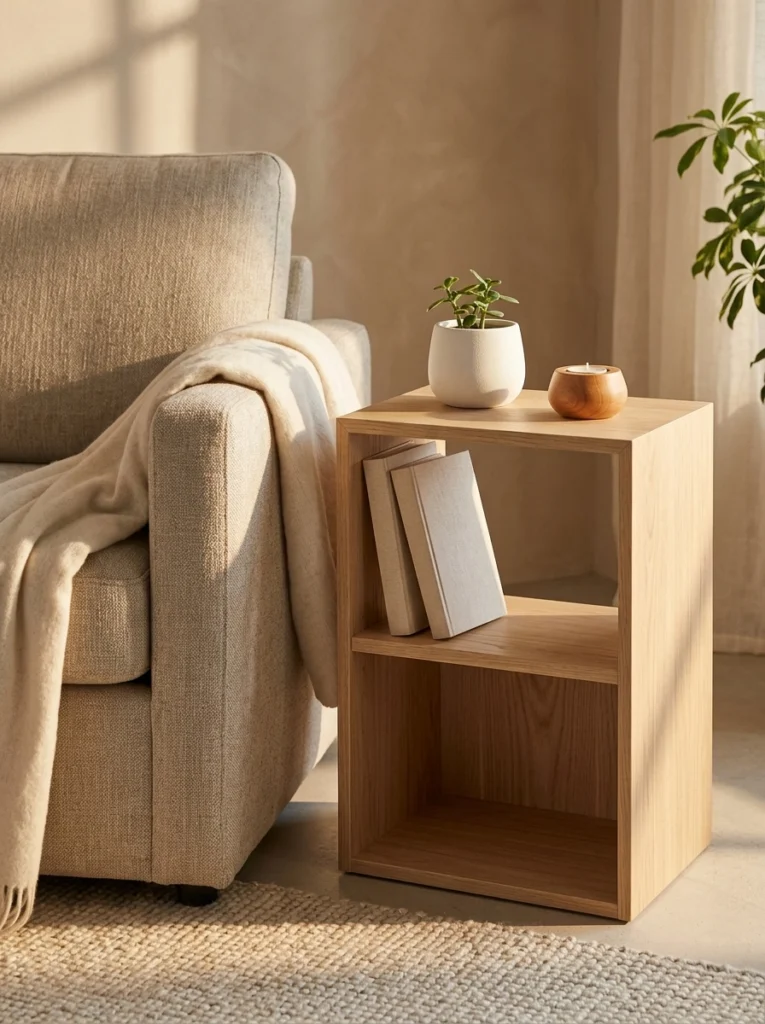
14. Build a Small Reading Corner Shelf
A shelf beside your favorite reading chair should be useful before it becomes decorative. Install a 24- to 30-inch shelf for roughly $20 to $45 and keep your current book, reading glasses, and a small ceramic dish within reach. Add one compact plant or a simple wooden object if there’s room. Position the shelf so you can reach it comfortably while seated, and check that its brackets are suitable for the wall and expected weight. This setup works well in apartments where a full side table would crowd the walkway. It also gives a lonely corner a clear purpose without requiring another piece of furniture. Choose books you are actually reading rather than filling the shelf with decorative spines. A small tray can collect reading glasses and earbuds, making them easier to find. Dust the shelf regularly and keep drinks on a stable table or coaster instead of balancing them near the edge. The best reading corner looks relaxed because everything on the shelf earns its place.
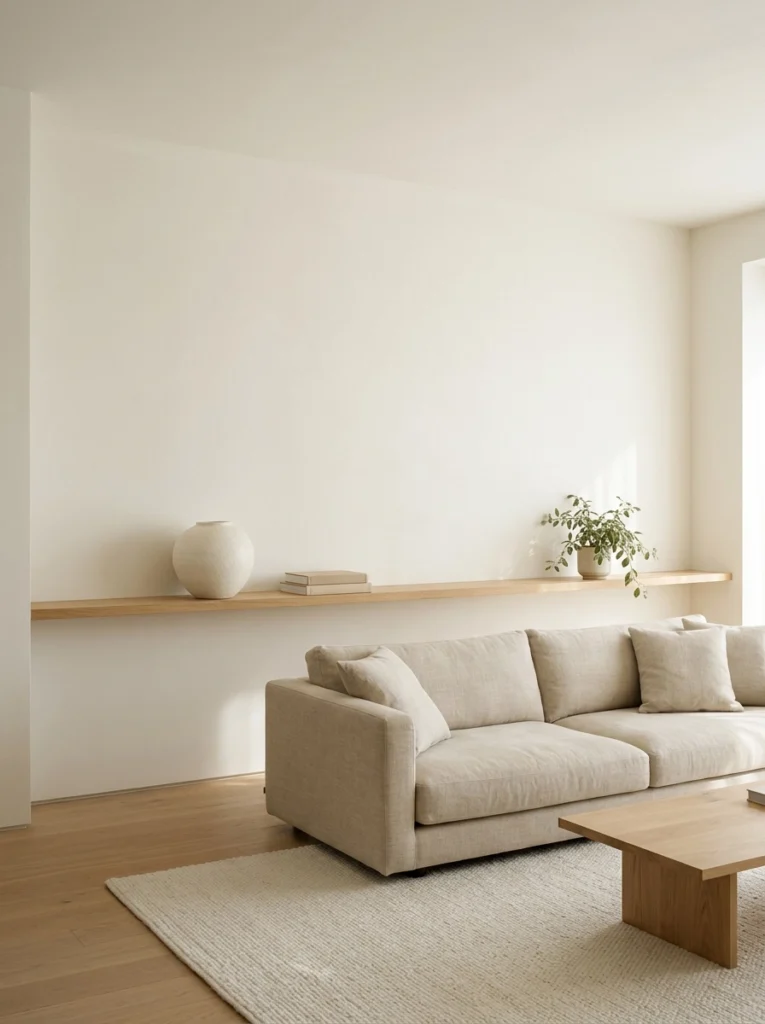
15. Arrange Objects at Different Heights
A shelf can feel strangely flat when every object sits at the same height. Fix that by combining one tall piece, one medium piece, and one low object. For example, pair a 10-inch vase costing around $20 to $35 with a small framed print and a short horizontal book stack. Place the tallest object toward one side, then lower the height as your eyes move across the shelf. You don’t have to create a perfect triangle or measure every gap. Just avoid making a row of identical-height objects that competes for attention. This approach works on shelves above sofas, along built-in bookcases, and on long ledges behind a console. Keep the tallest piece low enough that it doesn’t cover nearby artwork or feel awkward against the ceiling. A quick photo taken from the opposite side of the room helps you see whether the arrangement looks balanced from a normal viewing distance. Sometimes moving one vase three inches is all it takes.
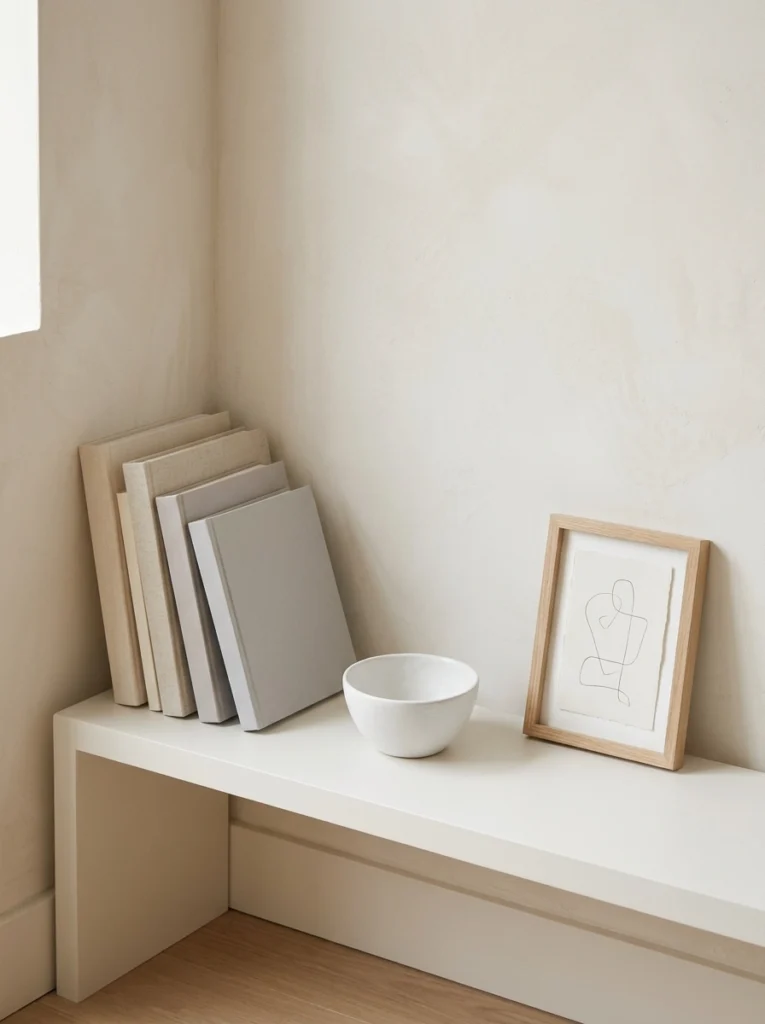
16. Use a Short Book Stack as a Base
Books can help smaller decorative objects stand out without requiring a taller shelf. Stack two or three books horizontally, then place a small bowl or sculptural object on top. A three-book stack costing roughly $10 to $25 from thrift stores is plenty for this purpose. Choose books with sturdy covers and similar colors, and avoid stacking so high that the objects become unstable. This trick is especially useful when a favorite ceramic piece looks too short beside a tall vase. The books provide a little height while adding a casual, lived-in quality. Place the stack toward one end of the shelf, leaving enough open surface nearby to prevent a crowded appearance. If the books are valuable, avoid placing a heavy object directly on them for long periods. Dust the top book and check the edges occasionally for fading from direct sunlight. The result feels collected rather than overly styled, especially when the books are titles you enjoy reading.
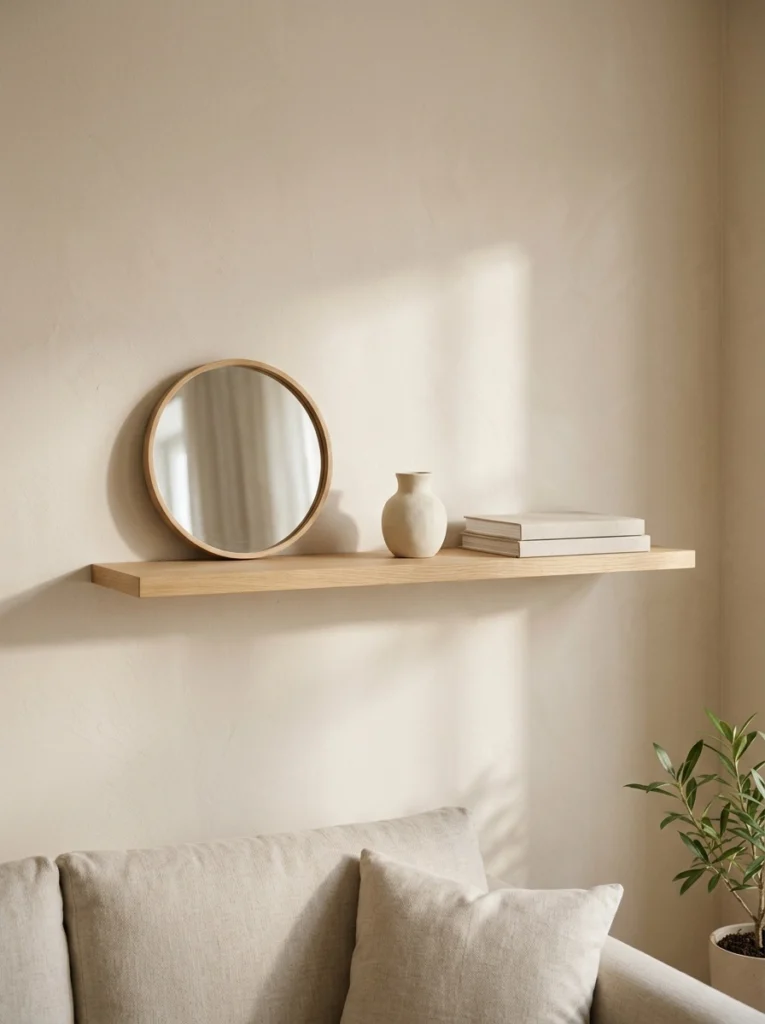
17. Reflect Light With a Small Round Mirror
A compact mirror can add depth to a narrow living room without introducing another large decorative object. Choose a 10- to 14-inch round mirror for around $20 to $45 in a thin wood or black frame. Lean it securely on a deep shelf or mount it above the ledge, following the manufacturer’s hardware instructions. Position it where it reflects a window, a lamp, or another attractive part of the room rather than a cluttered corner. The reflection gives the shelf more dimension and can help a darker room feel brighter during the day. Pair the mirror with just one or two accessories, such as a small vase and a short book stack. Avoid using several mirrors or shiny objects together, since too many reflections can make a small space feel busy. Clean the glass with a soft cloth and apply cleaner to the cloth rather than spraying directly onto a wood frame. This is a good option for narrow living rooms that lack wall space for large artwork.
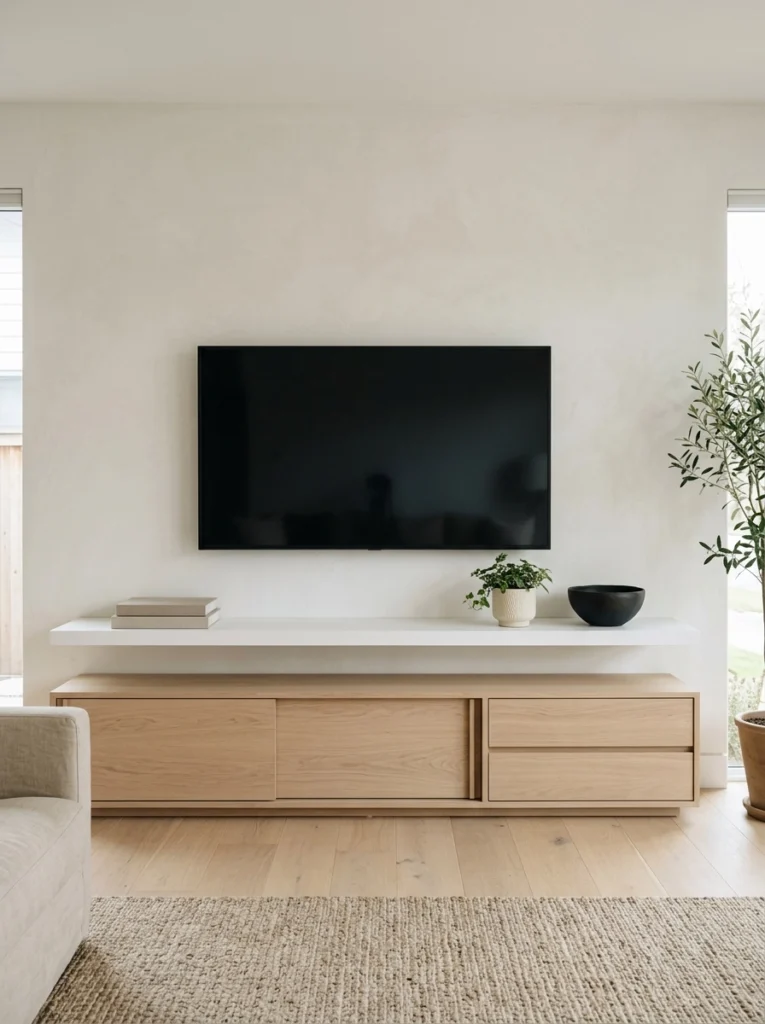
18. Keep the Shelf Beneath Your TV Nearly Empty
The wall around a television can get busy quickly, especially when cables, speakers, and decorative objects compete for attention. If you have a media shelf, keep its decor low and simple. A 48-inch shelf for about $35 to $80 can hold a small planter, two books, and a low bowl without blocking equipment or making the television look crowded. Leave ventilation space around electronics and follow the manufacturer’s instructions for clearance. Place decorative pieces toward the ends rather than directly in front of the screen or speakers. A closed storage box can hide small remotes and spare cables if the shelf is deep enough. For a cleaner appearance, use an appropriate cable-management kit and secure loose wires safely. Dust electronics with a suitable microfiber cloth and avoid spraying cleaning products onto screens or vents. The biggest improvement often comes from removing objects rather than buying new ones. A calm media wall lets the television sit naturally within the room instead of becoming part of a cluttered display.

19. Repeat One Color Across Different Objects
A shelf looks coordinated when a color appears more than once, even if the objects have different shapes. Pick one accent, such as charcoal, olive green, or muted brown, and repeat it in two pieces. For example, combine a $15 charcoal vase with a $10 dark picture frame and keep the remaining objects in cream and natural wood. The repeated color links the arrangement without making everything match exactly. This is useful if you already own accessories from different stores and don’t want to replace them. Move existing objects around before spending money on new pieces. Place the darker items at different points on the shelf rather than side by side, allowing the eye to travel across the display. Clean each material according to its finish, particularly if the arrangement combines wood, glass, and ceramic. Keep the chosen accent color limited to the shelf and a few nearby details, such as a cushion or lamp base. The room feels connected without becoming overly coordinated.
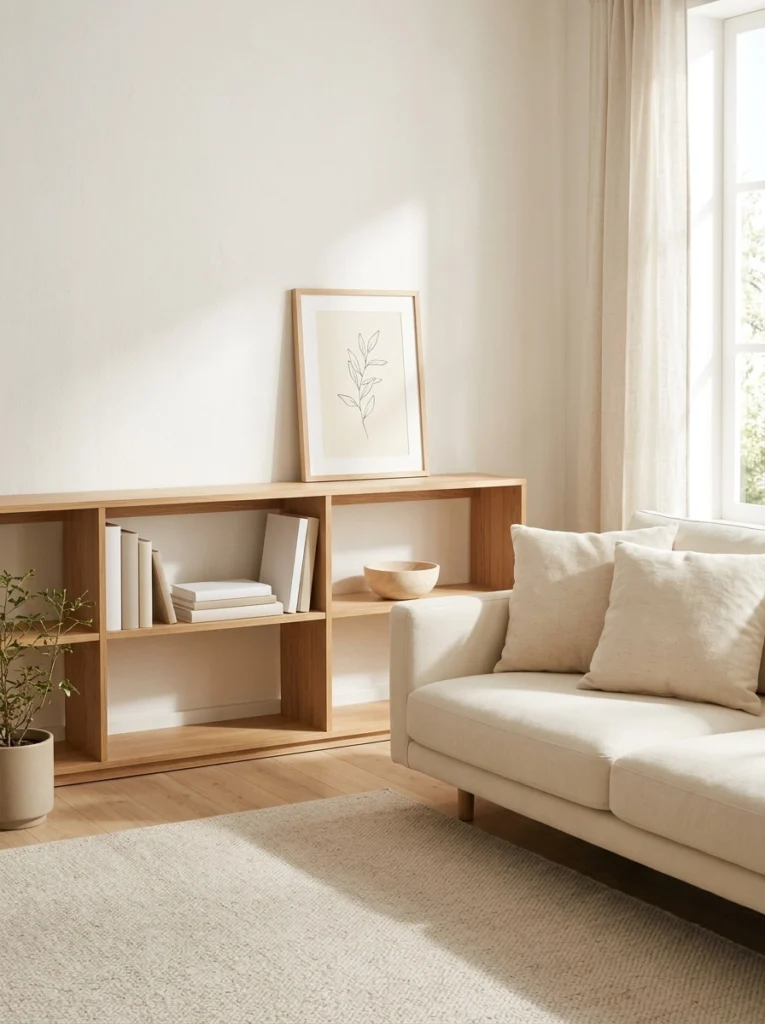
20. Leave Breathing Room Between Books and Decor
Open shelving often looks cluttered because every available inch is filled. Instead, separate your books from decorative pieces and leave a clear patch of shelf between them. On a 36-inch shelf, reserve about 8 to 12 inches of open space when the layout allows. Put a short row of books on one side and a single vase or bowl on the other. This gives each group a distinct shape, making the arrangement easier to read from across the room. It also makes everyday dusting quicker because you can lift a small group of objects rather than move dozens of tiny items. You don’t need to buy matching baskets or decorative bookends to create order. If your collection is too large, move overflow books to a closed cabinet or another bookcase. Keep only the titles you want nearby on the display shelf. For more ways to make compact rooms feel organized, try [INTERNAL LINK: article about small living room storage ideas].
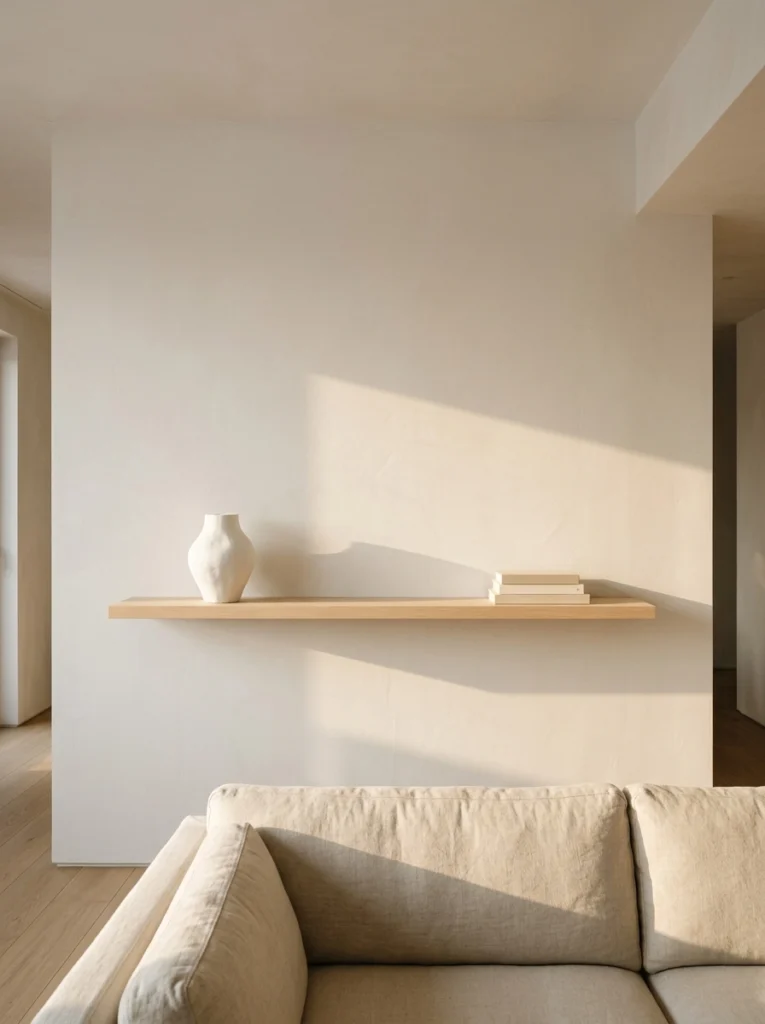
21. Try the Nearly Empty Shelf for a High-End Look
If your living room feels crowded, start by removing almost everything from one shelf. Leave a single substantial object, such as a 10-inch ceramic vase costing around $20 to $40, and see how the room feels for a day. You can add one book stack later if the shelf looks too bare. This approach works especially well on a long floating shelf above a sofa, where a full arrangement can compete with cushions, artwork, and lighting. The empty space draws attention to the shape and finish of the remaining object, giving an inexpensive accessory more presence. Choose a piece with a noticeable silhouette or tactile finish rather than a tiny ornament that disappears against the wall. Dust the shelf before styling, because an otherwise empty surface makes marks and crumbs easier to spot. Don’t feel pressured to fill every gap just because the shelf was expensive. A clean, open ledge can be the most elegant part of the living room, particularly when the furniture and artwork already provide plenty of visual interest.
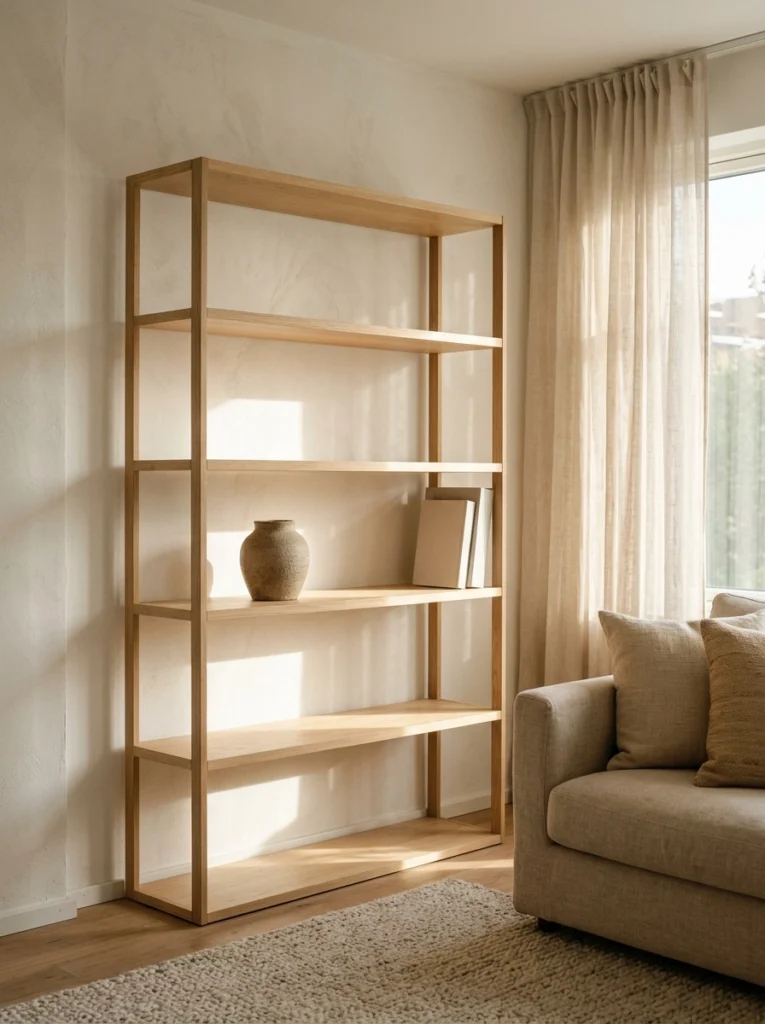
Mistakes That Ruin the Look
– Filling every inch of the shelf. Empty space is part of minimalist styling, not wasted space. Remove a few objects and step back to see whether the remaining pieces have room to stand out.
– Buying lots of tiny accessories. Several small ornaments often look busier than one medium-sized vase or bowl. Before shopping, measure the shelf and choose one larger piece that suits its length.
– Ignoring the wall and furniture colors. A bright accessory can feel disconnected if nothing else in the room relates to it. Repeat one accent color in a cushion, frame, or lamp to tie the shelf into the rest of the space.
– Using the wrong shelf hardware. A beautiful display isn’t worth a loose or sagging shelf. Check the wall material, stud locations, weight rating, and mounting instructions before installing shelves or placing heavy books on them.
Frequently Asked Questions
Q: How do I style minimalist shelf decor living room displays on a budget?
Start with objects you already own, such as books, a small bowl, or a framed print. Add one affordable vase or plant for around $10 to $25, and leave plenty of space between each piece.
Q: How many items should I put on a living room shelf?
For a shelf around 30 to 36 inches long, three to five objects are usually enough. A longer shelf can hold more, but the arrangement should still include visible empty space.
Q: What colors work best for minimalist shelf decor?
Cream, white, beige, gray, black, and natural wood are reliable choices. Add one muted accent, such as terracotta or olive green, if you want a little warmth without making the shelf look busy.
Q: Should living room shelves have books or decorative objects?
Both work well together. Books add height and function, while a vase, bowl, or small sculpture gives the arrangement shape and texture.
Q: How can I decorate shelves in a small living room?
Choose shallow floating shelves, keep accessories compact, and avoid placing too many objects above eye level. A light wood finish and a limited color palette help the wall feel less crowded.
Q: How do I keep minimalist shelves from looking boring?
Mix different heights and materials instead of adding more objects. A ceramic vase, a wooden bowl, and a small framed print provide enough variation while keeping the arrangement simple.
[Image Prompt: A warm minimalist living room with a pale oak shelf above an ivory sofa, styled with one handmade ceramic vase, two books, and a small green plant. Late-morning window light, natural textures, uncluttered styling, inviting neutral palette, wide interior photograph, no people, no text or words anywhere in the image.]
[Alt Text: Elegant minimalist shelf decor living room styling with warm wood, ceramic accessories, and a touch of greenery.]
Start With One Shelf This Weekend
You don’t have to redecorate your entire living room to get a cleaner, more polished look. Pick one shelf, remove everything, and put back only the pieces you genuinely like. I’d start with a neutral vase, two favorite books, and one natural accent, then leave the remaining space open for a few days. If the shelf still feels empty, add a small plant or framed print rather than another handful of ornaments. Minimalist shelf decor living room styling is less about buying the perfect accessories and more about giving the right pieces room to stand out. A simple rearrangement costs nothing, and it can make the whole wall feel calmer before you spend a dollar.