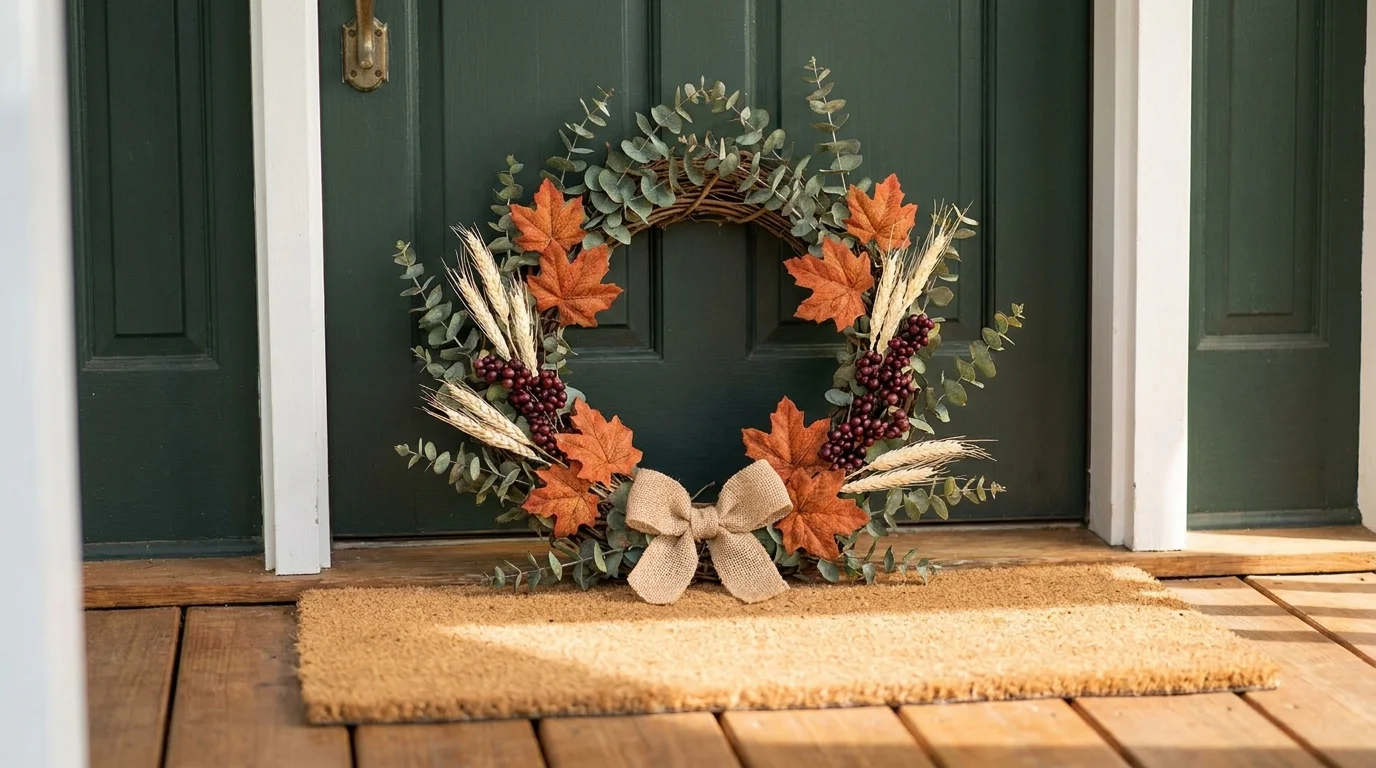
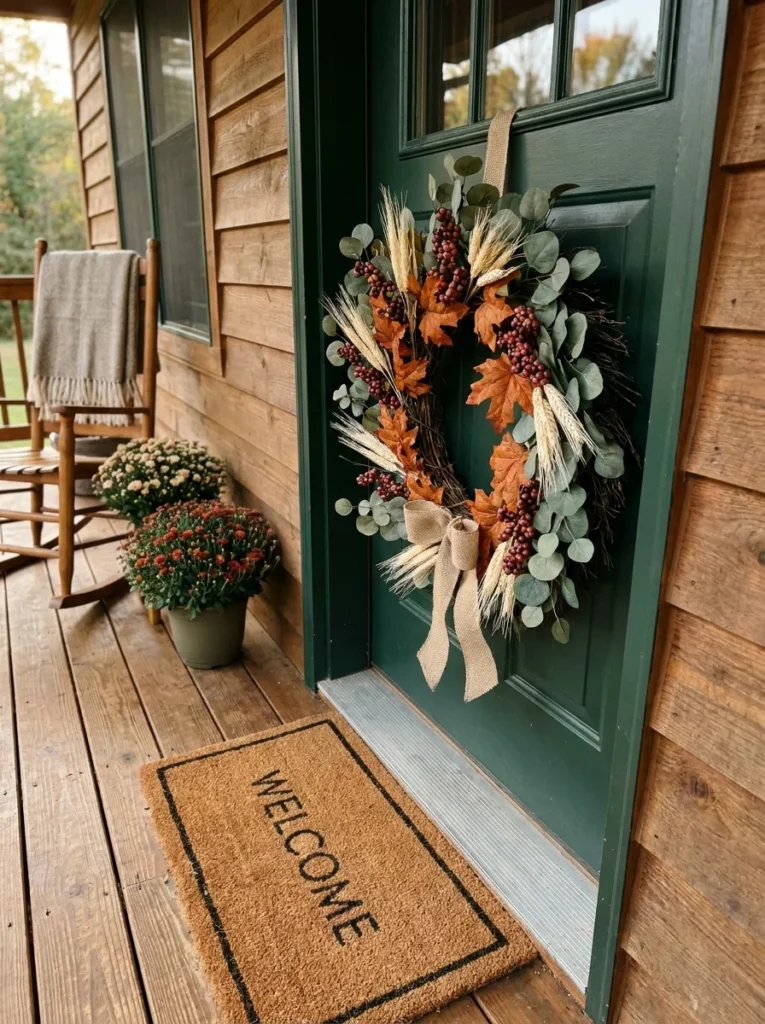
A plain front door can make an otherwise decorated porch feel unfinished. The easiest fix is often right at eye level, a seasonal wreath that adds color and texture without taking up any floor space.
This fall wreath uses a grapevine wreath form, faux eucalyptus, autumn leaves, wheat stems, berries, and a simple bow. You can make it in about 60 to 90 minutes for $30 to $50, and the finished wreath works on a front door, covered porch, apartment entry, or interior mudroom door.
Time: 1–1.5 hours | Cost: around $30–$50 | Difficulty: Easy | Best for: Front doors, covered porches, and apartment entries
What You’ll Need
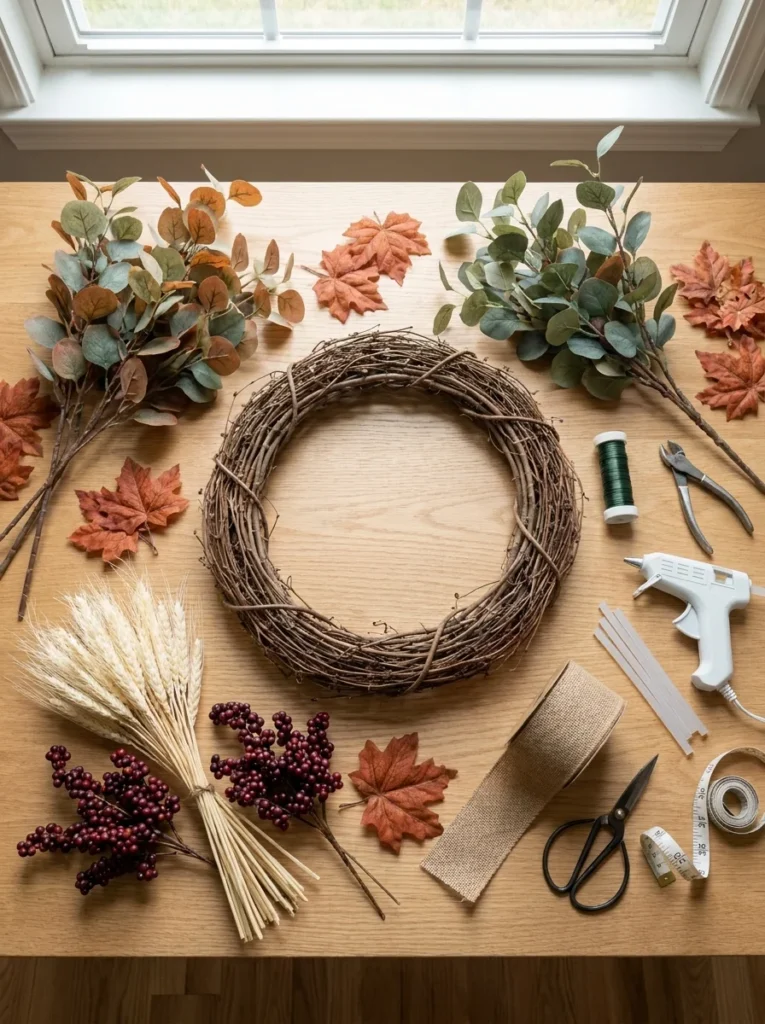
- 18-inch grapevine wreath form, around $8–$12
- Faux eucalyptus stems, around $5–$8
- Faux maple or oak leaves, around $5–$8
- Cream or tan wheat stems, around $4–$6
- Burgundy berry stems, around $4–$6
- 18 inches of 2.5-inch-wide burlap or velvet ribbon, around $4–$7
- Floral wire, around $3–$5
- Wire cutters, around $8–$12
- Hot glue gun and glue sticks, around $8–$12
- Scissors, already owned or around $5
- Over-the-door wreath hanger, around $8–$12
You can find most of these supplies at Michaels, Hobby Lobby, Walmart, Amazon, or a local craft store. Dollar-store faux foliage also works well for smaller pieces. For a more natural-looking base, check thrift stores for old grapevine wreaths and reuse the form.
Choose the Right Wreath Size
Start with an 18-inch grapevine wreath. Once the greenery and foliage are added, it will usually measure around 22 to 24 inches across, which gives it enough presence on a standard front door without covering the hardware.
Lay the wreath flat on your work surface and decide where the fuller section will sit. For this design, keep the bottom-right quarter fairly open so the wreath doesn’t become visually heavy on every side. An 18-inch wreath form is a good starting size for most standard doors. If you have a double door or a very wide entry, use a 22- to 24-inch form instead. The common mistake is buying a wreath form based only on its bare diameter and forgetting that foliage adds several inches.
Trim the Greenery Into Manageable Pieces
Cut the eucalyptus stems into pieces between 6 and 10 inches long. Use wire cutters for thick faux stems instead of scissors, which can leave you with bent blades and crushed plastic.
Keep a mixture of short and long pieces. The longer stems will create the outer shape, while the shorter pieces fill small gaps near the center. You don’t have to make every cut perfect. Prepare about 12 to 15 greenery pieces before you start attaching anything. Lay them around the wreath first so you can see how much coverage you have. A common mistake is cutting every stem into tiny pieces at once. Longer sections are easier to position and can always be trimmed later.
Build the Greenery Base
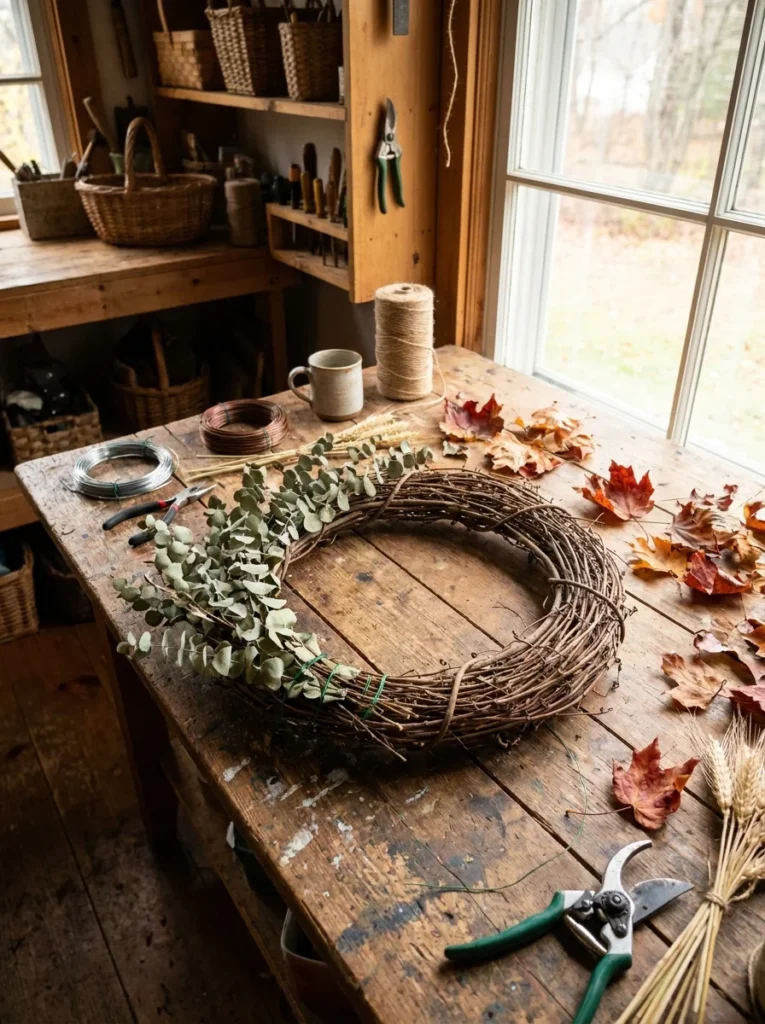
Begin at the lower-right section of the grapevine wreath and work upward along one side. Tuck each eucalyptus stem between the grapevine branches, then secure the thickest part with a short piece of floral wire.
Continue toward the upper-right and top sections, overlapping each piece by about 2 to 3 inches. Leave the left half mostly open because the fall leaves will fill that area later. Overlap each greenery piece by about 2 inches so the grapevine doesn’t show through in large gaps. If a stem keeps popping out, add another wire tie rather than relying on hot glue alone. I skipped the wire on one wreath once, and the greenery started slipping after a week on the door.
Add the Autumn Leaves in Small Clusters
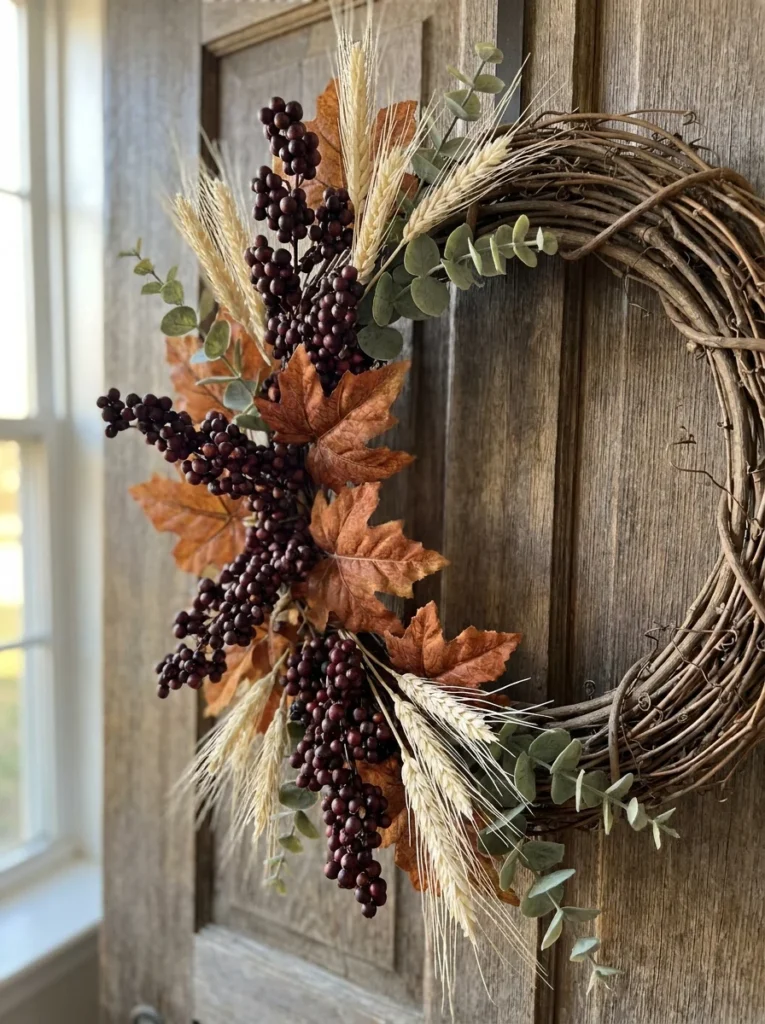
Take your rust, orange, brown, and muted gold faux leaves and separate them into small groups. Instead of placing one leaf at a time around the entire wreath, make three or four clusters.
Position one cluster near the lower-right, another near the upper-right, and a third toward the top-left. Tuck the stems beneath the eucalyptus and secure them with floral wire. Use three to four leaf clusters for an 18-inch wreath. This leaves enough greenery visible to keep the design from looking like a solid wall of orange. Avoid lining the leaves around the full circle. A wreath with an open section feels lighter and gives the eye somewhere to rest.
Tuck in Wheat Stems for Height
Cut the wheat stems into sections about 7 to 9 inches long. Place two or three pieces near the upper-right cluster and another two pieces toward the lower-right area. Angle the tips outward so they extend beyond the eucalyptus rather than pointing straight toward the center.
Secure the thick end of each stem with floral wire. If the faux stems have flexible wire inside, bend them gently before attaching them. Keep wheat stems 7 to 9 inches long for a balanced 18-inch wreath. Don’t place every stem at the same angle. Varying the direction by 15 to 30 degrees makes the arrangement look less stiff and more like gathered foliage.
Fill Small Gaps With Berries
Burgundy berry stems are perfect for filling spaces between the larger leaves and greenery. Cut the berry sprays into sections with three to five berries on each piece. Tuck them into gaps around the eucalyptus and secure the stems with floral wire.
Use fewer berries near the center and more around the outer foliage. This creates little points of color without turning the wreath into a berry-covered circle. Use 5 to 7 small berry pieces on an 18-inch wreath. Stand the wreath upright for a quick check before adding more. The mistake here is filling every empty spot immediately. Some visible grapevine is useful because it gives the wreath structure and keeps the foliage from looking crowded.
Make and Attach a Simple Bow
Cut a piece of 2.5-inch-wide burlap, velvet, or wired ribbon about 30 inches long. Create two loops, each roughly 5 inches wide, leaving two tails about 8 inches long. Pinch the center tightly and secure it with floral wire.
Attach the bow near the lower-right foliage cluster, where the greenery is already thick enough to hide the wire. Fluff the loops and angle the tails downward. Cut about 30 inches of ribbon for a medium bow. If the ribbon has wired edges, bend the loops into shape with your fingers. Don’t put the bow at the exact bottom center unless you want a traditional symmetrical wreath. A slightly off-center bow gives this design a more relaxed porch look.
Secure Loose Pieces With Hot Glue
Hold the wreath upright and gently shake it once. Watch for stems or leaves that move. Use small dots of hot glue at the base of loose decorative pieces, especially the berries, lightweight leaves, and bow.
Don’t glue the main eucalyptus stems directly to the grapevine if you plan to reuse the wreath next year. Floral wire makes those pieces easier to remove. Use a small 1/4-inch dot of hot glue on loose accents rather than coating an entire stem. Too much glue can create visible hardened blobs between the leaves. Let the glue cool for several minutes before lifting the wreath, then check every section with your fingers.
Hang the Wreath and Check the Scale
Use an over-the-door hanger if you’re renting, or a properly rated hook if you’re attaching hardware to your own door. Center the wreath at eye level, with its middle roughly 57 to 60 inches above the porch floor.
Step back about 10 to 15 feet and check the wreath against the door. If the door is dark, cream wheat and rust leaves will stand out nicely. On a pale door, darker eucalyptus and burgundy berries provide stronger contrast. Make sure the wreath doesn’t cover the house number, peephole, handle, or doorbell. A common mistake is hanging it too high, which makes the wreath look disconnected from the rest of the entry.
For more seasonal entry styling, try [INTERNAL LINK: article about cozy fall front porch decorating ideas] next.
Mistakes That Ruin the Result
- Making the wreath too symmetrical: Leave one section open and concentrate foliage on two-thirds of the form.
- Using too many colors: Stick with three or four autumn shades, such as rust, cream, burgundy, and green.
- Skipping floral wire: Wire the heavier stems before using glue on small decorative pieces.
- Making the bow oversized: Keep the finished bow around 10 to 12 inches wide on an 18-inch wreath.
- Covering the whole grapevine: Leave small areas of the natural base visible so the wreath has texture.
Frequently Asked Questions
Q: How do I make a fall porch wreath that lasts all season?
A: Use outdoor-rated faux foliage, floral wire, and a covered location whenever possible. Keep the wreath away from constant rain and direct moisture to help the leaves and ribbon stay in good shape.
Q: How much does it cost to make a fall wreath?
A: A homemade wreath usually costs around $30 to $50 with new supplies. Reusing a wreath form and shopping at Walmart or thrift stores can bring the cost closer to $20.
Q: What size wreath works best for a front door?
A: An 18- to 24-inch wreath form works well for most standard doors. An 18-inch grapevine form usually becomes about 22 to 24 inches wide after foliage is added.
Q: Can I use real leaves on a fall wreath?
A: You can, but dried real leaves become brittle and shed as the season goes on. Faux leaves are easier for a wreath that will hang outside for several weeks.
Q: How do I keep a fall wreath from moving in the wind?
A: Use two small floral wire ties around the wreath hanger or secure the wreath to the door with clear fishing line. Avoid relying on a single loose hook in a windy location.
Q: Can I make a fall wreath without a hot glue gun?
A: Yes. Floral wire is enough for grapevine wreaths, foliage, leaves, wheat, and berries. It also makes the wreath easier to take apart and reuse next year.
Make Your Front Door Ready for Fall
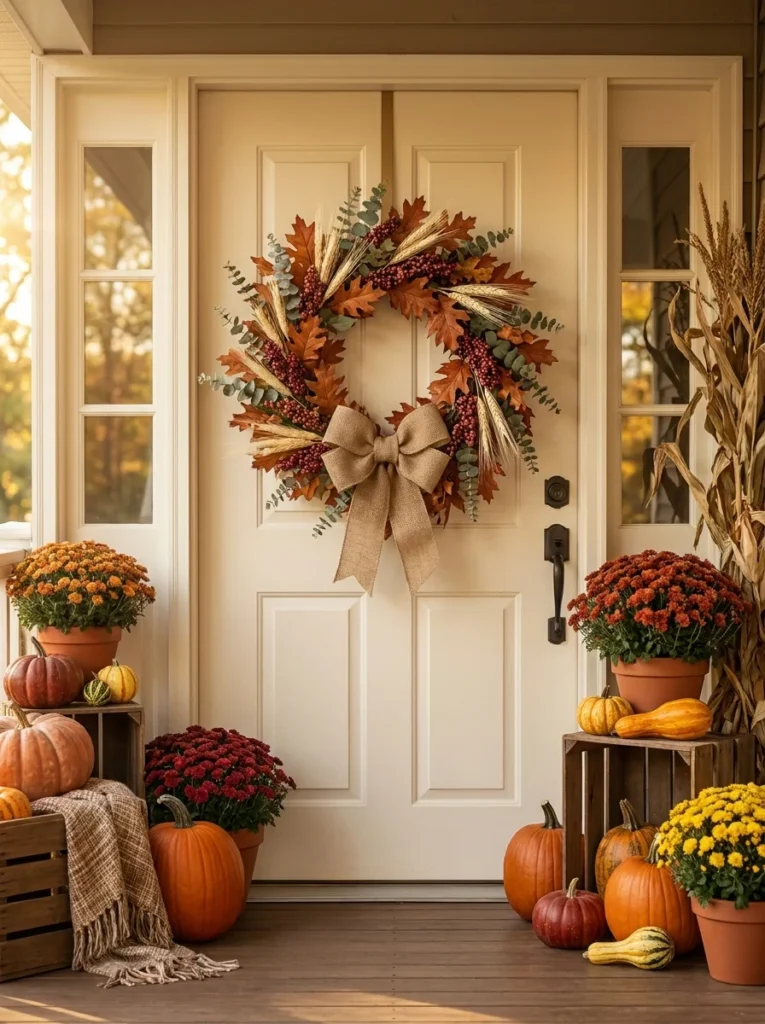
Learning how to make a fall porch wreath is one of those small weekend projects that gives you a big seasonal change without filling the porch with decorations. Pick a grapevine form, choose three or four autumn colors, and build the wreath in layers rather than trying to attach everything at once. Give yourself an hour or two this weekend, put on some music, and make a wreath that you can reuse with new leaves and ribbon next year.
Leave a Reply