
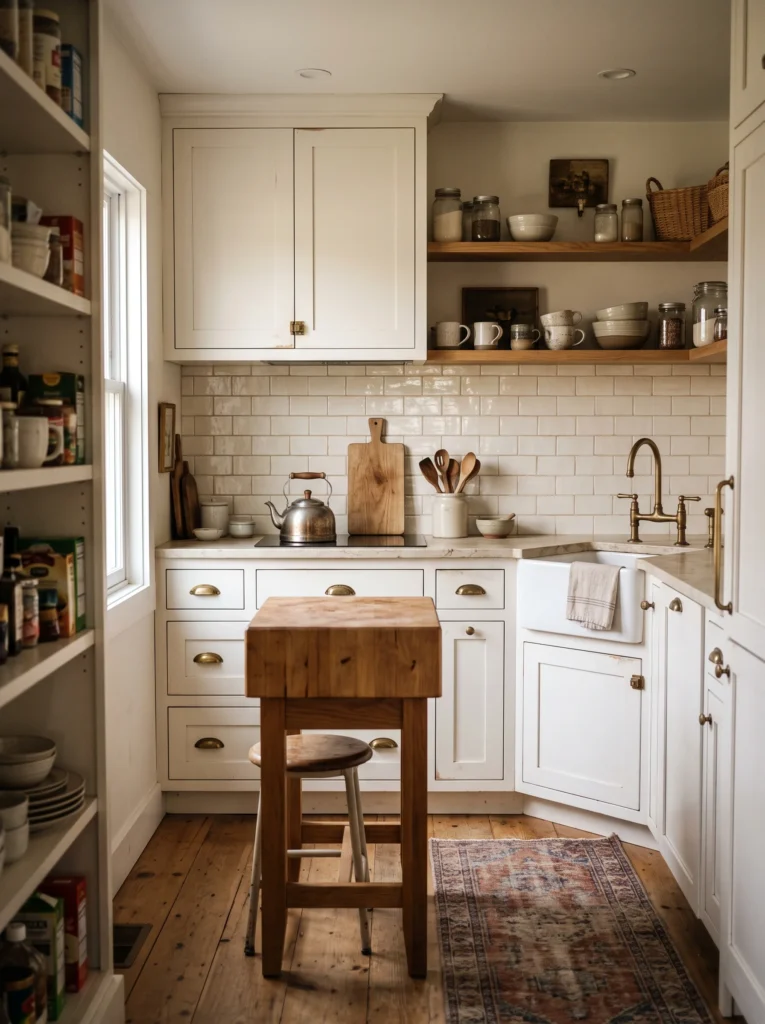
A tiny kitchen can feel cramped before you even start cooking. One crowded countertop, a few mismatched storage containers, and suddenly the room feels smaller than it really is. The good news is that farmhouse style works especially well in compact kitchens because it relies on warm materials, simple shapes, open storage, and practical decorating.
The best tiny farmhouse kitchen ideas combine useful storage with cozy details without filling every inch. Think white or cream cabinets, natural wood, vintage hardware, woven baskets, compact lighting, and a few carefully chosen decorative pieces. Even a $20 thrift-store find can give a small kitchen plenty of personality.
1. Give White Cabinets a Warm Wood Countertop

White cabinetry is a classic farmhouse choice, but an all-white kitchen can feel a little flat in a small room. Add a butcher-block countertop in oak, maple, or acacia to bring in natural warmth without adding visual clutter. A 24- to 30-inch-deep countertop is standard for most base cabinets, so you don’t lose valuable floor space. For a compact kitchen, IKEA and Home Depot often have wood countertop options starting around $100 to $250, depending on length and material.
Keep the rest of the room simple. Use aged brass or matte black pulls, one ceramic utensil crock, and a neutral runner. If you cook frequently, seal butcher block according to the manufacturer’s instructions and wipe standing water quickly. I especially like this approach in rental kitchens because changing cabinet hardware and adding a removable countertop section can create a farmhouse feel without a major renovation.
2. Turn One Small Wall Into Open Farmhouse Shelving

A narrow wall can become useful storage with two or three floating shelves. Choose unfinished or lightly stained oak for a traditional farmhouse look, then display only the things you actually use. A 10- to 12-inch-deep shelf gives plates and mugs enough room without sticking too far into the walkway.
You can find basic pine shelves at Home Depot for around $20 to $35 each, while reclaimed boards from a local salvage shop can cost even less. Mount them into wall studs whenever possible, especially if you’re storing ceramic dishes. Keep the heaviest pieces on the lower shelf and lighter glassware above.
Don’t line every inch with objects. Leave a little empty wall between groups so the shelves don’t become another clutter zone. For a rental, use appropriate removable hardware where the shelf load allows it. This is also a great place to repeat the warm wood tone from your cutting boards or countertop.
3. Add a Petite Farmhouse Island With Storage

A full kitchen island isn’t practical in every small room. A narrow furniture-style island often works much better. Look for a piece around 18 to 24 inches wide and 36 to 48 inches long, leaving at least 36 inches for a comfortable walkway where possible. IKEA, Walmart, and Facebook Marketplace are good places to hunt for compact options between $80 and $250.
Choose an island with drawers, shelves, or cabinet doors rather than a purely decorative table. Store mixing bowls, cutting boards, or extra towels underneath. A butcher-block top adds farmhouse character and gives you a practical prep surface.
One small mistake is choosing an island that’s too deep. Measure the open floor area with painter’s tape before buying anything. Stand inside the taped outline and open your oven and dishwasher doors. If you can’t move comfortably around them, the island is too large. This little test can save you from an expensive return.
4. Swap Builder Hardware for Aged Brass Pulls
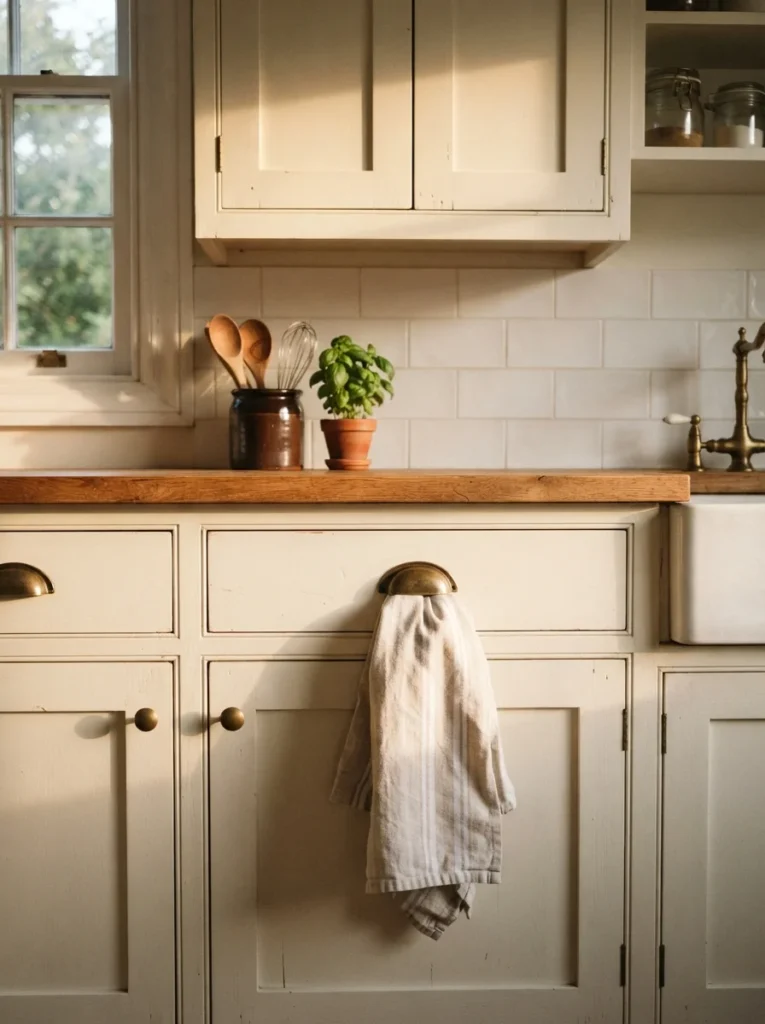
Cabinet hardware takes up almost no space, yet it can change the character of the entire kitchen. Replace shiny builder-grade knobs with aged brass cup pulls, simple brass knobs, or matte black handles. For a small kitchen, using one finish throughout keeps the room visually calm.
A set of 10 to 15 cabinet pulls can cost about $25 to $60 from Amazon, Target, or Home Depot. Before ordering, measure the distance between the screw holes on your existing handles. Many pulls use a 3-inch center-to-center measurement, but don’t assume yours does.
If the cabinets are painted, remove one old handle and check the paint underneath before buying everything. You may find that the previous hardware left marks or faded areas. A small sample can prevent a larger headache.
For cleaning, use a soft damp cloth and mild soap. Skip abrasive cleaners on aged finishes because they can remove the patina that gives farmhouse hardware its character.
5. Use a Vintage Runner to Soften the Floor

A runner is one of the easiest ways to make a tiny kitchen feel lived-in without taking up any permanent space. Look for faded terracotta, muted blue, olive, cream, or brown patterns that work with your cabinet color. For most galley kitchens, a 2.5-by-7-foot runner fits nicely along the sink and prep area.
Target and Walmart often have washable runners around $25 to $60, while vintage rugs from Etsy or local antique shops can cost more. If you cook often, choose a washable synthetic option. It will handle splashes much better than a delicate antique textile.
Place a nonslip pad underneath so the rug stays put. Vacuum it regularly, especially around the edges where crumbs collect. A small runner also helps visually define the working area, which is useful when the kitchen shares space with a dining or living room.
For more ideas on using small textiles throughout your home, see [INTERNAL LINK: article about cozy small-space decorating ideas].
6. Hang a Simple Farmhouse Pendant Over the Sink

Lighting deserves more attention in a tiny kitchen because one fixture can affect the whole room. A single pendant over the sink creates a farmhouse focal point without using counter or cabinet space. Look for clear glass, aged brass, brushed nickel, or matte black depending on the other finishes in your kitchen.
A 10- to 14-inch-wide pendant usually feels proportional above a small sink. Basic farmhouse-style fixtures from Home Depot or Amazon often cost around $40 to $100. If you’re renting, a plug-in pendant can provide a similar effect without electrical work.
Keep the bulb warm, around 2700K, for a cozy evening atmosphere. For everyday cooking, pair decorative lighting with brighter ceiling or under-cabinet lighting so the room isn’t dependent on one bulb.
Before hanging anything, check the door swing and cabinet clearance. A pretty fixture that sits directly in your sightline or bumps into a tall person’s head gets old quickly.
7. Display Cutting Boards Like Useful Wall Art
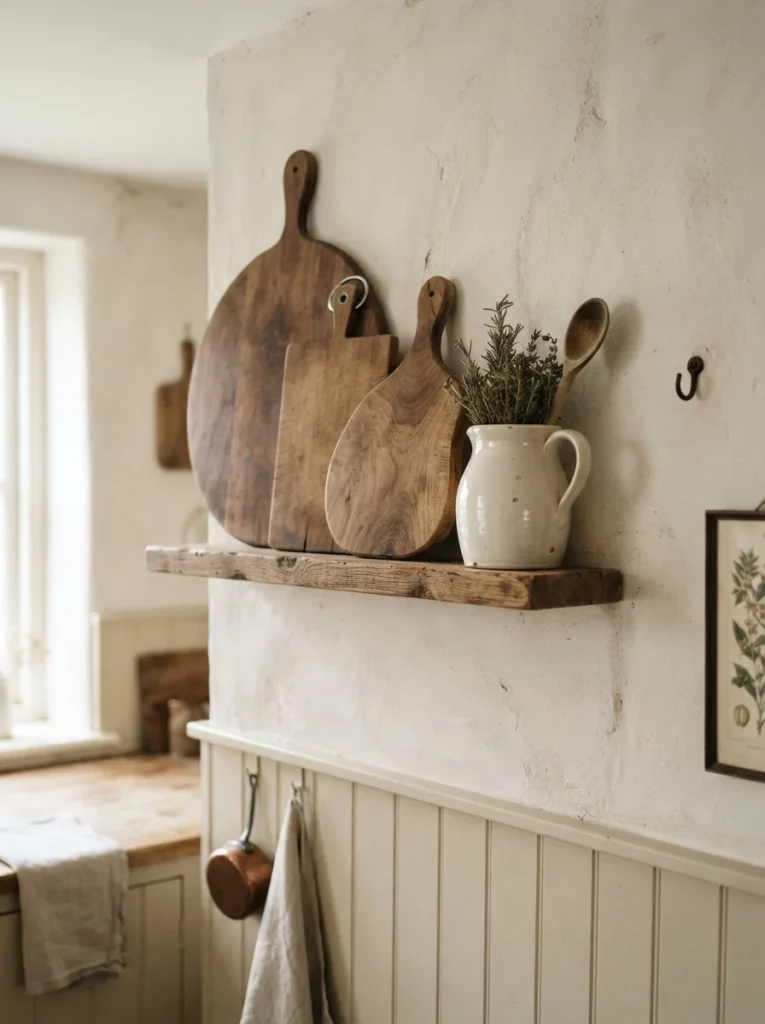
Instead of hiding cutting boards inside a crowded cabinet, turn a few into practical decoration. Choose two or three boards with different shapes, such as a round paddle board, a rectangular butcher board, and a small handled board. Hang them from simple black or brass hooks beside the prep area.
Expect to spend around $15 to $50 for a small collection from Walmart, Target, or a thrift store. Don’t buy boards just for decoration if you don’t have much storage. Use the ones you already cook with.
Keep raw wood boards dry between uses and oil them occasionally with food-safe mineral oil. Never soak them in a sink full of water. For a farmhouse look, choose natural wood with visible grain rather than highly polished boards.
The trick is restraint. Three boards create a collected look. Eight boards on one wall can make a tiny kitchen feel crowded. Leave a few inches between each piece and hang them where they’re easy to grab.
8. Add Beadboard to One Small Section
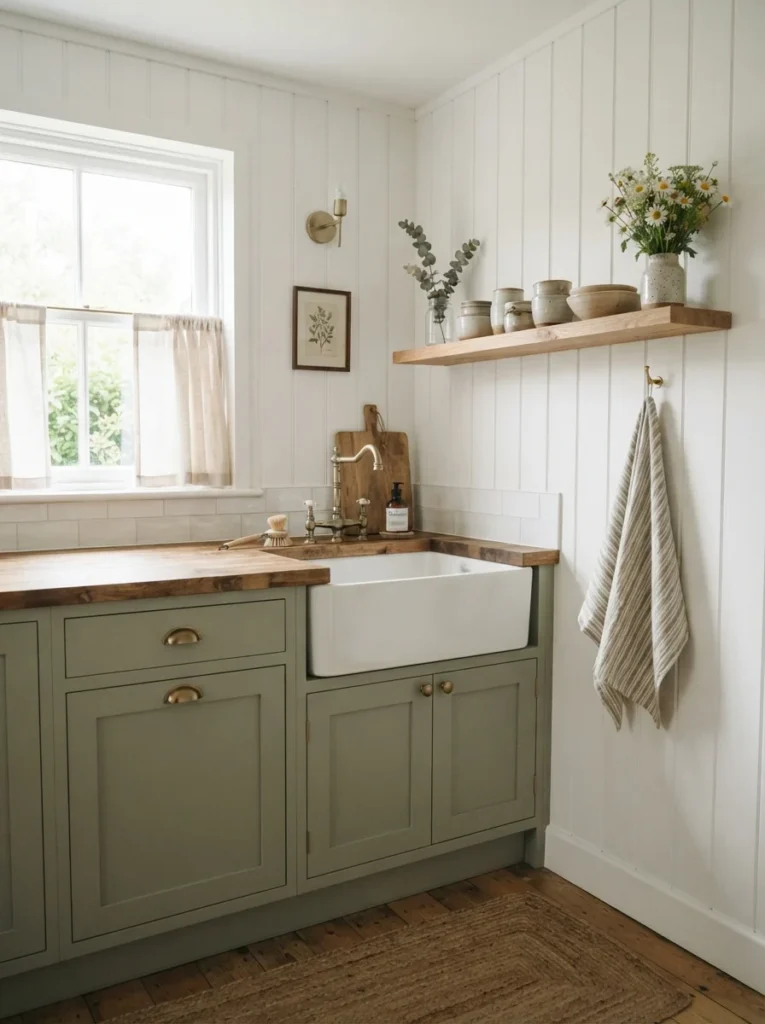
Beadboard gives a small kitchen instant architectural character, especially when the cabinets themselves are plain. Rather than covering every wall, install it behind the sink, beneath open shelving, or on one narrow backsplash section. A 32- to 36-inch-high panel works well behind a standard countertop.
Primed MDF beadboard panels often cost around $25 to $50 per panel at Home Depot, depending on size and thickness. Paint it warm white, soft cream, muted sage, or dusty blue. Satin or semi-gloss paint is easier to wipe clean than flat paint in a kitchen.
If you’re renting, removable beadboard wallpaper can create a similar visual effect for around $20 to $40 per roll. Test a small section first to make sure the adhesive won’t damage the wall.
Keep the surrounding surfaces quiet. Beadboard already provides texture, so pair it with simple hardware and one or two wood accessories instead of adding several competing patterns.
9. Create a Tiny Coffee Station on One Counter Corner

A coffee station doesn’t require an entire cabinet. Choose one 18- to 24-inch-wide section of counter and group the coffee maker, mugs, and beans together on a small wood or metal tray. The tray creates a visual boundary so the area looks intentional rather than like appliances were left wherever they fit.
A simple wooden tray costs around $15 to $30 at Target or Walmart. Add two ceramic mugs from a thrift store for $4 to $8 each, then use a glass jar you already own for coffee beans.
Keep the setup limited to daily items. Extra syrups, seasonal mugs, and large canisters can quickly eat up a tiny countertop. Store those in a nearby cabinet.
Wipe coffee grounds and spills daily, and wash the tray weekly. If your coffee maker has a bulky water reservoir, position it so you can refill it without moving the entire station. Small details like that make the corner practical instead of merely decorative.
10. Paint Lower Cabinets a Soft Sage Green
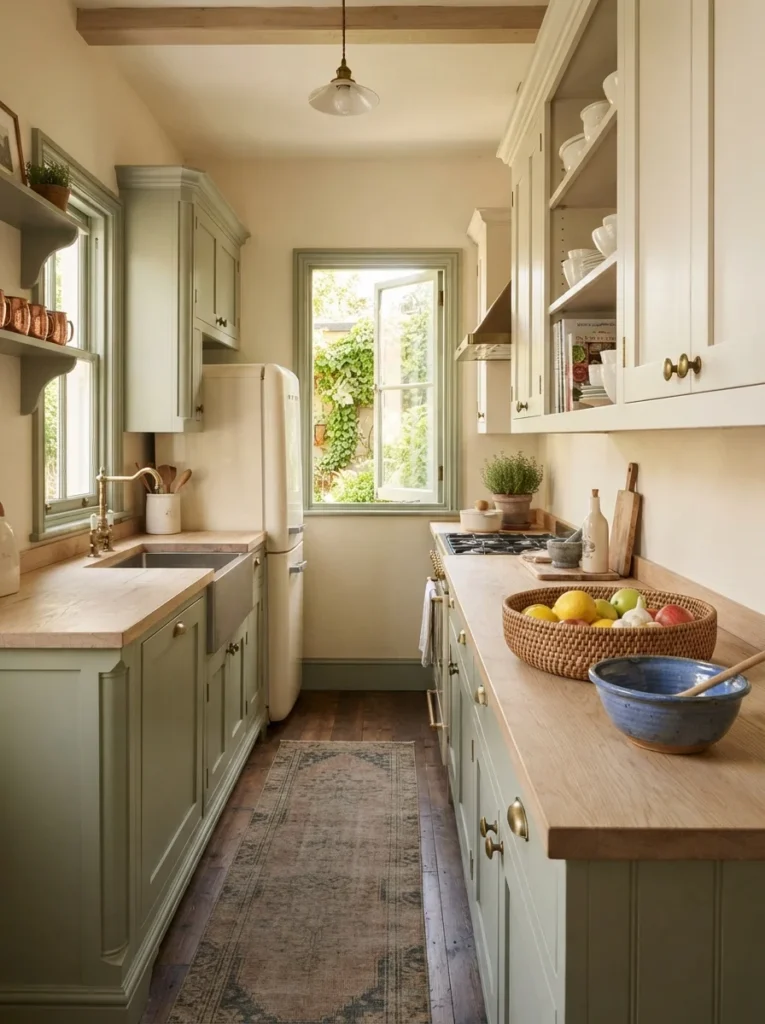
If your kitchen feels too plain, paint only the lower cabinets. Soft sage green works beautifully with cream walls, warm wood, brass hardware, and natural woven accessories. Keeping the upper cabinets white helps the ceiling feel taller.
A quality cabinet paint project can cost around $80 to $150 for primer, paint, brushes, and supplies, depending on the number of doors. Remove the doors and label each one with painter’s tape so everything returns to the right spot. Clean the surfaces thoroughly before sanding and painting.
Use a satin cabinet finish because it wipes clean more easily than chalky or flat finishes. Give each coat enough drying time before reinstalling the hardware.
This idea works especially well in rental-inspired makeovers where replacing cabinets isn’t realistic. If painting isn’t allowed, try sage-green textiles, ceramic pieces, or removable cabinet accents instead. Keep the green muted rather than bright so the small room still feels calm.
11. Replace a Bulky Trash Can With a Pull-Out Bin

One of the least attractive things in a small kitchen is often the trash can sitting in plain sight. A pull-out bin inside a lower cabinet frees the floor and keeps the room visually cleaner. Basic pull-out systems fit inside many 12- to 18-inch-wide cabinets, although you should measure the interior opening before buying.
Hardware from Home Depot or Amazon generally runs around $40 to $100. Choose a system with separate bins if you want recycling tucked away too. Installation usually involves mounting the frame to the cabinet floor, so check that the cabinet base is sturdy enough.
Use removable liners and wipe the inside of the cabinet every week. A small leak from a trash bag can create a nasty smell if it sits unnoticed.
If your cabinets don’t allow a pull-out system, use a slim lidded bin around 8 to 10 inches wide. Place it beside the refrigerator rather than in the middle of the walkway. The goal is to keep the main sightline open.
12. Use a Narrow Farmhouse Cart for Extra Storage

A rolling cart is useful when cabinets are already full but you don’t have room for another permanent piece. Choose one around 12 to 16 inches wide so it can slide beside a refrigerator, pantry, or cabinet without blocking the walkway.
Walmart, IKEA, and Amazon have simple carts for roughly $40 to $100. Look for wood shelves, black metal frames, or a combination of both to keep the farmhouse feel. Use the top for everyday items like a coffee grinder or fruit bowl, then store linens and dry goods underneath.
Don’t overload the cart. Heavy appliances on every shelf make it difficult to move and can make the small kitchen feel crowded. Keep heavier objects on the bottom.
A cart is also handy during parties because you can roll it into the dining area as a serving station. Wipe wooden surfaces with a damp cloth and dry them promptly. For metal frames, mild dish soap and water are enough for routine cleaning.
13. Install Under-Cabinet Lighting for Evening Warmth

Small kitchens often have one annoying lighting problem: the ceiling fixture is bright, but the countertop where you’re working is dark. Under-cabinet lights solve that without taking up any physical space. LED puck lights or slim light bars can be installed beneath upper cabinets.
A basic rechargeable or plug-in set costs around $20 to $50. Choose warm white around 2700K to 3000K for a farmhouse atmosphere. If you’re using the lights for food preparation, choose a brighter setting than you would for evening ambiance.
Mount the lights toward the front edge of the cabinet rather than directly against the wall. This spreads illumination across the work surface instead of creating a bright stripe at the backsplash.
Clean the light covers occasionally with a dry microfiber cloth. Grease can collect around cooking areas, so a lightly damp cloth with mild soap works when necessary. This small upgrade makes the kitchen easier to use while giving the room a warm glow after sunset.
14. Hang a Small Peg Rail for Everyday Kitchen Tools

A short peg rail can hold the kitchen tools you reach for constantly while leaving drawers less crowded. Install a 24- to 30-inch-long wood rail under an open shelf or beside the sink. Hang only five or six items, such as wooden spoons, measuring cups, a small strainer, and a linen towel.
Simple pine or oak rails cost around $15 to $35 from Etsy, Amazon, or home improvement stores. Paint it cream for a softer appearance or leave the wood natural for more contrast.
Mount the rail securely into studs or use anchors rated for the load. Avoid hanging heavy cast-iron cookware from a lightweight rail.
Wipe wooden tools regularly and wash anything that touches food according to its material. Keep the rail away from direct splashing around the sink so the wood stays in good condition.
This setup is particularly handy in a narrow kitchen because vertical wall space becomes useful storage without taking over the countertop.
15. Style a Small Farmhouse Sink Without Crowding It

You don’t need a huge apron-front sink to get farmhouse character. In a compact kitchen, a 24- to 30-inch sink can provide the look while taking up less cabinet width than larger models. Fireclay gives a classic appearance, while porcelain or composite options can cost less.
Small farmhouse-style sinks often start around $250 to $500, with premium fireclay models costing considerably more. If replacing the sink, measure the existing cabinet opening first. This is not a good place to guess.
Keep the surrounding counter nearly empty. A brass or brushed nickel faucet, one ceramic soap dish, and a folded linen towel are enough. Use a soft nonabrasive cleaner for porcelain or fireclay, and wipe away coffee, tea, and food stains rather than letting them sit.
If a sink replacement isn’t possible, focus on the area around your existing sink. A farmhouse faucet style, striped towel, wood brush, and simple ceramic dispenser can create the same country-inspired feeling for under $100.
16. Mix Cream Ceramics With One Muted Accent Color
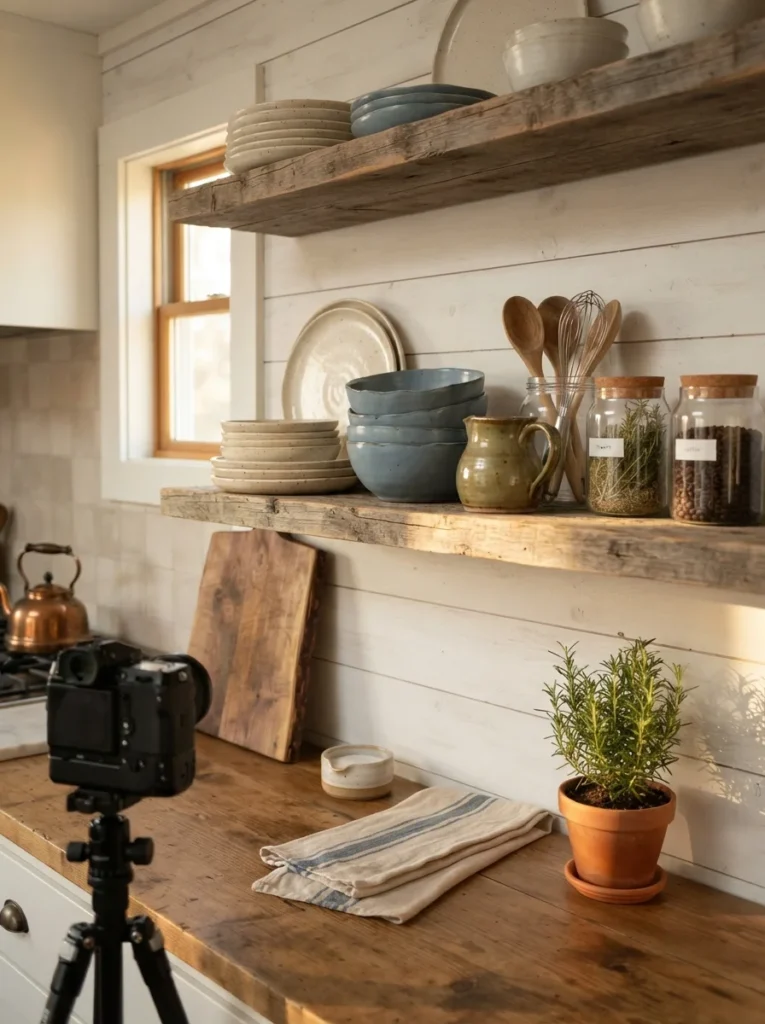
Farmhouse kitchens don’t have to be entirely white and beige. Add one muted accent color through dishes, pottery, or textiles. Dusty blue, olive green, faded terracotta, and soft mustard all work nicely with warm white cabinetry.
Start with one accent color, then repeat it two or three times around the room. A thrift store is perfect for this because you can often find ceramic bowls or pitchers for $5 to $12 each. Don’t worry if every piece isn’t from the same collection. Slight variation gives the shelves a collected feeling.
Choose matte or lightly glazed ceramics rather than highly glossy pieces if you want a softer farmhouse look. For open shelves, keep stacks short enough that you can remove one plate without knocking everything else over.
Wash frequently used dishes normally, but dust decorative pottery with a microfiber cloth. The trick is to use color in small doses. A few blue bowls can add character without making a tiny kitchen feel visually busy.
17. Turn a Window Ledge Into a Mini Herb Garden
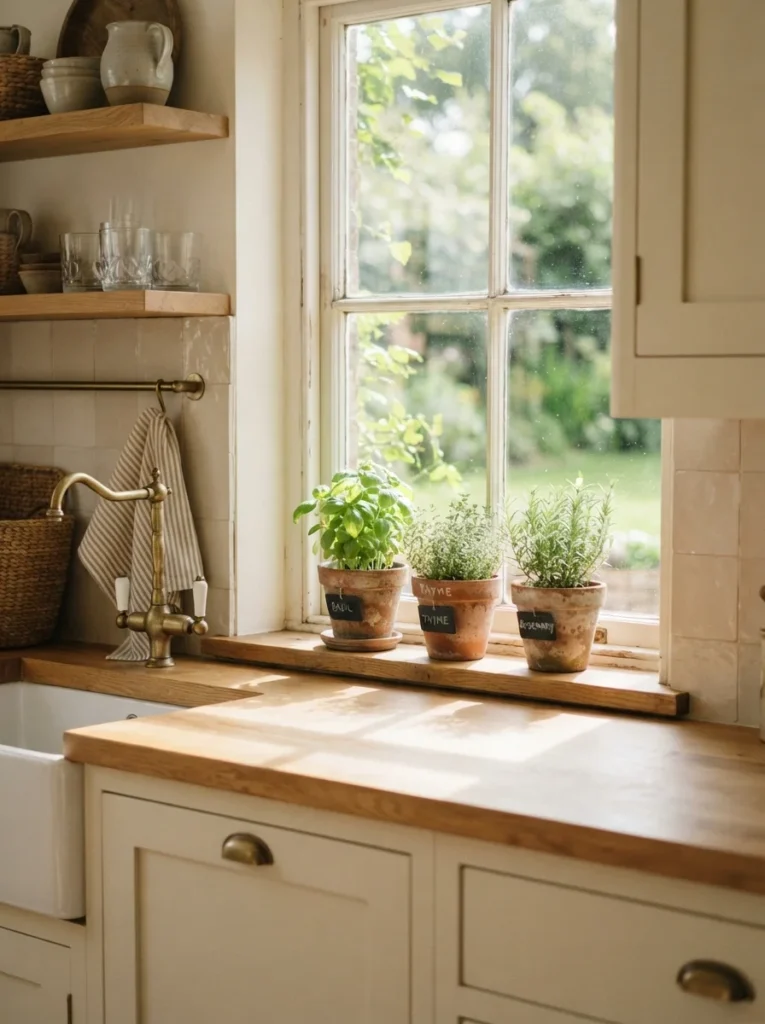
A sunny kitchen window can do more than provide a view. Use the ledge for three small herbs in matching terracotta pots. Basil, thyme, and rosemary are practical choices, and their greenery adds a farmhouse touch without taking counter space.
Small terracotta pots cost around $3 to $7 each at Home Depot, Walmart, or local garden centers. Use saucers underneath so watering doesn’t stain the sill. Keep the plants where they receive several hours of light, and rotate the pots every few days so growth stays even.
Don’t overcrowd the window. Three pots in the same general size look much tidier than a collection of mismatched containers.
Trim herbs regularly instead of letting them become leggy. Water based on the soil condition rather than a strict schedule. If the window receives very little sunlight, use a small grow light instead of forcing plants into a spot where they won’t thrive.
The little garden also gives you something useful to reach for while cooking.
18. Add a Freestanding Pantry Cabinet

If cabinet storage is limited, use vertical space with a slim freestanding pantry. Look for a cabinet around 18 to 24 inches wide and 12 to 18 inches deep, especially if you have an unused wall beside the refrigerator or dining area.
Facebook Marketplace is excellent for finding older cabinets between $50 and $150. Paint a thrifted piece warm white or soft sage, replace the knobs, and add baskets inside. A glass-front upper section can display pretty jars while closed drawers hide less attractive pantry goods.
Anchor a tall cabinet to the wall so it can’t tip, particularly in a home with children or pets. Store heavier cans and appliances on lower shelves, with lighter dry goods higher up.
Use removable shelf liners to protect the interior from spills. Wipe jars before putting them away so sticky residue doesn’t build up inside the cabinet.
A narrow pantry can hold much more than a collection of small countertop organizers, which makes it a smart choice for a genuinely tiny kitchen.
19. Use a Farmhouse-Style Open Plate Rack

A plate rack uses wall space that often sits empty above a counter or beside a cabinet. Choose a narrow wooden rack with individual slots and display the plates you use most. A 24- to 30-inch-wide rack can hold six to eight plates without taking over the wall.
Ready-made racks usually cost around $30 to $80, while thrifted wooden racks can be cheaper. Look for oak, pine, or painted wood with simple construction rather than ornate details.
Keep plates stacked by size and avoid filling every slot. Two small bowls or a folded linen towel can add variety without making the display look crowded.
Dust the rack weekly with a microfiber cloth, especially around the grooves where crumbs can collect. Wash plates normally before using them.
If your wall is narrow, mount the rack vertically instead of horizontally. This is one of those tiny farmhouse kitchen ideas that makes decoration useful because your favorite dishes become part of the room rather than hiding behind a cabinet door.
20. Frame One Vintage Farmhouse Print

Small kitchens don’t have much wall space, so choose one piece of art instead of creating a gallery wall. A vintage botanical print, old fruit illustration, or simple landscape can bring personality to an otherwise plain corner.
A 8-by-10-inch or 11-by-14-inch print is usually enough for a compact wall. Search thrift stores, Etsy, or Facebook Marketplace for pieces around $10 to $40. If the artwork itself is inexpensive, spend a little more on a wood frame because the frame often makes the piece look more substantial.
Hang it away from direct stove steam and grease. A wall beside the pantry or dining area is safer than directly behind the cooktop.
Dust the frame with a soft cloth and keep the glass clean with a gentle glass cleaner sprayed onto the cloth rather than directly onto the artwork.
One carefully chosen print often feels more authentic than filling every available wall with signs and quotes.
21. Build a Tiny Breakfast Nook With a Wall-Mounted Table

A small kitchen can still have a place for coffee and breakfast. Install a wall-mounted drop-leaf table that folds flat when you need more floor space. A table around 20 to 24 inches deep is enough for two people to sit comfortably.
Basic folding tables cost around $60 to $150 from IKEA, Amazon, or home improvement stores. Choose natural oak, pine, or painted white wood to suit the rest of the kitchen.
Mount the table securely into studs and check the manufacturer’s weight rating before using it. Add one spindle-back chair and a slim bench rather than two bulky chairs.
Keep the tabletop mostly clear. A small vase or ceramic mug is enough decoration.
If the table is used every day, wipe it after meals and use coasters under hot drinks. When folded up, the wall becomes useful again, which is exactly what a small kitchen requires. For more compact dining inspiration, see [INTERNAL LINK: article about small breakfast nook ideas].
22. Add a Woven Basket Above the Cabinets

The space above kitchen cabinets can become awkward dead space, especially in older homes with a gap between the cabinet tops and ceiling. A few woven baskets can fill that area while keeping the farmhouse style natural.
Choose baskets around 12 to 16 inches wide and use only two or three. Target and Walmart often carry seagrass or water-hyacinth baskets for $15 to $35 each. Pick similar natural tones so the display feels connected rather than random.
Don’t store anything you use every day up there. Reaching above cabinets is inconvenient, and dust collects quickly. Instead, use the baskets for seasonal linens, serving pieces, or lightweight items.
Wipe them with a dry microfiber cloth or soft brush every few weeks. Avoid soaking natural-fiber baskets because moisture can weaken the material.
If your cabinets already reach the ceiling, skip this idea. The goal is to use an existing gap, not add clutter where there isn’t any.
23. Choose a Cream Subway Tile Backsplash

Subway tile is popular for a reason. In a tiny kitchen, its simple rectangular shape creates texture without adding a busy pattern. Choose warm white or cream tile rather than stark blue-white if you want a softer farmhouse atmosphere.
Standard subway tiles are often 3 by 6 inches, and basic ceramic options can cost around $2 to $5 per square foot. Installation adds labor and supplies, so price the whole project before buying.
A running-bond layout is a safe farmhouse choice, but a vertical stack can make the walls feel taller. Use a warm gray, beige, or soft white grout depending on how much contrast you want.
Wipe the backsplash regularly around the stove, where grease builds up fastest. A soft sponge and mild dish soap usually handle routine messes.
If a full tile project isn’t in your budget, peel-and-stick backsplash panels can cost $30 to $80 for a small area. Test the adhesive on a hidden section first, especially in a rental.
24. Hang Linen Cafe Curtains at the Window

If your kitchen window feels bare, try cafe curtains instead of full-length panels. They cover the lower half of the window while leaving the upper portion open for daylight. Natural linen, cotton ticking, and subtle stripes all suit farmhouse interiors.
A pair of 24- to 36-inch-long panels can cost around $20 to $50 at Target, Walmart, or Etsy. Measure your window before ordering, including the inside width if you’re using a tension rod.
Choose a washable fabric because kitchen curtains collect dust and cooking odors. Wash them according to the label and let them air dry when possible to reduce shrinkage.
Keep the pattern simple. A tiny stripe or solid oatmeal color works better in a compact room than a large floral print competing with cabinets, tile, and countertops.
If your window sits close to the sink, leave enough clearance so the fabric doesn’t touch water or the faucet. This little textile change can make the kitchen feel softer without taking up any floor or counter space.
25. Create a Farmhouse Pantry Wall With Glass Jars
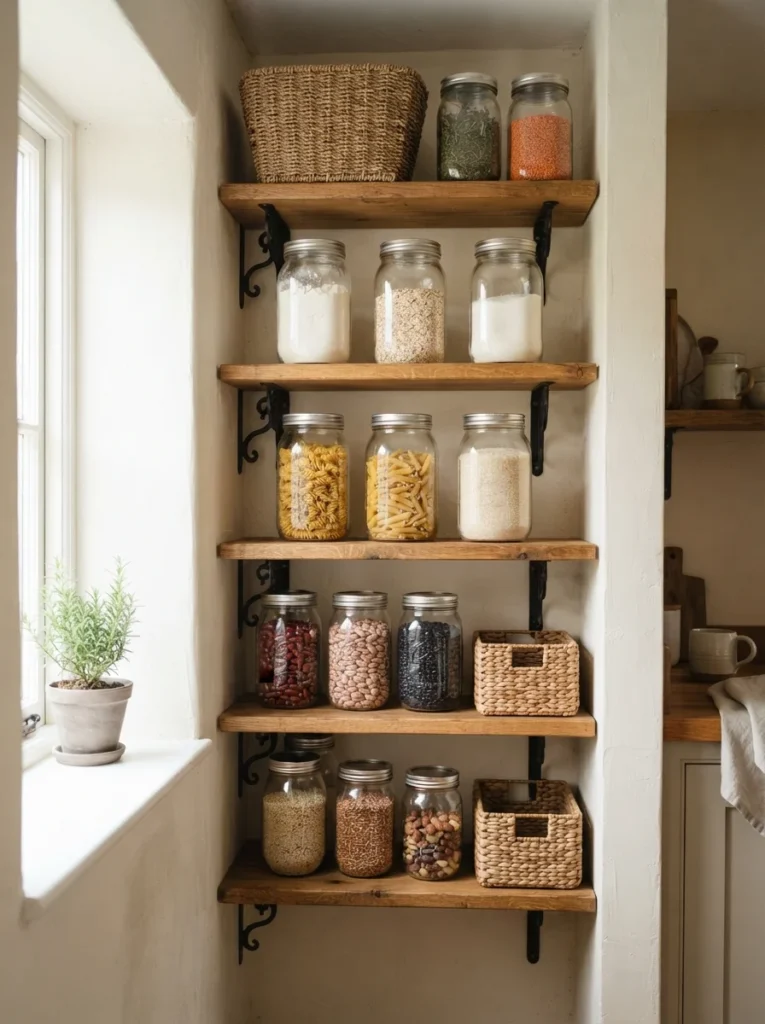
If your pantry cabinet is small, move a few dry goods into matching glass jars and place them on one dedicated shelf. Flour, oats, rice, pasta, beans, and sugar are easy candidates. The transparent containers make it easier to see what you have without opening every cabinet.
A set of six to eight 1-quart glass jars costs around $20 to $40 from Walmart, IKEA, or Amazon. Choose straight-sided jars that are easy to wash and stack.
Don’t transfer food into containers until you’ve checked expiration dates and washed everything thoroughly. Keep labels simple if several ingredients look alike. A small piece of kraft paper or a clean printed label works well.
Wash jars with warm soapy water and dry them completely before refilling. For foods such as flour, use airtight lids and rotate older ingredients forward.
This system works best for staples you buy repeatedly. You don’t have to decant every snack and cereal box in the kitchen.
26. Give a Thrifted Cabinet a Farmhouse Makeover
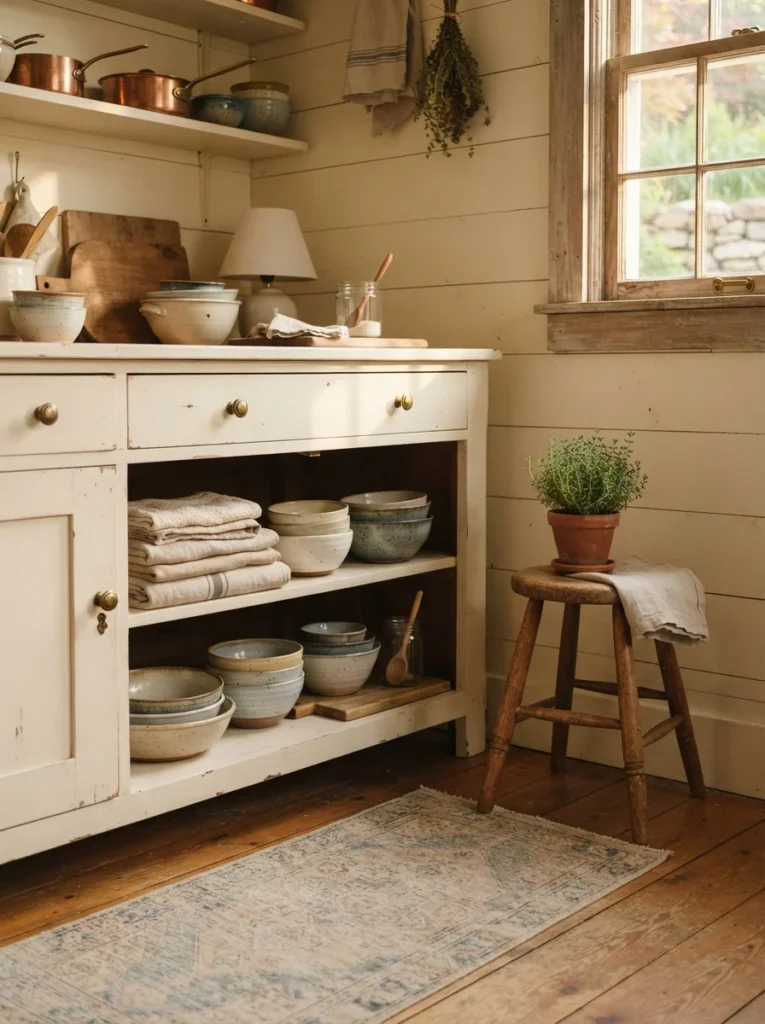
A secondhand cabinet can become one of the most useful pieces in a small kitchen. Look for solid wood rather than particleboard, especially if you plan to repaint it. Facebook Marketplace, Habitat for Humanity ReStore, and local thrift stores are good places to search.
A cabinet priced around $40 to $100 can often become a farmhouse piece with cleaning, paint, and new knobs. Sand glossy surfaces lightly, prime where needed, then use a durable satin cabinet paint in cream, sage, or muted blue.
Replace dated hardware with simple brass or black knobs for around $10 to $25. If the cabinet smells musty, clean it with diluted vinegar and water, then let it dry completely outdoors before bringing it inside.
Measure the available space before buying. A beautiful cabinet that’s six inches too wide isn’t a bargain.
Use it for appliances, serving dishes, linens, or pantry overflow. Giving an old piece a second life also adds character that brand-new matching furniture often lacks.
27. Use a Narrow Wood Valance Above the Sink
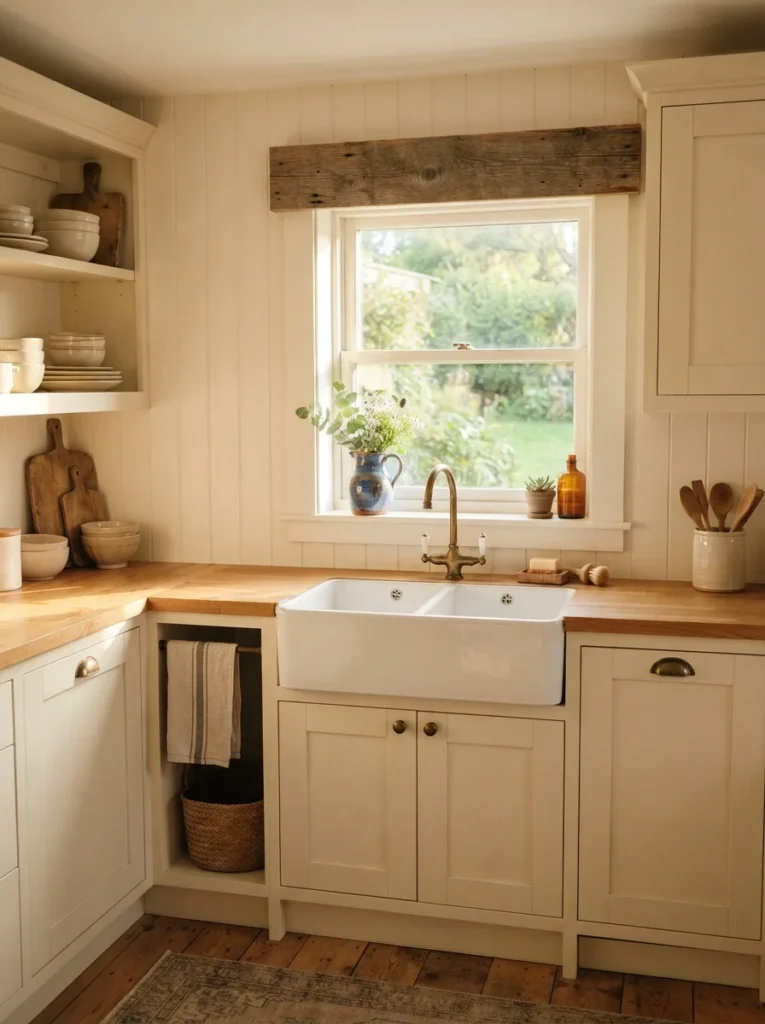
A narrow wood valance can add architectural interest without the bulk of a full cabinet or large curtain treatment. Use a simple board with a lightly distressed finish above the sink window or between upper cabinets.
A 6- to 8-inch-tall wood board is enough for this detail. A reclaimed board from a salvage shop can cost around $15 to $40, while a new pine board from Home Depot may cost less. Sand rough edges, stain or paint it, and seal the surface if the kitchen has high humidity.
Keep the shape simple. A straight board with small brackets looks more timeless than elaborate carved trim.
Dust the top regularly because kitchen grease can settle on exposed wood. If you use a clear finish, choose one suitable for interior wood and allow it to cure fully before installation.
This is a good project for a tiny kitchen because it adds visual weight in one narrow area without reducing cabinet, counter, or floor space.
28. Finish the Room With One Oversized Farmhouse Clock
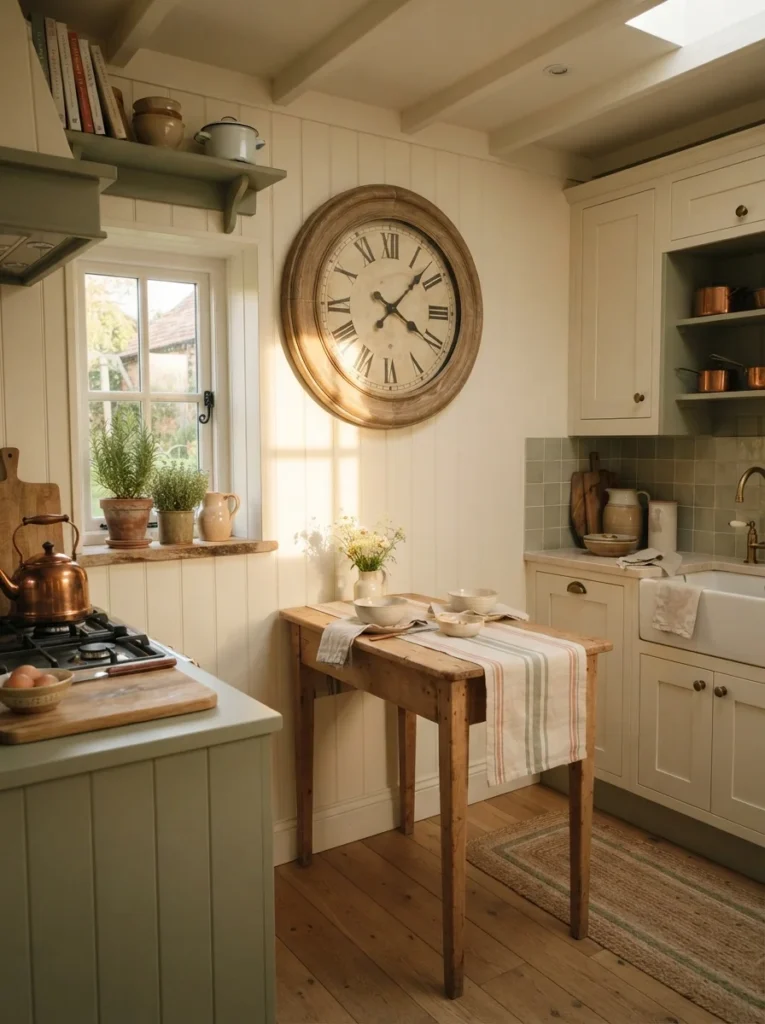
A small kitchen doesn’t have room for lots of wall accessories, so let one larger piece do the decorating. A round farmhouse clock with a wood or black metal frame can fill an empty wall above a breakfast table or beside the pantry.
Look for a clock around 18 to 24 inches in diameter. Basic options from Walmart, Target, and Amazon often cost $25 to $70. Choose a simple face and frame so the clock doesn’t compete with open shelves, artwork, or patterned textiles.
Before mounting it, place a paper circle the same size on the wall with painter’s tape. Leave it there for a day and see whether the scale feels right. This is an easy way to avoid drilling unnecessary holes.
Dust the clock with a dry microfiber cloth and keep it away from direct steam from the stove. In a tiny kitchen, one substantial decorative piece usually looks cleaner than a collection of small signs scattered across every wall.
Mistakes That Ruin the Look
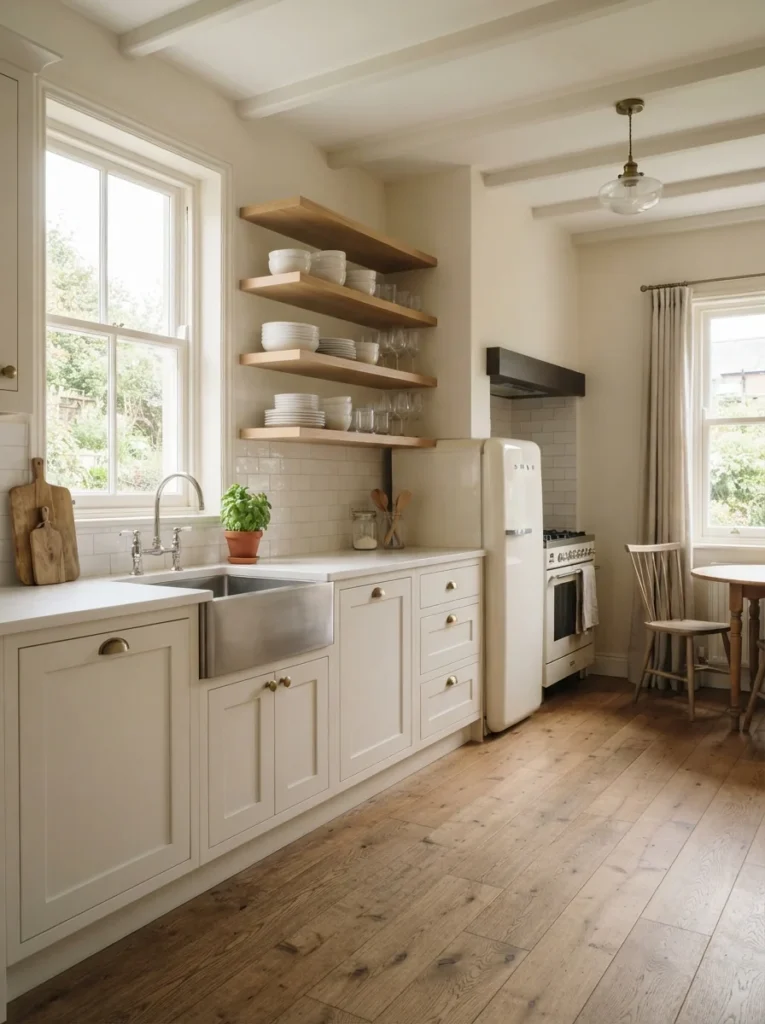
- Using too many small decorations: A tiny kitchen already has plenty of visual activity from cabinets, appliances, dishes, and countertops. Pick a few larger pieces instead of filling every surface.
- Choosing the wrong wood tone: Mixing five different wood colors can make a compact room feel disconnected. Stick with one main wood tone, then allow one small secondary tone.
- Ignoring walkway clearance: Before buying an island, cart, or cabinet, measure the walking path. Around 36 inches of clearance is a comfortable target for a main kitchen walkway.
- Making every surface white: Warm wood, muted green, aged brass, blue ceramics, or woven baskets keep a white kitchen from feeling flat. Add color in small, repeatable doses rather than covering everything at once.
Frequently Asked Questions
[Image Prompt: A bright tiny farmhouse kitchen with cream cabinets, natural oak shelves, sage accents, and warm brass hardware, styled simply with a ceramic pitcher and folded linen towel. Clear morning light fills the room. Shot on a high-end camera, natural light, no people, no text or words anywhere in the image.]
[Alt Text: Warm and simple tiny farmhouse kitchen with cream cabinets and natural wood.]
Q: What are the best tiny farmhouse kitchen ideas for a small budget?
A: Start with cabinet hardware, a vintage runner, open shelving, thrifted ceramics, and warm lighting. These changes can often be done for under $200 without changing the layout.
Q: What colors work best in a tiny farmhouse kitchen?
A: Warm white, cream, soft sage, dusty blue, muted terracotta, and natural wood all work well. Keep the main surfaces light and use stronger colors in small accents.
Q: How do I make a tiny farmhouse kitchen look bigger?
A: Keep upper walls light, use open shelving selectively, and maintain clear countertops. A narrow runner and good under-cabinet lighting can also make the room feel more organized and open.
Q: Is open shelving practical in a small farmhouse kitchen?
A: Yes, if you display items you use regularly and limit the number of pieces. Shelves around 10 to 12 inches deep usually provide useful storage without taking over the walkway.
Q: What type of lighting suits farmhouse kitchens?
A: Warm 2700K to 3000K lighting works well for a cozy farmhouse atmosphere. Combine ceiling lighting with under-cabinet lights so work surfaces remain easy to see.
Start With One Small Weekend Project
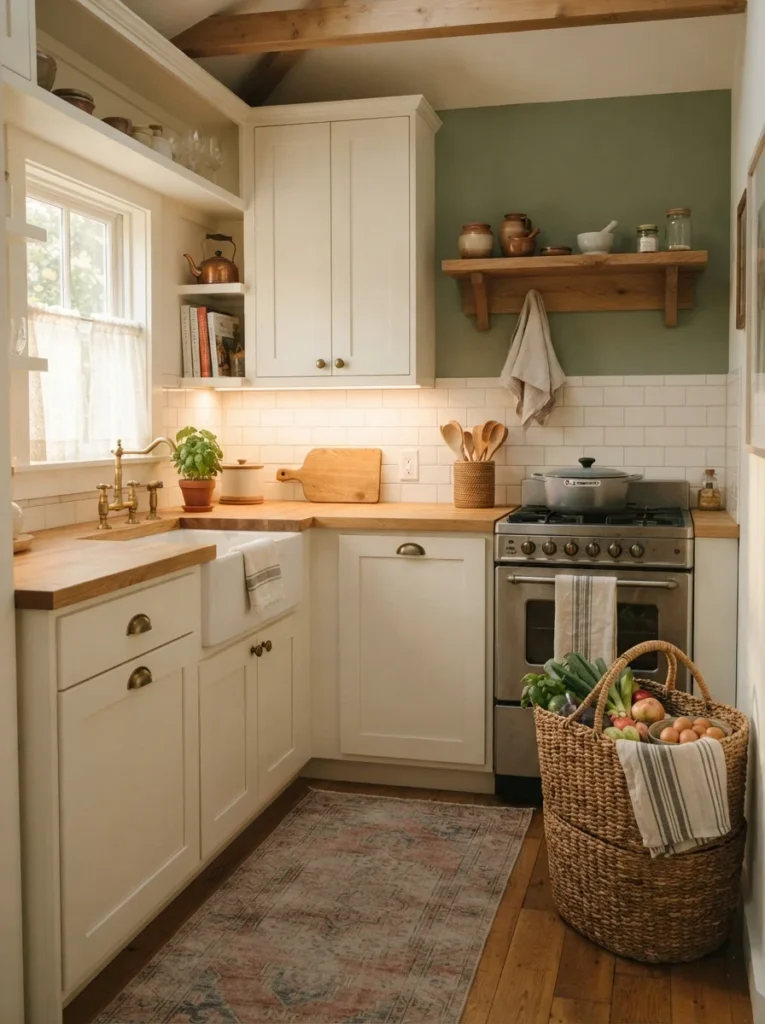
You don’t have to redo the whole kitchen to get the farmhouse feeling you want. Pick one project this weekend, such as replacing the cabinet pulls, hanging two wood shelves, adding a washable runner, or turning an unused corner into a coffee station. The best tiny farmhouse kitchen ideas are the ones that solve a real space problem while adding warmth. Start with the area that annoys you most every day, give it a simple farmhouse update, and let the rest of the room follow naturally.