

A tiny kitchen can feel cramped even when every cabinet is perfectly organized. Often, the problem isn’t the square footage. It’s that one harsh ceiling fixture throws shadows across the counters and makes the room feel smaller than it is.
The best tiny kitchen lighting ideas use layers: overhead light for the whole room, task lighting for counters, and decorative fixtures for warmth. You can create that layered look for roughly $40 to $500, depending on whether you’re swapping bulbs, adding LED strips, or installing statement fixtures.
A few smart lighting changes can also make a rental kitchen feel more polished without touching the cabinets. The trick is choosing fixtures that fit the scale of the room instead of filling every open spot with another lamp.
1. Hang One Slim Brass Pendant Over the Sink
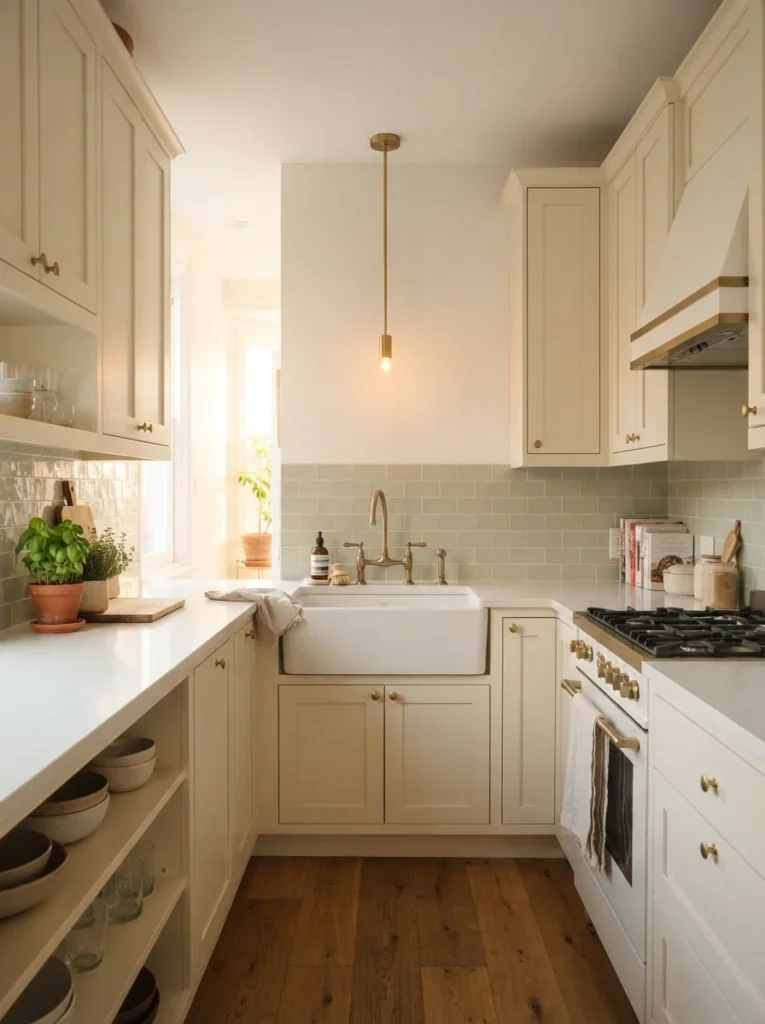
A pendant above the sink gives a tiny kitchen a finished look without taking up counter space. Choose a fixture around 6 to 10 inches wide, especially if the kitchen has upper cabinets on both sides. A simple brushed brass or aged brass pendant from IKEA, Home Depot, or Amazon usually runs $35 to $90. Hang the bottom of the shade about 30 to 36 inches above the countertop so you can wash dishes without bumping your head. Pick an opaque or lightly frosted shade if you want softer light on the sink. Clear glass looks pretty, but it exposes the bulb and can create glare. Wipe brass with a soft microfiber cloth once a week, and skip abrasive cleaners that can dull the finish. In a very narrow kitchen, one small pendant often looks better than two because it gives the eye one clear focal point.
2. Run Warm LED Strips Under the Upper Cabinets
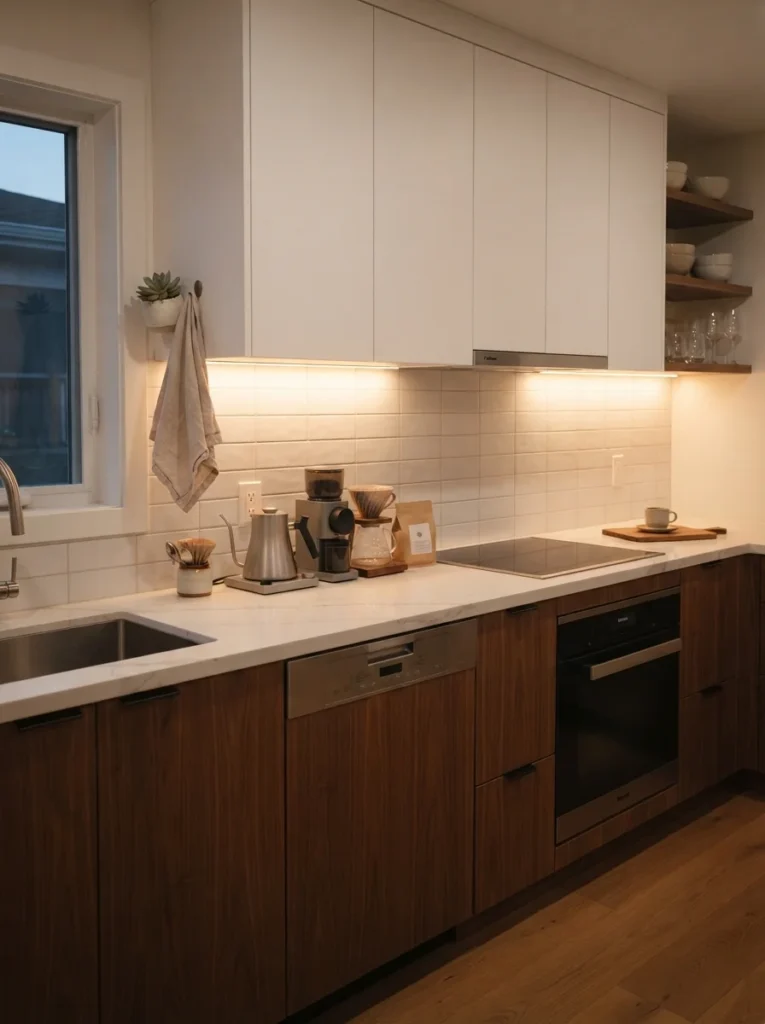
Under-cabinet LEDs are one of the easiest ways to fix dark counters. Install a continuous strip along the underside of the upper cabinets, keeping the light toward the front edge rather than pushed against the backsplash. A 16-foot warm-white kit from Amazon or Home Depot costs about $20 to $45, while hardwired systems cost more. Look for around 2700K to 3000K for a cozy kitchen, with 3000K being a nice middle ground for food prep. Hide the power cord inside a small adhesive cable channel if you’re renting. A common mistake is buying a strip that is too blue, which can make cream cabinets look gray. Choose a dimmable kit if possible. The direct light makes chopping and cooking easier while also giving the countertops a soft glow at night.
3. Try a Small Flush Mount With a Linen Shade

A bulky ceiling fixture can visually crowd a small kitchen, especially when the ceiling is only 8 feet high. Replace it with a low-profile flush mount covered in linen or frosted glass. Fixtures around 12 to 15 inches wide work well in compact kitchens and usually cost $45 to $120 at Lowe’s, Home Depot, or Wayfair. Choose a shade that sits close to the ceiling rather than a semi-flush fixture with a long stem. Warm white bulbs around 2700K keep the linen looking creamy instead of stark. If the kitchen has white cabinets, a natural linen shade adds just enough texture to keep the ceiling from disappearing into one large white surface. Dust the fabric gently with a soft brush attachment every few months.
4. Add Two Mini Pendants Instead of One Large Chandelier

If your tiny kitchen has an island or peninsula, skip the oversized chandelier and use two petite pendants. Look for shades around 5 to 8 inches wide and space them roughly 24 to 30 inches apart. A pair from IKEA or Amazon can cost $70 to $160, depending on the finish. Matte black works with modern kitchens, while aged brass suits warmer cabinetry. Keep the bottom of each fixture about 30 to 36 inches above the island surface. This arrangement spreads light across the work area without making the ceiling feel crowded. Choose matching bulbs with the same color temperature so the pair looks intentional. Clean glass shades with diluted dish soap and a soft cloth when fingerprints start showing.
5. Install Puck Lights Inside Glass-Front Cabinets
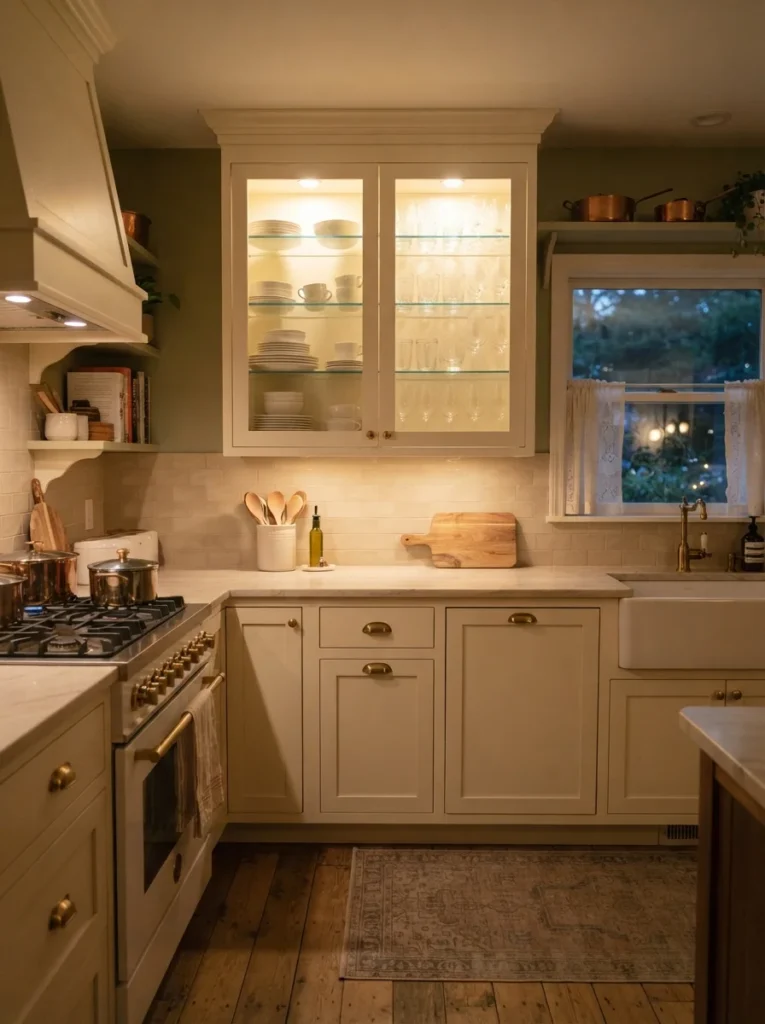
Glass-front cabinets can become decorative lighting boxes with a few tiny LEDs. Place one puck light near the front-center of each cabinet shelf, rather than hiding it all the way at the back. Battery-powered versions cost around $15 to $30 for a six-pack, making this an easy weekend project. Use warm white lights around 2700K so dishes and glassware look soft instead of blue. Keep the cabinet display simple, with three or four favorite pieces rather than every mug you own. Wipe the puck lenses with a dry microfiber cloth when dust collects. If the cabinets are wired for lighting already, a low-voltage system gives a cleaner result and avoids changing batteries.
6. Choose a Slim Track Light for a Galley Kitchen

A track fixture makes sense in a long kitchen because each adjustable head can point toward a different work zone. Pick a model with three or four small heads and a bar around 24 to 36 inches long. Basic fixtures at Home Depot or Lowe’s cost $50 to $130. Aim one head toward the sink, one toward the stove, and another toward the prep counter. Keep the fixture centered on the kitchen’s walking path so the room doesn’t look visually lopsided. Brushed nickel disappears nicely into a white ceiling, while black creates a stronger architectural detail. Dust each adjustable head with a microfiber cloth every few weeks because track fixtures collect dust on their upper surfaces.
7. Use Toe-Kick LEDs for a Soft Nighttime Glow
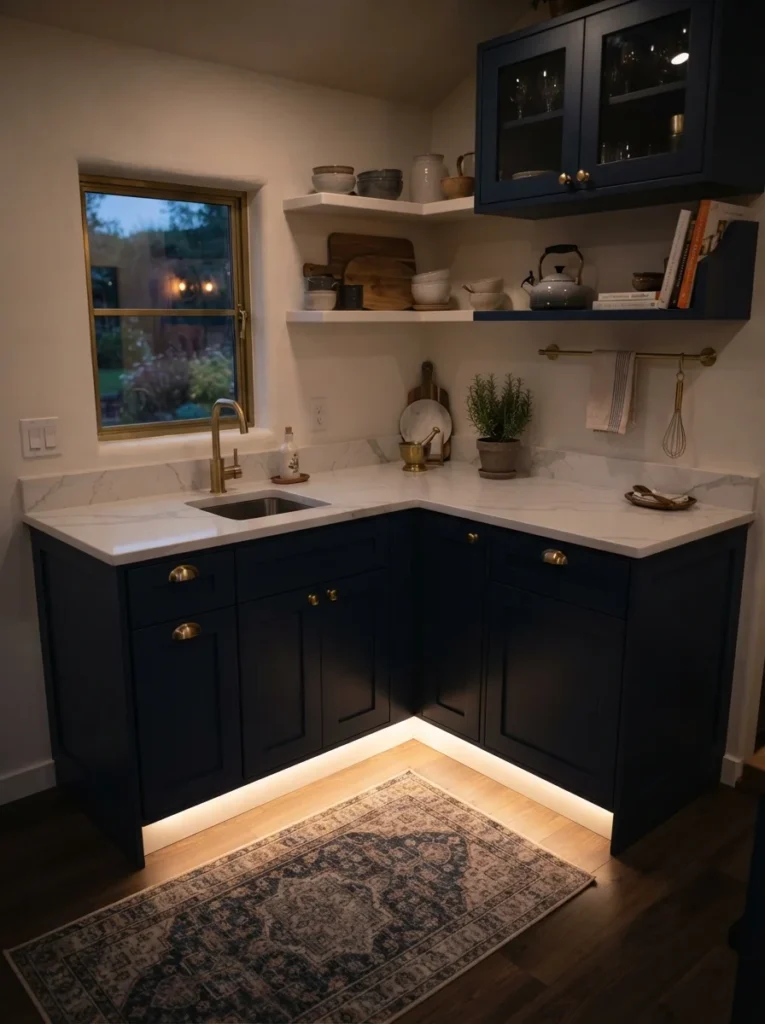
Toe-kick lighting is a small detail that makes a kitchen feel custom. Attach a warm LED strip beneath the lower cabinets, keeping it recessed enough that you see the glow rather than the individual diodes. A 10-foot kit costs roughly $18 to $40. Use a motion sensor if you want the lights to turn on automatically during nighttime trips for water or snacks. Warm 2700K light works especially well with wood, navy, forest green, and cream cabinets. Clean the cabinet base before installing the adhesive backing, because dust and grease can cause the strip to peel. This lighting isn’t meant for cooking. It works as a low-level accent that adds depth after sunset without forcing you to switch on every bright fixture.
8. Install a Picture Light Above an Open Shelf
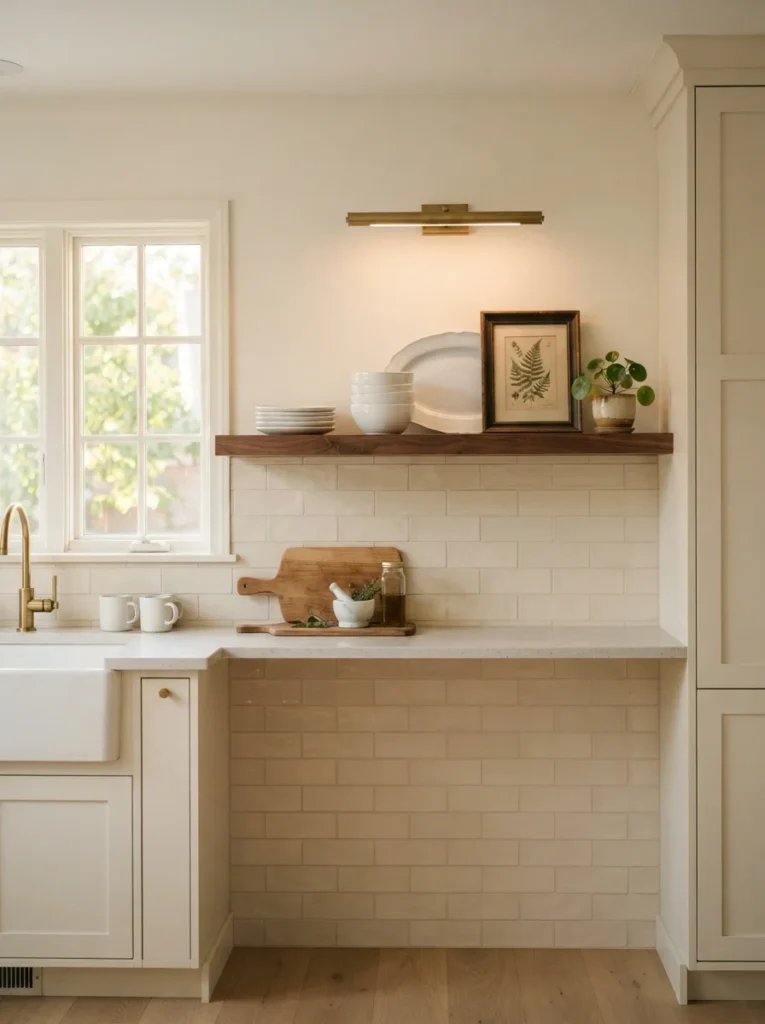
A picture light isn’t just for artwork. In a small kitchen, mount one above an open shelf and let it wash light down over dishes, cookbooks, and a little framed print. A 12- to 18-inch plug-in picture light costs around $35 to $80 from Amazon or Wayfair. Keep the shelf at least 18 inches below the light so the beam has room to spread. Brass looks especially good against cream tile, while black suits a more modern space. Hide the cord inside a slim paintable cable cover. This is also a smart rental trick because you can remove the fixture later without rewiring the kitchen. Use a warm LED bulb and wipe the shade with a damp microfiber cloth once a month.
9. Swap Cool Bulbs for 3000K LEDs

Sometimes the best lighting upgrade is sitting in a package at the hardware store. Replace mismatched cool-white bulbs with LEDs around 3000K for a clean but warm kitchen. A four-pack usually costs $8 to $18 at Target, Walmart, or Home Depot. Check the fixture label before buying and match the required bulb shape, such as A19 or globe. If your kitchen has several fixtures, use the same color temperature throughout the room. Mixing 2700K, 4000K, and daylight bulbs makes a small space feel visually disjointed. LEDs also run cooler and use less electricity than old incandescent bulbs. Keep the packaging until you know every bulb fits properly, especially in enclosed fixtures where the wattage rating matters.
10. Pick a Glass Globe Pendant for a Light, Airy Look

Clear glass is useful when you want a pendant without adding visual weight. Choose a globe around 8 to 10 inches wide and hang it above a sink, peninsula, or small prep zone. Expect to pay $45 to $110 for a simple fixture from IKEA, Home Depot, or Amazon. Use a frosted LED globe bulb if a clear filament bulb feels too bright. Keep the surrounding ceiling visually quiet, with no second oversized fixture competing for attention. Glass shows fingerprints, so keep a microfiber cloth nearby and clean it with diluted vinegar every few weeks. The transparent shade lets your eye travel through the fixture, which helps a low or narrow kitchen feel less crowded.
11. Add a Plug-In Sconce Beside a Breakfast Nook
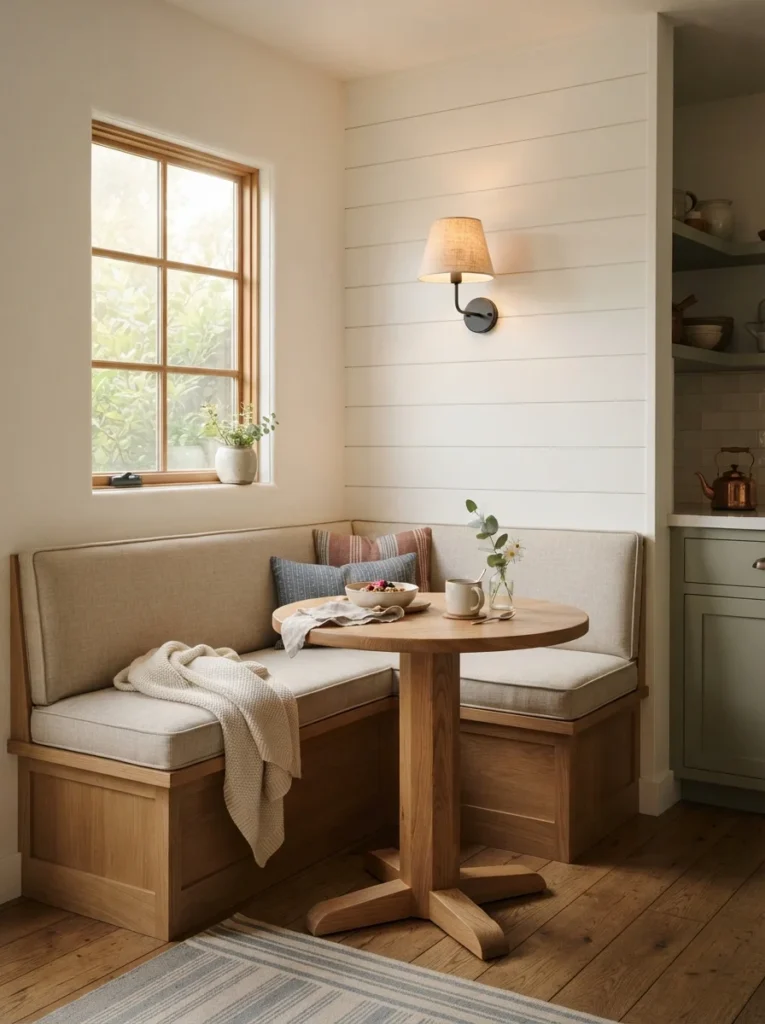
A wall sconce can give a tiny dining corner its own pool of light without stealing ceiling space. Choose a plug-in sconce with a fabric shade and a swing arm if you want flexibility. Basic models cost $30 to $75. Mount the fixture so the bottom of the shade sits about 50 to 60 inches above the floor, depending on the table height. Run the cord inside a paintable cord cover that follows the wall down to the outlet. Keep the bulb at 2700K for a relaxed breakfast area. If you like small-space dining ideas, pair this with a round table no larger than 36 to 40 inches wide.
[INTERNAL LINK: article about small kitchen breakfast nook ideas]
12. Make the Range Hood Part of the Lighting Plan

Don’t overlook the light already built into your range hood. Many homeowners leave it off because the main ceiling light is on, but hood lighting puts illumination exactly where cooking happens. If you’re replacing the hood, look for a model with two LED task lights and a dimming option. A basic under-cabinet range hood can cost around $100 to $250, while higher-end models run much more. Keep the filters clean so grease doesn’t collect around the light openings. If the existing bulbs are replaceable, check the manual before changing them because some hoods require specific heat-resistant bulbs. This small change makes evening cooking much easier, especially when upper cabinets block light from the ceiling fixture.
13. Use a Black Linear Fixture in a White Kitchen

A slim black linear fixture gives a white kitchen some definition without filling the ceiling with visual clutter. Choose a fixture around 24 to 36 inches long with two or three small integrated lights. Prices generally fall around $70 to $180 at Home Depot, Lowe’s, and online lighting shops. Position the fixture along the kitchen’s longest axis instead of across it. That orientation reinforces the room’s length and works especially well in galley layouts. Keep the rest of the ceiling fixtures minimal. Matte black is easy to wipe clean with a slightly damp microfiber cloth, and it hides small dust marks better than polished metal. If your cabinets already have black pulls, the ceiling fixture will feel connected to the rest of the room.
14. Add a Small Brass Semi-Flush Fixture

For an 8-foot ceiling, a compact semi-flush fixture can look more decorative than a plain builder-grade dome without hanging low over your head. Search for a fixture around 10 to 14 inches wide, with a total drop under 12 inches. A good-looking option from Amazon or Wayfair usually runs $55 to $140. Aged brass pairs nicely with dusty blue, sage, cream, and walnut. Use a frosted globe bulb if the fixture leaves the bulb exposed. Dust the metal with a dry cloth and clean glass parts separately. This is a strong choice for kitchens where a pendant would interfere with cabinet doors or a tall family member’s head. The fixture adds character at eye level while leaving the work surfaces open.
15. Place a Tiny Rechargeable Lamp on the Counter
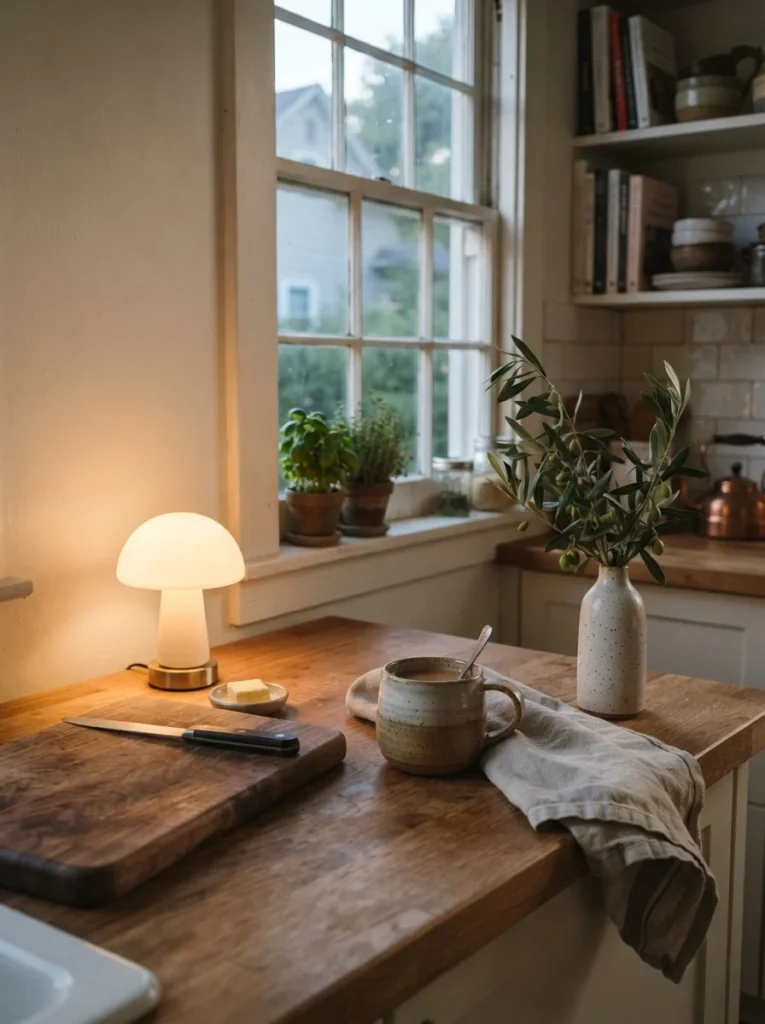
A little rechargeable lamp can soften a kitchen after dinner without adding another wired fixture. Choose a compact lamp under 8 inches tall with a dimmable warm LED. Expect to spend $20 to $50 at Target, Amazon, or IKEA. Put it on a counter corner that isn’t used for chopping or cooking, such as beside the coffee station. Charge it during the day and switch it on while you’re cleaning up at night. Look for a model with a metal or glass shade that can be wiped clean. Fabric shades aren’t ideal beside a stove because they collect cooking residue. This simple addition gives a dark corner its own glow and can be moved to a dining table, shelf, or entryway whenever you want.
16. Light a Narrow Open Shelf From Behind
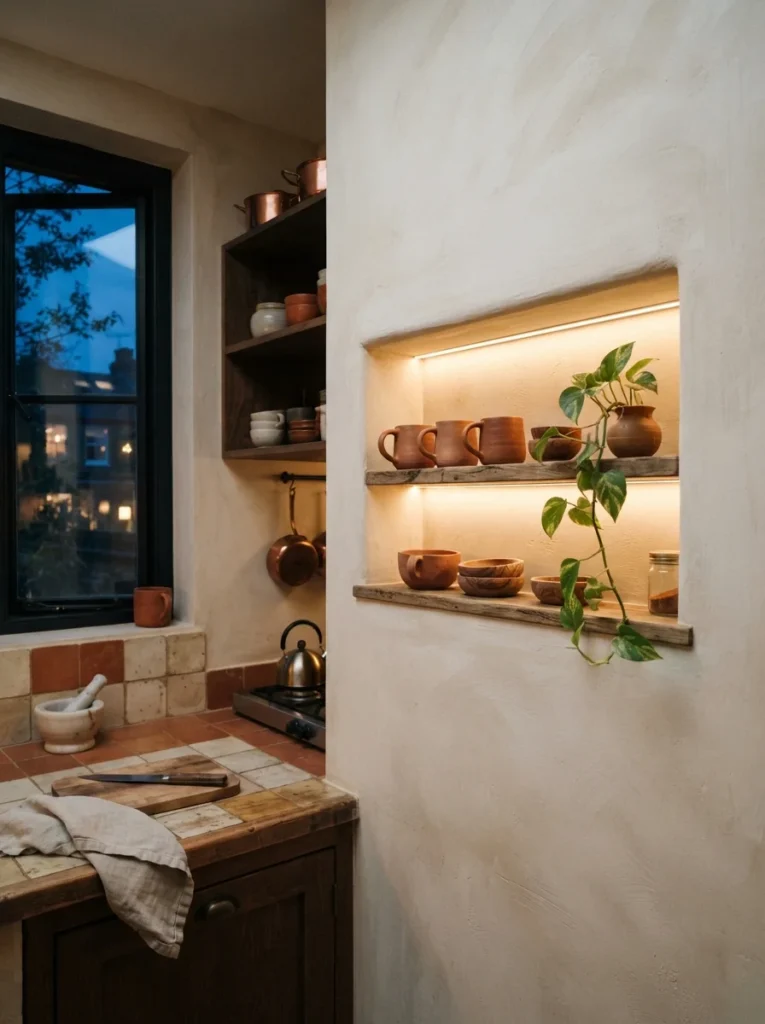
If you have a recessed shelf or shallow open shelving, hide a short LED strip along the back edge. The light should wash across the wall rather than shine directly into your eyes. A 6- to 10-foot warm strip costs about $15 to $30. Use it behind wood, ceramic, or stone pieces in muted colors so the glow doesn’t become visually busy. Keep the shelf depth around 8 to 10 inches if the kitchen is especially tight. Wipe the shelf and backsplash before installing the adhesive strip. For removable setups, use small clips rather than permanent adhesive. The hidden source creates depth behind the objects, which helps a shallow kitchen wall feel layered instead of flat.
17. Try a Vintage Milk-Glass Ceiling Light

Milk glass has a soft glow that works beautifully in small kitchens with cottage or vintage details. Look for a flush mount around 10 to 14 inches wide at a thrift store, Etsy-style vintage shop, or Facebook Marketplace. You can often find an older fixture for $25 to $80, although rewiring may add another $40 to $100 if you hire an electrician. Check the fixture for cracks, loose sockets, and damaged wiring before installation. Pair it with a warm LED bulb rather than a harsh daylight bulb. Milk glass hides the bulb’s glare while spreading light across the room. If you find a vintage piece you love, have the wiring inspected instead of assuming an old fixture is ready for modern use.
18. Install a Narrow LED Bar Above the Counter
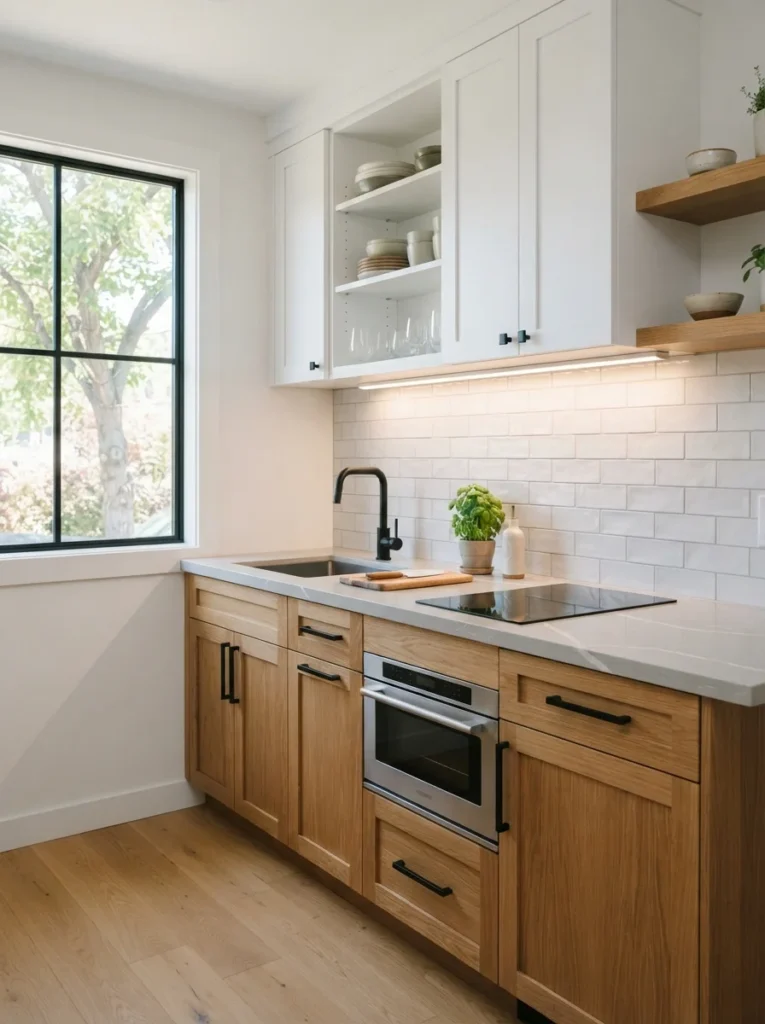
A narrow LED bar is ideal when you want strong task light without seeing a strip of individual bulbs. Choose a bar roughly 18 to 24 inches long for a small counter section and mount it close to the front underside of the cabinet. Basic plug-in bars cost about $25 to $60 at Home Depot or Amazon. Choose a 3000K model with a high color-rendering rating so food colors look natural. Run the wire toward the back corner and secure it with small cable clips. Dust the bar with a dry cloth before wiping it with a slightly damp one. This works particularly well over a coffee station, baking counter, or narrow prep zone where the main ceiling light doesn’t reach.
19. Use a Tiny Rattan Pendant for Warm Texture

Rattan adds texture without the heaviness of a large metal chandelier. Choose a woven pendant around 8 to 12 inches wide, preferably with an open weave that allows plenty of light through. Budget $45 to $100 for a small fixture from IKEA, Amazon, or a home decor store. Hang it over a sink or compact peninsula, keeping the bottom at least 30 inches above the work surface. Dust woven shades with a soft brush attachment because grease can settle into the fibers. Keep rattan several feet from the cooktop if your range produces a lot of steam. The natural material pairs well with white, cream, olive, terracotta, and light wood kitchens.
20. Use Wall-Wash Lighting on a Tall Backsplash
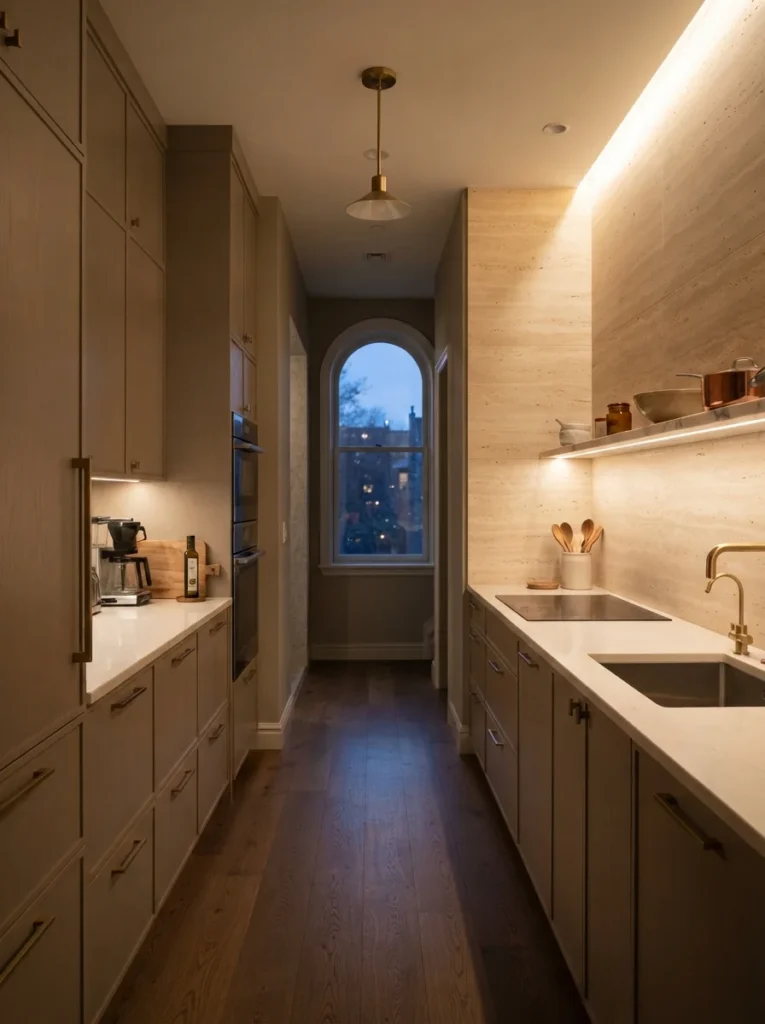
A tall backsplash deserves its own lighting treatment, especially when it uses marble, zellige tile, or textured stone. Install a slim directional LED fixture beneath the upper cabinets or along the top edge of a shallow shelf so light grazes the surface. A small system costs around $30 to $90 for plug-in components, while built-in work is more expensive. Warm 2700K to 3000K light brings out stone texture without making the surface look overly yellow. Keep the light source hidden from normal standing height. Clean the backsplash according to its material, and don’t spray cleaner directly toward electrical fittings. This idea is especially effective in kitchens where the backsplash is the main decorative feature.
[INTERNAL LINK: article about small kitchen backsplash ideas]
21. Frame a Window With Two Small Sconces

If you have a window above the counter, two small sconces can frame it beautifully. Choose fixtures around 5 to 7 inches wide and install them symmetrically if wall space allows. Expect to pay $60 to $150 for a pair at Home Depot, Lowe’s, or online retailers. Keep the sconces high enough that the light doesn’t shine directly into your eyes while you’re standing at the sink. Frosted glass or linen shades soften the effect. In a very small kitchen, use shallow fixtures that project less than 5 inches from the wall. Dust the shades monthly, especially if the window is near the stove. The paired lights create balance without taking up counter or floor space.
22. Use a Dimmable Ceiling Fixture for Day-to-Night Control
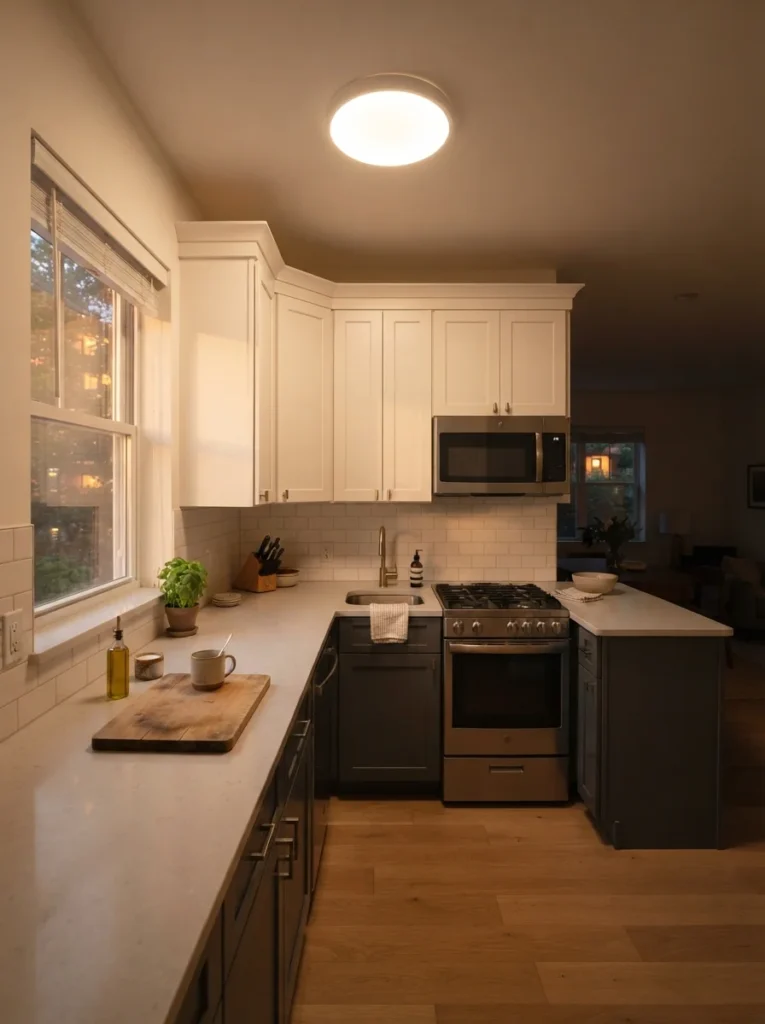
A small kitchen doesn’t have to be equally bright all day. Install a dimmable ceiling fixture and use brighter settings for cooking, then lower the output during dinner or cleanup. A compatible fixture and dimmer usually cost $70 to $180, not including electrical labor. Choose an LED fixture rated for dimming and pair it with the correct LED dimmer. Keep the light centered in the room so the dimmed glow remains useful instead of leaving dark corners. Wipe the fixture with a dry microfiber cloth every month. Dimming is especially helpful in open-plan homes where a bright kitchen light can spill into the living room at night.
23. Add Lighting Above a Tiny Coffee Station

Give your coffee station its own light instead of relying on the main kitchen fixture. A tiny dome pendant around 7 to 9 inches wide works well over a narrow counter section and costs about $40 to $90. Hang it around 30 to 34 inches above the counter, leaving enough clearance for cabinets and appliances. Choose a black, cream, or brass finish that relates to your coffee maker and cabinet hardware. Use a warm 2700K bulb for a cozy morning feel. Wipe the pendant shade regularly because coffee stations tend to collect fine grounds and dust. This little zone also gives you a chance to add personality without filling the entire kitchen with decorative fixtures.
24. Install Motion-Sensor Cabinet Lighting
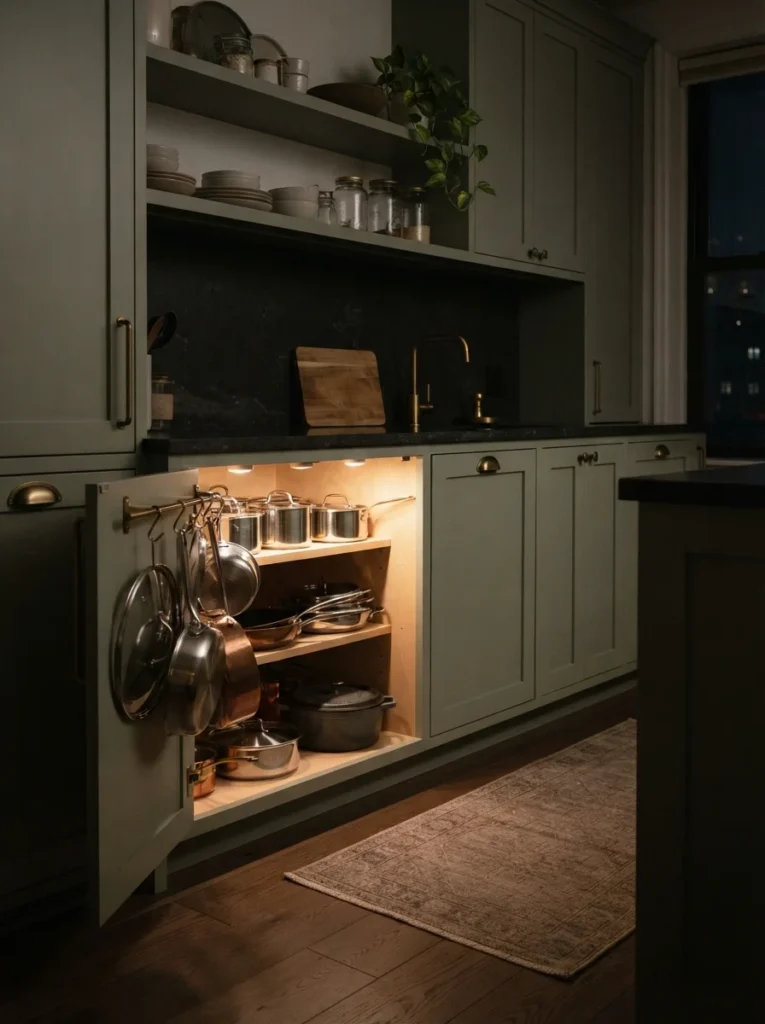
Dark cabinets can be annoying at night, especially when the cabinet sits beneath a poorly lit counter. Add battery-powered motion-sensor lights inside deep cabinets and pantry shelves. A pack of four to six lights costs around $20 to $35. Mount each light near the front top edge so it illuminates the entire shelf when the door opens. Rechargeable versions save money over time and usually last several weeks between charges, depending on use. Wipe the cabinet interior before sticking anything to it. Choose a warm or neutral white setting if the lights offer color options. This is a practical fix for renters because the lights don’t require electrical work and can move with you later.
25. Choose a Long Opal Glass Pendant
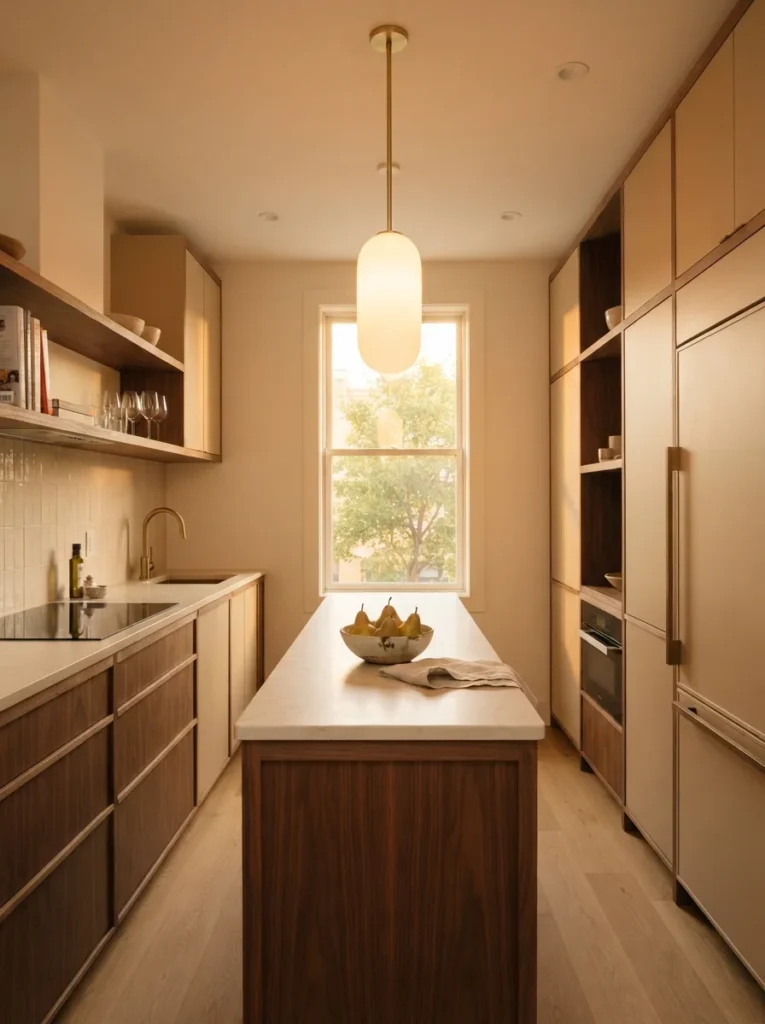
One elongated pendant can work better than several little fixtures when the kitchen has a narrow island. Look for an opal glass fixture around 18 to 30 inches long with a shallow profile. Prices range from $90 to $250 for attractive mid-range options. Keep the fixture centered over the island and roughly 30 to 36 inches above the countertop. Opal glass spreads light evenly and hides the harshness of a bare LED. Choose brass for a warmer traditional kitchen or black for a sharper contemporary space. Clean the glass with a soft cloth and mild glass cleaner, spraying the cloth rather than the fixture. The long horizontal shape follows the island’s footprint and keeps the ceiling from looking cluttered.
26. Use Candle-Style LED Bulbs in a Small Sconce

A candle-shaped LED bulb can give a small wall sconce a softer decorative quality than a standard round bulb. Pick an E12-base LED in a warm 2200K to 2700K range if you want a candle-like glow. A bulb costs roughly $6 to $12, while a simple sconce can add $30 to $70. Place it beside a pantry door, breakfast nook, or open shelving where it won’t interfere with cooking. Check the fixture’s maximum wattage and bulb base before buying. Wipe the glass or metal shade with a dry microfiber cloth. This idea works particularly well in kitchens with vintage brass hardware, beadboard, painted cabinets, or traditional trim.
27. Use Ceiling Spotlights Over Separate Work Zones
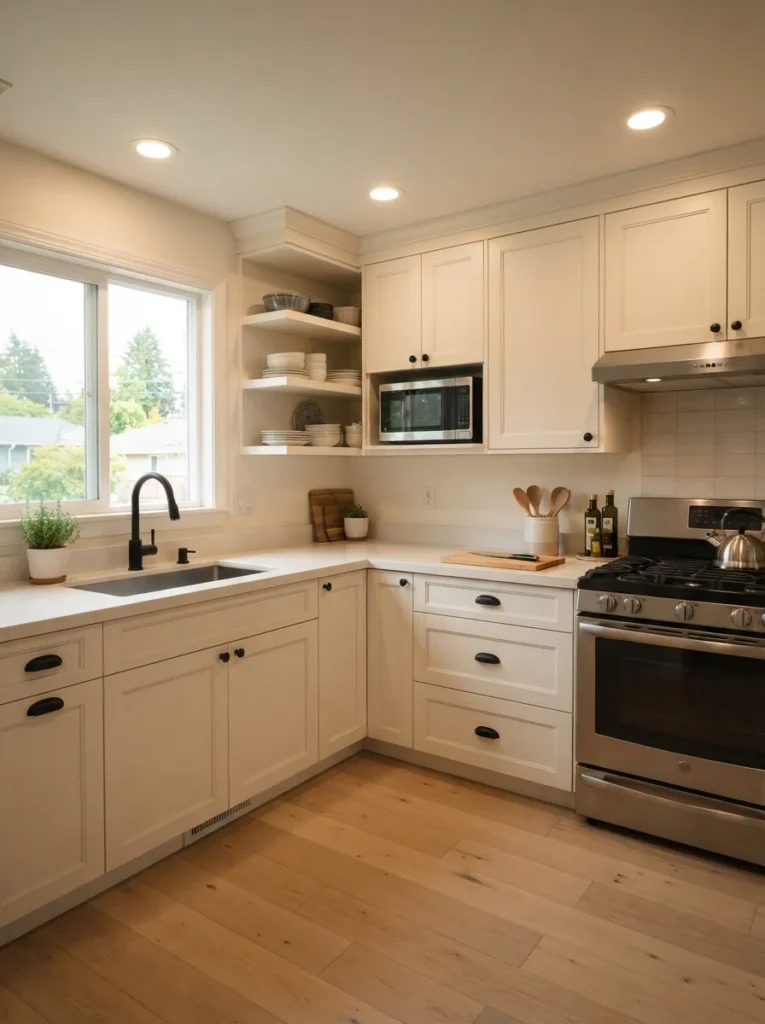
If you’re renovating, plan recessed lights around the work areas rather than placing every light in a perfect grid. Three or four small adjustable fixtures can cover a sink, cooktop, and prep counter in a tiny L-shaped kitchen. Budget roughly $15 to $40 per fixture, plus electrical labor. Position each light so your body doesn’t cast a shadow directly over the counter. Choose a 3000K LED with a high color-rendering rating for food prep. Recessed lights are especially useful in kitchens with low ceilings because they keep the ceiling visually clean. Dust the trim with a microfiber cloth and replace bulbs only when needed. If the ceiling is already finished, this option involves more work than plug-in lighting, so it makes the most sense during a remodel.
28. Highlight Open Shelves With Mini Directional Spots

Open shelves look better when you can actually see what is sitting on them after sunset. Use small directional spots aimed toward the shelves instead of flooding the whole wall with light. A set of three compact LED spots costs around $40 to $100. Space them evenly across the shelf length and angle them slightly downward so the beam lands on the objects. Keep shelf styling simple with bowls, glasses, cookbooks, and one plant. Wipe the shelf and light fixtures regularly because dust becomes obvious when a strong beam hits the surface. This approach creates a boutique feel without installing decorative lighting on every shelf.
29. Pair Warm Cabinet Lighting With a Dark Backsplash

A dark backsplash can look sophisticated in a tiny kitchen, but it needs enough light to avoid feeling closed in. Add warm under-cabinet LEDs and aim the light toward the front half of the counter. A good plug-in system costs around $25 to $60. Choose a 3000K temperature so the backsplash remains rich without turning orange. Keep the countertop mostly clear because the light will highlight whatever sits beneath the cabinets. Wipe the backsplash according to its material, especially if it’s matte tile that shows cooking residue. This combination works well with walnut, cream, taupe, and brass, and it gives a small kitchen more visual depth after dark.
30. Finish With a Statement Fixture in a Quiet Ceiling

If the rest of your kitchen is simple, let one ceiling fixture carry the decorative detail. Choose a sculptural pendant no wider than about 12 to 16 inches, especially in a narrow room. A quality mid-range fixture usually costs $120 to $300, though vintage and designer pieces can run higher. Keep the surrounding ceiling empty so the fixture has room to read as one intentional feature. A cream ceramic, aged brass, ribbed glass, or matte black shade can work depending on the cabinets. Use a dimmable warm LED and clean the fixture according to its material. This approach saves you from buying several decorative lights while still giving the kitchen a custom focal point.
Mistakes That Ruin the Look

- Using only one ceiling light: A central fixture often leaves the counters in shadow. Add under-cabinet or directional task lighting where you actually chop, wash, and cook.
- Mixing bulb temperatures: A 2700K pendant beside a 5000K ceiling bulb makes the room feel disjointed. Keep most kitchen bulbs between 2700K and 3000K.
- Choosing fixtures that are too large: Measure the ceiling, island, and cabinet clearances before ordering. A fixture that looks perfect online can overwhelm a 7-foot-wide kitchen.
- Ignoring glare: Bare bulbs and shiny glass shades can create uncomfortable reflections. Use frosted bulbs, diffusers, or dimmers where the light hits eye level.
Frequently Asked Questions
[Image Prompt: A bright compact kitchen with layered warm lighting, cream cabinets, pale wood counters, brass fixtures, and subtle under-cabinet illumination. Morning sunlight fills the room with a clean residential feel. Shot on a high-end camera, natural light, no people, no text or words anywhere in the image.]
[Alt Text: Layered tiny kitchen lighting ideas in a bright compact home kitchen.]
Q: What are the best tiny kitchen lighting ideas for making a space feel bigger?
A: Use several low-profile light sources instead of one oversized fixture. Under-cabinet LEDs, a slim ceiling light, and one small pendant help spread light across different surfaces.
Q: What color temperature is best for a small kitchen?
A: Around 3000K is a reliable choice for most kitchens because it feels warm while keeping counters and food colors clear. Use 2700K for a softer, cozier look.
Q: How big should a pendant be over a tiny kitchen island?
A: A pendant around 8 to 12 inches wide usually works well over a small island. Leave about 30 to 36 inches between the countertop and the bottom of the fixture.
Q: Can renters add under-cabinet lighting without hiring an electrician?
A: Yes. Plug-in or rechargeable LED strips and puck lights are simple options. Use removable cable clips or paintable cord covers to keep wiring neat.
Q: Are LED strips safe for kitchen cabinets?
A: Quality LED strips produce little heat and work well beneath cabinets when installed according to the manufacturer’s instructions. Keep electrical connections away from water and cooking splashes.
Q: Should kitchen lighting be warm or cool?
A: Warm to neutral lighting, usually 2700K to 3000K, works well in residential kitchens. Very cool bulbs can make cream cabinets and wood look gray or washed out.
Give Your Tiny Kitchen a Lighting Upgrade

You don’t have to replace the whole kitchen to change how it feels. Start with the darkest work area this weekend, add a $20 to $40 under-cabinet LED kit, then swap any harsh bulbs for warm 3000K LEDs. If the ceiling still feels plain, add one small pendant or semi-flush fixture that fits the room’s scale. These tiny kitchen lighting ideas work best as layers, not a collection of competing fixtures, so give each light a clear job and let the room stay visually calm.