

A tiny kitchen can feel gloomy even when it’s clean and organized. Sometimes, the cabinets are too dark, the walls look a little dull, or the countertops and backsplash compete for attention. Before you spend money on a renovation, take a closer look at the colors already in your kitchen.
The best tiny kitchen color ideas use light-reflecting neutrals, gentle greens, warm whites, and carefully chosen accent shades to make a small room feel brighter and more welcoming. You can repaint a cabinet wall for around $40 to $100, add color through accessories for less than $30, or combine two complementary cabinet shades for a custom look. The trick is choosing colors that work with your natural light, flooring, and existing countertops.
1. Warm White Cabinets With Natural Wood Accents
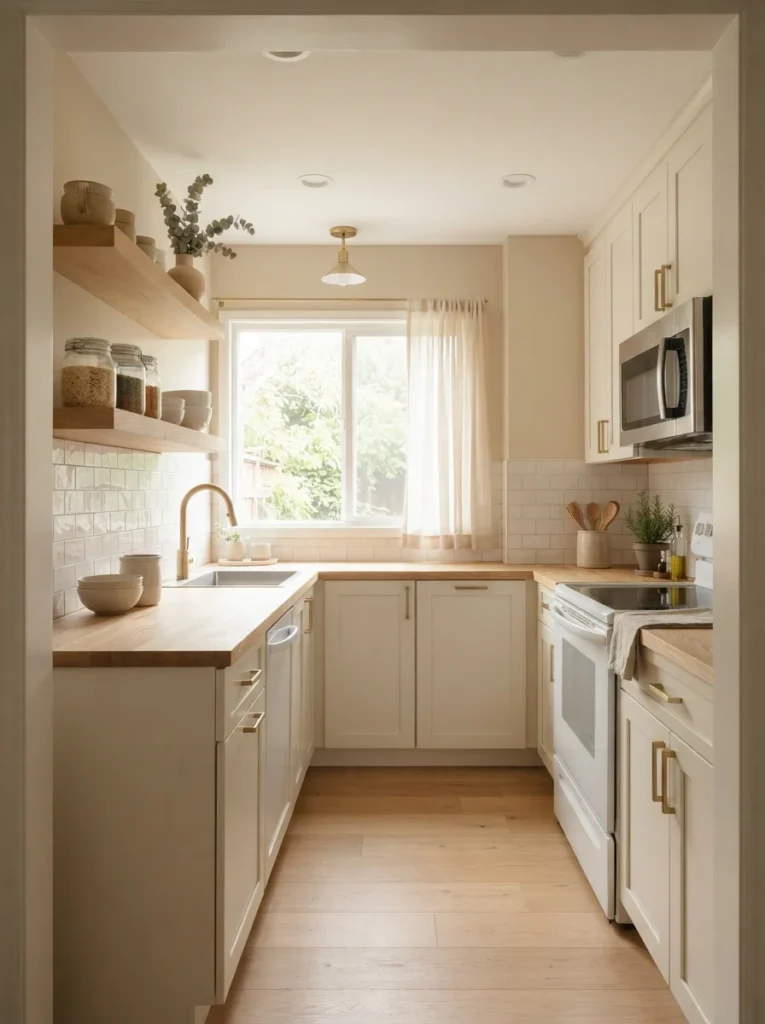
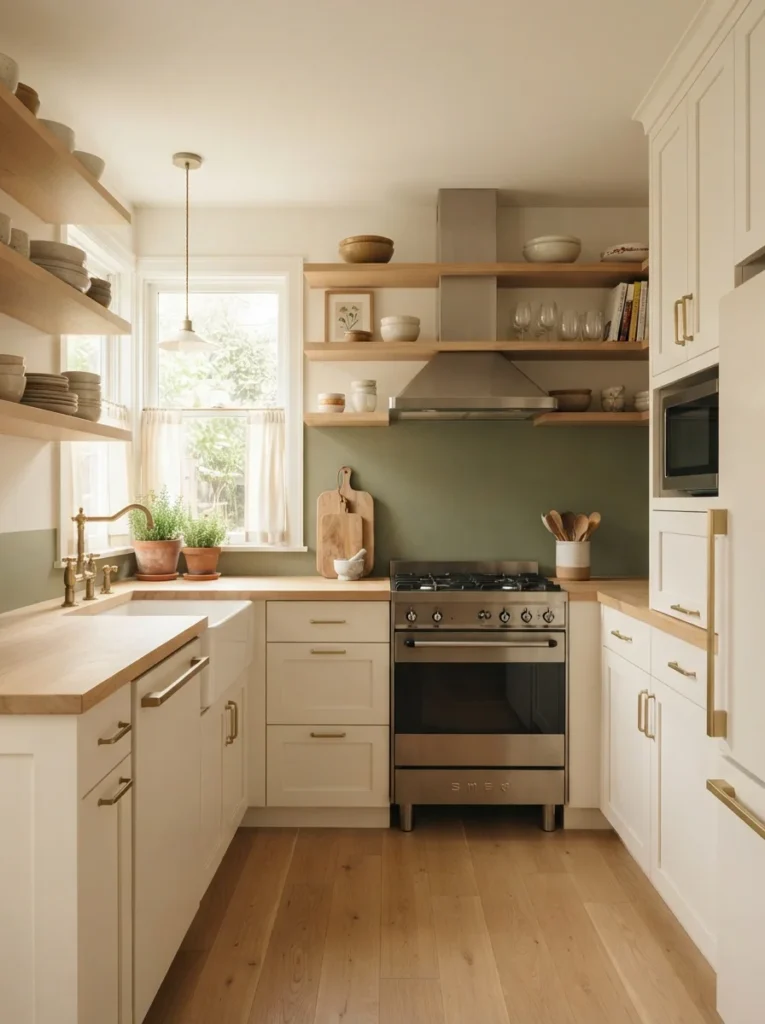
Warm white is a lovely starting point if your kitchen feels cramped but you don’t want it to look cold or sterile. Choose a creamy shade with a subtle yellow or beige undertone, then pair it with natural wood cutting boards, oak shelves, or a butcher-block countertop. This combination creates contrast without dividing the room into too many competing colors. A quart of cabinet paint typically costs around $20 to $40, while a gallon often runs $40 to $80. For a small cabinet painting project, budget around $80 to $180 for paint and basic supplies, depending on the number of doors and drawers. Clean the surfaces thoroughly before painting, since cooking grease can ruin the finish. Add two or three wood accents rather than covering every counter with wooden accessories. The natural grain keeps the white cabinetry from feeling flat, while the pale finishes reflect daylight. If your kitchen has beige flooring, this palette will also help the floor feel like part of the design instead of a separate color.
2. Sage Green Walls for a Soft Cottage Look

Sage green gives a tiny kitchen personality without the heaviness of a deep forest shade. It looks especially good alongside white cabinets, oak countertops, and brushed nickel or brass hardware. For a small kitchen, try a muted sage with a gray undertone rather than a bright grassy green. A gallon of interior wall paint generally costs $30 to $65, with primer and painting tools adding to the total if you don’t already have them. Test two or three sample pots on different walls before committing. The color can appear grayer in a north-facing kitchen and warmer near a sunny window. Keep the backsplash relatively simple, such as white subway tile or cream ceramic, so the walls remain the main source of color. Sage also pairs nicely with linen curtains and terracotta herb pots. Use washable kitchen paint around cooking areas, and wipe splashes away with a soft cloth. It’s a good option if you want a gentle color change without repainting every cabinet.
3. Pale Blue Cabinets for an Airy Coastal Feel
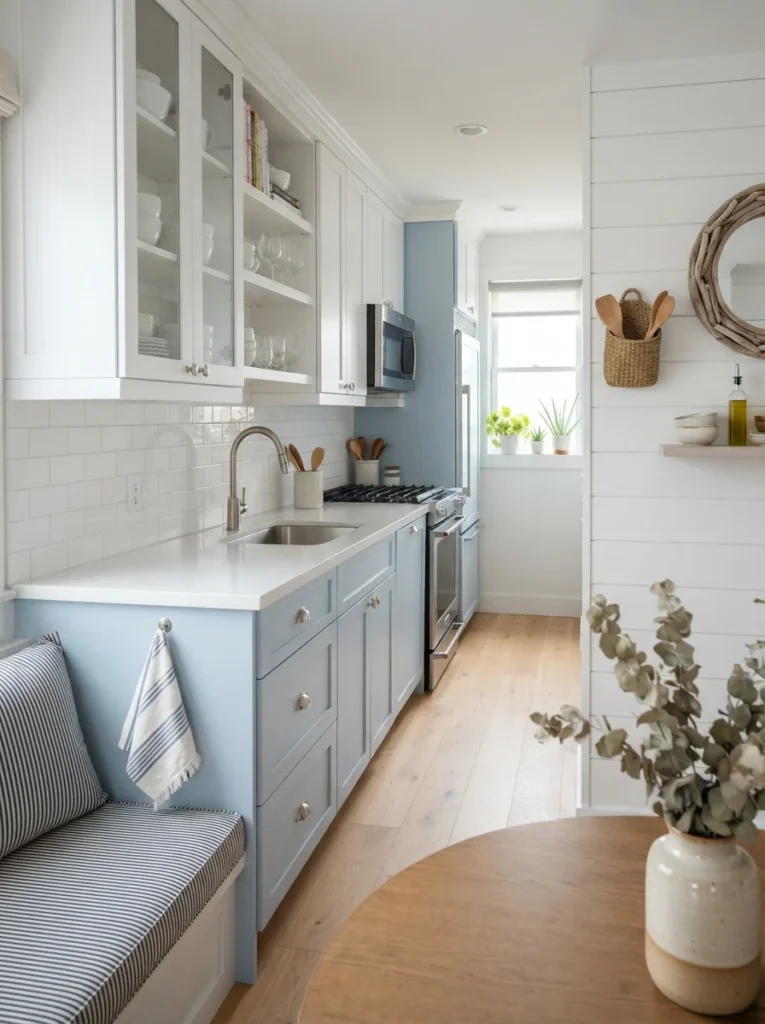
Pale blue brings a quiet, airy quality to a kitchen, especially when the room gets plenty of daylight. Rather than painting every surface blue, use it on the lower cabinets and keep the upper cabinets white. This arrangement adds color closer to the floor while allowing the wall area to remain light. A quart of suitable cabinet paint costs around $20 to $40, while the full painting supplies for a small kitchen may bring the project to $100 to $250. Look for powder blue, misty blue, or a muted blue-gray rather than a saturated royal shade. These softer colors work with white tile, light gray counters, and stainless-steel appliances. If your flooring has orange or reddish wood tones, test the blue beside it first, since some combinations can look unexpectedly cool. Brushed nickel handles keep the palette relaxed, while a few natural wood accessories add warmth. Clean the cabinets with a mild soap solution when needed, and avoid abrasive sponges that can scratch the finish.
4. Cream and Terracotta for a Warm Mediterranean Kitchen

If bright white feels too plain, cream and terracotta offer a warmer alternative. Cream cabinets provide a light foundation, while a muted clay shade adds earthy character to a short wall, breakfast nook, or small decorative area. You don’t have to repaint the entire kitchen to get the effect. A quart of wall paint often costs around $15 to $35, and terracotta accessories from Target or a thrift store can cost another $10 to $30. Start with one terracotta accent wall or a few coordinated accessories rather than using the color on every surface. This keeps the room from feeling enclosed. Pair the palette with pale counters, natural wood, and off-white tile. If you have a dark countertop, bring in cream through a backsplash or painted upper cabinets to balance it. Terracotta is forgiving around small everyday marks, but matte painted walls near the stove can collect grease, so choose a washable finish and clean splashes promptly. The overall effect feels warm and lived-in, even in a kitchen with very little floor space.
5. Soft Gray Cabinets With Bright White Walls

Soft gray works well for homeowners who want something more distinctive than white but still prefer a neutral kitchen. A pale dove gray gives cabinets a gentle outline, while white walls and a light backsplash keep the space from feeling enclosed. Cabinet paint often costs $40 to $80 per gallon, so allow roughly $100 to $220 for a small DIY repaint, including primer and basic supplies. Choose a gray with a subtle warm undertone if your flooring is beige or honey oak. Cool gray can look slightly blue beside warm wood, which isn’t always the effect you’re after. Chrome or brushed nickel hardware fits naturally with this palette, and a few black accents can add definition without taking over. Keep the countertop clear enough to show the contrast between the gray cabinets and white walls. For maintenance, use a soft microfiber cloth and mild cleaner rather than abrasive pads. Gray is especially useful if your appliances are stainless steel because the finishes look coordinated without needing to match exactly.
6. Butter Yellow for a Cheerful Little Kitchen

Butter yellow adds a little sunshine to a kitchen that rarely gets direct daylight. The key is choosing a soft, creamy yellow instead of a sharp lemon shade. Paint the lower cabinets or a small breakfast nook wall, then use white upper cabinets to keep the room feeling open. A quart of cabinet paint usually costs $20 to $40, and a few yellow accessories from Walmart or Target may cost another $15 to $35. This color pairs well with white tile, natural wood, and simple chrome or brass hardware. It also looks lovely with small touches of pale blue or green, although I’d keep those accents limited to one or two items. Too many pastel colors can make a tiny kitchen feel scattered. Before painting, test a sample near the window and under your evening lights. Yellow changes noticeably with different bulbs, sometimes appearing much stronger at night. Choose a washable finish for painted walls and wipe cooking splashes away before they leave marks. A little yellow can make a compact room feel welcoming without requiring a full renovation.
7. Navy Blue and White for a Crisp, Classic Contrast

Navy blue adds depth and definition, but using it on every cabinet in a tiny kitchen can make the room feel heavy. A better approach is navy on the lower cabinets with white or ivory above. This creates a clear visual division while keeping the upper part of the room bright. Expect to spend around $40 to $80 for a gallon of suitable cabinet paint, with a complete small-kitchen DIY painting budget of roughly $100 to $250. Choose a softened navy rather than an almost-black shade if the kitchen has limited natural light. White countertops and a simple backsplash keep the palette from feeling too busy. Brass hardware adds warmth, while stainless-steel appliances fit comfortably into the design. Use a sample board to check the navy against your existing flooring, especially if the floor is dark brown or charcoal. Wipe cabinet fronts regularly to remove fingerprints, which can be more visible on darker finishes. This palette suits traditional, transitional, and modern kitchens, making it a good choice if you want a classic color that won’t feel tied to one decorating trend.
8. Greige Cabinets for a Calm, Coordinated Space
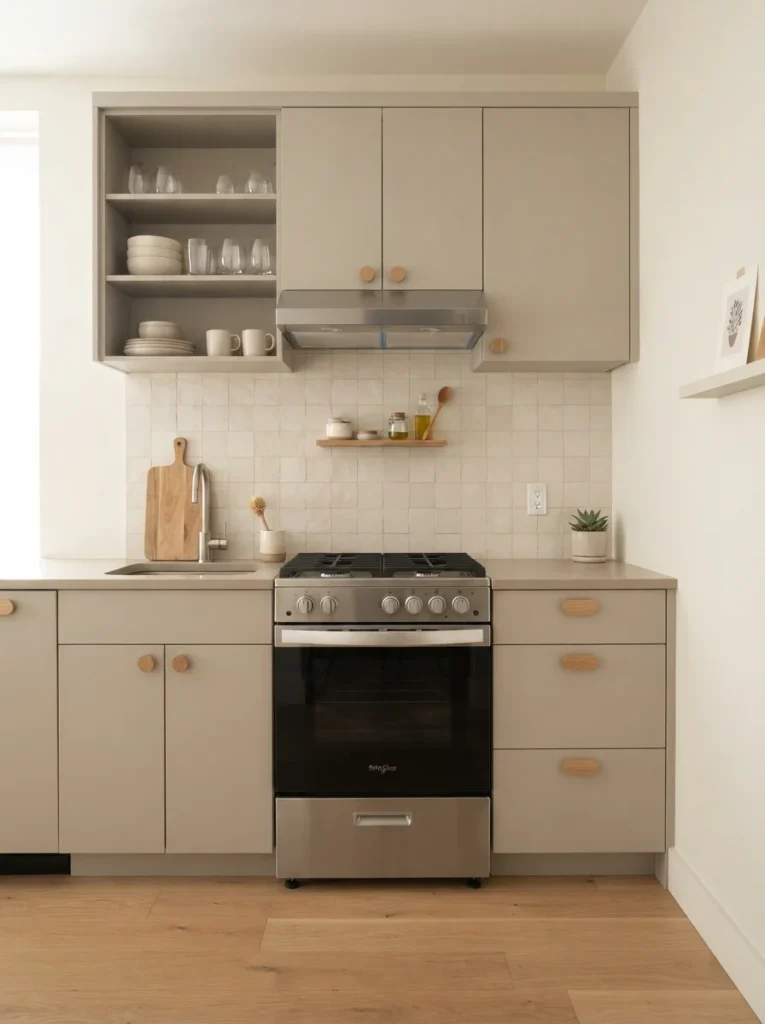
Greige sits between gray and beige, which makes it useful when your kitchen already contains a mixture of warm and cool finishes. It can connect beige flooring, stainless-steel appliances, and white walls without making any one surface look out of place. A gallon of cabinet paint generally costs $40 to $80, while sample pots are often available for around $5 to $10. Test your greige beside the countertop and floor before painting, since the undertone can look completely different under your kitchen lighting. A shade with more beige suits warm oak and cream tile, while a grayer version works well with polished concrete-look counters. Add simple black or brushed nickel hardware to create definition. Keep decorative accessories minimal, perhaps a wood cutting board and a ceramic utensil holder. Greige is practical for households that want a neutral backdrop but find pure white too stark. For everyday cleaning, wipe painted surfaces with a damp microfiber cloth and a mild detergent. The gentle contrast makes the kitchen feel connected rather than divided into unrelated color blocks.
9. Olive Green With Natural Oak Details

Olive green has more depth than sage, so it’s a good choice if you want color that feels earthy rather than pastel. Use it on lower cabinets or a single pantry unit, and pair it with warm white walls and pale oak accents. A quart of cabinet paint usually costs $20 to $40, while a larger repaint may run $100 to $250 for paint and basic DIY supplies. Olive works particularly well with cream ceramic tile, butcher block, and aged brass hardware. Avoid pairing it with too many dark surfaces in a kitchen with limited sunlight. Instead, keep the counters light and use a warm bulb to prevent the green from looking muddy after sunset. If you’re unsure about painting the cabinets, try an olive runner, a pair of planters, or a set of ceramic canisters for $20 to $50. These accessories let you test the color before making a permanent change. Clean painted cabinet fronts gently, and keep the surrounding backsplash free from heavy grease buildup so the earthy shade stays rich and even.
10. Peachy Beige for a Soft, Sunlit Kitchen
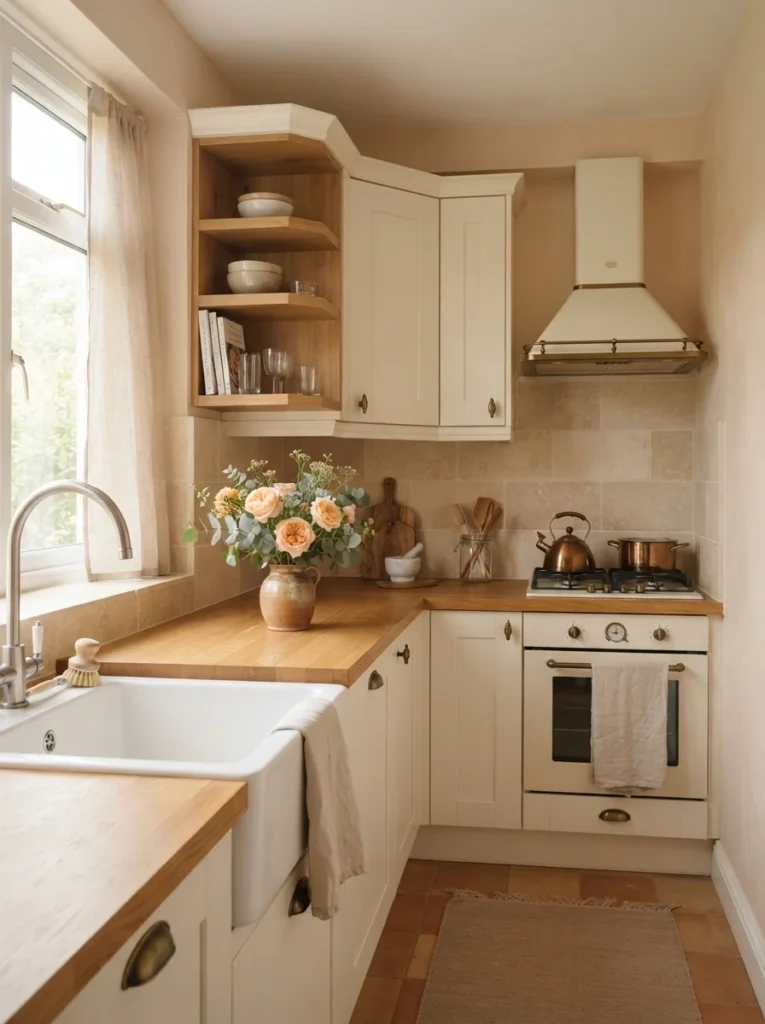
Peachy beige adds a little warmth without the stronger color statement of pink or orange. It works beautifully in a kitchen with white cabinets, beige floors, and natural wood counters. Choose a muted shade that looks almost neutral on the paint chip, because a stronger peach can become surprisingly bright across an entire wall. A quart of wall paint often costs $15 to $35, making this an inexpensive way to test the look. Apply the color to a small breakfast nook or the wall beside the refrigerator rather than every available surface. Pair it with cream textiles, clear glass jars, and simple brushed nickel hardware. A pale peach wall also looks attractive beside green herbs, which provide a natural contrast. If the kitchen has warm lighting, check that the shade doesn’t turn too orange at night. Washable eggshell or satin wall paint is practical around everyday splashes, although the backsplash area behind the stove should use a suitable heat-resistant surface. This palette creates a gentle, sunny feeling without needing colorful cabinets or elaborate decoration.
11. Black Accents Against a Light Neutral Kitchen

Black can look surprisingly good in a small kitchen, provided you use it as an accent instead of covering every wall and cabinet. A matte black faucet, cabinet pulls, or pendant light adds definition to white or cream finishes. Basic cabinet pulls often cost $2 to $8 each, and a set of 10 to 20 handles can cost around $30 to $120 depending on the style. If you want to test the look cheaply, replace just the drawer pulls first and repeat the black finish in one other place, such as a small frame or utensil holder. Keep the backsplash and countertop light so the dark details don’t dominate the room. Matte black hardware can show grease and fingerprints, especially near the range, so wipe it with a soft damp cloth and avoid abrasive cleaners. If you already have black appliances, matching hardware can help them feel connected to the rest of the kitchen. The goal is a few clear outlines, not a collection of unrelated dark objects scattered around the counters.
12. Dusty Pink for a Subtle Vintage Touch

Dusty pink brings a soft vintage feel to a kitchen without the sweetness of a bright pastel. Choose a muted rose shade with a beige undertone and use it on lower cabinets, a small pantry, or one wall near a breakfast table. Cabinet paint often costs $40 to $80 per gallon, and $100 to $250 is a reasonable starting budget for a small DIY cabinet repaint when primer and supplies are included. Pair the pink with cream cabinets, warm wood, or a simple white backsplash. Brass knobs complement the rosy undertone, while chrome gives the kitchen a cooler, more contemporary feel. Keep the countertops fairly neutral and limit additional pastel accessories to avoid an overly busy look. Before painting, check the color beside your floor and under both daylight and evening lighting. Dusty pink can look more mauve in a dim room, which may be attractive but different from the original sample. Clean the finish gently and avoid scouring pads. If permanent paint feels like too much commitment, a pink tea towel, small framed print, or ceramic utensil pot can introduce the shade for under $25.
13. Pale Greener Blue for a Light, Relaxed Palette
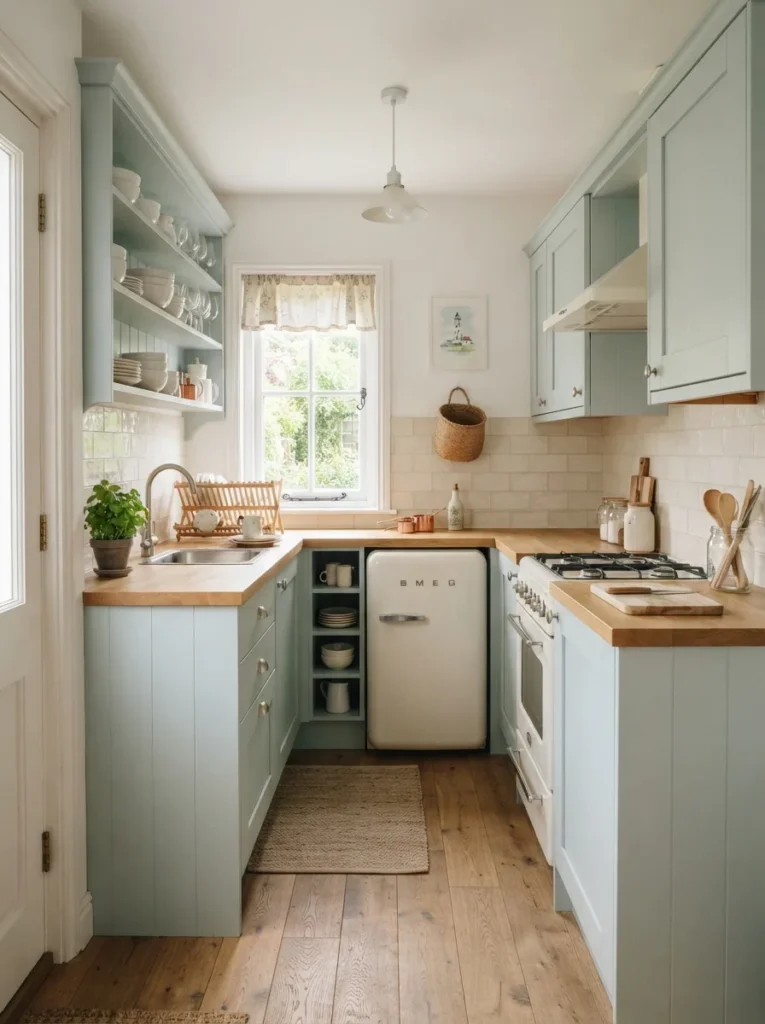
A pale blue-green shade sits between mint, aqua, and sea glass, making it a lovely option for a kitchen that feels plain but doesn’t suit strong colors. Use it on lower cabinets or a small island, then keep the walls warm white. A quart of cabinet paint typically costs $20 to $40, and sample pots often cost around $5 to $10. Paint a sample board at least 12 inches square and move it around the room to see how it looks near the window, backsplash, and refrigerator. Blue-green pairs nicely with oak, white ceramic, and brushed nickel hardware. If your countertops have strong gold or red undertones, compare samples carefully because those warm colors can make the green appear bluer. Use a limited number of decorative accents, such as one matching planter and a simple striped towel. Clean cabinet fronts with a mild solution and dry them with a soft cloth. This color gives the kitchen a relaxed, slightly coastal feel without requiring nautical decorations or a themed backsplash.
14. Charcoal Gray on One Feature Wall
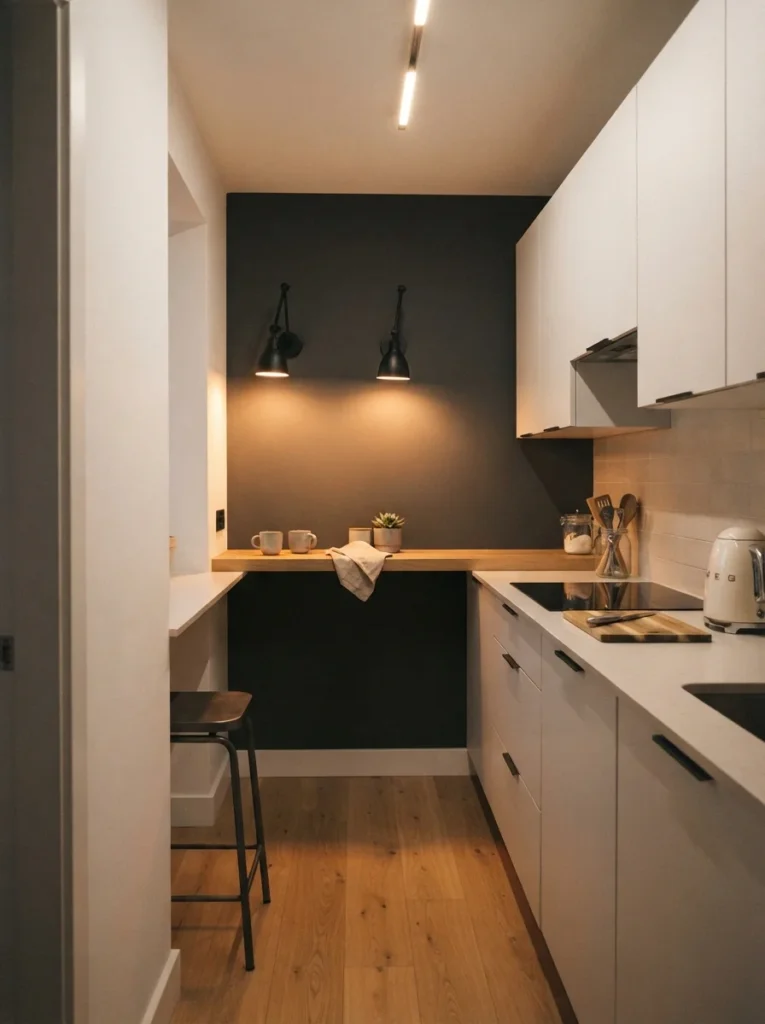
Charcoal gray can add depth to a small kitchen, but it works best in a controlled area rather than across every wall. Try it behind a breakfast shelf, on a short dining nook wall, or on a narrow section beside white cabinetry. A quart of wall paint often costs $15 to $35, so you can test a feature wall for around $25 to $60 if you also need basic painting supplies. Pair the charcoal with white cabinets, pale counters, and light wood so the darker section has room to stand out. In a kitchen with very little natural light, keep the charcoal away from the largest wall and use it on a smaller area instead. Check the paint sample under your evening lighting because dark gray can look nearly black at night. A washable finish makes everyday marks easier to remove, particularly near dining areas. Avoid adding several more dark accents throughout the room. One well-placed charcoal surface creates contrast without making the kitchen feel like a narrow tunnel.
15. Buttercream and Light Beige for a Gentle Neutral Kitchen

Buttercream and light beige create a gentle palette that feels warmer than stark white without looking yellow. This combination is especially useful if your kitchen has beige tile floors or warm-toned countertops that clash with cooler paint colors. A gallon of cabinet paint usually costs $40 to $80, and wall paint often falls in a similar range depending on the brand. For a small DIY refresh, allow around $100 to $220 for paint and supplies if you’re updating both cabinets and walls. Keep the cabinet shade lighter than the wall, or use nearly matching tones to create a quiet, continuous appearance. Antique brass knobs, a pale oak shelf, and a simple white backsplash add texture without introducing another major color. Test the paint against your existing countertop before purchasing a full gallon. Some beige finishes have pink undertones, while others lean yellow or gray. Cleaning is straightforward with a soft cloth and mild detergent, which helps keep pale painted surfaces looking tidy around handles and frequently used drawers.
16. Use a Two-Tone Palette With Mushroom Brown and White
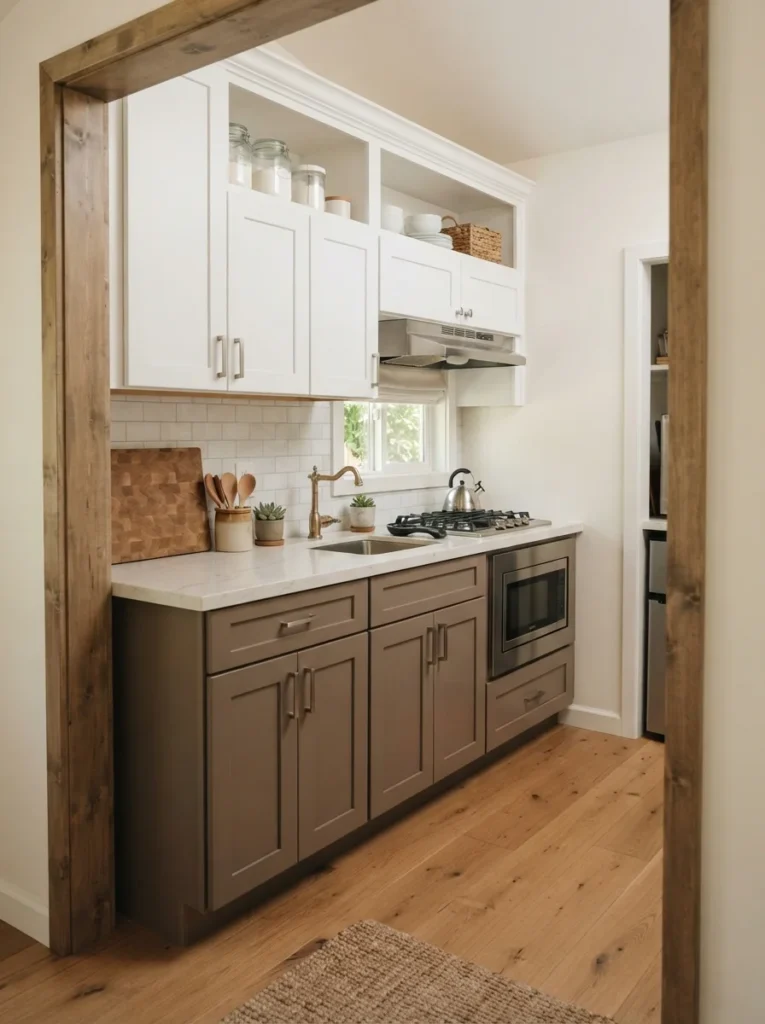
Mushroom brown is a soft gray-brown that adds warmth without the heaviness of espresso or dark chocolate. Use it on the lower cabinets and leave the upper cabinets white to keep the room balanced. Cabinet paint typically costs $40 to $80 per gallon, while a complete small-kitchen DIY repaint may cost $100 to $250 after primer and tools are included. This color works with white tile, oak counters, beige floors, and stainless-steel appliances. Choose a mushroom shade that looks neutral in your kitchen rather than one that turns purple or pink beside the existing flooring. Simple nickel hardware keeps the palette understated, while a small brass accent can warm it up. Don’t add a strong wood grain on every surface, since the brown cabinets already provide visual weight. Wipe cabinet fronts regularly to remove cooking residue, particularly around the stove and handles. This combination suits homes where bright white feels too stark but a dark kitchen would be overwhelming.
17. Add Lavender-Gray for an Unexpected Soft Color

Lavender-gray is an understated way to introduce color without making the kitchen look overly decorated. It works especially well on walls paired with white cabinetry and light wood surfaces. A quart of wall paint usually costs $15 to $35, while a few matching accessories from Target or a thrift store may cost another $10 to $25. Choose a gray-based lavender rather than a strong purple, which can feel much more saturated across a whole wall. Test it beside the countertop and under your existing light bulbs. Cool daylight can bring out the blue undertones, while warm bulbs make some lavender shades look pinker. Keep the rest of the palette simple with cream textiles, clear glass, and brushed nickel hardware. Avoid combining the wall with several competing pastel colors. One or two soft accents are enough. Use a washable finish near the dining area and wipe splashes promptly. This palette is particularly attractive in kitchens with white cabinets that need a little more personality but not a dramatic color change.
18. Light Taupe With Black and Oak Details
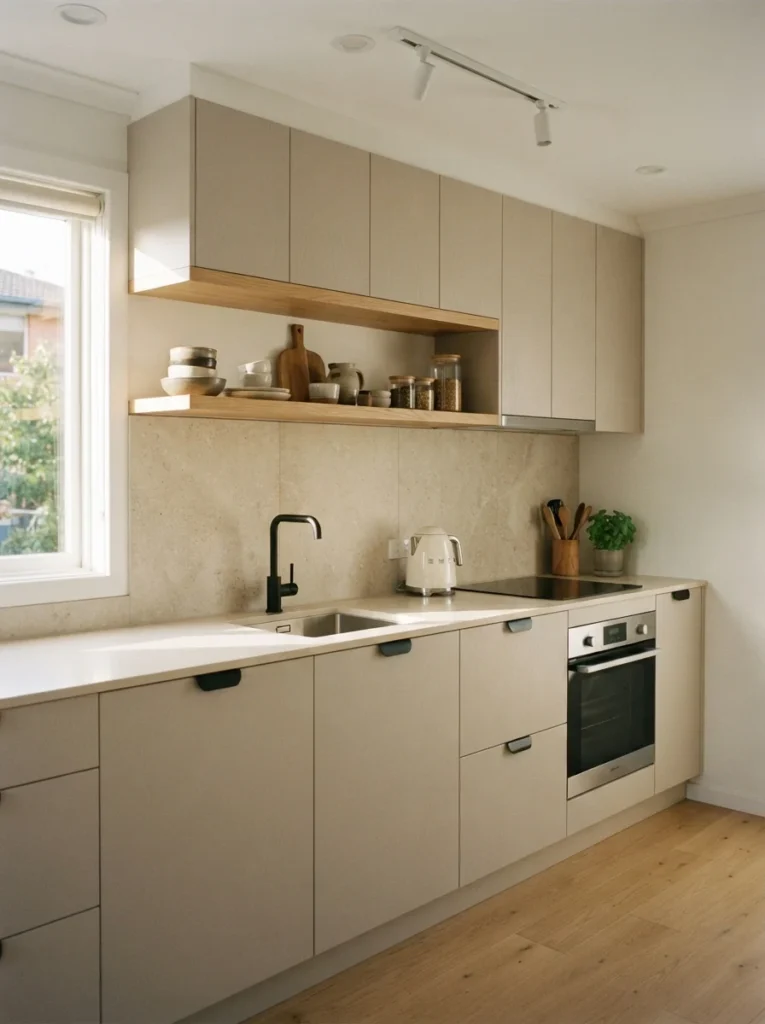
Light taupe is a dependable option for a kitchen that already contains a mixture of beige, gray, and wood finishes. It adds more character than plain white but stays neutral enough to work with different decor styles. A gallon of cabinet paint typically costs $40 to $80, and a DIY cabinet update can run around $100 to $220 with primer and basic supplies. Pair taupe cabinets with oak shelving, matte black pulls, and a cream backsplash. If your kitchen has dark counters, keep the walls and upper cabinets lighter so the room doesn’t feel compressed. Taupe can shift noticeably under different lighting, so test a sample beside your flooring before painting the full cabinet run. Choose a shade with a warm undertone for honey oak or beige tile, and a more neutral gray-brown for cooler stone finishes. For upkeep, wipe the doors with a damp microfiber cloth and avoid abrasive cleaners that can wear down the finish. The result feels grounded and coordinated without depending on trendy accent colors.
19. Use Pale Mint Green for a Playful Vintage Kitchen
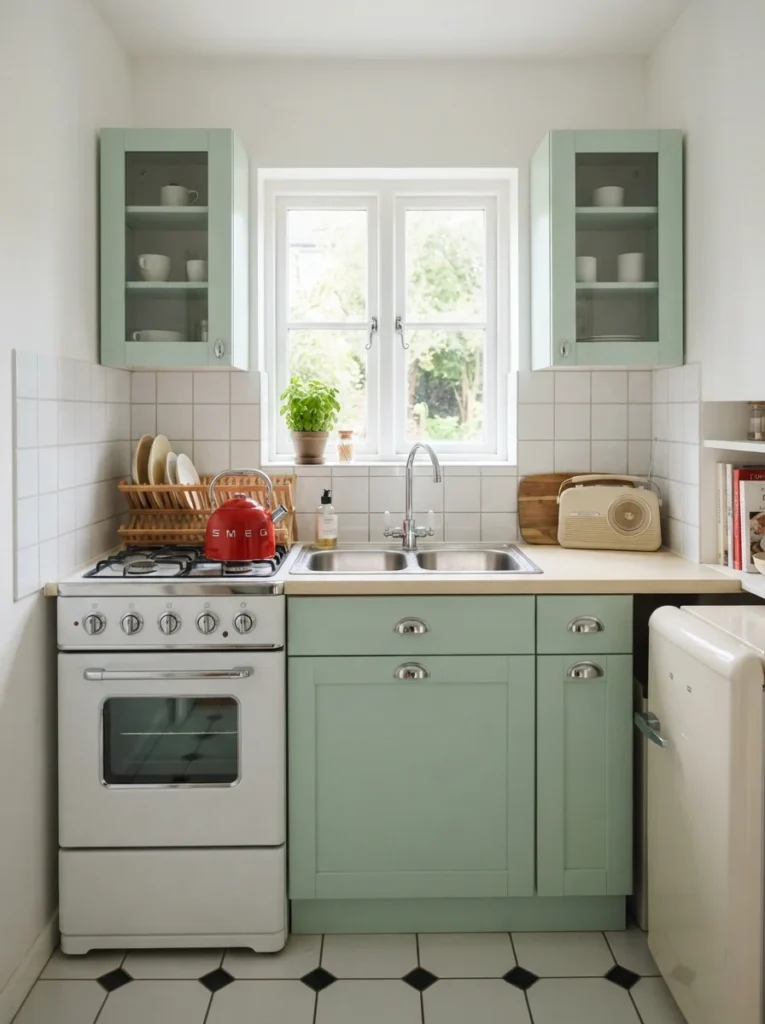
Pale mint green brings a cheerful retro touch to a tiny kitchen, especially when paired with white tile and chrome hardware. The color feels playful but still light enough for a compact room. A quart of cabinet paint generally costs $20 to $40, and a small cabinet repaint may cost $100 to $250 once primer and painting supplies are included. Choose a soft, slightly gray mint rather than a bright turquoise shade if you want the room to feel calm. White upper cabinets help keep the color from dominating the kitchen, while a cream counter adds warmth. One red or coral accessory can provide a small vintage accent, but avoid filling the counter with colorful appliances and collectibles. Check the mint sample in both daylight and evening light, because some shades appear much brighter under warm bulbs. Clean the painted surfaces gently and dry them after wiping. If you’re renting, bring in the color through a kettle, tea towels, canisters, or a washable runner instead of painting the cabinetry.
20. Pair Soft White With a Muted Rust Accent
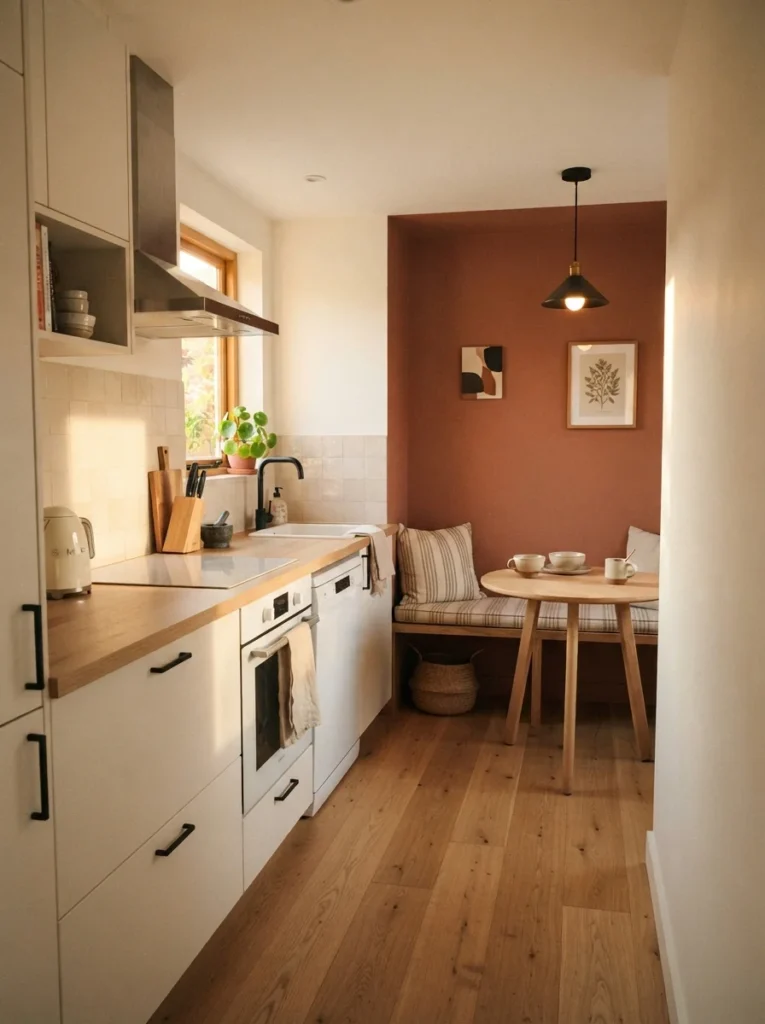
Muted rust adds warmth and personality without the brightness of orange or red. It looks particularly good beside soft white cabinets, oak counters, and cream backsplash tiles. A quart of wall paint generally costs $15 to $35, and a couple of coordinated accessories may add $15 to $40 if you’d rather avoid painting. Apply rust to a small dining nook wall or the section behind a breakfast shelf rather than every wall in the kitchen. Keep the countertops and cabinet fronts light so the accent remains distinct without visually shrinking the room. Natural wood and simple black hardware help connect the warm wall color to the rest of the space. Test the shade in daylight because some rust paints turn much redder under warm bulbs. Use washable paint in areas where chairs or bags may rub against the wall. For renters, a rust-colored table runner, small framed print, or ceramic planter can bring in the same warmth without a permanent change. This palette is a good match for modern farmhouse and relaxed Mediterranean interiors.
21. Create a Light Monochromatic Kitchen With Different Textures
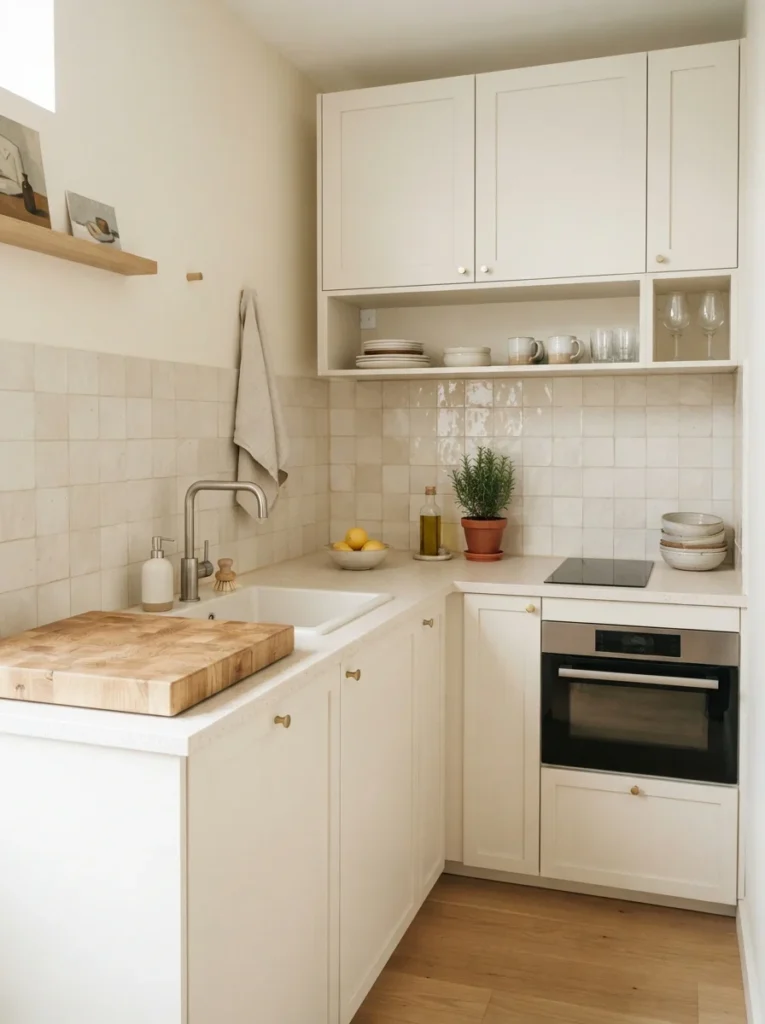
An all-light kitchen doesn’t have to look flat. The secret is using slightly different shades of white and cream alongside materials that have visible texture. Pair warm white cabinets with ivory walls, a lightly textured backsplash, and a pale stone countertop. A sample pot of paint often costs $5 to $10, making it easy to compare two whites before buying a full gallon. Choose one main white for the cabinets, then use a softer shade on the walls rather than trying to match every surface exactly. Add interest with a wood cutting board, linen tea towels, and a ceramic utensil holder. These small details introduce texture without adding another strong color. If you have glossy counters, choose a matte wall finish to keep the room from looking overly shiny. Clean the backsplash and cabinet surfaces regularly, since pale finishes show food splashes even when they hide dust well. This approach is ideal for narrow kitchens because the similar tones create visual continuity, while the varied materials stop the space from feeling like a plain white box.
22. Try Warm White With a Dusty Blue-Green Accent
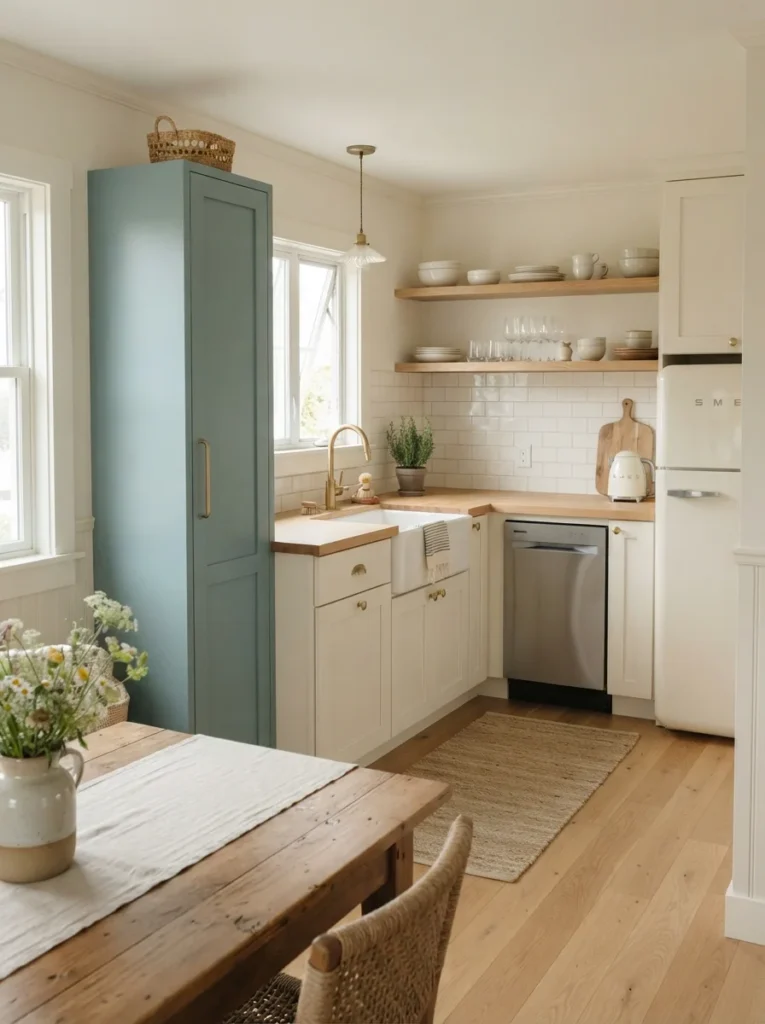
If you can’t decide between blue and green, a dusty blue-green accent offers a little of both. Use it on a pantry door, a small cabinet section, or a short wall, then leave the remaining surfaces warm white. A quart of paint typically costs $15 to $35 for a wall or door product, while a small accent project can stay around $25 to $60 if you already own basic painting tools. Pair the color with pale oak, cream tile, and brushed brass hardware. The white surfaces help the room remain bright, while the blue-green provides a gentle focal point. Test the shade against your countertop and flooring, especially if they have strong yellow undertones. A muted color with a gray base usually feels calmer than a vivid aqua. If you rent, use the same shade through a removable wall print, small appliance, or washable textiles. Keep the accent limited to one or two areas so the kitchen doesn’t become visually fragmented. The result feels personal but still simple enough to work with changing accessories over time.
Mistakes That Ruin the Look
Even beautiful paint colors can disappoint if they’re chosen without looking at the whole kitchen. Avoid these common mistakes before opening the paint cans.
- Choosing a color from a screen alone. Online photos are useful for inspiration, but screens don’t show the exact paint undertone. Buy samples and test them beside your counters and floors.
- Using too many strong colors. Stick to two main colors and one accent shade. Repeating the same finishes makes a tiny room feel more connected.
- Ignoring natural and artificial light. A gray that looks soft in the morning may appear blue or muddy at night. Check samples at different times of day.
- Painting every surface the same shade without adding texture. An all-white kitchen benefits from wood, ceramic, linen, or metal details. These materials provide contrast without making the room feel busy.
Frequently Asked Questions
[Image Prompt: A bright tiny kitchen with warm white cabinets, pale sage walls, light oak accents, cream backsplash tiles, and a small green herb plant. Eye-level view in natural daylight, balanced neutral styling, no people, no text.]
[Alt Text: A bright small kitchen showcasing soft neutral colors, sage green accents, and natural wood finishes.]
Q: What are the best tiny kitchen color ideas for making a space look bigger?
Warm white, soft cream, pale gray, and light greige are reliable tiny kitchen color ideas because they reflect available light and create visual continuity. Pair them with a limited number of darker accents for definition without overwhelming the room.
Q: Should a tiny kitchen have light or dark cabinets?
Light cabinets generally make a small kitchen feel brighter, especially when natural light is limited. Dark navy or olive cabinets can also work on lower cabinets when the upper cabinets, walls, and counters remain light.
Q: What colors make a small kitchen feel warmer?
Cream, butter yellow, peachy beige, terracotta, and warm greige add warmth without requiring bold colors. Natural oak and brass details help these shades feel comfortable rather than overly yellow or orange.
Q: Can I use two colors in a tiny kitchen?
Yes. A two-tone palette, such as white upper cabinets and sage green lower cabinets, adds character while keeping the room balanced. Repeating one hardware finish and choosing a simple backsplash helps the colors work together.
Q: What is the cheapest way to change my tiny kitchen color scheme?
Start with inexpensive items such as tea towels, a washable runner, planters, or ceramic canisters, often for $10 to $40. If you want a more noticeable change, repainting one wall or a small cabinet section is usually less expensive than replacing cabinets or countertops.
Q: How do I choose the right kitchen paint color?
Compare sample colors beside your countertops, flooring, backsplash, and appliances. Check each sample in morning daylight and evening lighting before choosing a final shade.
Give Your Tiny Kitchen a Brighter New Look
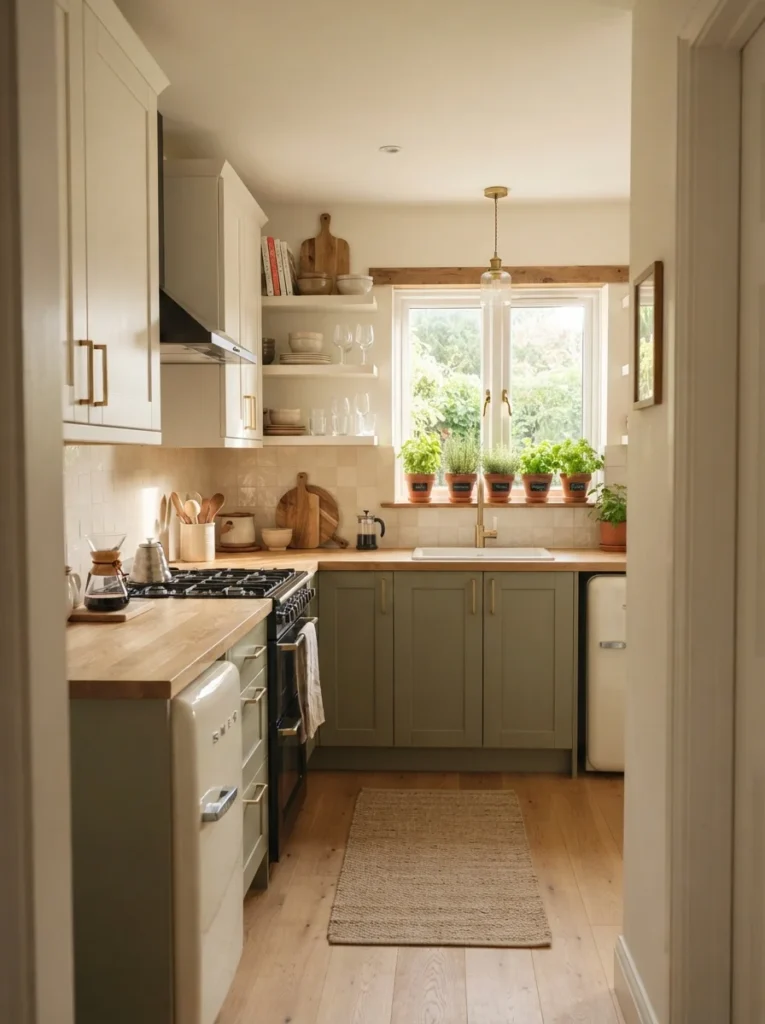
You don’t have to repaint the entire kitchen to make it feel different. Start by choosing one color that works with your existing countertop and flooring, then build around it with a few practical details. If your kitchen is dark, try warm white cabinets or pale walls first. If it already gets plenty of sunlight, sage, dusty blue, or muted olive can add personality without making the room feel crowded. My favorite starting point is a small paint sample beside the cabinets, followed by a quick check in both morning and evening light. It’s a simple way to avoid buying an entire gallon of the wrong shade. These tiny kitchen color ideas work best when the colors support the room instead of competing with it. Pick your favorite palette this weekend, test it on a small surface, and let the rest of the kitchen come together one thoughtful choice at a time.